Category: Blog

Your blog category

  • How PET Chips Are Manufactured from Recycled Material

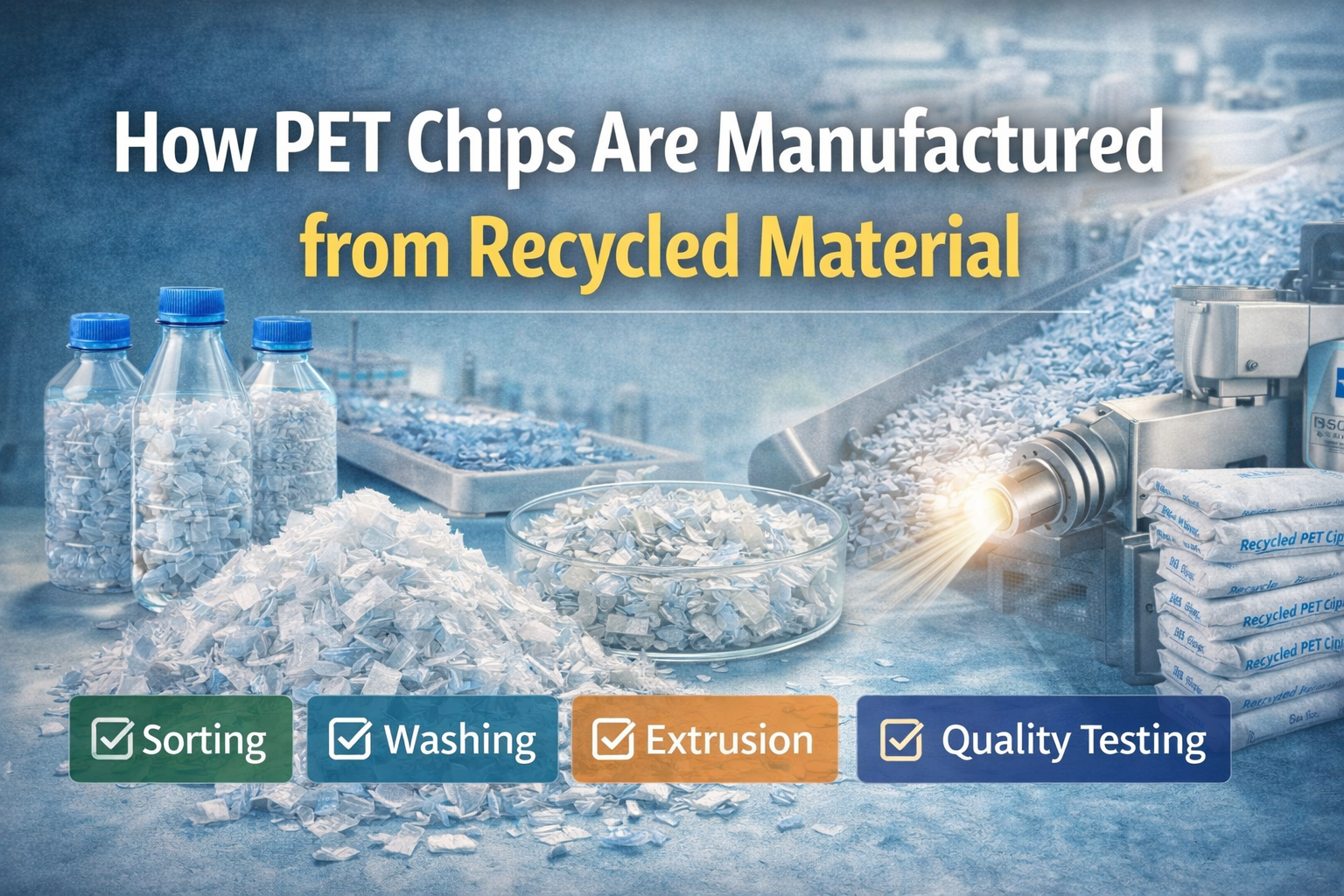
    How PET Chips Are Manufactured from Recycled Material

    With sustainability becoming a growing industry need, rPET chips have become a crucial raw material in the industry of packaging, textiles, and consumer goods. Knowledge of how PET chips are manufactured from recycled material is crucial to buyers and brands in understanding quality and safety.

    What Are Recycled PET Chips?

    Recycled PET chips are small, uniform pellets made from post-consumer PET waste, primarily plastic bottles. These chips are used to manufacture fibres, films, sheets, and new bottles, supporting a circular plastic economy while reducing dependence on virgin petroleum-based materials.

    Step 1: Collection of Post-Consumer PET Waste

    It starts with the retrieval of the used PET bottles from the following sources:

    • Municipal recycling facilities
    • Deposit return systems
    • Industrial and commercial waste streams

    Collected bottles are sorted to remove non-PET plastics, metals, labels, and caps. Proper sorting is crucial, as contamination directly affects the quality of final PET chips.

    Step 2: Sorting and Cleaning

    Collected PET bottles are sorted according to:

    • Material type: PET versus other plastics
    • Colour (clear, blue, green, mixed)

    Advanced optical sorting machines and human inspection guarantee a very high degree of purity. The bottles then undergo washing with hot water and detergent to remove dirt, glue, labels, and food residues. This stage ensures that the obtained material meets industrial and food-grade quality standards

    Step 3: Size Reduction into PET Flakes

    Shredded PET bottles are processed into PET flakes. These flakes undergo additional washing and drying to reduce:

    • Moisture content
    • Organic and inorganic contaminants

    To produce uniform and solid rPET chips, high-quality flakes are required.

    Step 4: Drying and Decontamination

    For food packaging applications, flakes must undergo an aggressive decontamination procedure as follows:

    • High-temperature treatment
    • Vacuum or inert gas cleaning

    This step removes absorbed contaminants and meets food-contact regulations. Before melting, the flakes are dried to obtain the optimal moisture content.—

    Step 5: Filtration and Melting

    Dried flakes undergo processing in an extrusion machine in which the flakes are heated to definite temperatures. The melted PET is then forced through fine screens to eliminate:

    • Dust particles
    • fibers Paper
    • Other Impurities

    This stage is important as it enhances the strength and clarity of the reclaimed PET chips.

    Step 6: PET Chips, or Recycled PET, Pelletizing

    The purified molten PET is then cut into uniform pellets, known as recycled PET chips. These chips are cooled and crystallized to enhance stability during storage and transportation.

    At this stage, the following key quality parameters are checked:

    • IV (Intrinsic viscosity)
    • Color
    • Pellet size
    • Moisture content

    Step 7: Quality Testing & Packaging

    Before shipping, rPET chips are subjected to rigorous tests to check quality according to industry standards. Depending on what the output is to be used for—fibres, films, or bottles—further tests may be conducted.

    After approval, they are packaged in moisture-resistant packaging and delivered to various manufacturers abroad.

    Importance of Manufacturing rPET Chips

    Production of PET Chips from Recycled Material:

    • Eliminates plastic waste in landfills and oceans
    • Reduces carbon emissions and energy usage
    • Furthers sustainability goals and laws
    • Offers a cost-effective alternative for virgin PET

    Also Read: Why Brands Are Shifting to Recycled Polyester Staple Fibre

    Concluding Comments

    The process of making PET chips from recyclables is a meticulously managed, tech-oriented process that converts trash into a treasure as a valuable industrial primary product. Recycling technologies advance, and in many applications, recycled PET chips are matching, and in some cases surpassing, virgin PET.

    For brands and manufacturers aiming to reduce environmental impact without compromising quality, recycled PET chips are the smart and sustainable choice.
  • Why Brands Are Shifting to Recycled Polyester Staple Fibre

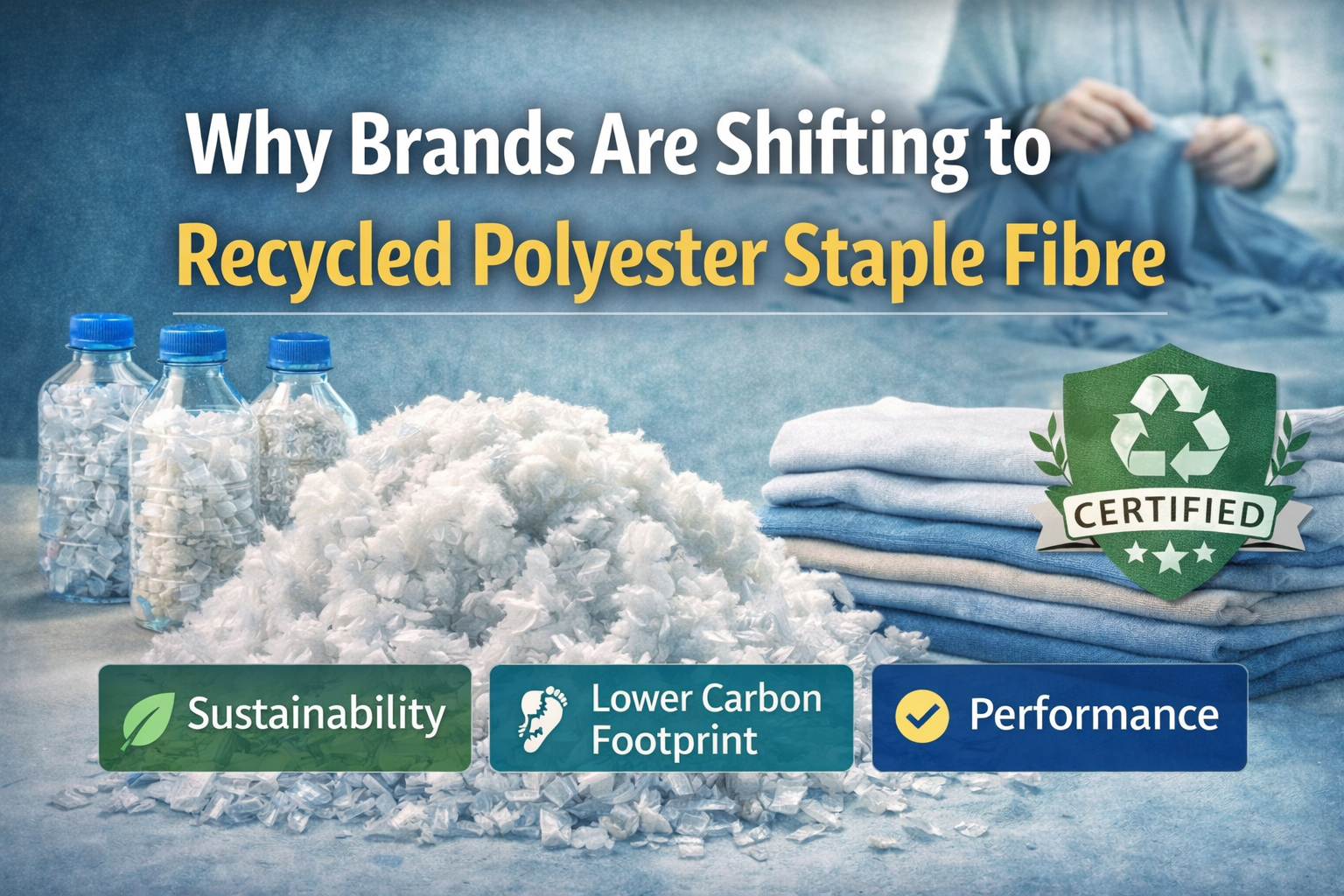
    Why Brands Are Shifting to Recycled Polyester Staple Fibre

    The global textile industry is going through a big change as sustainability becomes a key focus rather than just a marketing trend. One major change is the increasing use of Recycled Polyester Staple Fibre (rPSF). Brands in various sectors, including fashion, home furnishings, and automotive textiles, are choosing recycled polyester instead of virgin polyester. But why is this change happening? Let’s look at the main reasons brands are moving toward recycled polyester staple fibre.

    What is Recycled Polyester Staple Fibre (rPSF)?

    Recycled Polyester Staple Fibre is made by recycling post-consumer PET bottles or polyester waste. These materials are collected, sorted, washed, processed into flakes, and then turned into staple fibres. The result is a high-performance fibre that closely matches virgin polyester in strength, durability, and versatility while providing significant environmental benefits.

    Sustainability as a Core Brand Strategy

    One important reason why the shift to rPSF is being adopted in the industry is because of sustainability. Virgin polyester, being made from petroleum, results in high greenhouse gas emission and wastage of natural resources. However, recycled polyester fibers are different because they are made from recycled plastics

    • Keeps plastic waste out of landfills and oceans
    • Saves non-renewable fossil fuels
    • Supports circular economy practices

    By rPSF, companies are able to indicate support for environmental sustainability and fulfill the demands of the global sustainability agenda.

    Reduced Energy Consumption and Carbon Footprint

    Compared to virgin polyester, recycled polyester staple fibre production requires less energy and water. Studies indicate that greenhouse gas emissions from recycled polyester are 50-70% lower. For brands aimed at reducing carbon footprint and achieving climate goals, rPSF is an easy and straightforward solution.

    Meeting Growing Consumer Demand

    The modern-day consumers are seeking sustainable and morally made products. The consumers are now very eager to support brands that use recycled resources, which are openly sourced. The recycled polyester staple fibre helps brands in the following ways:

    • Trust of the consumer typically starts when
    • Encourage brand loyalty
    • Enhance market differentiation

    Sustainable labels as well as the use of recycled material help make a product even more attractive, particularly in the international market.

    Regulatory Pressure and Industry Commitments

    Governments and regulatory bodies around the world are enforcing stricter environmental policies, including requirements for recycled content in textiles. Additionally, many global fashion and textile brands have publicly committed to increasing the use of recycled fibres within set timelines.

    By switching to rPSF, brands comply with regulations, lower future risks, and fulfill sustainability commitments without sacrificing product quality.


    Performance Comparable to Virgin Polyester

    A common misconception is that recycled fibres are of lower quality. However, modern recycling technologies ensure that high-quality rPSF provides excellent strength, durability, and consistency. Recycled polyester staple fibre is widely used in:

    • Apparel and sportswear
    • Home furnishings like carpets and cushions
    • Automotive interiors
    • Non-woven and industrial textiles

    This performance similarity simplifies the transition for brands.

    Cost Stability and Supply Chain Benefits

    Virgin polyester prices vary with crude oil markets, creating cost uncertainty. Recycled polyester staple fibre often provides better price stability and lowers dependency on fossil fuels. In areas with strong recycling systems, rPSF also shortens supply chains and improves access to raw materials.

    Supporting the Circular Textile Economy

    By adopting rPSF, brands contribute to a closed-loop textile system where waste is turned into valuable resources. This circular approach lessens environmental impact while generating long-term economic value for the textile industry.

    Also Read: Quality Parameters to Check Before Buying PET Flakes

    Brands increasingly prefer Recycled Polyester Staple Fibre for its ideal amalgamation of sustainability, performance, compliance, and consumer appeal. Due to increased awareness of environmental concerns and the introduction of regulations, rPSF is no longer an option but a benchmark.

    For brands that wish to maintain competitiveness and responsibility, the future of textiles is in recycled polyester staple fibres.

  • Quality Parameters to Check Before Buying PET Flakes

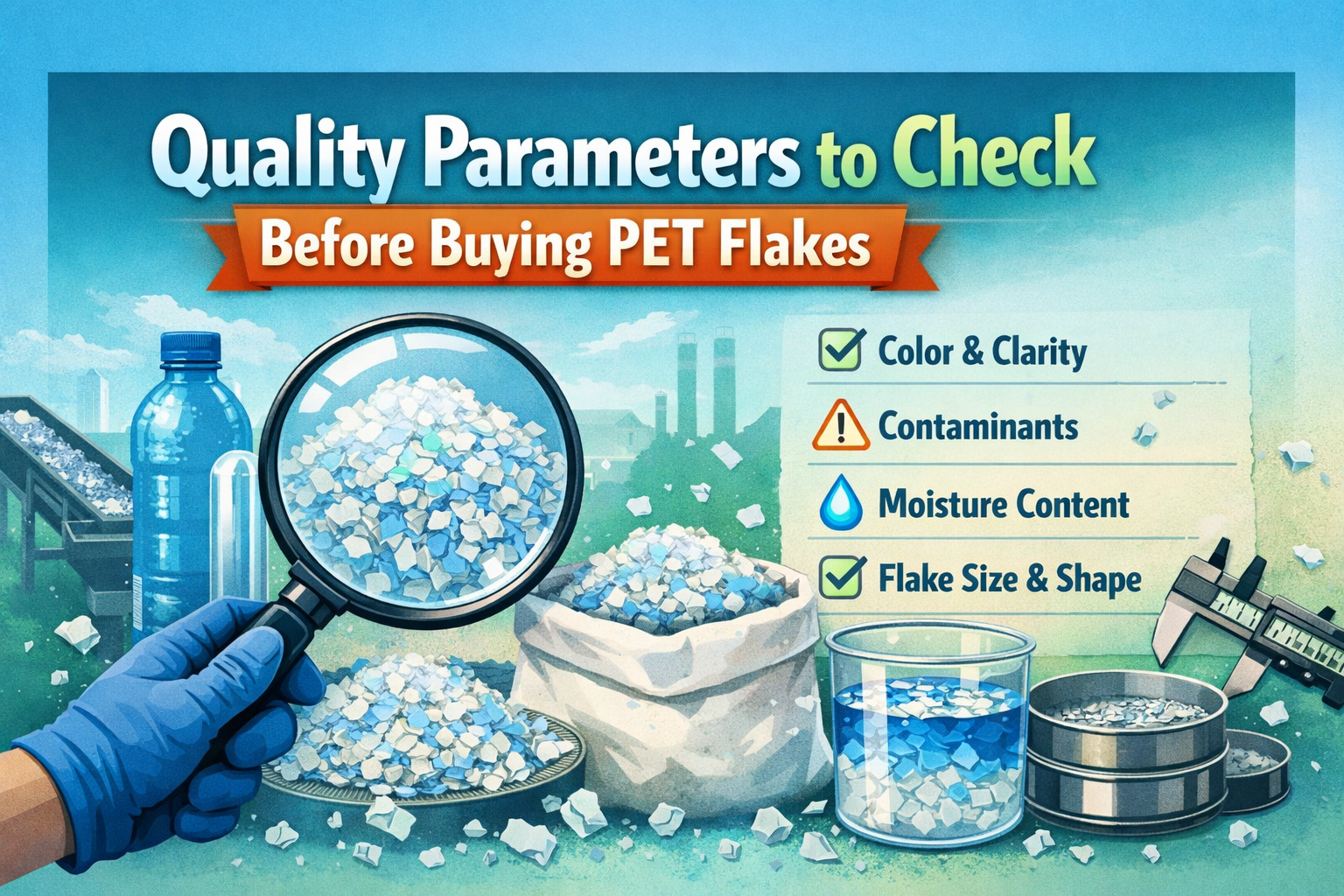
    Quality Parameters to Check Before Buying PET Flakes

    With the increasing demand for recycled plastics, PET flakes have emerged as an essential material for the packaging, textile, and bottling industries. However, not all PET flakes are the same when it comes to their quality. In order to provide the required performance, safety, and economy, one needs to understand the parameters to check before purchasing PET flakes.

    What Are PET Flakes?

    PET flakes are produced by recycling post-consumer PET bottles through sorting, washing, shredding, and drying processes. These flakes are used to manufacture rPET fibers, sheets, strapping, and food-grade packaging. The final product quality largely depends on the recycling process and raw material selection.

    Why PET Flake Quality Matters

    Poor quality PET flakes can result in:

    • Lacks Mechanical Strength
    • Processing difficulties in extrusion or injection molding
    • Product defects and increased rejections
    • Safety and Compliance Risks

    because quality checking parameters are essential for preventing losses during production as well as ensuring the quality is maintained.

    Key Quality Parameters to Check Before Buying PET Flakes

    1. Intrinsic Viscosity (IV)

    Intrinsic Viscosity-IV- shows the molecular weight of PET. The larger the value of IV, the stronger and more durable the material.

    • Fiber-grade PET flakes: Lower IV
    • Bottle-grade PET flakes, Higher IV

    Make sure the IV fits your desired application.

    2. Moisture Content

    Excess moisture may promote hydrolytic degradation during processing.

    • Ideal moisture ≤ 0.5%
    • Low moisture provides good melt stability and strength to the product.

    Always request moisture test reports from suppliers.

    3. Contamination level

    Contaminants reduce the quality of PET flakes and affect the performance of an end product. Common contaminants include:

    • PVC
    • Polyolefins (PP, PE)
    • Labels, glue, and metals

    High-quality PET flakes have contamination of less than 100 ppm.

    4. Colour Consistency

    PET flakes are normally categorized as:

    • Clear / Super Clean
    • Sky Blue
    • Mixed Color

    For food-grade and premium applications, clear flakes are preferred. The color inconsistency could affect the aesthetics and transparency in the final product.

    5. Bulk Density

    Bulk density informs material handling and feeding efficiency in the processing chain.

    * Consistent bulk density = smooth extrusion.

    * Low density may indicate fines or irregular flake size.

    6. Flake Size & Shape

    Uniform flake size improves:

    • Melting consistency
    • Washing efficiency
    • Final product quality

    Irregular flakes might cause processing upsets or nonuniform melting.

    7. Ash Content

    Ash content is a measure of the inorganic residue that results after burning PET flakes.

    • Lower ash content = higher purity
    • ideal ash content: ≤0.3%

    High ash content normally indicates poor washing or contamination.

    8. Degree of Acetaldehyde

    In food and beverage packaging, it is very important to maintain low levels of acetaldehyde to avoid taste and odor problems.

    • Lower AA assures adherence to food safety.
    • Critical for the flakes in bottle-grade PET

    9. Washing & Drying Quality

    Well-washed PET flakes should be:

    • Free from oil, glue, and label residues
    • Results are properly dried to avoid moisture-related defects.

    Ask suppliers to provide information on hot washing and drying processes.

    Are PET Flakes Safe for Food-Grade Applications?

    PET flakes can be employed for any food-contact use, provided they undergo approved recycling processes. One must check for certification and testing reports before purchasing food-grade PET flakes.

    How to Choose the Right PET Flake Supplier

    Before finalizing a purchase:

    • Request for laboratory test reports.
    • Check sample consistency
    • Verify quality certifications
    • Stabilize supply and make it traceable.

    Trustworthy suppliers emphasize quality and document transparency.

    Also Read: Textile-to-Textile Recycling: Closing the Loop in Polyester Fibres

    Knowledge of quality parameters to check before buying PET flakes helps the buyer ensure performance, safety, and long-term cost savings. Be it IV, moisture content, contamination, or color consistency, each is an important contributor to final product quality.

    Choosing among the right PET flakes isn’t all about price but also reliability, compliance, and consistent results.

  • Textile-to-Textile Recycling: Closing the Loop in Polyester Fibres

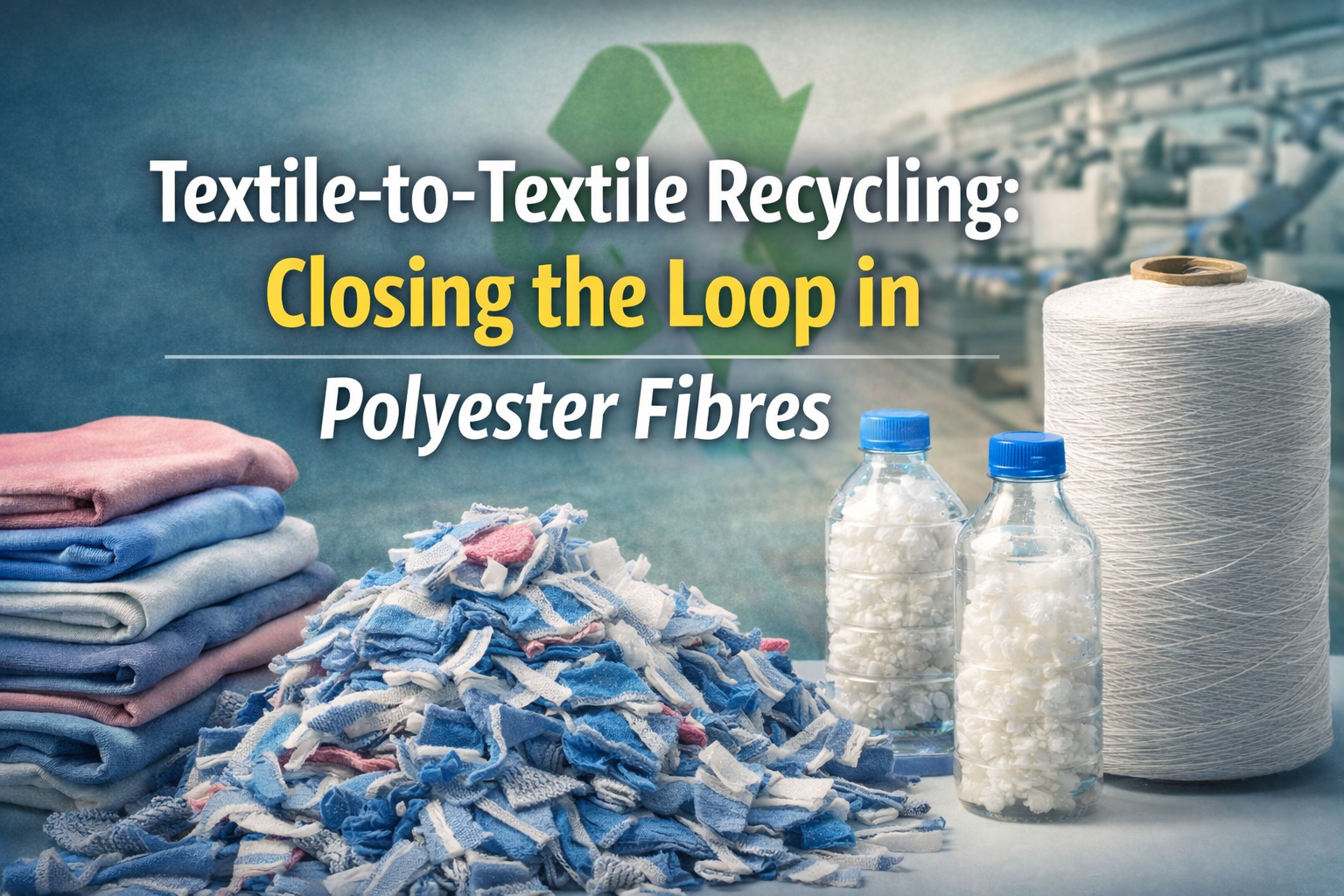
    Textile-to-Textile Recycling: Closing the Loop in Polyester Fibres

    The global textile industry is constantly being forced to cut down on waste and start focusing on a circular economy. Among the most promising technologies that are inducing this shift is textile-to-textile recycling, particularly for polyester fibres, since polyester-based fibres make up a massive chunk of the global production of textiles. 

    What Is Textile-to-Textile Recycling?

    Textile-to-textile recycling refers to the recycling of used/waste textiles to produce a new strand of fibres which can be converted into a new fabric. Unlike traditional recycling, which often downgrades textiles into insulation or filling materials, textile-to-textile recycling aims to retain fibre quality and enable repeated reuse within the textile industry.

    This can be achieved through mechanical or chemical recycling techniques for polyester fibres, where old fabrics are recycled and reused as raw materials.

    Why Polyester Fibres Need Circular Recycling

    Polyester is strong, versatile, and affordable; however, it is a petroleum-based product that is non-biodegradable. Tens of millions of tonnes of polyester garments go to landfills or incinerators annually.

    Textile-to-textile recycling helps to handle these challenges by:

    • Textile waste reduction
    • Reducing the dependency on virgin polyester
    • Reduce carbon emissions and energy use.
    • Supporting world sustainability goals

    It requires no pre-processing or semantic attachments on the input data.

    How Textile-to-Textile Recycling Works

    The two main approaches used in polyester fibre recycling are:

    1. Mechanical Recycling

    This technique sorts, cleans, shreds, and melts polyester textiles into fibres. Mechanical recycling, though much cheaper, can weaken the fibres in multiple reprocessing, thus requiring blending with virgin polyester.

    2. Chemical Recycling

    Chemical recycling breaks down polyester into its original monomers. These again are repolymerized into new high-quality polyester fibres that perform like virgin material. This method is key to true textile-to-textile circularity.

    Benefits of Textile-to-Textile Recycling in Polyester

    “Textile-to-textile recycling has many benefits throughout the chain:”

    Environmental Advantages

    • 50 to 70% lower carbon footprint versus traditional polyester
    • Less landfill and ocean pollution
    • Reduced water and energy use

    Economic Benefits

    • Stable source of recycled raw materials
    • Dependence on volatile fuel market prices has reduced.
    • New Business Opportunities in Recycling Infrastructure

    Brand and Consumer Benefits

    • Supports commitment to sustainable fashion
    • Supporting the fast-growing demand for eco-friendly textiles
    • Increases credibility and trustworthiness

    Challenges in Textile-to-Textile Recycling

    • Mixed fibre textiles (polyester-cotton mixtures)
    • Poor waste collection and sorting networks
    • Higher costs for chemical recycling technology

    However, innovations in AI-based sorting, enzyme recycling, and advanced depolymerization are rapidly addressing these barriers.

    Is Textile-to-Textile Recycled Polyester as Good as Virgin Fibre?

    Yes. Using modern technology, the quality of chemically recycled polyester fibres equals that of virgin polyester. This indicates that they are usable for higher-performing applications such as sportswear, clothing, and home textiles.

    The Future of Closing the Loop in Polyester Fibres

    Governments, as well as brands and companies, are investing heavily in closed-loop systems for textiles. The need for recycled content, influenced by consumer awareness, has increased textile-to-textile recycling.

    As collection mechanisms continue to improve and advances in technology lead to scalability, the process of textile-to-textile recycling will look to become an increasingly mainstream option, effectively converting a linear polyester fibre material to a circular material.

    Also Read: How rPET Chips Are Redefining Food Packaging Safety: Are They Safe for Food Use?

    Textile-to-textile recycling holds the key to the loop-closing of polyester fibres. The processing of old textiles into new, high-quality materials means a drastic decrease in the environmental impact of the industry while satisfying the growing demand for sustainable fabrics.

    For a truly circular textile future, polyester must be recycled back into polyester—and textile-to-textile recycling makes that possible.

  • How rPET Chips Are Redefining Food Packaging Safety: Are They Safe for Food Use?

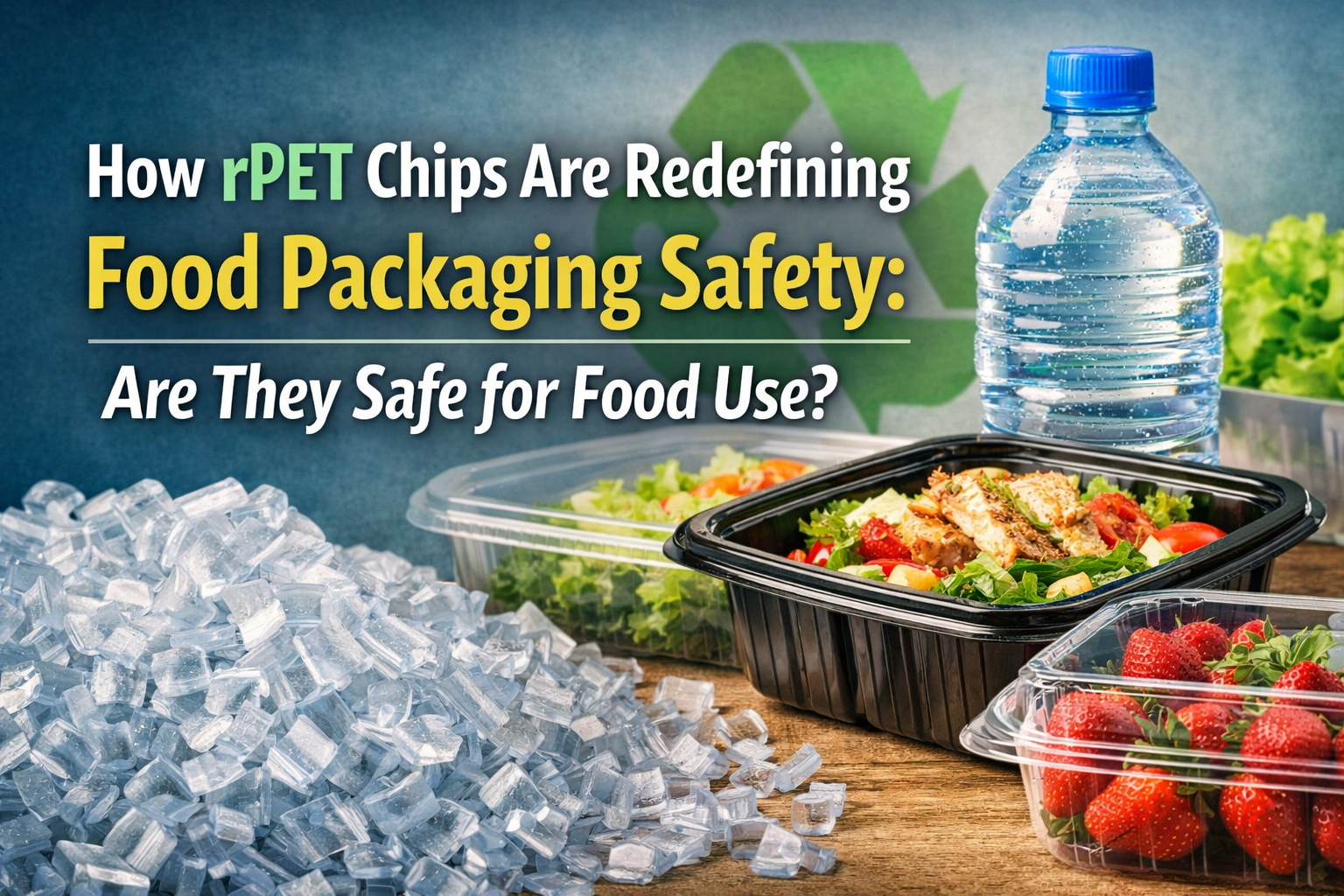
    How rPET Chips Are Redefining Food Packaging Safety: Are They Safe for Food Use?

    Just when the question of sustainability has come to the front and center for the food and beverage industry, rPET chips, also known as recycled polyethylene terephthalate chips, have been gaining attention from both brands and consumers to date as a safer and eco-friendly substitute for virgin plastic. But a basic question across all brands and consumers is-are food-grade rPET chips safe for food packaging?

    The short answer is yes-when it’s manufactured under strict food-grade standards. Let’s see how rPET chips are redefining food packaging safety and why they are becoming the future of sustainable packaging.

    What Are rPET Chips?

    rPET chips are small granules produced from recycled PET plastic, primarily sourced from post-consumer PET bottles. These bottles are collected and cleaned, processed to flakes, and then converted into chips through advanced recycling technology.

    Food-grade rPET chips are subjected to further purification and decontamination processes to remove impurities, ensuring they meet international food safety standards.

    Are rPET Chips Safe for Food Packaging?

    Yes, food-grade rPET chips are safe if they are produced following proper procedures. Food safety organizations, such as the US FDA and EFSA (the European Food Safety Authority), have accepted rPET packaging if it has followed certain guidelines.

    Advanced recycling techniques involve the use of the

    • High-temperature processing
    • Vacuum Decontamination
    • Solid State Polymerization (SSP)

    These processing steps remove contaminants to make the material pure so that the rPET chips can be used for food contact purposes.

    How rPET Chips Improve Food Packaging Safety

    rPET chips are not only sustainable but also work towards improving food safety in many ways:

    1. High Purity & Quality Control

    Food-grade rPET chips are manufactured in controlled conditions with continuous testing. This gives them strength and safety similar to virgin PET.

    2. Strong Barrier Properties

    rPET retains a very high level of resistance to moisture, oxygen, and contaminants from outside sources.

    3. Thermal & Chemical Stability

    The rPET chips are heat-resistant and do not react when exposed to food products, which makes them suitable for bottles, trays, and containers.

    Why Brands Are Switching to rPET Chips

    Leading brands in the food and beverage industry are now turning to rPET chips in view of the safety, sustainability, and trust factor associated with them.

    Key benefits include:

    • Lower carbon footprint when compared with virgin plastic
    • Reduces dependency on fossil fuels
    • Adherence to international regulations on sustainability
    • Enhanced brand reputation & consumer confidence

    With governments everywhere promoting the use of recycled materials for packaging, these rPET chips ensure that brands adhere to these requirements while preserving food safety.

    rPET Chips vs Virgin PET: Is There a Safety Difference?

    From a food safety perspective, high-quality rPET chips perform on par with virgin PET. The main difference lies in environmental impact. rPET significantly reduces plastic waste and greenhouse gas emissions without compromising packaging performance or safety.

    Common Concerns About rPET  in Food Packaging

    Some consumers may have concerns about contamination or smell within recycled plastic. However, modern recycling and testing methods guarantee that food-grade rPET packaging materials are odorless, clean, and pure. Such materials from reputable suppliers are essentially contamination-free.

    The Future of Food Packaging Using rPET Chips

    With the growth of circular economy schemes, rPET chips are set to become a key part of the closed-loop food packaging chain, in which bottles are converted back into bottles. Advances in recycling technologies are making it possible for rPET to become a cleaner, more efficient food material.

    Also Read: Is Food-Grade Recycled PET Safe? Standards, Testing & Regulations Explained

    So, are the rPET chips safe for food purposes? Absolutely! Provided they pass the certification process for the production of food. The rPET chips are changing the dynamics of the safety of food packaging.

    For food brands wanting to achieve sustainability targets without having an impact on safety, rPET chips are no longer an alternative but the future.

  • Is Food-Grade Recycled PET Safe? Standards, Testing & Regulations Explained

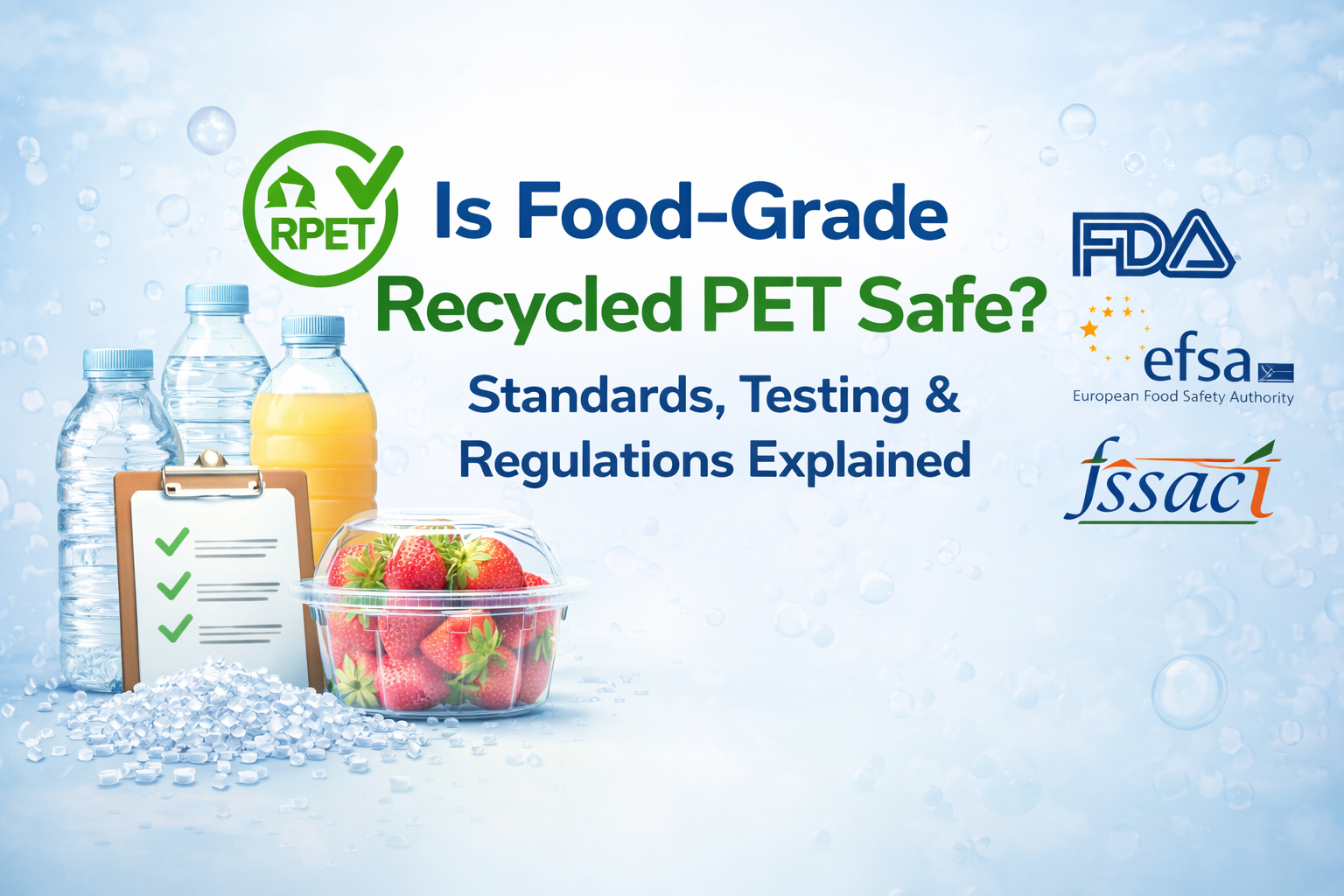
    Is Food-Grade Recycled PET Safe? Standards, Testing & Regulations Explained

    With the growing need to manage plastic waste and the demand for sustainability, food-grade recycled PET, also known as rPET, has emerged as a promising substitute for conventional plastic. A frequently asked question in connection with the need for sustainability through the use of recycled materials in the packaging of foods and beverages is: Is food-grade recycled PET safe for packaging use?

    This blog informs and guides the audience about the safety, norms, and testing procedures that regulate the use of food-grade rPET.

    What Is Food-Grade Recycled PET?

    Food-grade rPET is made from post-consumer PET bottles, which are collected, sorted, cleaned, and then processed through a sophisticated recycling process. In contrast to normal recycled plastics, food-grade rPET is subjected to rigorous processes in order to ensure its cleanliness and suitability for packaging food.

    It is often employed for:

    • Bottles of water, soft drinks,
    • Containers for edible oils
    • Food trays and clamshell packages
    • Dairy & Juice Packaging Industry –

    What is rPET, and how is it made safe for use in packaging food

    Food-grade rPET is produced through accepted recycling technology, including:

    • Super-clean recycling
    • Chemical recycling
    • High-temperature vacuum decontamination

    These processes remove:

    • Chemical contaminants
    • Odors and residues
    • Micro-organic impurities

    Only rPET that complies with food safety requirements worldwide is permissible for food contact applications.

    International Standards on Food-Grade rPET

    “Food-grade” recycled PET is required to obey the following stringent regulations of the international community:

    1. FDA (USA)

    The United States’ Food and Drug Administration (FDA) approves processes for recycling rather than the final product. It is only possible through approved processes for recycling that it is possible to get food-grade rPET.

    2. EFSA (European Union)

    European Food Safety Authority (EFSA) scrutinizes rPET recycling technology and makes sure that contaminant migration levels are at a safe limit.

    3. FSSAI (India)

    The use of food-grade rPET in India is allowed by the FSSAI under certain standards, including traceability, processing, and migration requirements.

    4. ISO & Global Certifications

    Typically, the manufacturers will follow.

    • ISO 22000 (Food Safety Management)
    • ISO 9001 (Quality Management
    • Global Recycled Standard (GRS)

    Methods for Testing Food-Grade rPET

    The food-grade rPET material requires a series of tests to ensure it meets the

    • Migration testing: Testing whether harmful substances migrate into food
    • Intrinsic Viscosity (IV) testing: Verifies that a substance is strong
    • Contaminant Challenge Testing: Simulates worst-case contamination scenarios
    • Sensory testing: This ensures that there is no transfer

    Only Batches that have cleared all the tests alone are approved for food packaging.

    Is Food-Grade rPET As Safe As Virgin PET?

    Yes. Food-grade rPET is as safe as virgin PET if it is made through approved processes. Licensed food-grade rPET is deemed to be as safe as virgin PET, provided it is made by acceptable processes. Numerous studies have shown that recycled PET is not a hazard to human health.

    In fact, in most countries, drink manufacturers are currently utilizing 100% rPET bottles, ensuring the material’s safety and efficiency.

    Advantages of Using Food-Grade Recycled PET

    • Safe for direct food contact
    • Reduces plastic waste and pollution
    • Reduces carbon emissions by a minimum of 60%
    • Promotes circular economy objectives
    • Helps brands meet ESG targets related to sustainability

    Common Myths About Food-Grade rPET

    Myth: “Recycled plastics are not safe for containing food.”

    Fact: It’s only non-certified recycled plastics that are harmful to use. Food-grade rPET, on the

    Myth: rPET impacts taste/smell

    Fact: rPET, after appropriate processing, will not affect sensory testing.

    Also Read: Recycled PET vs Virgin PET: Complete Comparison, Uses & Benefits

    Recycled PET that meets food-grade requirements is safe, standardized, and environmentally friendly when processed under approved specifications. Since it is strictly standardized, extensively tested, and approved by worldwide regulatory authorities, rPET is a safe and environmentally friendly alternative to traditional plastic. With the ever-tightening regulations and the need for sustainability, the future of responsible packaging in the food industry will be through food-grade rPET packaging.

  • Recycled PET vs Virgin PET: Complete Comparison, Uses & Benefits

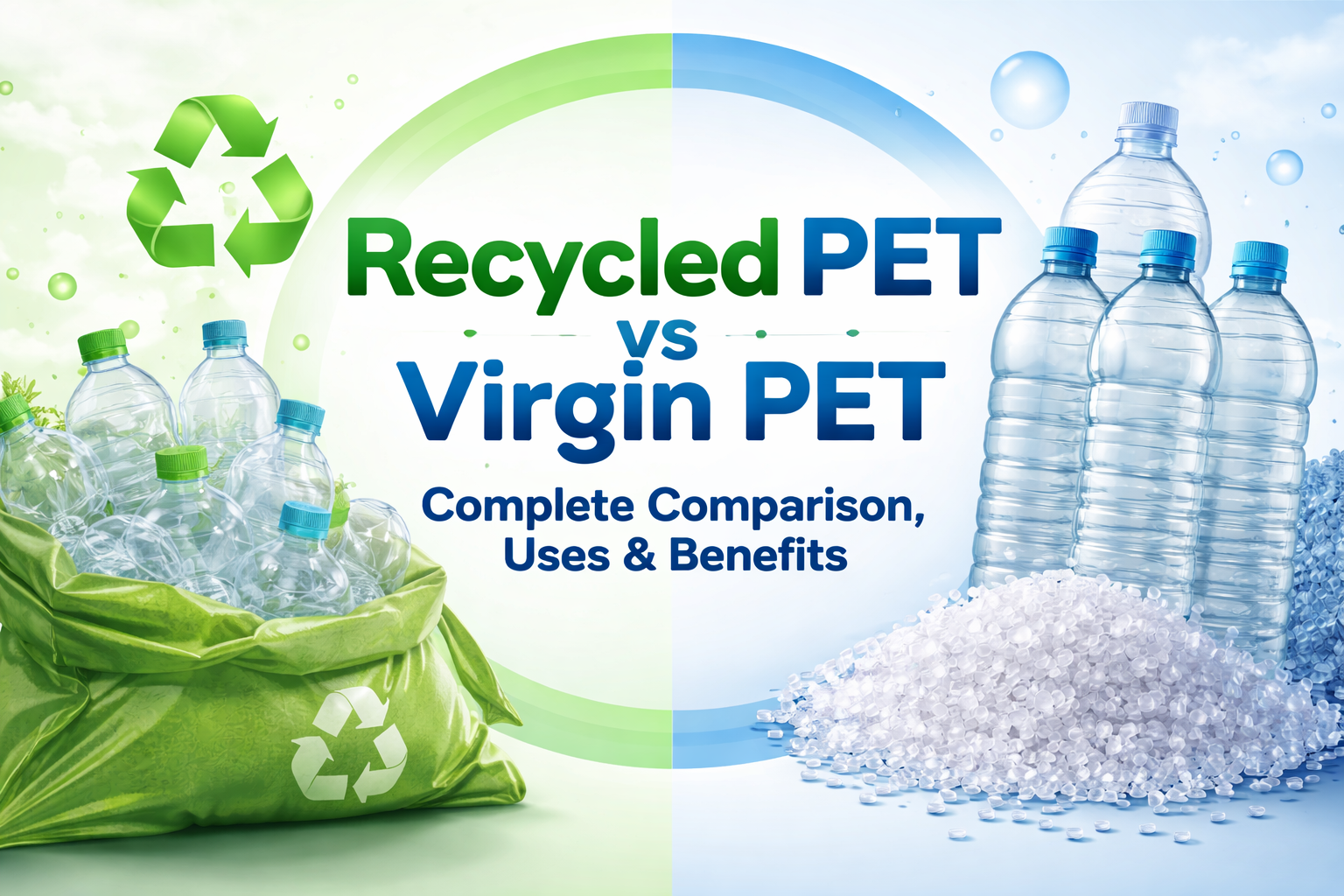
    Recycled PET vs Virgin PET: Complete Comparison, Uses & Benefits

    Plastic is an important material in the production of packaging materials, fabrics, and various industrial uses. One of the most frequently used plastics is PET, or Polyethylene Terephthalate. Nowadays, companies and consumers compare the two options—Recycled PET and Virgin PET to find the best one. In this article, the main characteristics and implications of Recycled PET and Virgin PET will be described.

    What Is Virgin PET?

    Virgin PET is made from petrochemical materials extracted from crude oil and gas. The material is made without the use of recycled material, so that its quality is maintained at a high standard.

    Characteristic Properties of Virgin PET

    • Always made up entirely of 100% new raw material.
    • High clarity, strength, and uniformity
    • Approved for food and beverage packaging
    • It is generally used in bottles, packaging, and film.

    Common Uses of Virgin PET

    • Drinking water and soft drink bottles
    • Food packaging trays & jars
    • Pharmaceuticals packaging
    • Cosmetics containers

    Virgin PET is preferred in applications requiring stringent standards of quality and safety, as in food-contact applications.

    What is Recycled PET (rPET)?

    Recycled PET, abbreviated to rPET, is made from the reprocessing of used PET bottles and containers. Plastic materials are gathered, processed, shredded, and reconstituted.

    Important Attributes of rPET

    • Derived from post-consumer PET packaging materials
    • Reduced carbon footprint over traditional PET packages.
    • Promotes the circular economy
    • Flake, pellet, or fiber form

    rPET in Everyday Life

    • Textile fibers (RPSF, yarns,
    • Non-food packaging
    • Strapping and sheets.
    • Automotive and construction components

    With the use of recycling technology, the production of food-grade rPET is also achieved.

    Recycled PET vs Virgin PET: What is the Difference?

    1. Environmental Impact

    Virgin PET is dependent on fossil fuels and emits more greenhouse gases. On the other hand, rPET reduces plastic waste, saves energy, and reduces carbon emissions significantly.

    2. Comparison of Costs

    rPET is often cheaper, particularly when crude oil prices are high. The cost of virgin PET varies with oil market fluctuations.

    3. Quality & Performance

    Virgin PET offers marginally better clarity and uniformity. However, high-quality rPET is able to fulfill performance requirements in many applications.

    4. Sustainability

    rPET is the clear winner from a sustainability perspective for helping brands meet ESG goals, as well as government recycling regulations.

    Advantages of the Use of Recycled PET

    • It reduces the landfill and ocean plastic waste.
    • It saves natural resources.
    • Requires up to 60% less energy than virgin PET
    • It enhances brand image by making consumers perceive the brand as eco-friendly.
    • Supports global sustainability initiatives

    Many global brands have now agreed to use from 30% to 100% recycled PET in their packaging.

    When Should You Choose Virgin PET?

    Virgin PET is best used when:

    • Ultra-high clarity is essential.
    • There are regulatory requirements for using virgin material.
    • Long shelf life and food safety standards must be emphasized.

    When Should You Choose Recycled PET?

    rPET is best when:

    • Sustainability is a priority.
    • Cost optimization is important.
    • Products allow recycled content.
    • Brand positioning targets eco-sensitive consumers.

    Also Read: What Are rPET Chips? Process, Uses, Grades & Market Demand

    Final Comparison Summary

    Recycled PET and Virgin PET each have their place in the world of plastic. While the advantages offered by Virgin PET include its purity and quality, the benefits offered by rPET include its environmental sustainability and cost-effectiveness. Nowadays, rPET recycling technology is upgrading to become a very reliable option.

    The choice between using recycled PET and virgin PET relies on certain requirements. However, firms looking for growth in terms of sustainability are turning towards using recycled PET, thus becoming the future of plastic production.

  • What Are rPET Chips? Process, Uses, Grades & Market Demand

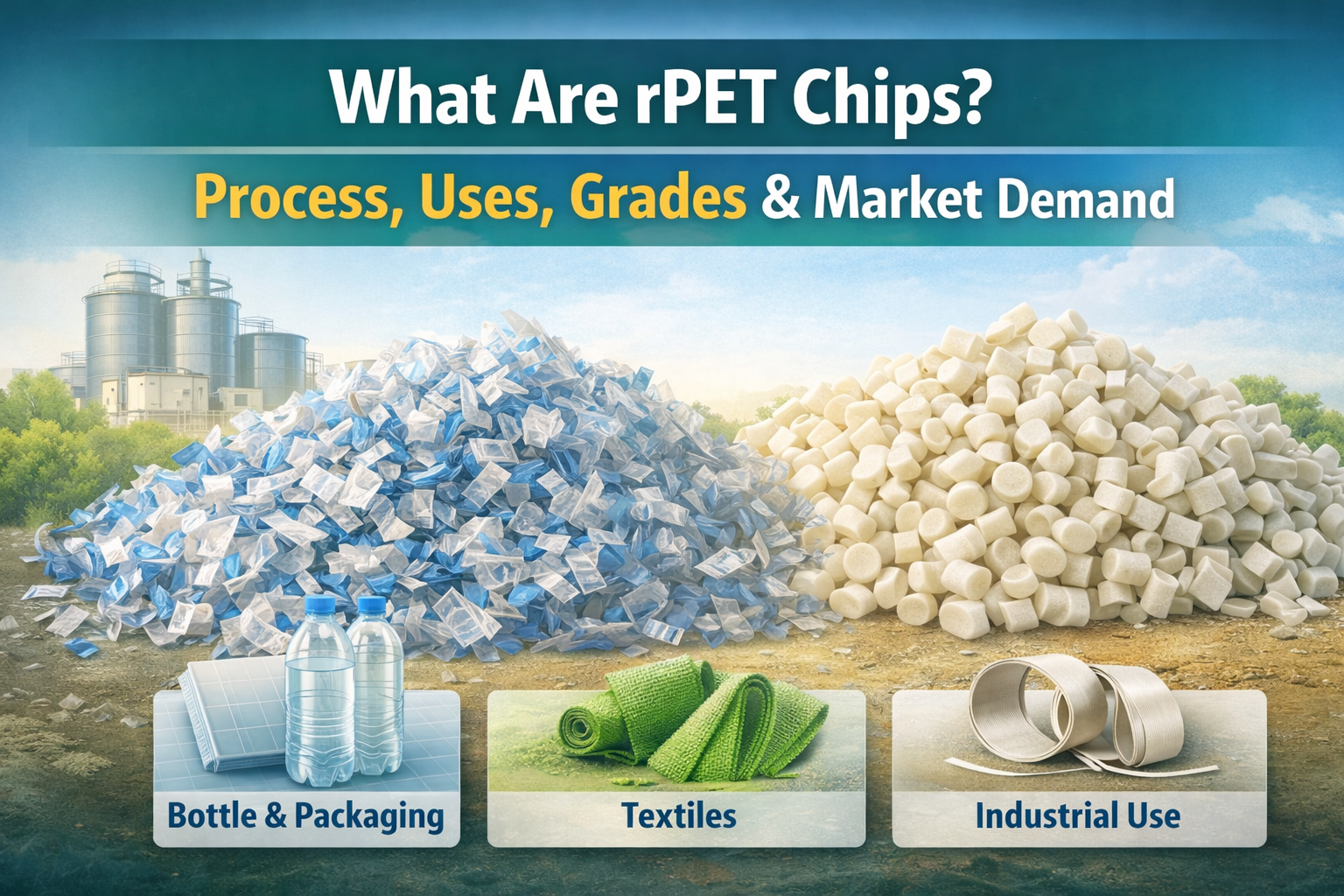
    What Are rPET Chips? Process, Uses, Grades & Market Demand

    With the rise of sustainability around the world, rPET chips have become an essential material in the market of recycled plastics. These types of plastics are created from post-consumer PET waste, like plastic bottles. This helps in raising the sustainability of plastics and also provides a material with a value equivalent to virgin PET. This article will describe rPET chips, their production process, their applications, types, and increasing demand.

    What Are rPET Chips?

    The rPET chips refer to recycled polyethylene terephthalate chips. This corresponds to small chips that are made from recycled PET. The chips function as raw material that can be used to produce bottles, fiber, and plastic products.
    Unlike traditional PET chips, rPET chips are obtained from recycled PET bottles and therefore qualify as very environmentally friendly and economical alternatives as well. Their use is also very important in popularizing the use of the “Circular Economy” concept.

    rPET chips manufacturing process:

    1. Collection of PET Waste

    The recycling process begins with the collection of PET bottles from waste collection centers, scrap vendors, and recycling schemes.

    2. Sorting and Segregation

    Bottles are sorted on the basis of material and color. Segregation of bottles helps ensure the quality of the bottles and prevents the entry of non-PET objects.

    3. Washing and Cleaning

    The used PET bottles undergo crushing and cleaning processes to remove the labels, caps, adhesives, as well as impurities. This is crucial, especially in the production of food-grade rPET chips.

    4. Flake Production

    The cleaned PET bottles are shredded to make rPET flakes, which are then washed and dried.

    5. Pelletizing of rPET Chips

    The flakes are melted, filtered, and extruded into rPET chips of uniform diameter and viscosity, ready for industrial processing.

    What Are rPET Chips Used For?

    rPET chips find their application in various sectors such as:
    • Bottle-to-bottle recycling of water and beverage containers
    • Textile production of polyester yarns and fibers
    • Packaging sheets and films
    • Strapping and injection molding products
    • Non-woven fabrics and industrial components
    Due to their versatility, rPET chips have emerged as the choice for manufacturers looking for environmentally responsible materials that do not impart any detrimental effects on the quality.

    Types & Grades of rPET Chips

    1. Food-Grade rPET Chips

    They are used for packaging food and drinks and are recognized to satisfy strict norms of purity and safety.

    2. Textile-Grade rPET Chips

    Mainly applied in fibers and yarns for making clothes, household textiles, as well as non-woven materials.

    3. Industrial-Grade rPET Chips

    For strapping, flat roll stock, and molded plastic products that do not come into contact with food.
    Each grade is developed depending on the purity, intrinsic viscosity (IV), and final application requirement.

    What is the difference between rPET Chips & rPET Flakes?

    • rPET flakes are shredded and cleaned fragments of PET bottles
    • rPET chips are processed, melted, and pelletized into flakes
    Chips are more consistent, easier to process, and more valuable when applied. They are better suited for advanced manufacturing.

    Market Demand for rPET Chips

    The market for rPET chips is expanding steadily due to:
    • Government regulations on plastic waste management
    • Brand pledges to use recycled materials
    • Increasing consumer awareness of the environment
    • Greater demand for sustainable packaging solutions
    • Impact of packaging
    The industrial sector has started to change from using virgin PET to rPET due to the need to reduce the carbon footprint, as well as meet the sustainability requirements.

    Why rPET Chips Are the Future of Sustainable Manufacturing

    Companies operating in the manufacturing sector It assists if rPET chips are used.
    • Less plastic waste is sent to the landfill.
    • Reduced greenhouse gas emissions
    • Save natural resources
    • Support circular economy efforts.
    With sustainability emerging as a requirement in business, rPET chips are expected to play a vital role in the future of plastic manufacturing.

    Conclusion

    rPET chips represent more than just reused plastics; they are the future of sustainable production for industrial applications. rPET chips are versatile, from packaging through to industrial use, and they are eco-friendly. By using high-quality rPET chips, companies can help build a brighter, more sustainable future.
  • From PET Bottles to rPET Products: How Recycling Works

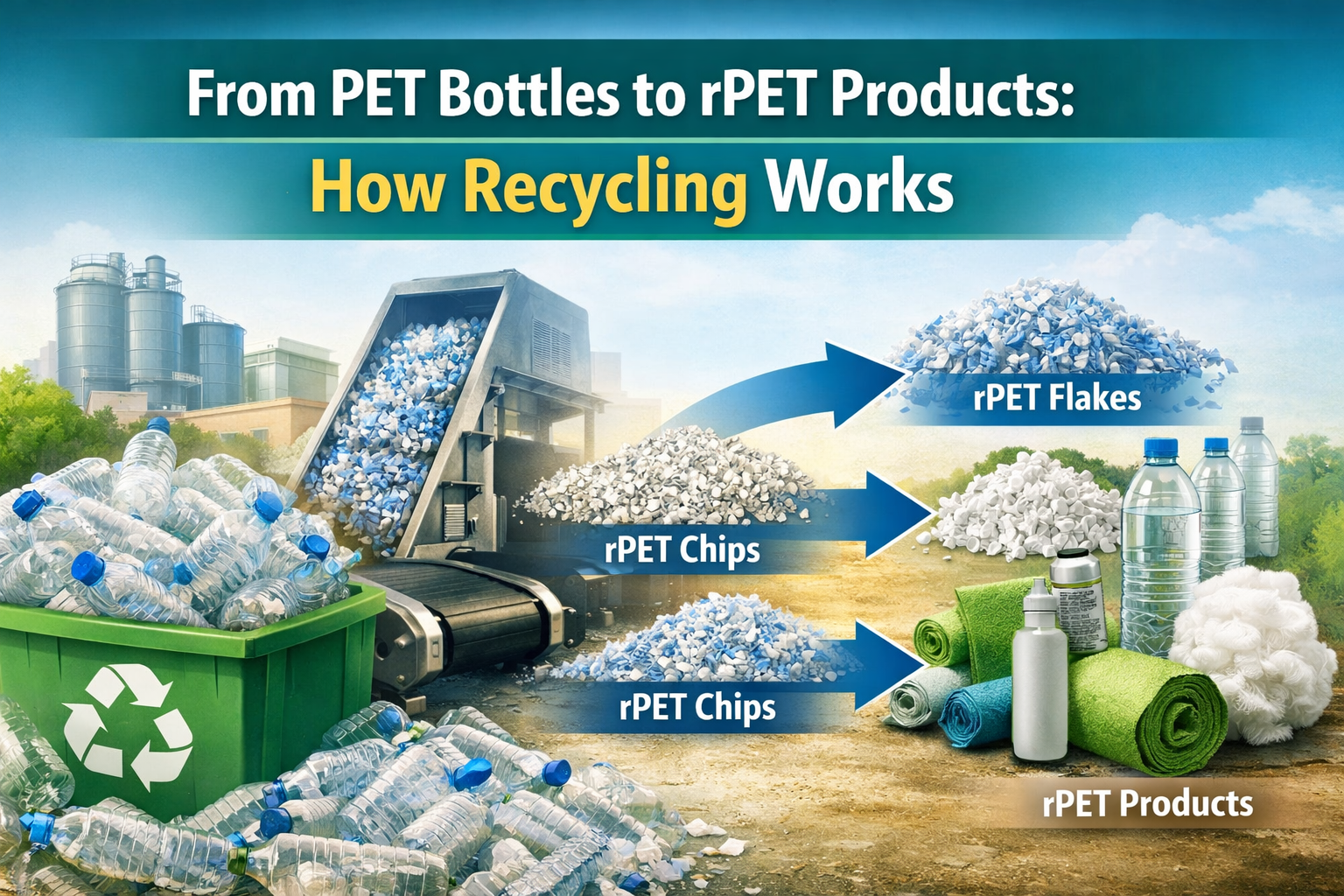
    From PET Bottles to rPET Products: How Recycling Works

    Plastic recycling constitutes an indispensable part in the chain of modern packaging and manufacturing systems. One of the most identifiable and thriving processes for recycling is converting used PET bottles into rPET products with great value. Knowledge of the process helps industries, brands, and consumers understand the value of a product made from recycled materials and its potential effect on production efficiency.

    What are PET bottles and rPET products?

    The polyethylene terephthalate bottles are used in beverages, food packaging, and household products because of their lightweight and strength. When these plastic bottles collect and enter the process of recycling, they convert into rPET product forms such as flakes, pellets, fibers and packaging materials.
    rPET materials still retain many of the properties of their virgin PET cousins and, therefore, can be repurposed for use in many different industries.

    Step-by-Step Process: From PET Bottles to rPET Products

    1. Collection & Sorting

    PET recycling involves the processes of collection of post-consumer PET bottles from households, commercial facilities, and waste management systems. Sorting into colour and type is done by using both manual and automated systems to ensure material consistency.

    2. Washing & Cleaning

    Bottles sorted intensive washing takes away the labels, caps, adhesives, and contaminants. Washing hot ensures high purity for production of quality rPET products.

    3. Shredding into PET Flakes

    Clean bottles are reduced to small pieces, called PET flakes. The flakes then undergo further cleaning and filtration to get rid of residual impurities, resulting in a consistent, recyclable raw material.

    4. Drying & Quality Control

    The PET flakes are then dried to a degree that minimizes moisture content and are put through strict quality checks. Flake size, colour consistency, and possible contamination levels are measured based on the industrial requirements for these parameters.

    5. Extrusion & Pelletizing

    During this stage, PET flakes are melted and extruded into rPET pellets or chips. These pellets act as the base material for manufacturing new rPET products.

    How rPET Products Are Manufactured

    After the rPET pellets have been produced, they are used in the following processes:

    • Packaging: rPET is used in the manufacture of bottles, containers, trays, and films.
    • Textiles: rPET pellets are converted into polyester fibers used for clothing and yarns made for home textiles.
    • Industrial Products: rPET is used in making strapping, sheets, and molded products.

    Due to the versatility of rPET, manufacturers have the opportunity to significantly replace virgin plastic with recyclate.

    Why rPET Recycling Is Important

    Recycling PET bottles to rPET products has several added advantages:
    • Plastic waste reduction in landfills.
    • Saves raw materials
    • supports efficient resource utilization.
    • Helps with meeting regulatory and compliance requirements
    These benefits make the recycling of PET a required part of modern material management strategies.

    Industries driving rPET demand.

    Several industries are speeding up the demand for rPET products:
    • Packaging & FMCG
    • Textile & apparel manufacturing
    • Automotive & construction
    • Consumer goods & logistics
    This demand continues to grow while companies are in need of reliable recycled raw materials.

    Final Thoughts

    From PET bottle collection to rPET product development, the cycle shows how recycling can turn waste into a useful resource. By learning about the technology behind PET recycling, companies can make intelligent choices regarding their source materials and methods of production. rPET products represent a pragmatic solution for industries focused on efficiency, quality, and long-term material availability.
  • High Quality rPET White Flakes: Packaging & Manufacturing Apps

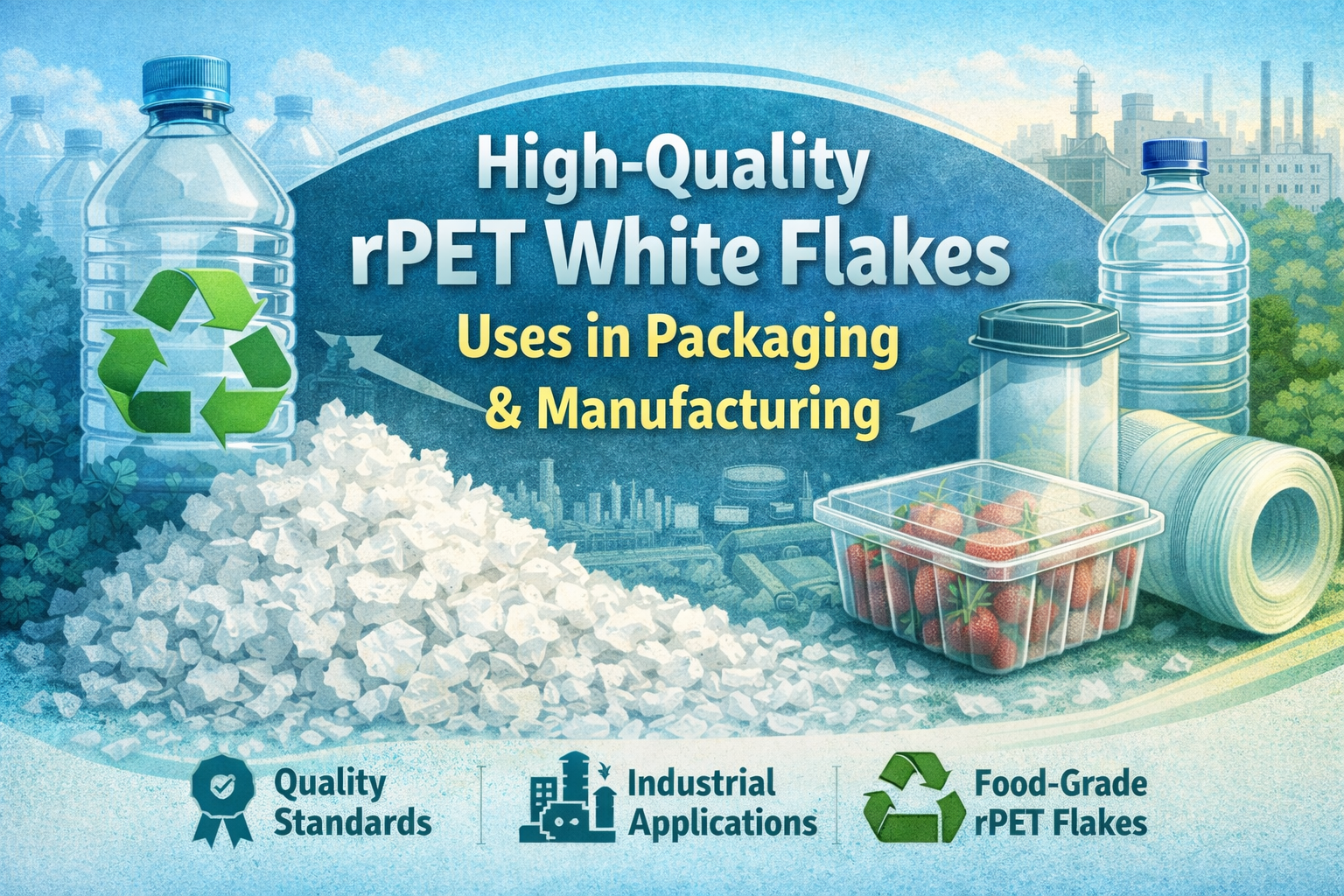
    High Quality rPET White Flakes: Packaging & Manufacturing Apps

    Various sectors are now shifting towards responsible material supply, and this is leading to the increasing demand for high-quality rPET white flakes. High-quality rPET white flakes can be used as raw material in various sectors because they are pure, have a uniform color, and perform well.

    What Are High-Quality rPET White Flakes?

    rPET white flakes are produced from post-consumer PET bottles using advanced recycling methods. The recycling processes involve sorting, washing, hot cleaning, as well as removing contaminants to produce white flakes of high whiteness and purity. High-quality rPET white flakes are of high enough standards to be applicable in the manufacture of packaging, clothing, as well as other industries.

    White rPET flakes are preferred for their clean appearance and property stability, making them suitable for applications where material consistency is paramount.

    Why Quality is Important in rPET White Flakes

    It directly influences the functionality, functionality, and economic viability. The superior quality rPET white flakes provide:

    • Low moisture content
    • High intrinsic viscosity (IV)
    • Low levels of PVC and metal contamination
    • Uniform Flake Sizes and Colors

    These attributes enable the manufacturers to ensure smooth processing, as well as the quality of the final products.

    Applications of rPET White Flakes in Packaging

    1. Bottle-to-Bottle Packaging

    High-quality white flakes made from rPET find numerous applications in the production of PET bottles. They can be produced as food-grade packaging materials after proper processing.

    2. Thermoformed Packaging

    The rPET white flakes are used for making trays, clamshells, and other consumer product containers. The material is clear and robust, which makes it suitable for the thermoforming process.

    3. Flexible & Rigid Packaging

    rPET white flakes are used by the manufacturer in the production of sheets and films used in rigid and semi-rigid packaging solutions developed by the firm.

    Applications of rPET White Flakes in Manufacturing

    1. Polyester Fibre Production

    rPET White Flakes are major raw materials in the production of recycled polyester staple fiber and filament yarn. Such fibers can be found in textiles, car interiors, and home furnishings.

    2. Strapping & Industrial Products

    Premium rPET flakes are utilized for PET strapping, ensuring the highest tensile strength for use in the packaging industry.

    3. Injection & Extrusion Applications

    rPET White Flakes: These are used for molded products and extrusion production that require strength and stiffness.

    Advantages of High Quality rPET White Flakes

    • Consistent material performance
    • Reduced dependence on virgin PET
    • Improved processing efficiency
    • Compliance with global packaging regulations
    • Cost stability for manufacturers

    These advantages make rPET white flakes a practical and reliable choice for large-scale manufacturing.

    Market Demand and Industry Growth

    There is an increasing demand for rPET white flakes because of the rising packaging consumption and recycling requirements all over the world. There is also a rising demand for high-quality production of rPET flakes.

    Export markets, particularly the packing industry and the textile industry, tend to require buyers with consistent quality or quality standards.

    Also Read: Why Brands Are Turning to Recycled Polyester Staple Fibre for the Future

    Conclusion

    Premium-quality rPET white flakes find important applications in the packaging and manufacturing sectors. The reliable characteristics and varied applications of rPET white flakes make this material an important one for manufacturing. Improved technology for recycling is expected to enhance the application of rPET white flakes in manufacturing.