Category: Blog

Your blog category

  • Recycle Polyester Staple Fiber Suppliers: What B2B Buyers Should Know

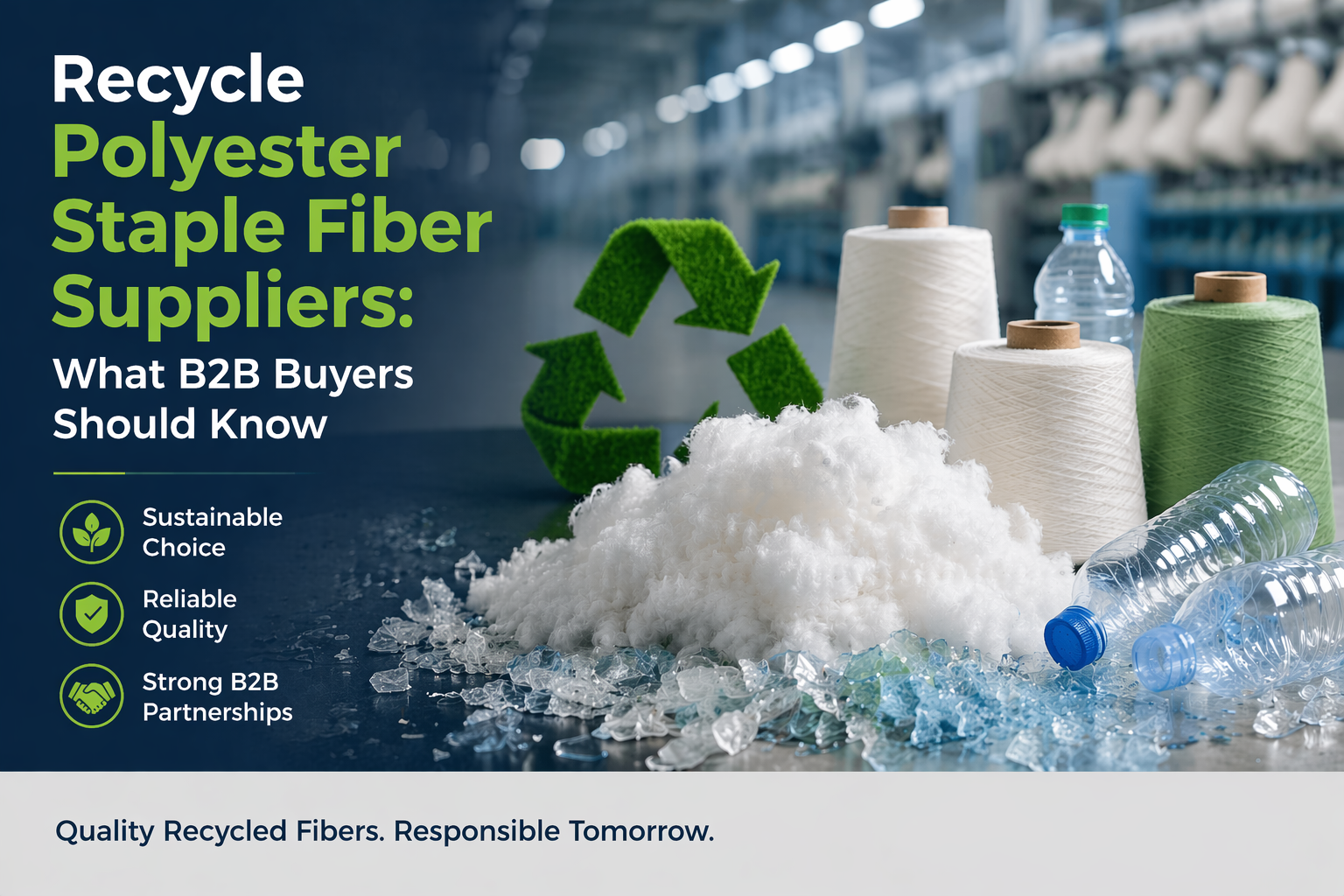
    Recycle Polyester Staple Fiber Suppliers: What B2B Buyers Should Know

    In today’s textile industry, things are changing fast. Earlier, most businesses focused only on cost and production speed. But now, sustainability has become just as important. More manufacturers are shifting toward eco-friendly raw materials, and recycle polyester staple fiber (RPSF) is quickly becoming a preferred choice.

    But for B2B buyers, one question always comes up:
    How do you choose the right supplier?

    Because in manufacturing, the supplier you choose directly impacts your product quality, timelines, and even your brand reputation.

    Let’s break it down in a simple, practical way.

    What is Recycle Polyester Staple Fiber?

    Recycle polyester staple fiber is made from recycled PET plastic, mainly used bottles. Instead of letting plastic go to waste, it gets processed into usable fiber for textiles and industrial applications.

    This makes it:

    • Environment-friendly
    • Cost-effective
    • Suitable for multiple uses like textiles, filling materials, and non-woven products

    For many businesses, it’s not just about sustainability anymore—it’s also about staying competitive in the market.

    What B2B Buyers Should Look for in a Supplier

    1. Consistent Quality

    This is the most important factor.

    If the fiber quality changes from batch to batch, it can create serious problems in production—uneven fabric, machine issues, and unhappy clients. A good supplier ensures consistency in fiber length, strength, and cleanliness every single time.

    2. Clear and Reliable Raw Material Sourcing

    Not all “recycled” materials are the same.

    A trustworthy supplier will be transparent about their sourcing and processing methods. Clean and properly processed raw material leads to better fiber quality, which directly affects your final product.

    3. Timely Delivery

    In B2B, delays are expensive.

    If your supplier cannot deliver on time, it affects your entire production cycle. Late deliveries can lead to missed deadlines and lost business opportunities. Always work with suppliers who have the capacity to handle bulk orders and maintain reliable timelines.

    4. Customization Options

    Every business has different requirements.

    Whether it’s denier, cut length, or specific application needs, a good supplier should be flexible enough to offer customization. This helps you maintain product quality without switching suppliers frequently.

    5. Balance Between Price and Quality

    Going for the cheapest option may seem attractive, but it often leads to bigger problems later.

    Smart B2B buyers focus on value rather than just price. A slightly better quality fiber can save you from production issues, rework, and customer complaints.

    Why RPSF is Becoming the Industry Standard

    The demand for sustainable products is no longer limited to a few brands. Today, even large manufacturers and exporters are moving towards recycled materials.

    Why?

    • Increasing environmental regulations
    • Growing awareness among consumers
    • Demand from international markets

    This means using recycle polyester staple fiber is not just a good choice—it’s becoming a necessary one.

    Choosing the Right Supplier is a Long-Term Decision

    In B2B, a supplier is not just a vendor—they are a partner.

    A reliable supplier supports your growth, helps you maintain consistency, and becomes a part of your production ecosystem. Making the right choice here can save you time, money, and stress in the long run.

    Also Read: Government Policies & Future of Plastic Recycling in India

    Rakshitam – A Partner You Can Rely On

    At Rakshitam, we understand what B2B buyers truly need—consistent quality, reliable supply, and long-term trust.

    Our recycle polyester staple fiber is manufactured with a strong focus on maintaining uniform quality across batches. We work closely with textile manufacturers and industrial buyers to understand their requirements and deliver accordingly.

    Whether you need bulk supply or customized specifications, our goal is simple:
    to support your business with dependable and sustainable solutions.

    If you’re looking for a supplier you can rely on, Rakshitam is ready to work with you.

    Let’s connect and build something long-term.
  • Government Policies and Future of Plastic Recycling in India: Regulations, Trends & Opportunities

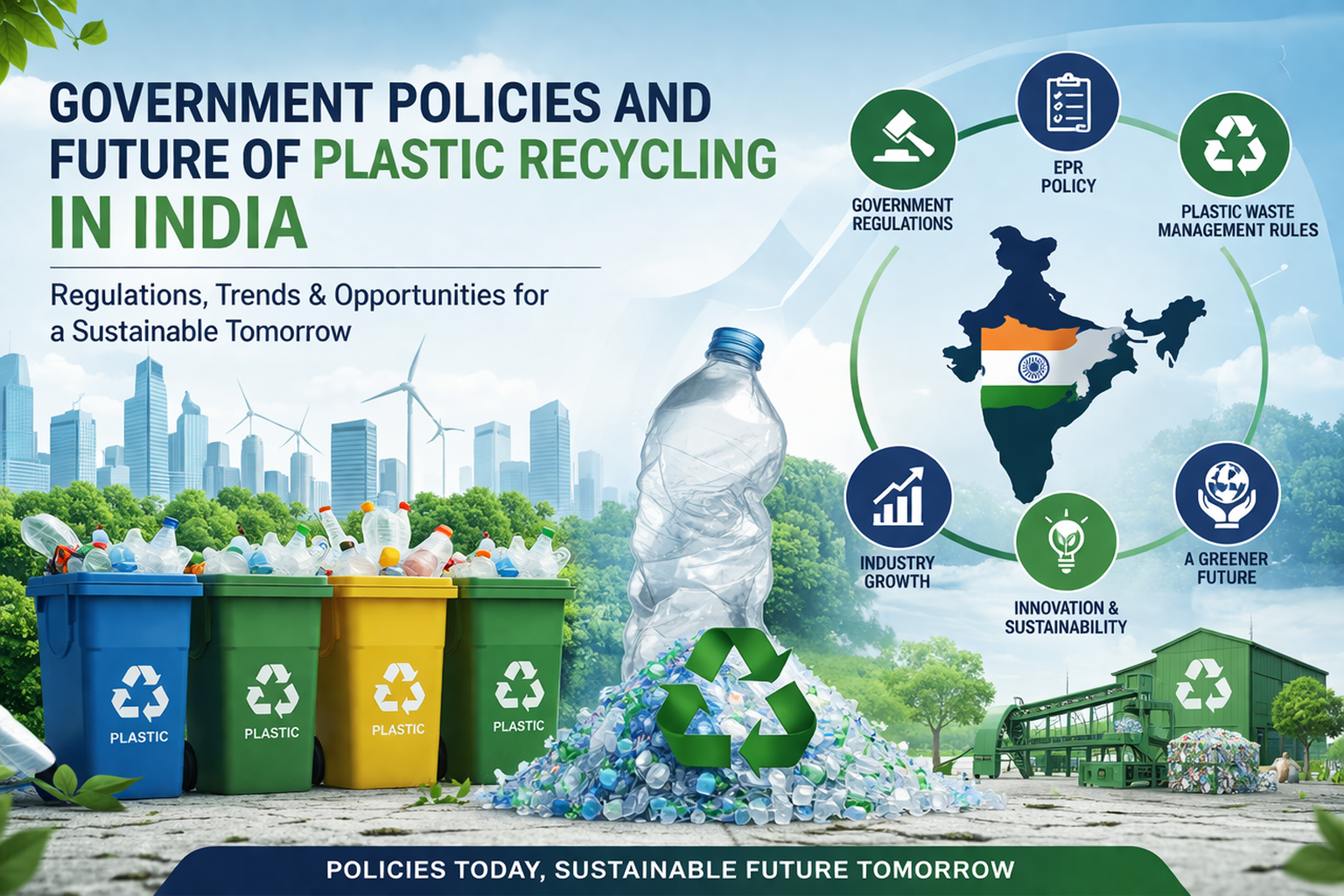
    Government Policies and Future of Plastic Recycling in India: Regulations, Trends & Opportunities

    Plastic waste has become one of the largest environmental challenges in India. With rapid urbanization and rising consumption, the country generates millions of tons of plastic waste every year. To address this problem, the government has rolled out several policies and regulations aimed at promoting recycling and cutting down plastic pollution. Understanding these government policies and the future of plastic recycling in India is vital for businesses, manufacturers, and environmental advocates.

    Overview of Plastic Recycling in India

    India is among the top countries in plastic recycling, with a large informal sector playing an important role in collecting and processing plastic waste. However, issues like improper waste sorting, poor infrastructure, and low awareness continue to hamper the effectiveness of recycling systems.

    To tackle these challenges, the government has established structured policies to enhance the plastic recycling ecosystem.

    Key Government Policies on Plastic Recycling

    1. Plastic Waste Management Rules (PWM), 2016

    The Plastic Waste Management Rules, 2016, marked an important step toward organized waste management. These rules introduced guidelines for waste sorting, collection, and recycling.

    Key highlights include:

    • Mandatory sorting of plastic waste
    • Responsibility of local authorities for waste management
    • Promotion of recycling and reuse practices

    2. Extended Producer Responsibility (EPR)

    One of the most significant policies is Extended Producer Responsibility (EPR). Under EPR, manufacturers, importers, and brand owners are responsible for handling the plastic waste generated from their products.

    This policy encourages companies to:

    • Use recyclable materials
    • Invest in recycling infrastructure.
    • Reduce plastic use

    3. Ban on Single-Use Plastics

    The Indian government has placed restrictions on single-use plastics, including items like plastic bags, straws, and cutlery. This move aims to cut plastic waste at the source and support sustainable alternatives.

    4. Swachh Bharat Mission

    The Swachh Bharat Mission has also enhanced waste management systems across the country. It promotes cleanliness, waste sorting, and recycling awareness at the community level.

    Trends Shaping the Future of Plastic Recycling in India

    Increased Use of Recycled Materials

    Industries are increasingly using recycled plastics like rPET for packaging and manufacturing. This change is driven by both regulatory demands and consumer interest in sustainable products.

    Technological Advancements

    Innovations in recycling technologies are enhancing the quality of recycled plastic, making it suitable for high-end applications such as food-grade packaging and industrial use.

    Growing Investment in Recycling Infrastructure

    Both government and private sectors are investing in modern recycling facilities to boost efficiency and capacity.

    Rising Consumer Awareness

    Consumers are becoming more aware of environmental issues, prompting brands to adopt eco-friendly packaging and recycling practices.

    Opportunities for Businesses

    The evolving regulatory landscape offers several opportunities for businesses:

    • Building recycling plants and infrastructure
    • Producing recycled materials like PET flakes and RPSF
    • Creating sustainable packaging solutions
    • Collaborating with government initiatives

    Companies that follow these policies can gain a competitive edge and enhance their brand image.

    Challenges in Plastic Recycling

    Despite progress, India still faces challenges like:

    • Inadequate waste sorting
    • Dependency on the informal sector
    • Limited awareness in rural areas
    • High costs of advanced recycling technologies

    Addressing these issues will be essential for achieving long-term sustainability goals.

    Also Read: Industrial Uses of PET Chips in Fibre, Film, and Bottle Manufacturing

    Conclusion

    The government policies and future of plastic recycling in India show a strong commitment to sustainability and environmental protection. With initiatives like EPR, plastic bans, and improved waste management rules, India is moving toward a more organized recycling system.

    As technology improves and awareness grows, plastic recycling in India is expected to expand significantly. Businesses that embrace sustainable practices and adhere to government policies will be crucial in shaping a cleaner and greener future.

  • Industrial Uses of PET Chips in Fibre, Film, and Bottle Manufacturing

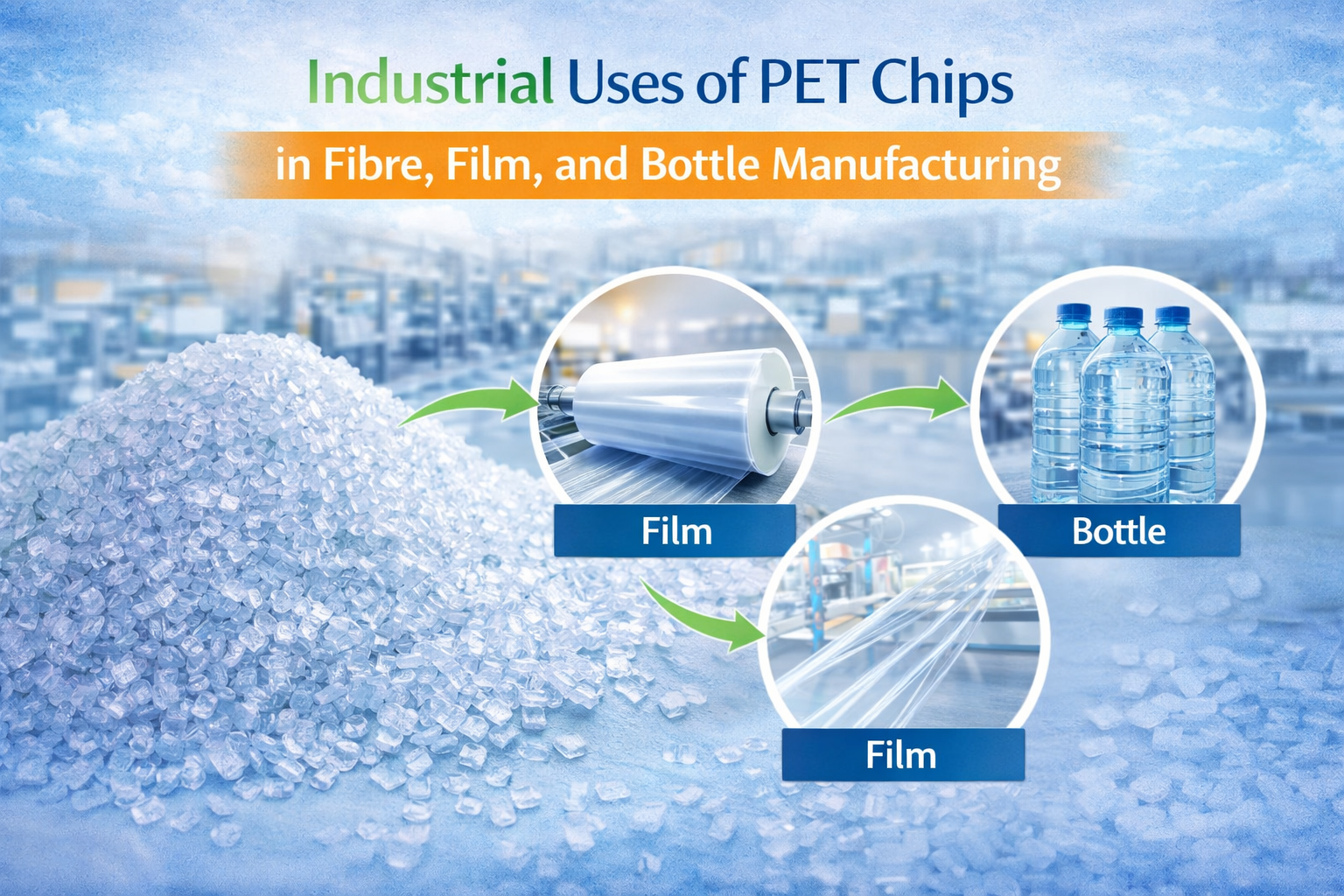
    Industrial Uses of PET Chips in Fibre, Film, and Bottle Manufacturing

    The global demand for sustainable, high-performance materials has increased the importance of PET chips in modern manufacturing. Made from Polyethylene Terephthalate (PET), these small plastic granules are key raw materials in industries like textile fibre production, packaging films, and bottle manufacturing.

    With advancements in recycling technologies, both virgin PET chips and recycled PET (rPET) chips are widely used across various sectors. This blog explores the industrial uses of PET chips in fibre, film, and bottle manufacturing, along with their benefits and applications.

    What Are PET Chips?

    PET chips are small, uniform plastic pellets made from either virgin raw materials or recycled PET bottles. These chips are known for their strength, clarity, chemical resistance, and durability, which make them suitable for a range of industrial applications.

    They serve as the base material for producing fibres, films, and bottles found in everyday products as well as industrial solutions.

    1. PET Chips in Fibre Manufacturing

    One of the largest applications of PET chips is in polyester fibre production.

    How It Works

    PET chips are melted and extruded through spinnerets to create fine filaments. These filaments are then processed into polyester staple fibre (PSF) or filament yarns.

    Industrial Applications

    • Textile and apparel manufacturing
    • Home furnishing products like pillows, cushions, and carpets
    • Automotive seat filling and insulation
    • Nonwoven fabrics for industrial use

    Benefits

    • High tensile strength
    • Lightweight and durable
    • Cost-effective for large-scale production

    PET chips play an important role in meeting the growing demand for sustainable textile materials, especially when sourced from recycled materials.

    2. PET Chips in Film Manufacturing

    PET chips are commonly used to produce plastic films for packaging and industrial use.

    How It Works

    The chips are melted and processed into thin sheets or films through extrusion and stretching techniques. These films are then treated to achieve specific properties like heat resistance or barrier performance.

    Industrial Applications

    • Food and beverage packaging films
    • Laminated sheets and flexible packaging
    • Electrical insulation films
    • Industrial wrapping materials

    Benefits

    • Excellent clarity and transparency
    • Strong barrier properties
    • Resistance to moisture and chemicals

    PET films are crucial for modern packaging solutions, providing durability and protection for products.

    3. PET Chips in Bottle Manufacturing

    PET chips are the main raw material for making plastic bottles, particularly in the beverage and packaging sectors.

    How It Works

    PET chips are melted and molded into preforms, which are then expanded into bottles using blow molding technology.

    Industrial Applications

    • Water and soft drink bottles
    • Edible oil and food containers
    • Personal care product packaging
    • Pharmaceutical bottles

    Benefits

    • Lightweight and shatter-resistant
    • High clarity and strength
    • Recyclable and eco-friendly

    The use of rPET chips in bottle manufacturing is on the rise as companies pursue sustainable packaging options.

    Advantages of PET Chips in Industrial Applications

    PET chips offer several benefits that make them a preferred material in various industries:

    • Versatile and suitable for multiple applications
    • Cost-efficient for large-scale manufacturing
    • Recyclable and environmentally friendly
    • Strong, durable, and lightweight
    • Supports circular economy practices

    These benefits contribute to their widespread use in fibre, film, and bottle production.

    Industry Trends and Future Outlook

    The demand for PET chips is growing rapidly due to an increased focus on sustainability and recycling. Governments and organizations are promoting the use of recycled PET (rPET) to cut down on plastic waste and carbon emissions.

    Technological improvements are also enhancing the quality of recycled PET chips, making them suitable for high-performance applications, including food-grade packaging.

    As industries shift toward eco-friendly materials, PET chips will remain a vital component in modern manufacturing.

    Also Read: How rPET Bottles Are Made and Why They Are Important for Plastic Recycling

    Conclusion

    The industrial uses of PET chips in fibre, film, and bottle manufacturing highlight their role as a versatile and sustainable raw material. From textile production and packaging films to bottle manufacturing, PET chips are essential in supporting various industries.

    With the growing focus on sustainability, the use of recycled PET chips is expected to rise, making them a key part of the future of industrial manufacturing.

  • How rPET Bottles Are Made and Why They Are Important for Plastic Recycling

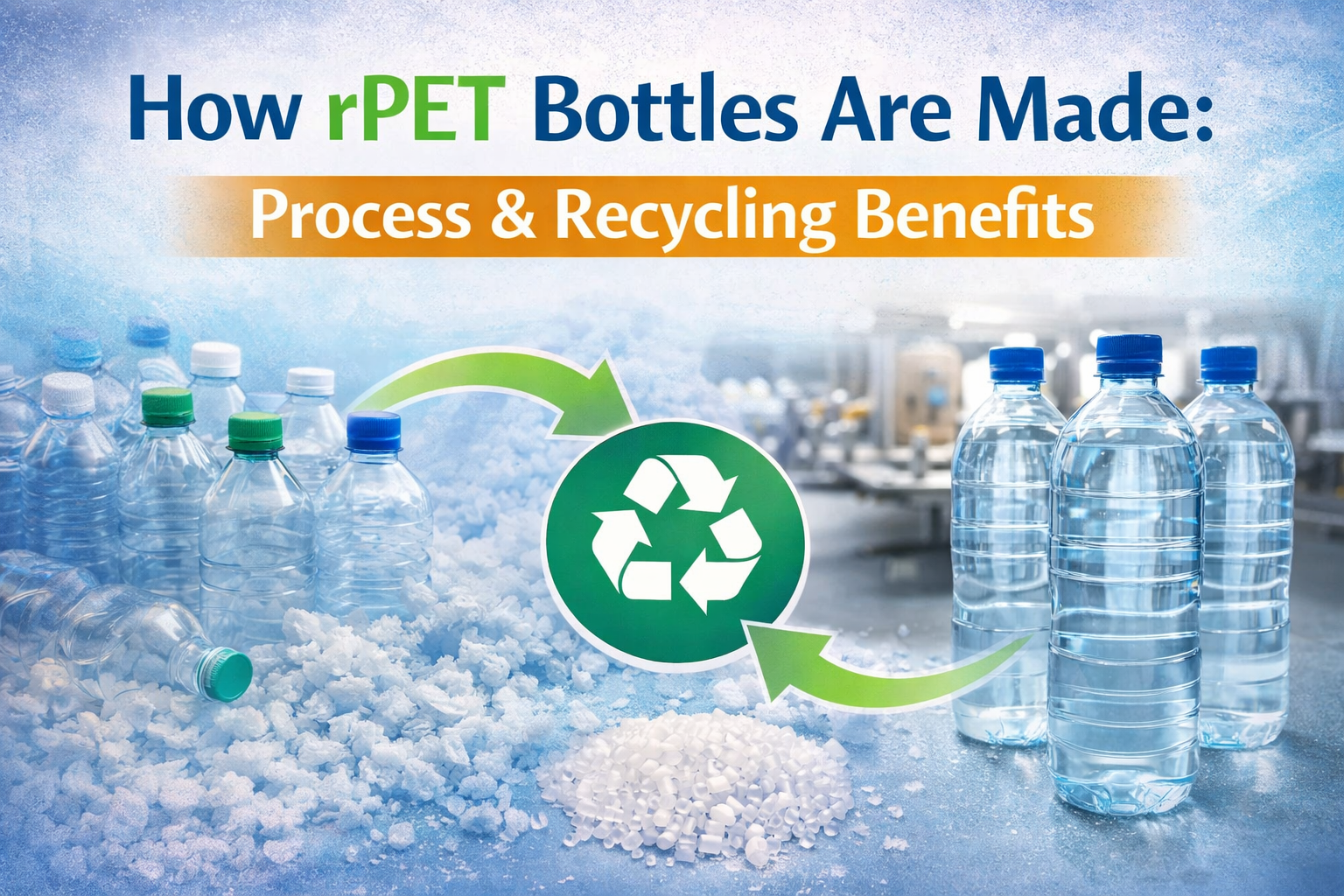
    How rPET Bottles Are Made and Why They Are Important for Plastic Recycling

    The growing concern about plastic waste has led to an increased need to find alternatives to plastic packaging. One such solution is offered by rPET bottles. These bottles are created by recycling used plastic bottles into reusable packaging. They play a crucial role in reducing environmental pollution.

    In this blog post, we shall examine how rPET bottles are created and their importance in the recycling process.

    What Are rPET Bottles?

    The term rPET means Recycled Polyethylene Terephthalate, which refers to bottles made from recycled PET plastic. Rather than using new plastic from petroleum sources, the rPET manufacturing process begins with the recycling of used bottles and converting them to new bottles.

    Also, rPET bottles are used for packaging beverages, food items, and personal care products because they are as strong, clear, and durable as new Polyethylene bottles.

    Stage-by-Stage Explanation of the Manufacturing of rPET Bottles

    There is an established process for both recycling and manufacturing for rPET bottles.

    1. Collection of Discarded PET Bottles

    The process begins with collecting used PET bottles from homes, recycling centers, and waste management systems. There are workers who separate the bottles based on the different types of plastics.

    2. Sorting and Separation

    The workers who sorted the bottles have them cleaned and sorted by colors and different types of materials. They extract non-PET components, removing caps, labels, etc., so that the desired material is of good quality.

    3. Washing and Cleaning

    The bottles that have already been sorted through are thoroughly cleaned and washed of the substances that are glued to the bottles and other impurities.

    4. Shredding to Obtain PET Flakes

    The bottles that are clean and sorted are processed through a machine that shreds them and produces small flakes of PET. These flakes are cleaned and dried to achieve homogeneity.

    5. Melting and Pelletizing

    The PET flakes are melted and made into small granules known as rPET chips or pellets. These pellets serve as the raw material for making new bottles.

    6. Bottle Manufacturing

    The rPET pellets are melted again and formed into preforms. These preforms are heated and blown into the shape of bottles using blow molding technology.

    Why rPET Bottles Are Important for Plastic Recycling

    1. Reduces Plastic Waste: rPET bottles help reduce plastic waste by reusing existing materials instead of throwing them in landfills or oceans.
    2. Supports Circular Economy: Recycling PET bottles into new ones creates a closed-loop system, where materials are reused continuously. This approach reduces reliance on raw resources.
    3. Lowers Carbon Footprint: Making rPET bottles uses less energy than producing new plastic, leading to lower greenhouse gas emissions.
    4. Conserves Natural Resources: By cutting down the need for petroleum-based raw materials, rPET production helps preserve natural resources.
    5. Encourages Sustainable Packaging: Many large brands are choosing rPET bottles to achieve sustainability goals and lessen their environmental impact.

    Applications of rPET Bottles

    rPET bottles are widely used in various industries because of their reliability and eco-friendly characteristics.

    • Beverage packaging (water, soft drinks, juices)
    • Food packaging containers
    • Personal care and cosmetic products
    • Pharmaceutical packaging

    Future of rPET Bottles

    The demand for rPET bottles is rising as governments and organizations implement stricter recycling rules. Improvements in recycling technology are enhancing the quality of recycled plastic, making it more suitable for food-grade applications.

    As awareness of sustainability grows, rPET bottles are likely to become a standard in packaging industries worldwide.

    Also Read: Recycled Polyester Staple Fibre in Nonwoven Applications: Performance Comparison and Key Benefits

    Conclusion

    Learning how rPET bottles are made emphasizes the importance of recycling in reducing plastic pollution. By turning used PET bottles into new packaging materials, rPET supports sustainable manufacturing and protects the environment.

    As industries continue to embrace eco-friendly solutions, rPET bottles will be essential for creating a cleaner and more sustainable future.

  • Recycled Polyester Staple Fibre in Nonwoven Applications: Performance Comparison and Key Benefits

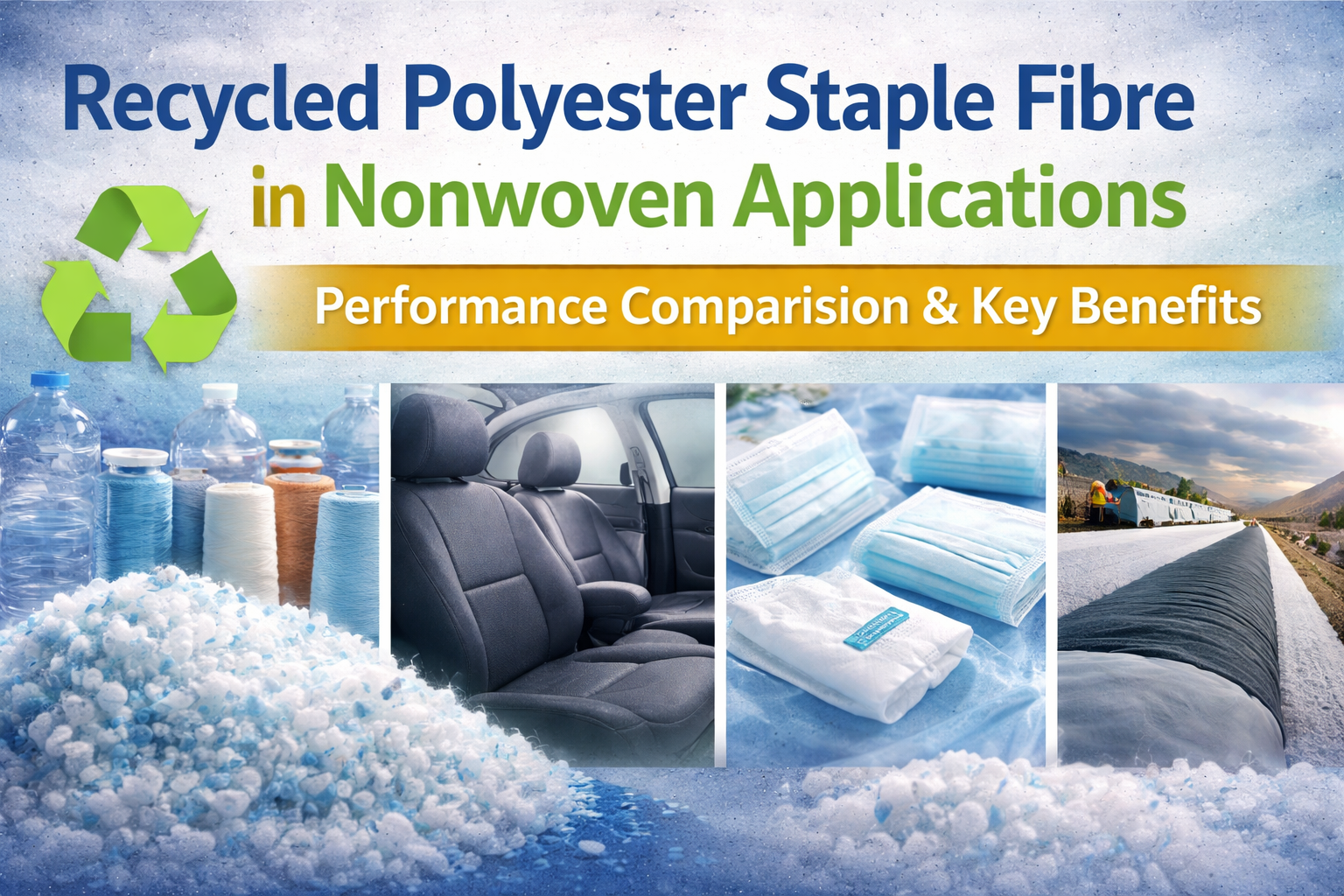
    Recycled Polyester Staple Fibre in Nonwoven Applications: Performance Comparison and Key Benefits

    The demand for sustainable materials in industrial manufacturing has led to the rapid growth of Recycled Polyester Staple Fibre (RPSF). In the nonwoven sector, RPSF has become a popular choice over virgin polyester because it is eco-friendly, cost-effective, and dependable.

    Nonwoven fabrics are widely used in industries such as automotive, construction, healthcare, and packaging. This article compares the performance of recycled polyester staple fibre in nonwoven applications and highlights its key benefits.

    What Does RPSF Mean in Nonwoven Applications?

    RPSF stands for Recycled Polyester Staple Fibre which is produced by recycling Polyethylene Terephthalate (PET) bottles and polyester waste into short recycled fibres. These fibres are then bonded by the manufacturers using either a mechanical, thermal or a chemical way, to produce nonwoven materials.

    The nonwoven materials produced from RPSF are used in the production of geotextiles, insulation materials, filters, hygiene products and automotive interiors.

    Performance Comparison: RPSF versus Virgin Polyester

    Understanding how the RPSF performs in regards to the virgin polyester is crucial for manufacturers.

    1. Strength and Durability

    When processed correctly, RPSF will provide tensile strength comparable to virgin polyester. The latest advancements in recycling technology have allowed for consistent fibre quality which is why RPSF is ideal for industrial nonwoven applications.

    2. Thermal and Insulation Properties

    RPSF is ideal for automotive insulation and construction materials as it has great thermal resistance, which helps to manage and improve energy efficiency.

    3. Moisture Resistance

    RPSF has a natural resistance to moisture and is ideal for applications such as hygiene products, filtration systems, and outdoor uses. This is the same as virgin polyester.

    4. Cost Efficiency

    RPSF’s lower cost is one of the main advantages compared to virgin polyester. This makes it attractive for manufacturers that want to reduce production costs and still get a desirable outcome.

    5. Environmental Impact.

    RPSF contributes positively to the environment by recycling plastic waste. Producing RPSF uses comparatively less energy than the production of virgin polyester, resulting in less carbon emissions.

    Key Benefits of RPSF in Nonwoven Applications

    Sustainable Material

    RPSF supports eco-friendly manufacturing by reducing plastic waste and encouraging recycling. It helps build a circular economy.

    Versatility

    RPSF can be used in various nonwoven products, including:

    • Geotextiles for construction
    • Automotive insulation materials
    • Industrial filters
    • Medical and hygiene products
    • Packaging materials

    Lightweight and Flexible

    Nonwoven fabrics made from RPSF are lightweight and flexible, making them easy to handle for different industrial applications.

    Consistent Quality

    Advanced recycling processes allow manufacturers to achieve consistent fibre quality, ensuring reliable performance across applications.

    Applications of RPSF-Based Nonwoven Fabrics

    The use of RPSF in nonwoven applications is expanding rapidly across industries.

    Common applications include:

    • Automotive industry: insulation, carpets, and soundproofing materials
    • Construction sector: geotextiles and roofing materials
    • Healthcare industry: masks, wipes, and hygiene products
    • Packaging industry: protective and cushioning materials

    These applications show the versatility and growing importance of recycled polyester fibres.

    Industry Trends and Future Outlook

    The global push for sustainability is driving demand for recycled materials like RPSF. Governments and organizations are introducing regulations to cut plastic waste, encouraging industries to use eco-friendly options.

    Improvements in recycling technology are also enhancing the quality and performance of recycled fibres, making them more competitive with virgin materials.

    As a result, RPSF is expected to play a significant role in the future of nonwoven manufacturing.

    Also Read: India’s rPET Flake Market: Clear vs Green PET Flakes, Demand, Pricing & Future Outlook

    Conclusion

    Recycled polyester staple fiber (RPSF) has positive attributes in the nonwoven sector, and its comparability to virgin polyester is a sign of a strong, durable, and economical substitute. The fiber’s performance and versatility, coupled with the recycling process to produce RPSF, provides an industrially relevant fiber.

    With a focus on increasing sustainability, RPSF will be a valuable fiber in the development of sustainable nonwoven innovations.

  • India’s rPET Flake Market: Clear vs Green PET Flakes, Demand, Pricing & Future Outlook

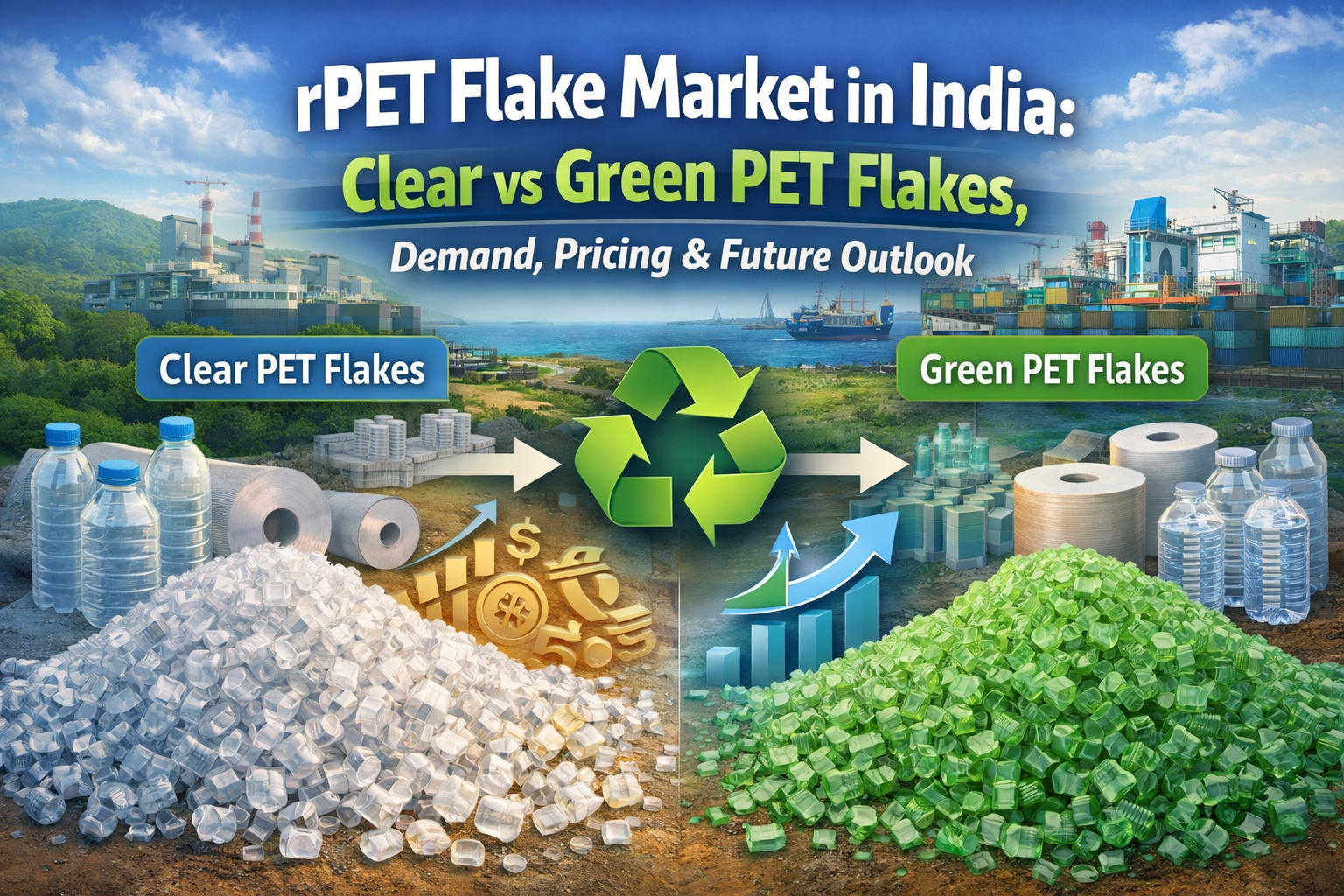
    India’s rPET Flake Market: Clear vs Green PET Flakes, Demand, Pricing & Future Outlook

    With the global emphasis on sustainability, plastic recycling in India is becoming a major industry, with rPET (recycled polyethylene terephthalate) flakes being one of the most valuable commodities. rPET flakes are used in textiles, packaging, and many other industrial products. rPET flakes, especially the clear and green variants, are in high demand in India. This blog covers the entire rPET flake market in India, including the various types, market demand, prices, and possible future growth.

    What are rPET flakes?

    rPET flakes are made by recycling used PET (polyethylene terephthalate) plastic, most often plastic bottles and containers. The plastics are sorted, washed, and then shredded and processed into small flakes. The flakes can then be used in new manufacturing processes. rPET flakes can be categorized based on the source material used, and in this case, they are divided into two main types, which are clear and green.

    Key Differences Between Clear and Green PET Flakes

    rPET Flakes That Are Clear

    Because of their transparency, clear plastic flakes come from clear PET bottles and are particularly high in demand because of their high purity, and potential multiple flexible uses. Flakes of clear plastic are typically utilized in the following applications:
    • Production of polyester fiber
    • High-quality plastic products
    • Packaging at a food-grade level (after some additional processing)

    rPET Flakes That Are Green

    Flakes of green plastic come from colored PET bottles—specifically, green soft drink bottles. Although their value is marginally less than that of clear flakes, there is still a high demand for green flakes in the following applications:
    • Production of textiles
    • Strapping and other industrial uses
    • Non-food-grade packaging
    Pricing and demand are mostly influenced by the color, purity, and range of uses.

    Market Analysis of rPET Flakes in India

    Recycling industries in India are growing because of government support and rising environmental concerns from the public. rPET flakes are used in several growing segments, including:
    • Textile: A large consumer, particularly in making recycled polyester staple fiber (RPSF)
    • Packaging: Rapidly increasing preference for sustainable packaging
    • Automotive & Industrial: Insulation, strapping, and molded products
    Demands for rPET flakes will continue to grow because sustainable recycled products are used in all industries, including large multinational corporations, which produces positive downward pressure on the price of rPET flakes.

    Pricing of rPET Flakes in India

    The price of rPET flakes in India is influenced by several different parameters, including:
    • Quality and purity (transparency)
    • Color and level of contamination
    • Demand and supply of the market
    • Crude oil price and virgin PET price
    Because of their exponentially wide range of applications, clear rPET flakes are sold at a higher price than all other rPET flakes. In contrast, all other rPET flakes, including green rPET flakes, are offered at a more economical price for use in the industry.

    Possible Expansion of the rPET Flake Market in India

    There are a number of reasons why the rPET Flake Market in India has a very positive future. Some of them are:
    • In India, there are a number of government polices that promote the recycling of plastics and efficient waste management systems.
    • Several large companies have made public commitments to promote sustainability through the use of recycled plastic in their packaging.
    • Demand for recycled plastics is increasing across the globe.
    • Improved recycling technologies have increased the quality of the recycled plastics.
    India’s cost-effectiveness and the right growing infrastructure offer the potential to be a world leader in the recycling of PET.

    Conclusion

    The rPET flake market in India is expanding quickly, with clear and green PET flakes playing a crucial role in sustainable manufacturing. While clear flakes lead in terms of quality and price, green flakes continue to meet essential industrial needs. As industries work toward eco-friendly solutions, the importance of rPET flakes will only grow in the coming years.
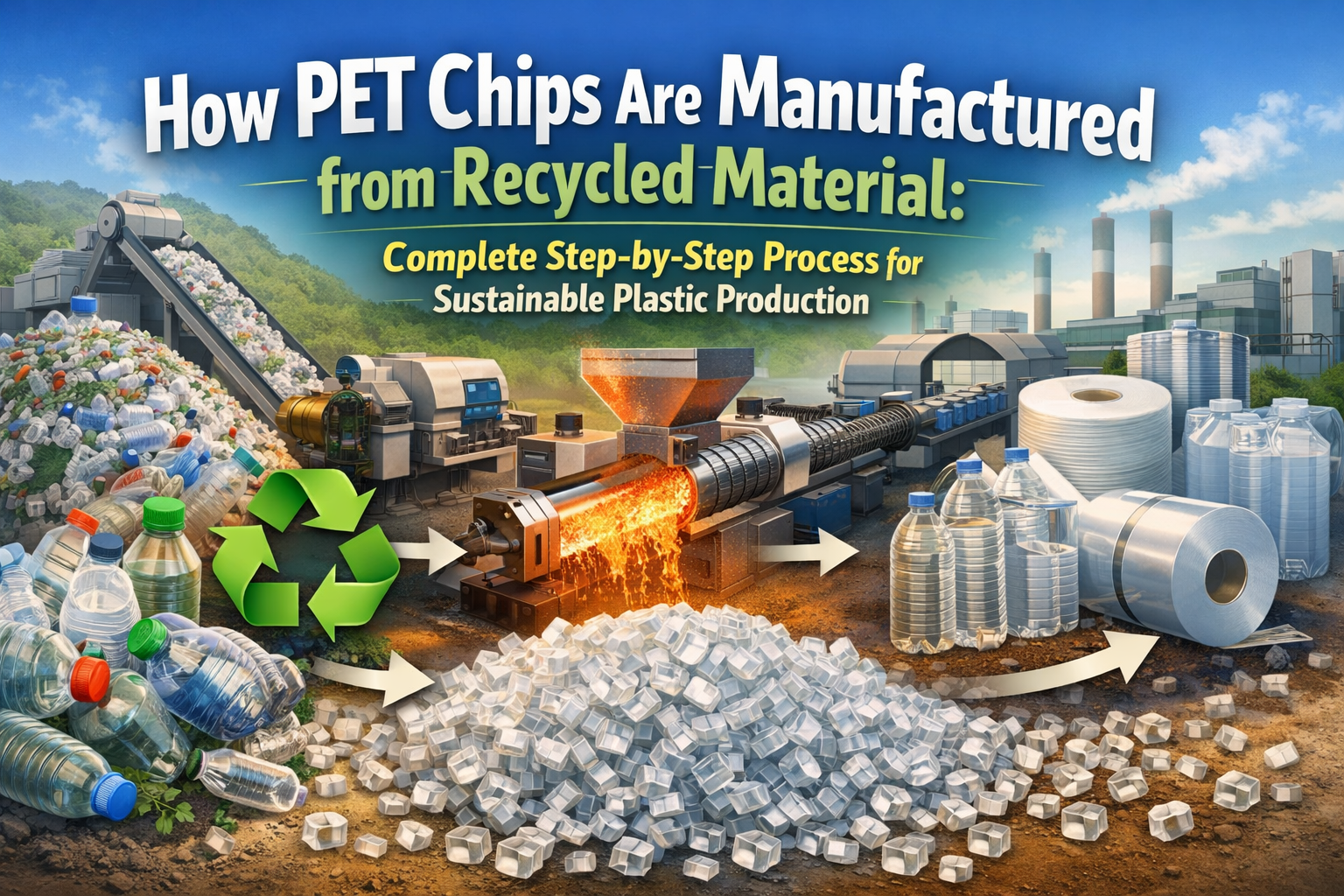
  • How PET Chips Are Made from Recycled Material: Step-by-Step Process for Sustainable Plastic Production

    How PET Chips Are Made from Recycled Material: Step-by-Step Process for Sustainable Plastic Production

    As the demand for sustainable materials grows, industries around the world are looking for recycling solutions to lower their environmental impact. One such innovation is the production of PET chips from recycled materials. These chips are essential for making fibers, packaging materials, and plastic products. But how are PET chips made from recycled plastic? Let’s break down the process step by step.

    What Are PET Chips?

    PET (Polyethylene Terephthalate) chips are small granules used as raw materials in various industries like textiles, packaging, and bottling. When they come from recycled sources, they are called rPET chips, offering an eco-friendly alternative to new plastic.

    Step-by-Step Process of Making PET Chips from Recycled Material

    1. Collection of Plastic Waste

    The process begins with collecting post-consumer PET waste, mainly plastic bottles. These materials come from recycling centers, households, and industrial waste streams.

    1. Sorting and Segregation

    Collected plastic is sorted by color, type, and quality. This step is important to ensure the final PET chips meet industry standards. Contaminants like labels, caps, and non-PET materials are removed.

    1. Washing and Cleaning

    The sorted plastic undergoes thorough washing to remove dirt, adhesives, and impurities. Hot washing and chemical treatments are often used to achieve high purity levels.

    1. Shredding into Flakes

    Clean PET bottles are then shredded into small pieces known as PET flakes. These flakes serve as the base material for further processing.

    1. Drying Process

    Removing moisture is crucial before melting. The flakes are dried using specialized equipment to prevent defects in the final product.

    1. Melting and Extrusion

    The dried PET flakes are melted at high temperatures and pushed through an extruder. This process turns the flakes into a molten form.

    1. Filtration and Purification

    The molten plastic is filtered to remove any remaining impurities. Filtration systems ensure high-quality output suitable for industrial use.

    1. Pelletizing into PET Chips

    Finally, the purified molten plastic is cooled and cut into small, uniform granules known as PET chips. These chips are now ready for reuse in manufacturing processes.

    Benefits of Using Recycled PET Chips

    • Eco-Friendly: Reduces plastic waste and lowers environmental pollution.
    • Energy Efficient: Uses less energy compared to new plastic production
    • Cost-Effective: Helps manufacturers lower raw material costs.
    • Versatile Use: Widely used in textiles, packaging, and automotive industries

    Applications of rPET Chips

    Recycled PET chips are used in:

    • Polyester fiber manufacturing
    • Packaging films
    • Bottles and containers
    • Home furnishings and apparel

    Also Read: How RPSF Is Used in Automotive, Home Furnishing, and Apparel Industries

    Conclusion

    Making PET chips from recycled material is an important step toward a circular economy. By turning plastic waste into valuable raw material, industries can greatly lower their carbon footprint while keeping product quality. As sustainability becomes a global focus, rPET chips are likely to play an even bigger role in the future of manufacturing.

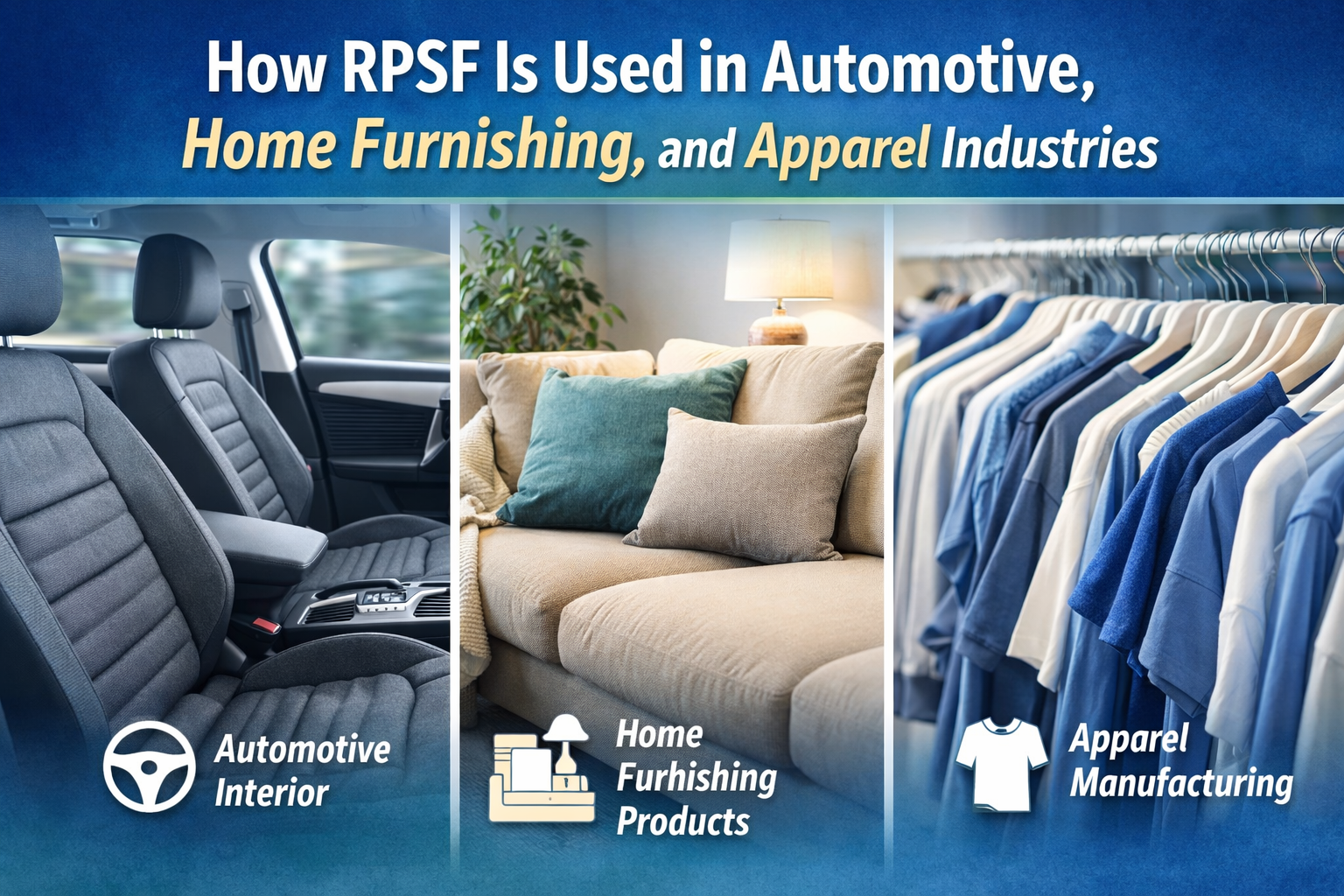
  • How RPSF Is Used in Automotive, Home Furnishing, and Apparel Industries

    How RPSF Is Used in Automotive, Home Furnishing, and Apparel Industries

    Recycled Polyester Staple Fibre (RPSF) is an essential component in contemporary manufacturing industries owing to its eco-friendliness, strength, and cost-effectiveness. RPSF is manufactured from recycled plastic bottles and plastic waste, thereby contributing to the prevention of environmental pollution.

    Today, RPSF is commonly used in automotive, home furnishing, and clothing industries, which are some of the industries that use RPSF to manufacture eco-friendly and high-performance products.

    As the global need for eco-friendly materials is on the rise, manufacturers are increasingly opting for RPSF as a trustworthy substitute for polyester.

    What Is RPSF?

    RPSF, or Recycled Polyester Staple Fibre, is defined as a man-made fibre manufactured from recycled PET plastic bottles and other forms of polyester waste materials. A unique recycling technique is employed to recycle plastic waste materials, which involves cleaning, cutting, melting, and finally transforming them into strong polyester fibres.

    Fibres are commonly used for different purposes in various industries owing to their excellent properties, such as strength, flexibility, light weight, and moisture resistance.

    RPSF Applications in the Automotive Industry

    The automotive industry uses RPSF in many interior and insulation components. Automakers prefer RPSF because it is lightweight, durable, and environmentally friendly.

    Common Automotive Uses of RPSF

    1. Car Seat Filling  

    RPSF is widely used as a filling material in car seats and cushions. It provides comfort, resilience, and long-lasting shape retention.

    1. Interior Insulation Materials  

    Automotive manufacturers use RPSF in insulation layers for doors, roofs, and floors. These materials help reduce noise and improve thermal insulation inside vehicles.

    1. Carpets and Floor Mats  

    Many car carpets and floor mats are produced using recycled polyester fibres, including RPSF. These fibres offer strength and wear resistance.

    1. Sound Absorption Components  

    RPSF-based nonwoven fabrics are used in soundproofing panels to improve acoustic comfort in vehicles.

    By using recycled materials like RPSF, automotive companies can reduce their carbon footprint while meeting sustainability goals.

    RPSF in Home Furnishing Products

    Another major application of RPSF is in the home furnishing industry. Due to its softness, resilience, and affordability, RPSF is widely used in household products.

    Common Home Furnishing Applications

    1. Pillows and Cushions  

    RPSF is commonly used as a filling material in pillows and cushions because of its soft texture and durability.

    1. Mattresses and Quilts  

    Many mattress and quilt manufacturers use RPSF filling, as it provides comfort while maintaining shape over time.

    1. Sofa and Furniture Filling  

    Furniture manufacturers use RPSF for sofa padding and upholstery filling. It provides bulk and comfort while keeping costs manageable.

    1. Carpets and Rugs  

    RPSF fibres are also used in carpets and rugs because of their durability and wear resistance.

    These applications help create sustainable home products while reducing dependence on virgin synthetic fibres.

    RPSF in Apparel and Textile Manufacturing

    The apparel and textile industry is one of the largest users of recycled polyester fibres. RPSF is used in spinning yarns and producing fabrics that are later turned into garments.

    Textile and Apparel Applications

    1. Blended Yarns  

    RPSF is blended with cotton, viscose, or other fibres to produce yarns used in fabric manufacturing.

    1. Nonwoven Fabrics  

    Nonwoven textiles made from RPSF are used in interlining, padding, and technical textiles.

    1. Sustainable Clothing  

    Many clothing brands now use recycled polyester fibres to produce eco-friendly garments such as jackets, sportswear, and casual apparel.

    1. Industrial Textiles  

    RPSF is also used in technical textiles such as filters, geotextiles, and protective fabrics.

    Using recycled fibres allows fashion and textile brands to support circular economy practices and reduce environmental impact.

    Benefits of Using RPSF Across Industries

    RPSF offers several advantages that make it suitable for automotive, home furnishing, and apparel applications.

    Key benefits include:

    • Reduces plastic waste by recycling PET bottles  
    • Supports sustainable manufacturing practices  
    • Provides durable, lightweight fibre  
    • Cost-effective compared to virgin polyester  
    • Suitable for multiple industrial applications  

    Because of these benefits, the demand for RPSF continues to grow globally.

    Also Read: Regenerated PSF Manufacturing Process from Recycled PET Bottles

    Conclusion

    The use of Recycled Polyester Staple Fibre (RPSF) in automotive, home furnishing, and apparel industries highlights the importance of sustainable materials in modern manufacturing. By transforming plastic waste into valuable fibres, RPSF helps reduce environmental pollution while supporting efficient production processes.

    As sustainability becomes a priority for industries worldwide, RPSF will continue to play a crucial role in creating eco-friendly products for everyday use.

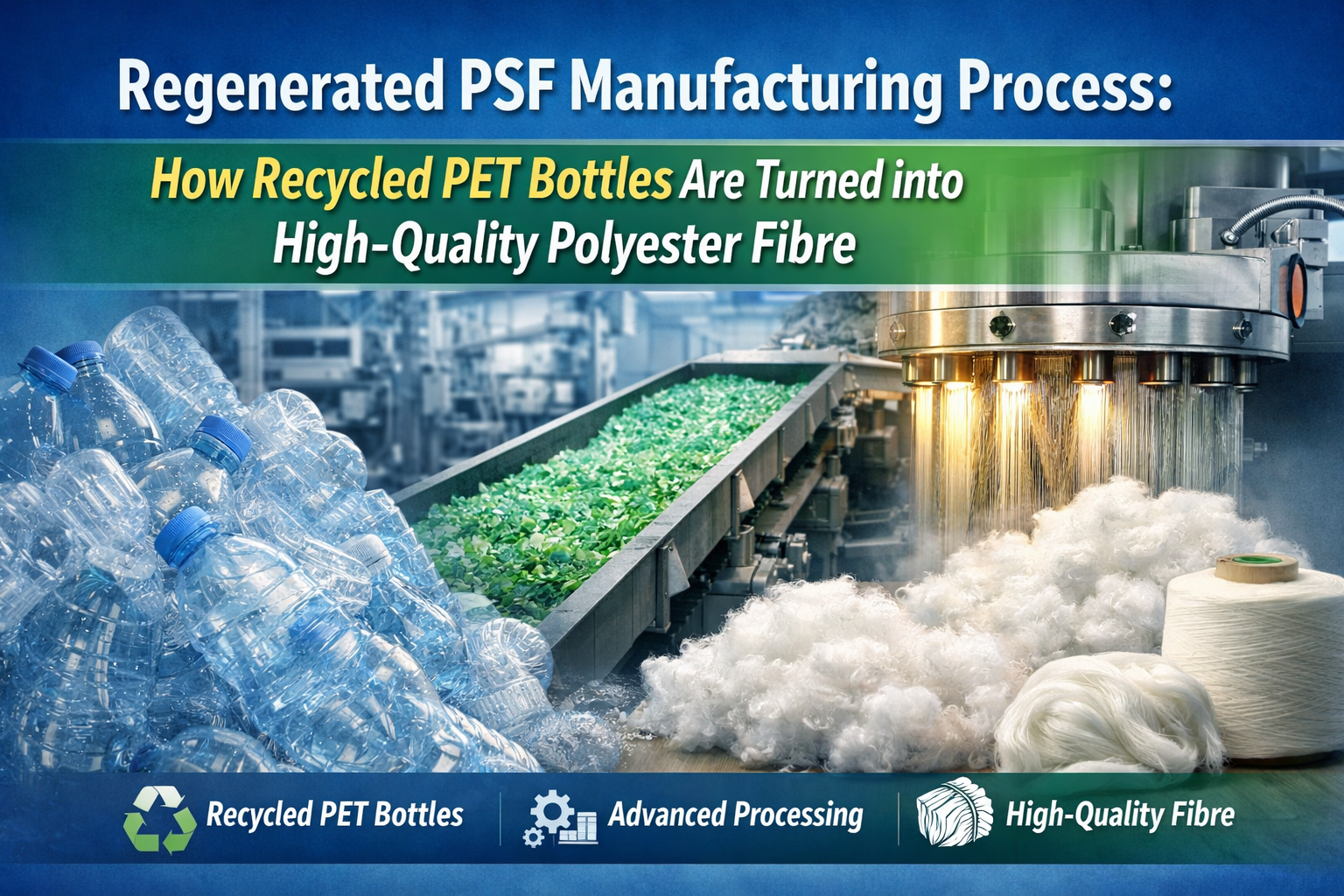
  • Regenerated PSF Manufacturing Process: How Recycled PET Bottles Are Turned into High-Quality Polyester Fibre

    Regenerated PSF Manufacturing Process: How Recycled PET Bottles Are Turned into High-Quality Polyester Fibre

    In today’s world, where sustainability matters, industries are turning to recycled materials to lessen their environmental impact. One such innovation is Regenerated Polyester Staple Fibre (PSF), made from recycled PET bottles. This process helps manage plastic waste and produces high-quality fibre used in textiles, automotive materials, home furnishings, and non-woven products.

    The Regenerated PSF manufacturing process converts discarded plastic bottles into valuable polyester fibre through several controlled steps. Let’s look at how this transformation occurs.

    What Is Regenerated PSF?

    Regenerated Polyester Staple Fibre (PSF) is a synthetic fibre made by recycling PET (Polyethylene Terephthalate) plastic bottles. Instead of sending plastic waste to landfills or oceans, manufacturers turn it into durable and versatile fibre used across many industries.

    This sustainable material performs similarly to virgin polyester while significantly cutting carbon emissions, energy use, and plastic pollution.

    Step-by-Step Regenerated PSF Manufacturing Process

    1. Collection of PET Bottles

    The first step is the collection of used PET bottles. These are already being collected by the recycling centres, the waste management centres, and collection programs. When employees sort the bottles, they remove, among others, non-PET plastics, metals, and other contaminants.

    Sorting is important because the quality of the fibres will be affected by any contaminants.

    1. Sorting and Cleaning

    After the bottles have been collected, they will go through the collection and sorting processes again. This will wash away the contaminants in the collection, remove the labels and caps, and remove the adhesives and, of course, the dirt.

    This step ensures that only clean PET materials will be sent to the next step.

    1. Shredding Into PET Flakes

    The next step is to feed the bottles into shredding machines, at which point the machines will be able to cut them into small pieces known as PET flakes. These flakes are then washed and dried to increase the purity of the flakes, as well as the consistency of the flakes.

    In order to be able to make strong and uniform polyester fibres, the PET flakes have to be of high quality.

    1. Melting and Extrusion  

    At this step, manufacturers melt the PET flakes and then filter them to remove remaining impurities. Next, the molten plastic is forced through a device called a spinneret, which contains small holes.  

    When the molten polymer comes out of the holes, it is transformed into continuous polyester filaments.  

    1. Fibre Formation and Cooling  

    Filaments that have been extruded are then solidified using a cooling system, which can be either air or water. After this, the filaments are then stretched and aligned to improve the strength and durability of the fibre. This process is called drawing, and it helps achieve the desired fibre properties for various applications.  

    1. Crimping and Cutting  

    Then, the filaments are crimped, which provides them with a textured look. This increased texture helps to add bulk and improve the bonding of the fibres for use in textiles and non-woven applications.  

    Subsequent to the crimping step, the fibres are then cut into short lengths to form polyester staple fibres. Generally, these lengths will range from 32 to 64 mm, depending on the intended application.  

    1. Packaging and Distribution  

    The final regenerated PSF is compressed into bales and arranged for transport. The fibres are sent to industries such as textile manufacturing, filling materials, automotive interiors, and home furnishings.

    Advantages of Recycled PSF

    The environmental and economic advantages of regenerated PSF have contributed to its growing popularity.

    The main benefits of regenerated PSF include:

    • Decreases plastic waste and the pollution of landfills
    • Provides a lower carbon footprint than virgin polyester
    • Conserves energy and essential raw materials
    • Offers a strong and versatile fiber for various industries
    • Contributes to the circular economy.

    As a result of these advantages, an increasing number of manufacturers and brands are shifting toward recycled polyester fibers.

    Uses for Recycled Polyester Staple Fiber

    The versatility of Recycled PSF results in its broad application in many different industries, for instance, its strength, flexibility, and sustainability.

    Some of the most common uses include:

    • Production of yarns for textiles
    • Production of non-woven textiles
    • Filling and thermal insulation of automobile seats
    • Production of pillows, cushions, and mattresses
    • Production of carpets and other home furnishing textiles

    The ability of Recycled PSF to replicate the performance of virgin polyester assures its reliability as a source material for both industrial and consumer applications.

    Also Read: Global Demand and Market Trends for PET Flakes: Growth, Opportunities & Future Outlook

    Conclusion  

    The Regenerated PSF manufacturing process demonstrates how PET bottle recycling technologies can be used to create valuable resources from plastic waste. Manufacturers transform plastic waste to meet the growing demand for sustainable materials while reducing environmental pollution.

    As businesses implement more eco-friendly practices, the importance of regenerated PSF for the sustainable textiles and manufacturing sector will continue to grow.

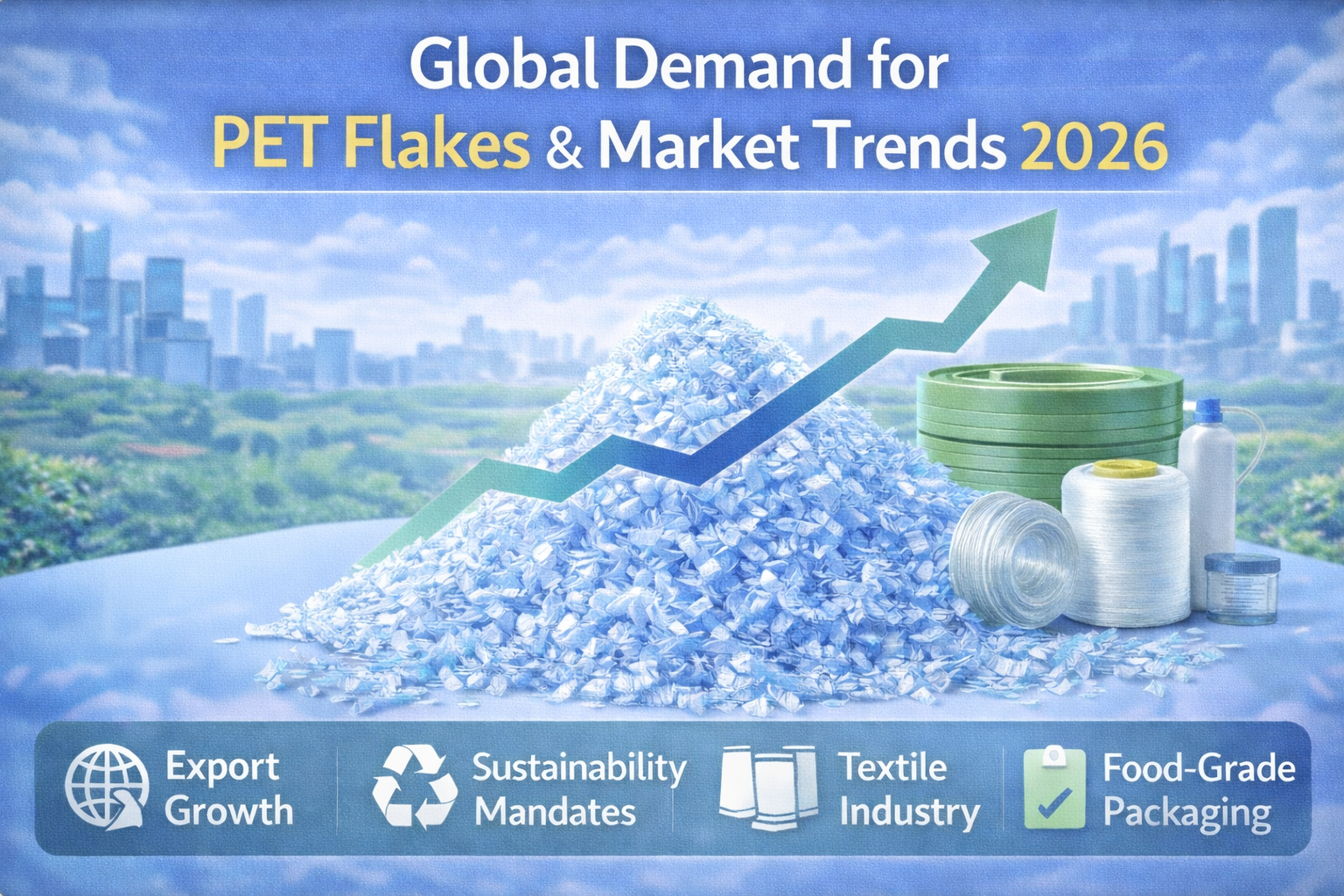
  • Global Demand and Market Trends for PET Flakes: Growth, Opportunities & Future Outlook

    Global Demand and Market Trends for PET Flakes: Growth, Opportunities & Future Outlook

    The global demand for PET flakes has grown significantly over the past decade. This rise is fueled by sustainability goals, recycling initiatives, and the increasing use of recycled materials across various industries. As businesses move toward circular economy models, PET flakes have become an important raw material for packaging, textiles, and industrial applications.

    In this article, we examine global demand patterns, key market trends, growth drivers, challenges, and future opportunities in the PET flakes industry.

    What Are PET Flakes?

    PET flakes are processed pieces of recycled polyethylene terephthalate (PET) that usually come from post-consumer PET bottles and plastic waste. After collection, sorting, washing, and shredding, PET waste is turned into clean flakes. These flakes are then used to make:

    • Recycled polyester staple fiber (RPSF)
    • rPET sheets and films
    • PET straps
    • Food-grade packaging (after further processing)

    Thanks to their recyclability and cost-effectiveness, PET flakes are essential for sustainable manufacturing.

    Why Is Global Demand for PET Flakes Increasing?

    1. Rising Sustainability Regulations

    Governments around the world are implementing stricter regulations on plastic waste management and promoting the use of recycled materials. Many countries now require a minimum amount of recycled content in packaging, which boosts the demand for high-quality PET flakes.

    1. Growth in rPET Packaging

    Major beverage and fast-moving consumer goods (FMCG) brands are setting targets for 25%–100% recycled content in their packaging. This need has greatly increased the demand for food-grade PET flakes.

    1. Expansion of Textile Industry

    The production of recycled polyester fiber is growing quickly, especially in Asia. PET flakes serve as a primary raw material for creating recycled yarn and fiber used in clothing, carpets, and home furnishings.

    1. Cost Advantage Over Virgin PET

    With changing crude oil prices, recycled PET flakes often offer a cost-effective alternative to virgin PET resin.

    Global Market Trends for PET Flakes

    1. Asia-Pacific Dominates Production

    Countries such as China and India are leading producers and exporters of PET flakes due to their strong recycling infrastructure and lower processing costs.

    1. Shift Toward Food-Grade rPET

    There is a rising investment in recycling technologies to produce bottle-to-bottle, food-grade PET flakes. This segment is seeing the fastest growth worldwide.

    1. Increasing Export Demand

    Europe and North America import large amounts of PET flakes and rPET resin to meet recycled content targets and sustainability standards.

    1. Technology Upgradation

    Modern washing lines, hot washing systems, and automated sorting technologies are enhancing flake purity and quality.

    Key Industries Driving Demand

    The demand for PET flakes mainly comes from:

    • Packaging Industry – Bottles, trays, thermoformed sheets
    • Textile Industry – Recycled polyester fiber
    • Automotive Industry – Interior components
    • Construction Sector – Strapping and insulation materials

    Among these, packaging is the fastest-growing segment.

    Challenges in the PET Flakes Market

    Even with strong growth, the industry faces certain challenges:

    • Contamination in post-consumer plastic waste
    • Price fluctuations of virgin PET
    • Strict import/export regulations
    • Limited collection systems in developing countries

    However, improvements in recycling technology and rising environmental awareness are gradually addressing these issues.

    Future Outlook of the PET Flakes Market

    The global PET flakes market is expected to grow steadily over the next decade. This growth will be driven by:

    • Increased mandates for recycled content
    • Consumer preference for sustainable packaging
    • Growth of circular economy models
    • Corporate commitments to environmental, social, and governance (ESG) principles

    Experts expect significant growth, especially in the food-grade and high-quality washed PET flakes sectors.

    As industries focus on sustainability and reducing their carbon footprint, PET flakes will remain a key part of the global recycling ecosystem.

    Also Read: PET Packaging Material for Food, Beverage, and Consumer Packaging Applications

    FAQ Schema

    Q1. What are PET flakes used for?  

    PET flakes are used to make recycled polyester fiber, packaging materials, PET sheets, straps, and food-grade containers.

    Q2. Why is demand for PET flakes increasing globally?  

    Demand is increasing due to sustainability regulations, recycled packaging targets, and growth in the textile and packaging industries.

    Q3. Which region leads in PET flakes production?  

    Asia-Pacific, particularly China and India, leads in global production and exports of PET flakes.

    Q4. Are PET flakes environmentally friendly?  

    Yes, PET flakes reduce plastic waste, lower carbon emissions, and support circular economy efforts.