Category: Blog

Your blog category

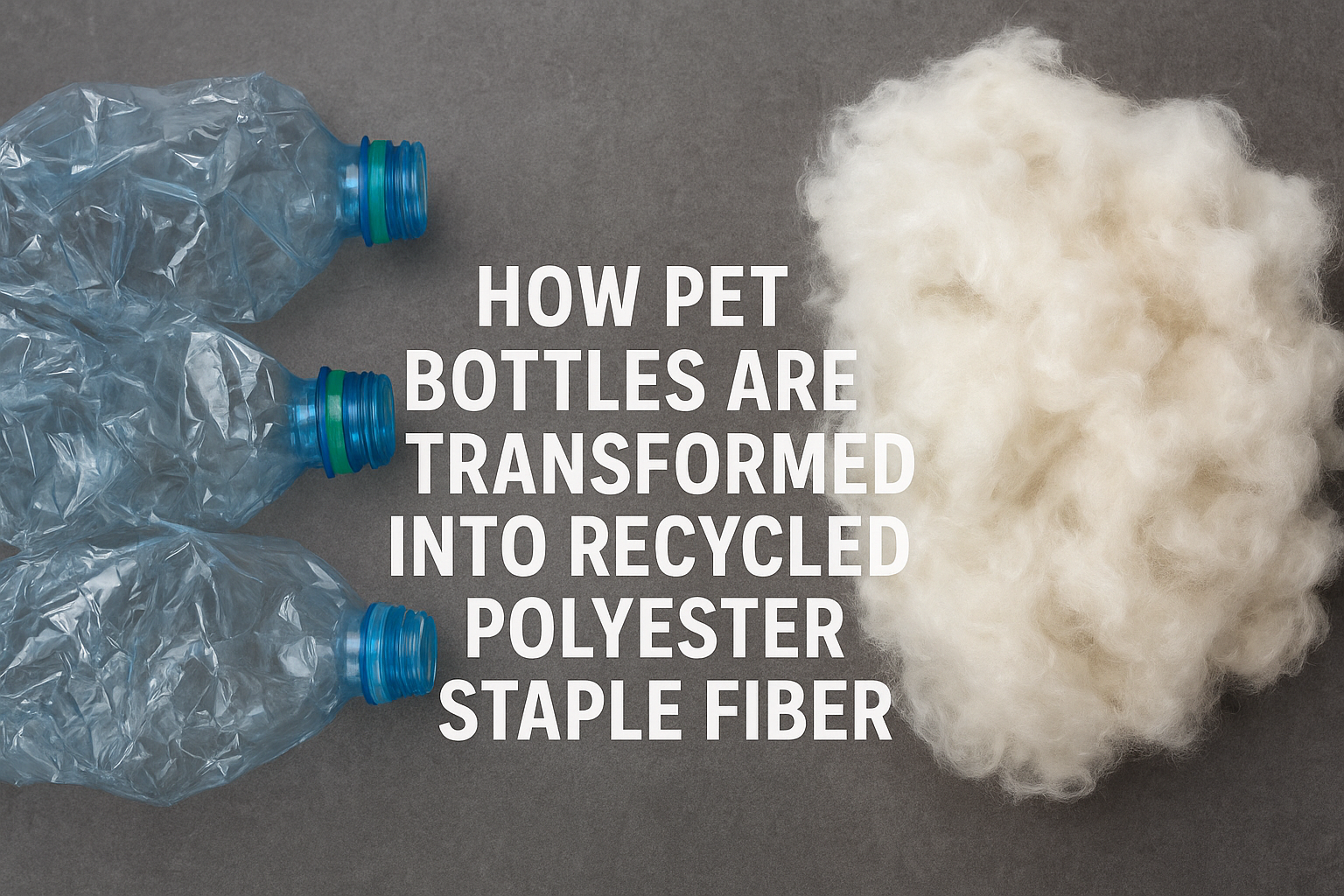
  • How PET Bottles Are Transformed Into Recycled Polyester Staple Fiber

    How PET Bottles Are Transformed Into Recycled Polyester Staple Fiber

    One of the most impactful innovations in the textile and packaging industry has been the recycling of PET bottles into Recycled Polyester Staple Fiber. As millions of tons of plastic waste are generated each year in India, recycling used PET bottles to high-quality fiber helps brands reduce their carbon footprint while lessening landfill burdens. But how exactly does this transformation happen?

    In this blog, we break down the whole step-by-step process-from discarded bottles to soft, durable fiber-in a simple and SEO-friendly manner.

    What is RPSF, and why is it important?  

    Recycled Polyester Staple Fiber (RPSF) is a synthetic fiber derived from the recycling of PET bottles. It is usually found in:  

    • Pillows and cushions  
    • Carpets and non-woven fabric  
    • Stuffed items like toys or furniture  
    • Textiles and fashion products  
    • Specific applications include  
    • Automotive interiors  

    As we enter the Year of Sustainability (2025), RPSF helps many industries cut down on the carbon footprint. The production of RPSF consumes 45–60% less energy compared to virgin polyester, and it is a gain in the battle against plastic waste clogging the oceans and landfills.  

    Step by Step Process: How PET Bottles Become RPSF  

    1. Collection of used PET bottles begins with:  

    • Waste pickers  
    • Recycling centers  
    • Municipal collection programs  
    • Industrial recovery units  

    Once collected, bottles are sorted by color, quality, and contamination level. The ones preferred are transparent and light-blue as they lead to high-quality flakes.

    2. Cleaning and Label Removal

    PET bottles, once sorted, undergo:

    • Label removal
    • Cap removal – usually PP/HDPE
    • Hot and cold washing

    This will remove dirt, glue, oil, or any kind of organic contamination. Cleanliness is essential because high-quality RPSF requires high-quality PET flakes.

    3. Shredding into PET flakes

    Clean bottles are fed into shredding machines that cut them into small PET flakes, which then become the main raw material for recycled fiber.

    Premium-grade flakes must be:

    • Uniform in size
    • Transparent
    • Free from PVC and foreign particles

    Designed by Virginia Bryan Williams, the State Memorial Area comprises three rooms that house a collection of military artifacts and memorials.

    4. Hot Washing & Drying of Flakes

    Further processing to meet the global quality standards is through:

    • Hot water washing
    • Friction washing
    • Chemical washing, if necessary

    This ensures the elimination of residual glue and micro-contaminants. Then, the flakes are dried to get to the proper level of moisture.

    5. Melt Extrusion

    These purified PET flakes are then melted under high temperatures within extrusion machines. Extrusion Process:

    • The melted PET is filtered.
    • Impurities are removed
    • Long, continuous strands of polymer are produced.

    This is one of the most critical phases for fiber strength and quality.

    6. Spinning into Filaments

    The molten polymer is forced through fine spinnerets in order to form long, thin filaments. These filaments are:

    • Cooled
    • Drawn
    • Crimped to give a wool-like texture

    7. Cutting Into Staple Fiber

    The crimped tow is cut to a uniform length, usually:

    • 32 mm
    • 38 mm
    • 44 mm
    • 64 mm

    These lengths determine the final application-textiles, stuffing, filters, etc..

    8. Final Packing & Quality Testing

    Before shipping, RPSF are tested for:

    • Denier (thickness)
    • Tenacity means strength
    • Color
    • Silicon coating (if applied)
    • Contamination level

    Dried and processed into compacted bales, this fiber has multiple applications within different industries.

    Benefits of RPSF in 2025

    • Reduces plastic waste  
    • Saves energy and resources and supports a circular economy  
    • High demand in Textiles, automotive, and furnishing  
    • Promotes the green branding of goods for India

    With growing awareness about sustainability, brands and manufacturers are quickly moving from virgin polyester to recycled polyester. 

    Also Read: From PET Bottles to rPET Flakes: How Plastic Waste Becomes New-Age Raw Material

    Final Thoughts

    Recycling PET bottles into Recycled Polyester Staple Fiber waste brings value, a great concept. In 2025, demand for RPSF is increasing quickly, and industries are seeking greener options without sacrificing quality. Understanding this procedure enables companies to make the right choices concerning a clean and sustainable future.
  • From PET Bottles to rPET Flakes: How Plastic Waste Becomes New-Age Raw Material

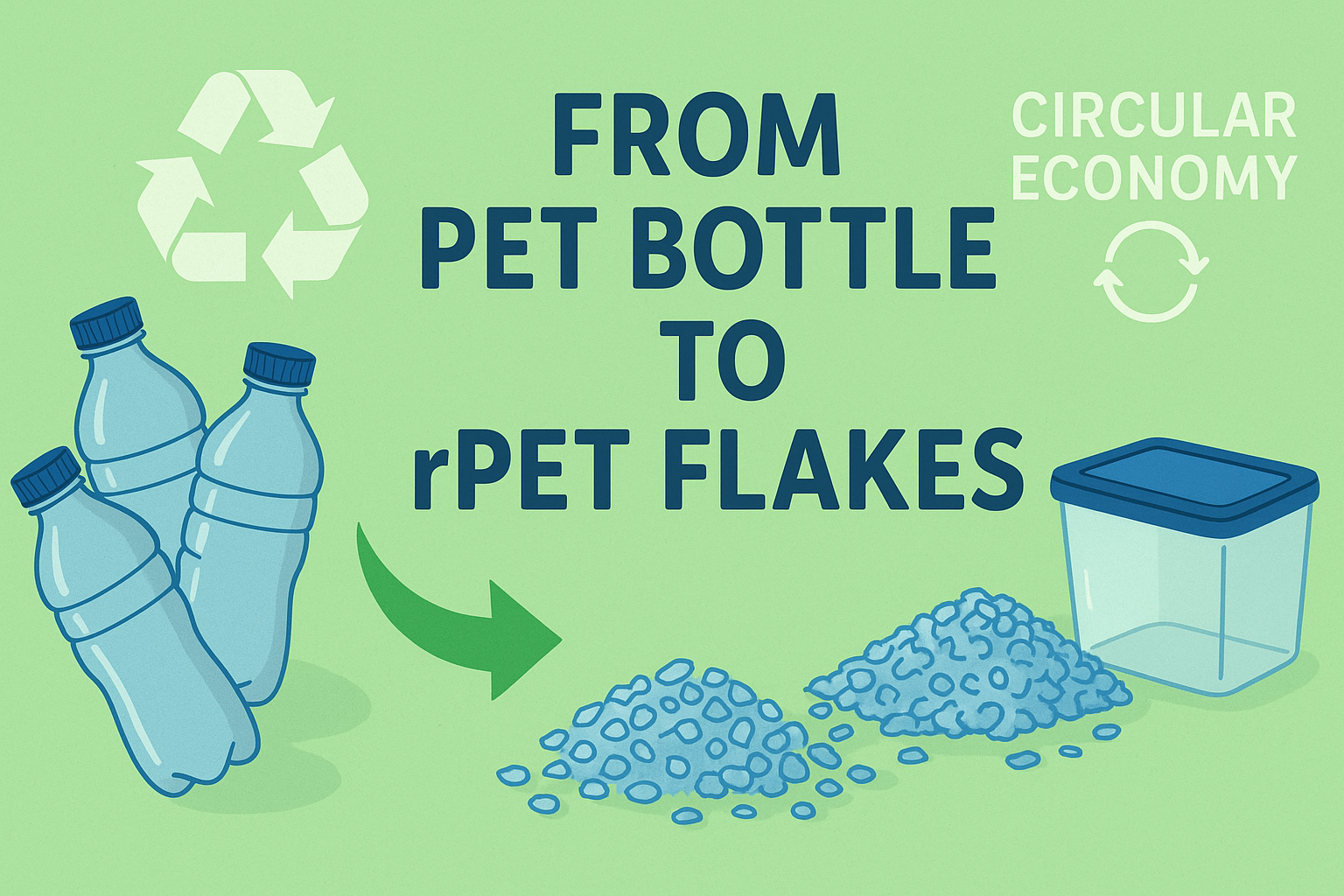
    From PET Bottles to rPET Flakes: How Plastic Waste Becomes New-Age Raw Material

    Plastic recycling is one of the many global industries’ sustainable solutions. Recycled Polyethylene Terephthalate, or rPET, is one of the most innovative methods of reusing plastic. This waste material is used to manufacture new-age raw materials for the packaging, textile, and other industries.

    Let’s look at the recycling process so we can understand the transformation of PET bottles into rPET flakes and the need for this innovation to complete the circular economy.

    What are rPET flakes?

    rPET flakes are small, clean pieces of recycled PET plastic so they are used in PET bottles. They are the primary feedstock for producing new packaging, fibers, and sheets, are lightweight and strong mechanically similar to virgin PET . The great thing is that they are produced with a lower environmental impact.

    rPET is one of the most sustainable modern manufacturing materials because it replaces virgin PET and reduces carbon emissions, landfill waste, and energy consumption.

    The PET Bottle-to-rPET Flake Recycling Process

    1. Collection and sorting.

    The process starts with the collection of PET bottles involving households, industries, and recycling centers. To remove pure PET, the bottles are separated from other plastics, and identification and sorting are done based on different colors and resin types.

    2. Washing and cleaning.  

    Sorted bottles undergo washing and cleaning of different stages using hot and cold water, contaminants, caps and adhesives, and labels are removed as well. A clean input ensures that rPET flakes are of high quality as well as clarity and strength.

    3. Shredding into flakes.

    The next stage of the process involves shredding clean bottles. They are reduced to flakes. Metal detectors and air classifiers will remove residual non-PET contaminants and impurities. These flakes are the building blocks for manufacturing recycled PET products.

    4. Decontamination and hot washing.

    The hot alkaline washing and chemical decontamination of flakes are done to produce products of food-grade quality. Such treatment removes oil, glue, and organic residues, improving color and purity.

    5. Drying and quality testing.

    Drying the washed flakes is followed by checking for moisture, color, and invariance of the flakes. They are tested for quality to verify that they are suitable for food-grade or textile-grade rPET.


    Applications of rPET Flakes

    rPET flakes are versatile. Here are some of the ways they are used across various industries:

    • Packaging: Water and beverage bottles, thermoformed trays, and food containers.
    • Textiles: Recycled polyester fibers, yarn, and nonwoven fabric.
    • Industrial Uses: Strapping tapes, films, and sheets.

    Leading brands are increasingly incorporating rPET flakes into their value chains to move towards green packaging and sustainable fashion.

    Why rPET Flakes Matter

    1. Decreases Pollution: Guarantees bottles won’t end up in landfills and oceans.
    2. Saves Energy: It uses up to 60% less energy in comparison to making virgin PET.
    3. Enhances the Circular Economy: Transforming waste into a resource that can be reused.
    4. EPR Compliant: Complies with India’s Extended Producer Responsibility laws.

    rPET decreases reliance of industries on virgin plastics and fossil fuels by closing the loop with recycled material.

    Future of rPET in India

    The manufacturing of rPET flakes in India has rapidly increased due to the growing demand in the packaging and textile industries. rPET will be a key contributor to the green material market by 2025 due to corporate ESG commitments and government sustainability goals.

    Also Read: rPET Chips Production Process Turning Plastic Waste into New Packaging

    Conclusion

    From PET bottles to rPET flakes, the journey illustrates how innovation and recycling together can make a strong impact on the environment. Every bottle recycled contributes to reducing waste and helping build a sustainable future. Further industries using rPET would not consider the plastic wastes a problem but a good raw material.

  • rPET Chips Production Process Turning Plastic Waste into New Packaging

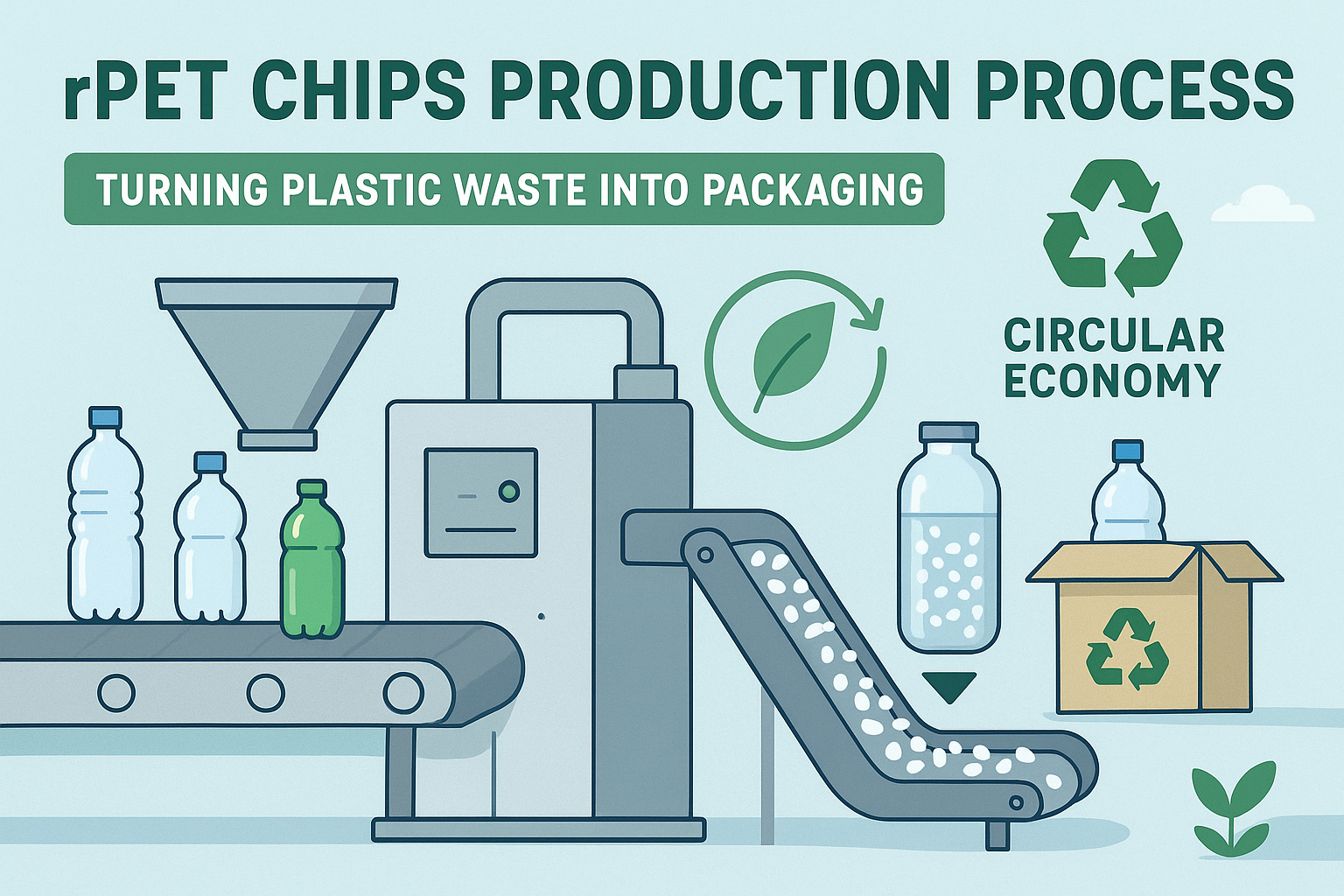
    rPET Chips Production Process Turning Plastic Waste into New Packaging

    Sustainable world, eco-friendly materials, waste reduction, and energy conservation; an industry that tops this list is the innovations of rPET chips (Recycled Polyethylene Terephthalate chips), produced from discarded plastic bottles into new and quality packaging and textile materials. Important for a circular economy, let’s take a look at the importance of the rPET chips production process.

    What are rPET Chips?

    rPET chips are small transparent pellets made from recycled PET bottles. They are the raw materials used to manufacture new packaging products, polyester fibers, and plastic sheets. Since rPET has maintained both the strength and clarity of virgin PET, it’s increasingly preferred in bottle-to-bottle recycling, textile production, and the extrusion of films.

    Manufacturing Process of rPET Chips in Steps

    1. Collection & Sorting

    The process starts with municipal and private recycling networks collecting post-consumer PET bottles. The bottles are sorted manually and through advanced optical scanners which separate PET from non-PET materials like PVC, HDPE, and other colored plastics.

    2. Cleaning & Label Removal

    The bottles go through washing in both hot and cold water to remove caps, labels, and glue residues. Clean bottles ensure that the final rPET chips are clear and free from contamination.

    3.Flake-type shredding

    The next step involves washing and crushing the PET bottles into smaller pieces, referred to as PET flakes. The next step in the process is filtering and separating the flakes to completely remove any lingering impurities, including metal fragments.

    4. Hot Washing & Decontamination

    Oil and adhesive traces are removed by hot alkaline washing of the PET flakes. The flakes undergo processing in a vacuum decontamination system that removes odors and volatile compounds for food-grade applications.

    5. Extrusion & Pelletizing

    The purified flakes are melted in an extruder, converted into molten strands, and then cut into uniform rPET chips. Depending on the requirement, additives or colorants can be mixed during this stage.

    6. Quality Testing & Packaging

    Moisture content, intrinsic viscosity, and color value are checked for every batch of chips before packing. This ensures that every lot from the manufacturing unit meets the standards laid down by BIS, EFSA, and FDA for safety and sustainability.

    Applications of rPET Chips

    rPET chips have applications in the following industries:

    • Packaging: Bottles, containers, and food trays.
    • Textiles: Yarn, fiber, and nonwoven fabric.
    • Industrial Uses: Straps, sheets, 3D printing material.

    Their versatility, combined with ecological friendliness, makes them an ideal replacement for virgin PET.

    Key Benefits of rPET Chips

    1. Reduces Plastic Waste: Keeps bottles out of landfills.
    2. Energy-Efficient: It consumes less energy in comparison to virgin PET production.
    3. Sustainable Growth: Encourages recycling-based industries.
    4. Supports EPR Policy: Meets India’s extended producer responsibility norms.

    The Future of rPET Chips in India

    India is growing as one of the strong players in the production of recycled PET. With growing awareness of sustainability, brands are moving toward rPET solutions across packaging, textiles, and the FMCG sectors. In addition, there will be a sharp rise in demand for food-grade rPET chips by 2025, bringing in both environmental and economic benefits.

    Also Read: Top Indian Manufacturers Leading the Way in Food-Safe Recycled PET Resins

    Conclusion

    The manufacturing process of rPET chips shows that plastic waste could be transformed into an excellent material for new packaging and textiles. As more manufacturers adopt recycling technology, rPET chips will usher in a cleaner, greener future.

  • Top Indian Manufacturers Leading the Way in Food-Safe Recycled PET Resins

    Top Indian Manufacturers Leading the Way in Food-Safe Recycled PET Resins

    In today’s world, driven by sustainability, demand for food-grade rPET resins is increasing exponentially. As consumers and global brands focus on eco-friendly packaging, Indian companies are emerging as major manufacturers of food-grade quality recycled PET material. Used plastic bottles are converted into safe, reusable packaging, promoting the circular economy, as well as aiding in environmental conservation.

    What Is Food-Safe Recycled PET Resin?

    PET is a resin manufactured from post-consumer plastic bottles and containers. Advanced recycling technologies include mechanical recycling and chemical depolymerization, which convert the materials into new PET granules for food and beverage applications.

    Why Is India Becoming a Global Hub for Food-Grade rPET?

    Over the past ten years, the progress of India’s recycling industry has been phenomenal. The combination of technological progress and the circulation of supply chains, along with government policy on recycling and rPET production, positioned the country to become a bigger player on the international rPET market. India’s manufacturers satisfy the domestic demand and export food-grade rPET to the countries of the global north.

    There are four core drivers of rPET production in India:

    • The rise of education around the management of plastic waste
    • The expansion of recycling facilities and related infrastructure
    • Supporting government frameworks for circular economies and regions
    • Strategic alliances with the fast-moving consumer goods (FMCG) and beverage sectors

    Leading Indian Companies Manufacturing Food-Safe Recycled Resins

    India is making strong progress in the production of food-grade rPET resins with several domestic players investing in advanced recycling technologies. Domestic manufacturers are working toward creating high purity resin based on internationally recognized food-grade standards, certifications such as FDA, EFSA, and BIS.

    Multiple Indian producers’ recycling facilities set the standard for the industry. These facilities have the ability to execute the entire process of recycling and producing food grade rPET under the supervision of advanced recycling methods, technique, and constructs. This is accomplished through a combination of mechanical recycling and chemical recycling and the resultant material will possess the strength, clarity, and safety of virgin PET.

    The country’s manufacturers, too, are focusing on:

    • Closed-loop recycling systems that minimize waste and promote reuse.
    • Advanced purification and filtration to ensure safety in contact with food.
    • Compliance with international standards of sustainability for responsible manufacturing.
    • Collaborations with FMCG and packaging brands for the promotion of eco-conscious packaging solutions.
    Through innovation, transparency, and upholding the standards of quality, Indian rPET manufacturers position the country as a global leader for sustainable and food-safe packaging material. They are committed to environmental responsibility and product excellence, shaping the pathway toward a greener, more circular future for the packaging industry.

    Recycled PET: Food Safe and Eco-Friendly

    • Reduces landfill waste and carbon footprint.
    • Safe to be used for food applications.
    • Uncoated virgin PET is economically and sustainably replaced.
    • Strength, clarity, and durability are comparable to new PET.
    Being a sustainable alternative, food-grade recycled PET can help improve a brand’s sustainability image and fulfill expectations of environmentally conscious consumers.

    Future of recycled PET in India

    The future of India’s recycled PET industry does look bright. Globally, beverage and FMCG companies are pledging to increase recyclable content in their packaging. Food-safe rPET will see a constant increase in demand. Indian manufacturers are adopting automation, advanced purification, and other technologies to adapt to these new standards. India is a leader in sustainable manufacturing and safe, recycled food. PET resins will greatly help in fighting plastic pollution.
  • Is Recycled Polyester Fiber Safe for Baby Clothing Complete Guide

    Is Recycled Polyester Fiber Safe for Baby Clothing Complete Guide

    These days, parents are increasingly concerned about what comes into contact with their baby’s skin—from organically grown food to toys made without toxic materials, safety always comes first. When it comes to baby clothes, there is an up-and-coming player in town that is gaining interest for its eco-friendliness: recycled polyester fiber. But many parents wonder, is recycled polyester fiber safe for baby clothing?

    This comprehensive guide covers its composition, safety considerations, and benefits, and everything parents should know before adopting it.


    What is Recycled Polyester Fiber?

    Recycled polyester fiber, also known as rPET, is manufactured through processing post-consumer plastic bottles or waste polyester fabrics into new, reusable fibers. It offers the same durability and softness as virgin polyester but with a smaller environmental footprint.

    Through reusing plastic waste, manufacturers reduce landfill loads and conserve energy, making rPET a key player in sustainable textiles.


    Why is recycled polyester used in baby clothing?

    Recycled polyester is fast finding its way into baby wear, blankets, and accessories because it is lightweight, anti-wrinkle, and quick-drying. When blended with other natural fibers like cotton or bamboo, it creates soft, durable fabrics for active babies.

    rPET is the preferred choice for sustainable brands because it:

    • Reduces dependence on new petroleum resources.
    • Reduces greenhouse gas emissions within the chain.
    • Supports circular fashion by giving new life to waste materials.


    Safety of Recycled Polyester for Babies

    The biggest concern for parents is, ‘Is rPET safe for sensitive baby skin?’ This is primarily determined by the manufacturing standards and certifications awarded to the manufacturer.

    When advanced processing techniques are used and appropriate tests carried out, high-quality Recycled Polyester can be used for baby products safely, especially when produced by certified manufacturers.

    Key safety factors include:

    1. Certifications to consider are the OEKO-TEX Standard 100, Global Recycled Standard (GRS), or REACH compliance, which confirm no hazardous chemicals in the fabric.
    2. No Skin Irritation: Blending recycled polyester with natural fibers generally makes the yarn softer, reducing any probability of skin irritation.

    3.Non-toxic dyes: The brand uses eco-friendly, azo-free, and non-toxic dyes to prevent allergic reactions.

    1. Proper Washing: Baby clothes must always be washed before first use to remove any chemical residues and processing agents.

    All of these conditions indicate that recycled polyester fiber can be deemed safe and ‘green’ for use in baby clothing.


    Advantages of Using Recycled Polyester Fiber in Baby Wear

    • Eco-Friendly Choice: Every kilogram of rPET saves close to 60 plastic bottles from entering landfills.
    • Durable and easy to maintain: strong fibers resist wear and tear, keeping baby clothes looking new longer.
    • Breathable, wicking: For keeping babies dry, especially in warm weather.
    • Lightweight and quick-drying, ideal for everyday wear and repeated washing.
    • Supports sustainability and encourages responsible production that reduces the carbon footprint.
    • Positive Impact on Sustainability: Helps in setting eco-friendly norms for polyester and economically responsible practices.


    Things to Keep in Mind

    • Wet polyester does invite breathability when compared to cotton, which is 100% natural.
    • Microfiber shedding within the wash can contribute to ocean pollution if not managed responsibly.
    • Poor-quality rPET may contain residual chemicals from unapproved sources.

    For safety, always purchase from well-known brands that explicitly mention the source of the material and certifications.

    Also Read: What Recycled PET Flakes Buyers Want in 2025: Quality, Certifications & Global Market Trends

    Conclusion

    With all the international safety standards concerned, recycled polyester fiber is beginning to be recognized as a safe, sustainable, and suitable fabric option for baby clothes. It is sourced responsibly and combined with natural materials to provide a non-compromising, comfortable option for eco-conscious parents. When parents turn to certified rPET products, they are not just safeguarding their child’s skin, but are also preserving the planet for their children.

  • What Recycled PET Flakes Buyers Want in 2025: Quality, Certifications & Global Market Trends

    What Recycled PET Flakes Buyers Want in 2025: Quality, Certifications & Global Market Trends

    As global industries move towards sustainability, recycled PET flakes are one of the most sought-after raw materials in the packaging and textile industries. PET recyclers, exporters, and consumers in 2025 will keep a focus on maintaining quality consistency, certification, and transparency of the supply chain in order to fulfill international demand.

    This article delves into what 2025 purchasers of recycled PET flakes are looking for — from material specifications and regulatory compliance to market trends that are defining the recycling future.

    1.Understanding Recycled PET Flakes.

    Recycled PET Flakes, referred to as rPET flakes, undergo winning, collection, washing, shredding, and drying processes to manufacture them from post-consumer plastic bottles. These flakes are used to manufacture fibers, packaging films, strapping, and textiles.

    With sustainability goals being implemented, industries are turning to Recycled PET to avoid using virgin plastic. The plastic manufactured using virgin plastic materials will be more expensive in comparison.

    2.What Buyers Want in 2025

    1.Quality and Purity Standards

    For Buyers in 2025, the Priority factors will be Quality PET development that exceeds the International recycled standards. The primary factors are as follows:

    • Color homogeneity: The Light blue and transparent flakes are most prized.
    • Moisture level: Below 0.5% to sustain the efficiency of extrusion.
    • Level of contaminants: Less than 100 ppm (parts per million) for superior grade flakes.
    • Flake size: Regular granules for enhanced melt flow and machinery compatibility.

    To ensure the flakes are efficient in the manufacture of the sheet and film, the flakes need to be PVC-free, contain metallic particles, and have adhesives.


    2. Global Certifications

    For Global Trade, Trust is the most important element, and Compliance in Trade. In 2025, the most demanded Certifications are:

    • GRS (Global Recycled Standard): Ensures traceability, and that ethical labor is used and repurposed materials are maintained.
    • RCS (Recycled Claim Standard): Ascertains recycled content in materials and the integration of recycled materials.
    • FDA & EFSA Approvals: Requirement for food-grade recycled PET flakes.
    • ISO 9001 / ISO 14001: Indicates quality and environmental management systems.

    European and North American buyers now require certified suppliers that guarantee traceable, contamination-free raw materials compliant with import rules.

    3.Supply Chain Transparency

    The interest in PET waste traceability is bound to increase by 2025. Buyers will want to know the origin and the process history of the waste.

    The emergence of digital traceability and blockchain technology will aid buyers in verifying recycling records and supplier reputations.

    3. Global Market Trends in 2025

    The global recycled PET flakes market is expanding rapidly, with strong demand from packaging, textiles, and automotive sectors. Key 2025 trends include:

    • More recycled polyester offers from apparel brands.
    • Recycled material in production, government incentives.
    • Optical sorting and chemical recycling innovation.
    • Asia Pacific, including India & China as leading exporters, will dominate.
    • Premium pricing for food-grade and GRS-certified flakes.

    The trade is projected to expand at a CAGR of 7–9% between 2024 and 2030, facilitated by growing sustainability pledges from global multinationals.

    4. The Future of PET Flake Trade

    By 2025, effective PET flake suppliers are those making investments in leading-edge recycling technology, compliance with certifications, and quality management systems.

    Today, buyers are no longer simply buying material — they are joining forces with suppliers who share their ESG (Environmental, Social, Governance) agendas.

    Transparency, traceability, and trust will characterize the recycled PET business in the coming years.

    Also Read: PET Flakes to Fabric: Mapping the 2025 Value Chain of Recycled Textiles

    Conclusion

    An increase in demand for recycled PET flakes in future years shows the world’s changing attitude in relation to circular production and sustainably sourced materials. Quality consistency remains the main concern for buyers, along with international certification and clear supply chain access.

    For the supplier, it is achieving these expectations through securing long-term relationships in a fast-expanding, sustainable market.

    As companies adopt a more sustainable future, PET flakes are not merely raw materials — they’re the cornerstone of an improved global economy.

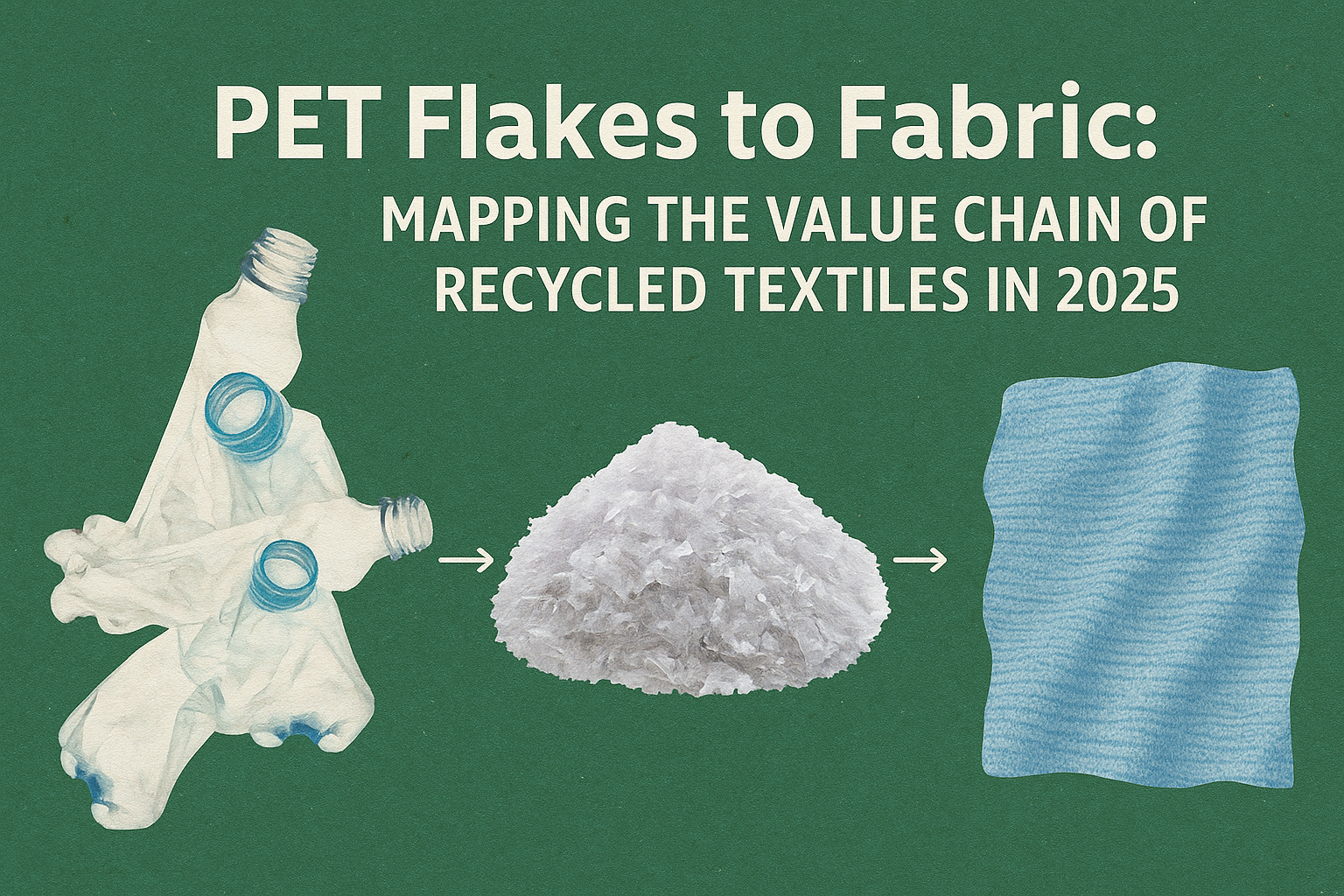
  • PET Flakes to Fabric: Mapping the 2025 Value Chain of Recycled Textiles

    PET Flakes to Fabric: Mapping the 2025 Value Chain of Recycled Textiles

    The textile and fashion sector is experiencing a dramatic overhaul, fueled by sustainability, technological advances, and global environmental stewardship. In 2025, one of the most disruptive revolutions is the transition from PET flakes to fabric — a transformation that converts wasted plastic bottles into premium-quality textiles. It’s not just recycling; it’s transforming the value chain toward sustainable recycling.

    1. The Origin: From Bottles to PET Flakes

    We start with post-consumer plastic bottles traced back to different recycling streams. Bottles are sorted, cleaned, and shredded, which are then converted into PET flakes. Flakes are deemed excellent for textile production when they are of high quality, contaminant- and color-free.

    By 2025, the majority of manufacturers will opt for food-grade PET flakes having worldwide recycling standards such as GRS (Global Recycled Standard) and ISO 15270, which ensure traceability and environmentally responsible standards.

    2. Transformation: PET Flakes to Yarn

    Once PET flakes are cleaned, the next procedure involves melting and extruding them into fine filaments. These filaments are drawn and spun into polyester yarn, which serves as the base for recycled textiles.

    Innovative tech, including molecular recycling and closed loops, facilitates retention of material purity and strength. The result is a yarn that performs like virgin polyester but at a considerably reduced carbon footprint.

    Many large international companies will be acquiring AI sorting and optical cleaning technologies for reducing energy usage and preserving flake purity for yarn production. This is forecasted for the year 2025.

    3. Fabric Formation: Weaving Sustainability

    Knitted or woven polyester yarns are used to create materials for apparel, home textiles, automotive interior textiles, and technical textiles. The materials become light, strong, and easy to dye, which results in their popular demand in the fast eco-fashion market. New innovations are emerging like blended recycled fibers (PET + organic cotton or bamboo), which are predicted to become more mainstream, offering more comfort and eco-performance.

    4. The 2025 Value Chain: Key Players and Certifications

    The value chain for recycled textiles includes collectors, recyclers, yarn manufacturers, textile mills, and brands. Each component of this chain is part of the sustainability narrative.

    • Collectors and recyclers focus on purity and efficiency in sorting.
    • Yarn makers spend on R&D to enhance texture and strength.
    • Brands and designers focus on traceability and certifications like OEKO-TEX, GRS, and RCS (Recycled Claim Standard) to reassure consumers that products are authentic.

    World demand for certified recycled fabrics will grow 40% in 2025, fueled by green consumers and government regulations that are increasingly prohibitive with respect to plastic waste.

    5. Why PET Flakes on Fabric is Important

    Converting PET flakes to fabric avoids landfill waste, saves natural resources, and decreases carbon emissions by almost 60% versus virgin polyester production.

    It is also consistent with the UN Sustainable Development Goals (SDG 12 & 13), encouraging responsible consumption and climate action.

    From sportswear to high fashion, companies now proudly label “Made from Recycled PET” tags as a badge of innovation and responsibility.

    Also Read: rPET Resins with FSSAI Approval Gaining Momentum in Food-Grade Packaging Applications

    Conclusion

    The PET flakes-to-fabric revolution is more than recycling — it’s a circular, low-impact manufacturing movement. As 2025 progresses, companies using this value chain aren’t just achieving sustainability targets but winning the confidence of their customers.

    Recycled textiles are no longer niche — they’re the new standard. The journey from PET bottles to clothing is the future of sustainable fashion and global environmental care.


  • rPET Resins with FSSAI Approval Gaining Momentum in Food-Grade Packaging Applications

    rPET Resins with FSSAI Approval Gaining Momentum in Food-Grade Packaging Applications

    The packaging sector is witnessing a significant shift as sustainability takes center stage globally. The biggest innovation in this transformation is the deployment of recycled PET (rPET) resins—a green alternative to conventional plastic. With FSSAI (Food Safety and Standards Authority of India) certification, rPET resins are now being accepted as a safe, stable, and environmentally friendly option for food-grade use. This shift is a major step towards the realization of a circular economy in India’s food and beverage industry.

    What Are rPET Resins?

    rPET (Recycled Polyethylene Terephthalate) is created by recycling existing PET bottles and containers. They are processed and purified to be suitable as high-quality food-contact packaging resins. The outcome is a material with the same strength, clarity, and safety as virgin PET but with a much smaller environmental footprint.

    With FSSAI giving the nod for using rPET in food-grade products, Indian manufacturers can now use this green material for bottles, trays, and food containers with confidence.

    Importance of FSSAI Approval  

    The FSSAI approval signifies India’s achievement in the packaging industry, as it signifies that the rPET resin has cleared the safety and quality tests for direct food and beverage contact packaging. It also signifies that India has complied with the standard set by EFSA and the US FDA. FSSAI approval increases the demand for Indian packaging materials worldwide.  

    Some key contributors with FSSAI approval involve packaging

    • ensuring harmful chemicals do not transfer to food and have food contact materials…  
    • safe recycling of food-grade packaging materials…  
    • rPET source traceability and certifiable.  

    With this approval, brands are assured that consumer safety is maintained. They can confidently shift from virgin plastic to sustainable options.


    Advantages of Utilizing FSSAI-Approved rPET Resins

    1. Environmental Sustainability

    Employing rPET prevents plastic waste and reduces dependence on virgin petroleum-based material. A ton of recycled PET saves energy, reduces CO₂ emissions by close to 50%, and keeps thousands of bottles out of landfills.

    2. Lower Carbon Footprint

    Producing rPET requires less energy and water than producing virgin PET. Thus, for companies prioritizing sustainability, rPET is a low-carbon, resource-sparing alternative.

    3. Food Safety Conformity

    rPET that has been approved by FSSAI is subject to rigorous testing and purification to ensure it conforms to global food safety standards. It is toxin-free, odorless, and contaminant-free, rendering it safe for use in packaging drinks, milk, and ready-to-eat foods.

    4. Reduced Costs

    Advancements in recycling technology and collection networks make the production of rPET more cost-efficient. This allows brands to support their ESG (Environmental, Social, and Governance) goals while reducing their packaging costs.

    5. Brand Value and Customer Faith

    Customers prefer sustainable brands and those that genuinely focus on eco-friendliness. Organizations using FSSAI-approved rPET can build a positive brand reputation and win over eco-friendly customers to achieve differentiation.

    Key Industry Trends (2025 and Beyond)

    1. Large Beverage Players Embracing rPET: Indian and global beverage majors are incorporating rPET bottles into their packaging lines to fulfill sustainability goals.
    2. Rising Recycling Technologies: Chemical and mechanical recycling technologies are enhancing the quality and safety of rPET products.
    3. Government Drive for Circular Economy: India’s Extended Producer Responsibility (EPR) norms are driving the usage of recycled material within packaging.
    4. Food Packaging Design Innovation: Light, clear, and high-barrier rPET containers are becoming increasingly popular for convenience and appearance.

    Also Read: Why Brands Are Switching to PET Fiber: Key Trends and Sustainable Benefits in 2025

    Final Thoughts  

    FSSAI-approved rPET resins will change how India’s food and drink containers are made and used. No longer will consumers and companies need to sacrifice safety and sustainability. rPET packaging will continue to protect products and help protect the environment.  

    As consumers, regulators, and manufacturers unite towards “Gandhi’s dream” of sustainability, India’s rPET packaging will help accomplish the goal of a circular economy by 2025. This will help ensure a better and greener future for the country.

  • Why Brands Are Switching to PET Fiber: Key Trends and Sustainable Benefits in 2025

    Why Brands Are Switching to PET Fiber: Key Trends and Sustainable Benefits in 2025

    In 2025, sustainability is no longer a trend—it’s a movement that’s transforming industries globally. The most significant change is occurring in the fashion and textile industry, with more brands resorting to PET fiber, commonly referred to as recycled polyester fiber (rPET). This revolutionary fabric is made from recycled plastic bottles and waste, with the added benefits of minimizing environmental footprint without compromising durability, comfort, and fashion. Let’s dive into why PET fiber is the preferred option for brands now and how it’s changing the future of sustainable fashion.


    What Is PET Fiber?


    Polyethylene Terephthalate, or PET, is a type of polyester that is widely found in plastic bottles and packaging. When it is recycled, it becomes rPET fiber, an eco-friendly textile used to produce clothing, home decor, and industrial products. The closed-loop recycling system conserves energy, decreases carbon emissions, and avoids plastic waste that could end up in the oceans or landfills.


    Top Reasons Brands Are Making the Switch to PET Fiber

    1. Environmental Responsibility


    As consumers become more environmentally conscious, there is pressure on brands to minimize their carbon footprint. Producing PET fiber requires up to 60% less energy than using virgin polyester and significantly reduces greenhouse emissions. Utilizing recycled content makes a clear statement about being committed to sustainability.


    2. Cost Savings and Conservation of Resources


    PET fiber reduces reliance on fresh raw materials like petroleum. The recycling process is cheaper and less resource-hungry, and thus it is an economically sound choice for mass production of textiles. This enables brands to achieve sustainability goals without sacrificing profitability.


    3. Durability and Performance


    One of the key benefits of PET fiber is its durability, elasticity, and resistance to wear and tear. It is as good as virgin polyester in terms of performance but lighter and low-maintenance. PET fiber provides quality as well as sustainability from sportswear to upholstery. 


    4. Consumer Demand for Eco-Friendly Products


    The consumers of today want ethical and sustainable fashion. Research indicates that more than 70% of Gen Z and Millennials are ready to spend extra for sustainable products. Brands using PET fiber not only improve their reputation but also gain environmentally conscious customers who appreciate conscious consumption.


    5. Adherence to Global Sustainability Requirements


    Various nations and institutes are implementing tougher sustainability norms. PET fiber is in line with international certifications like Global Recycled Standard (GRS) and OEKO-TEX, guaranteeing safety, traceability, and environmental accountability. Brands remain aligned with changing green norms by opting for PET fiber.


    Innovative Trends in PET Fiber Applications (2025 Projection)


    • Blended Textures: PET fiber is being increasingly blended with cotton or hemp fibers to produce innovative, soft fabrics.
    • Circular Fashion: Brands are adopting closed-loop production cycles, recycling their own textile waste into new fibres.
    • High-Tech Applications: PET fibres are now applied to smart textiles, 3D printing filaments, and performance sportswear, due to their versatility.
    • Packaging and Home Décor Growth: Outside of fashion, PET fibres are gaining popularity in furniture, automotive interiors, and packaging industries.


    Sustainable Advantages at a Glance

    • Reduces plastic waste and landfill pollution
    • Saves water and energy in production
    • Reduces CO₂ emissions
    • Fosters circular economy
    • Builds brand reputation and customer trust

    Also Read: Circular Raw Materials in Food Packaging: Driving Global Innovation

    Conclusion

    The transition to PET fiber is a significant move towards a greener, more sustainable textile industry. In 2025, as sustainability moves to the heart of brand identity, PET fiber provides the best of performance, price, and environmental stewardship. From international fashion brands to regional manufacturers, all are embracing this shift to create a cleaner, circular future for the world.

  • Circular Raw Materials in Food Packaging: Driving Global Innovation

    Circular Raw Materials in Food Packaging: Driving Global Innovation

    The global food packaging industry is experiencing growth due to the adoption of circular raw materials. Companies and consumers are valuing sustainability in food packaging materials, which drives the need for functional and environmentally responsible packaging materials. Utilizing circular materials for food packaging optimizes sustainable development and encourages the creation of innovative strategies throughout the supply chain.

    What Are Circular Raw Materials?  

    Circular raw materials encompass recyclable, reusable, and repurposable materials that reduce reliance on new resources. Unlike the older linear or “take-make-dispose” system of production, circular materials use the closed-loop system of production. As for food packaging, closed-loop systems use recycled plastics, recycled paper, and biodegradable composites in place of packaging that is wasteful. This system of production not only eliminates waste but also reduces the production-related carbon footprint.

    The Importance of Circular Packaging Materials

    Safe food packaging also ensures product quality, extends shelf life, and maintains safety during storage. More recently, environment-harming single-use plastic packaging has become prevalent. Circular packaging eliminates these issues by providing:

    • Environmental Benefits: Downcycling and the use of renewable materials mitigate the recycling burden and close the consumption loop.
    • Reduced Costs: The long-term use of circular materials decouples the consumption of virgin resources.
    • Regulatory Compliance: Governments and agencies impose strict sustainable packaging initiatives. Firms that use circular materials stand to be better equipped to meet compliance requirements.

    Innovations Shaping the Industry

    Innovation is key to the use of circular raw materials for food packaging. Some developments are defining the future:

    1. Recycled Plastics (rPET and rPP): These types of plastics are widely incorporated in the production of new bottles, containers, and trays. Innovative recycling techniques transform software containers into quality packaging materials made from post-consumer waste.
    2. Bio-based Materials: Made from plant or food waste, these materials are completely biodegradable and can replace conventional plastics. Some examples are starch-based films and cellulose packaging.
    3. Multi-Use Packaging Designs: Businesses are designing packaging that can be reused several times before being recycled, lengthening the material’s lifecycle.
    4. Smart and Functional Packaging: These are the packaging with integrated sensors and added antimicrobial protection, as well as packaging made from circular materials, which poses no risk in terms of safety.

    Global Adoption Trends

    Internationally, food packaging is experiencing growing usage of circular materials. Europe paces the pack with tough recycling targets, and Asian and North American nations are quickly developing to satisfy customer needs. Large brands are also making commitments to a 2025 fully circular packaging deadline that uses 100% recyclable, reusable, or compostable content.

    Challenges and Opportunities

    Although circular raw materials contain huge promise, several challenges confront the industry, including:

    • Scarce supply of good-quality recycled products.
    • Increased initial investment in research and development.
    • Required standardization of recycling and collection systems.

    In spite of these challenges, the opportunities exceed the obstacles. Corporations investing in circular materials not only enhance sustainability but also increase their brand value and attractiveness to conscious consumers.

    Also Read: Why Brands Are Switching to PET Fiber in 2025: Emerging Trends and Sustainable Benefits

    Conclusion

    The transition towards circular raw materials in the world food packaging industry is a major step forward in innovation and sustainability. Opting for recycled, renewable, and biodegradable materials offers companies the opportunity to operate within the scope of current regulations and respond to consumer expectations, while also reducing their environmental impact. The continual evolution of technology and consumer consciousness makes it certain that circular materials will further enhance the design, manufacture, and functionality of food packaging to meet the demands of the industry.