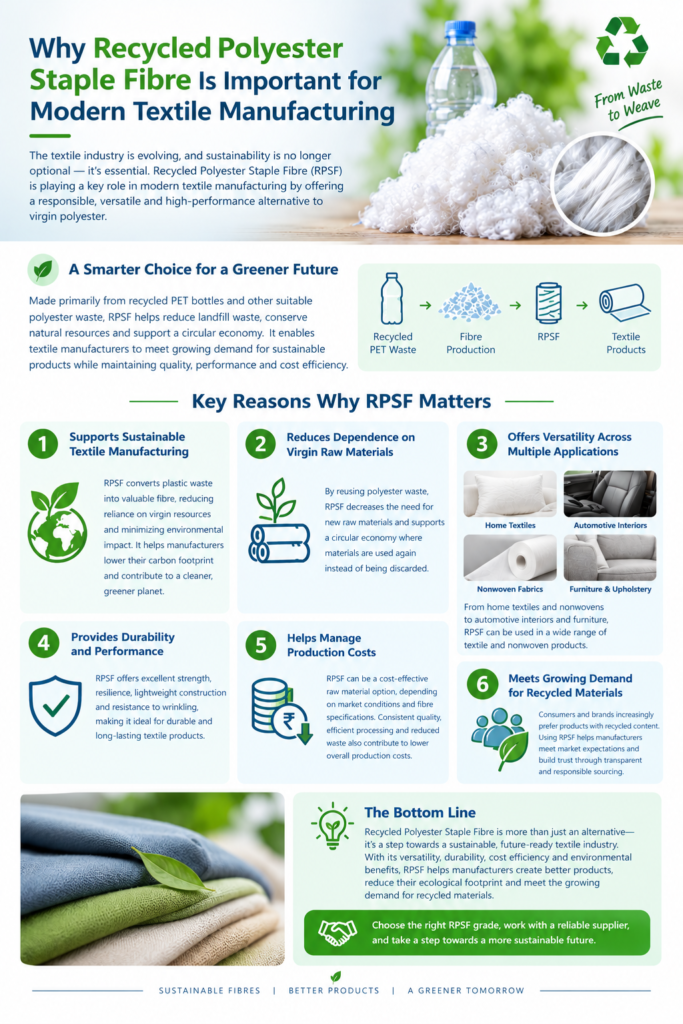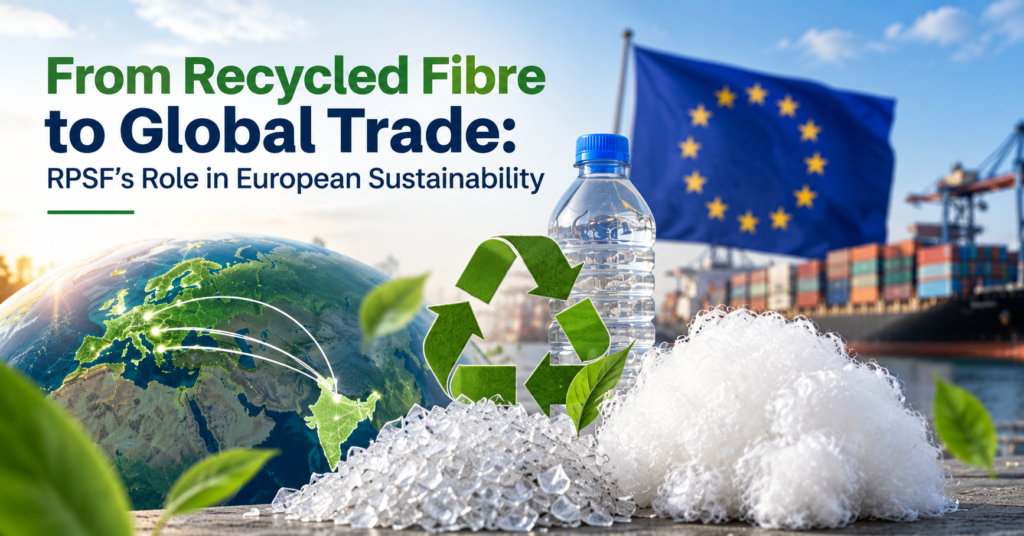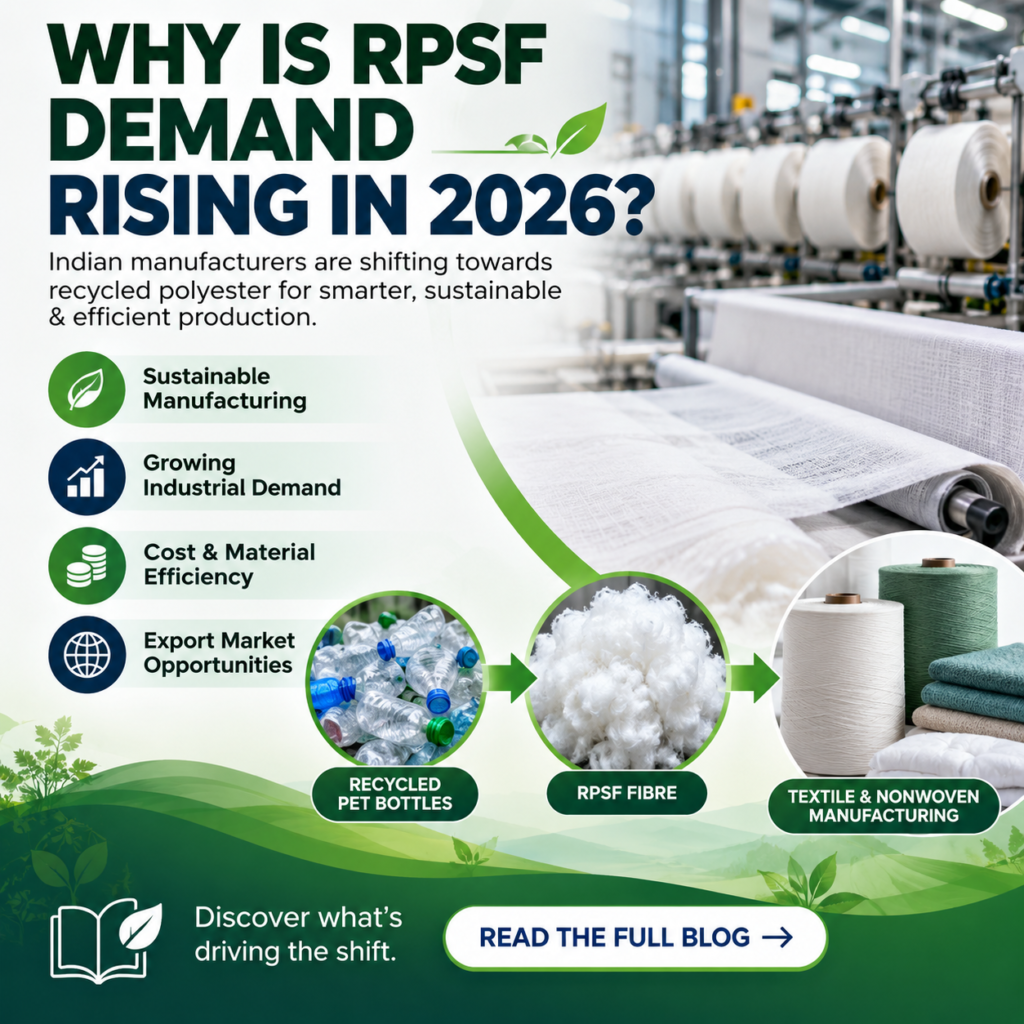
With industries across the world moving towards sustainable production, the Recycled Polyester Staple Fibre (RPSF) has become a significant solution for the textile and nonwoven sectors. RPSF is manufactured from recycled PET bottles and polyester waste, thereby reducing environmental pollution and fulfilling the increasing demand for eco-friendly materials.
Though many are aware that recycled fibre comes from plastic waste, few have a detailed understanding of the manufacturing process. The process of turning discarded plastic bottles into high quality polyester fibre is one of advanced technology, quality control and sustainable practices.
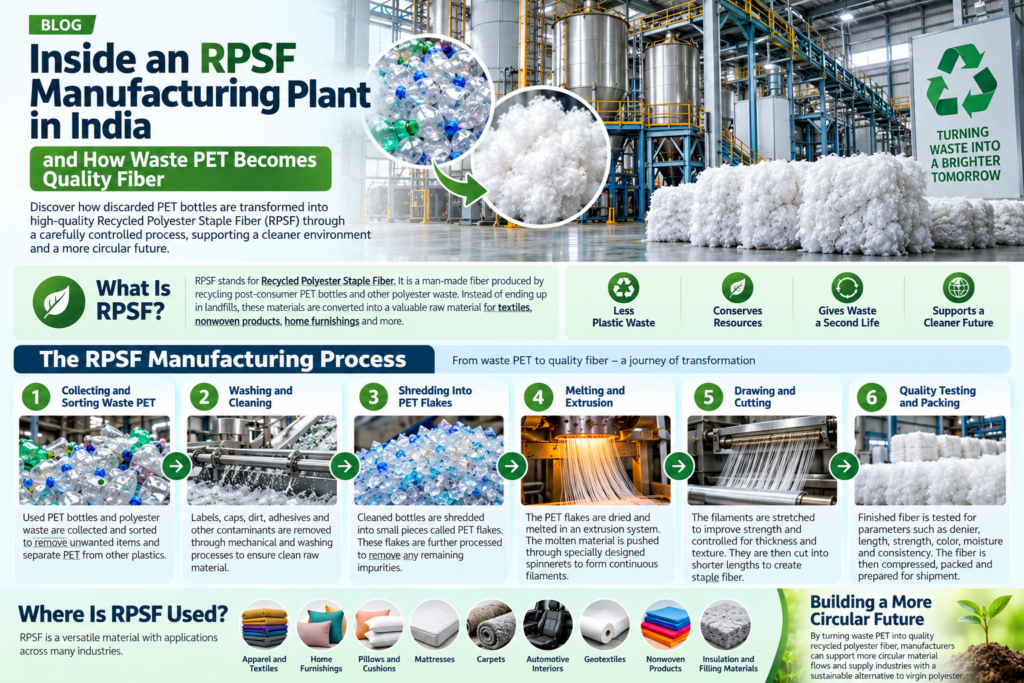
Plastic waste collection
The manufacturing process of RPSF involves collecting post-consumer PET plastic bottles and polyester waste materials. The bottles are sourced from recycling centers, waste management facilities and industrial sources.
PET bottles are among the most widely recycled materials because they contain polyester-based polymers that are recycled well. This waste material is used to make fiber instead of ending up in landfills or the oceans.
This first step is crucial in reducing plastic pollution and fostering a circular economy.
Separation & Sorting
The plastic waste is sorted in a detailed way, once collected. Bottles are sorted by colour, type of material and quality in order to ensure consistency in the final fibre production.
Careful removal of non-recyclable materials such as caps, labels, metals and other contaminants. Sorting is very important. The impurities may affect the quality and performance of the recycled fibre.
High manufacturing standards are often maintained through advanced sorting systems and manual inspections.
Washing & Cleaning Process
The PET bottles are then thoroughly washed and cleaned to remove dirt, adhesives, oils and other contaminants.
The bottles pass through several cleaning stages involving hot water, detergents and industrial washing systems. This process makes sure that the recycled material is clean and good for further processing.
Clean raw material is very important to make high quality and durable Recycled Polyester Staple Fibre.
Shredding to PET Flakes
The cleaned bottles are crushed into small pieces called PET flakes. The flakes are of uniform size and are easier to handle in the next stages of manufacture.
The strength, texture and consistency of the final fibre product are directly affected by the quality of the PET flakes. Therefore, manufacturers are very careful to maintain proper flake standards.
At this stage the material has been converted from waste plastic into a useful industrial raw material.
Extrusion and Melting
The PET flakes are then melted in specialized machinery at high temperatures . The material becomes a thick liquid polymer after melting.
This molten polymer is then extruded through spinnerets – small nozzles with tiny holes – to form long continuous polyester filaments. It is called extrusion.
At this stage the thickness and properties of the fibre can be controlled according to industrial needs.
Fibre Stretching & Crimping
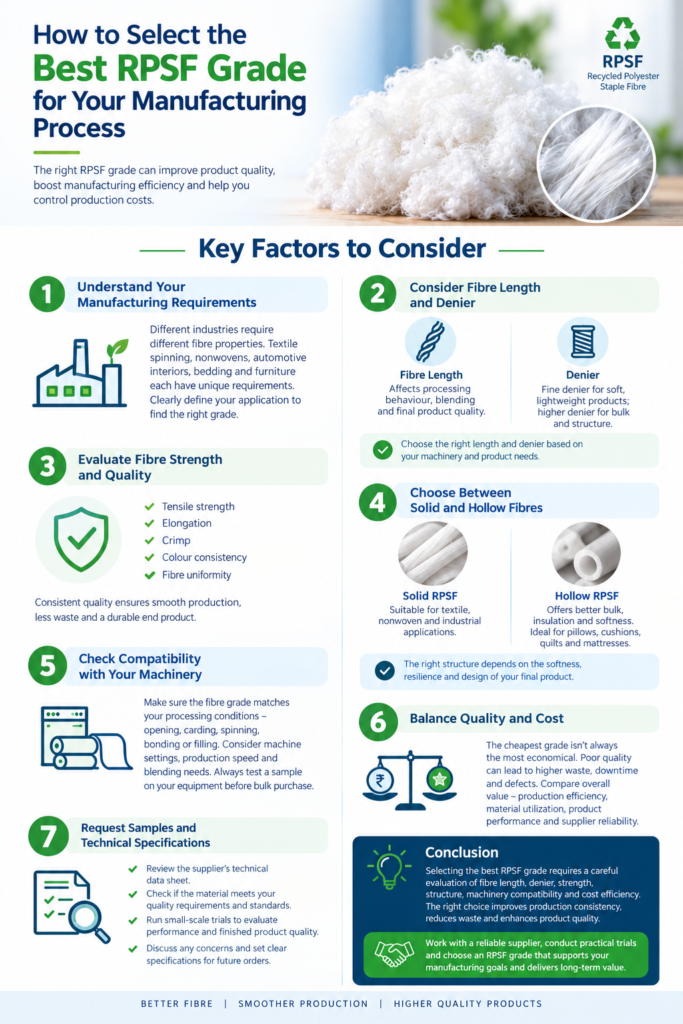
The fibres are cooled and stretched after extrusion to enhance their strength and durability. The stretching process aligns the molecular structure of the fibre, which makes it more resilient and suitable for a variety of textile applications.
The fibres are then crimped to give a textured, wave-like surface similar to natural fibers. Crimped fibres have better softness, elasticity and filling properties.
This step is particularly important in applications such as pillows, cushions, quilts and upholstery products.
Cutting & Finishing
The continuous polyester filaments are cut to specific lengths of staple fibre according to customer requirements. Different industries require different sizes and specifications of fibre.
After cutting the fibres may be subjected to further finishing treatments to enhance softness, brightness, antistatic properties or performance characteristics.
Finally the finished Recycled Polyester Staple Fibre is baled, packed and ready for distribution.
Applications of RPSF:
RPSF finds extensive application in many industries such as:
- Products of home furnishing
- Pillows & Cushions
- Quilts and mattresses
- Vehicle interiors
- Non-woven fabric
- Geo-textiles
- Soft furnishings and upholstery
It is eco-friendly , durable and lightweight making it a great option for modern manufacturing .
Also Read: The role of RPSF in sustainable home furnishing products
Conclusion
Recycled Polyester Staple Fibre’s manufacturing is a perfect example of how waste can be turned into a valuable and sustainable resource. From the collection of discarded PET bottles to the production of high quality textile fibre, every step contributes to environmental protection and responsible manufacturing.
As industries increasingly prioritise sustainability and circular economy practices, RPSF will have an even greater role to play in shaping the future of textile and home furnishing production. Manufacturers are not just producing quality products but also contributing to a cleaner greener world through the recycling of plastic waste into useful fibre.