Walk into almost any manufacturing facility today — whether it makes clothes, car seats, packaging, or construction materials — and somewhere in that supply chain, there’s a good chance recycled PET flakes are involved. What started as a niche sustainability initiative has quietly become a core raw material for industries that care about both performance and environmental responsibility.
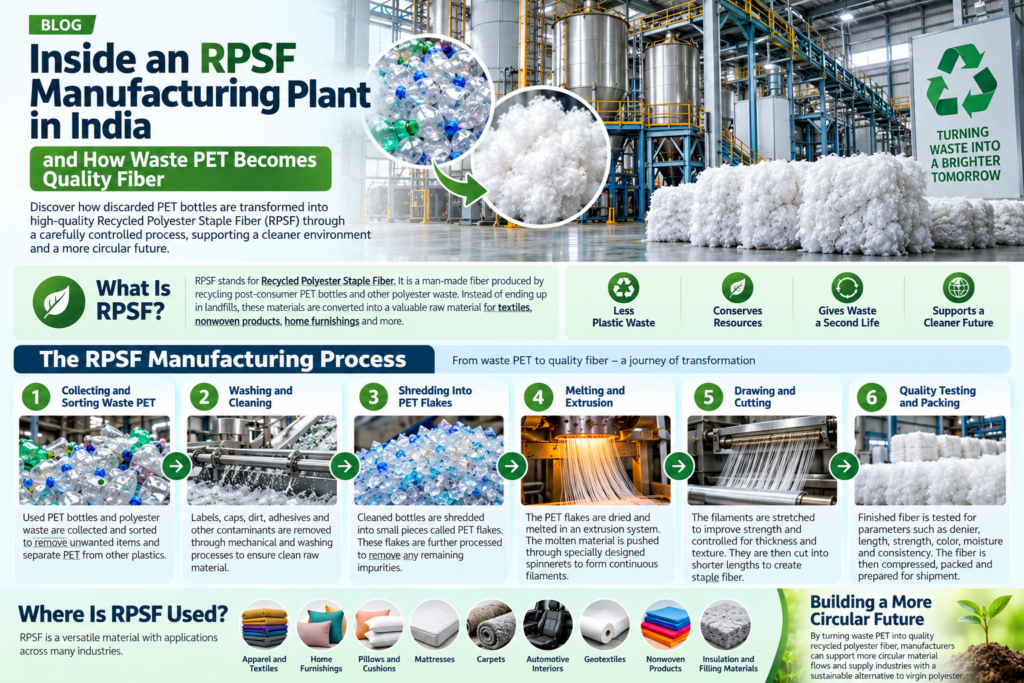
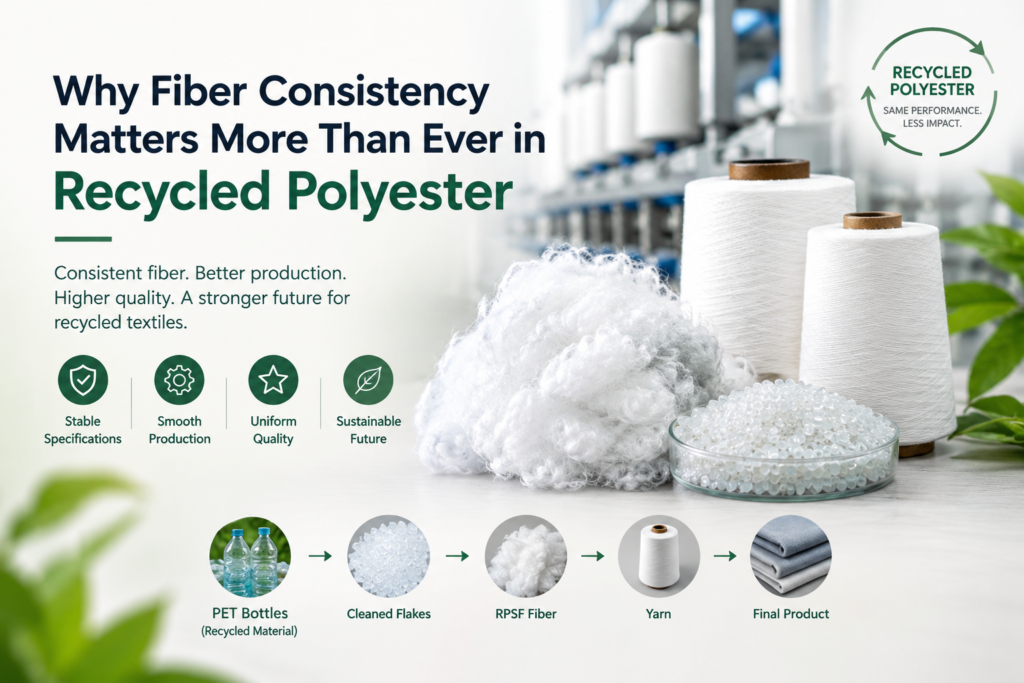
PET flakes — derived from post-consumer plastic bottles that are cleaned, sorted, shredded, and processed — are now one of the most versatile recycled materials on the planet. In 2026, demand is not just growing. It’s accelerating. Here’s a look at the five industries driving that growth.
1. Textile and Apparel Industry
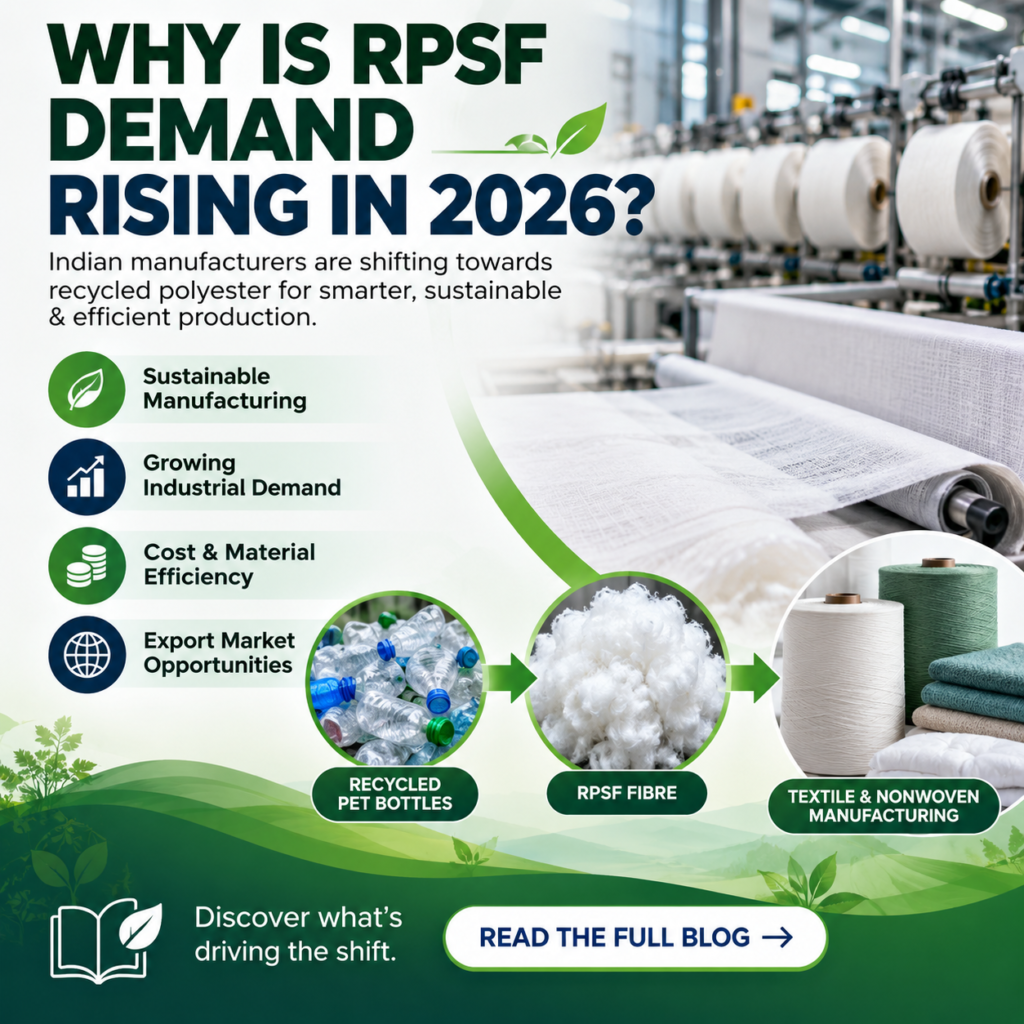
This is the biggest consumer of recycled PET flakes globally, and the numbers make sense. The textile industry needs enormous quantities of polyester fibre, and rPET flakes are the starting point for producing recycled polyester staple fibre (RPSF) — the same fibre used in everything from fleece jackets to bed linens.
Brands like Patagonia, H&M, and Adidas have made strong commitments to increasing their recycled content, and they’re not alone. The pressure from consumers and regulators alike is pushing even mid-market fashion labels to rethink their raw material sourcing. PET flakes processed into RPSF offer a reliable, high-volume solution that doesn’t compromise on fibre quality.
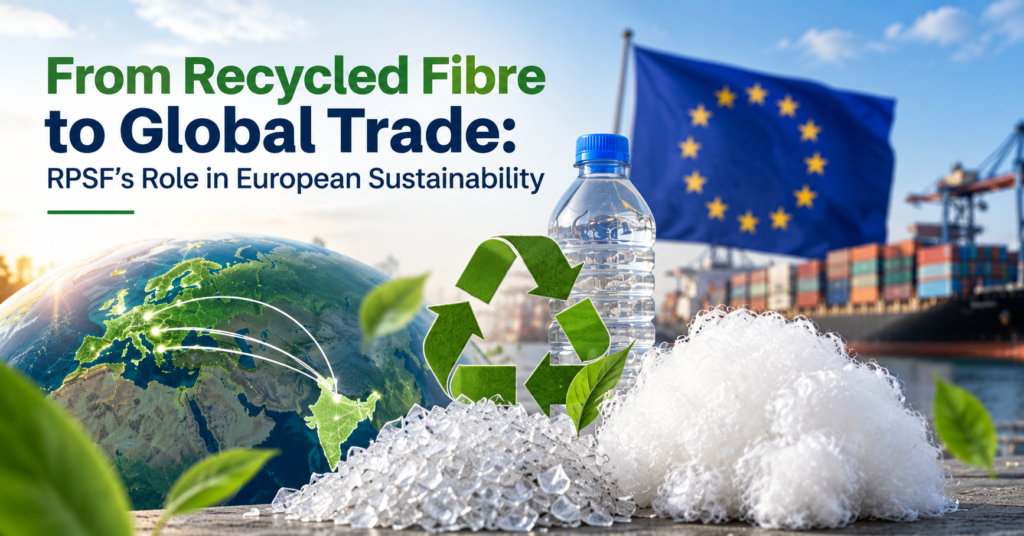
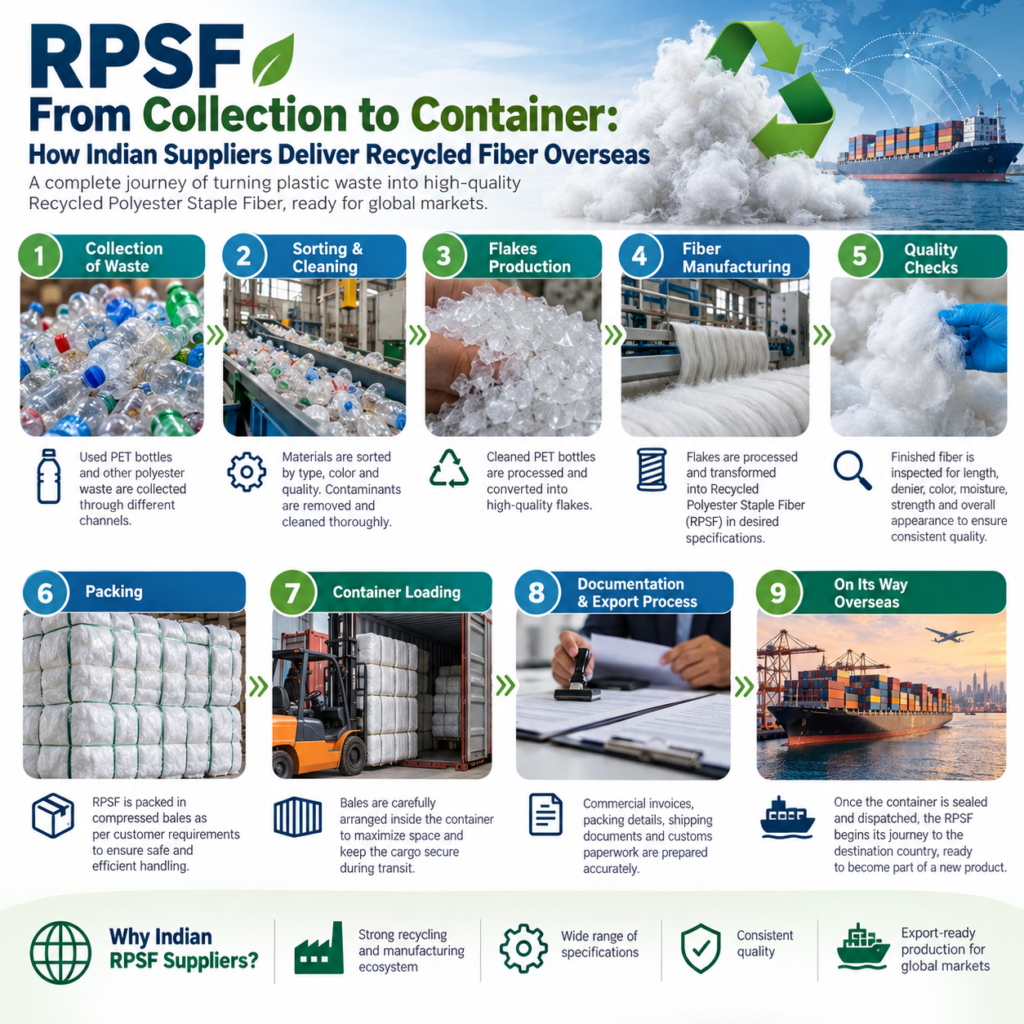
For manufacturers in India — particularly in Gujarat and Rajkot — this represents a significant export opportunity as global demand for GRS-certified RPSF continues to rise.
2. Packaging and Bottles Industry
The circular economy concept is perhaps most visible here. Recycled PET flakes are converted back into new PET resin and used to produce fresh bottles, food containers, and packaging films. This bottle-to-bottle recycling loop is exactly what regulators in the EU and India have been pushing for.
In 2025, the EU mandated that beverage bottles contain at least 25% recycled PET. Similar Extended Producer Responsibility (EPR) frameworks in India are creating domestic demand for food-grade rPET flakes. Companies that can supply clean, high-purity, clear PET flakes are well-positioned to serve this growing market.
The key requirement here is purity. Packaging-grade flakes need to meet strict contamination standards, which is why the washing and sorting process at the manufacturing stage is so critical.
3. Automotive Industry
Open the door of a modern passenger car and you’re surrounded by recycled PET without knowing it. Seat padding, trunk liners, door panel insulation, headliners, and underbody shielding — all of these commonly use nonwoven fabrics made from recycled PET fibres that start life as PET flakes.
The automotive sector values rPET for two specific reasons: weight and durability. Recycled polyester components are lightweight, which improves fuel efficiency, and they hold up well against temperature extremes and mechanical wear. Major OEMs including Toyota, BMW, and Maruti Suzuki have committed to increasing recycled material content in their vehicles as part of broader sustainability targets.
As electric vehicles scale up and automakers compete on sustainability credentials, demand from this sector is only going to grow.
4. Construction and Geotextiles Industry
This is a sector that doesn’t always make the headlines in sustainability conversations, but it quietly consumes large volumes of recycled PET fibre and nonwovens. Geotextiles — permeable fabrics used in road construction, drainage systems, soil erosion control, and embankment reinforcement — are a major end-use for rPET.
The properties that make recycled polyester ideal here are its resistance to moisture, chemicals, and biological degradation. Unlike natural fibres, rPET-based geotextiles don’t rot underground. They maintain their structural integrity for years, which makes them a practical and cost-effective choice for civil engineering projects.
With India’s infrastructure expansion continuing at a significant pace — roads, highways, irrigation canals, and urban drainage — this segment represents a substantial domestic opportunity for rPET flake processors and fibre manufacturers.
5. Home Textiles and Furnishings Industry
Cushions, pillows, duvets, mattress pads, curtains, rugs — the home furnishings industry is a significant and often underestimated consumer of recycled PET fibres. Hollow conjugate fibre, which is widely used as a filling material in pillows and cushions, is almost entirely made from rPET.
Consumers are increasingly aware of what’s inside their home products, not just what’s on the surface. The ability to label a product as “made from recycled bottles” has real marketing value — and manufacturers are responding by specifying recycled fibre in their procurement. OEKO-TEX and GRS certifications have become standard requirements for suppliers in this space.
India is one of the largest exporters of home textiles globally. That export market increasingly demands recycled content, which means domestic rPET flake and fibre producers like Rakshitam Ecofibre are sitting at exactly the right point in the supply chain.
Final Thoughts
Recycled PET flakes are no longer a niche material for sustainability-focused brands. They are a mainstream industrial input that five major sectors depend on — and that dependency is growing as regulations tighten, consumer awareness rises, and the economics of virgin versus recycled materials continue to shift.
For buyers across these industries, the question is no longer whether to use recycled PET. It’s who to source it from, and how to ensure consistent quality at the volumes they need.
At Rakshitam Ecofibre, we manufacture and supply premium quality recycled PET flakes from our facility in Rajkot, Gujarat. Our flakes meet GRS and international quality standards, making them suitable for textile, packaging, automotive, and industrial applications.
Contact us to discuss your requirements or request a sample.