India generates more than 9.4 million tonnes of plastic waste every year, a large share of which is from discarded PET bottles. Much of this waste ends up in landfills or waterways, but an ever-growing slice of India’s manufacturing sector is turning this problem into an extraordinary opportunity. Leading the charge in this transformation is the manufacture of Recycled Polyester Staple Fibre (RPSF) – a process that transforms post-consumer PET bottle waste into a high-grade textile fibre that is used in industries around the world.
What is RPSF and why does it matter?
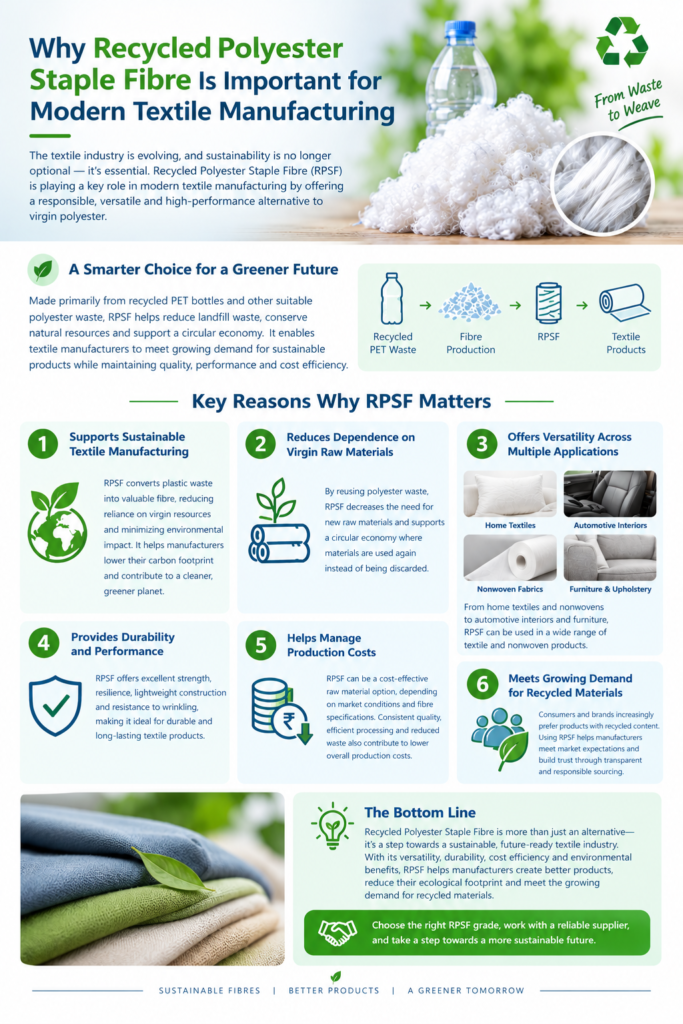
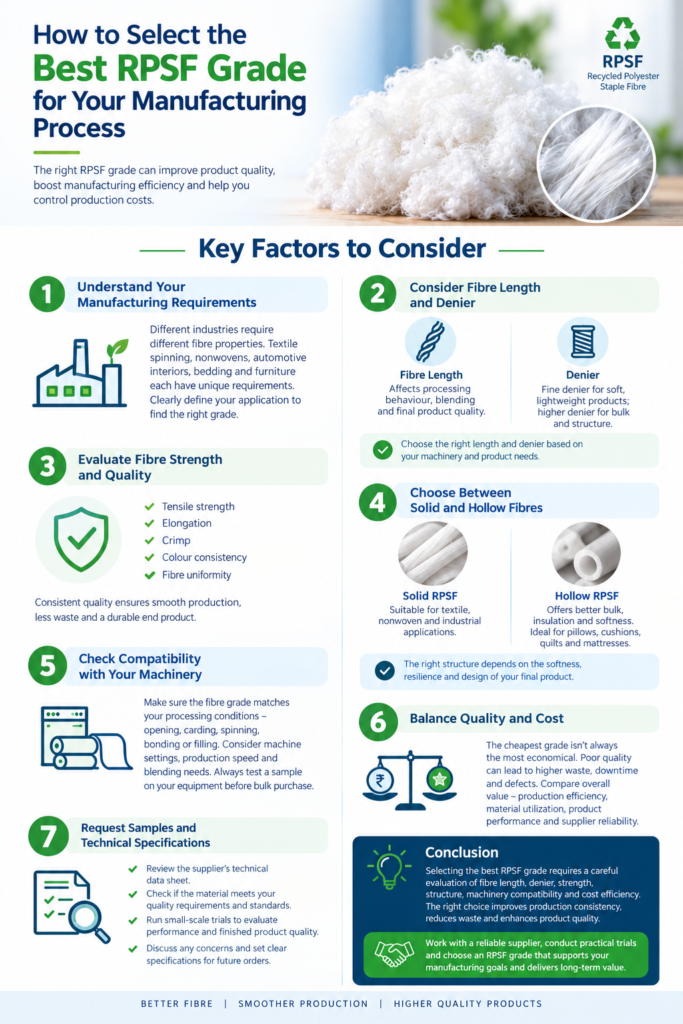
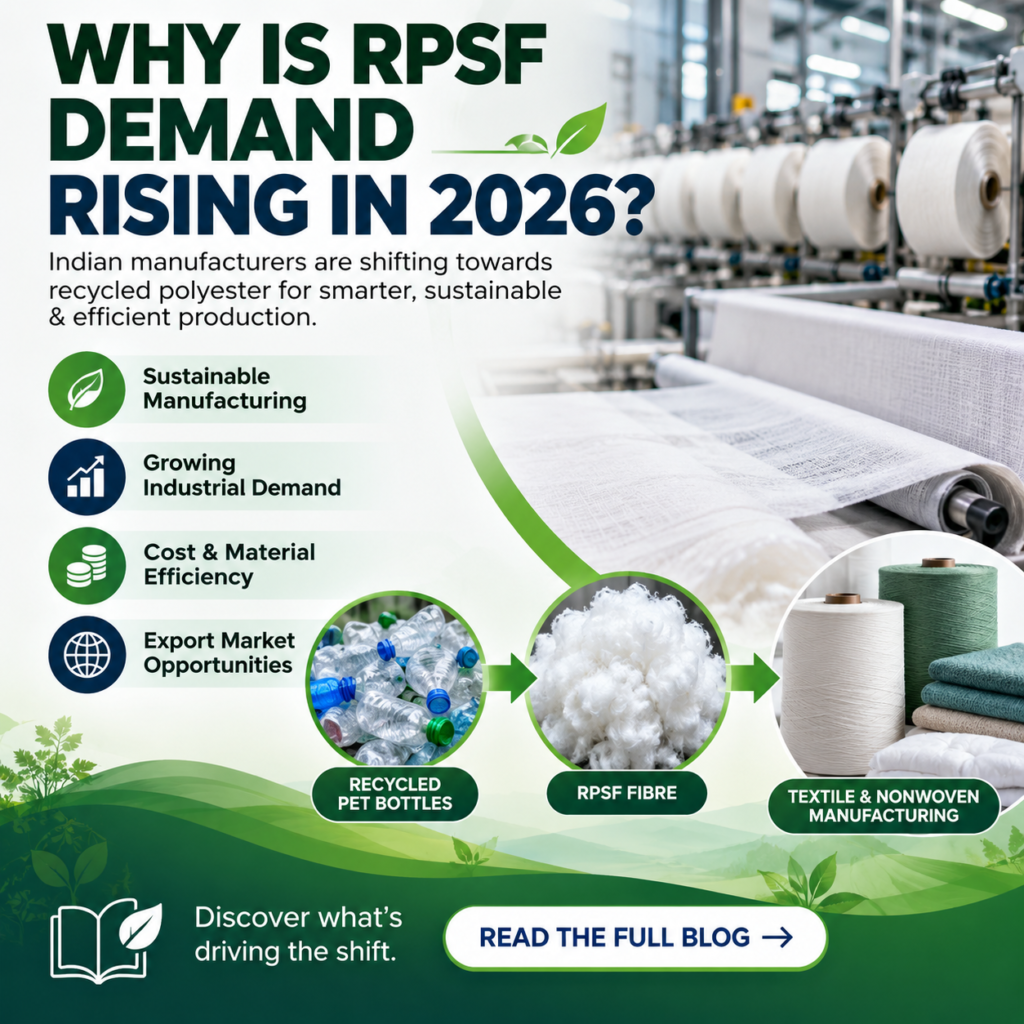
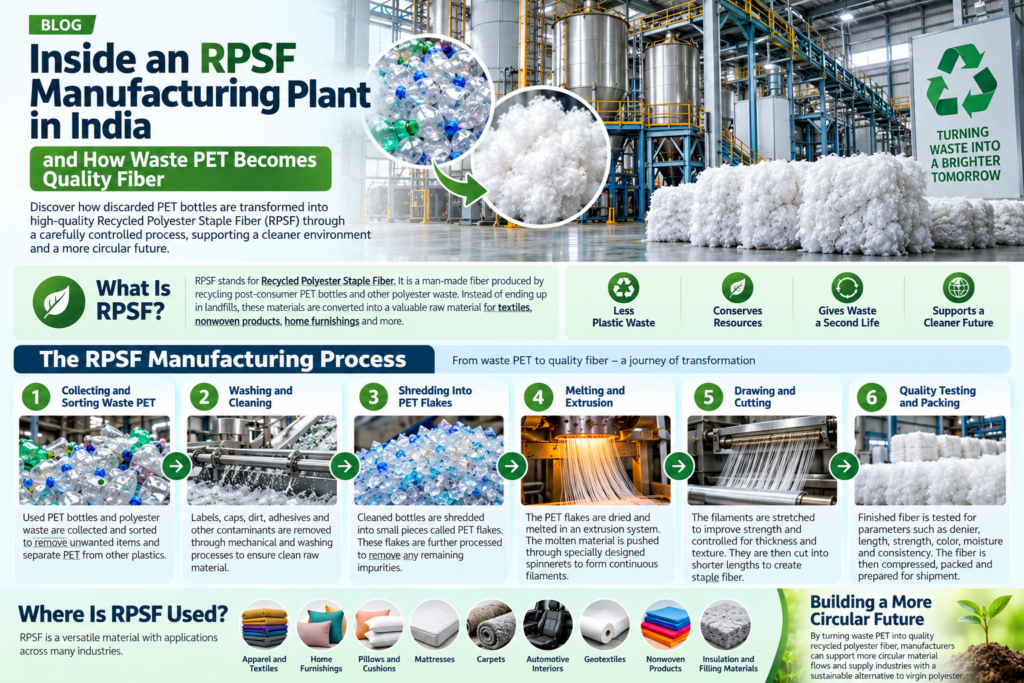
Recycled Polyester Staple Fibre (RPSF) is a high performance fibre manufactured from post-consumer PET waste – mainly used plastic bottles – by a series of carefully controlled industrial processes. The bottles collected are then washed, sorted and shredded into small PET flakes. These are then melted, extruded and drawn into fine staple fibres that match – and in many cases exceed – the performance attributes of virgin polyester.
This is a game changer for the textile industry. RPSF provides the softness, tensile strength and dyeability of traditional polyester, with a significantly lower environmental footprint of the production process. RPSF production uses significantly less energy, produces fewer greenhouse gases, and does not need new petroleum-based raw material than virgin polyester.
Wide range of applications across sectors
RPSF is one of the most versatile of its type. The recycled polyester staple fiber is used today in a wide range of sectors:
Textiles and clothing RPSF is widely used in clothing, home decorations and furniture, offering a sustainable option catering to the increasing consumer demand for eco-friendly fashion.
Automotive Interiors: RPSF is helping to make vehicles greener and more comfortable, and is used by car makers for seat padding, sound-absorbing panels and thermal insulation.
Nonwovens: Fast growing area for RPSF, nonwoven applications include medical textiles, geotextiles, filtration, packaging and more. Home comfort products Pillows, cushions, mattresses and quilts are increasingly filled with recycled polyester staple fibre, a resilient, hypoallergenic and sustainable filling material.
Gujarat – India’s RPSF manufacturing base
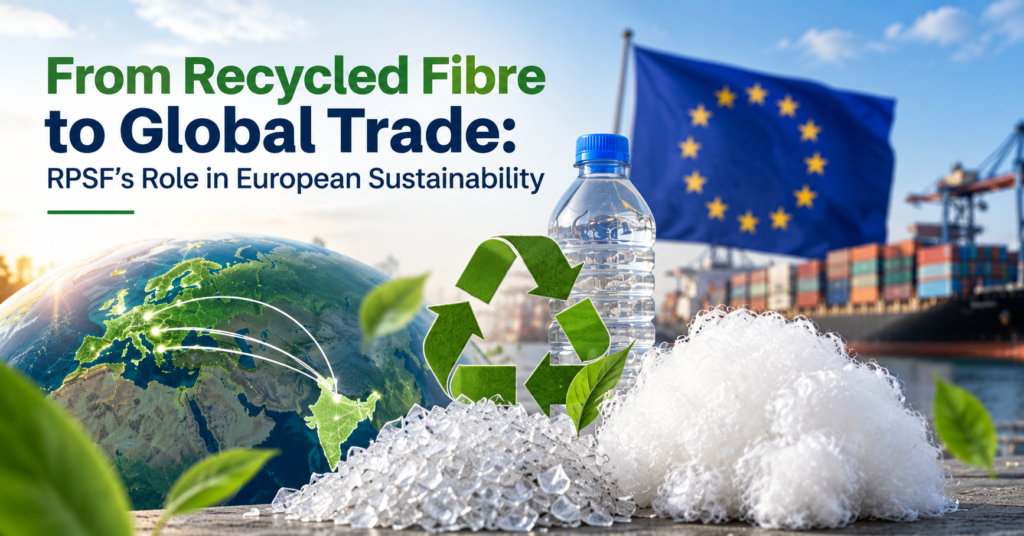
Gujarat is now the number one destination for RPSF manufacturing in India due to its strong textile ecosystem, robust logistics infrastructure and high density of innovative recycling companies. Now, companies in the Rajkot-Morbi belt with access to PAN India PET waste networks are exporting premium grade recycled polyester fibre and rPET flakes to Europe, Southeast Asia and North America markets.
Rakshitam Ecofibre Pvt. Ltd. is a well-known name in this space with its headquarters at Wankaner, Morbi. The company has a manufacturing capacity of 30,000 TPA. It procures 100% post consumer PET bottle waste and converts them into superior grade RPSF and rPET flakes. Its clients include companies in Spain, Italy, Belgium, Turkey, USA, Bangladesh, Vietnam and China.
Circular economy in practice
RPSF manufacturing isn’t just recycling, it’s a circular economy in action. Companies like Rakshitam Ecofibre are closing the loop on materials, reducing dependence on virgin petroleum-based resources and enabling brands to meet their sustainability commitments by directing waste plastic bottles back into productive industrial use. “Indian manufacturers are likely to see a substantial increase in demand for certified and traceable RPSF as more global brands adopt EPR (Extended Producer Responsibility) frameworks and recycled content targets.
Gujarat-based suppliers are quickly emerging as a preferred sourcing destination for textile brands, apparel manufacturers and industrial buyers seeking a reliable RPSF manufacturer in India with the scale, quality certifications and sustainability credentials.
Also Read: Inside the manufacturing process of recycled polyester staple fibre
On the horizon
As sustainability regulations around the world tighten and brands come under increasing pressure to reduce their plastic and carbon footprints, recycled polyester staple fibre is transitioning from a niche material to an industry standard. India, with its huge base of PET waste resources, cost competitive manufacturing ecosystem and rapidly upgrading recycling technology, is well positioned to become the world’s largest supplier of RPSF.
Rakshitam Ecofibre is the kind of partner the future of textile manufacturing needs for companies looking for a dependable, high-capacity manufacturer of recycled polyester staple fibre with a real commitment to sustainability.