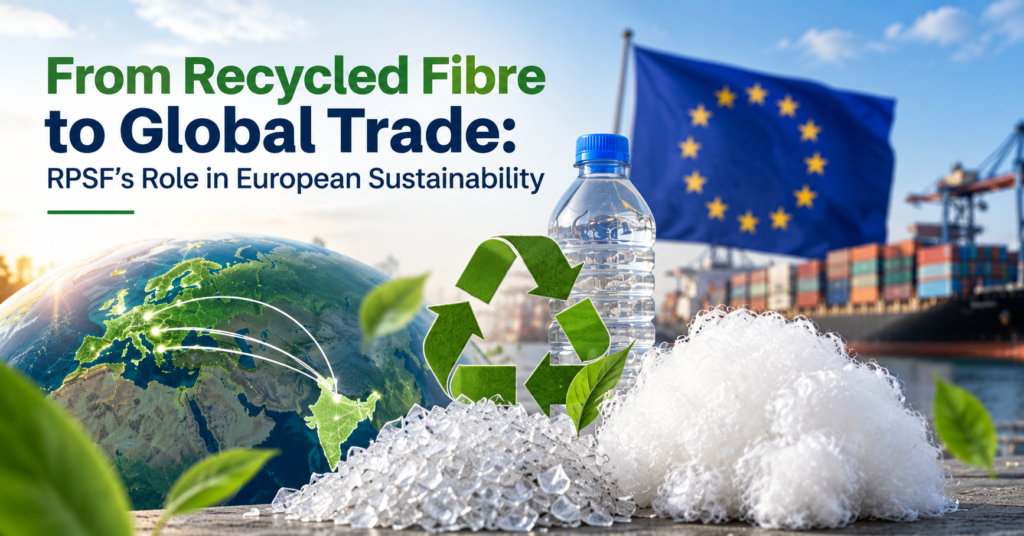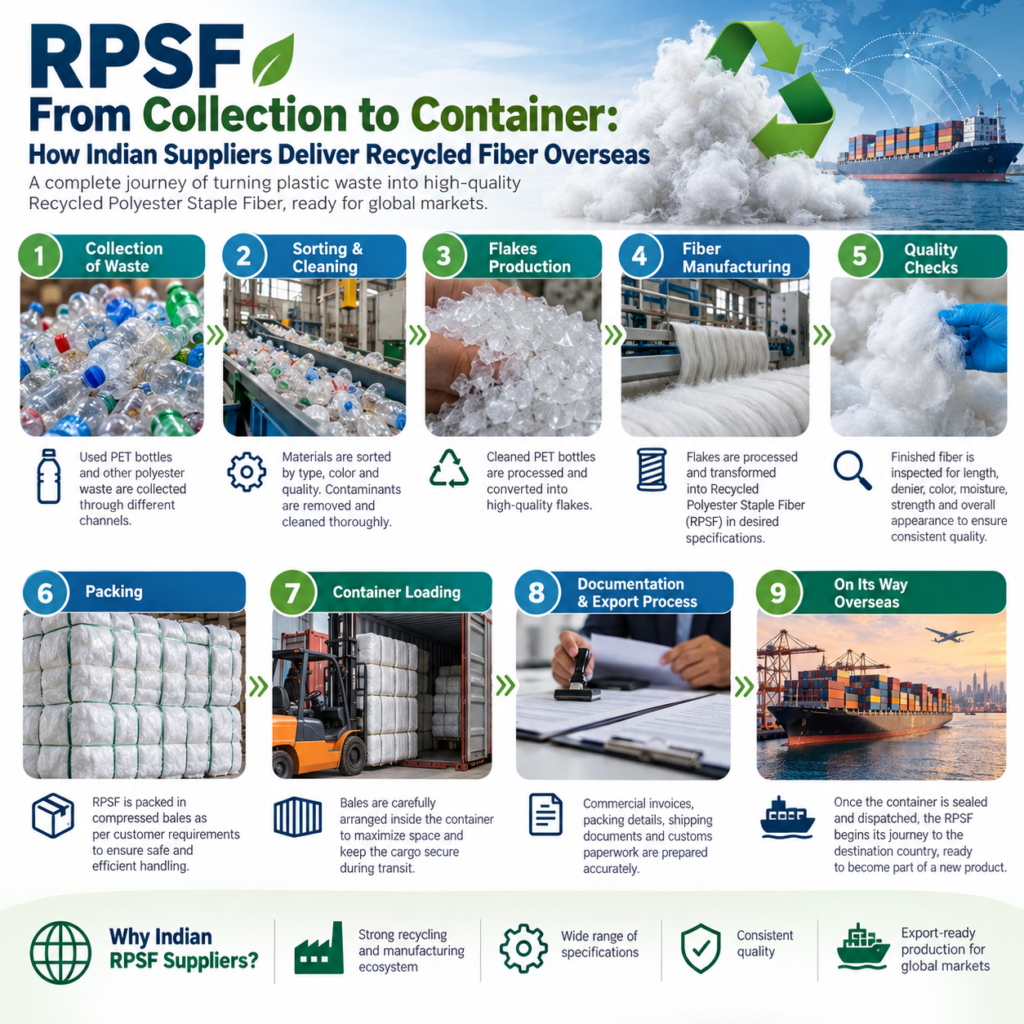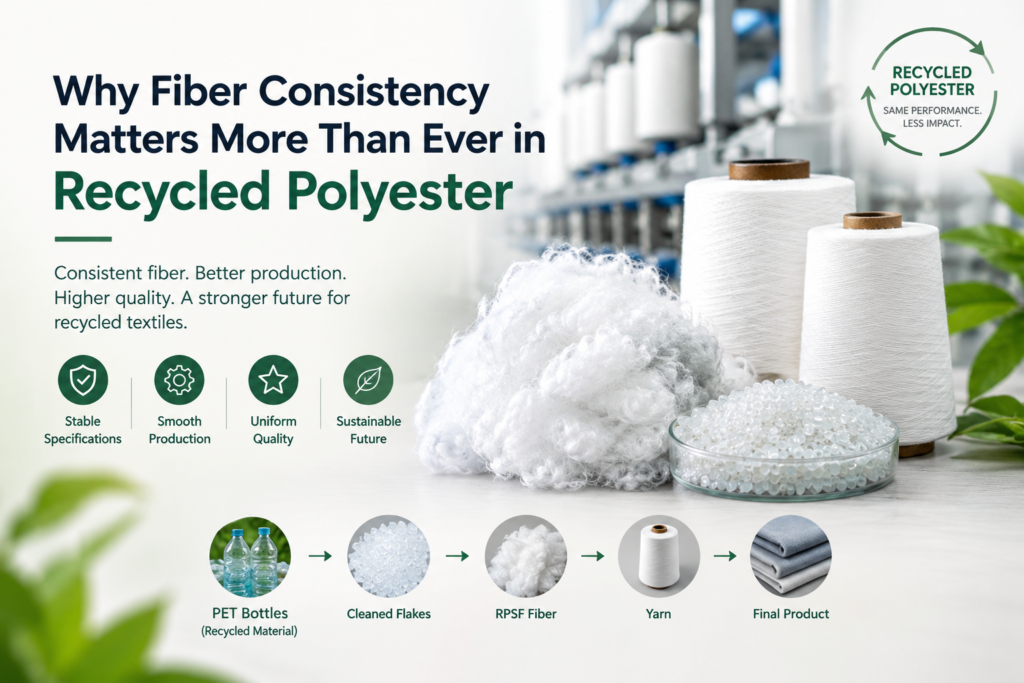
In today’s global economy, which is focused on sustainability, recycled materials are becoming more important than ever. Recycled Polyester Staple Fibre (RPSF) has become a key raw material in many industries, including textiles, automotive, home furnishings, and nonwoven products. India is quickly becoming a top exporter of RPSF as demand grows around the world.
India has a lot of potential in the global RPSF export market because it has strong manufacturing capabilities, easy access to raw materials, and prices that are competitive. This sector is becoming one of the best places for manufacturers, exporters, and investors to grow.
Why RPSF is in High Demand Around the World
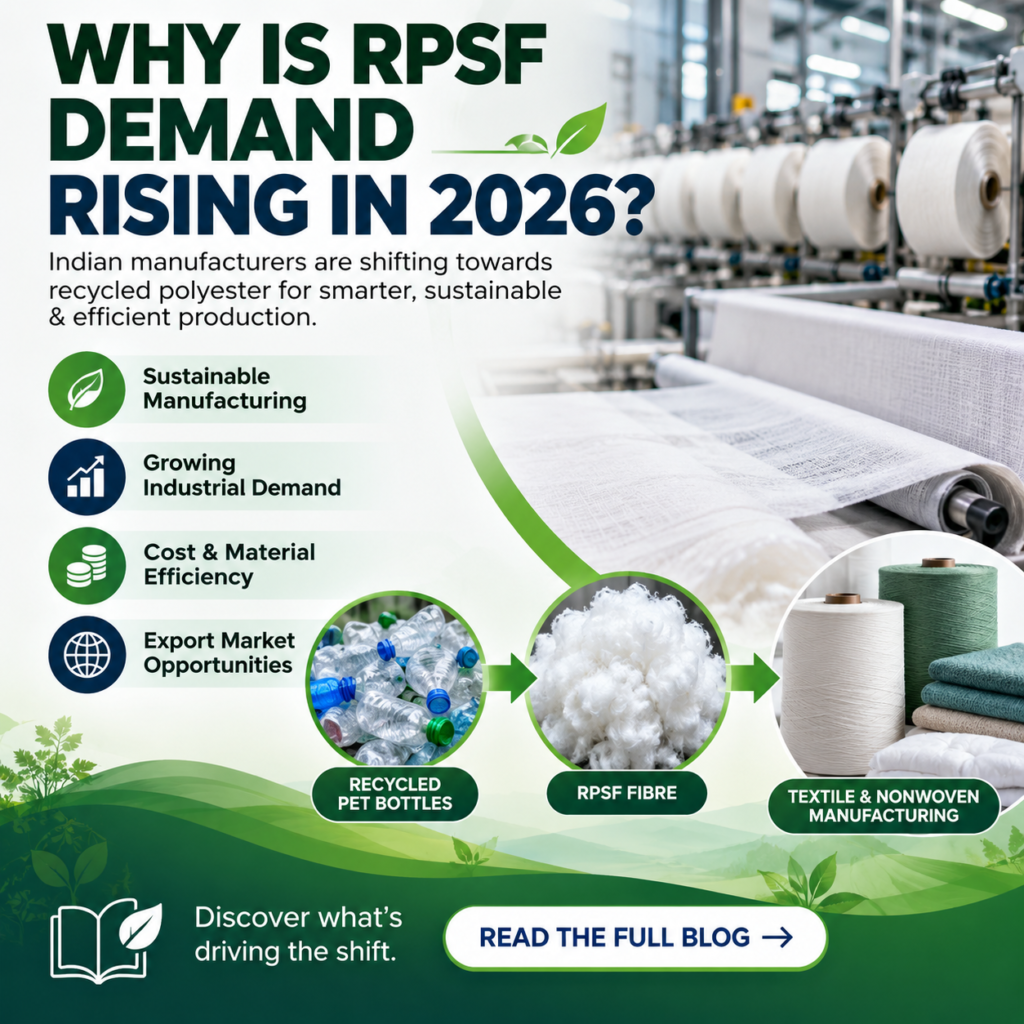
The main reason people want RPSF is because the world is moving towards sustainability. More and more, governments, brands, and consumers are working to cut down on plastic waste and carbon emissions. Because of this, there has been a big change from virgin polyester to recycled polyester.
To meet environmental standards, big industries like fashion and textiles are using recycled fibres. Global brands are also promising to use recycled materials in their products, which directly increases the need for RPSF.
Also, RPSF is cheaper than virgin polyester, which makes it a good choice for manufacturers who want to be environmentally friendly and make money at the same time.
India’s Strength in Making RPSF
India has a lot of strengths that make it a strong competitor in the RPSF export market:
- Lots of raw materials available: India makes a lot of PET plastic waste, which is the main raw material for making RPSF. This makes sure that manufacturers always have a steady supply chain.
- Making things at a low cost: Indian manufacturers can make RPSF at competitive prices because their labour and operational costs are lower. This makes exports more appealing in international markets.
- More and more recycling facilities: The recycling system in India is always getting better, and new technologies are making RPSF better and more consistent.
- A skilled workforce: Having skilled workers in the textile and recycling industries helps make production processes more efficient and output of higher quality.
Indian RPSF’s Most Important Export Markets
India sends RPSF to many places around the world. These are some of the biggest markets:
- Europe: High demand because of strict rules about the environment
- United States: More and more people want eco-friendly materials
- Middle East: More uses in textiles and industry
- Asia-Pacific: Manufacturing sectors are growing
These markets have steady demand, so exporting RPSF is a good business opportunity.
Applications That Are Driving Export Growth
One of the main reasons why RPSF is in high demand for export is that it can be used in many different ways. Important uses are:
- Textiles and Apparel: Used in yarns, clothing, and blended fabrics
- Furniture for the home: cushions, pillows, carpets, and upholstery
- Automotive Industry: materials for seat fillings and insulation
Nonwoven items include hygiene products, wipes, and filters.
The need for RPSF keeps going up as these industries grow around the world.
Problems with RPSF Export
Exporters have a lot of chances, but they also have some problems to deal with:
- Quality Consistency: For international buyers, it is very important to keep the fibre quality the same.
- Raw Material Fluctuation: The amount of high-quality PET waste that is available can change.
- Global Competition: This area is also competitive for countries like China and Vietnam.
- Logistics and Compliance: Shipping costs and export rules can affect margins.
But companies that focus on quality control, getting certifications, and making logistics run smoothly can get past these problems.
Potential for Future Growth
It looks like the future of RPSF exports from India is very bright. As people become more aware of the need for sustainability and global rules on plastic use become stricter, the demand for recycled fibres is likely to rise quickly.
The government of India is also encouraging recycling programmes and eco-friendly manufacturing, which will make the industry even stronger. Indian exporters have a great chance to grow their business in other countries as global brands move towards using more environmentally friendly materials.
Now is the best time for businesses that want to enter or grow in this sector to put money into technology, quality standards, and partnerships around the world.
Also Read: Top 7 uses of Recycled Polyester Staple Fiber in Textile Industry
Conclution:
The export of RPSF from India is not only a growing industry, but it is also a smart way to make money in the long term. India is in a great position to become the world’s top supplier of recycled fibre because global demand is rising, production is strong, and export markets are growing.
To get the most out of this market, manufacturers and exporters need to focus on quality, sustainability, and new ideas.
Questions and Answers
1. What is RPSF?
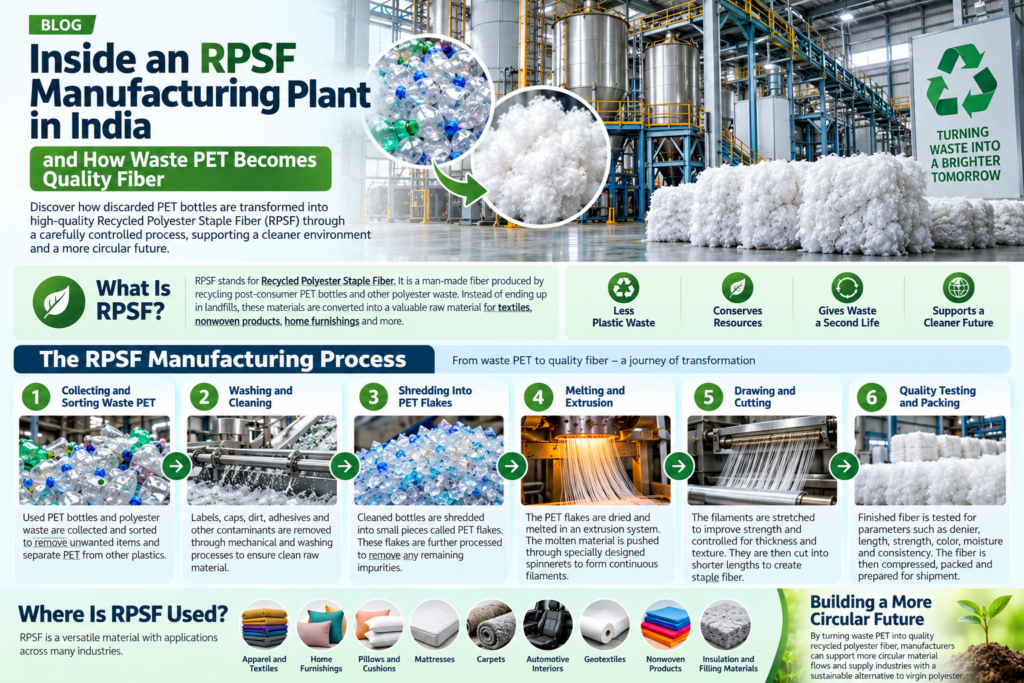
Recycled PET plastic, mostly bottles, is used to make Recycled Polyester Staple Fibre (RPSF). It is a sustainable alternative to new polyester.
2. What is causing RPSF exports from India to grow?
The global demand for sustainable materials is rising, prices are competitive, and India’s strong recycling infrastructure is making RPSF exports grow.
3. What countries buy RPSF from India?
Countries in Europe, the US, the Middle East, and the Asia-Pacific regions are the biggest buyers.
4. Who uses RPSF?
RPSF is used in textiles, furniture for the home, car parts, and nonwoven products.
5. Is RPSF a good business for exporting?
Yes, RPSF exports have a lot of room to grow and make money because demand is rising and global trends towards sustainability are growing.