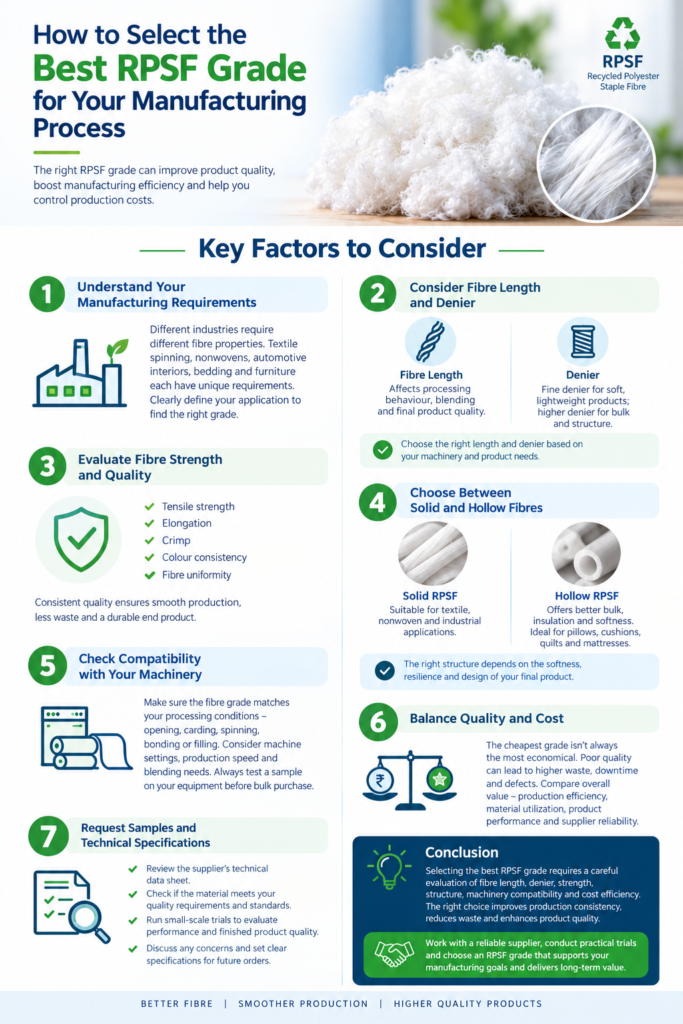
Over the last couple of years, industries worldwide have begun to focus more on sustainability, waste management and responsible manufacturing. Environmental issues are on the rise and manufacturers are seeking materials that can maintain industrial performance and eco-friendly production. One material that has gained significant importance in this shift is Recycled Polyester Staple Fibre (RPSF).
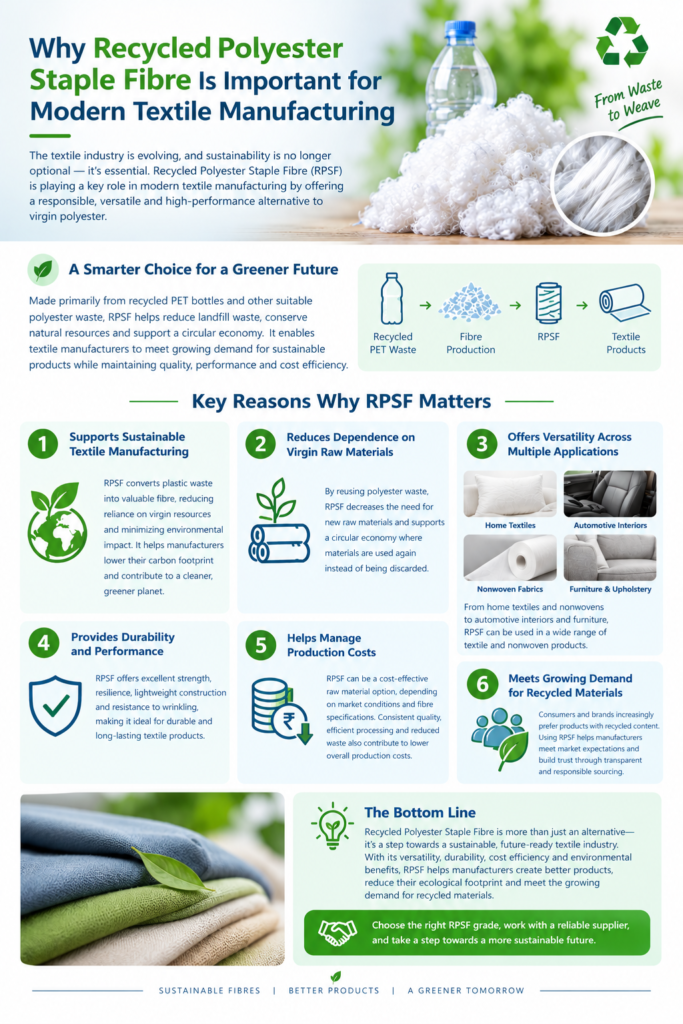
RPSF is produced from recycled PET plastic bottles and polyester waste. It has become much more than an alternative raw material. Today, it plays a major role in modern industrial manufacturing, due to its durability, versatility and environmental value.
What is Recycled Polyester Staple Fibre
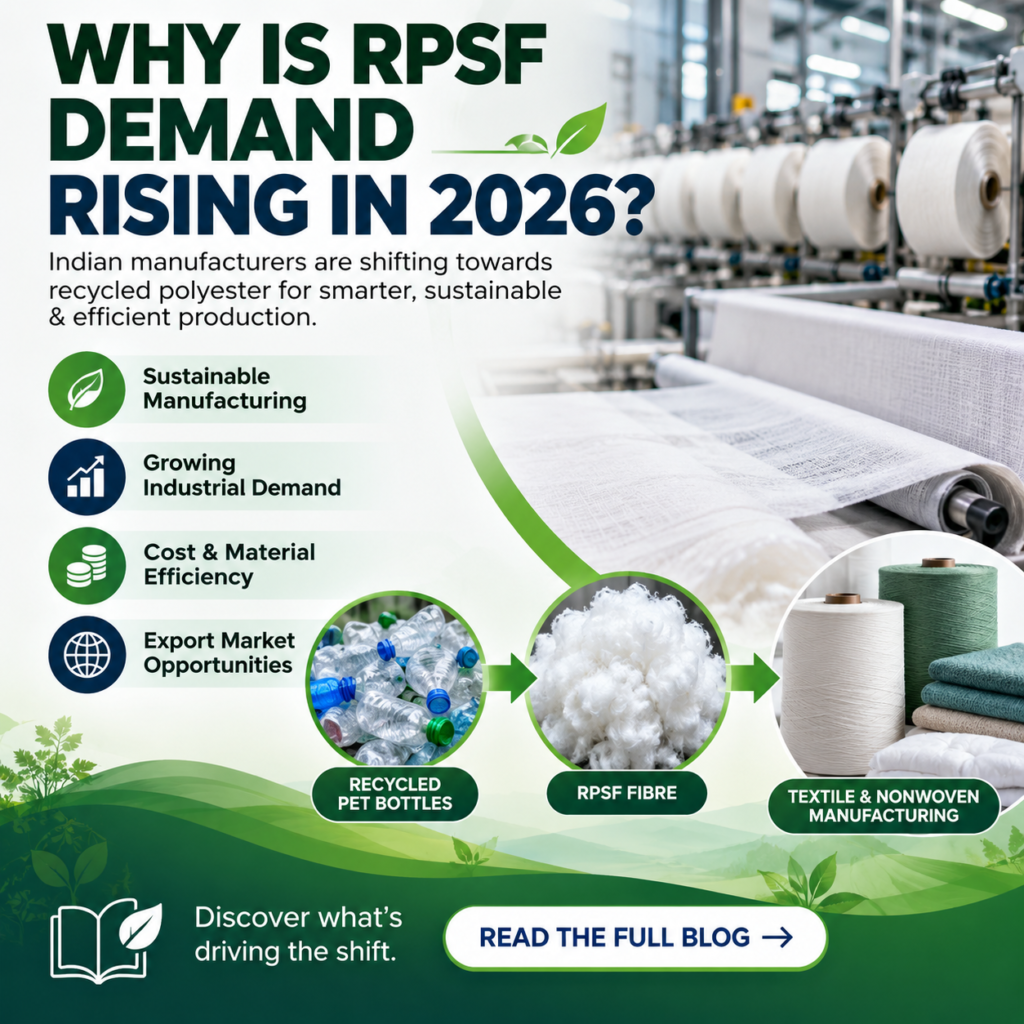
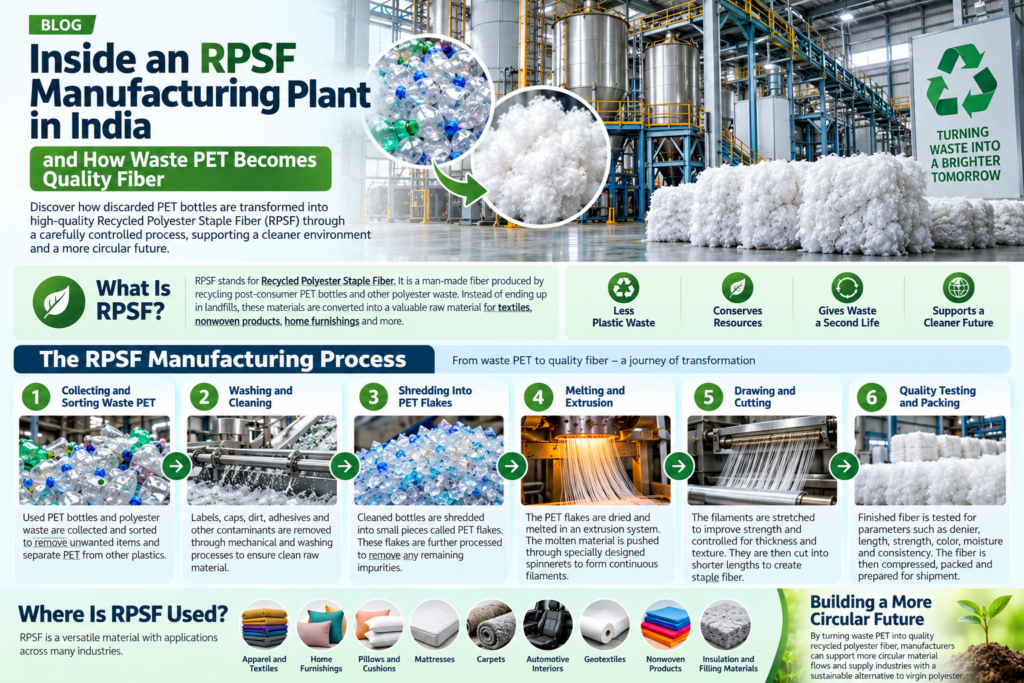
Recycled Polyester Staple Fibre is produced from used PET bottles and polyester waste that is processed into a reusable fibre. Instead of risking plastic waste ending up in landfills or the oceans, businesses are turning it into a valuable industrial product that can be used across multiple sectors.
The process is as follows:
- Plastic waste collection
- Sorting and cleaning
- PET flake processing plant
- Fiber cutting and finishing Melting and extrusion
The fiber thus produced is then supplied to the industries for various applications.
Why RPSF is being adopted by industry
The increased demand for RPSF is due to two major goals that industries today are trying to balance:
- Manufacturing with high efficiency
- Sustainable production methods
Environmental impact and cost of production are increased by traditional raw materials. Recycled Polyester Staple Fibre helps manufacturers reduce waste, whilst maintaining product quality and industrial efficiency.
One of the main reasons that the industrial value of this combination of performance and sustainability is growing.
Applications in Various Industries
Perhaps the biggest advantage of RPSF is its flexibility. Its adaptable properties make it suitable for use in many industrial sectors.
Textile Industry
RPSF is extensively used in textile manufacturing for:
- Yarn Fabric production
- TEXTILES NONWOVEN
- Stuffing materials
Its strength and flexibility are well suited to a variety of textile applications.
Home Furnishing Products
Recycled polyester fibre is used by the home furnishing sector in:
- Cushions
- Cushions
- Mattress
- Quilts
- Upholstery Items
Soft feel and durability make it ideal for comfort products.
The automotive industry
Automotive manufacturers also utilize RPSF to:
- Filling Car Seats
- Insulation, interior;
- Soundproofing fabrics
- Fabric Parts
This helps to reduce the use of virgin materials in vehicle production.
Industrial and Nonwoven Applications
RPSF is well-liked in:
- Geotextile fabrics
- Products Filter
- Packaging Materials 6
- Industrial Insulation Services
Its capability to operate in diverse industrial environments enhances its commercial worth immensely.
Environmental Benefits Drive Industrial Demand
Much of the shift to RPSF is driven by environmental responsibility. The management of plastic waste has become a global issue and manufacturers are under increasing pressure to move towards sustainable solutions.
The use of recycled polyester fibre helps:
- Combat plastic pollution
- Less waste in landfills
- less dependence on virgin polyester
- Support activities of the circular economy
- Lower total environmental impact
For many companies, sustainability is no longer a branding strategy. It’s an operational necessity.
Cost effectiveness and production benefits
Besides sustainability, RPSF has practical industrial advantages. In general, manufacturers prefer materials that offer long term production efficiency and recycled polyester fibre is very much in support of this requirement.
Some of the main benefits are:
- The material is always available
- Long life fibre conductivity
- Lightweight construction
- Versatile for a range of applications
- Production costs competitive
These factors are felt to be giving RPSF a high commercial value for large scale and small scale manufacturing operations.
Increasing Global Demand for Sustainable Materials
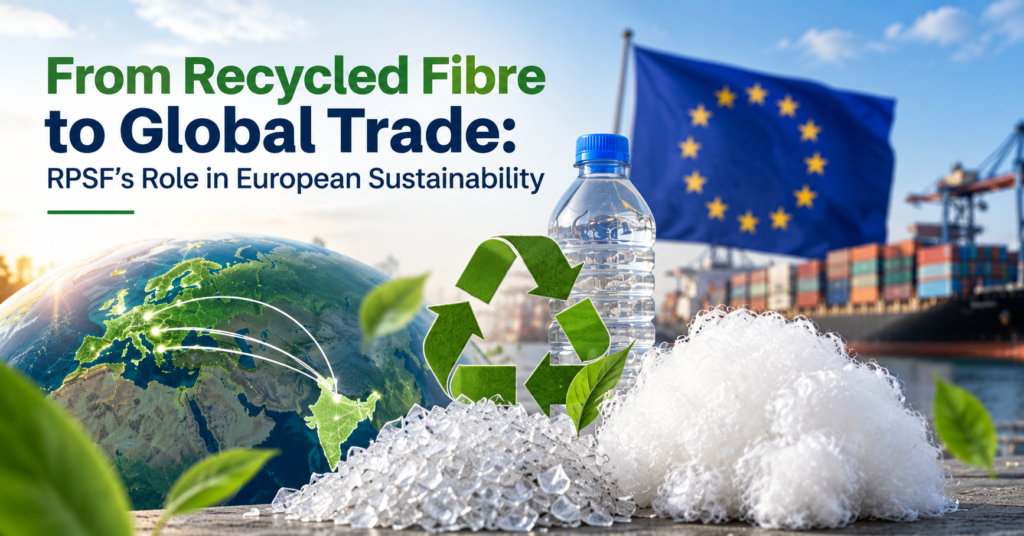
Environmentally conscious production systems are evolving rapidly worldwide. Sustainable manufacturing practices are increasingly being embraced by consumers, businesses and governments.
This in turn means demand for recycled materials continues to grow in:
- Textiles Manufacturing
- Packaging industries
- Construction applications
- Automotive manufacturing
- Consumer goods industries
Recycled polyester staple fibre has become a vital part of this transition, combining the benefits of industrial usability and sustainability.
RPSF Opportunities in Manufacturing
The future of industrial manufacturing will be even more sustainability-driven. “Companies are likely to spend more on materials that reduce environmental impact but do not compromise product quality.
RPSF is an ideal candidate for this direction as it upcycles waste into a useful industrial resource. With ongoing improvements in technology and recycling infrastructure, the industrial use of recycled polyester fibre is likely to grow even more across global markets.
Also Read: How RPSF manufacturing is reshaping indias textile industry
Conclusion
The real industrial value of Recycled Polyester Staple Fibre is much more than just recycling plastic waste. It is a realistic and sustainable solution for today’s manufacturing industries looking for performance, efficiency and environmental responsibility at the same time.
RPSF has been proving its worth in a number of industries, from textiles and home furnishings to automotive and industrial applications. Recycled polyester staple fibre is a key material for the future of sustainable manufacturing as industries shift to greener production systems.