Category: Blog

Your blog category

  • Why Brands Are Turning to Recycled Polyester Staple Fibre for the Future

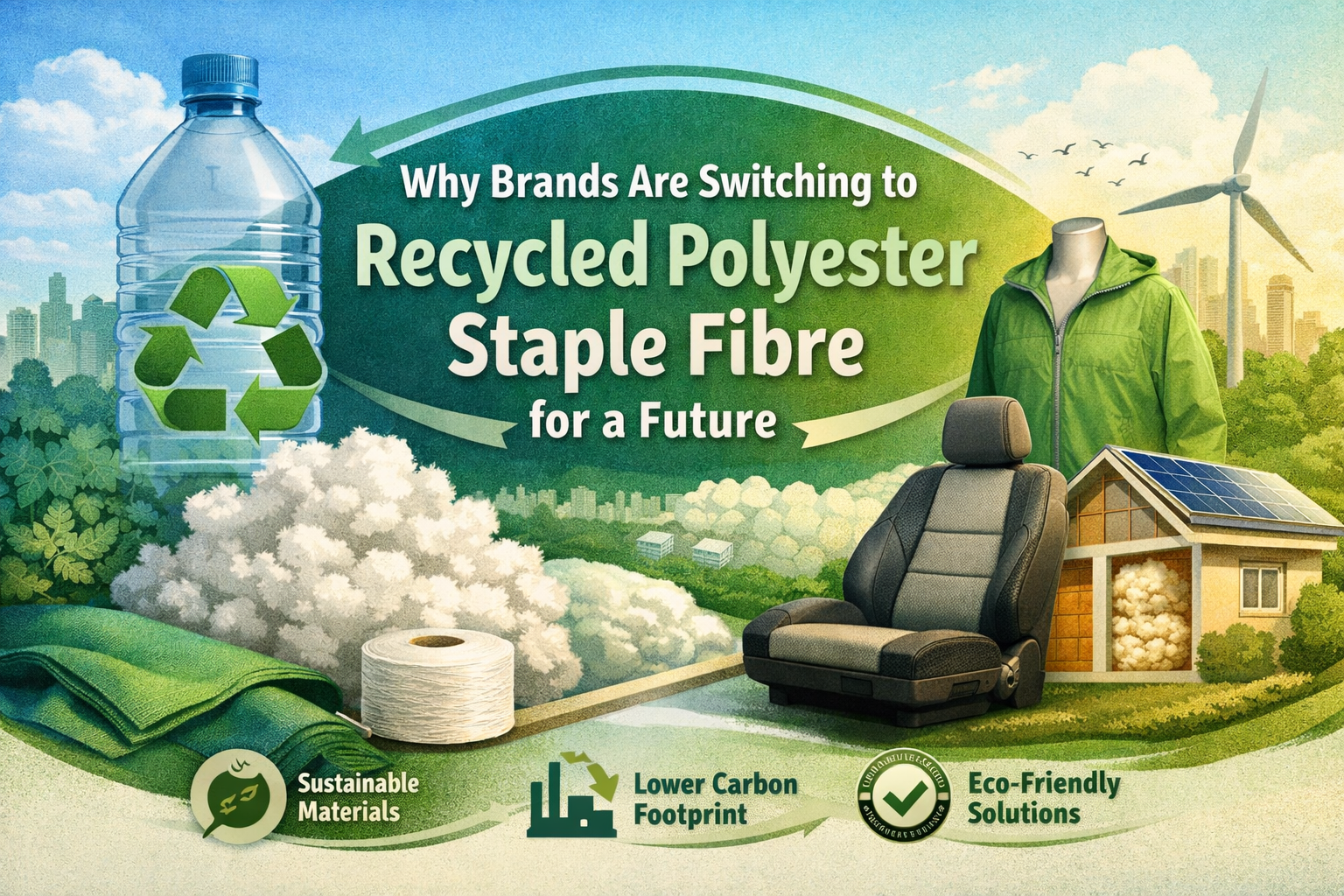
    Why Brands Are Turning to Recycled Polyester Staple Fibre for the Future

    Sustainability has ceased to be a trend and has increasingly become the need of the day. Whether in the fashion industry, home textiles industry, automotive industry, or insulation industry, companies have started to transform themselves in terms of the materials used. One such product that’s gaining immense popularity as a choice of material is “Recycled Polyester Staple Fibre” or “RPSF”.

    What Is Recycled Polyester Staple Fibre?

    Recycled Polyester Staple Fibre is made from post-consumer plastic waste, primarily from used PET bottles. Such bottles are collected, cleaned, reduced into flakes, melted, and then produced into premium-quality fibres. This produces a robust and universal fibre that performs equally well to virgin polyester, but with a substantial negative effect on the environment.

    With its closed-loop recycling system that converts waste into value, RPSF has become the preferred packaging supplier for brands that support the circular economy.

    Why Are Brands Shifting from Virgin Polyester?

    Virgin polyester is extracted from petroleum, which is a non-renewable resource. It requires large amounts of energy for processing, which in turn releases large quantities of carbon emissions. The need for sustainable strategies in brands has increased, with companies being challenged with regard to their carbon footprint, plastics, and reliance on oil.

    The recycled polyester staple fibre meets the following challenges:

    • Decreasing plastic waste in landfills and the ocean
    • Consuming less energy compared to virgin polyester
    • Reducing the emissions of greenhouse gases
    • Supporting global sustainability commitments

    Key Features of Recycled Polyester Staple Fibres

    1. Responsibility to the Environment

    Applications of RPSF will lead to a reduction in carbon emissions between 30-50% compared to that of virgin polyester. Brands that use recycled fibres are making a conscious effort to reduce waste and conserve the planet.

    2. High Performance & Durability

    Advances in modern recycling have ensured that the recycled staple polyester fibres have good strength, elasticity, and resistance. The fibres can be readily processed in products like yarn spinning, non-woven materials, filling, or insulation materials.

    3. Cost Efficiency in the Long Term

    Even though the start-up costs differ, the recycled fibres ensure that the raw material procurement remains stable for brands, shielding them against any variability in the price of petroleum. Additionally, tax benefits apply.

    4. Adherence to International Standards

    It can be certified according to international norms such as GRS (Global Recycled Standard), making it simpler for brands to satisfy export conditions and audits on sustainability.

    Industries Promoting the Adoption of RPSF

    Some of the sectors that are taking the lead in the application of recycled polyester staple fibre are:

    • Fashion & Apparel: Recycled materials, sportswear, and fast fashion clothing are now using R-PET in place of virgin polyester.
    • Home Textiles: Pillows, cushions, quilts, and mattresses employ RPSF for softness and strength.
    • Automotive: Car interiors, insulation panels, and seat cushioning are increasingly utilising recycled fibres.
    • Construction & Insulation: It is commonly used in acoustic and thermal insulation materials.

    Why Consumers Like Brands that use Recycled Fibre

    Consumers today investigate how products are created. Brands that incorporate recycled polyester staple fibre into their products make their customers satisfied and loyal to their brand because they take good care of the planet.

    Search trends reveal increasing interest in keywords such as eco-friendly fibre, recycled polyester, and sustainable textile materials; thus, RPSF is an SEO-friendly material choice too.


    The Future of Recycled Polyester Staple Fibre

    With the enforcement of government regulations on the management of plastic waste and the target of net-zero by brands, recycled polyester staple fibre would become the norm rather than the exception. Advances in the technology of recycling would increase the quality of the fibre.

    “The brands that adopt RPSF are not only minimising their negative impact on the environment,” says Blome, “they are protecting themselves against an

    Also Read: rPET Chips Recycling Process: From PET Waste to Reusable Material

    Final Thoughts.

    Moving to recycled polyester staple fibre represents a positive strategy for sustainability, compliance, and future development. This approach links sustainability and positive performance. In the wake of an increasing global call for sustainable materials, companies that use RPSF will be at the forefront of sustainable production in the future.

  • rPET Chips Recycling Process: From PET Waste to Reusable Material

    rPET Chips Recycling Process: From PET Waste to Reusable Material

    With an ever-growing need for sustainable plastic alternatives, rPET chips have become one of the primary components used in current recycling technology. rPET (recycled polyethylene terephthalate) chips are made from waste PET material generated by consumers and are reused in a wide range of applications, such as packaging and industry.

    A clear comprehension of rPET chips recycling technology can be a great help in allowing manufacturers, brands, and recyclers to establish quality standards, adherence, as well as efficiency in recycling technology.

    What Are rPET Chips?

    rPET chips are processed and pelletized from recycled PET that is extracted from used PET containers. While flakes are irregular in size and shape, chips are more uniform and easier to melt and mold during manufacturing. rPET chips have almost similar performance attributes to those of virgin PET without using raw petrochemicals.

    Importance of rPET Chips Recycling

    The conversion of PET waste into rPET Chips promotes a circular economy, thereby utilizing plastic waste materials as raw material. This is beneficial for:
    • Decrease the landfill and ocean plastic waste.
    • Lower carbon emissions compared with virgin PET production.
    • Save Energy & Natural Resources
    • Satisfy regulatory and branding sustainability requirements.

    Step-by-Step rPET Chips Recycling Process

    1. Collection and Classification of PET Waste

    To start, there is the gathering of PET bottles from post-consumer recyclables. PET bottles are sorted by type of polymer and color using both manual and automated methods. Clear PET bottles are the most preferred material when producing quality rPET chips.

    2. Shredding and Flake Production

    The sorted PET bottles are then reduced to small flakes. The flakes act as the raw material for further cleaning and subsequent processing.

    3. Hot Washing & Decontamination

    PET flakes are subjected to hot washing, where labels, adhesives, food residues, and impurities are removed. The process is important for obtaining rPET chips for high-performance or food-contacting uses.

    4. Drying and Melt Filtration

    After purification, the flakes are dried and melted. Modern melt filtration equipment filters out fine contaminants, leaving high-quality material.

    5. Extrusion and Chip Removal

    Molten PET is extruded and sliced into equal rPET chips. This is quickly cooled to retain the desired level of product crystallinity.

    6. Testing & Packing of Quality

    rPET chips are checked for intrinsic viscosity, moisture content, color uniformity, and level of contamination prior to their final packing for industrial consumption.

    rPET Chips for Food Packaging – Industry

    In food contact applications, rPET chips are required to adhere to certain safety standards, such as:
    • FDA, EFSA, or equivalent regulatory authority requirements:
    • Use of approved decontamination technologies: Boats
    • Traceability of raw materials
    • Ongoing IV and low levels of contaminants
    However, only those rPET chips that meet these requirements can be considered for food and beverage packaging applications.

    Applications of rPET Chips

    rPET Chips are commonly employed in:
    • PET bottles and packaging of drinks
    • Food containers and preforms
    • Polyester fibers are intended for textiles.
    • Strapping, sheets, and thermoformed products
    Due to versatility, recycling of these plastics becomes a preferred option in manufacturing factories.

    Benefits of Using Rpet Chips

    • Comparable quality to virgin PET
    • Cost-effective and resource-efficient
    • Facilitates sustainability and regulatory requirements support
    • Helps mitigate the effects on the

    Conclusion

    The recycling process of rPET chips is able to convert PET waste into high-quality recyclable material. By adopting sophisticated recycling practices, rPET chips assist in meeting the demand between plastic waste generation and green product manufacturing.
    1. What distinguishes rPET chips from rPET flakes?
    rPET chips are in pellets, whereas flakes are irregular pieces. Chips are more uniform in their preparation.
    2. Are rPET chips safe for food packaging?
    rPET chips are Yes, provided the process involves accepted technology and the product meets food standards.
    3. Are rPET chips substitutes for virgin PET?
    Depending on the application, rPET chips may be capable of fully or partially replacing virgin PET.
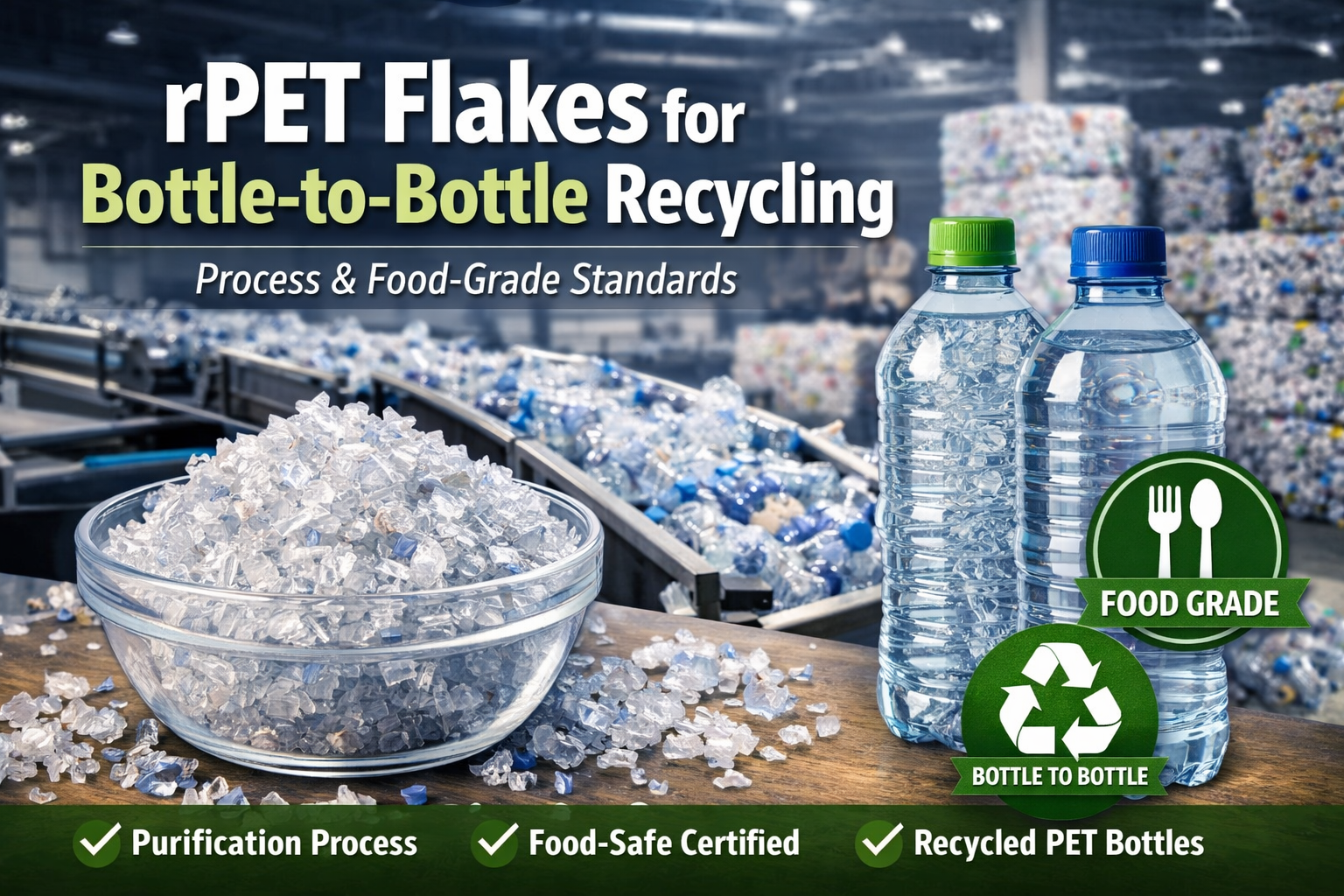
  • rPET Flakes for Bottle-to-Bottle Recycling: Process & Food-Grade Standards

    rPET Flakes for Bottle-to-Bottle Recycling: Process & Food-Grade Standards

    Bottle-to-bottle recycling has emerged as an important technology and method that can help deal with plastic and support a circular economy. The focus of this sustainable technology is based on flakes of rPET, which can recycle PET plastic bottles and reuse them in the form of new, food-grade plastic bottles. It is necessary to understand how flakes of rPET are made and what properties they require according to food-grade standards.

    What Are rPET Flakes?

    rPET flakes, also known as recycled polyethylene terephthalate, rPET, refer to materials made from post-consumer PET bottles. rPET flakes are purified, sorted, and processed to remove any contamination. In bottle-to-bottle recycling, high-quality rPET flakes undergo additional processes to ensure they meet food-grade guidelines.

    Importance of Bottle-to-Bottle Recycling

    Bottle-to-bottle recycling helps make PET bottles recyclable and reusable numerous times without affecting their quality. rPET flakes act as an important material link in this entire process, as they are the basic feedstock from which waste is converted into new bottles.

    rPET Flakes Production Process for Bottle-to-Bottle Recycling

    Food-grade rPET flake production requires a series of processes:

    1. Collection & Sorting: The used PET bottles are collected and sorted according to color and type. Clear PET bottles make better bottle-to-bottle recycled materials because they have greater purity.
    2. Grinding & Size Reduction: The bottles are flaked into identical pieces to facilitate washing and processing.
    3. Hot Washing & Decontamination: The flakes are subjected to hot washing with detergent to remove any labeling materials, adhesives, oil, and contaminants. This process is important for food packaging.
    4. Drying & Quality Inspection: The cleaned flakes are dried and then checked for their moisture content, intrinsic viscosity, and contaminants.
    5. Approval for Food Use: Advanced decontamination technology and traceability solutions are in place to ensure that the flakes of rPET produced are safe to come into direct contact with food.

    Food Grade specifications for rPET Flakes

    When it comes to bottle-to-bottle recyclable materials, rPET flakes need to meet the global food safety standards. Some of the key factors that

    • Low levels of contaminants (PVC, metals, and other polymers)
    • Intrinsic Viscosity (IV) for bottle strength
    • Deodorant and color-stable flakes
    • Compliance with FDA, EFSA, and analogous food-contact regulatory requirements
    • Utilization of accredited technologies for recycling and decontamination

    Those are the only types of rPET flakes qualified for the production of food and beverage packages.

    Applications of food-grade rPET Flakes

    Quality rPET flakes are applied in:

    • Water and soft drink bottles
    • Edible Oil and Dairy Products packaging
    • Drink preforms
    • Food-contact containers

    Such applications validate the safety and performance standards maintained by rPET flakes.

    Advantages of rPET Flakes Use in Bottle-to-Bottle Recycling

    The use of rPET flakes in bottle-to-bottle recycling has several advantages:

    • Reduces plastic waste in landfills
    • Reduces the use of virgin PET materials because it is made from recycled materials.
    • Aids in achieving recycling and packaging requirements
    • Encourages circular manufacturing practices

    Also Read: The Future of PET Bottles: Innovation, Reuse & Eco-Friendly Trends

    Conclusion

    rPET flakes for bottle-to-bottle recycling offer a viable and scalable technology for sustainable packaging solutions. As a result of advanced processing and strict food-grade regulations, flakes made from rPET can be reused for making new bottles without any quality and safety concerns.

    1. Are rPET flakes suitable for food contact applications?

    “Yes, food-grade flakes of rPET produced with accepted technologies are safe for direct food contact.”

    2. What are the differences between r-pet flakes and virgin PET flakes?

    The rPET flakes are considered recycled sources, while virgin PET sources come from petrochemicals.

    3. What are the advantages of using clear rPET flakes in bottle-to-bottle recycling?

    This is because clear flakes have better purity and color consistency suitable for new bottles.

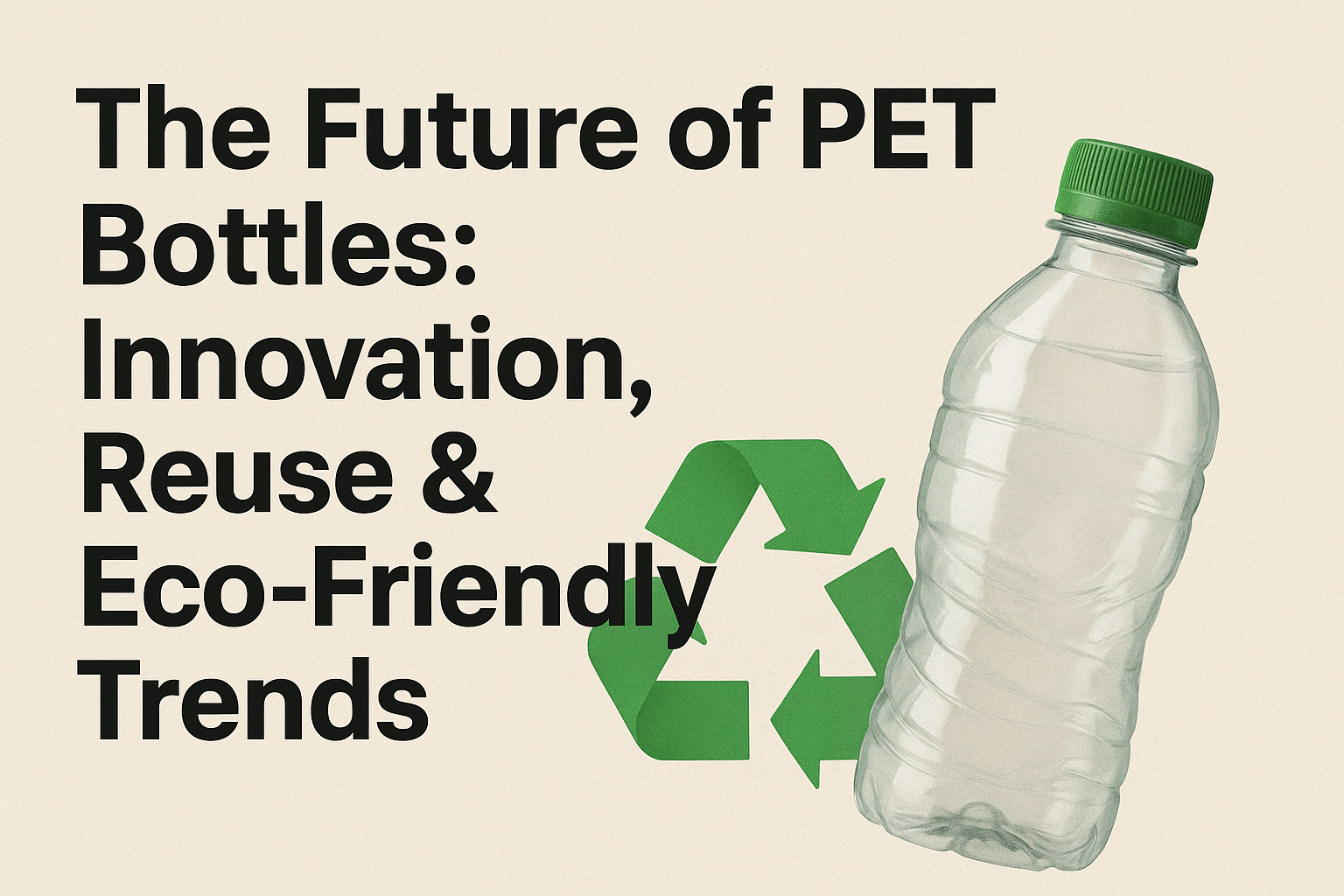
  • The Future of PET Bottles: Innovation, Reuse & Eco-Friendly Trends

    The Future of PET Bottles: Innovation, Reuse & Eco-Friendly Trends

    The global demand for sustainable packaging has rapidly surged, and PET bottles find themselves at the very core of this transformation. As industries gear up for eco-friendly materials, PET is becoming the preferred material of choice for its durability, recyclability, and cost-effectiveness. Today, PET bottles are no longer single-use packaging but essentially smart, reusable, and environmentally responsible solutions. Innovation and sustainability have thus finally come face to face in shaping the future of PET bottles.

    1. Growing Focus on Recyclability & Circular Economy

    The future of PET packaging lies in 100% recyclability and closed-loop systems. Manufacturers and recycling companies around the world are investing in technologies that turn used PET bottles into rPET, which can later be reused for new packaging.

    Key Trends:

    • More collection of post-consumer PET waste
    • Advanced sorting and washing technologies
    • Large-scale adoption of rPET in FMCG, beverages, cosmetics & pharmaceuticals
    • Government regulations supportive of including recycled content

    Through rPET, brands decrease their carbon footprint by saving energy, raw materials, and avoiding landfill space.

    2. Lightweight, High-Strength Designs for PET Bottles

    Lightweight bottle manufacturing is one of the major innovations shaping the PET industry. Though lighter in weight, these bottles have the same durability and strength.

    Benefits:

    • Lower cost of transportation
    • Reduced carbon emissions
    • Less consumption of raw material
    • Improved consumer convenience

    Lightweight PET bottles assist manufacturers in reaching sustainability goals without sacrificing quality.

    3. Smart & Connected PET Packaging

    As digitalization accelerates, even PET bottles are turning into smart packaging solutions. Brands add QR codes, NFC tags, and digital watermarks to improve traceability and engage with customers.

    Smart Packaging Features:

    • Authentication to avoid counterfeit products
    • Real-time product information
    • Improved track-and-trace during supply chain movement
    • Interactive consumer experiences

    This helps to build transparency and trust between brands and customers.

    4. Biobased PET: The Next Big Step in Green Packaging

    Biobased polyethylene terephthalate is being developed by researchers using renewable feedstocks such as sugarcane, corn, and organic waste. This reduces reliance on fossil fuels and provides a greener alternative to traditional PET.

    Advantages of Biobased PET:

    • Similar strength and clarity to conventional PET
    • Reduce carbon output.
    • Eco-friendly and renewable
    • Fully recyclable

    This could be the breakthrough to reshape the packaging industry over the coming years.

    5. Increase in Refillable PET Bottles’ Popularity

    Reusable PET bottles are gaining more and more momentum due to consumer preference for refillable and long-life packaging. Many brands launch refill stations for beverages, household cleaners, oils, and personal care products.

    Why Refillable PET Works:

    • Cost-effective for consumers
    • Reduces packaging waste
    • Encourages responsible consumption.
    • Extends PET lifecycle

    This shift supports global sustainability goals and reduces dependency on single-use plastics.

    6. Design Innovations for Better Sustainability

    New-generation PET bottle designs are all about greener performance. Companies are focusing on:

    • Single-material packaging allows easier recycling.
    • Labels and caps made of recyclable materials
    • Reduced color additives for improving material recovery
    • Sleeker shapes and ergonomic designs

    Such improvements make PET bottles more appealing while enhancing recyclability.

    Also Read: RPSF’s Role in Acoustic and Thermal Insulation Efficiency

    Conclusion

    The future of PET bottles revolves around innovation, eco-friendliness, and circular economy principles. From the integration of rPET to smart packaging and biobased materials, continuous evolution is transforming PET into one of the most sustainable packaging solutions. As global consumer awareness grows, industries increasingly adapt to using PET technologies that minimize environmental impact and facilitate a greener world. From humble containers, PET bottles are increasingly becoming ‘smart’, reusable, and ‘planet-friendly’ packaging solutions for the future.

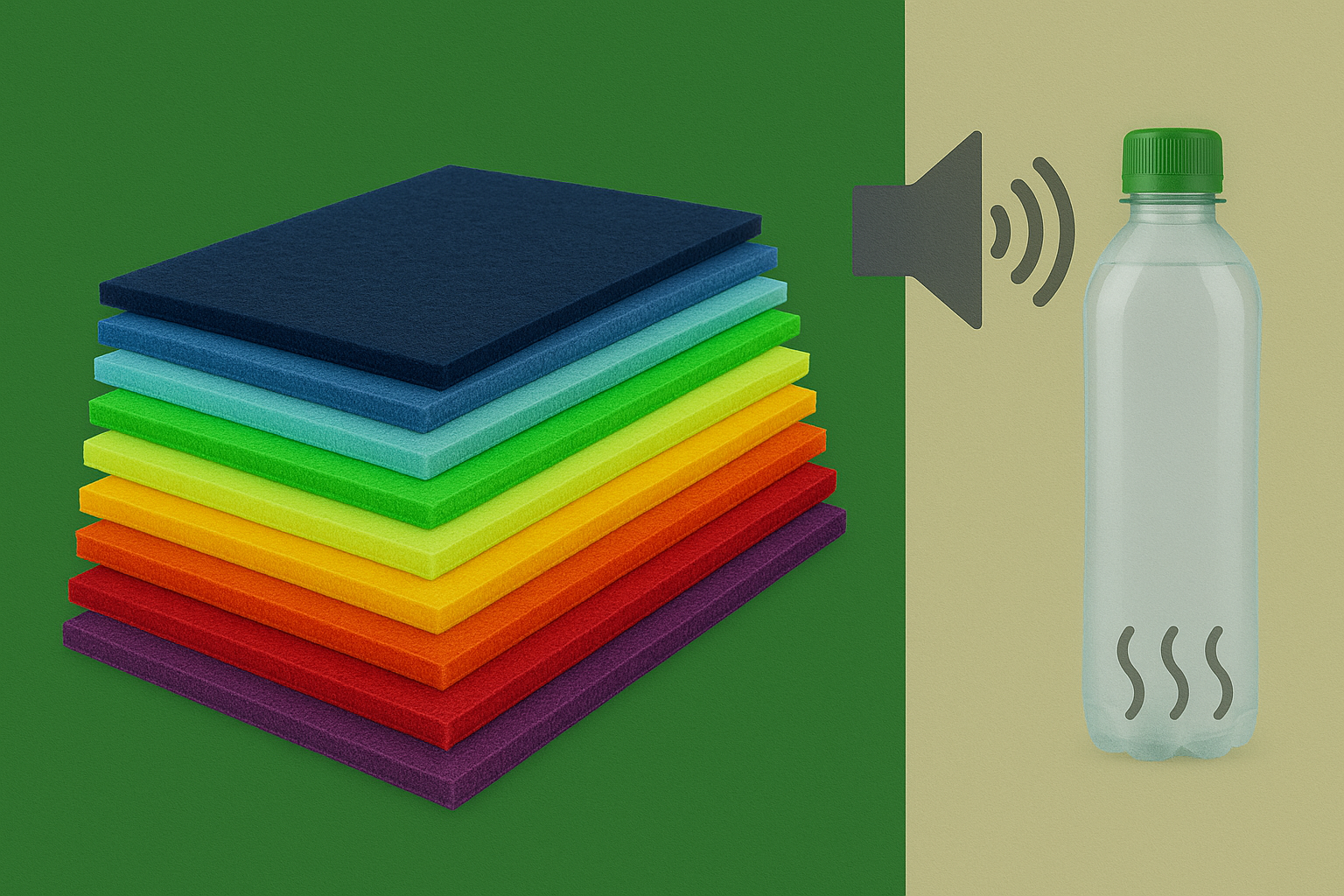
  • RPSF’s Role in Acoustic and Thermal Insulation Efficiency

    RPSF’s Role in Acoustic and Thermal Insulation Efficiency

    In today’s construction and manufacturing industries, the demand for materials that offer both acoustic insulation and thermal resistance is higher than ever. Rising energy costs, urban noise, and growing sustainability concerns have pushed industries to look for innovative solutions. One such advanced material gaining popularity is Recycled Polyester Staple Fiber (RPSF). Known for its strength, flexibility, and eco-friendly nature, RPSF plays a significant role in enhancing insulation efficiency across multiple sectors.

    In this blog, we explore how RPSF improves acoustic and thermal insulation performance, the associated benefits, and why industries are increasingly adopting it.

    What is RPSF?

    RPSF, or Recycled Polyester Staple Fiber, is produced from reclaimed PET bottles and polyester waste, hence it is considered an eco-friendly substitute for virgin polyester. Its fibrous structure, resilience, and low thermal conductivity make it ideal for insulation applications.

    RPSF finds broad applications in:

    • Construction
    • Automotive Interiors
    • Home furnishings
    • Sound-absorbing panels
    • HVAC insulation boards

    It is ideal for modern needs of insulation owing to its versatility and renewable nature.

    How RPSF Improves Acoustic Insulation

    Noise pollution is increasingly becoming an issue both in residential and commercial buildings. Its sound-absorbing properties result from the open, airy fiber structure of RPSF, which captures sound waves and reduces noise transmissions.

    Key Acoustic Advantages of RPSF:

    1. High Sound Absorption

    RPSF is effective in absorbing mid to high-frequency sounds; hence, it is suitable for offices, studios, auditoriums, and homes.

    1. Reduced Echo and Reverberation

    When RPSF is used in wall panels or ceiling boards, it reduces echo significantly, thus creating a smooth and quiet environment.

    1. Improved Indoor Comfort

    Its acoustic insulation helps maintain peaceful surroundings in high-traffic or noisy areas.

    1. Lightweight & Flexible

    Easy to install in various forms: rolls, pads, or boards.

    Thermal Insulation Role of RPSF

    Beyond acoustics, RPSF is also a strong thermal insulator. The fiber structure traps air pockets, slowing the transfer of heat and helping to keep temperatures balanced.

    Thermal Advantages:

    1. Thermal conductivity

    RPSF restricts heat flow, making it effective for both hot and cold climates.

    2. Energy Efficiency

    With RPSF, buildings and vehicles require less heating and cooling, reducing energy bills.

    3. Fire-Retardant Grades Available

    RPSF can be made flame-retardant, which enhances safety, through special treatments.

    4. Durability and Long Life

    Unlike foam-based insulation, RPSF does not sag or degrade quickly; thus, it provides continued thermal performance.

    What Makes RPSF More Important than Traditional Insulation Materials  

    RPSF is now more popular than its rivals because of its continuous superiority in environmental and performance outcomes.

    Key outcomes are:

    • Environment-friendly with 100% recyclability      
    • Strong without any excessive weight    
    • Non-irritating and friendly to skin as opposed to fiberglass    
    • Mold, moisture, and pest-resistant    
    • Economical price on large-scale projects    
    • Easy to process for producers    

    The combination of versatility and sustainability for the environment is the main reason every industry chooses RPSF.

    Application of RPSF in Insulation

    Various industries use RPSF for the dual benefits of acoustic and thermal performance:

    • Building insulation boards.
    • Car roof liners & door panels,
    • Acoustic wall panels,
    • HVAC duct insulation,
    • Mattresses and other home furnishing paddings.
    • Soundproofing for studios & offices.

    Its flexibility makes it suitable for structural as well as decorative insulation solutions.

    Also Read: From Plastic Waste to rPET Chips Turning Recycled Resin Into Packaging.

    Conclusion

    RPSF is changing the approach toward acoustic and thermal insulation in industries. The sound-absorbing, temperature-regulating, energy-saving capability, together with its eco-friendly aspect, makes it a perfect choice for modern applications. As sustainability is becoming a global priority, RPSF will keep on playing a major role in delivering practical, durable, and environmentally responsible insulation solutions.

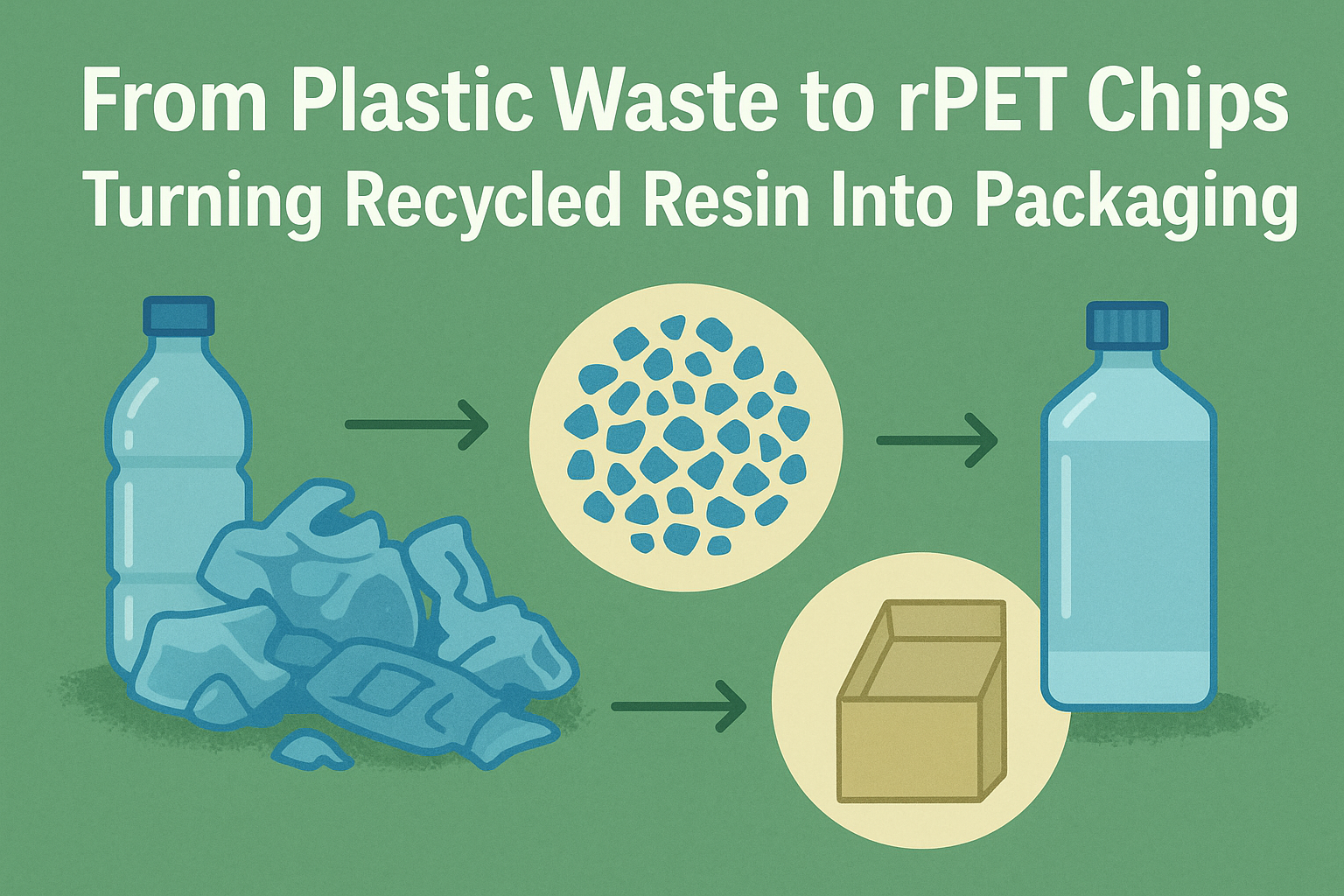
  • From Plastic Waste to rPET Chips Turning Recycled Resin Into Packaging.

    From Plastic Waste to rPET Chips Turning Recycled Resin Into Packaging.

    As consumers choose environmentally sustainable options, so will brands. This is why there is so much demand for eco-friendly packaging options. One recent innovation to come out of this industry is rPET. rPET packaging is made from single-use plastic, specifically, plastic water bottles. Through a recycling process, the bottles are first converted into resin and then transformed into packaging products for food and beverages, as well as non-food-grade packaging. In this blog, we will discuss how rPET chips are made from plastic waste and how the area is recycling plastic for eco-friendly products.

    What is rPET and Why It Matters

    rPET is recycling used PET bottles and the other recyclable waste associated with PET. Every year, millions of bottles find their way into oceans and landfills. In a recycling process, used bottles are diverted from the waste stream and repurposed into safe, reusable packaging material. rPET is an eco-friendly, repurposed product. Packaging made from rPET also helps reduce greenhouse gas emissions, save overall energy, and decrease the use of new plastic. Because it meets the goals of the circular economy, it is very highly regarded by eco-conscious brands.

    Step 1: Collection and Sorting of Waste Plastic

    Collecting PET bottles from homes, businesses, and recycling and waste management centers begins the recycling process. The collected waste plastic is sent to a recycling facility that performs initial sorting.

    Bottles are sorted according to:

    • Material
    • Color
    • Quality
    • Level of Contamination

    High-quality, clean PET bottles are selected for food-grade recycling. For food-grade recycling, accurate sorting is vital.

    Step 2: Shredding and Washing

    At each sorting stage, bottles are sent to a facility where they are crushed and shipped to large bottles that are made into small plastic pieces called flakes. At this stage, the plastic flakes still contain impurities such as caps, adhesives, and labels.

    To achieve the level of purity needed for making quality rPET flakes, the waste is subjected to a multi-stage washing process that includes:

    • Hot water wash
    • Chemical wash
    • Friction washing
    • Rinses and float-sink separation

    In producing quality rPET food-grade flakes, the plastic flakes must be free from all contaminants.

    Step 3: Drying and Decontamination

    After washing, the flakes are dried using high-temperature drying systems. Any residual moisture could make a difference in the quality of the finished products, so advanced dryers guarantee almost zero moisture content.

    The flakes produced would also need to undergo SSP or other processes for decontamination to make them suitable for food-grade applications. This step increases the IV and removes microbial or chemical contamination.

    Step 4: Melting and Extrusion into rPET Chips

    The purified flakes are melted under controlled heat and pressure. This molten PET then passes through fine filters to remove remaining microscopic impurities. After filtration, the melted PET is extruded and cooled into uniform rPET chips (pellets). These wafers are used as raw materials in producing packaging goods. The quality of the chips is tested for:

    • IV value
    • Color clarity
    • Melt flow
    • Food-grade safety

    Only high-quality rPET chips are approved for packaging use.

    Step 5: Converting rPET Chips Into Packaging

    rPET chips are used by manufacturers in processes like:

    • Injection molding
    • Blow moulding
    • Sheet extrusion

    This results in products such as:

    • Bottles for water, juice, and beverages
    • Food-grade containers
    • Cosmetic packaging
    • Thermoformed trays and clamshells
    • Packaging films

    The final products provide all the strength and transparency of virgin PET with considerably lower environmental impact.

    Also Read: rPET Flakes in India: Quality, Grades and Industrial Applications

    Conclusion

    This transformation of plastic waste into rPET chips is an outstanding example of how innovation can be a driving factor for sustainability. By turning the discarded bottles into high-value resin used in packaging, rPET supports the reduction of waste, carbon savings, and a greener future. With the global demand for eco-friendly packaging continuously rising, rPET is going to play a leading role in building a circular and sustainable packaging ecosystem.

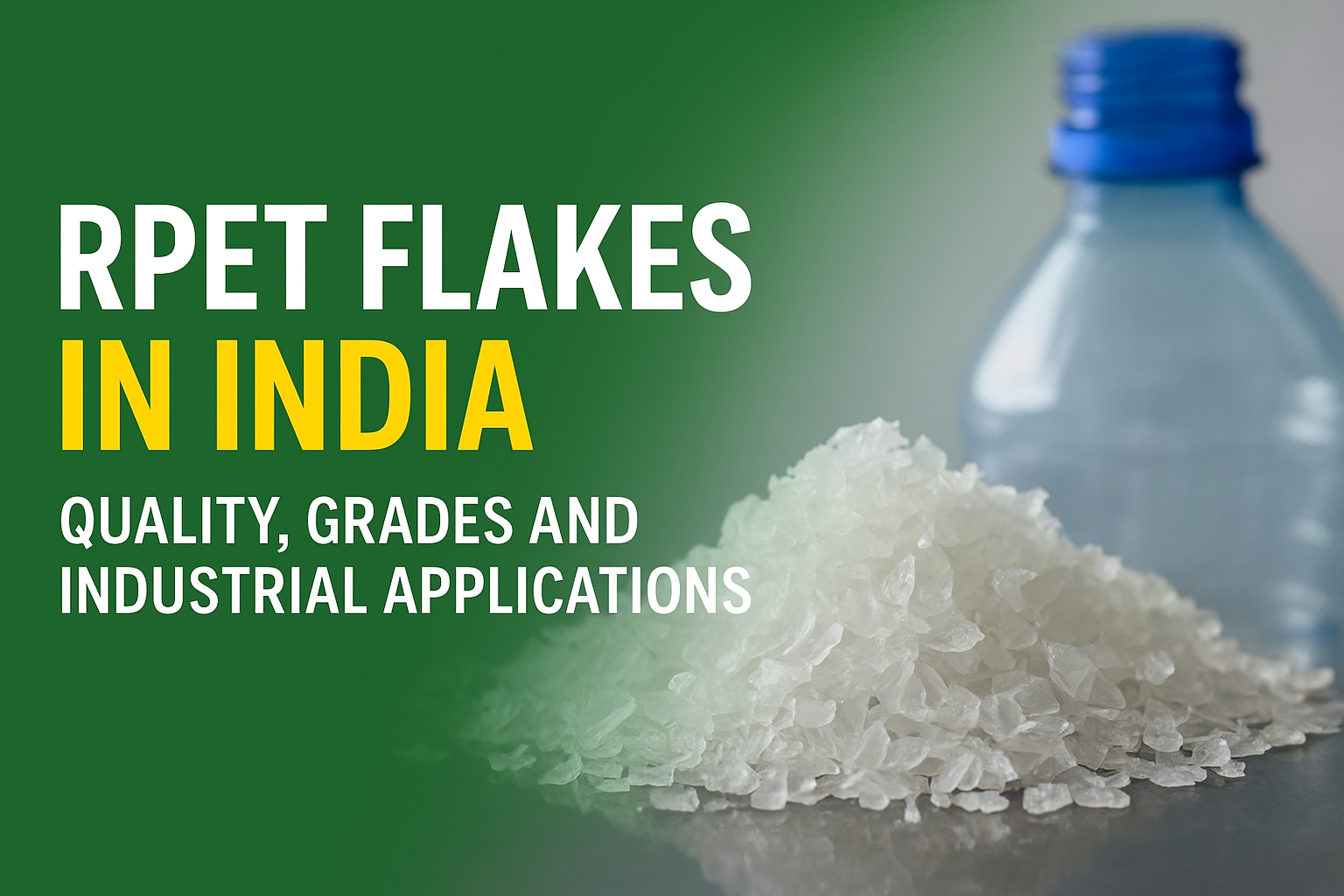
  • rPET Flakes in India: Quality, Grades and Industrial Applications

    rPET Flakes in India: Quality, Grades and Industrial Applications

    Demand for the rPET flakes in India is rapidly growing, with industries moving toward sustainable raw materials. rPET flakes, produced from post-consumer PET bottles, today are an essential part of packaging, textiles, yarn production, sheet manufacturing, and even food-grade applications. Quality, grades, and uses of rPET flakes have become increasingly significant for manufacturers, buyers, and exporters as India moves toward a circular economy.

    What are RPET Flakes?

    RPET flakes are the outcome of the recycling process whereby post-consumer PET bottles are collected, sorted and washed. This process turns plastic waste into a valuable substitute for virgin PET. Inlines rPET Flakes is produced in India and is in demand due to both legislation and cost-effective packaging along with the textile manufacturing industry.

    Types of rPET Flakes in India

    Indian manufacturers produce various grades of recycled PET flakes, each depending upon the final application:

    1. Hot Washed rPET Flakes

    These flakes go through high-temperature washes and chemical treatments to remove labels, adhesives, and impurities.
    • Uses: Fibres, yarn, filling material, non-woven textiles.

    2. Cold Washed rPET Flakes

    Cold-washed flakes represent a more economical alternative and can be used when high-purity products are not required.
    Uses: Strap manufacturing, sheet production, low-grade fibres.

    3. Food-Grade rPET Flakes

    Food-grade flakes are produced under strict safety standards and meet international requirements for use in packaging.
    Uses: Bottle-to-bottle recycling, food containers, beverage packaging.

    4. Clear vs. Coloured rPET Flakes

    • The high-quality bottle-grade chips and premium packaging use clear flakes.
    • Coloured flakes have gained broad utilisation in textiles and other industrial applications.

    Industrial Applications of rPET Flakes

    1. Textile Industry

    Indian textile and fibre manufacturers are the biggest consumers of rPET flakes. These are further used to manufacture polyester staple fibre, yarn, and non-woven fabrics.

    2. Packaging Industry

    High-purity flakes are processed into rPET-chips for:
    • Bottles
    • Containers
    • Thermoformed trays
    • Food-grade packaging
    This helps major brands meet sustainability and recycled content targets.

    3. Sheet & Film Manufacturing

    rPET flakes are processed into sheets for packaging, thermoforming, and industrial uses.

    4. Strap & Tape Industry

    Recycled PET flakes are also used in the manufacture of PET straps applied in logistics, bundling, and heavy-duty packaging.

    Why rPET Flakes Matter Today

    As India strides towards Extended Producer Responsibility compliance, companies are well into making the switch from virgin PET to recycled PET. Manufacturers using rPET flakes can reduce carbon footprint and global sustainability standards, besides bringing down raw material costs.

    Also Read: Connecting with Recycled PET Flakes Buyers: B2B Sourcing & Export Tips

    Conclusion

    The Indian market is also developing at a rapid pace for rPET flakes as industries shift their focus towards recycled materials. The increasing demand for sustainable packaging and textiles has made high-quality rPET flakes a crucial raw material for both domestic use and export. The companies switching over to recycled PET solutions now will be the leading players of this market in the near future.
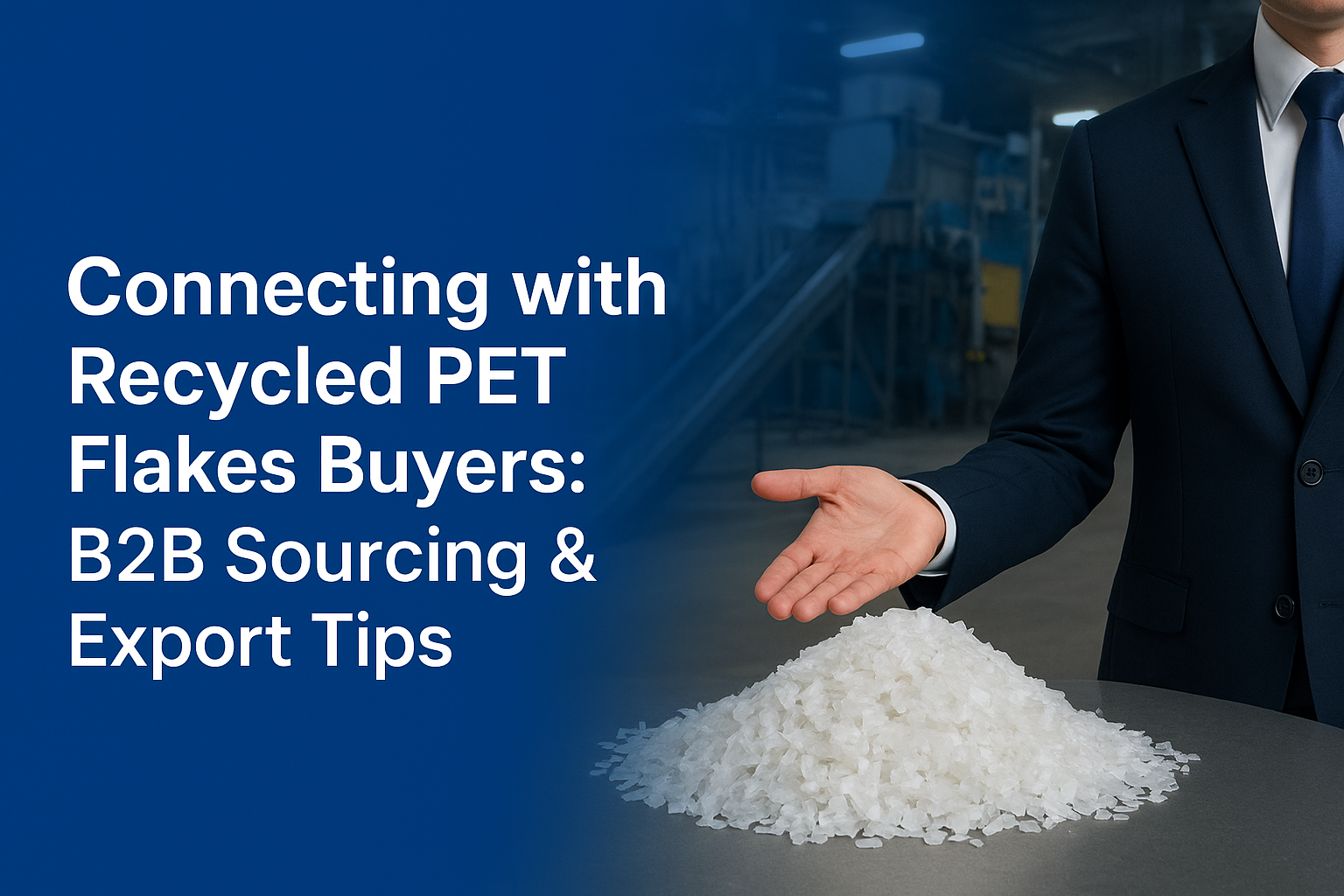
  • Connecting with Recycled PET Flakes Buyers: B2B Sourcing & Export Tips

    Connecting with Recycled PET Flakes Buyers: B2B Sourcing & Export Tips

    The recycling and packaging industry is growing and developing at a fast rate, and therefore, the need for r-PET flakes is growing as well. Industries such as textiles, food packaging, automotive, and consumer goods continuously produce sustainable goods and require high-quality rPET flakes. For the long-term success of trading, manufacturing and exporting firms, proper relationships with recycled PET flakes buyers should be developed. This blog outlines some of the B2B sourcing, exporting, and rPET flakes buyer relationships strategies.  

    What is Causing the Increase in Demand for Recycled PET Flakes  

    The main cause of the demand for these PET flakes is the increase in environmental concerns and the rise in regulations on plastic waste. These industries focus on their carbon footprints and therefore, the versatility of these Flakes, as well as cost, is crucial. All of the demand has created significant opportunities for exporters and suppliers in the international market.

    B2B Sourcing Tips: Where to Find Recycled PET Flakes Buyers

    1. Online B2B Marketplaces

    Platforms such as Alibaba, Indiamart, TradeIndia, Global Sources, and Europages work as effective bridges between suppliers and buyers across the globe. Create a detailed and verified company listing with product specifications such as:

    • PET Flake Grade (Hot-washed / Cold-washed)
    • Color (Clear, Blue, Mixed)
    • Moisture Level
    • PVC Content
    • Type of packaging
    • Minimum Order Quantity (MOQ)

    An optimized listing increases its visibility and attracts serious buyers.

    2. Global Trade Fairs for Recycling & Plastic Industry

    Plastivision, ArabPlast, Interpack and K-Show are great for direct interactions. These events allow manufacturers to present the quality of their products and negotiate prices face-to-face with overseas clients.

    3. LinkedIn Outreach & Networking

    LinkedIn is now a prized sourcing tool in the B2B world. One can contact the buying managers, recyclers, and distributors by:

    • Product update and certifications sharing
    • Publishing recycling-industry insights
    • Using professional messaging for outreach

    A strong profile helps boost your credibility and reach out to premium buyers.

    4. Export Promotion Councils & Government Databases

    Membership of Export Promotion Councils like FIEO (India) or simply using the Export Databases gives you access to reliable buyers’ lists. These contacts are always safe, reliable and foster long-term partnerships.

    Best Practices for Exporting Recycled PET Flakes

    1. Ensure that everything is of the highest possible standard.

    International buyers are looking for consistency and transparency. Ensure the following quality certifications:

    • GRS- Global Recycled Standard
    • ISO 9001
    • SGS Testing Reports

    Quality assurance helps instill confidence and increases the likelihood of repeat orders.

    2. Efficiency of Packaging and Shipment

    Packaging helps sustain the products’ integrity and condition especially for fragile products. Opt for the following durable packaging:

    • Jumbo Bags (1 MT)
    • Compressed Bales
    • PP Woven Sacks

    You need to have your shipment documents prepared for a proper and smooth shipment. These include MSDS, COA, invoice, packing list, and bill of lading.

    3. Competitive & Transparent Pricing

    Providing different varieties of products (and especially for scraps) provides the Customers with different pricing bins allowing them to be provided with multiple options. Pricing differentiation can be made based on these components:

    • Quality of PET Scrap
    • Cleaning Process
    • Market Process
    • Freight Charges

    Providing Customers with these options will ultimately allow you to have pricing transparency and establish a long-term positive and trustworthy relationship with your Customers.

    4. Efficient and Smooth Communication

    Because your Customers will be coming from International locations providing them with quick, Clear, and Prompt Communication will improve your business relationships and help you to keep providing them with your services and products.

    Tips for Buyers Using PET Flake

    • Trusting relationships have been built, providing videos and different high-quality images to customers for your production process.
    • Providing customers with a sample prior to the bulk supply for quality confirmation.
    • Ensure products have the same color, especially with fillers.
    • Providing Clients with flexible ED Terms will enhance your relationships, especially to merited Clients.
    • Create an online presence via a website, brochures, and social profiles.

    Focus on transparency and quality to outpace your competitors and impress global buyers.

    Also Read: Food-Grade PET Packaging: Safety Compliance & 2025 Market Trends

    Conclusion

    It is a combination of digital outreach, quality control, trade networking, and knowledge of export procedures that one builds a relationship with the buyer of Recycled PET flakes. The demand for rPET flakes will keep increasing in the coming years as sustainability becomes a global priority. The right sourcing channels, high standards, and professional ways of communication can help a supplier expand into international markets.

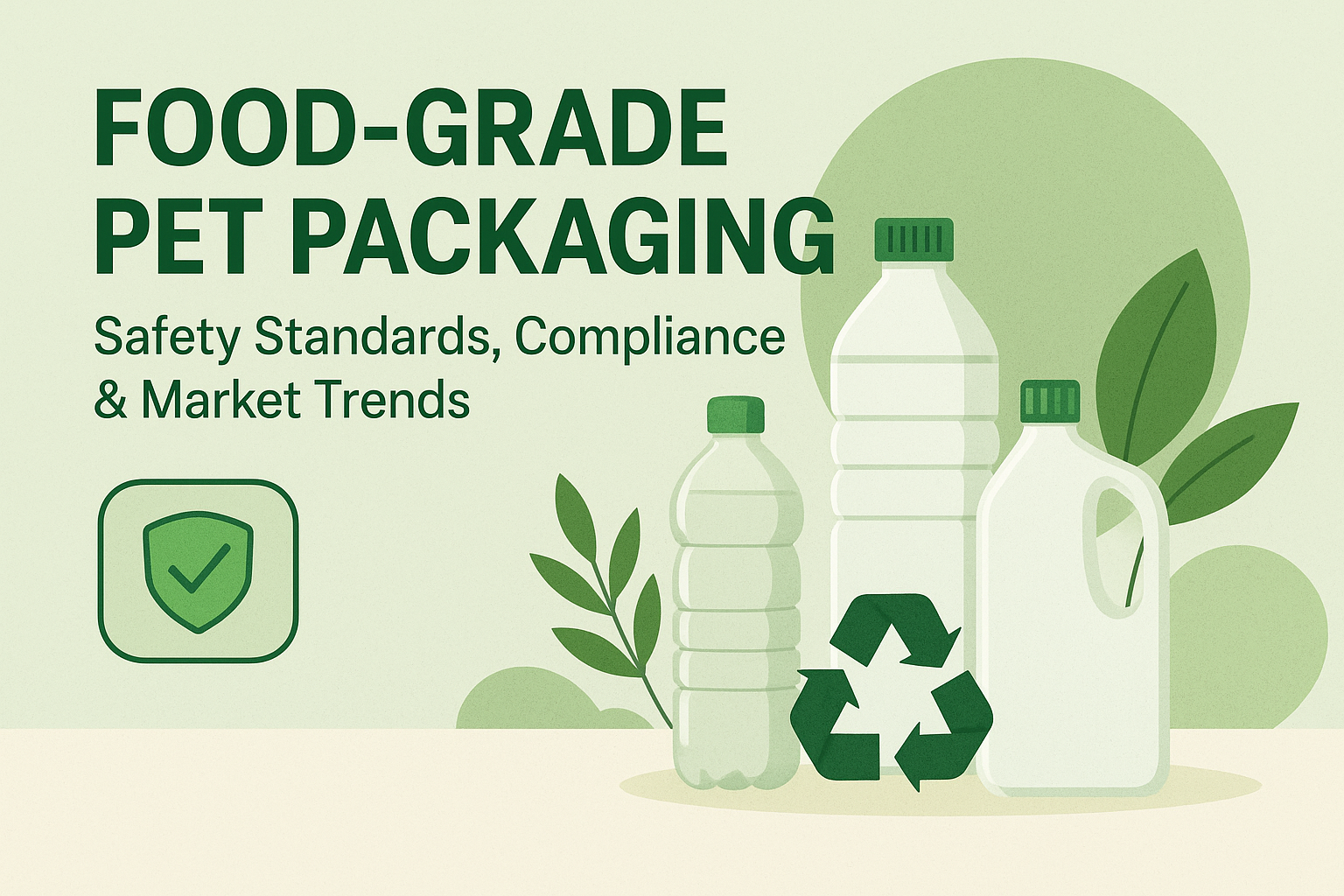
  • Food-Grade PET Packaging: Safety Compliance & 2025 Market Trends

    Food-Grade PET Packaging: Safety Compliance & 2025 Market Trends

    PET (Polyethylene Terephthalate) packaging is now one of the most trusted materials. It is used in the packaging of beverages, food storage, and other consumer items. From containers of edible oil to bottling water and ready-to-eat food packs, PET is still the most used packaging material worldwide. The pivot to sustainable materials and recycling systems has also increased the adoption of food-grade rPET (recycled PET) and has become the most used packaging material by brands in the world.  

    What Makes PET Food-Grade?  

    PET packaging must adhere to safety guidelines to be considered food-grade, allowing it to be in direct contact with food and beverages. For PET to be classified as food-grade, it must remain chemically stable and non-contaminating by noxious or other toxic substances. Food-grade PET does not chemically associate with the food, contaminates it, or allows the food to spoil. Food-grade also shields and protects the food from air, bacteria, and moisture.  

    In contrast to some other kinds of plastic, food-grade PET does not release additives or degrade over time. Food-grade PET will stay as it is, with the same clarity, safety, and barrier. It will be consistent in its properties and performance over its entire lifecycle.


    Safety Standards & Compliance Requirements

    To be considered food-grade, PET materials must comply with national and international safety regulations. Many common global certifications have included:

    • FDA- U.S. Food and Drug Administration
    • EFSA: European Food Safety Authority
    • Good Manufacturing Practices (GMP)
    • ISO 22000 / FSSC 22000 Food Safety Management Standards
    • BIS / FSSAI Requirements in India

    These standards assess elements like:

    • Migration caps
    • Traceability
    • Raw material quality
    • Process contamination control
    • Recyclability and chemical safety

    Compliance also ensures the PET packaging is suitable for direct food contact and safe across temperature variations during transport, storage, and consumption.

    The Rise of rPET in Food Packaging

    One of the fast-moving trends is the adoption of rPET for food-grade applications. With advanced food-contact-approved recycling technologies like chemical recycling, melt filtration, SSP, and EFSA/FDA-certified closed-loop processes, rPET can now replace virgin PET safely in many applications.

    Modern bottle-to-bottle recycling gives assurance that plastic packaging can be repeatedly used, hence supporting a circular economy and reducing environmental pollution.

    Market Growth & Future Trends

    The demand for food-grade PET packaging is foreseen to grow significantly through 2025–2030, driven by:

    • Increased consumption of packaged beverages and ready-to-eat products.
    • Government regulations encourage sustainable and recyclable materials.
    • Consumer preference for eco-friendly and recyclable packaging.
    • Brand commitments towards carbon-neutral and zero-waste operations.

    The global food-grade PET packaging market is forecasted, by industry estimates, to grow in double digits, while the shift towards high-purity rPET flakes, food-grade rPET resins, and closed-loop recycling systems will be particularly strong.

    Also read: Recycled PET Fibre for Textile Yarns: Production, Key Benefits & 2025 Industry Growth

    Conclusion

    Food-grade PET packaging is more than a functional material; it stands for the future of safe, compliant, and sustainable food-contact packaging. As industries worldwide head toward green solutions, so too will modern packaging innovations continue to be influenced by the enduring presence of PET and rPET.

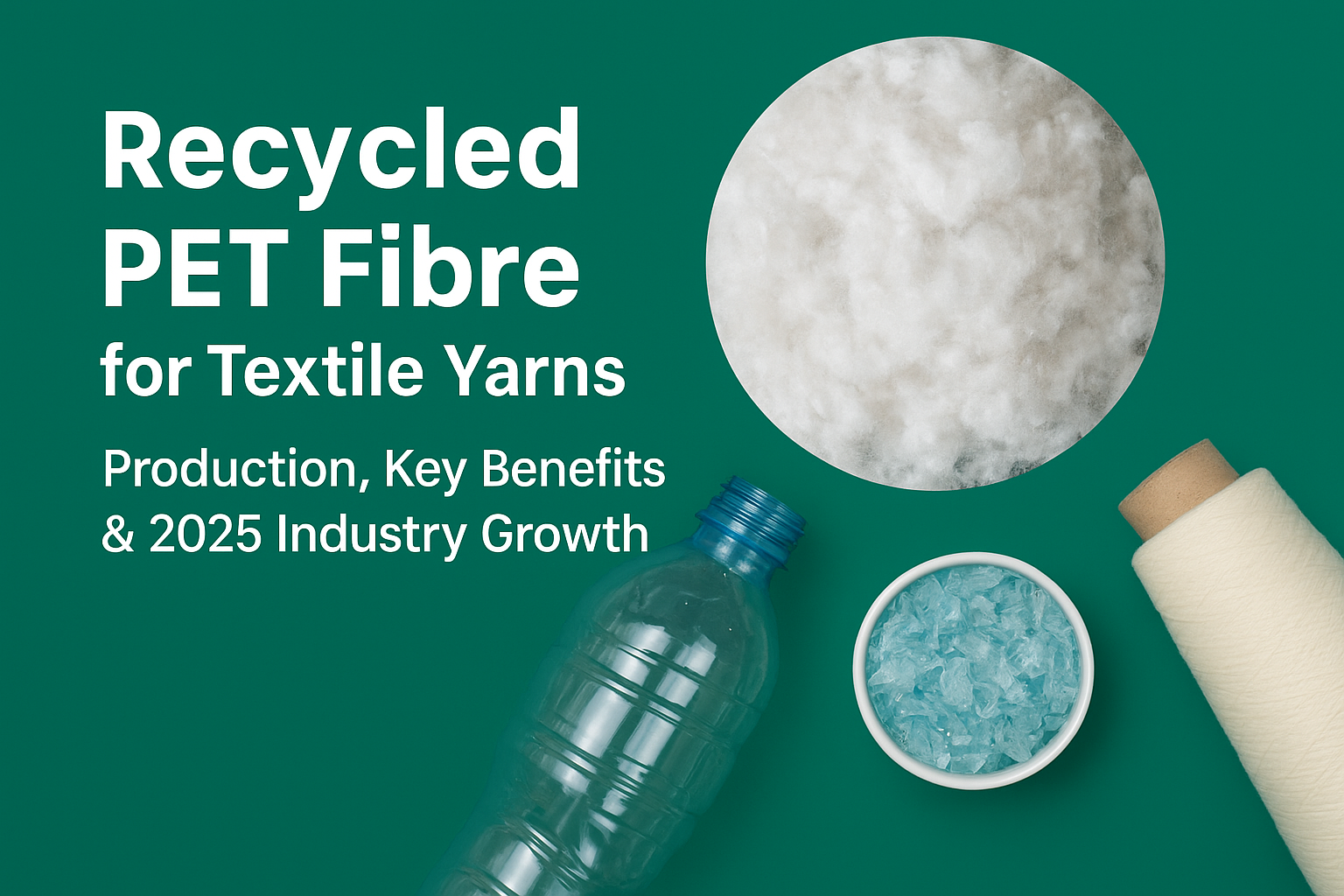
  • Recycled PET Fibre for Textile Yarns: Production, Key Benefits & 2025 Industry Growth

    Recycled PET Fibre for Textile Yarns: Production, Key Benefits & 2025 Industry Growth

    rPET fibre is currently one of the fastest-growing sustainable materials in the textile world. From fashion brands to home furnishing manufacturers and industrial textile producers, all are showing a penchant for rPET as a sustainable material.With increasing demand for circular textiles, reduced carbon emissions, and global sustainability commitments, India’s recycled polyester fibre industry is expected to experience strong growth in 2025.

    This blog explains how recycled PET fibre is manufactured, why it is beneficial, and how the textile industry is embracing it for large-scale yarn manufacturing in 2025.

    What is recycled PET fibre?

    Recycled PET is made by collecting used PET bottles and reprocessing them into staple fibre, which in turn is spun into textile yarns for:

    • Apparel: T-shirts, active wear, jackets
    • Home textiles: carpets, cushions, bedsheets.
    • Industrial textiles: geotextiles, filters
    • Automotive fabrics
    • Upholstery & furnishings

    It offers the same durability as virgin polyester, while saving energy, reducing waste, and supporting a circular economy.

    How rPET Fibre Is Produced: Step-by-Step

    • Collection & Sorting: Used PET bottles are collected and sorted by color and quality. Clear bottles give the best fibre.
    • Washing & Label Removal: Bottles are washed thoroughly to remove dirt, glue, and labels.
    • Shredding into PET Flakes: Clean bottles are shredded into small uniform flakes—the main raw material.
    • Hot Washing & Drying: Flakes are rewashed for purity and dried to the right moisture level.
    • Melt Extrusion: Dried flakes are melted, filtered, and pushed through spinnerets.
    • Fibre Spinning: The melted polymer forms long filaments that are stretched, crimped, and cooled.
    • Cutting into Staple Fibre: Filaments are cut into standard lengths like 32mm, 38mm, 44mm, or 64mm.
    • Yarn Spinning: Staple fibre is spun into yarn using ring-spinning or open-end spinning.

    Advantages of Recycled PET Fibre

    1. Use of rPET is eco-friendly and sustainable: Between 45–60% less energy is used in production compared to virgin polyester and CO₂ gas emissions are decreased remarkably.  
    2. Every kg of rPET fibre takes 60–70 plastic bottles diverted from landfills: rPET fibre consumes  
    3. Recycled PET fibre is characterized by remarkable tensile strength, is moisture resistant, and very durable: it is also versatile.
    4. Cost-Effective for Manufacturers: Due to increasing crude oil prices, rPET is turning out to be a cheaper alternative to virgin polyester.
    5. Supports Global Circular Economy Goals: Brands around the world are committed to 100% recycling or sustainable materials by 2030. rPET fibre helps them meet their commitments.

    Industry Growth of rPET Fibre in 2025

    The rPET fibre market of India is expected to grow at a 12–15% CAGR in 2025, driven by:

    • High demand from apparel & home textile brands
    • Govt. focuses on recycling & plastic waste management.
    • Increasing export demand for recycled textile yarns
    • Global sustainability mandates from key fashion brands

    This has led to increased demand for rPET fibre in India and globally, with brands like Adidas, H&M, Levi’s, and Decathlon using the yarns in substantial quantities.

    Also Read: How PET Bottles Are Transformed Into Recycled Polyester Staple Fiber

    Conclusion

    Recycled PET fibre has developed as a game-changing innovation for textile sustainability. Its increased adoption across yarn manufacturing testifies to how far the textile industry has moved toward a greener future. In 2025, rPET will not be just a trend; instead, it will be a long-term solution that supports both environmental and economic goals. If your textile business is considering moving to sustainable yarns, then rPET fibre is the smart choice for durability, cost-efficiency, and eco-impact.