Category: Blog

Your blog category

  • PET Packaging Material for Food, Beverage, and Consumer Packaging Applications

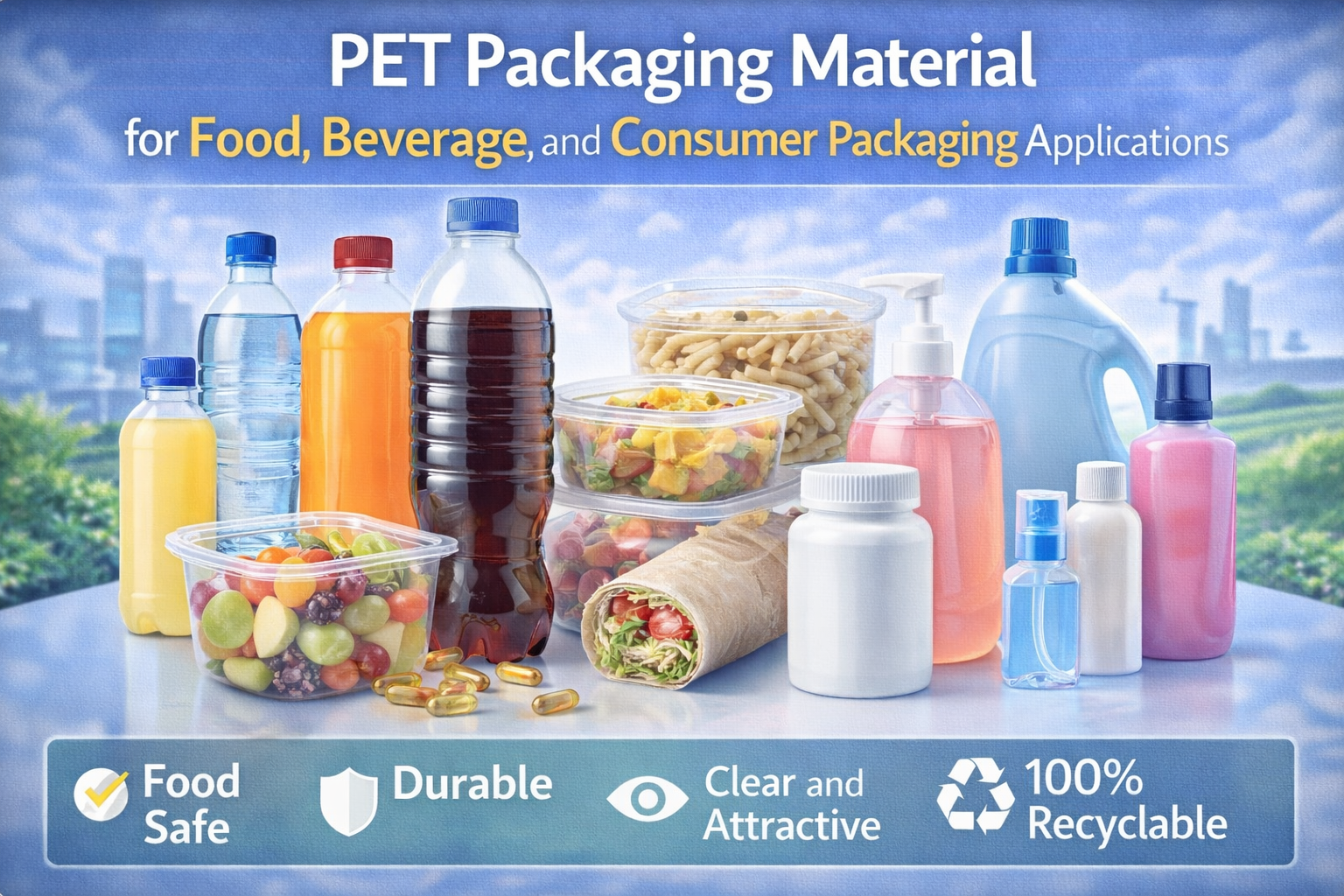
    PET Packaging Material for Food, Beverage, and Consumer Packaging Applications

    Polyethylene Terephthalate (PET) is one of the most common packaging materials in the food, beverage, and consumer goods industries. It is strong, clear, lightweight, and recyclable. Many manufacturers prefer PET for its safety, durability, and sustainability.

    PET is essential for various modern packaging solutions, including water bottles, food containers, cosmetic jars, and packaging for household products.

    What Is PET Packaging Material?

    PET (Polyethylene Terephthalate) is a thermoplastic polymer from the polyester family. It is often used to produce:

    • Beverage bottles
    • Food trays and containers
    • Edible oil bottles
    • Pharmaceutical packaging
    • Personal care product containers

    PET is valued for its transparency, impact resistance, and barrier properties. These features protect products from contamination and moisture.

    Why PET Is Preferred for Food and Beverage Packaging

    1. Food Safety Compliance  

    PET is approved by global food safety authorities for direct contact with food. It does not react with food or drinks, making it safe for packaging water, carbonated beverages, juices, and edible oils.

    2. Excellent Barrier Properties  

    PET effectively resists moisture and gases, helping to maintain freshness and extend shelf life, especially in beverages and dairy products.

    3. Lightweight and Durable  

    PET is lighter than glass or metal packaging, which lowers transportation costs and reduces carbon emissions. It is also very durable and less prone to breakage during shipping and handling.

    4. Crystal Clear Transparency  

    PET bottles and containers are clear, allowing consumers to see the product. This clarity boosts product appeal and builds consumer trust.

    Applications of PET in Consumer Packaging

    Besides food and beverages, PET packaging is widely used in consumer goods.

    1. Personal Care and Cosmetics  

    Shampoos, lotions, and cosmetics are often packaged in PET due to their durability and good looks.

    2. Household Products  

    Cleaning supplies and detergents are frequently stored in PET bottles because of their chemical resistance and strength.

    3. Pharmaceutical Packaging  

    PET is used in various pharmaceutical packaging due to its protective qualities and safety standards.

    Sustainability and Recyclability of PET Packaging

    One of the main benefits of PET packaging is its recyclability. PET is fully recyclable and can be turned into:

    • rPET flakes
    • Recycled PET chips
    • Polyester fibers
    • New PET bottles and containers

    Using recycled PET (rPET) significantly cuts down on plastic waste and lowers carbon emissions compared to producing virgin PET. Many global brands now use a higher percentage of recycled PET in their packaging to meet sustainability goals.

    The push toward circular economy practices has increased the demand for food-grade recycled PET, especially in beverage packaging.

    Advantages of PET Over Other Packaging Materials

    Compared to materials like glass, aluminum, or PVC, PET has several advantages:

    • Lower production and transportation costs
    • Reduced carbon footprint
    • High recyclability
    • Strong mechanical performance
    • Flexible design options

    These benefits make PET a cost-effective and eco-friendly choice for manufacturers.

    Future Trends in PET Packaging

    The packaging industry is changing quickly, with a growing focus on sustainability and regulatory compliance. Key trends include:

    • Increased use of recycled PET (rPET)
    • Lightweight bottle designs
    • Improved recycling technologies
    • Development of bio-based PET materials

    As environmental awareness rises, PET packaging continues to evolve to meet consumer expectations and global sustainability standards.

    Also Read: How Recycling PET Reduces Environmental Pollution

    Frequently Asked Questions (FAQ)

    1. Is PET safe for food and beverage packaging?  

    Yes. PET is approved for food contact and does not react with food or beverages. It meets global food safety standards and is widely used for bottled water and soft drinks.

    1. Can PET packaging be recycled?  

    Yes. PET is completely recyclable. It can be processed into recycled PET (rPET) and reused for new bottles, fibers, and packaging materials.

    1. What are the advantages of PET over glass packaging?  

    PET is lightweight, shatter-resistant, cost-effective, and easier to transport compared to glass, which helps reduce the overall carbon footprint.

    1. What industries use PET packaging material?  

    PET is used in the food, beverage, cosmetics, pharmaceuticals, household products, and industrial packaging sectors.

    1. Does recycled PET maintain the same quality as virgin PET?  

    With modern recycling technologies, high-quality recycled PET can meet performance standards similar to virgin PET, especially for non-food and approved food-grade applications.
  • How Recycling PET Reduces Environmental Pollution

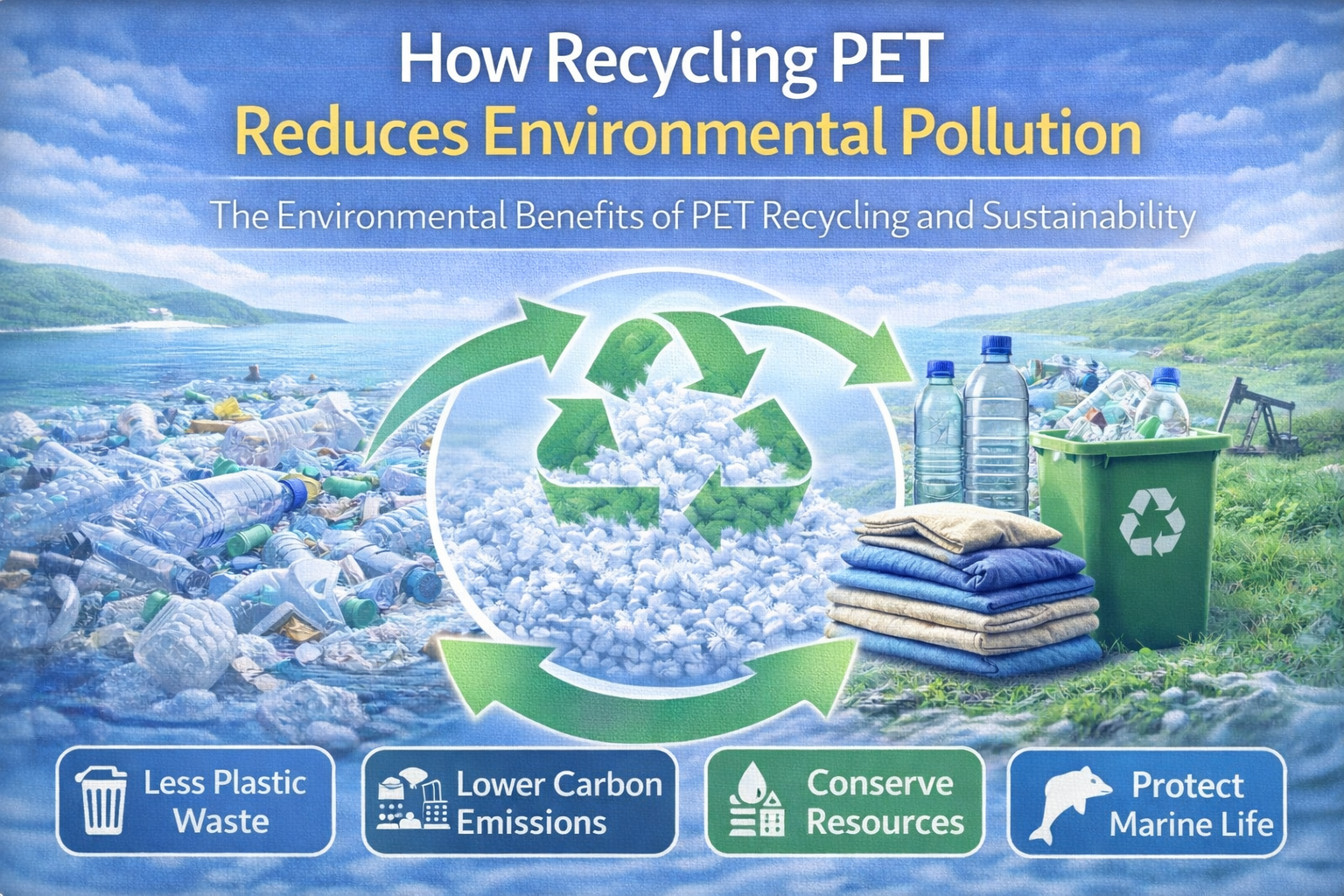
    How Recycling PET Reduces Environmental Pollution

    Plastic pollution has become one of the biggest environmental challenges worldwide. Among various plastics, PET (Polyethylene Terephthalate) is widely used in bottles, packaging, and textiles. While PET is durable and lightweight, improper disposal contributes significantly to landfills and ocean pollution.

    Recycling PET plays a vital role in reducing environmental pollution and supporting a circular economy. By turning used PET bottles into reusable materials like rPET flakes, PET chips, and recycled polyester fiber, industries can significantly lower their environmental impact.

    What Is PET and Why Is It a Concern?

    PET is commonly used in:

    • Beverage bottles
    • Food packaging
    • Polyester textiles
    • Industrial strapping

    Because of its strength and clarity, PET is very popular. However, when thrown away incorrectly, PET waste can take hundreds of years to decompose. Large amounts of plastic waste end up in oceans, harming marine life and ecosystems.

    Recycling PET helps prevent this build-up and reduces long-term environmental damage.

    How PET Recycling Works

    The PET recycling process includes several stages:

    1. Collection of used PET bottles
    2. Sorting and removal of contaminants
    3. Crushing into flakes
    4. Washing and purification
    5. Conversion into rPET flakes or PET chips

    These recycled materials are then used to make new bottles, fibers, sheets, and packaging products.

    Since PET is 100% recyclable, it can be processed multiple times without losing quality.

    Environmental Benefits of Recycling PET

    1. Reduction in Plastic Waste

    Recycling PET directly lowers the amount of plastic entering landfills and oceans. Each recycled bottle prevents more plastic pollution and reduces the need for waste incineration.

    2. Lower Carbon Emissions

    Producing recycled PET uses much less energy compared to making virgin PET. Lower energy use means fewer greenhouse gas emissions, helping to tackle climate change.

    Studies show that recycling PET can cut carbon emissions by 50-60% compared to producing new plastic.

    3. Conservation of Natural Resources

    Virgin PET comes from petroleum-based raw materials. Recycling decreases dependence on fossil fuels, conserves natural resources, and reduces environmental damage from extraction.

    4. Reduced Water Consumption

    Recycling PET uses less water than making new plastic from raw materials, which further eases environmental strain.

    5. Support for Circular Economy

    Recycling PET supports a closed-loop system where plastic waste turns into a valuable raw material rather than becoming pollution.

    Impact on Marine and Land Ecosystems

    Plastic waste in oceans breaks down into microplastics, which marine organisms consume. This disrupts food chains and threatens biodiversity.

    By recycling PET:

    • Fewer bottles enter waterways
    • Marine ecosystems are safer
    • Wildlife has less exposure to plastic waste

    On land, less landfill waste helps lower soil contamination and prevents toxic leakage.

    Role of Industries in PET Recycling

    Industries are increasingly using recycled PET in:

    • Beverage packaging
    • Textile manufacturing
    • Automotive interiors
    • Home furnishings

    Many global brands have committed to using larger amounts of recycled PET in their products. This shift increases demand for high-quality rPET materials and strengthens recycling systems.

    Government Regulations and Sustainability Goals

    Governments around the world are enforcing strict regulations to reduce single-use plastic waste. Recycling targets and extended producer responsibility (EPR) policies encourage businesses to invest in PET recycling systems.

    These policies speed up environmental benefits and promote sustainable manufacturing practices.

    Future of PET Recycling

    With advancements in technology, recycled PET now meets food-grade and high-performance standards. As awareness increases and sustainability becomes a priority, PET recycling will continue to grow.

    Improvements in sorting, washing, and purification technologies are enhancing recycling efficiency and material quality.

    Also Read: Quality Standards and Testing Methods for PET Chips

    Conclusion

    Recycling PET significantly cuts down on environmental pollution by reducing plastic waste, lowering carbon emissions, conserving resources, and protecting ecosystems. It transforms waste into valuable industrial raw material and supports global sustainability efforts.

    As industries, governments, and consumers collaborate, PET recycling will remain a key solution for reducing plastic pollution and creating a cleaner future.

  • Quality Standards and Testing Methods for PET Chips

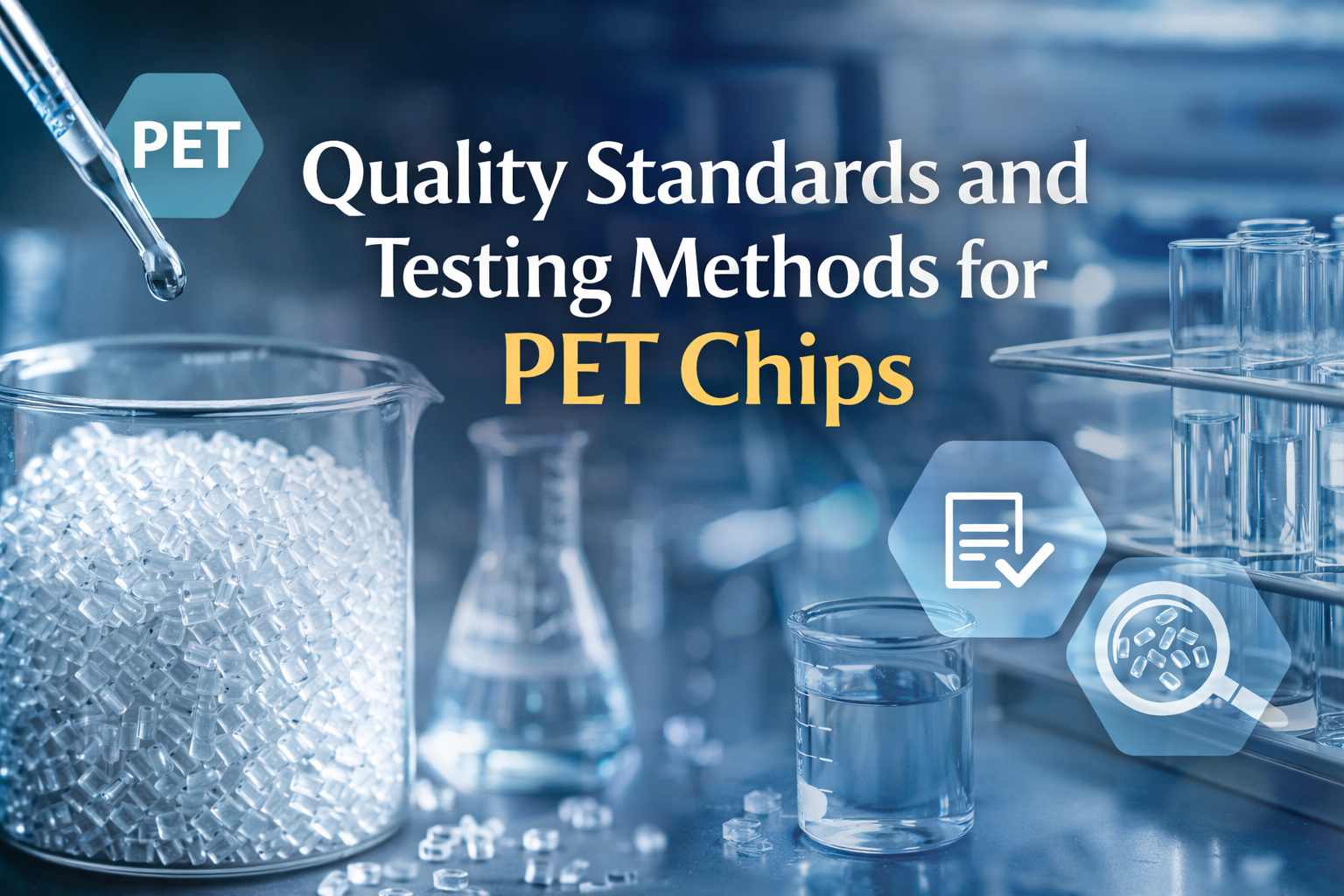
    Quality Standards and Testing Methods for PET Chips

    PET chips are a crucial raw material used to make polyester fibers, films, bottles, and industrial packaging. Maintaining strict quality standards for PET chips is vital for ensuring consistent performance, durability, and safety in downstream applications. Both manufacturers and buyers depend on standardized testing methods to verify material properties before processing.

    In this guide, we look at the key quality standards and testing methods used to evaluate PET chips in industrial applications.

    Why Quality Control Is Important for PET Chips

    PET (Polyethylene Terephthalate) chips are commonly used in textiles, packaging, and the manufacturing of plastics. Any change in quality can affect:

    • Fiber strength and durability
    • Film clarity and mechanical properties
    • Bottle performance and food safety compliance
    • Processing efficiency

    Thus, quality testing ensures that PET chips meet industry standards and customer needs.

    Key Quality Parameters of PET Chips

    To maintain consistency, manufacturers assess several crucial parameters:

    1. Intrinsic Viscosity (IV)

    Intrinsic viscosity (IV) is a primary quality indicator. It determines the molecular weight of PET resin, which directly influences mechanical strength and processing performance.

    Higher IV values are generally needed for:

    • Bottle-grade PET
    • High-strength fibers

    Lower IV values work for:

    • Film and sheet applications

    2. Moisture Content

    PET is very sensitive to moisture. Too much moisture can cause hydrolytic degradation during processing, leading to reduced strength and defects.

    The acceptable moisture level is usually below 0.005% for high-quality PET chips.

    3. Color and Transparency

    Color consistency is essential, especially for bottle-grade PET. Testing includes:

    • L-value (lightness)
    • b-value (yellowing index)

    Clear and bright PET chips are preferred for premium packaging.

    4. Bulk Density

    Bulk density affects material handling, storage, and feeding efficiency in extrusion and injection molding.

    5. Contamination Level

    Foreign particles, black specks, or PVC contamination can harm processing and end-product quality. Advanced filtration and inspection systems are used to detect impurities.

    Testing Methods for PET Chips

    Various standardized laboratory methods evaluate PET chip quality.

    1. IV Testing (Viscometer Method)

    Intrinsic viscosity is measured using a viscometer under controlled lab conditions. This test checks molecular weight consistency.

    2. Moisture Analyzer Testing

    A moisture analyzer measures the water content in PET chips through thermal drying techniques. Accurate drying ensures better melt processing.

    3. Colorimeter Testing

    A colorimeter measures L* and b* values to ensure visual consistency and meet customer specifications.

    4. Differential Scanning Calorimetry (DSC)

    DSC testing evaluates melting temperature and crystallization behavior to ensure thermal stability during processing.

    5. Contamination and Black Speck Testing

    Microscopic analysis and filtration tests help detect contamination and ensure material purity.

    Global Quality Standards for PET Chips

    PET chip manufacturers follow internationally recognized standards to maintain compliance and be ready for export. These may include:

    • Food-grade safety regulations
    • ISO quality management systems
    • Industry-specific material standards

    Following global standards enhances product reliability and fosters trust with international buyers.

    Quality Control in Recycled vs. Virgin PET Chips

    Both virgin and recycled PET chips require thorough testing. However, recycled PET chips may need additional checks for contamination and IV consistency to ensure they perform comparably to virgin material.

    Innovative recycling technologies now enable recycled PET chips to meet high-quality industrial and packaging standards.

    Also Read: How rPSF Is Used in Automotive, Home Furnishing & Apparel Industries

    Conclusion

    Quality standards and testing methods for PET chips are crucial for ensuring product consistency, safety, and performance. From intrinsic viscosity testing to moisture analysis and contamination control, each parameter plays a role in the reliability of the final product.

    As demand grows across textiles, packaging, and industrial sectors, strict quality control remains essential for manufacturers seeking a competitive advantage in global markets.

  • How rPSF Is Used in Automotive, Home Furnishing & Apparel Industries

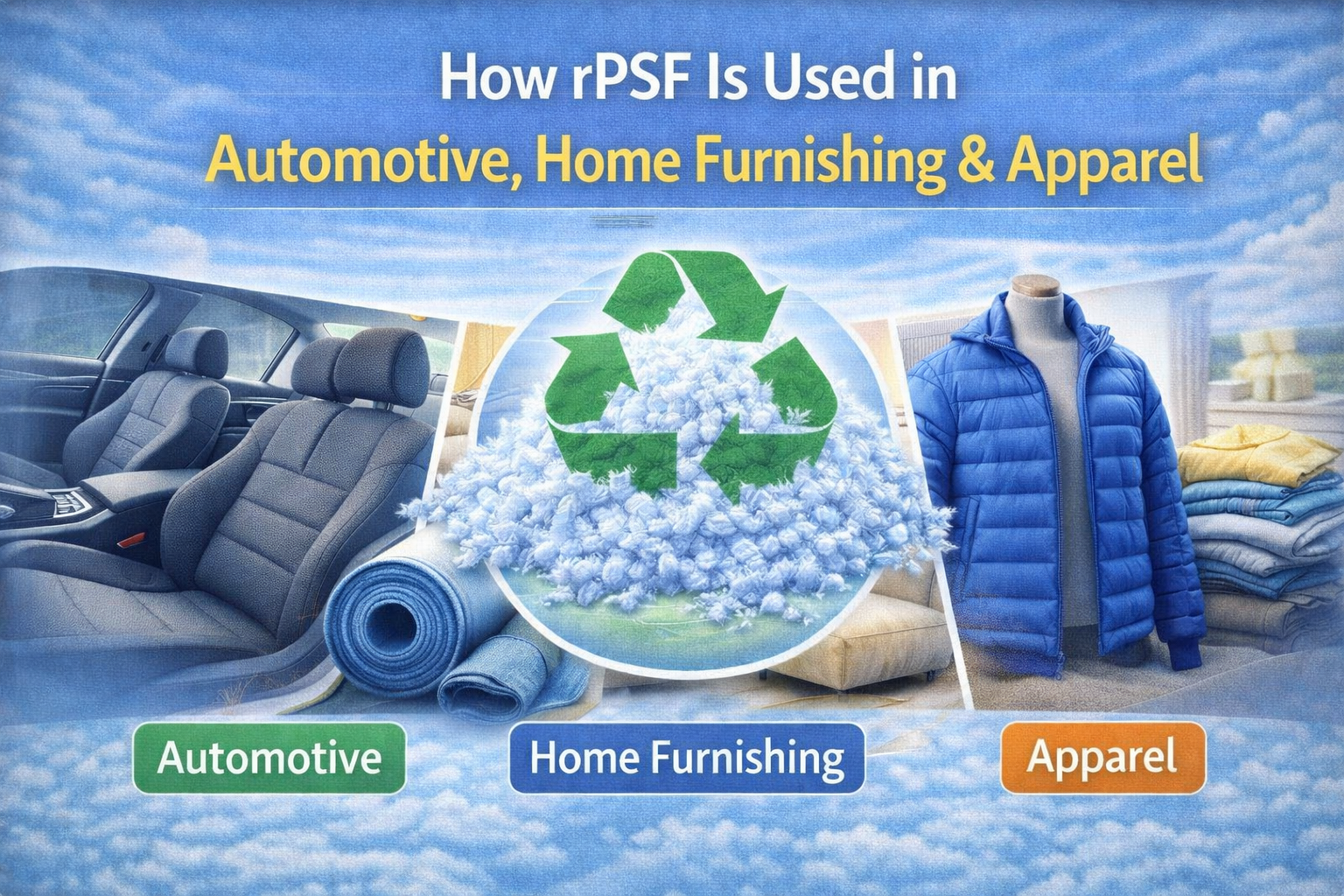
    How rPSF Is Used in Automotive, Home Furnishing & Apparel Industries

    As sustainable development emerges as a prime focus for sectors globally, the importance of Recycled Polyester Staple Fibre (rPSF) is increasing rapidly. Made from recycled PET bottles and wastes, rPSF is non-toxic in nature and possesses the same functional qualities as virgin polyester. At present, rPSF is used by many manufacturing units in the automobile industry, home furnishings sector, and clothing industry.

    What Is rPSF and Why Is It Important?

    Recycled Polyester Staple Fibre (rPSF) is made by recycling post-consumer PET bottles into fibres used in textiles and industrial applications. Compared to virgin polyester, rPSF uses less energy, lowers carbon emissions, and keeps plastic waste out of landfills. Because of these benefits, rPSF is now a preferred material for manufacturers aiming for a circular economy.
    Use of rPSF in the Automotive Industry
    The automotive sector is one of the largest consumers of rPSF because of its durability, flexibility, and cost efficiency.

    Key Automotive Applications:

    • Seat upholstery and seat padding
    • Roof liners and door panels
    • Carpets and floor mats
    • Trunk liners and insulation materials
    rPSF provides excellent thermal insulation, sound absorption, and abrasion resistance, making it perfect for vehicle interiors. Leading automobile brands are increasingly replacing virgin fibres with rPSF to lower vehicle carbon footprints and meet global sustainability regulations.

    Use of rPSF in Home Furnishing Products

    In the home furnishing industry, rPSF has become a popular choice due to its softness, resilience, and long-lasting performance.

    Common Home Furnishing Applications:

    • Sofa and cushion filling
    • Mattresses and pillows
    • Carpets and rugs
    • Curtains, blankets, and quilts
    rPSF offers high loft, moisture resistance, and shape retention, which ensures comfort and durability. Its hypoallergenic properties make it suitable for bedding products, while its affordability allows manufacturers to offer eco-friendly products at competitive prices.

    Application of rPSF in the Clothing Sector

    The fashion industry is under intense pressure to use sustainable materials. rPSF has an important role to play in this respect.

    Clothing Applications Include:

    • Sportswear and activewear
    • Jackets & winter clothing insulation
    • T-shirts, shirts, and blended fabrics
    • Work clothes and uniforms
    rPSF fibers can also be blended together with cotton or other fibers to enhance strength, wrinkle resistance, and moisture management capabilities. Some of the popular fashion brands around the world have started using rPSF in producing recycled polyester fabric.

    Benefits of Using rPSF Across Industries

    The growing use of rPSF comes with several key advantages:
    • Lower carbon footprint than virgin polyester
    • Reduced plastic waste and landfill pollution
    • Comparable strength and durability to virgin fibres
    • Cost-effective and scalable production
    • Compliance with global sustainability standards
    These benefits make rPSF a material ready for the future across sectors.

    Future Outlook of rPSF Usage

    With stricter environmental rules and increased consumer awareness, the demand for rPSF is expected to rise steadily. Automotive OEMs, furniture manufacturers, and apparel brands are investing heavily in recycled materials to reach ESG goals and sustainability certifications.
    As recycling technologies improve, rPSF quality continues to match and, in some cases, surpass traditional polyester, making it a key part of sustainable manufacturing.

    Also Read: Why Brands Are Shifting to Recycled Polyester Staple Fibre

    From vehicle interiors to comfortable home furnishings and eco-friendly apparel, rPSF is changing multiple industries. Its ability to deliver performance, durability, and sustainability makes it an essential material in the global shift toward a circular economy.
  • Global Demand and Market Trends for PET Flakes

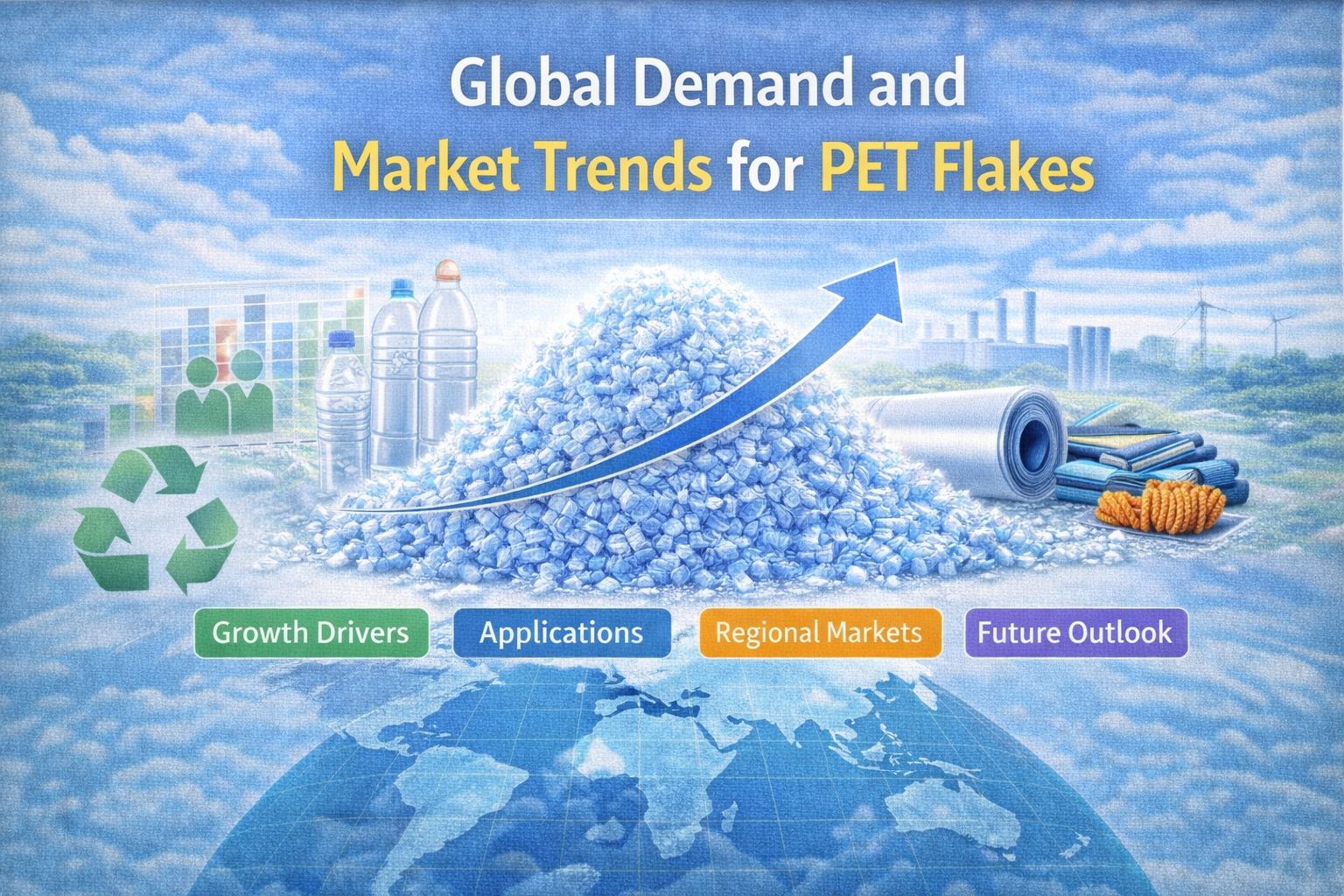
    Global Demand and Market Trends for PET Flakes

    The international plastic and recycling industry is currently experiencing a growing demand for PET flakes. This is based on the aspects of sustainability, regulations, and new applications of the product. PET flakes are made from post-consumer waste in the form of used plastic bottles and are crucial raw materials that are used in textiles, packaging, and industrial applications. This blog post examines the international demand and trends within the industry regarding PET flakes.

    What Are PET Flakes?

    PET flakes are small, clean, shredded pieces of polyethylene terephthalate taken from post-consumer PET bottles. After collecting, sorting, washing, and shredding, the bottles become flakes that may serve as base material for making rPET chips, polyester fibers, films, sheets, and strapping.
    PET flakes have thus become indispensable in the circular economy, as they are recyclable and versatile.

    Increase in Global Demand for PET Flakes

    There has been a substantial demand for PET flakes in recent years. The main drivers for the above growth are:
    • Use of recycled polyester in textiles
    • Use of rPET in food and beverage packaging
    • Corporate pledges for sustainability
    • Government regulations encourage recycled content.
    A number of international brands have also pledged to adopt higher recycling content targets. This has increased the demand for PET flakes.

    Key Market Trends Shaping the PET Flakes Industry

    1. Growth in Textile and Apparel Applications

    The textile industry is among the largest users of PET flakes. Recycled polyester fibers made from PET flakes are commonly used in clothing, home goods, automotive textiles, and nonwovens. This trend is especially strong in the Asia-Pacific region, where textile manufacturing is concentrated.

    2. Bottle-to-Bottle Recycling Expansion

    Food-grade PET flakes are now more widely used in bottle-to-bottle recycling systems. Beverage companies are turning to recycled PET flakes to comply with packaging regulations and lower their carbon footprints. Improved washing and decontamination technologies support this change.

    3. Shift Toward High-Quality, Food-Grade Flakes

    There is a rising demand for clear, contamination-free PET flakes that adhere to international food safety standards. Buyers are increasingly focused on low moisture content, consistent flake size, and minimal PVC contamination.

    4. Regional Market Growth

    • Asia-Pacific: The largest producer and consumer, thanks to strong recycling and textile sectors
    • Europe: Driven by strict recycling laws and sustainability targets
    • North America: Rising use of rPET in packaging and consumer goods
    Emerging markets are investing in recycling infrastructure to meet global demand as well.

    Impact of Regulations on PET Flakes Demand

    Government policies such as:
    • Extended Producer Responsibility (EPR)
    • Plastic Waste Management Rules
    • Mandatory recycled content targets
    are driving demand for PET flakes worldwide. These regulations motivate manufacturers to use recycled materials instead of virgin plastics.

    Pricing and Supply Chain Trends

    PET flake prices depend on:
    • Availability of post-consumer PET bottles
    • Quality and processing level of flakes
    • Local recycling infrastructure
    As demand increases, transparency in the supply chain and quality consistency are becoming key factors for buyers.

    Sustainability Benefits Driving Market Growth

    Using PET flakes helps to:
    • Cut plastic waste and landfill pressure.
    • Lower greenhouse gas emissions
    • Save energy compared to producing virgin PET.
    • Support goals for a circular economy
    These environmental advantages make PET flakes a key material for sustainable manufacturing.

    Future Outlook for the PET Flakes Market

    The future of the PET flakes market looks promising, with continued growth expected in textiles, packaging, and industrial sectors. Technological improvements in sorting, washing, and chemical recycling will enhance flake quality and broaden applications.
    As sustainability shifts from a choice to a necessity for businesses, PET flakes will stay at the center of global recycling and manufacturing strategies.

    Also Read: Role of Plastic Recycling in Sustainable Textile Manufacturing

    The demand as well as market dynamics for PET flakes are clearly shifting in the direction of sustainable materials and circular systems in the global market. With increasing support from regulations, uses, and commitments, it is expected that PET flakes will play an essential role in shaping the future of plastics and textiles in the coming years.
  • Role of Plastic Recycling in Sustainable Textile Manufacturing

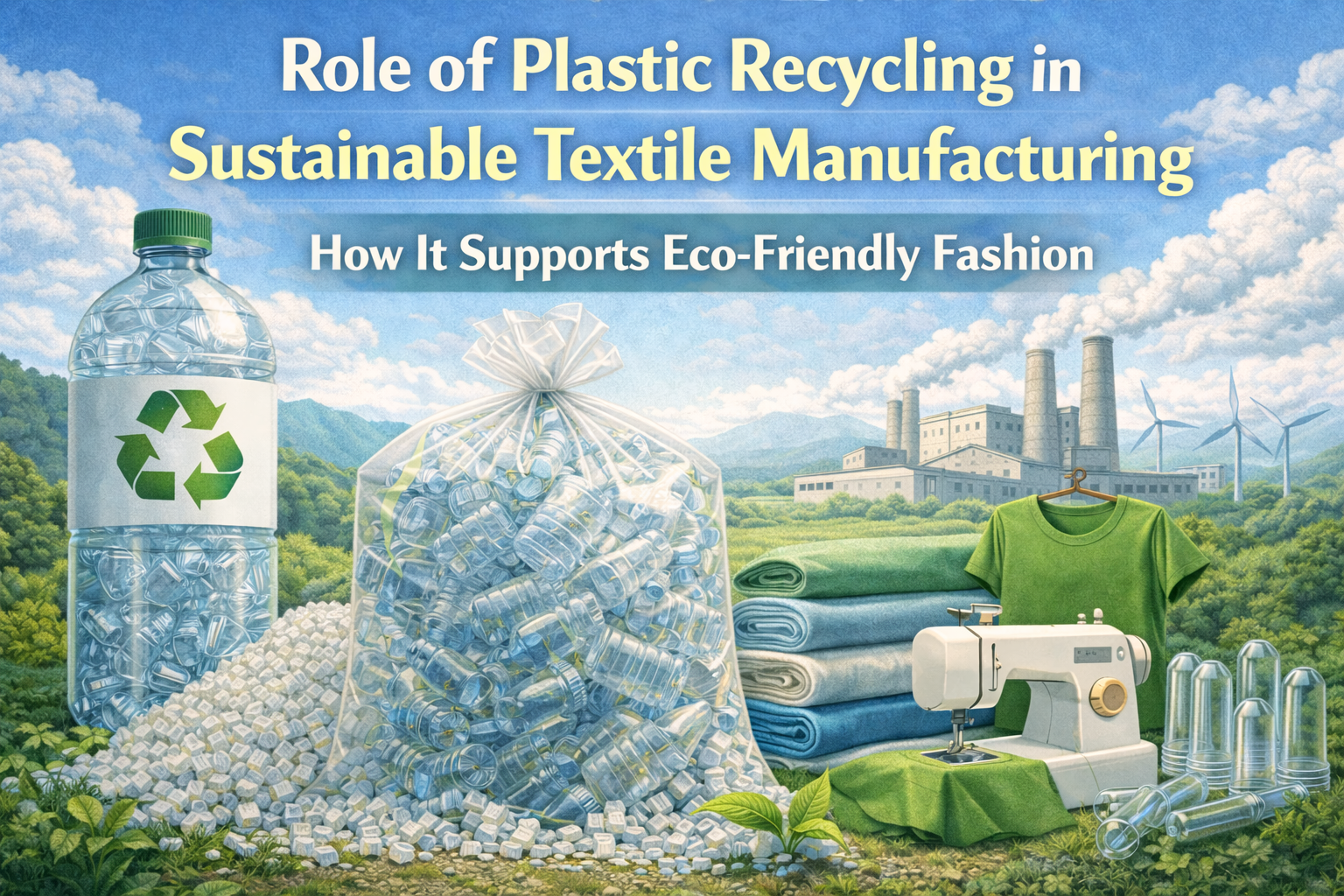
    Role of Plastic Recycling in Sustainable Textile Manufacturing

    The textile industry significantly contributes to environmental pollution due to high resource use and waste generation. As the world focuses more on sustainability, plastic recycling has become an important solution for creating a more responsible textile industry. By turning plastic waste into valuable textile fibers, recycling is essential for sustainable textile manufacturing.

    Understanding Plastic Recycling in Textiles

    In the textile industry, the recycling of plastic happens when post-consumer PET plastic, such as used water packaging, is recycled into polyester fibers. The obtained polyester fibers can then be spun into fabrics that can be used in manufacturing garments, domestic textiles, and industrial fabrics, thus providing an alternative to petroleum-derived polyester fabrics.

    Why Plastic Recycling Matters for Sustainability

    1. Reducing Environmental Pollution

    Plastic waste is a serious environmental threat, especially when it ends up in landfills or oceans. Recycling plastic into textile fibers keeps waste out of ecosystems and turns it into useful raw materials, helping to lower environmental pollution.

    2. Lower Carbon Footprint

    Producing recycled polyester uses less energy compared to making virgin polyester. By avoiding crude oil extraction and refining, plastic recycling helps cut greenhouse gas emissions, making textile production more environmentally friendly.

    Contribution to Circular Textile Economy

    Plastic recycling supports a circular economy, where materials are reused instead of thrown away. In textile manufacturing, recycled plastics are turned into fibers that can be reused multiple times. This circular method reduces waste, conserves resources, and extends the life cycle of plastic materials.

    Resource and Energy Conservation

    Producing recycled textile fibers requires:

    • Less water
    • Less energy
    • Fewer natural resources

    This conservation of resources supports sustainable manufacturing goals. Brands that use recycled fibers also lessen their reliance on unstable fossil fuel markets.

    Applications of Recycled Plastics in Textiles

    The types of fibers derived from recycled plastic and widely used are:

    • Apparel: activewear, jackets, t-shirts
    • Household textiles. Carpets, curtains, cushions
    • Textile for cars, seats, insulation, etc.
    • Industrial textiles: Non-woven textiles

    Such applications prove that post-consumer waste can measure up to other fibers in performance and quality attributes.

    Role of Brands and Regulation


    Brands are adopting recycled materials at a growing pace due to:

    • Consumer demand for environmentally friendly products
    • Corporate Sustainability and ESG Commitments
    • Plastic wastes: government regulation policy on recycling

    Extended Producer Responsibility (EPR) is another policy that encourages recycling plastics and, therefore, enhances the existing (recycling textile) value chain.

    Challenges in Plastic Recycling for Textiles

    Nevertheless, there are still challenges involved:

    • Inconsistent waste collection and separation
    • Variability in used materials quality
    • lack of infrastructure for recycling textiles into textiles. Nevertheless,

    The investments in the newer forms of recycling technology help to meet these challenges.

    Future of Plastic Recycling in Textile Manufacturing

    The future appears bright as innovations in chemical recycling, closed-loop systems, and traceability technologies gain momentum. With global brands committing to using more recycled content, plastic recycling will continue to influence the next generation of sustainable textiles.

    Also Read: Best rPET Chips in Fibre, Film, and Bottle Manufacturing

    Plastic Recycling: Plastic recycling has proven to be a revolutionary way to develop sustainable textile production. Plastic recycling helps reduce waste, lower pollutants, conserve resources, and promote a circular economy. Plastic recycling has already proven to be an important component in sustainable textile production and will continue to do so as advancements in recycling occur.

  • Best rPET Chips in Fibre, Film, and Bottle Manufacturing

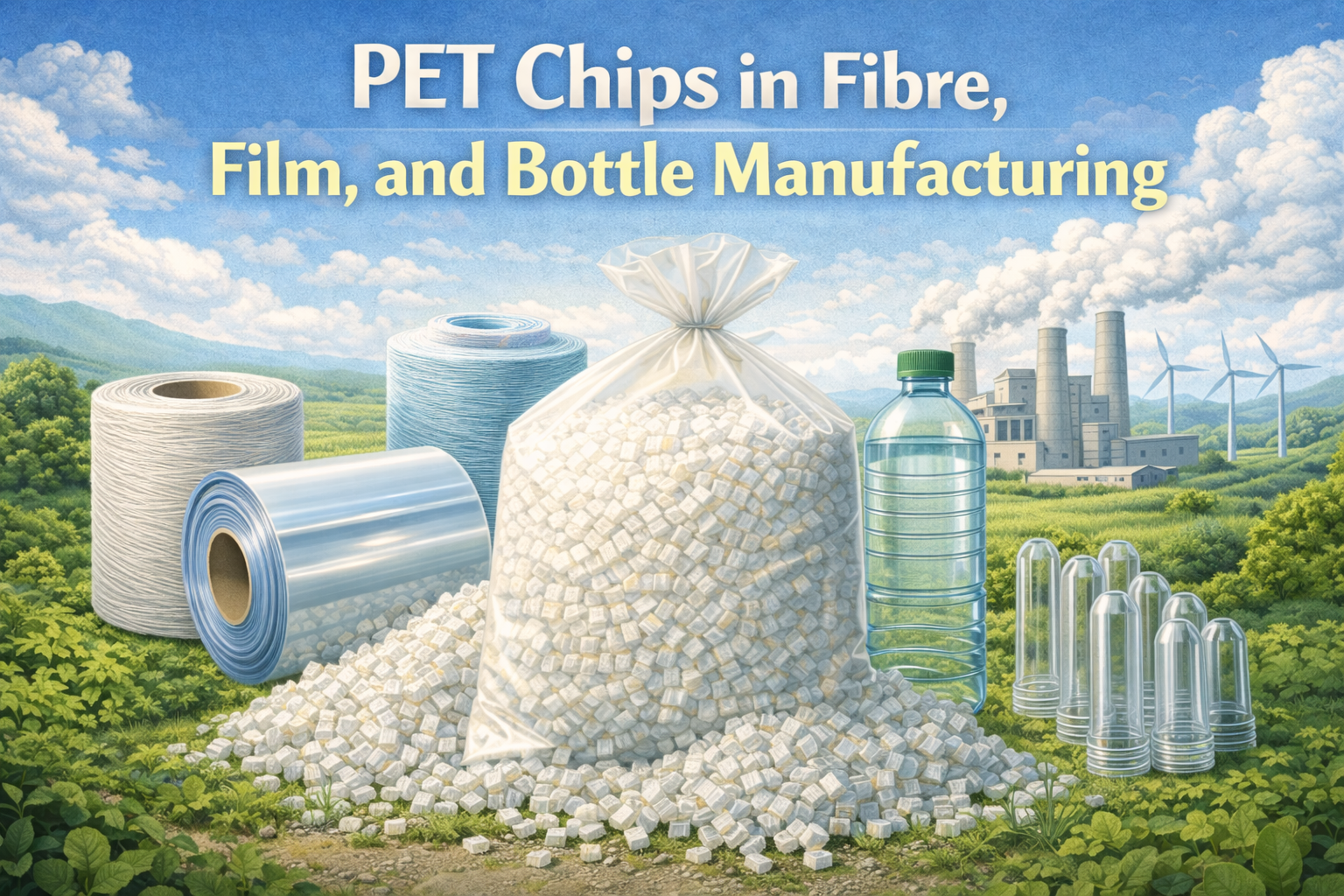
    Best rPET Chips in Fibre, Film, and Bottle Manufacturing

    As industries move toward sustainable materials, recycled PET (rPET) chips have become an important raw material in fibre, film, and bottle manufacturing. They work equally well as virgin PET but with very minimal environmental concerns. The use of rPET chips has become prevalent in the textile industry, packaging firms, and beverage companies. The above discussion highlights the features of the best rPET chips in use, their applications in different fields, and the reason behind their impact on the future of the manufacturing sector.

    What Are rPET Chips?

    rPET chips are plastic pellets produced by recycling post-consumer PET bottles and industrial PET waste. The recycling procedure entails sorting, cleaning, decontamination, extrusion, and pelletizing. The recycled PET chips with good properties are of very good quality and thus suitable for use in difficult-to-process applications like spinning of fibres, extruded films, and containers.

    Key Qualities of the Best rPET Chips

    Not all rPET chips are the same. The best rPET chips for industrial use are defined by:
    • High intrinsic viscosity (IV) for strength and durability
    • Low contamination and moisture levels
    • Consistent pellet size and colour
    • Compliance with food-contact and quality standards
    These factors ensure smooth processing and reliable end-product performance.

    rPET Chips in Fibre Manufacturing

    In textile industry applications, rPET chips find numerous applications in the production of recycled polyester fibres, such as staple and filament yarns. High IV rPET chips also possess superior tensile strength and find application in:
    • Apparel and activewear
    • Home textiles – carpets and upholstery
    • Automotive interiors and nonwoven fabrics
    Fibre-grade rPET chips enable brands to cut carbon footprints without compromising quality, durability, or comfort levels in fabrics.

    rPET Chips in Film Manufacturing

    Film-grade rPET chips are used to manufacture:
    • Packaging films
    • Sheets and thermoformed trays
    • Industrial and protective films
    These chips provide good clarity, strength, and barrier properties. Using rPET chips in film manufacturing reduces reliance on virgin plastics and supports sustainable packaging efforts. Many brands now include recycled content in films to meet regulations and consumer expectations.

    rPET Chips in Bottle Manufacturing

    Bottle-quality rPET chips are manufactured using sophisticated decontamination technology to conform to safe-food-quality standards. Bottle-quality rPET chips can be used in:

    • Beverage bottles
    • Food containers
    • Personal care packaging
    High-quality bottle-grade rPET chips allow for bottle-to-bottle recycling. This is an important part of recycling systems. They help lessen plastic waste and greenhouse gas emissions while keeping transparency and strength.

    Environmental Benefits of Using rPET Chips

    Using rPET chips instead of virgin PET provides several sustainability benefits:
    • Lower energy use during production
    • Reduced greenhouse gas emissions
    • Less plastic waste in landfills and oceans
    • Conservation of fossil fuel resources
    These advantages make rPET chips important for companies seeking to meet ESG goals and sustainability targets.

    Why Industries Prefer rPET Chips

    They are preferred by manufacturers because they come with the following benefits:
    • Cost stability relative to oil-based virgin PET
    • Complying with EPR and Recycled Content Regulations
    • Brand image and environmental credibility
    With advances in recycling technology, quality in rPET chips is consistent across application types.

    Also Read: Impact of Recycled Polyester on Carbon Footprint Reduction

    The best rPET chips are essential in making fibre, film, and bottles because they combine performance, safety, and sustainability. As industries shift to circular production models, rPET chips will keep replacing virgin PET in various applications. Selecting high-quality rPET chips is not only an environmental choice; it is also a smart strategy for future manufacturing.
  • Impact of Recycled Polyester on Carbon Footprint Reduction

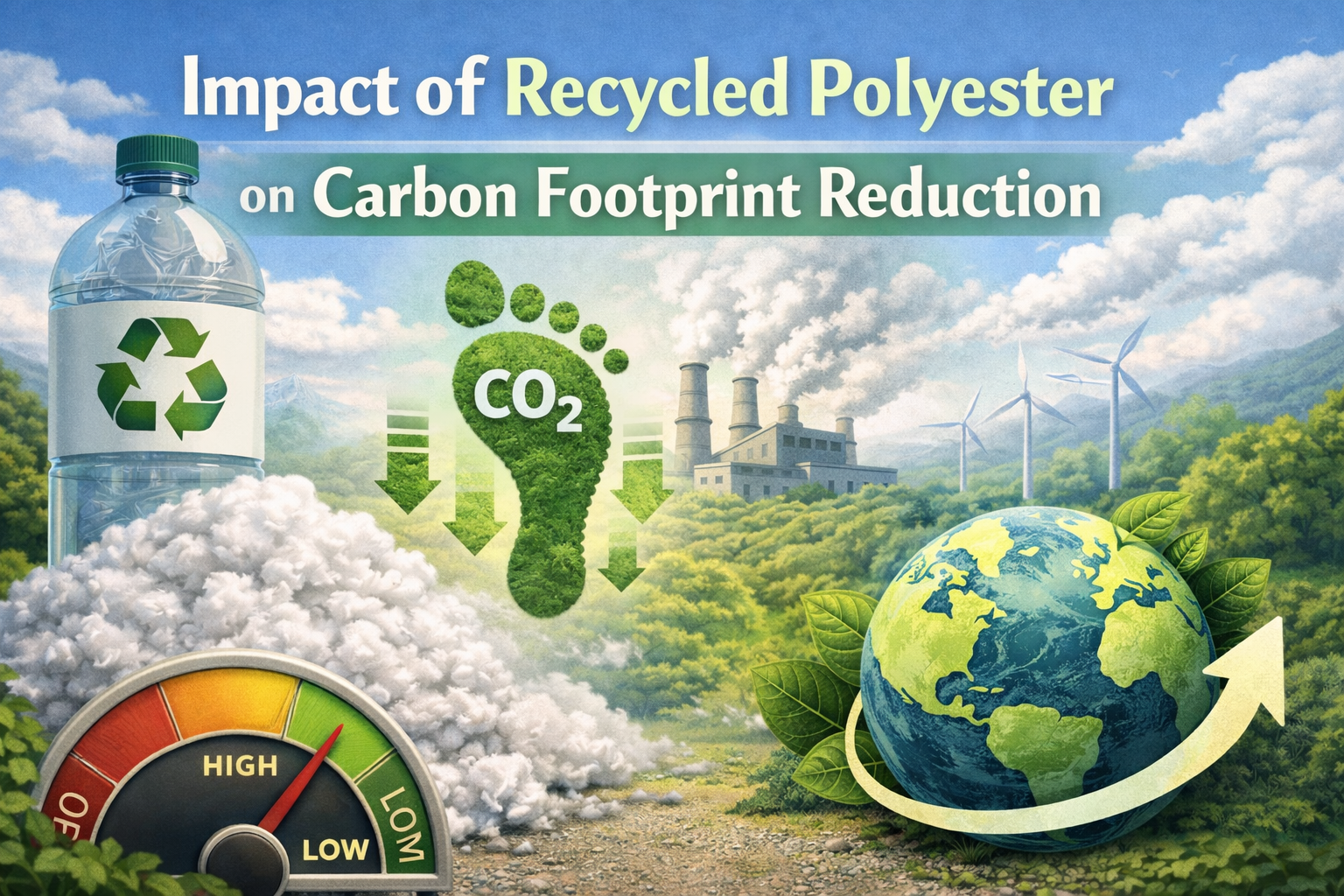
    Impact of Recycled Polyester on Carbon Footprint Reduction

    Today, as the industries of the world continue to bear increasing pressure to significantly reduce emissions and develop methods that ensure sustainable practices, recycled polyester has been recognized as a powerful game-changer, particularly in the textile and apparel sector. Recycled polyester is made from post-consumer PET bottles and industrial plastic waste to an extraordinary extent. In this light, it greatly reduces environmental impact with no apparent sacrifice in performance. This blog examines how recycled polyester contributes to carbon footprint reduction and why it is being favored by brands the world over.

    What Is Recycled Polyester?

    The recycled polyester process reuses plastic waste in the form of PET bottles to create new polyester fibers. Instead of depending on fossil fuels in order to create polyester, suppliers now rely on plastic that already exists.
    The recycling process usually entails:
    • Collection and sorting of PET waste
    • Washing and flaking into flakes
    • Melting and extrusion into fiber or chips
    • Spinning into yarn for textile use
    This closed system is essential when it comes to lowering carbon emissions.

    How Recycled Polyester Lowers Carbon Emissions

    1. Reduced Energy Usage

    The energy required to produce recycled polyester is lower compared to virgin production. Additionally, there is a saving in energy for non-production purposes compared to producing virgin polyester. According to studies, recycled polyester consumes between 30% and 50% less energy.

    2. Less Dependence on Fossil Fuels

    Virgin polyester comes from oil. When companies switch to using recycled polyester, it decreases the consumption of fossil fuel, a key source of environmental carbon emissions globally. Every ton of recycled polyester created helps to conserve oil and prevent emissions.

    3. Lower Greenhouse Gas Emissions

    In comparison to virgin polyester, recycled polyester has been shown to emit anywhere from 40 to 60% lower levels of greenhouse gases. The difference largely derives from differences in energy requirements, resource extractions, and variations in production methods.

    Contribution to Circular Economy

    Recycled polyester supports the circular economy: materials are being reused instead of landfilled. PET bottles, which otherwise reach landfills or oceans, get recycled into valuable textile fibers. This helps reduce plastic pollution and avoids emissions from waste management methods involving incineration.
    Recycled polyester helps to close the loop by keeping materials in use longer, offering a reduction in the overall environmental footprint created by the textile industry.

    Impact Across Industries

    Apparel & Fashion

    Fashion brands are starting to use recycled polyester in sportswear, outerwear, and casual wear. It provides the same durability, water resistance, and functionality as virgin polyester, but at a much lower carbon price.

    Home Furnishing

    Products such as carpets, cushions, and upholstery, produced by recycled polyester, cut down on emissions and meet quality and longevity requirements.

    Automotive & Industrial Uses

    Recycled polyester also has other applications, such as car interior parts, insulation, and non-woven products, that aid in meeting environmental and emission standards for different industries.

    Why Brands Are Choosing Recycled Polyester

    Brands are embracing recycled polyester not only for its eco-friendly properties but also because:
    • ESG and sustainability commitments
    • Regulatory forces, influencing pollution emission reductions
    • Consumer demand for green products
    • comparable quality and performance to virgin polyester
    The use of recycled polyester enables companies to reduce the scope 3 emissions of CO2, as scope 3 emissions account for the largest part of the overall carbon footprint of companies.

    Challenges and the Road Ahead

    While recycled polyester obviously has clear environmental benefits, challenges persist in the forms of recycling infrastructure, quality consistency, and fiber-to-fiber recycling. However, textile-to-textile recycling is getting far better with the development of new technologies, and waste collection systems are similarly improving.

    Also Read: How PET Flakes Support Circular Economy and Sustainability

    The impact of recycled polyester on carbon footprint reduction is both significant and measurable. By reducing energy consumption, lowering reliance on fossil fuels, and decreasing greenhouse gas emissions, recycled polyester presents a pragmatic approach towards sustainability. As recycling technologies continue to evolve and improve, along with upscaling processes, recycled polyester will become key to developing a low-carbon, more circular textile industry.
  • How PET Flakes Support Circular Economy and Sustainability

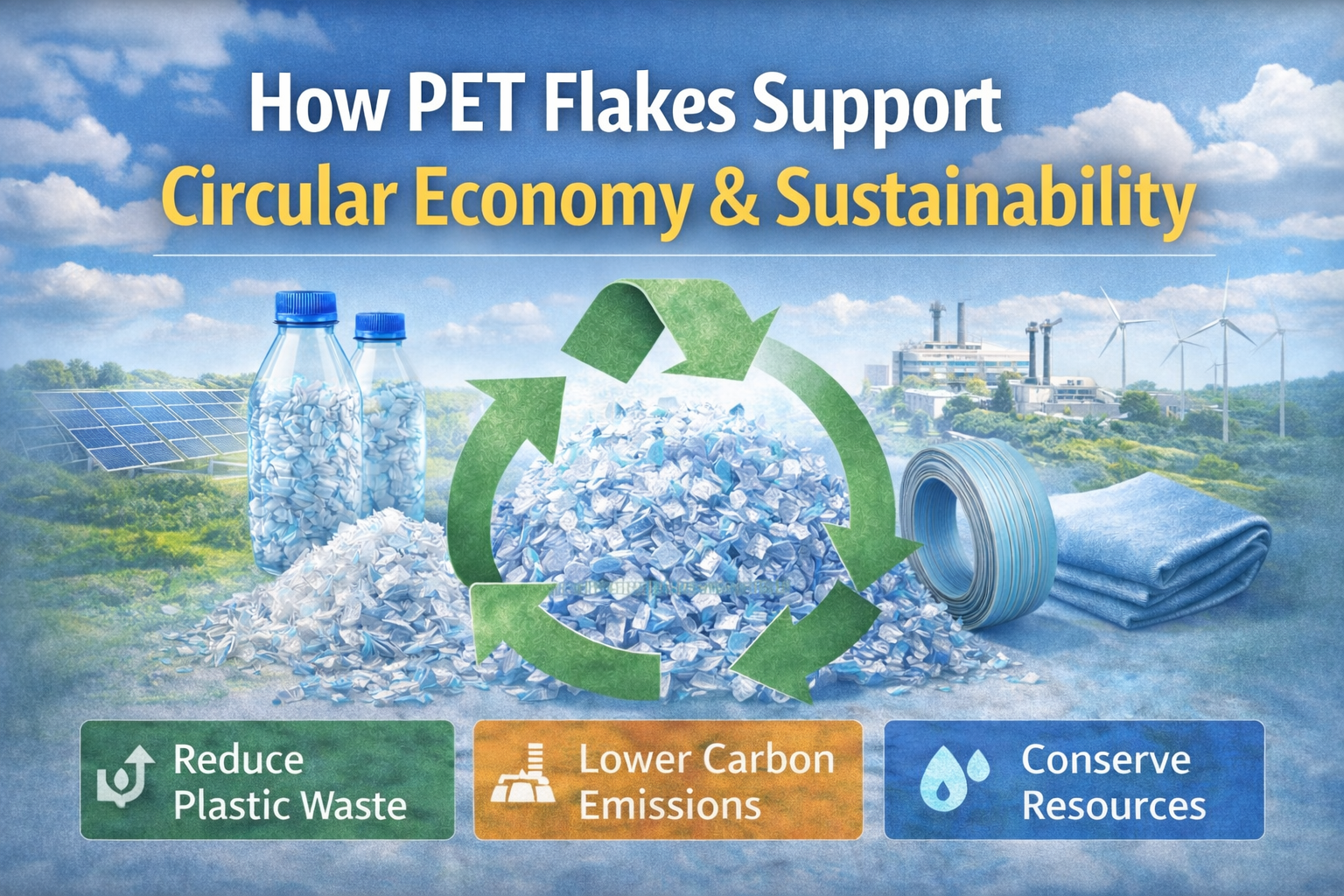
    How PET Flakes Support Circular Economy and Sustainability

    The global shift toward sustainability has made recycling more important than ever, and among the many materials being reused today, PET flakes are certain building blocks of a strong circular economy. Derived from recycled PET bottles and plastic waste, PET flakes transform the way industries think about plastic reuse, environmental responsibility, and long-term sustainability.

    In the given blog, we investigate how PET flakes help contribute to a circular economy, provide some environmental benefits, and finally, why they’ve become key for many eco-conscious brands around the world.

    What are PET flakes?

    These PET flakes are shredded pieces derived from PET plastic bottles and containers from post-consumer sources. These are then sorted, processed, and cleaned, making them into high-quality flakes. These flakes are later recycled to produce different items such as fibers, wrappers, strapping bands, and even plastics to make bottles and containers, or even sheets.

    This method gives plastic waste a new lease on life rather than having it end up in landfills and oceans.

    Understanding the Circular Economy

    A circular economy aims to minimize the generation of waste through the reuse of resources on a constant basis. A circular economy defies the take, make, dispose concept of the past by keeping resources in use as long as possible.

    PET flakes perfectly fall into place within this framework. Rather than new plastics being made using fossil fuels, companies recycle used PET flakes to make new products. This cuts down on the usage of new plastic.

    How PET Flakes Promote Sustainability  

    1. Reduces Plastic Pollution

    Every ton of recycled PET flakes means fewer plastic bottles thrown away in landfills or water bodies. Recycling PET waste into flakes directly cuts down environmental pollution and protects ecosystems.

    2. Saves Energy and Resources

    Processing products using recycled PET flakes requires much less energy compared to the production of virgin plastic. This reduces carbon emissions and fossil fuel use.

    3. Lowers Carbon Footprint

    Using PET flakes in manufacturing reduces greenhouse gas emissions. Many global brands now choose recycled PET materials for the sustainability goals and standards of the environment.

    4. Promotes responsible consumption.

    PET flakes create demand when used by different industries. This means it encourages good waste separation and recycling habits among consumers.

    Industries That Utilize PET Flakes

    There are numerous applications of PET flakes in different sectors:

    • Textile Industry for Recycled Polyester Fibers
    • Packaging industry for food and nonfood containers
    • Building materials
    • Automobile interior fabrics
    • Strapping and plastic sheets

    This broad applicability thus testifies that the produced material, having utilized recycled components, can withstand the quality offered by the virgin plastic itself, in an ecologically friendly manner.

    Why Brands Are Choosing PET Flakes

    Today’s consumer wants the brand to have concern for the environment. The use of PET flakes enables the company to:

    • Achieve sustainability goals
    • Enhance brand reputation
    • Adhere to environmental regulations.
    • Reduces the cost of production over time

    Many multinational organizations are now starting to market their products under the label “Made from Recycled PET,” thereby adding to the brand.

    Future of PET Flakes in the Circular Economy

    With growing awareness and government support for recycling, PET flakes are expected to play an even larger role in sustainable manufacturing. Innovations in recycling technology are improving flake purity and quality, making them suitable for food-grade and high-end applications.

    As recycling infrastructure expands in India and globally, PET flakes will become the backbone of circular plastic economies.

    Also Read: Government Policies and the Future of Plastic Recycling in India

    “PET flakes are more than just recycled plastic—in fact, the flakes are a powerful answer to plastic pollution and natural resource depletion. By being an advocate of the circular economy, the flakes are instrumental in conserving energy and cultivating a sustainable future.”

    Companies that implement PET flake-based manufacturing processes will not only improve environmental performance but will also have a competitive advantage in the green economy.

  • Government Policies and the Future of Plastic Recycling in India

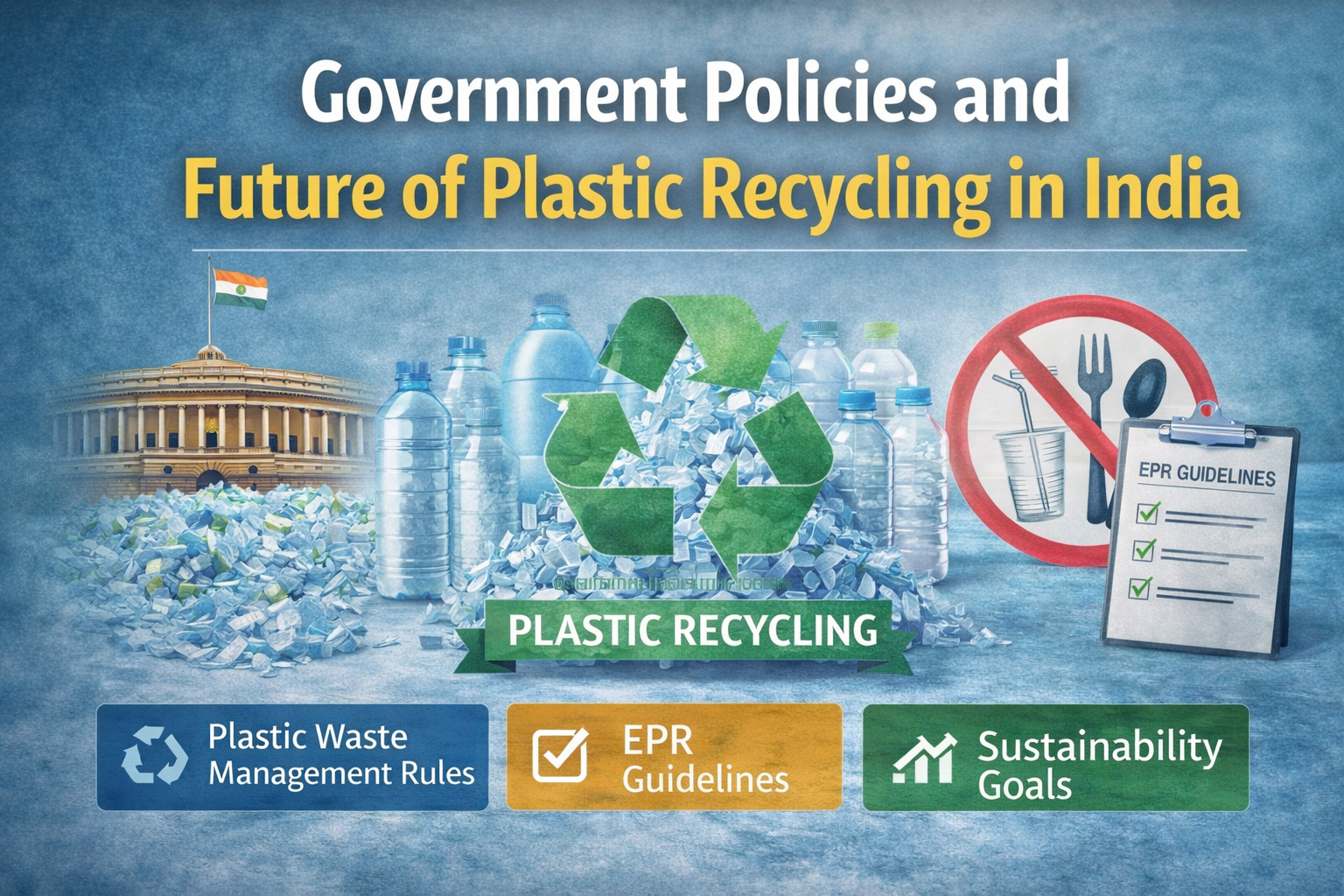
    Government Policies and the Future of Plastic Recycling in India

    The management of plastic waste is now one of the most critical environmental concerns in India. With increased rates of urbanization, population, and consumption, India produces millions of tonnes of plastic waste on an annual basis. To counter this problem, the Indian government has developed several policies, rules, and programs aimed at enhancing plastic recycling and developing a circular economy.

    Current Plastic Waste Scenario in India

    India ranks in the top tier of the globe’s plastic waste generation. Even though the country has a colossal unorganised recycling industry, hurdles like inadequate waste sorting, recycling of substandard quality, and unintended release of plastic into the surrounding environment persist. Having understood these challenges, the Indian government has made attempts to implement regulations and improve recycling systems.

    Plastic Waste Management Rules (PWM Rules)

    The plastic recycling regulatory system in India is founded upon the Plastic Waste Management Rules that were first implemented in 2016 and have undergone many variations thereafter. The rules pertain to:

    • Source segregation of plastic waste
    • Collection, storage, and processing of plastic waste
    • Minimizing the use of single-use
    • Recycling and Recovery of Waste

    Waste recycling is. The PWM Rules make it compulsory for all local bodies, producers, and brand owners to be actively engaged in managing plastic waste.

    Extended Producer Responsibility (EPR)

    Prominent among the newer policy approaches is Extended Producer Responsibility (EPR). Under the EPR policy, producers, importers, and brand owners (PIBOs) are responsible for:

    • Collecting post-consumer plastic waste
    • Facilitating recycling and/or responsible end-of-life disposal
    • Achieving specified recycling targets each year

    EPR has created new opportunities for recyclers, aggregators, and waste management companies, and has compelled brands to include a higher percentage of recycled plastic in their packaging.

    Ban on Single-Use Plastics

    In 2022, India put into effect a nationwide ban on identified single-use plastic items like straws, cutlery, and thin plastic bags. This policy serves to:

    • Include reducing plastic pollution at its source.
    • Promote alternatives and reusable materials.
    • Improve recycling productivity by reducing low-value waste.

    Though there are challenges in implementing, this ban has contributed to increased innovation in sustainable packaging and recycling solutions.

    Role of Government Initiatives and Missions

    There are national initiatives that assist in the recycling of plastics, such as:

    • Swachh Bharat Mission – Works on the segregation of waste and cleanliness in the cities.
    • Make in India – Supports the building of infrastructure for recycling in the country.
    • Startup India – Fosters new ideas for technologies in recycling.

    Also, local governments are implementing policies and incentives to improve the collection and recycling systems.

    Future of Plastic Recycling in India

    With the support of policies, technology, and a growing market, the future of plastic recycling in India is highly positive. Some of the trends that can be expected are:

    • Increased usage of recycled plastics (rPET, rHDPE, rPP) in packaging and textiles
    • Increase in chemical recycling and advanced recycling technology
    • Enhanced digital tracking and stronger traceability in EPR frameworks
    • Increase in the demand for rHDPE.

    India is strategically positioned to be a primary market for recycled plastic materials as global brands continue to prioritize sustainability.

    Challenges That Need to Be Addressed

    Despite the progress made, there are some.

    • Poor waste segregation at source
    • Small cities and a lack of recycling infrastructure
    • quality and consistency of recycled materials
    • Awareness Gaps in Consumers and Businesses

    These challenges will have to be approached in collaboration by all stakeholders, including government agencies and civil society.

    Also Read: How PET Chips Are Manufactured from Recycled Material

    Government policies play a vital role in shaping the future of plastic recycling in the country. With strong regulations like PWM Rules, EPR guidelines, and bans on single-use plastic, India moves toward a more sustainable and circular plastic economy. Ongoing policy enforcement, innovative technology, and public participation will, therefore, be pivotal in making the transformation of plastic waste into a valued resource rather than an environmental burden.