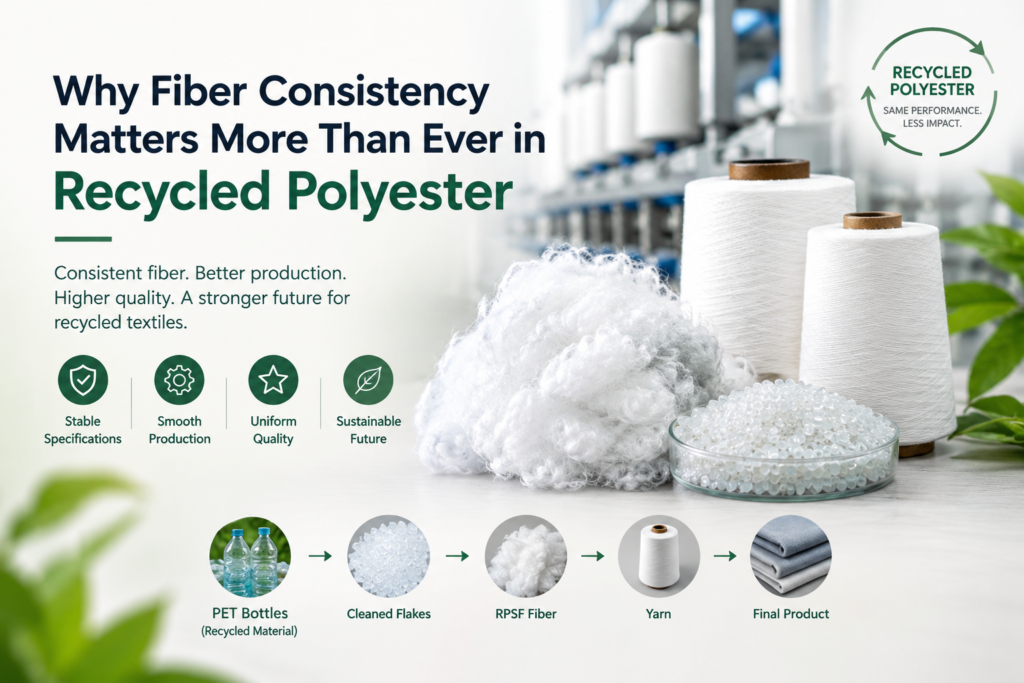
In the last few years, the world’s move toward sustainability has gone from being a trend to a need for businesses. Businesses all over the world are rethinking how they get, make, and use materials. Recycled Polyester Staple Fiber (RPSF) is at the heart of this change. It is becoming more and more important in the textiles, automotive, home furnishing, and nonwoven industries.
It’s no longer optional for manufacturers, exporters, and bulk buyers to know about RPSF market trends. It’s necessary to stay competitive.
Rising Demand Because of Goals for Sustainability
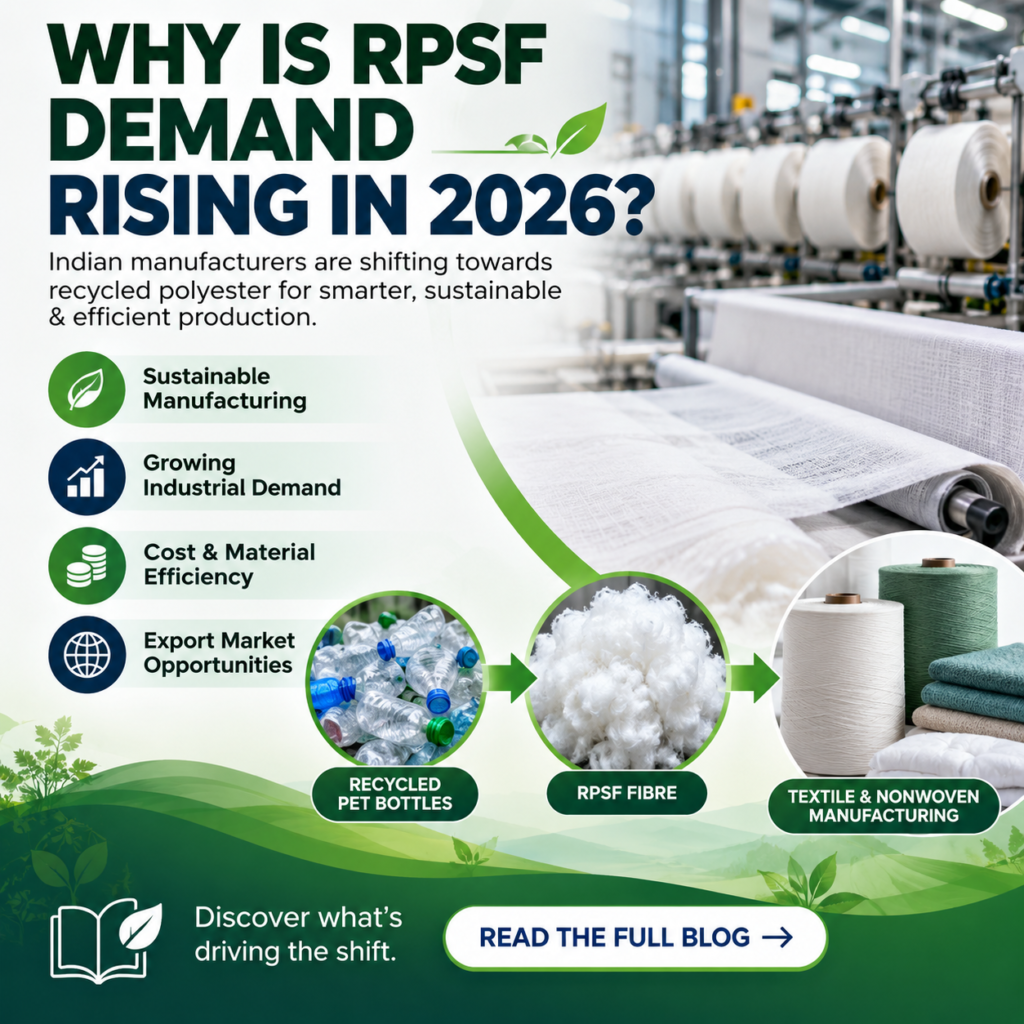
One of the main reasons why recycled polyester staple fiber is becoming more popular is that people are becoming more environmentally conscious. Governments and international groups are making rules about plastic waste and carbon emissions that are stricter. Because of this, businesses are actively moving toward using recycled materials.
Many well-known brands around the world, especially in the fashion and textile industries, have promised to use a lot of recycled fibers in their products. This has directly led to more people wanting RPSF, which is why it is now the best choice over virgin polyester.
Growth in Many Different Industries
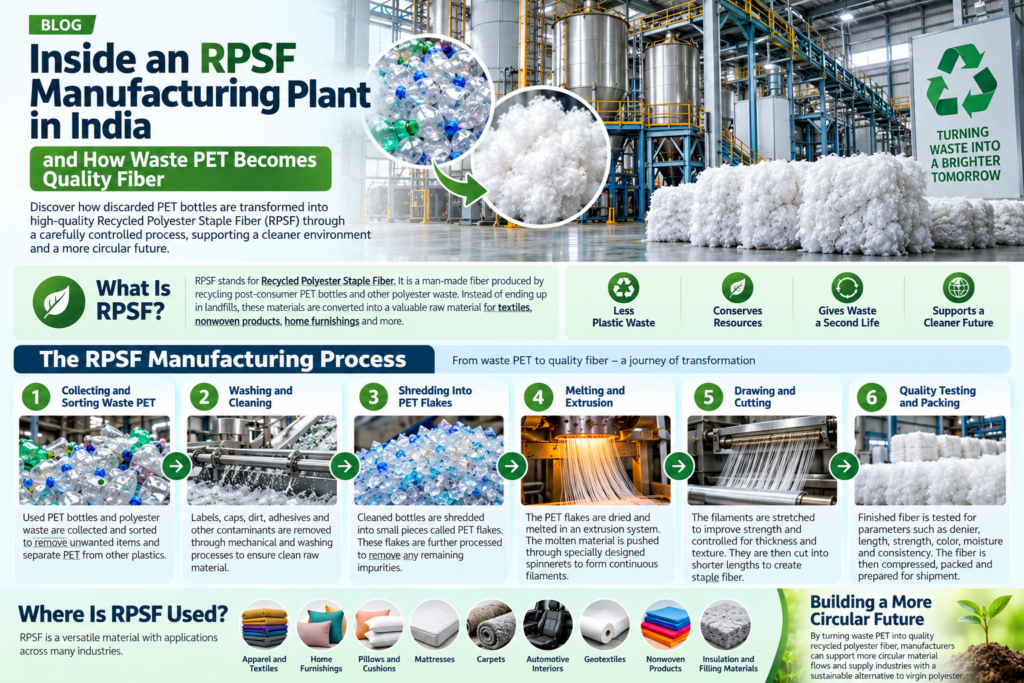
RPSF was first popular in the textile industry, but it has since been used in many other ways. It is now used a lot in:
Textiles and Clothing: Clothes that are good for the environment and fabrics that are mixed together
Home Goods: Pillows, mattresses, carpets, and furniture upholstery
Automotive Industry: Seat fillers and insulation materials
Filters, wipes, and hygiene products that are not woven
One of the main reasons why it is always in demand around the world is that it can be used in so many different ways.
Cost-effectiveness and an edge over the competition
Cost-effectiveness is another important reason why people are using recycled polyester staple fiber. RPSF is often a cheaper option than virgin polyester that doesn’t affect performance.
This gives B2B buyers a strong reason to buy: lower production costs and benefits for the environment. Companies that use RPSF in their supply chain can also improve their brand image as being good for the environment.
More chances for global trade and exports to grow
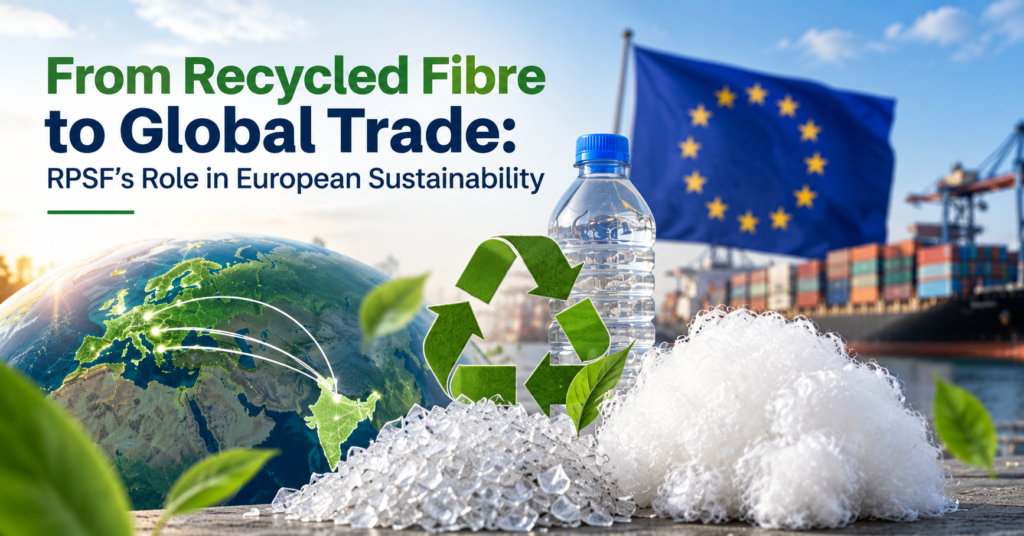
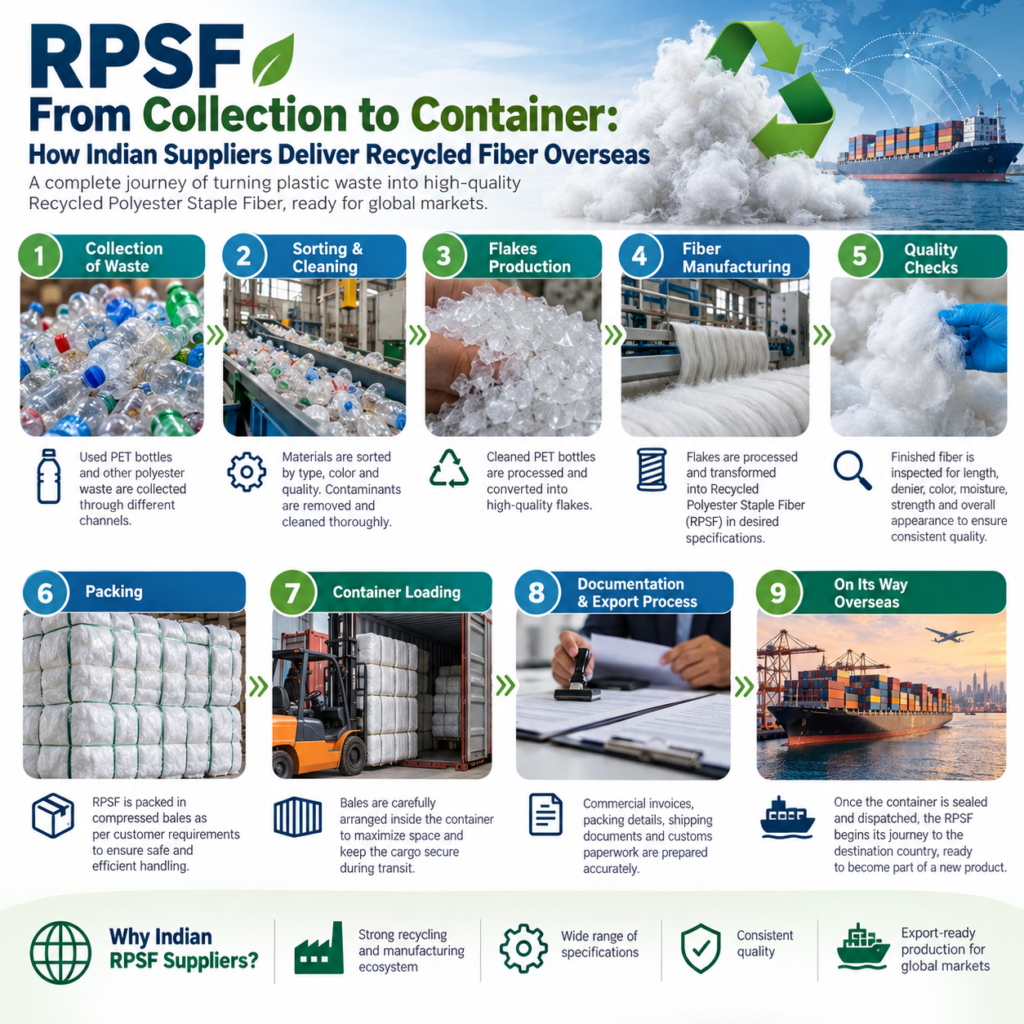
The trade in recycled polyester staple fiber is growing quickly around the world. Countries that have good recycling systems and can make things are becoming important exporters.
Asia, especially India and China, is becoming a major center for RPSF production because it has a lot of raw materials and makes things cheaply. At the same time, demand is rising in places like Europe and North America, where standards for sustainability are stricter.
Manufacturers and suppliers can make a lot of money exporting goods because there is a big gap between supply and demand.
Technological Progress Enhancing Quality
One of the first worries about recycled fibers was that their quality was not always the same. But new recycling technologies have made RPSF much more reliable and effective.
Modern processing methods make fibers stronger, more uniform, and longer-lasting, making them similar to virgin polyester in many uses. This has made buyers more confident and made it useful in more industries.
Problems in the Market
The RPSF market is growing, but it does have some problems. The availability of high-quality recyclable plastic is still a major worry. Changes in the supply of raw materials can affect the price and consistency of production.
To keep up with quality standards, you also need advanced machines and strict quality control processes. In this competitive market, businesses that put money into technology and quality control are more likely to do well.
The Future
Recycled polyester staple fiber has a very bright future ahead of it. The demand for recycled materials will keep going up as sustainability becomes a core business strategy instead of just a way to market.
Circular economy models, in which waste is reused and recycled, are becoming more popular around the world. RPSF fits this model perfectly, making it a long-term solution for businesses that want to lessen their impact on the environment.
This is the best time for manufacturers and suppliers to invest, grow, and make sure they are well-positioned in the global market.
Also Read: Turning Plastic into Performance: Recycled Polyester Staple Fiber Explained
FAQs
1. What is polyester staple fiber that has been recycled?
Recycled polyester staple fiber is made from recycled plastic, mostly PET bottles. These bottles are turned into short fibers that are used in many different industries.
2. Why is RPSF so popular all over the world?
People want it because it helps the environment, saves money, and is becoming more regulated when it comes to plastic waste and carbon emissions.
3. What kinds of businesses use recycled polyester staple fiber?
People use it a lot in textiles, furniture, car parts, and nonwoven items like wipes and filters.
4. Is recycled polyester staple fiber as strong as new polyester?
RPSF is strong and long-lasting like other materials, so it can be used in most situations.
5. What are the most important chances for RPSF in the market?
It has a lot of potential because demand is growing around the world, there are opportunities to export, and big brands are starting to use it more.
In conclusion
Recycled Polyester Staple Fiber is no longer just an option; it’s becoming the norm for making things in a way that doesn’t hurt the environment. It offers a great chance for businesses all along the supply chain because demand is rising, applications are growing, and the market is strong.
Keeping up with these trends can help buyers and manufacturers make better choices, save money, and stay in line with the future of responsible production.