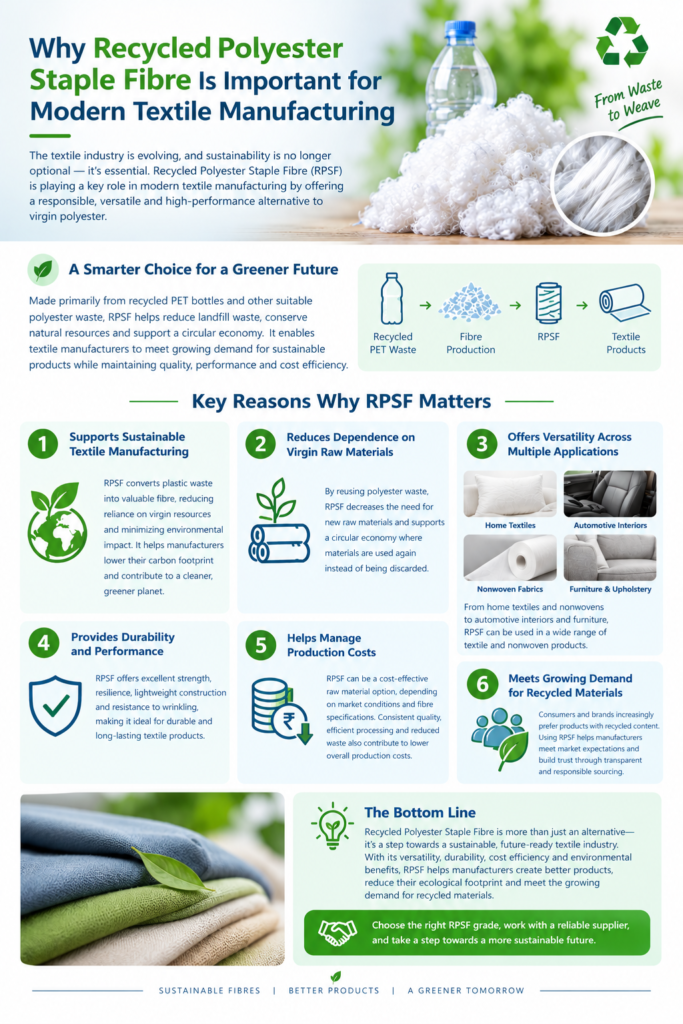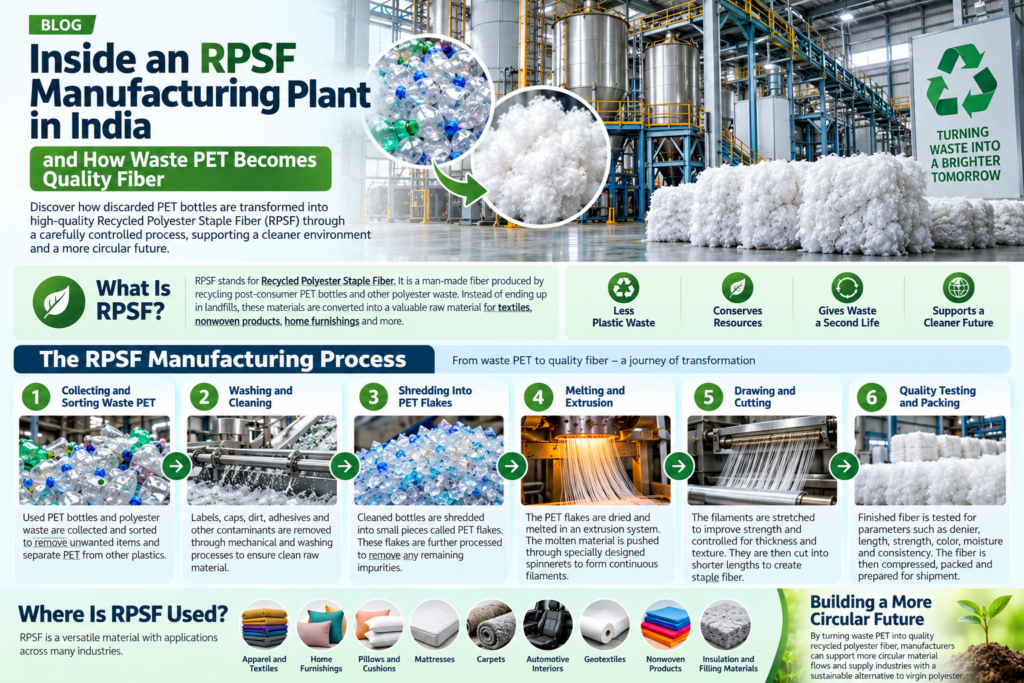
Recycled Polyester Staple Fiber (RPSF) has become a preferred material for a wide range of applications as businesses across the globe move towards sustainable manufacturing. Made from recycled PET bottles, RPSF is an environmentally responsible alternative and a cost effective, versatile and highly durable choice for virgin polyester.
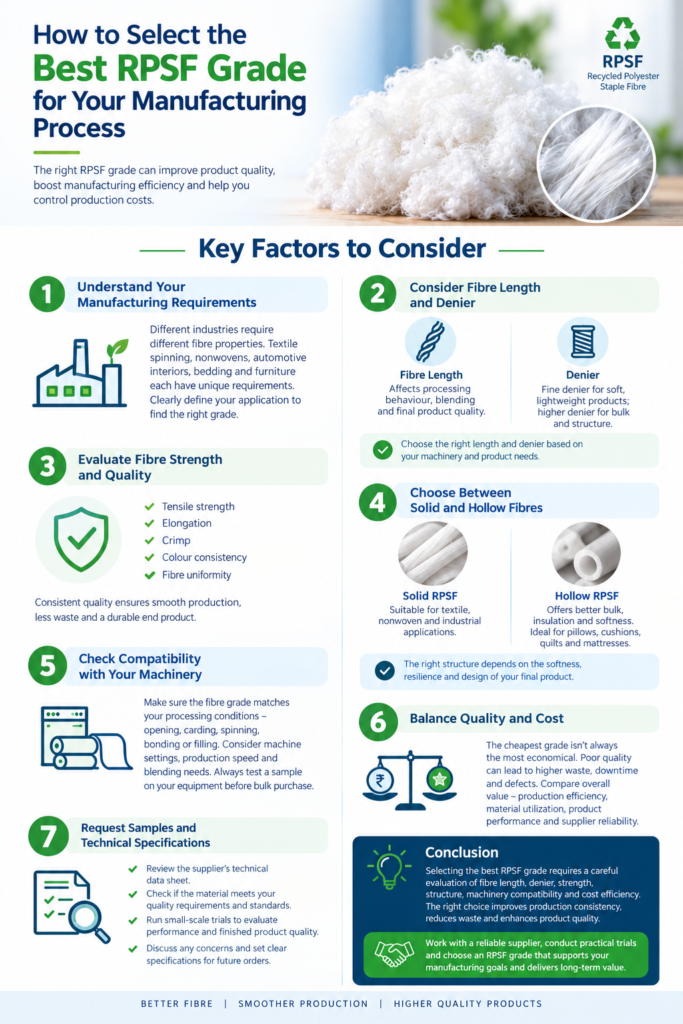
But not all RPSF is created equal. Different industries have different fiber specs that are required to achieve the desired product performance. Choosing the right Recycled Polyester Staple Fiber can greatly improve product quality, production efficiency, and long-term value. Knowing the key factors will also help manufacturers make informed decisions that meet their production requirements.
Understand Your Industry Needs
Understand Your Industry’s Needs The first step to choosing the right RPSF is knowing the needs of your industry.
For example, the automotive sector needs strong fibers with better resilience, whereas home furnishing manufacturers may prefer softness and loft. The producers of nonwoven fabrics generally look for a constant fiber length and processing efficiency.
A clear definition of the end application helps you decide what fiber specifications are best suited to your production process.
Consider the Fiber Denier
Fiber denier is the thickness of an individual fiber and is an important factor in product performance.
- Low denier fibers are soft, and are ideal for high quality textiles, apparel and fine nonwovens.
- Medium denier fibers are used to fill cushions, pillows, quilts and furniture.
- Higher denier fibers offer greater strength and durability in industrial applications such as geotextiles, automotive components and insulation products.
The right denier selection ensures functional and quality expectations of the final product.
Pick the Correct Fiber Length
Processing efficiency and product performance are directly affected by fiber cut length.
For spinning and textile applications, shorter fibers are generally preferred and longer fibers are generally used for filling materials, nonwoven manufacturing and industrial products.
Choosing the right fiber length will enhance machine performance, minimize waste and enhance overall quality of finished products.
Assess Fiber Quality
High quality RPSF gives consistency in manufacturing performance.
Considerations when choosing a supplier include:
- Uniformity of fibers
- Tensile strength
- Crimp uniformity
- Color Uniformity
- moisture levels
- Levels of contamination and cleanliness
Quality control procedures are strict and reliable manufacturers work to industry standards in each production batch.
Advanced Recycling: Virgin-Like Performance
Modern recycling technologies have achieved great progress in improving the quality of recycled polyester staple fiber.
Today sophisticated sorting, washing, extrusion and quality inspection systems produce RPSF that can perform as well as virgin polyester in many applications.
It means manufacturers can meet sustainability targets without compromising on product durability, resilience or appearance.
Environmental Benefits & Sustainability
One of the biggest advantages of RPSF is its positive effect on the environment.
Manufacturers help by converting discarded PET bottles into valuable industrial fibers:
- Cut down on plastic waste
- Minimize landfill contamination
- Less carbon emissions
- Preserve natural resources
- Support circular production
Using high quality recycled fiber is one indicator of a company’s commitment to responsible and sustainable manufacturing.
Work with an Established Manufacturer
The quality of the fiber is no better than the quality of your supplier.
RPSF experienced manufacturer provides:
- Reliable product quality
- Reliable production capability
- Technical know-how
- Custom fiber specs.
- Timely delivery
- International Quality Standards Adherence
A trusted supplier is a long-term manufacturing partner, not just a material provider.
Applications in Different Industries
Today RPSF serves a wide variety of industries including:
- Home furnishings
- Interior automotive
- Nonwoven fabrics.
- Geotextiles .
- Products for bedding
- Soft filling and toys
- Filtration media
- Insulating products
- Manufacture of textiles
Flexibility enables manufacturers to create sustainable products without compromising on performance or reliability.
Think Outside Cost
Price is an important consideration but do not select RPSF on price alone. This can lead to inconsistency in product quality and increased production losses.
Rather than just looking for the lowest price, businesses should consider the total value that a supplier brings to the table. Things like consistent quality, reliability, technical support, and how the product or service performs over time.
By using high-quality recycled polyester staple fiber, you can increase your production efficiency and customer satisfaction.
Also Read: How advanced recycling technology is improving RPSF quality
Quality, sustainable manufactured products are dependent on the right Recycled Polyester Staple Fiber. Factors such as fiber denier, cut length, quality consistency, supplier experience, and application needs all play a role in determining the best material to use.
As industries continue to emphasize environmental responsibility, high quality RPSF offers an effective solution that marries sustainability with superior performance. By collaborating with a trusted manufacturer and selecting the right fiber specifications, companies can enhance product quality, increase operational efficiency, and help create a greener future.