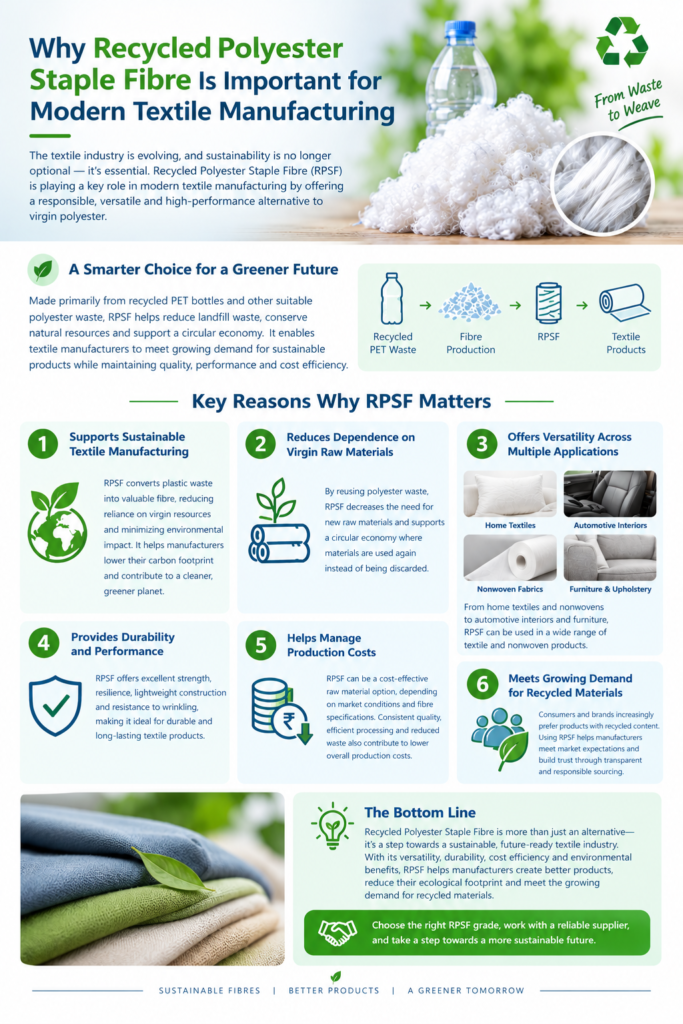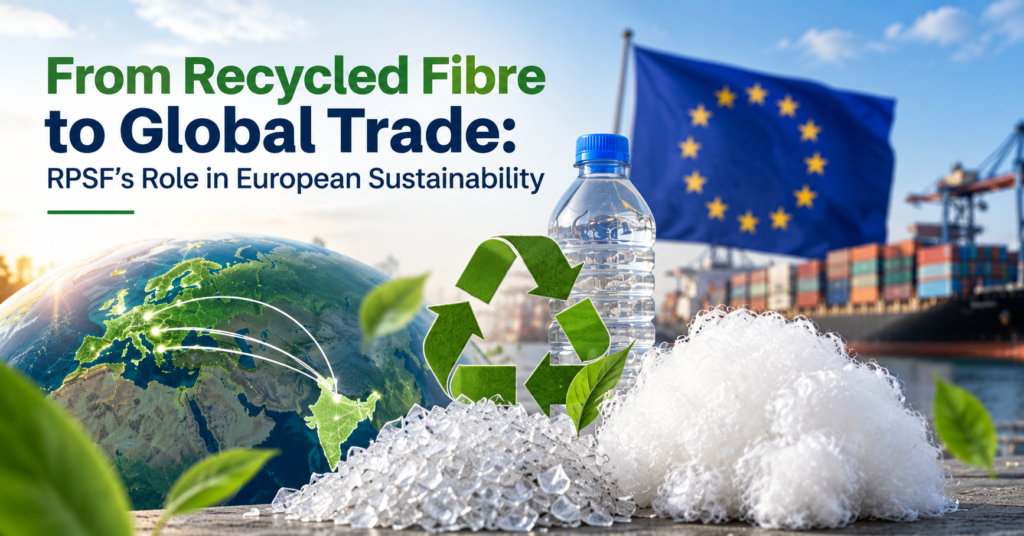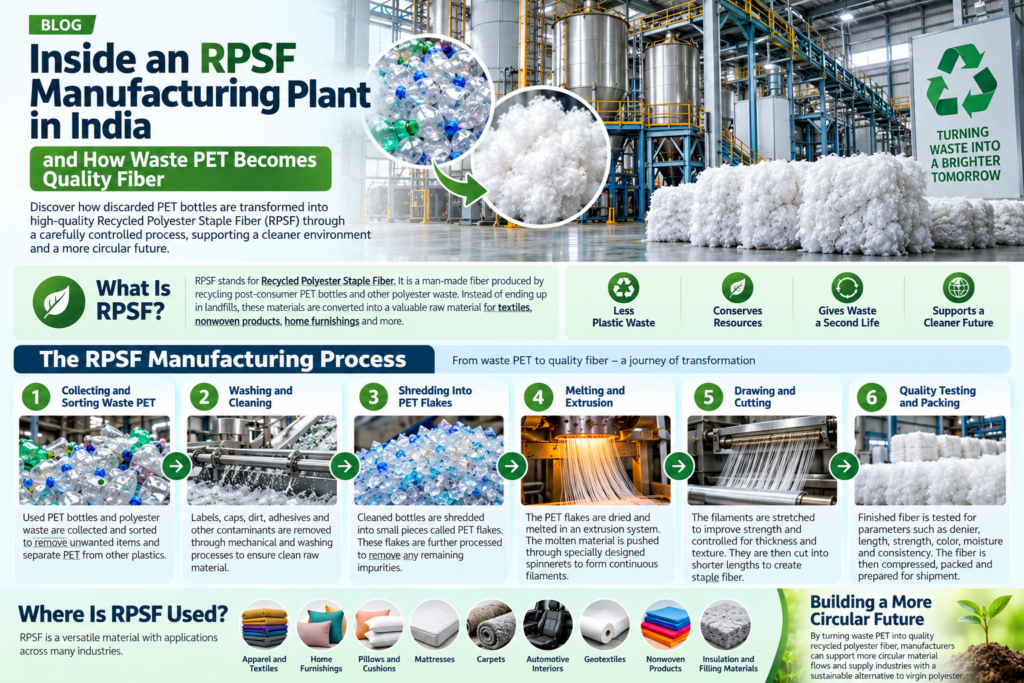
Sustainability is more of a priority for industries and manufacturers are looking for a material that provides both environmental benefits and increased product quality. One material that has received a great deal of attention is Recycled Polyester Staple Fiber (RPSF). Made from recycled PET bottles and post-consumer plastic waste, RPSF offers exceptional durability, strength and versatility, while enabling circular manufacturing practices.
Today, recycled polyester staple fiber is used in industries such as textiles, automotive, home furnishings, construction, and nonwoven manufacturing to improve product performance without sacrificing quality. This sustainable material makes products perform better – here’s why.
Superior Strength & Durability
One of the most important reasons why manufacturers opt for recycled polyester staple fiber is its very high strength. Finished products made with high-quality RPSF have superior tensile strength, which makes them more resistant to wear and tear.
Recycled polyester staple fibre is used in upholstery fabrics, geotextiles, insulation materials and automotive interiors to help products retain their structure and performance over time. That means products last longer and you pay less to replace them.
Good shape retention
The products made of recycled polyester staple fiber keep the original shape after repeated use. The excellent resilience of the fiber allows cushions, pillows, mattresses and furniture fillings to recover rapidly after compression.
This makes RPSF an ideal choice for manufacturers seeking to enhance product comfort while sustaining long term performance.
Great Moisture Resistance
Recycled polyester staple fiber absorbs very little moisture, unlike natural fibers. This property allows products to dry quickly and resist mildew, mold and bacterial growth.
Moisture resistance is especially useful for applications such as:
- House textiles
- Patio Furniture
- Automotive Interior
- Technical fabrics
- Nonwovens
Products are therefore cleaner, more durable and easier to maintain.
Light & Strong
Recycled polyester staple fiber has an excellent strength-to-weight ratio. This allows manufacturers to produce light products without compromising on strength or structural integrity.
This benefit is especially valuable in industries where weight reduction improves efficiency, including automotive, luggage, footwear and industrial packaging.
Improved Thermal Insulation
The air trapped in the fiber structure provides RPSF with good thermal insulation. This makes it a preferred material for insulation products, quilts, jackets, sleeping bags and construction applications.
Better insulation not only improves comfort for users, but also helps buildings and consumer products to be more energy efficient.
Enhanced Product Consistency
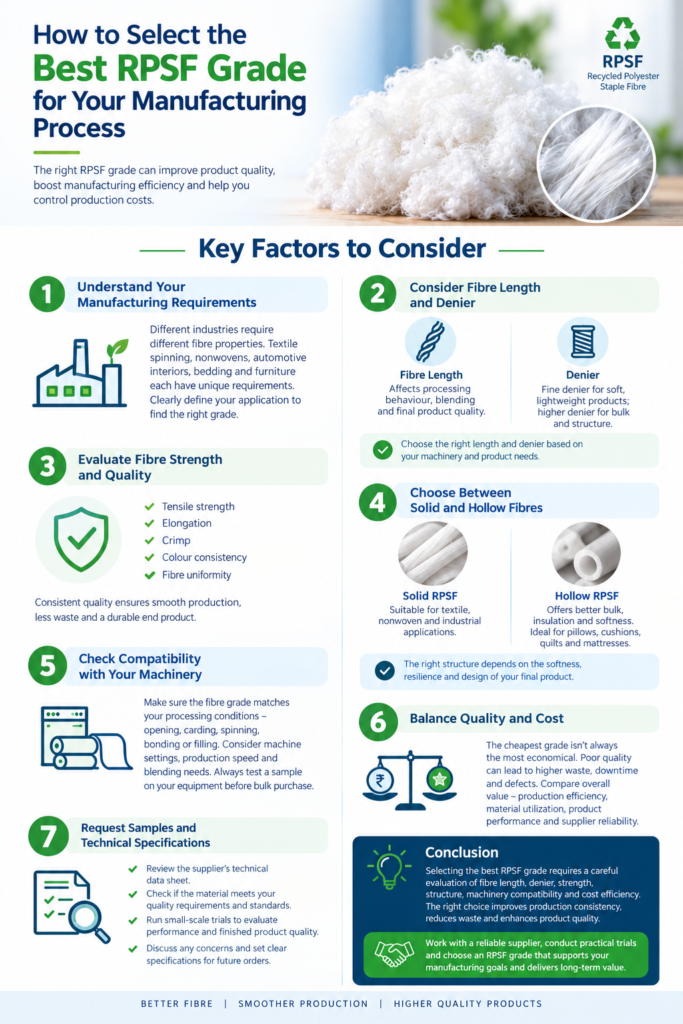
The modern recycling technology ensures that the high quality recycled polyester staple fiber is consistent in fiber length, denier and strength from one production batch to the other.
This consistency helps producers:
- Boost production efficiency
- Minimize material waste
- Deliver consistent product quality
- reduce manufacturing defects
In the end reliable raw materials mean better performing end products.
Excellent mixing ability
Recycled polyester staple fiber blends easily with cotton, viscose, wool, acrylic and other synthetic fibers. This flexibility allows manufacturers to develop fabrics with customized performance properties such as softness, strength, elasticity, and durability.
Mixed fibres are widely used in apparel, household textiles, industrial fabrics and technical applications.
Chemical and Abrasion Resistance
Products made from recycled polyester staple fiber are highly resistant to chemicals, abrasion and environmental exposure.
This makes RPSF suitable for demanding industrial applications like:
- Geotextiles
- Filter media
- Industrial Textiles
- The protective material
- Construction products
The increased resistance extends the life of the product even under harsh operating conditions.
Encourages Sustainable Manufacturing
In addition to performance benefits, recycled polyester staple fiber helps manufacturers reduce their environmental footprint.
Manufacturers turn PET plastic bottles into high quality fibers and can:
- Minimize landfill waste
- Less reliance on virgin polyester
- Protect natural resources
- Lower carbon emissions
- Support circular economy activities
Many global brands use recycled materials to meet their sustainability goals, but still maintain the quality of their products at a premium.
Performance Solution. Lower cost.
Recycled polyester staple fiber offers manufacturers the ideal blend of performance and cost-effectiveness. RPSF offers excellent mechanical properties at a competitive cost to many other man-made fibers.
Its durability also cuts down on maintenance and replacement costs, making it a smart long-term investment for manufacturers in multiple industries.
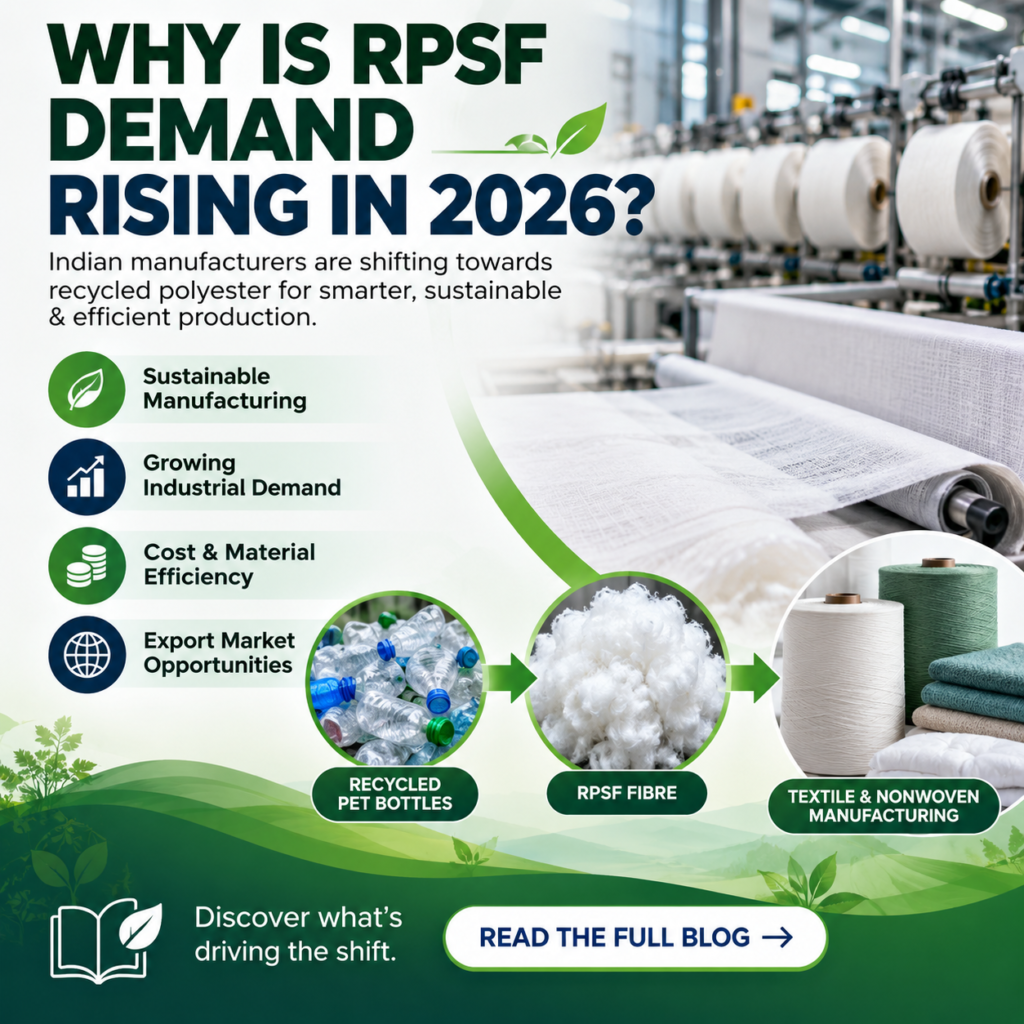
Also Read: Why 60% of fashion brands are switching to recycled polyester staple fiber in 2026
Recycled polyester staple fiber has evolved from an environmentally friendly alternative to a high-performance material used by manufacturers around the world. It is strong and light, moisture resistant, thermally insulating, durable and uniform in quality and is useful for millions of industrial and consumer applications.
With sustainability increasingly taking hold in global manufacturing at an ever faster pace, businesses using recycled polyester staple fiber can boost product performance and lessen their environmental impact. Collaborating with an experienced Recycled Polyester Staple Fiber manufacturer allows you to avail the best quality fibers that follow worldwide standards and help in making strong, creative, and green products.