India is taking multiple steps to curb plastic wastage by introducing stricter regulations and one of the most impactful steps is Extended Producer Responsibility (EPR). As plastic consumption continues to grow, EPR has become an important framework for encouraging responsible waste management and recycling. The policy has opened up new opportunities for the Recycled Polyester Staple Fiber (RPSF) industry, while promoting sustainable manufacturing operations.
In this blog, we will discuss what EPR for plastics means in India and how RPSF manufacturers are benefiting from this changing regulatory scenario.
EPR for Plastics: The Facts You Need to Know
Extended Producer Responsibility (EPR) is a policy that makes producers, importers and brand owners responsible for managing the plastic waste created by the products they introduce into the market. EPR transfers the burden away from municipalities or consumers and places the onus on businesses to actively collect, recycle and dispose of plastic waste.
The Central Pollution Control Board (CPCB) of India has issued guidelines on Extended Producer Responsibility (EPR) under the Plastic Waste Management Rules to promote effective plastic recycling and reduce environmental pollution.
The primary objective of EPR is to increase recycling rates, decrease landfill waste, and promote the use of recycled materials in manufacturing.
Turning Plastic Waste into a Valuable Resource
EPR’s big benefit is that it transforms plastic waste into a valuable industrial raw material.
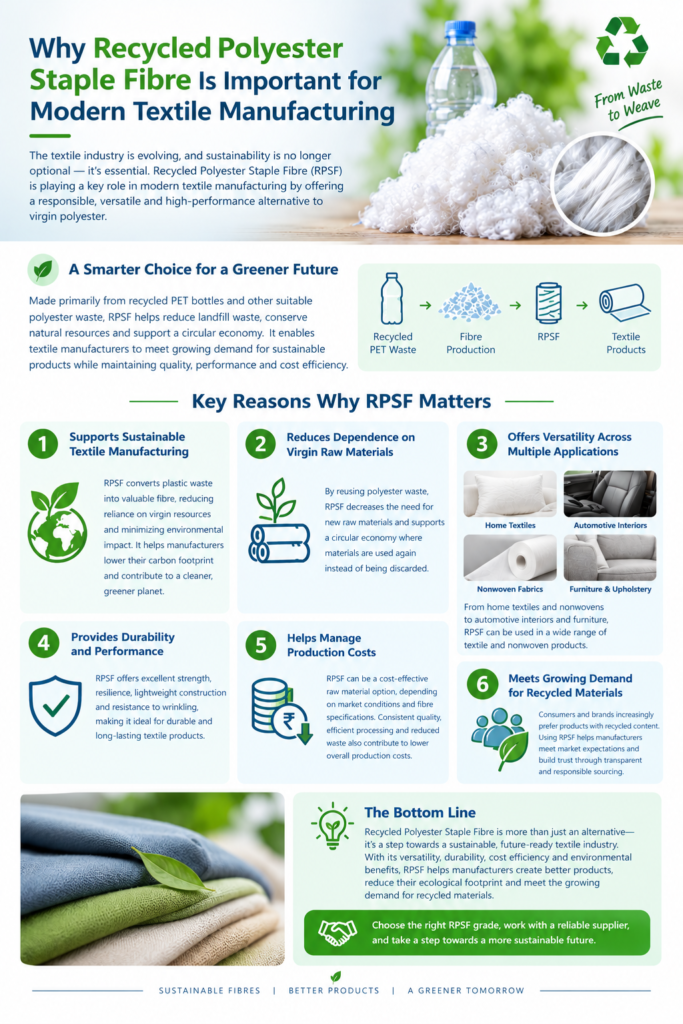
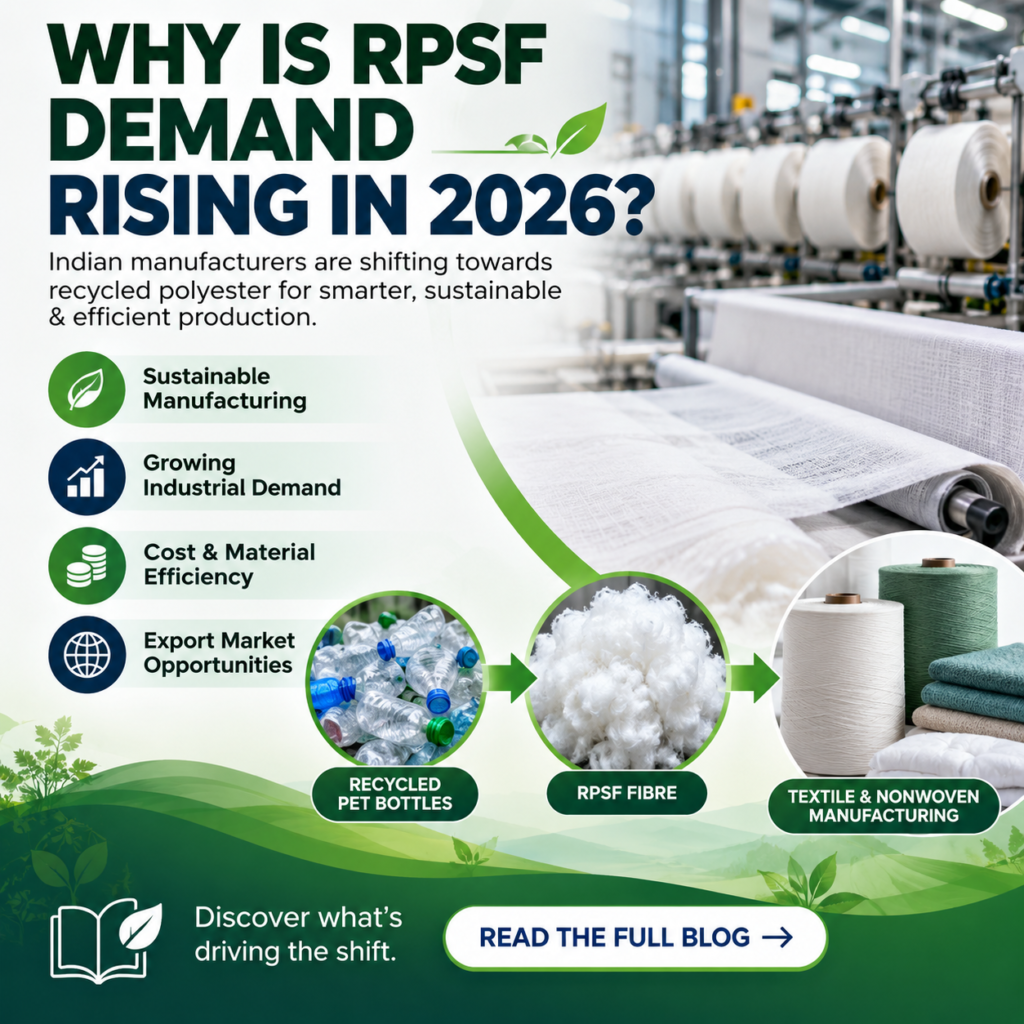
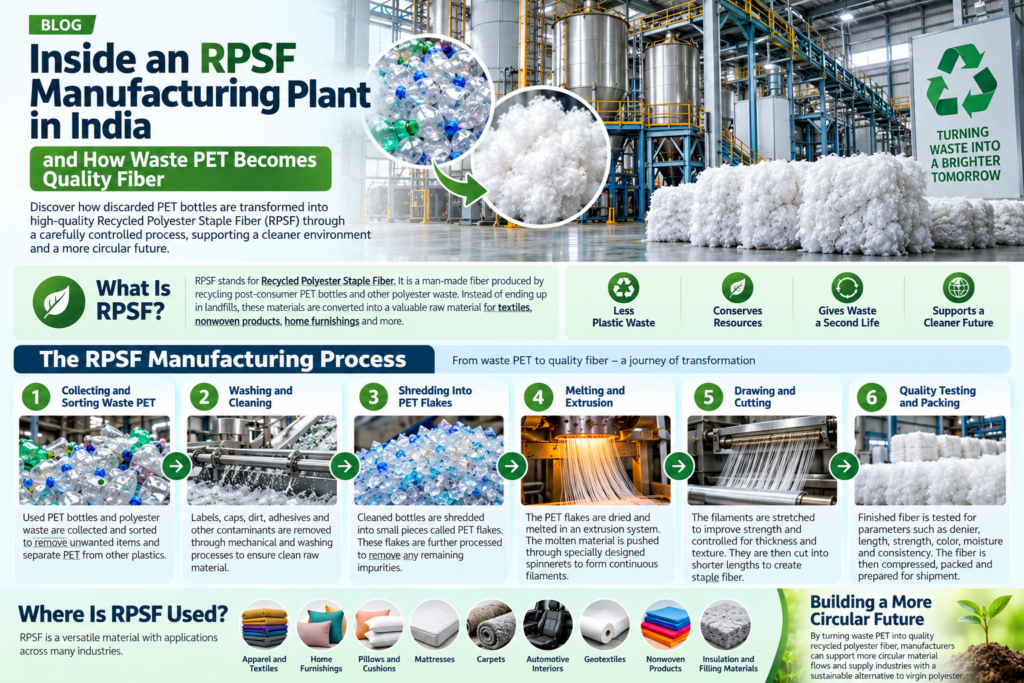
PET bottles recovered through organized Waste Management systems are washed, segregated and converted into PET Flakes and finally into high quality Recycled Polyester Staple Fiber. This systematic recycling process forms a sustainable supply chain and reduces dependence on virgin polyester.
With EPR compliance improving all over India, more and more recyclable PET bottles are becoming available, which directly benefits RPSF manufacturers.
Reliable availability of raw materials
The biggest challenge in recycled fiber manufacturing is a consistent supply of quality PET waste.
EPR encourages organized collection systems, which provides manufacturers with a more stable and dependable stream of recyclable plastic bottles. This helps in better production planning, less shortage of raw materials and supports smooth manufacturing operations.
With a steady supply chain, manufacturers can have consistent quality in their products all year round.
Better fiber quality
The quality of Recycled Polyester Staple Fiber (RPSF) largely depends on the quality of PET bottles collected for recycling.
EPR driven collection systems tend to lead to better segregation, cleaner plastics waste and lower contamination. Using high quality PET flakes, stronger, cleaner and more consistent polyester fibers are produced for a variety of industrial applications.
Better raw materials are used to produce better quality RPSF products conforming to domestic and international quality standards.
Popularity of Eco-Friendly Products Growing
Many industries are looking for eco-friendly raw materials to meet sustainability goals and customer expectations.
Car makers, textile companies, producers of nonwovens, furniture makers and home furnishing brands are increasingly choosing recycled polyester fiber over virgin alternatives.
With companies racing towards ESG commitments and circular economy goals, demand for certified recycled materials continues to increase, driving long-term growth opportunities for RPSF manufacturers.
More export opportunities
Now, global buyers are seeking suppliers that use recycled raw materials and responsible manufacturing practices.
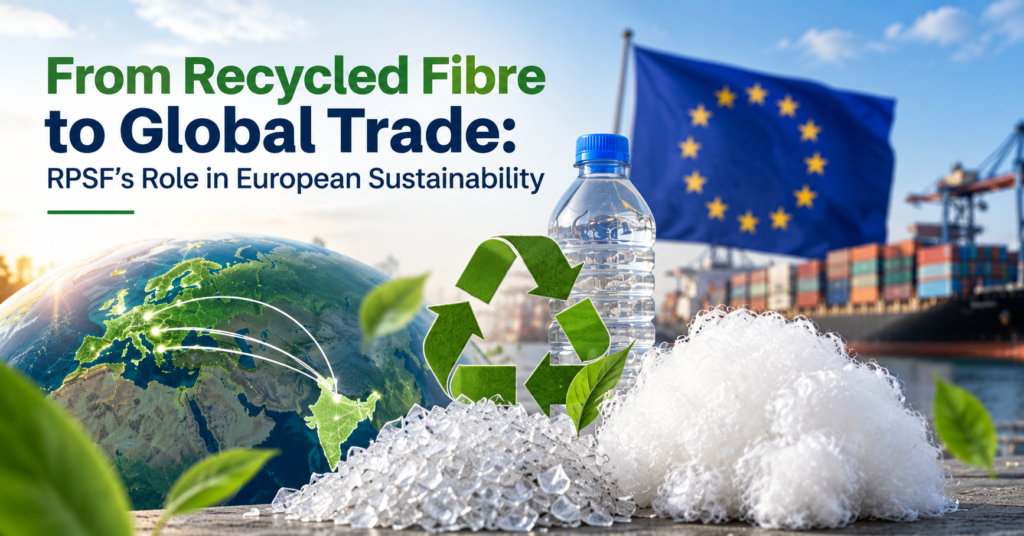
Manufacturers can improve their credibility in international markets through EPR supported recycling ecosystem in India. In many instances, following sustainability standards in Europe, North America, Australia and other environmentally-conscious markets results in increased business opportunity.
This makes Indian RPSF makers a competitive supplier in the global recycled fibre industry.
Supporting India’s Circular Economy
EPR is key to building a circular economy where plastic waste is continuously collected, recycled and reused instead of being thrown away.
Each recycled PET bottle converted into polyester staple fiber helps to keep waste out of landfills, save natural resources, reduce carbon emissions and reliance on petroleum-based virgin polyester.
The RPSF industry has emerged as a major contributor to this circular manufacturing model by converting waste into valuable industrial products.
The Future for EPR and the RPSF Industry
As the recycling infrastructure in India is improving and the effectiveness of EPR implementation is increasing, the Recycled Polyester Staple Fiber industry is set for substantial growth.
As advanced recycling technologies, improved collection systems and stronger regulation of the environment continue to improve, raw material availability and product quality will continue to improve. Manufacturers that invest in sustainable production processes today will be better positioned to meet future market demand.
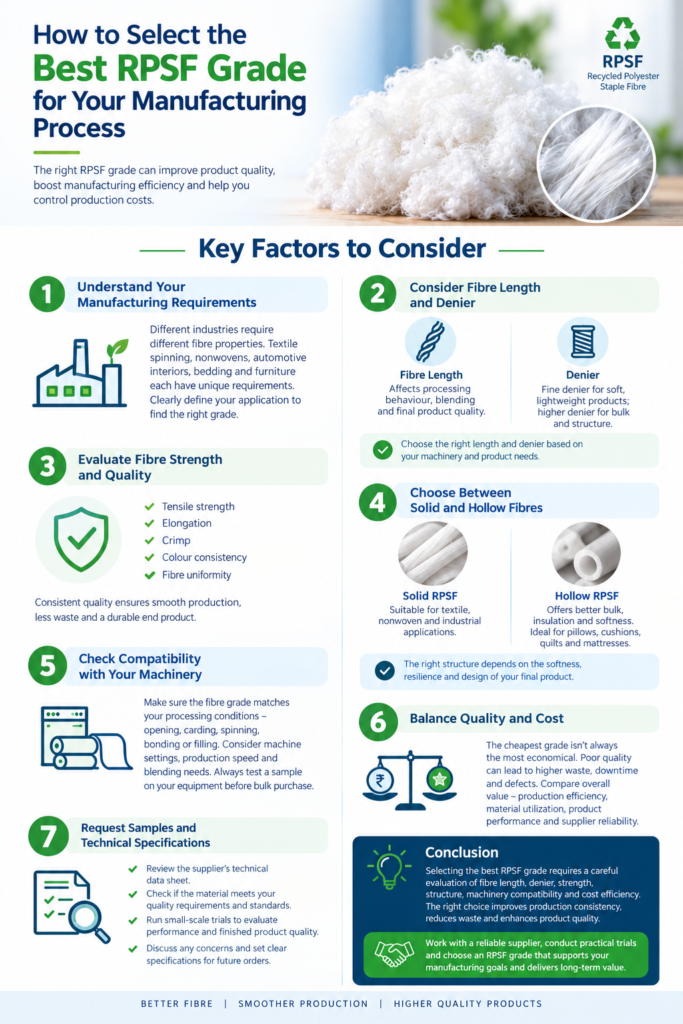
Read More: Choosing the right recycled polyester staple fiber for your industry
Extended Producer Responsibility is not just a regulatory mandate but a catalyst for India’s pursuit of sustainable manufacturing. EPR promotes the improved collection and recycling of plastic waste, supporting the strengthening of the entire recycling ecosystem and creating new opportunities for Recycled Polyester Staple Fiber manufacturers.
RPSF manufacturers are well-positioned to take a leading role in India’s circular economy and the future of environmentally sustainable industrial production, with improved availability of raw materials, better product quality, increasing global demand and enhanced sustainability credentials.