Category: Blog

Your blog category

  • The Role of RPSF in Sustainable Home Furnishing Products

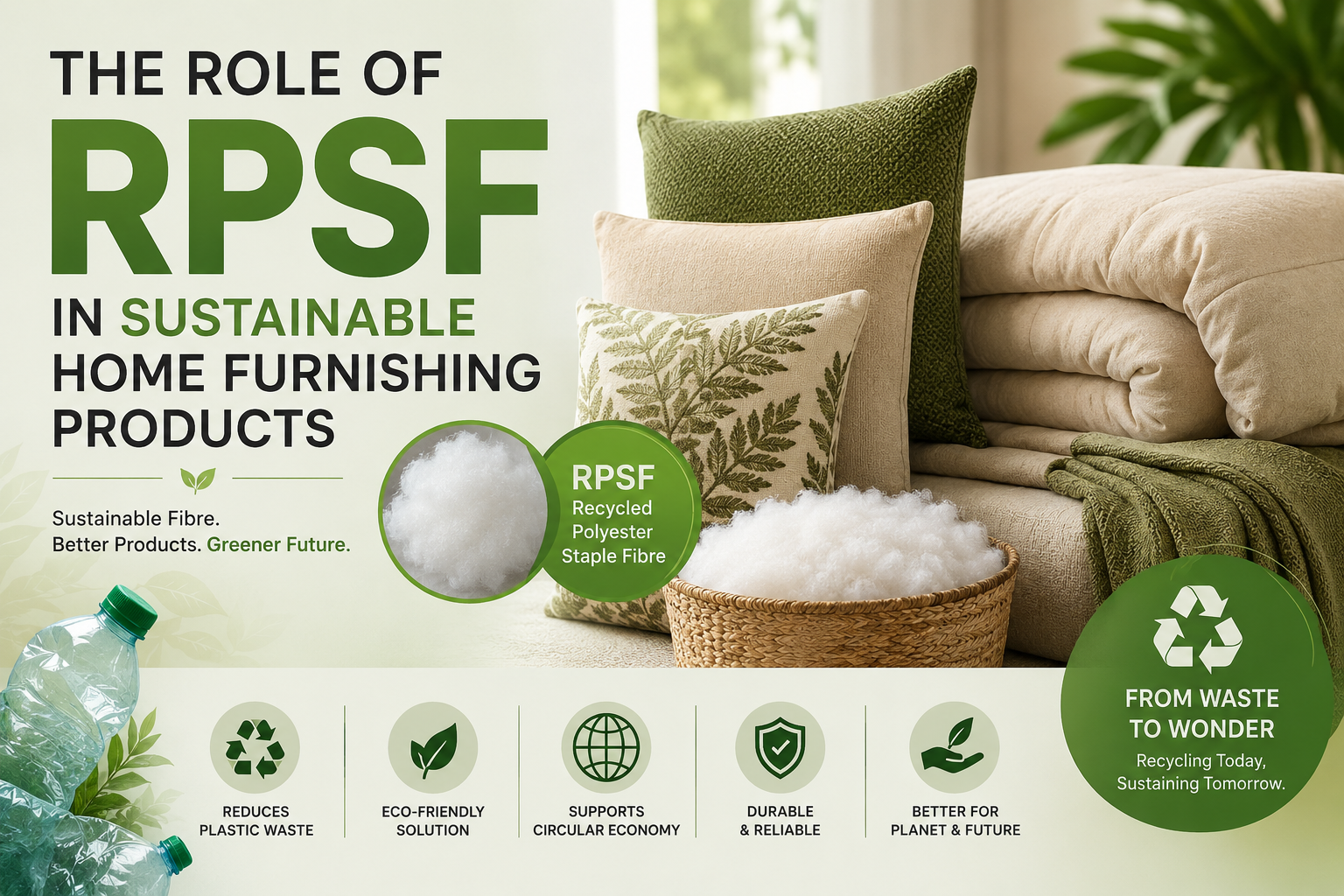
    The Role of RPSF in Sustainable Home Furnishing Products

    Sustainability has become one of the most important priorities in the textile and home furnishing industries in recent years. The modern consumer is more aware of the environmental issues and they are consciously choosing eco-friendly products for their home. This has created a demand for sustainable raw materials and Recycled Polyester Staple Fibre (RPSF) is one such material playing a major role.

    RPSF is made from recycled PET plastic bottles and other polyester waste materials. Instead of ending up in landfill or the ocean, the plastic waste is processed into high quality fibre for use in a range of industries. In the home furnishing sector, RPSF has become a smart and sustainable alternative to virgin polyester fibre.

    RPSF is short for Rapid Production Service Facility.

    Recycled Polyester Staple Fibre is a synthetic fibre obtained from recycling post-consumer PET bottles and polyester industrial waste. The recycling process involves cleaning, shredding, melting and spinning the material into fine fibres that can be used for textile production.

    The biggest plus of RPSF is that it supports waste reduction while providing great durability, softness and versatility. It provides manufacturers with an environmentally friendly alternative without compromising product quality.

    Sustainability in Home Furnishing is Getting More Important

    The global home furnishing industry is changing quickly. Consumers are interested not only in design and comfort, but also in products that help to build a greener future. More and more residential, hospitality and commercial spaces are going sustainable with furnishings.

    In response, manufacturers have sought eco-friendly materials that help lower carbon footprints and support responsible production practices. It has become a preferred solution due to its sustainability, coupled with strong performance characteristics.

    RPSF Applications for Home Furnishings Products

    RPSF is commonly used in a wide range of home furnishing applications because of its flexibility and durability. Some common uses are:

    Pillows & cushions:

    RPSF is soft, resilient and long-lastingly comfortable, making it ideal as cushions and pillow fillings. It helps keep the shape, while providing comfort to the user.

    Mattresses and comforters:

    RPSF is used by many manufacturers of mattresses and quilts because it is light and has insulating properties. It offers comfort while supporting sustainable manufacturing practices.

    Upholstery and sofa stuffing

    RPSF for sofa stuffing and upholstery applications, furniture makers like RPSF since it gives durability and keeps its volume for years.

    Carpets & Rugs

    RPSF fibres are also used in carpets and rugs for their strength and wear resistance. These products take advantage of the fibre’s robustness for everyday use.

    Soft Toys & Decorative Items

    RPSF is soft and safe and is perfect for use in soft toys, decorative cushions and other textile home products.

    RPSF Environmental Advantages

    One of the main reasons for the rising demand for RPSF is its positive environmental impact.

    Minimises Plastic Waste

    Millions of plastic bottles are thrown away every day. Turning them into polyester staple fibre helps to reduce landfill waste and environmental pollution.

    Preserves Natural Resources

    Recycled fibre means that fewer natural resources are used than when producing virgin polyester. It reduces reliance on petroleum-based feedstocks.

    Reduced Carbon Emissions

    The RPSF production process generally requires less energy, resulting in lower green house gas emissions and the production of a climate-friendly product.

    Promotes Circular Economy

    RPSF advocates for a circular economy, in which waste materials are repurposed and converted into valuable products instead of being discarded.

    Why RPSF Is Better for Manufacturers

    There are many practical benefits for manufacturers in the home furnishing industry beyond sustainability offered by RPSF:

    • Economical production material
    • Consistent quality fibre
    • Good durability and resilience
    • Lightweight and versatile apps
    • Applicable for mass production

    Advantages like these make RPSF an efficient and reliable solution for the modern textile and furnishing business.

    Also Read: Top 5 industries that use recycled PET Flakes in 2026

    Conclusions

    The demand for sustainable home furnishing products is expected to grow substantially in the coming years and Recycled Polyester Staple Fibre is expected to be a big part of this transformation. RPSF assists industries in moving towards more environmentally responsible manufacturing by converting plastic waste into a valuable textile fibre, without compromising on product quality and performance.

    Cushions, mattresses, carpets and upholstery are all areas where RPSF is becoming an important material in sustainable home furnishing manufacture. With industries and consumers increasingly focused on eco-friendly choices, RPSF will continue to be a key player in shaping a cleaner, greener, and more sustainable future.
  • Top 5 Industries That Use Recycled PET Flakes in 2026

    Top 5 Industries That Use Recycled PET Flakes in 2026

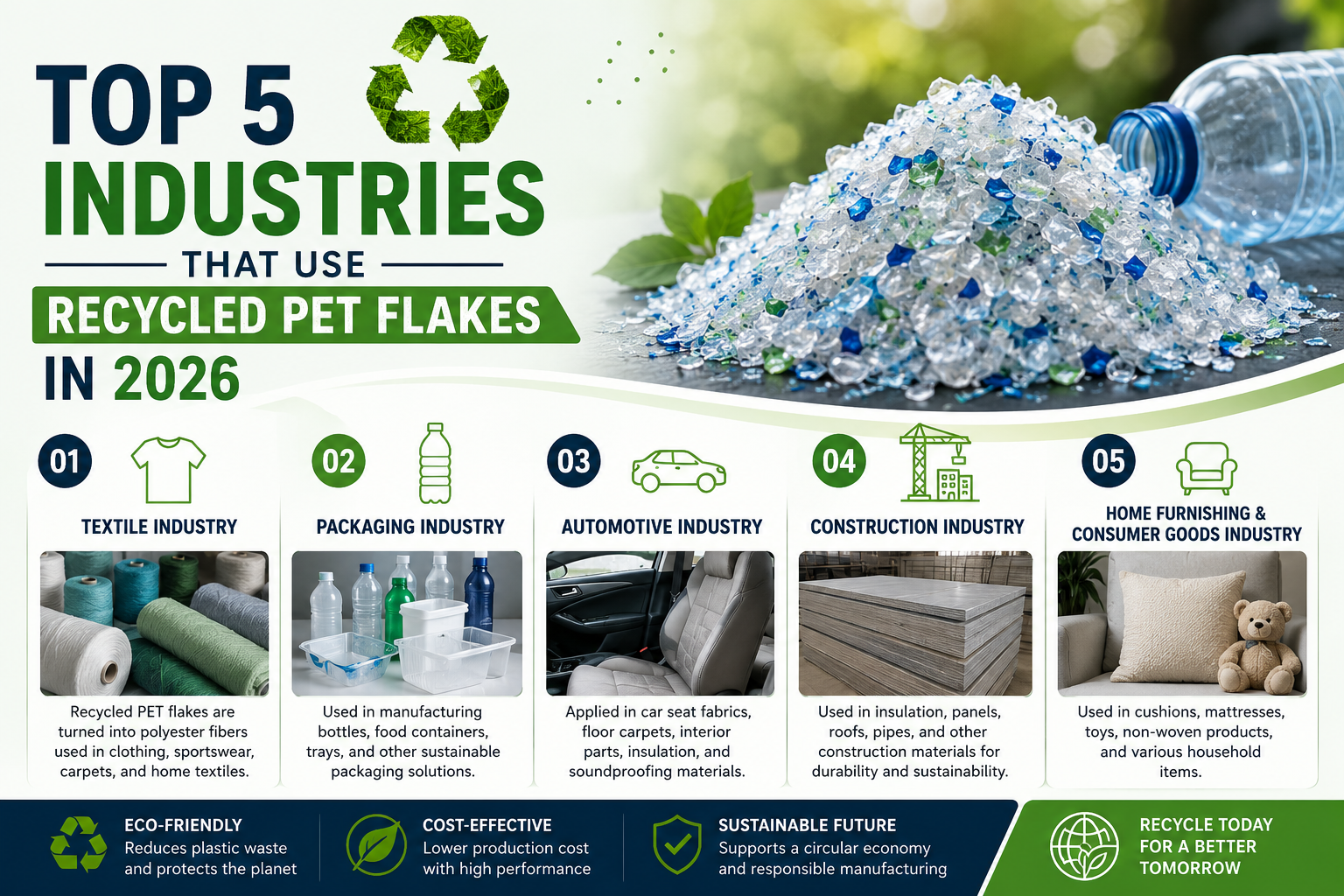
    Walk into almost any manufacturing facility today — whether it makes clothes, car seats, packaging, or construction materials — and somewhere in that supply chain, there’s a good chance recycled PET flakes are involved. What started as a niche sustainability initiative has quietly become a core raw material for industries that care about both performance and environmental responsibility.

    PET flakes — derived from post-consumer plastic bottles that are cleaned, sorted, shredded, and processed — are now one of the most versatile recycled materials on the planet. In 2026, demand is not just growing. It’s accelerating. Here’s a look at the five industries driving that growth.

    1. Textile and Apparel Industry

    This is the biggest consumer of recycled PET flakes globally, and the numbers make sense. The textile industry needs enormous quantities of polyester fibre, and rPET flakes are the starting point for producing recycled polyester staple fibre (RPSF) — the same fibre used in everything from fleece jackets to bed linens.

    Brands like Patagonia, H&M, and Adidas have made strong commitments to increasing their recycled content, and they’re not alone. The pressure from consumers and regulators alike is pushing even mid-market fashion labels to rethink their raw material sourcing. PET flakes processed into RPSF offer a reliable, high-volume solution that doesn’t compromise on fibre quality.

    For manufacturers in India — particularly in Gujarat and Rajkot — this represents a significant export opportunity as global demand for GRS-certified RPSF continues to rise.

    2. Packaging and Bottles Industry

    The circular economy concept is perhaps most visible here. Recycled PET flakes are converted back into new PET resin and used to produce fresh bottles, food containers, and packaging films. This bottle-to-bottle recycling loop is exactly what regulators in the EU and India have been pushing for.

    In 2025, the EU mandated that beverage bottles contain at least 25% recycled PET. Similar Extended Producer Responsibility (EPR) frameworks in India are creating domestic demand for food-grade rPET flakes. Companies that can supply clean, high-purity, clear PET flakes are well-positioned to serve this growing market.

    The key requirement here is purity. Packaging-grade flakes need to meet strict contamination standards, which is why the washing and sorting process at the manufacturing stage is so critical.

    3. Automotive Industry

    Open the door of a modern passenger car and you’re surrounded by recycled PET without knowing it. Seat padding, trunk liners, door panel insulation, headliners, and underbody shielding — all of these commonly use nonwoven fabrics made from recycled PET fibres that start life as PET flakes.

    The automotive sector values rPET for two specific reasons: weight and durability. Recycled polyester components are lightweight, which improves fuel efficiency, and they hold up well against temperature extremes and mechanical wear. Major OEMs including Toyota, BMW, and Maruti Suzuki have committed to increasing recycled material content in their vehicles as part of broader sustainability targets.

    As electric vehicles scale up and automakers compete on sustainability credentials, demand from this sector is only going to grow.

    4. Construction and Geotextiles Industry

    This is a sector that doesn’t always make the headlines in sustainability conversations, but it quietly consumes large volumes of recycled PET fibre and nonwovens. Geotextiles — permeable fabrics used in road construction, drainage systems, soil erosion control, and embankment reinforcement — are a major end-use for rPET.

    The properties that make recycled polyester ideal here are its resistance to moisture, chemicals, and biological degradation. Unlike natural fibres, rPET-based geotextiles don’t rot underground. They maintain their structural integrity for years, which makes them a practical and cost-effective choice for civil engineering projects.

    With India’s infrastructure expansion continuing at a significant pace — roads, highways, irrigation canals, and urban drainage — this segment represents a substantial domestic opportunity for rPET flake processors and fibre manufacturers.

    5. Home Textiles and Furnishings Industry

    Cushions, pillows, duvets, mattress pads, curtains, rugs — the home furnishings industry is a significant and often underestimated consumer of recycled PET fibres. Hollow conjugate fibre, which is widely used as a filling material in pillows and cushions, is almost entirely made from rPET.

    Consumers are increasingly aware of what’s inside their home products, not just what’s on the surface. The ability to label a product as “made from recycled bottles” has real marketing value — and manufacturers are responding by specifying recycled fibre in their procurement. OEKO-TEX and GRS certifications have become standard requirements for suppliers in this space.

    India is one of the largest exporters of home textiles globally. That export market increasingly demands recycled content, which means domestic rPET flake and fibre producers like Rakshitam Ecofibre are sitting at exactly the right point in the supply chain.

    Also Read: How to choose the right RPSF supplier in India

    Final Thoughts

    Recycled PET flakes are no longer a niche material for sustainability-focused brands. They are a mainstream industrial input that five major sectors depend on — and that dependency is growing as regulations tighten, consumer awareness rises, and the economics of virgin versus recycled materials continue to shift.

    For buyers across these industries, the question is no longer whether to use recycled PET. It’s who to source it from, and how to ensure consistent quality at the volumes they need.

    At Rakshitam Ecofibre, we manufacture and supply premium quality recycled PET flakes from our facility in Rajkot, Gujarat. Our flakes meet GRS and international quality standards, making them suitable for textile, packaging, automotive, and industrial applications.

    Contact us to discuss your requirements or request a sample.

  • How to Choose the Right RPSF Supplier in India?

    How to Choose the Right RPSF Supplier in India?

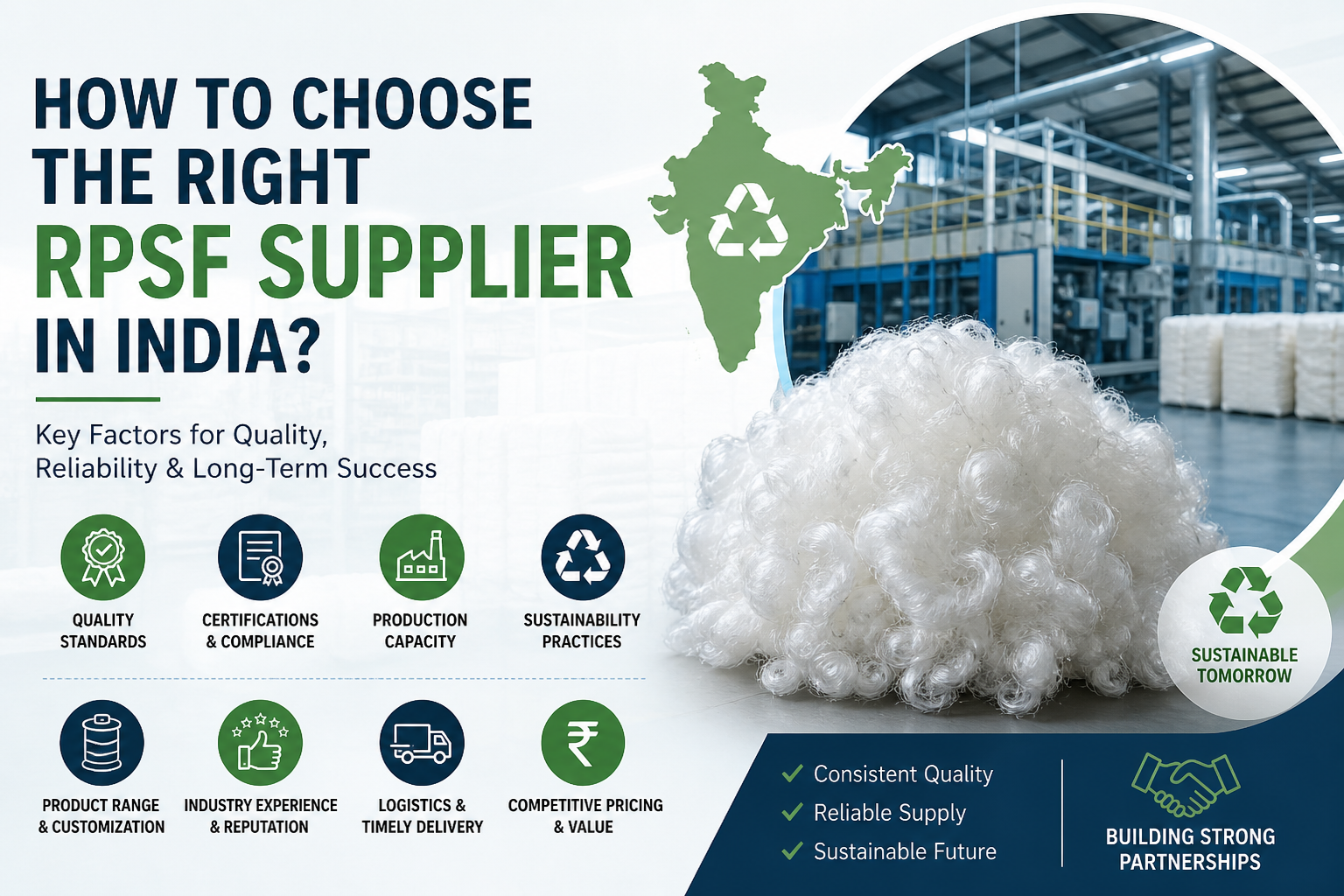
    Because sustainability is becoming a global priority, many industries, such as textiles, cars, home furnishings, and non-wovens, are looking for Recycled Polyester Staple Fiber (RPSF). India has become an important center for RPSF production, with a lot of different suppliers. But choosing the right supplier isn’t as easy as just looking at prices; it takes a strategic approach.

    Here’s how to choose the best RPSF supplier in India if you want to make sure your business is reliable, high-quality, and consistent over time.

    First, know what you need

    Before you choose a supplier, you need to be very clear about what you need. There are different types of RPSF, such as solid, hollow, siliconized, and more. It also comes in different colors, cut lengths, and deniers. Different industries need different things.

    For instance:

    • Textile manufacturing needs fibers that are always strong.
    • Softness and bulk are needed for filling applications.
    • Non-woven industries need consistent performance and bonding.

    Knowing what you need makes it easier to narrow down your list of suppliers who are experts in your field.

    Check the standards for quality and testing

    When picking an RPSF supplier, quality is the most important thing to look for. Low-quality fiber can cause problems with production, defects, and higher costs.

    Reliable manufacturers have strict quality control procedures in place, from checking the raw materials to testing the final product. To make sure everything is the same, important factors like intrinsic viscosity, levels of contamination, and tensile strength are watched.

    Because RPSF is made from recycled PET bottles, it is important to keep it clean and process it correctly. A good supplier will always send you test reports and make sure that all of your batches are the same.

    Check for Certifications

    Certifications are a good way to tell if a supplier is trustworthy. Some of the most important certifications are:

    • The Global Recycled Standard (GRS)
    • OEKO-TEX and ISO certifications
    • Following BIS

    These make sure that the product meets standards for quality, safety, and the environment. Choosing a certified supplier also makes your brand more trustworthy, especially when you sell things abroad.

    Check the production capacity

    The amount of goods a supplier can make has a direct effect on your supply chain. You need a supplier who can always deliver on time if your business needs a lot of something.

    Always look at:

    • Monthly production ability
    • Ability to take care of large orders
    • Ability to grow in the future

    A supplier with stable production makes sure that your business runs smoothly without any problems.

    Check the source of the raw materials

    The quality of RPSF depends a lot on the quality of the PET flakes that are used. Before processing, high-quality suppliers make sure that PET bottles are collected, cleaned, and sorted correctly.

    When you clean raw materials, the fibers become stronger, last longer, and are more consistent. Suppliers who use advanced recycling technology often get better results.

    Check the range of products and the ability to customize

    A good RPSF supplier should be able to be flexible. Customization is very important because different businesses have different needs.

    Look for suppliers who offer: Several denier choices Different lengths of cuts Different colors (white, black, and colored fibers) Specialty fibers, like those that are fireproof or kill germs A wide range of products makes it easy to work together for a long time.

    Check the reputation and experience of the industry Experience is a very important part of being reliable. Established suppliers usually have better quality control, more refined processes, and stronger operational systems.

    You can check out a supplier’s reputation by: Reviews and feedback from clients Presence in exports Experience in the field A reliable supplier lowers risk and makes sure that things work the same way every time.

    Think about eco-friendly practices

    Since RPSF is a green product, your supplier should really do things that are good for the environment.

    This includes:

    • Using PET waste from people who have already used it
    • Production that uses less energy
    • Systems for managing waste

    Suppliers who care about the environment add value to your business and brand image over time.

    Check the help with logistics and delivery.

    In business-to-business (B2B) work, getting things on time is very important. If deliveries are late, even a good supplier can become unreliable.

    Make sure the supplier gives you:

    • Good logistics help
    • The right way to package
    • Delivery on time

    Having experience with shipping around the world is a plus for exporters.

    Look at prices, but focus on value.

    It’s important to think about price, but going with the cheapest supplier can be dangerous. RPSF that is cheap may not always be of good quality and may cost more in the long run.

    Instead, think about getting the most value for your money, which means finding a balance between price, quality, and dependability.

    Why Companies Pick the Right Partner

    In today’s competitive market, companies are looking for more than just suppliers. They want reliable partners who understand their needs and always provide high-quality work.

    In the RPSF industry, companies that put a lot of emphasis on new ideas, being environmentally friendly, and putting the customer first stand out. Rakshitam and other sites like it show this approach by giving information about eco-friendly practices, quality-driven manufacturing, and a dedication to long-term business relationships.

    Also Read: RPSF export from india opportunities growth

    In conclusion

    Picking the right RPSF supplier in India is a smart choice that will have a direct effect on the quality of your products and the growth of your business.

    You can find a supplier that fits with your long-term goals by looking at their quality standards, certifications, production capacity, and commitment to sustainability. A good partner is more than just a vendor; they are also a key part of your success.

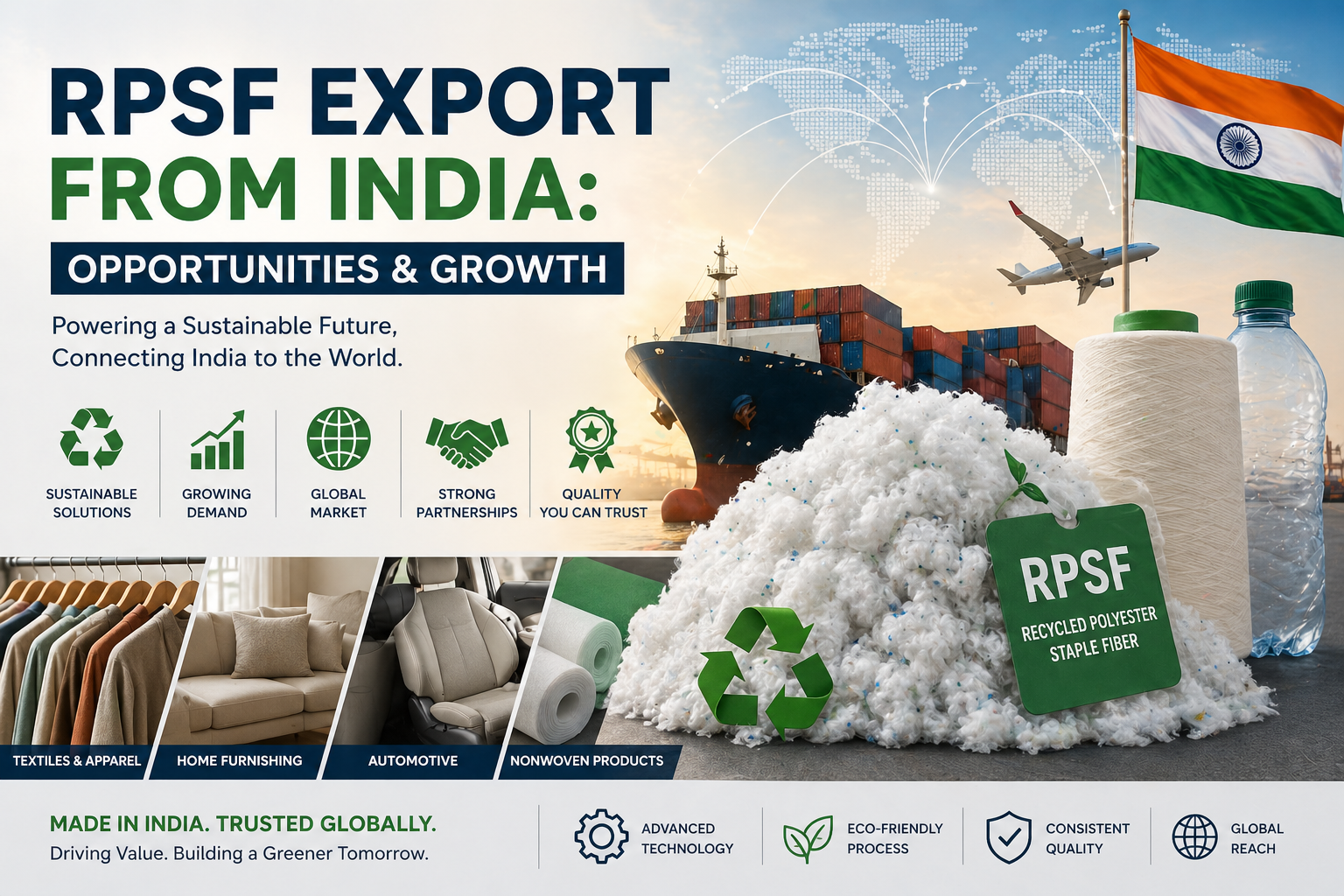
  • RPSF Export from India: Opportunities & Growth

    RPSF Export from India: Opportunities & Growth

    In today’s global economy, which is focused on sustainability, recycled materials are becoming more important than ever. Recycled Polyester Staple Fibre (RPSF) has become a key raw material in many industries, including textiles, automotive, home furnishings, and nonwoven products. India is quickly becoming a top exporter of RPSF as demand grows around the world.

    India has a lot of potential in the global RPSF export market because it has strong manufacturing capabilities, easy access to raw materials, and prices that are competitive. This sector is becoming one of the best places for manufacturers, exporters, and investors to grow.

    Why RPSF is in High Demand Around the World

    The main reason people want RPSF is because the world is moving towards sustainability. More and more, governments, brands, and consumers are working to cut down on plastic waste and carbon emissions. Because of this, there has been a big change from virgin polyester to recycled polyester.

    To meet environmental standards, big industries like fashion and textiles are using recycled fibres. Global brands are also promising to use recycled materials in their products, which directly increases the need for RPSF.

    Also, RPSF is cheaper than virgin polyester, which makes it a good choice for manufacturers who want to be environmentally friendly and make money at the same time.

    India’s Strength in Making RPSF

    India has a lot of strengths that make it a strong competitor in the RPSF export market:

    1. Lots of raw materials available: India makes a lot of PET plastic waste, which is the main raw material for making RPSF. This makes sure that manufacturers always have a steady supply chain.
    2. Making things at a low cost: Indian manufacturers can make RPSF at competitive prices because their labour and operational costs are lower. This makes exports more appealing in international markets.
    3. More and more recycling facilities: The recycling system in India is always getting better, and new technologies are making RPSF better and more consistent.
    4. A skilled workforce: Having skilled workers in the textile and recycling industries helps make production processes more efficient and output of higher quality.

    Indian RPSF’s Most Important Export Markets

    India sends RPSF to many places around the world. These are some of the biggest markets:

    • Europe: High demand because of strict rules about the environment
    • United States: More and more people want eco-friendly materials
    • Middle East: More uses in textiles and industry
    • Asia-Pacific: Manufacturing sectors are growing

    These markets have steady demand, so exporting RPSF is a good business opportunity.

    Applications That Are Driving Export Growth

    One of the main reasons why RPSF is in high demand for export is that it can be used in many different ways. Important uses are:

    • Textiles and Apparel: Used in yarns, clothing, and blended fabrics
    • Furniture for the home: cushions, pillows, carpets, and upholstery
    • Automotive Industry: materials for seat fillings and insulation
      Nonwoven items include hygiene products, wipes, and filters.

    The need for RPSF keeps going up as these industries grow around the world.

    Problems with RPSF Export

    Exporters have a lot of chances, but they also have some problems to deal with:

    • Quality Consistency: For international buyers, it is very important to keep the fibre quality the same.
    • Raw Material Fluctuation: The amount of high-quality PET waste that is available can change.
    • Global Competition: This area is also competitive for countries like China and Vietnam.
    • Logistics and Compliance: Shipping costs and export rules can affect margins.

    But companies that focus on quality control, getting certifications, and making logistics run smoothly can get past these problems.

    Potential for Future Growth

    It looks like the future of RPSF exports from India is very bright. As people become more aware of the need for sustainability and global rules on plastic use become stricter, the demand for recycled fibres is likely to rise quickly.

    The government of India is also encouraging recycling programmes and eco-friendly manufacturing, which will make the industry even stronger. Indian exporters have a great chance to grow their business in other countries as global brands move towards using more environmentally friendly materials.

    Now is the best time for businesses that want to enter or grow in this sector to put money into technology, quality standards, and partnerships around the world.

    Also Read: Top 7 uses of Recycled Polyester Staple Fiber in Textile Industry

    Conclution:

    The export of RPSF from India is not only a growing industry, but it is also a smart way to make money in the long term. India is in a great position to become the world’s top supplier of recycled fibre because global demand is rising, production is strong, and export markets are growing.

    To get the most out of this market, manufacturers and exporters need to focus on quality, sustainability, and new ideas.

    Questions and Answers

    1. What is RPSF?

    Recycled PET plastic, mostly bottles, is used to make Recycled Polyester Staple Fibre (RPSF). It is a sustainable alternative to new polyester.

    2. What is causing RPSF exports from India to grow?

    The global demand for sustainable materials is rising, prices are competitive, and India’s strong recycling infrastructure is making RPSF exports grow.

    3. What countries buy RPSF from India?

    Countries in Europe, the US, the Middle East, and the Asia-Pacific regions are the biggest buyers.

    4. Who uses RPSF?

    RPSF is used in textiles, furniture for the home, car parts, and nonwoven products.

    5. Is RPSF a good business for exporting?

    Yes, RPSF exports have a lot of room to grow and make money because demand is rising and global trends towards sustainability are growing.

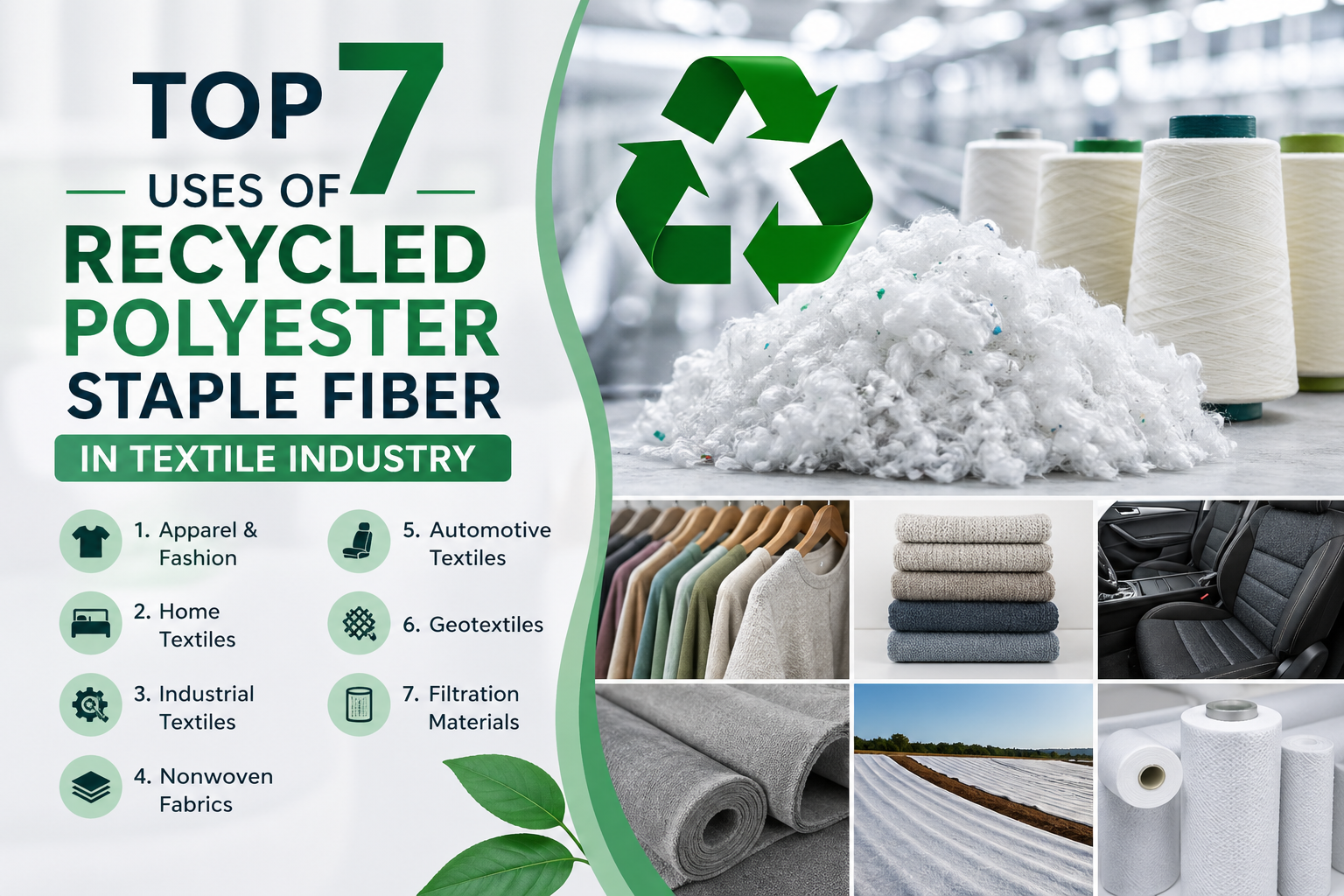
  • Top 7 Uses of Recycled Polyester Staple Fiber in Textile Industry

    Top 7 Uses of Recycled Polyester Staple Fiber in Textile Industry

    If you go into a clothing store today, chances are that at least half of the items on the shelves are made of recycled polyester staple fibre, or rPSF. You don’t know it yet. Ten years ago, this material was only used by brands that cared about the environment. It’s slowly becoming the most important part of the modern textile industry.

    What is recycled polyester staple fibre, then? It’s fibre made from trash that people throw away, mostly PET plastic bottles. It gets cleaned, shredded into flakes, melted, and spun into short lengths of fibre. These fibres look, feel, and work almost exactly like virgin polyester, but they are much better for the environment.

    Here are the seven best ways the textile industry is using this material.

    1. Fabrics for clothes and fashion

    This is the most obvious use. People use rPSF to make yarn, which is then woven or knitted into clothes like t-shirts, jackets, sportswear, and more. Companies like Patagonia and H&M have said in public that they will use more recycled polyester in their collections. The fibre holds dye well, doesn’t wrinkle, and dries faster than cotton, which makes it a good choice for both casual and activewear.

    2. Textiles and furniture for the home

    rPSF has found a strong home in the home furnishing market, where it is used for cushions, pillows, blankets, and curtains. Hollow-conjugate recycled fibre is a popular fill material because it is light, fluffy, and holds its shape well. It’s also hypoallergenic, which is great for families with young kids or allergies.

    3. Fabrics that are not woven

    One of the fastest-growing parts of rPSF is nonwoven applications. Think of things like geotextiles, materials for filtering, insulation for cars, and fabrics for farming. rPSF can be made in different denier ranges and cut lengths, which makes it easy to use in different nonwoven manufacturing processes like needle punching and thermal bonding. The end result is a strong, long-lasting material that doesn’t break under pressure.

    4. Inside Cars

    If you open the door of a modern car, you probably sit on recycled polyester. Because it meets strict standards for heat resistance, durability, and weight, rPSF is becoming more and more important for seat padding, trunk liners, headliners, and door insulation panels. Several car companies around the world have promised to use more recycled materials in their cars. rPSF is a good choice because it works well and is affordable.

    5. Textiles for Industry and Technology

    In addition to being used in consumer goods, rPSF is also used a lot in industry. Road building, controlling soil erosion, and drainage systems all use geotextiles made from recycled fibre. Fire-retardant recycled PSF variants are used to make clothing that protects you and insulation for buildings. These uses aren’t very glamorous, but they use a lot of this material and show how flexible it really is.

    6. Products for health and hygiene

    You might be surprised to learn that rPSF is becoming more common in sanitary napkins, diapers, surgical drapes, and disposable wipes. The most important thing is being able to make very fine microfiber grades that are soft and soak up water. This segment’s recycled fibre meets cleanliness and safety standards without the need for virgin petroleum-based inputs, thanks to strict quality control.

    7. Yarns that are mixed and special

    Lastly, rPSF is often mixed with natural fibres like cotton, wool, and viscose to make hybrid yarns. These blends combine the best of both worlds: the softness and breathability of natural fibres with the strength and low cost of recycled polyester. Poly-cotton blends made with recycled fibre are now common in the workwear, uniform, and institutional linen markets.

    Also Read: The Business of PET Flakes demand applications market potential

    Last Thoughts

    Recycled polyester staple fibre is no longer just a trendy term for being eco-friendly. It is a useful, high-performance material that is used in almost every part of the textile industry. As the cost of raw materials goes up and environmental rules get stricter around the world, manufacturers who adopt rPSF early are putting themselves ahead of the curve.

    We sell high-quality recycled polyester staple fibre to manufacturers all over India and beyond at Rakshitam. We have the right grade, denier, and volume for you, no matter what you do with it, whether it’s clothing, home textiles, or technical uses.

    Get in touch with us today to find out how rPSF can help your production line.

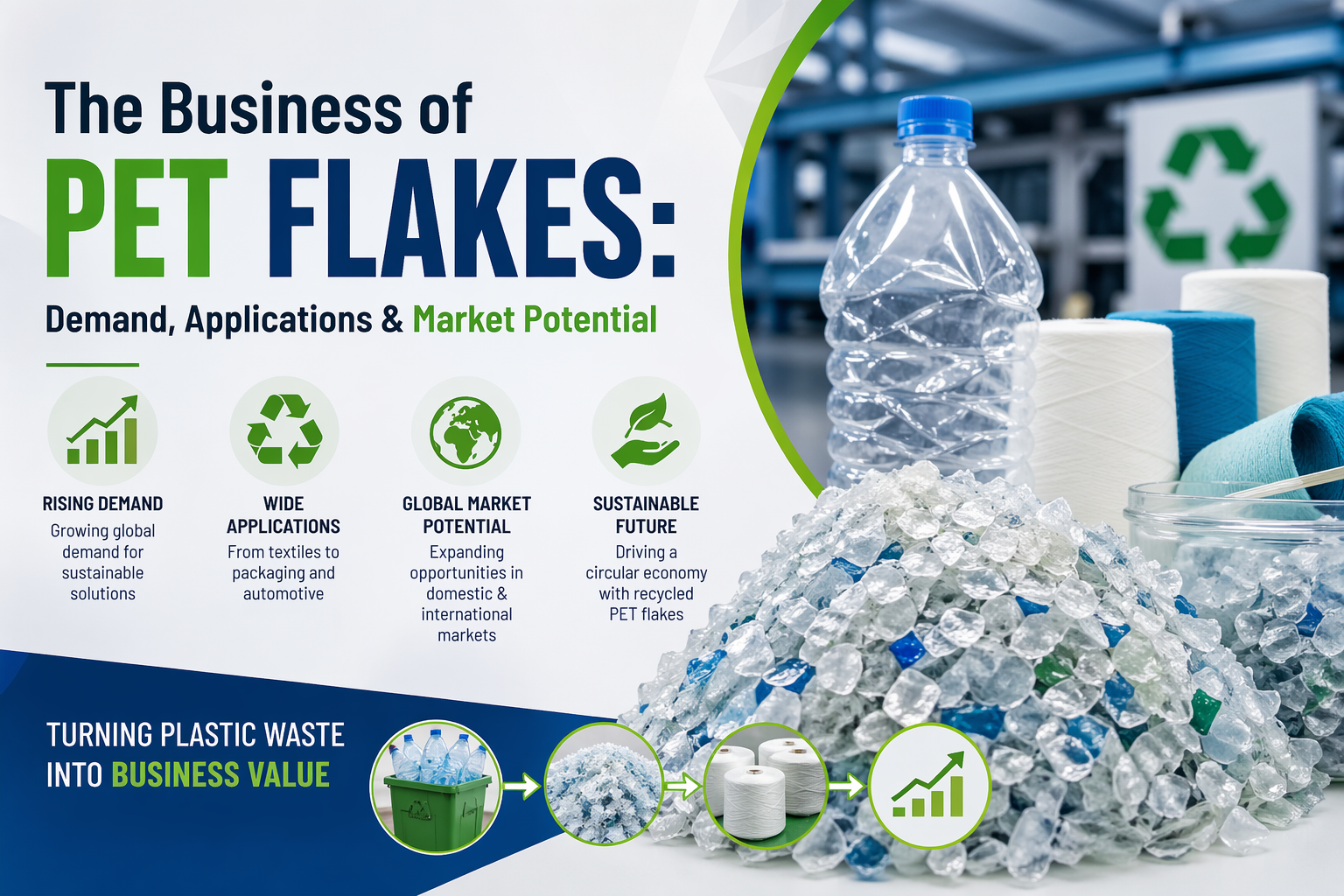
  • The Business of PET Flakes: Demand, Applications & Market Potential

    The Business of PET Flakes: Demand, Applications & Market Potential

    Sustainability is no longer just a trend in today’s fast-changing industrial world; it’s a way to do business. PET flakes have become an important raw material in the recycling ecosystem as industries move towards more environmentally friendly ways of doing business. PET flakes are driving a new wave of eco-friendly production that goes beyond making textiles and packaging. This is creating strong business opportunities all over the world.

    But why are PET flakes so valuable, and why are manufacturers and exporters paying so much attention to them? Let’s look at the demand, uses, and market potential of this industry that is growing.

    There are a few main reasons why the demand for PET flakes around the world is steadily rising:

    1. Rules and regulations for the environment and sustainability: Governments and environmental groups all over the world are calling for less plastic waste and more recycling. Because of this, the rules are stricter, which makes businesses more likely to use recycled materials like PET flakes.
    2. Move Towards a Circular Economy: Companies are using circular economy models, which means they recycle and reuse materials instead of throwing them away. PET flakes are a perfect fit for this system, which makes them very useful.
    3. Manufacturers save money: PET flakes are often a cheaper option than new plastic. This helps manufacturers keep the quality of their products while lowering the cost of making them.
    4. More and more people want textiles: The textile industry is one of the biggest reasons why people want PET flakes. People use a lot of PET flakes to make recycled polyester staple fibre, which is then used to make clothes, fabrics, and furniture.

    Important Uses for PET Flakes

    PET flakes can be used in many different ways in industry because they are so versatile:

    • Making textiles and fibres: The main use for PET flakes is to make recycled polyester fibres. People also use these fibres to make clothes, upholstery, carpets, and other fabric items.
    • The packaging business: Recycled PET is used a lot to make food-safe packaging materials, bottles, and containers. As more and more people care about the environment, brands are moving towards using recycled packaging.
    • The Car Industry: PET-based materials are used to fill seats, insulate, and make the inside of cars. They are a popular choice because they are strong and light.
    • Products that aren’t woven: PET flakes are also used to make nonwoven materials like wipes, filters, and personal care items.

    Business Opportunities and Market Potential

    The market for PET flakes is growing quickly, which is great news for manufacturers, exporters, and investors.

    1. Growth of the global market: The recycling business around the world is growing quickly, and PET flakes are a big part of this growth. Demand is rising in both developed and developing markets as people become more aware of the need for environmental sustainability.
    2. Chances to Export: Countries with good recycling systems, like India, are becoming major suppliers of PET flakes.Exporters have a great chance to reach more people as demand rises in Europe, the US, and other places.
    3. What Manufacturers Can Do: PET flakes are a scalable and profitable model for companies that recycle plastic. With the right technology and quality control, manufacturers can sell their goods in both the US and other countries.

    Problems in the PET Flakes Business

    The industry has some problems to deal with, even though the chances are good:

    • Availability of Raw Materials: Getting a steady supply of good plastic waste can be hard.
    • Quality Standards: For industrial use, it is important to keep the quality the same.
    • Price Changes: The prices in the market can change based on how much supply and demand there is.

    But companies that focus on quality, technology, and efficient supply chains can get around these problems easily.

    What Will Happen to PET Flakes in the Future

    PET flakes have a very bright future ahead of them. As businesses keep putting sustainability first, the need for recycled materials will only grow. New recycling technologies will make PET flakes even better and easier to use, making them even more competitive with new materials.In addition, big brands around the world are promising to use recycled materials in their products, which will make the demand for PET flakes even higher in the years to come.

    Also Read: Global Market trends of  Recycled Polyester Staple Fiber you should know

    In conclusion

    PET flakes are no longer just something that comes from recycling; they are now a valuable raw material that helps the economy grow in a way that is good for the environment.The business of PET flakes has exciting opportunities for manufacturers, exporters, and investors because demand is growing, there are many uses for them, and the market is very strong.

    Investing in PET flakes is not only a smart choice for businesses that want to stay ahead of trends and build a sustainable model, it’s also a strategic move towards long-term growth.

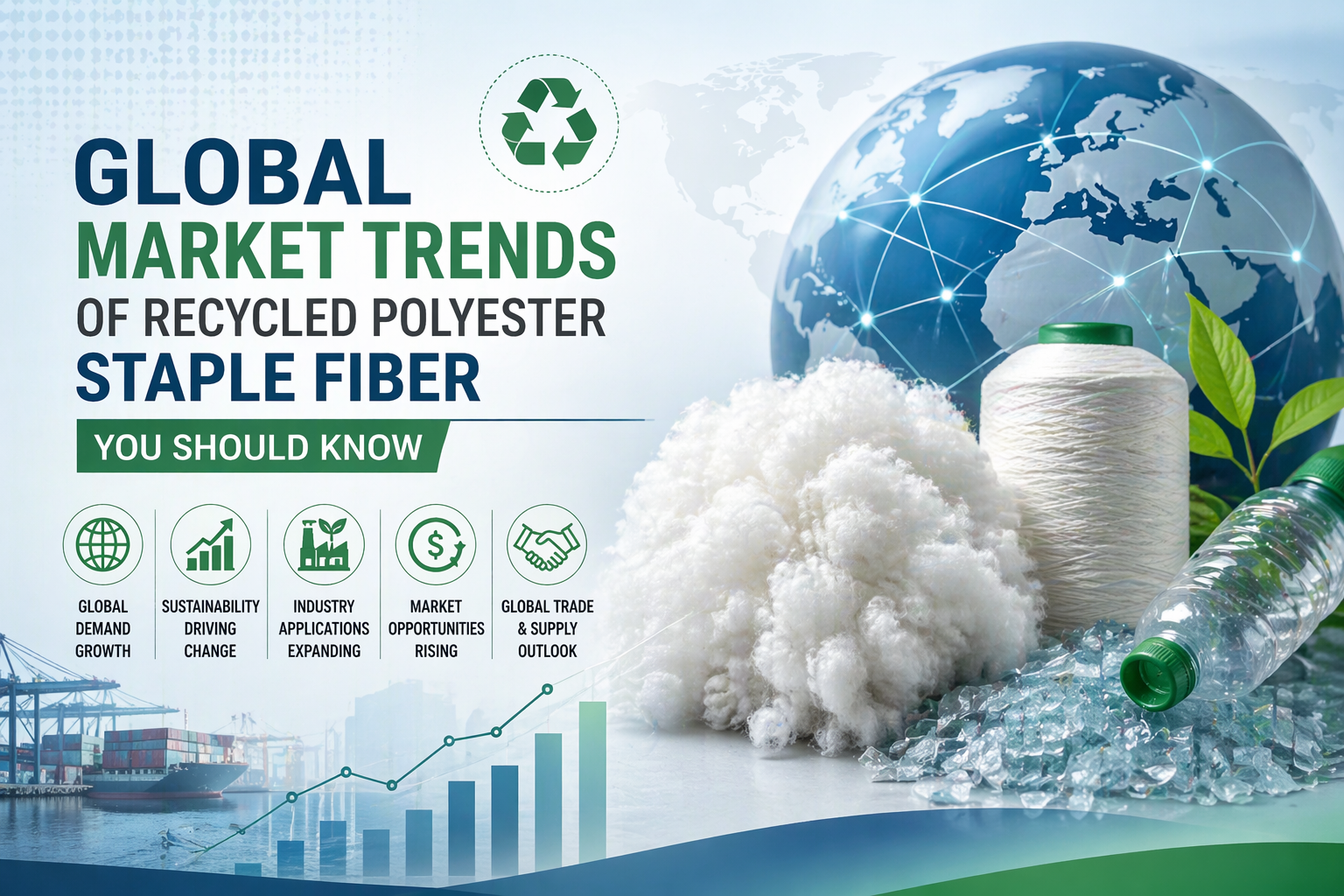
  • Global Market Trends of Recycled Polyester Staple Fiber You Should Know

    Global Market Trends of Recycled Polyester Staple Fiber You Should Know

    In the last few years, the world’s move toward sustainability has gone from being a trend to a need for businesses. Businesses all over the world are rethinking how they get, make, and use materials. Recycled Polyester Staple Fiber (RPSF) is at the heart of this change. It is becoming more and more important in the textiles, automotive, home furnishing, and nonwoven industries.

    It’s no longer optional for manufacturers, exporters, and bulk buyers to know about RPSF market trends. It’s necessary to stay competitive.

    Rising Demand Because of Goals for Sustainability

    One of the main reasons why recycled polyester staple fiber is becoming more popular is that people are becoming more environmentally conscious. Governments and international groups are making rules about plastic waste and carbon emissions that are stricter. Because of this, businesses are actively moving toward using recycled materials.

    Many well-known brands around the world, especially in the fashion and textile industries, have promised to use a lot of recycled fibers in their products. This has directly led to more people wanting RPSF, which is why it is now the best choice over virgin polyester.

    Growth in Many Different Industries

    RPSF was first popular in the textile industry, but it has since been used in many other ways. It is now used a lot in:

    Textiles and Clothing: Clothes that are good for the environment and fabrics that are mixed together
    Home Goods: Pillows, mattresses, carpets, and furniture upholstery
    Automotive Industry: Seat fillers and insulation materials
    Filters, wipes, and hygiene products that are not woven

    One of the main reasons why it is always in demand around the world is that it can be used in so many different ways.

    Cost-effectiveness and an edge over the competition

    Cost-effectiveness is another important reason why people are using recycled polyester staple fiber. RPSF is often a cheaper option than virgin polyester that doesn’t affect performance.

    This gives B2B buyers a strong reason to buy: lower production costs and benefits for the environment. Companies that use RPSF in their supply chain can also improve their brand image as being good for the environment.

    More chances for global trade and exports to grow

    The trade in recycled polyester staple fiber is growing quickly around the world. Countries that have good recycling systems and can make things are becoming important exporters.

    Asia, especially India and China, is becoming a major center for RPSF production because it has a lot of raw materials and makes things cheaply. At the same time, demand is rising in places like Europe and North America, where standards for sustainability are stricter.

    Manufacturers and suppliers can make a lot of money exporting goods because there is a big gap between supply and demand.

    Technological Progress Enhancing Quality

    One of the first worries about recycled fibers was that their quality was not always the same. But new recycling technologies have made RPSF much more reliable and effective.

    Modern processing methods make fibers stronger, more uniform, and longer-lasting, making them similar to virgin polyester in many uses. This has made buyers more confident and made it useful in more industries.

    Problems in the Market

    The RPSF market is growing, but it does have some problems. The availability of high-quality recyclable plastic is still a major worry. Changes in the supply of raw materials can affect the price and consistency of production.

    To keep up with quality standards, you also need advanced machines and strict quality control processes. In this competitive market, businesses that put money into technology and quality control are more likely to do well.

    The Future

    Recycled polyester staple fiber has a very bright future ahead of it. The demand for recycled materials will keep going up as sustainability becomes a core business strategy instead of just a way to market.

    Circular economy models, in which waste is reused and recycled, are becoming more popular around the world. RPSF fits this model perfectly, making it a long-term solution for businesses that want to lessen their impact on the environment.

    This is the best time for manufacturers and suppliers to invest, grow, and make sure they are well-positioned in the global market.

    Also Read: Turning Plastic into Performance: Recycled Polyester Staple Fiber Explained

    FAQs

    1. What is polyester staple fiber that has been recycled?

    Recycled polyester staple fiber is made from recycled plastic, mostly PET bottles. These bottles are turned into short fibers that are used in many different industries.

    2. Why is RPSF so popular all over the world?

    People want it because it helps the environment, saves money, and is becoming more regulated when it comes to plastic waste and carbon emissions.

    3. What kinds of businesses use recycled polyester staple fiber?

    People use it a lot in textiles, furniture, car parts, and nonwoven items like wipes and filters.

    4. Is recycled polyester staple fiber as strong as new polyester?

    RPSF is strong and long-lasting like other materials, so it can be used in most situations.

    5. What are the most important chances for RPSF in the market?

    It has a lot of potential because demand is growing around the world, there are opportunities to export, and big brands are starting to use it more.

    In conclusion

    Recycled Polyester Staple Fiber is no longer just an option; it’s becoming the norm for making things in a way that doesn’t hurt the environment. It offers a great chance for businesses all along the supply chain because demand is rising, applications are growing, and the market is strong.

    Keeping up with these trends can help buyers and manufacturers make better choices, save money, and stay in line with the future of responsible production.

  • Turning Plastic into Performance: Recycled Polyester Staple Fiber Explained

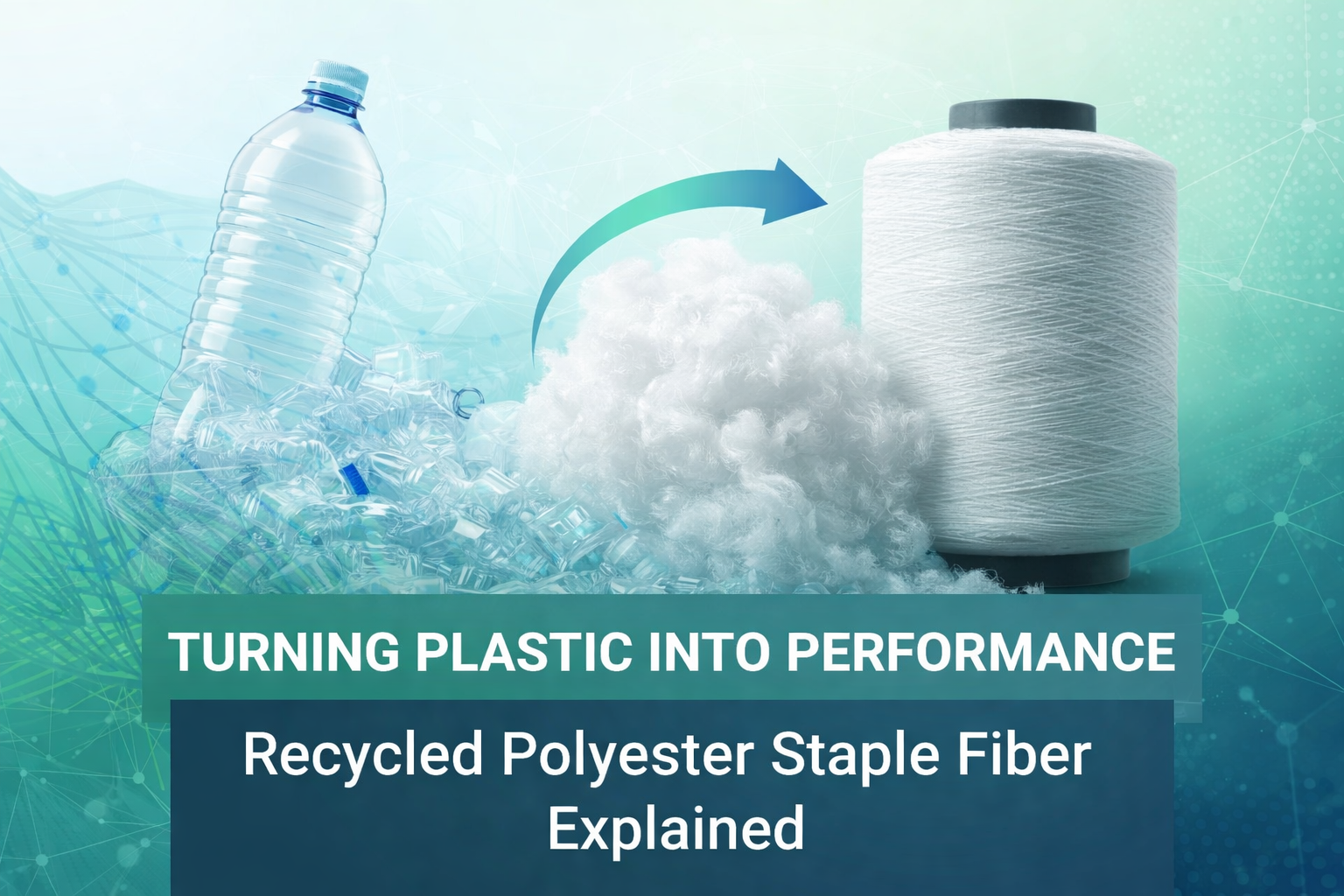
    Turning Plastic into Performance: Recycled Polyester Staple Fiber Explained

    In a world where sustainability is no longer an option, businesses are always looking for new ways to cut down on waste without lowering quality. Recycled Polyester Staple Fiber (RPSF) is one of the most important new materials in this area. It literally turns plastic waste into high-performance products.

    Recycled polyester staple fiber is a big step toward responsible manufacturing. It can be used to make everything from strong textiles to industrial products. But what is it, and why is it getting so much attention around the world? Let’s take it apart.

    What is polyester staple fiber that has been recycled?

    Recycled Polyester Staple Fiber is a synthetic fiber made from plastic waste that has already been used, mostly PET bottles. Instead of letting plastic build up in landfills or the ocean, it is collected, cleaned, melted, and spun into fine fibers that can be used in many different fields.

    They are called “staple” fibers because they are cut into short pieces, which makes them easy to mix with other materials and useful in many ways. The end result is a fiber that is strong, flexible, and cheap, and that works almost as well as virgin polyester.

    The Journey: Turning Plastic Waste into Performance Fiber

    The process of changing RPSF is both interesting and effective:

    • Collection and sorting: Used plastic bottles are gathered and sorted by type and quality.
    • Cleaning and shredding: The plastic is cleaned well and then cut into small pieces.
    • Melting and Extrusion: These flakes are melted and pushed through small nozzles to make fibers.
    • Cutting and Finishing: The fibers are cut into lengths that are useful and then treated for those uses.

    This process not only cuts down on pollution in the environment, but it also cuts down on the need for new raw materials by a large amount.

    Why Recycled Polyester Staple Fiber Is Important

    1. Effect on the environment

    RPSF’s positive effect on the environment is one of its best features. It helps keep landfills from overflowing and the ocean from getting polluted by recycling plastic waste. Also, making recycled polyester uses less energy than making new polyester, which means less carbon dioxide is released into the air.

    2. Performance and Longevity

    This fiber is still high quality even though it has been recycled. It is very strong, flexible, and resistant to moisture. Because of these qualities, it can be used in many different ways, such as in clothing and car interiors.

    3. A solution that doesn’t cost too much

    Recycled polyester staple fiber is usually cheaper than new polyester. It gives manufacturers a balance between being environmentally friendly and saving money, which is very important in today’s competitive market.

    Important Uses in Many Fields

    One of the best things about RPSF is how flexible it is. A lot of people use it for:

    • Textiles and clothing: blended fabrics, sportswear, and eco-friendly clothes
    • Furniture for the home includes cushions, mattresses, carpets, and upholstery.
    • The automotive industry makes seat fillings, insulation materials, and parts for the inside of cars.
    • Wipes, filters, and hygiene products are all examples of nonwoven products.

    Its ability to change makes it useful for both the consumer and industrial markets.

    Increasing Demand in Global Markets

    The demand for recycled polyester staple fiber is growing quickly because people are becoming more aware of the environment and there is more pressure from the government. Brands all over the world are making promises to be more environmentally friendly, and using recycled materials is a big part of their plans.

    People who buy things are also very important. People who buy things today are more aware of how the things they buy affect the environment. People are changing how they buy things, and this is making manufacturers more likely to use eco-friendly options like RPSF.

    Things to Think About

    RPSF has many advantages, but it also has some problems. Sometimes, it can be hard to find high-quality recyclable plastic. Also, to keep the quality of the product the same during processing, you need advanced technology and strict quality control.

    But these problems are getting easier to solve thanks to ongoing improvements and new ideas in recycling infrastructure.

    What will happen to recycled polyester staple fiber in the future?

    The future of RPSF looks bright, though. As recycling technology gets better and more people around the world care about sustainability, its use is likely to grow even more.

    Industries are moving toward models of the circular economy, where waste is kept to a minimum and resources are used again and again. Recycled polyester staple fiber is a key material for the future because it fits perfectly into this vision.

    Also Read: Growing Demand for Recycled Polyester Staple Fiber in Global Markets

    In conclusion

    Recycled Polyester Staple Fiber is not only a good choice for the environment; it’s also a smart choice for modern businesses. It solves both environmental and economic problems by turning plastic waste into high-performance fiber.

    As businesses and consumers keep putting sustainability first, materials like RPSF will be very important in making the future cleaner and more responsible.

    The idea of turning plastic into performance is no longer just an idea; it’s a reality that will shape the next generation of manufacturing.

  • Growing Demand for Recycled Polyester Staple Fiber in Global Markets

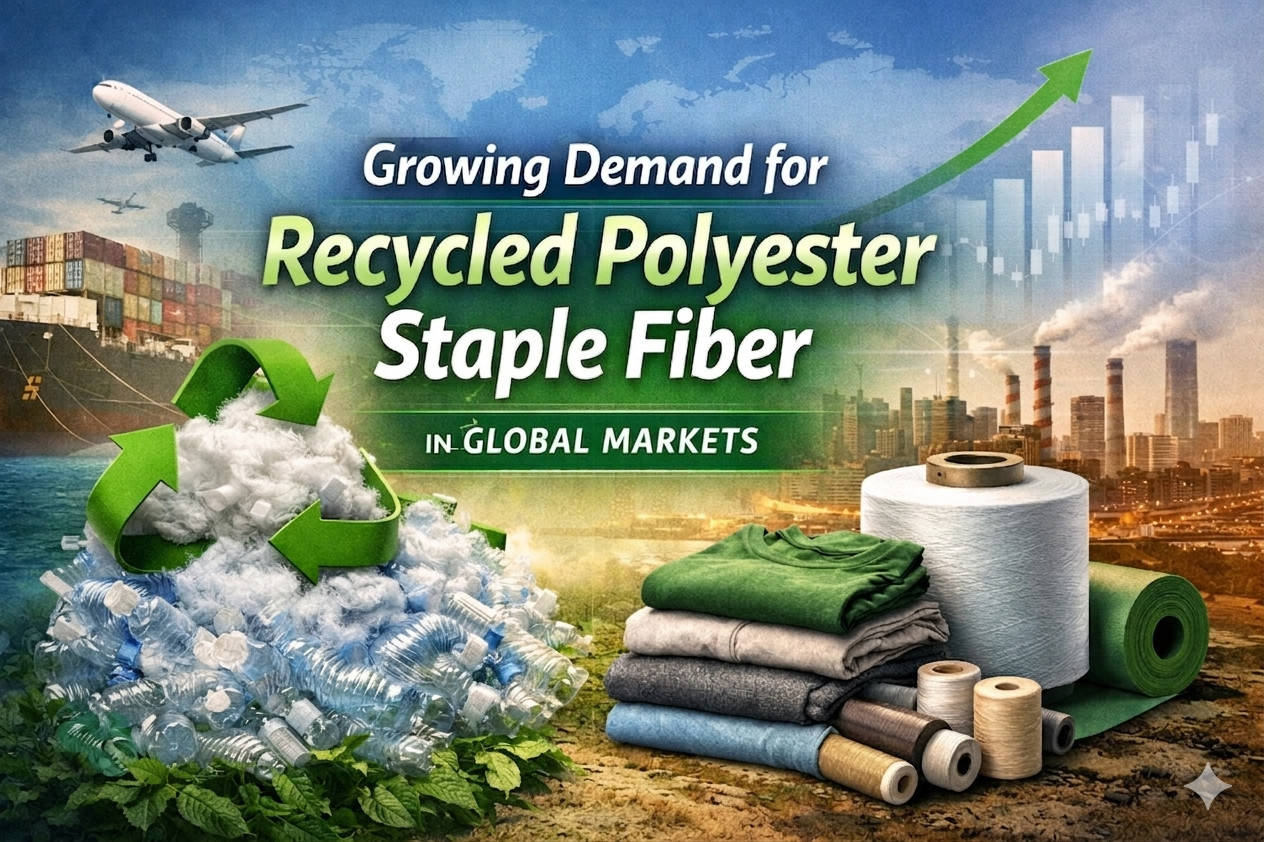
    Growing Demand for Recycled Polyester Staple Fiber in Global Markets

    In the last few years, the textile and manufacturing industries all over the world have made a big effort to be better for the environment. A lot of people have been talking about Recycled Polyester Staple Fiber (RPSF) lately. The world is seeing a huge rise in demand for recycled fibers as more people become concerned about the environment and businesses look for more environmentally friendly options.

    Recycled polyester staple fiber usually comes from plastic waste that people have already used, like PET bottles. This trash doesn’t go to landfills or the ocean. Instead, it is gathered, processed, and turned into high-quality fiber that is used in textiles, cars, furniture, and other things. This change not only helps reduce plastic waste, but it also helps the circular economy.

    People are paying more and more attention to sustainability.

    People want recycled polyester staple fiber because they are becoming more aware of environmental issues. Because it comes from oil, traditional polyester releases carbon and harms the environment. Recycled polyester, on the other hand, cuts down on waste and the carbon footprint by a lot.

    Many big companies and brands all over the world now use eco-friendly materials to make their products. Governments and regulatory bodies also make recycling easier by setting rules and standards for the environment. Recycled polyester fiber is becoming more popular as the world moves toward sustainability faster.

    Growing Market Size and Demand

    The market for recycled polyester staple fiber has been growing quickly. Production around the world has already gone over 12 million metric tons per year, which shows that it is becoming more popular in many fields.

    It is also thought that the market will grow steadily over the next few years, with estimates showing a big rise in value and demand. A big part of this growth is the growing use of recycled fibers in clothes, cars, and industry.

    Another important trend is that recycled fiber is becoming a bigger part of the polyester market as a whole. Thanks to sustainability goals and better technology, recycled polyester will probably make up a large part of all polyester use in the near future.

    Key Industries That Are Causing Demand

    A lot of industries are asking for more recycled polyester staple fiber:

    1. The clothing and textile business

    The textile industry uses polyester fibers the most. Brands are using more recycled materials because more people want clothes that are good for the environment. People are also becoming more aware of eco-friendly fashion, which is making the demand even higher.

    2. The auto industry

    Recycled polyester fibers are used to make a lot of the insides of cars, the seats, the insulation, and the carpets. They are good for cars because they are strong, light, and cheap.

    3. The industry that makes home goods and nonwoven fabrics

    More and more things are being made with recycled polyester fiber, like pillows, mattresses, carpets, and insulation materials. The nonwoven part, which includes diapers and wipes, is also growing quickly.

    Better technology

    Recycling technologies have improved the quality and performance of recycled polyester staple fiber a lot. People used to think that recycled fibers were worse than new polyester. But now, new ways of processing fibers make them just as strong, long-lasting, and useful as older ones.

    These new ideas are making recycled polyester a good and popular choice for manufacturers, which is making it even more popular around the world.

    Growth Trends by Region

    The Asia-Pacific region is the largest market in the world for polyester staple fiber. The main reason for this is that India, China, and Indonesia all have strong textile manufacturing centers. Lower production costs, high demand, and government policies that help the area are all good things.

    Europe and North America are also paying more attention to following the rules and being environmentally friendly, which is speeding up the use of recycled fibers. These places are spending a lot of money on recycling facilities and ways to make things that are good for the environment.

    Issues in the Market

    The market still has some problems, even though more and more people are buying recycled polyester staple fiber. One big problem is getting and gathering plastic trash that can be recycled. Some plastic waste isn’t picked up or processed properly, which makes it hard to get raw materials.

    Making recycled fiber can also cost more because it needs more processing and certification.

    People are also concerned about how good the products are and how well the recycling system works, especially in places that are still growing.

    Looking Ahead

    There is a lot of hope for recycled polyester staple fiber. There will probably be even more demand because people are becoming more aware of the environment, rules are getting stricter, and recycling technologies are getting better.

    In many industries around the world, the shift toward more environmentally friendly production methods is making recycled polyester an important part of the process. As new ideas come up and supply chains get better, recycled polyester staple fiber will be very important for making the future greener and more sustainable.

    Also Read: Virgin vs Recycled : Why top manufacturers are switching to Recycled Polyester Staple Fiber now

    Last thoughts

    The growing need for recycled polyester staple fiber in global markets shows that people are becoming more interested in sustainability and responsible manufacturing. Recycled polyester is good for the economy and the environment in many ways, including reducing plastic waste and carbon emissions.

    As businesses and consumers continue to put eco-friendly solutions first, recycled polyester staple fiber will soon be a key part of the global textile and manufacturing landscape.

  • Virgin vs. Recycled: Why Top Manufacturers are Switching to Recycled Polyester Staple Fiber Now

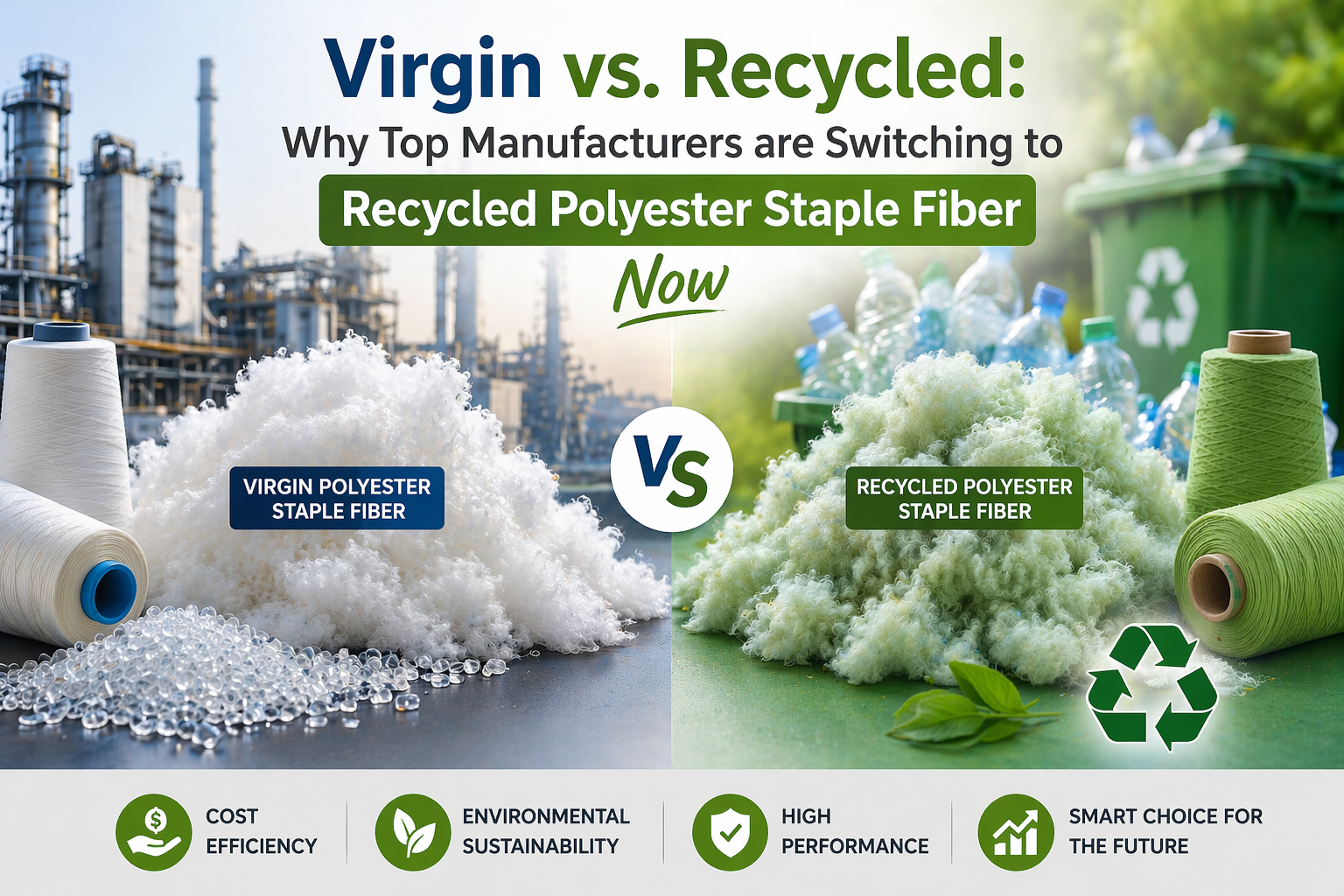
    Virgin vs. Recycled: Why Top Manufacturers are Switching to Recycled Polyester Staple Fiber Now

    For a long time, textile makers have always used virgin polyester staple fibre. It is reliable, easy to find, and well-known. But things are different today. More and more companies are switching to recycled polyester staple fibre (RPSF), and it’s not just because it’s better for the environment.

    This change isn’t sudden. It’s because of changing market needs, cost pressures, and the need for production that is smarter and more sustainable. So the real question is: what’s causing this change, and why are the best manufacturers making the switch now?

    Let’s look at it from a practical point of view.

    Knowing the Difference

    Virgin polyester staple fibre is made from petrochemicals without any other steps. It is a new, unused material that was made using chemicals. Recycled polyester staple fibre, on the other hand, is made from plastic waste from people, mostly PET bottles, that has been processed and turned into usable fibre.

    Both materials may look like they can be used in the same way at first glance, but they have very different effects.

    The Cost Factor: More Control, Less Waste

    One of the main reasons why manufacturers are moving toward recycled fibre is that it costs less. The price of crude oil has a big effect on virgin polyester, which can change a lot. This makes it hard to plan for the long term.

    On the other hand, recycled polyester staple fibre is better for keeping costs down. Manufacturers can often keep prices more stable because it comes from waste materials. This makes a big difference over time for businesses that have small profit margins or make a lot of things.

    A Lot Better Performance

    In the past, recycled fibre was known for being inconsistent. But that’s not true anymore. Thanks to improvements in recycling technology, today’s RPSF can work as well as virgin fibre in many situations.

    Recycled fibre from the present day offers:

    • Good strength in tension
    • Fibre length that stays the same
    • Reliable performance in both spinning and non-woven processes

    This means that manufacturers no longer have to give up quality to be environmentally friendly.

    It’s no longer optional to be sustainable.

    Markets around the world are changing. A lot of brands and buyers now want or even need materials that are good for the environment. Businesses that export goods are especially under pressure to meet environmental standards.

    Manufacturers can do the following by using recycled polyester staple fibre:

    • Cut down on plastic waste
    • Less carbon footprint
    • Be in line with global goals for sustainability

    It’s not enough to be eco-friendly anymore; you also need to stay relevant in a competitive market.

    Better Positioning of the Brand

    People who buy things today are more aware than ever. Sustainability has become a part of brand identity even in B2B industries. People think that manufacturers who use recycled materials are smart and responsible.

    This opens up possibilities:

    • A better brand image
    • More appealing to clients around the world
    • Easier to get into markets that care about the environment

    Switching to recycled fibre is not only a production choice, but also a business strategy.

    Benefits of the Supply Chain

    There are more and more organised and scalable suppliers of recycled polyester staple fibre. A lot of them now offer bulk supply, consistent quality, and even custom options based on what you need.

    This makes it easier for manufacturers to form long-term partnerships and keep production going without any problems.

    So, why the change now?

    The change from virgin to recycled polyester staple fibre is happening right now because all the important factors have come together:

    • Quality has gotten better thanks to technology.
    • There is more demand in the market.
    • Sustainability is now a must.
    • Smart choices are needed because of cost pressures.

    It’s not a matter of “if” for manufacturers anymore; it’s a matter of “when.”

    A Useful Way to Move Forward

    The change doesn’t have to happen all at once for businesses that still use virgin fibre. Many manufacturers are starting to use recycled fibre in their products and are slowly increasing the amount they use as they become more comfortable with it.

    This balanced way of doing things helps keep risks in check while moving toward a better future.

    Also Read: Recycle Polyester Staple Fiber suppliers what B2B buyers should know

    Going Forward with the Right Partner like Rakshitam Ecofibre

    Choosing the right supplier is the most important thing for this change to work. No matter what the material is, consistency, quality, and dependability are still the most important things.

    By working with the right recycled polyester staple fibre supplier, manufacturers can not only be more environmentally friendly, but they can also improve their overall production strategy.