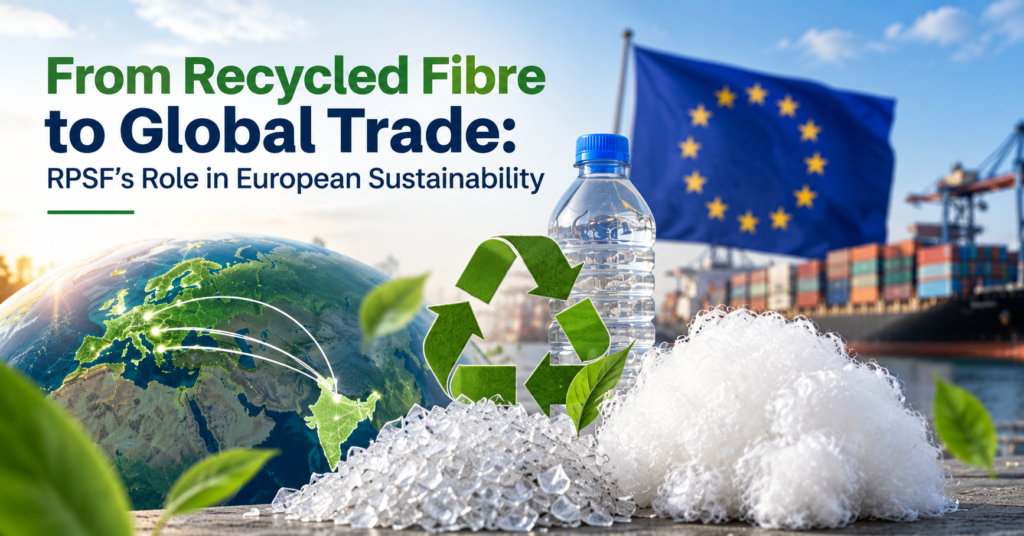
The global textile and industrial fibre market is undergoing a major transformation in 2026. With China’s production slowing amid tighter environmental regulations, increasing manufacturing costs and shifting trade patterns, buyers worldwide are looking for dependable alternative suppliers. This transition has opened up a huge opportunity for India’s Recycled Polyester Staple Fibre (RPSF) industry to strengthen its position in the global market.
India is becoming the preferred sourcing destination for high-quality recycled polyester staple fibre, with advanced recycling capabilities, increasing manufacturing capacity, and a strong emphasis on sustainability.
Why is China’s production slowing?
For many years China has been the world’s largest producer of polyester and recycled polyester products. However, production levels in 2026 have been impacted by a number of factors including:
- Tighter environmental regulations
- More expensive labour and energy
- Factory modernisation projects
- Temporary production restrictions in industrial regions
- Supply chains reorganisation
These developments have encouraged international buyers to diversify their supplier base and reduce dependence on a single manufacturing hub.
India Steps Into the Spotlight
India has steadily invested in recycling infrastructure, PET bottle collection systems, and modern fiber manufacturing facilities over the past decade. Indian manufacturers are better placed to fill the supply gaps with competitive price and consistent production with the change in demand across the globe.
Today India is among the top producers of recycled polyester staple fibre for industries such as:
- Hometextiles
- Automobiles Furniture
- nonwoven goods
- Geotextiles Packaging Industrial insulation
This diversified manufacturing base enables Indian suppliers to service a wide array of international customers.
Increasing Global Demand for Eco-Friendly Materials
Sustainability has become a major purchase factor across industries. Meanwhile, brands are working to reduce their environmental footprint by using more recycled materials in their products.
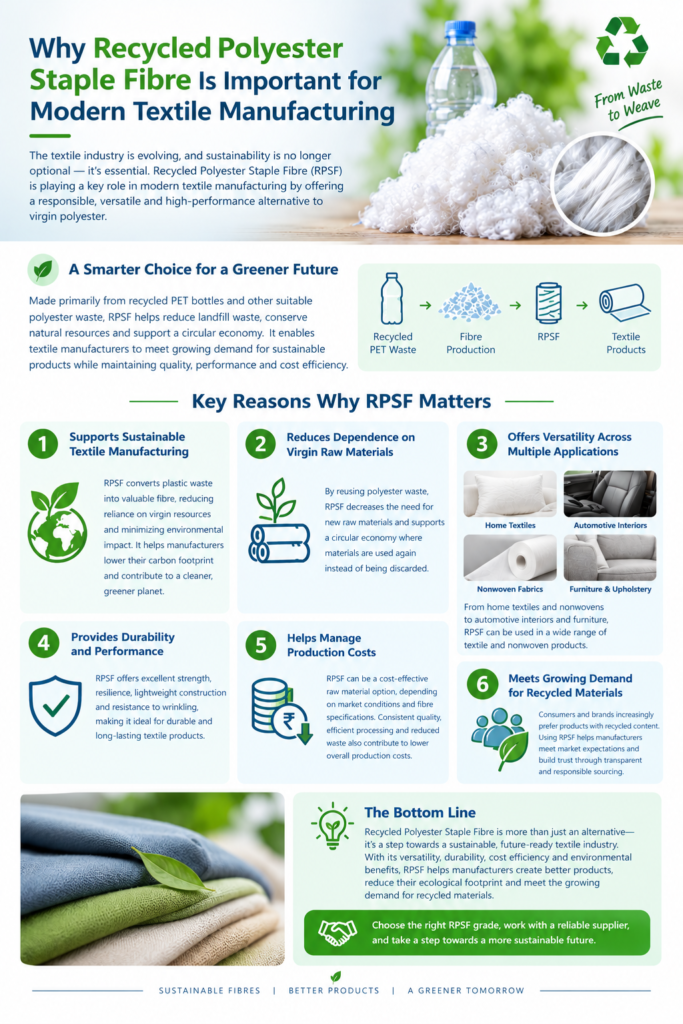
Recycled Polyester Staple Fibre is produced from post-consumer PET bottles, assisting in the reduction of plastic waste and the preservation of natural resources. RPSF is an environmentally responsible choice, requiring less raw material and less energy than the production of virgin polyester.
With sustainability regulations tightening up in Europe, North America and elsewhere, demand is growing for certified recycled fibre.
Competitive Advantage of Indian Manufacturers
Indian RPSF manufacturers have multiple strengths that make them attractive global suppliers.
Production Capacity Trustworthy
Modern manufacturing facilities of Indian companies help them in maintaining high quality standards with consistent volumes.
Cost Effective Manufacturing
India is a lucrative sourcing destination for global buyers as it offers competitive manufacturing cost without compromising on product quality.
Advanced Recycling Technologies
Many manufacturers use state of the art recycling processes to ensure high fibre strength, purity and consistency in each and every batch of production.
Workforce Skilled
We have an experienced manpower in India to ensure efficient manufacturing with strict quality control measures at all stages of manufacturing.
Enhancing export opportunities
Slower Chinese production has created new export opportunities for Indian manufacturers. Indian companies, capable of delivering reliable products and timely shipments, are increasingly partnering with buyers seeking stable supply chains.
The main destinations of exports are:
- Europe United States
- Middle East
- South East Asia Africa
As global businesses are diversifying their sourcing strategies, the export potential of India is likely to increase further.
Supporting Circular Economy –
The industry of recycled polyester staple fibre plays a vital role in the circular economy of India by converting the waste PET bottles into valuable industrial raw material.
This helps:
- Stop plastic pollution
- Minimising landfill waste
- Encourage resource efficiency
- Less carbon emissions
- Support sustainable production
Governments and businesses are focusing on environmental responsibility. Recycled materials are now key elements of industrial growth in the future.
The Significance of Certified Recycled Polyester Staple Fibre
International buyers increasingly prefer suppliers offering globally recognized certifications such as the Global Recycled Standard (GRS). These certifications provide assurance regarding recycled content, traceability, and responsible manufacturing practices.
Benefits for producers of certified recycled polyester staple fibre:
- Address global compliance needs
- Enhance ESG performance
- Build customer confidence
- Create long-term business relationships
As sustainability reporting becomes more important, certified materials continue gaining preference across international markets.
Rakshitam Ecofibre: Meeting Global Demand
As one of India’s trusted manufacturers of Recycled Polyester Staple Fiber, Rakshitam Ecofibre is committed to delivering premium-quality fiber solutions for domestic and international customers.
Using recycled PET bottles and advanced manufacturing technologies, the company focuses on producing consistent, durable, and environmentally responsible fibers suitable for diverse industrial applications. With a strong emphasis on quality, sustainability, and customer satisfaction, Rakshitam Ecofibre supports businesses looking for reliable recycled fiber solutions in an evolving global market.
China’s production slowdown in 2026 has accelerated a significant shift in the global recycled fiber industry. As buyers diversify their sourcing strategies, India’s Recycled Polyester Staple Fiber industry is emerging as a strong and dependable alternative.
With competitive manufacturing, growing export capabilities, sustainable production practices, and internationally recognized quality standards, Indian manufacturers are well-positioned to meet rising global demand. As industries continue embracing circular economy principles and environmentally responsible sourcing, India’s recycled polyester staple fiber sector is expected to play an even greater role in shaping the future of sustainable manufacturing worldwide.