Category: Blog

Your blog category

  • Sustainable Manufacturing: Inside India’s Recycled Polyester Staple Fiber Industry

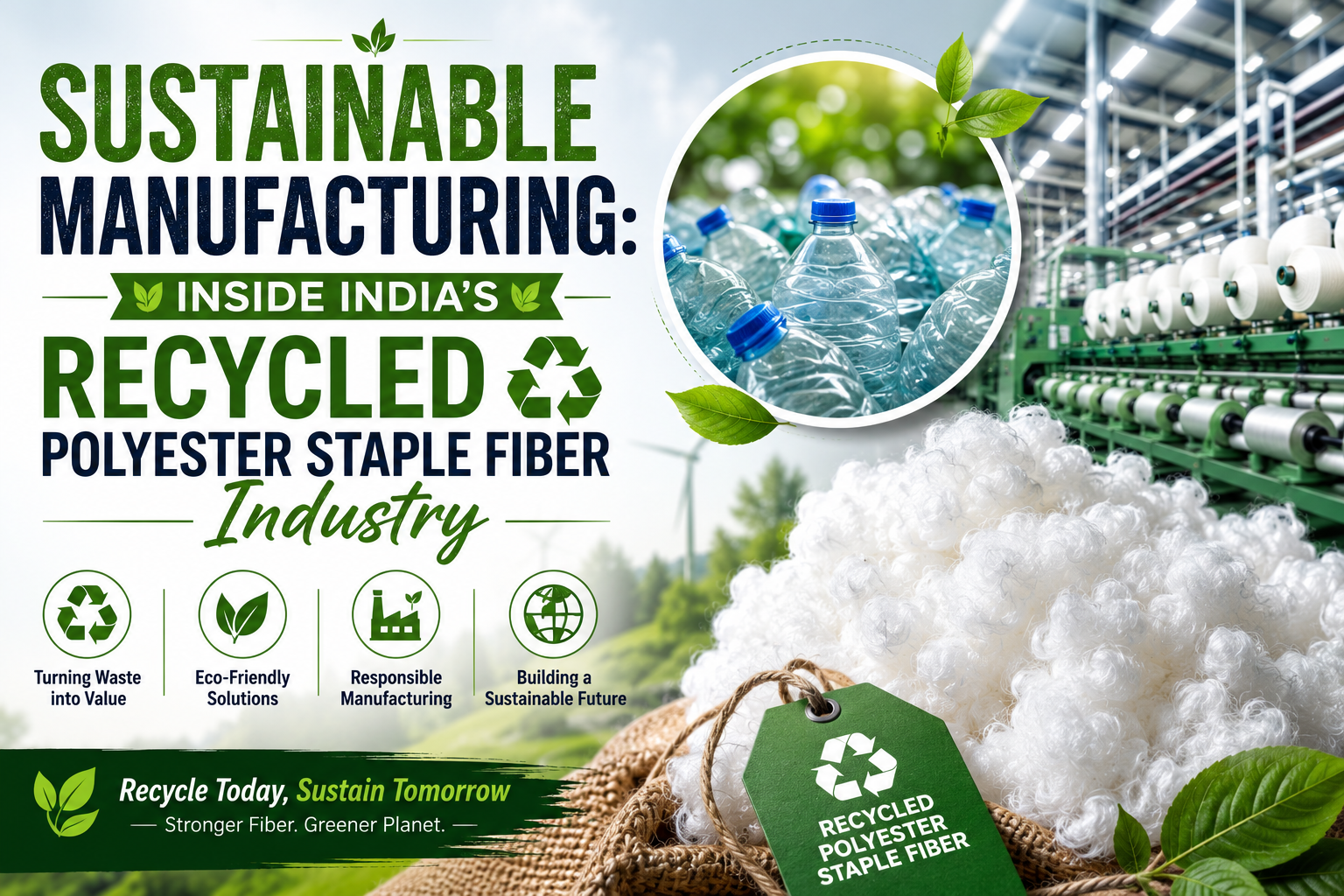
    Sustainable Manufacturing: Inside India’s Recycled Polyester Staple Fiber Industry

    Sustainability is now a key driver in industries around the world, shaping how products are made, sourced and consumed. Recycled polyester staple fiber (RPSF) industry is one of the industry sectors with a significant contribution to environmental responsibility. India has established itself as the world’s leading hub for textiles and manufacturing and has emerged as a leading producer of high-quality recycled polyester staple fiber with sustainable manufacturing practices.

    The Indian recycled polyester staple fiber industry continues to drive the circular economy and reduce the environmental footprint as businesses increasingly seek sustainable materials.

    What is Recycled Polyester Staple Fiber?

    Recycled polyester staple fiber is made from post-consumer and post-industrial plastic waste, predominantly PET bottles. Manufacturers can collect, process and convert this material into value-added fibers that can be used across a variety of industries, rather than plastic waste ending up in landfills or the ocean.

    The result is a strong, flexible and sustainable fiber that can be used in applications such as:

    • Furniture and Home Furnishings
    • Automotive interiors
    • Nonwoven fabrics
    • Mattresses & quilts
    • Pillows & cushions
    • Textile products Industrial application

    By using recycled raw materials, manufacturers are helping to reduce dependence on virgin polyester production.

    The Process of Sustainable Manufacturing

    The process of manufacturing recycled polyester staple fiber is a carefully controlled process that aims to recover as much of the material as possible, while maintaining the quality of the product.

    The first step of the journey is the collection of used PET bottles. These bottles are separated, cleaned and processed to remove labels, caps, contaminants and impurities. Advanced recycling systems then break down the plastic into flakes that are turned into polyester fibers.

    All the leading Indian manufacturers have strict quality control checks at various stages of the production process to ensure uniformity, cleanliness and performance.

    Modern facilities also focus on reductions in water use, energy use and waste generation, further bolstering their sustainability efforts.

    Why India Leads in Recycled Fibre Production

    There are several reasons for India’s strong position in the recycled polyester staple fibre industry.

    Plentiful Availability of Raw Materials

    The country has a good recycling network and a steady stream of waste PET bottles, providing a reliable source of recyclable material for making fiber.

    Infrastructure for Advanced Manufacturing

    Many Indian manufacturers have invested in modern technologies for large scale manufacturing, which comply with the international quality standards.

    Increasing Environmental Awareness

    The industry-wide adoption of environmentally responsible manufacturing practices has been driven by government initiatives, corporate sustainability goals and increasing consumer awareness.

    Worldwide Export Opportunities

    India’s recycled polyester staple fiber manufacturers supply to customers in Asia, Europe, the Middle East, and globally, underpinning India’s status as a reliable source for sustainable materials.

    Environmental Advantages of Recycled Polyester Staple Fiber

    One of the biggest benefits of recycled polyester staple fibre is its environmental credentials.

    Reducing Plastic Waste

    Recycling efforts can help keep millions of discarded PET bottles out of landfills and waterways, reducing pollution and environmental degradation.

    Conservation of Natural Resources

    Recycled fiber production utilizes less virgin raw materials, which lowers the need for petroleum-based resources used to make regular polyester.

    Reduced Carbon Footprint

    Producing recycled polyester can greatly reduce greenhouse gas emissions compared to producing virgin polyester, helping to meet global climate goals.

    Support the Circular Economy

    Recycling prolongs the life cycle of plastics and creates a more sustainable and resource efficient model of production.

    Applications Fueling Demand

    The demand for recycled polyester staple fiber is rising as sustainability becomes more important to the industry.

    Automakers use recycled fibers in seat padding, insulation materials and interior components. Home furnishings brands are using the recycled fibers in their mattresses, pillows and upholstery products. More and more textile companies use recycled materials to meet the expectations of consumers concerning environmentally responsible products.

    This increasing demand is spurring greater innovation and investment in India’s recycling and fiber manufacturing sectors.

    Also Read: Polyester Staple Fiber Manufacturer in India : What Buyers need to Know

    Summary

    India’s recycled polyester staple fibre sector is a good example of sustainable manufacturing in action. Manufacturers are converting plastic waste into valuable industrial materials, playing a dual role of conserving the environment and supporting diverse industries globally.

    As companies are increasingly focused on sustainability, recycled polyester staple fiber will become ever more important in creating a more responsible and resource-efficient future. In India’s recycled fiber industry, the future of sustainable production is being driven by innovation, quality manufacturing and a commitment to environmental stewardship.
  • Polyester Staple Fiber Manufacturer in India: What Buyers Need to Know

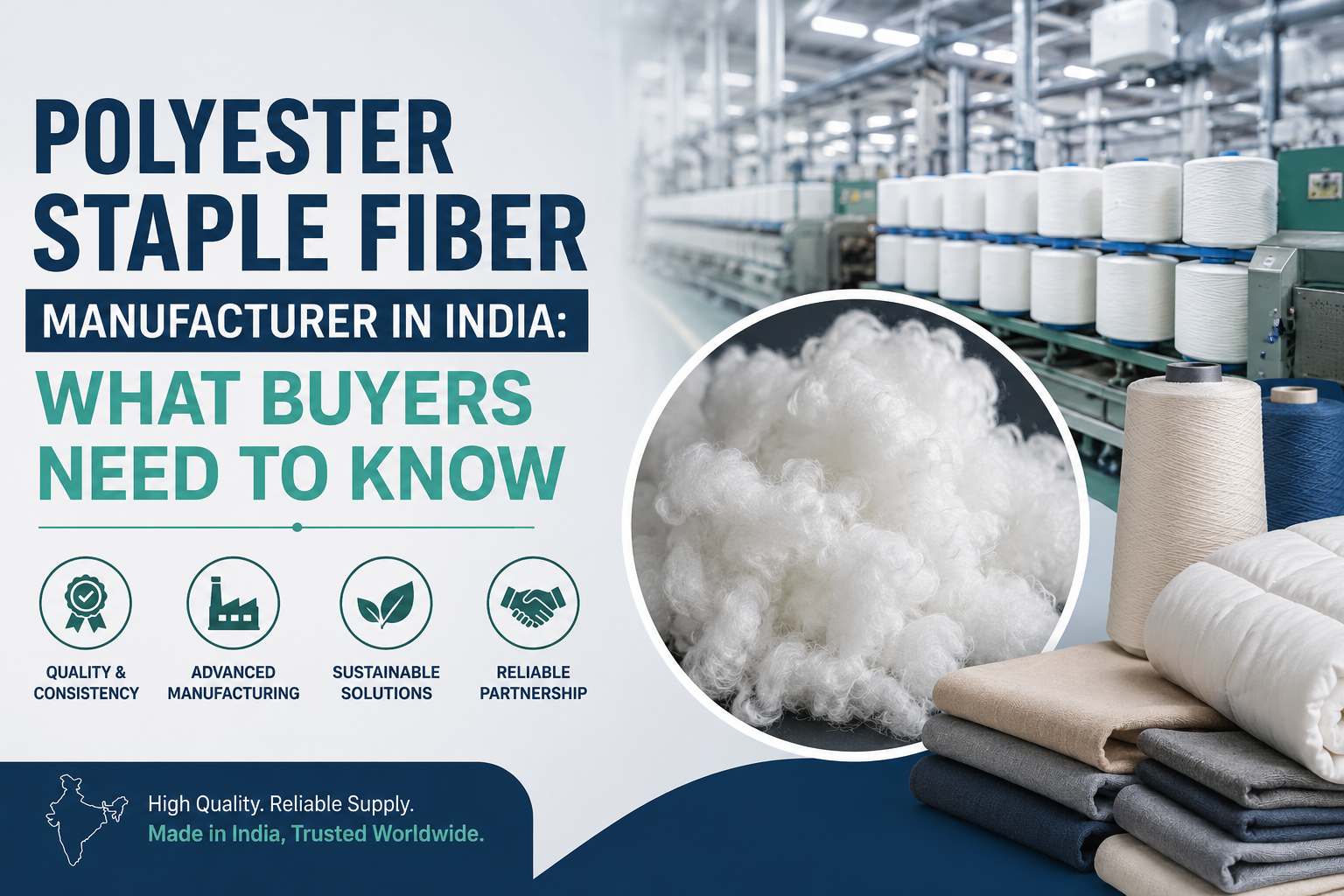
    Polyester Staple Fiber Manufacturer in India: What Buyers Need to Know

    India has emerged as one of the major hubs for production of polyester staple fibre for domestic and international markets. Industries are looking for reliable and sustainable raw materials, and the choice of the right polyester staple fibre manufacturer in India has become an important business decision.

    Whether you are in textiles, home furnishings, automotive manufacturing, non-woven products or industrial applications, knowing what to look for in a manufacturer can help you make informed purchasing decisions and build long-term partnerships.

    What is polyester staple fiber?

    Polyester staple fiber (PSF) is a man-made fiber made from virgin polyester or from recycled PET materials. It is very durable, versatile and economical so it is widely used. Polyester staple fiber is available in various deniers, lengths, colors and specifications based on the application.

    Today, PSF plays a significant role in producing products like:

    • Pillows and cushions
    • Bedding and Coverings
    • Car and truck interior
    • Nonwoven fabrics
    • Upholstery articles
    • Teddy bears
    • Textiles and textile mixtures, and clothing

    Its flexibility has made it a popular choice across industries.

    Why India is a Preferred Manufacturing Hub

    India has developed a strong reputation in polyester industry for its manufacturing capabilities, skilled workforce and competitive pricing. Many Indian manufacturers have invested in high-end technology and quality control systems so they are able to meet international standards.

    Also, the growing emphasis on sustainability has spurred the production of recycled polyester staple fiber from post-consumer PET waste by manufacturers, which helps companies lower their environmental impact.

    What Buyers Should Know About Product Quality and Consistency

    When selecting a polyester staple fiber manufacturer in India, quality should be the primary consideration. Fiber specifications are very important to the quality of the end product.

    Things buyers should consider include:

    • Strength of fiber
    • Denier Precision
    • Consistency of cut length
    • color consistency
    • Degree of cleanliness and dirtiness

    Reliable manufacturers have tight quality control procedures throughout the production process.

    Production Capabilities

    All businesses are different. Before you commit to a supplier, make sure that the manufacturer is capable of meeting your needs in terms of volume, technical specifications and customization.

    Knowing their production capacity can also ensure an uninterrupted supply during the peak demand periods.

    Sustainability Programs

    Sustainability is now a critical purchasing consideration in industries. Many companies now prefer manufacturers that offer solutions of recycled polyester staple fiber.

    Choosing suppliers that are eco-friendly shows a commitment to sustainability and aligns with worldwide market expectations.

    Certifications & Compliance

    “Reputable brands typically adhere to industry standards and certifications that indicate commitment to quality and ethical manufacturing practices.

    Certifications can add confidence that the manufacturing processes and product reliability are sound.

    Reliable supply chains

    Timely deliveries are important to keep operations efficient. Buyers should assess the manufacturer’s logistics capability, export experience, and ability to consistently meet orders.

    A reliable supply chain translates to less disruption and a healthier long-term business relationship.

    Building a Long Term Relationship

    The price of the Polyester Staple Fiber Manufacturer should not be the only choice. Competitive pricing is important, but so is communication, technical support, responsiveness and transparency.

    The ones that know what your industry really needs, and are there to help you along the way, tend to become more like good business partners, rather than suppliers.

    Also Read: Why Mattress Manufacturers Choose Recycled Polyester Staple Fibre

    Closing Thoughts

    India continues to strengthen its position as the preferred destination for the manufacture of polyester staple fiber. The combination of advanced production capabilities, competitive pricing and an increasing emphasis on sustainability allows Indian manufacturers to provide solutions catering to diverse industrial needs.

    Those buyers who do their homework and look beyond cost can reap the rewards of better product performance, smoother operations and stronger business outcomes.

    Therefore, choosing the right polyester staple fiber manufacturer in India is ultimately an investment in quality, reliability, and long-term growth. Successful collaboration with a trusted and experienced manufacturer enables companies to confidently meet market demands and ensure high quality across their product lines.

  • Why Mattress Manufacturers Choose Recycled Polyester Staple Fibre

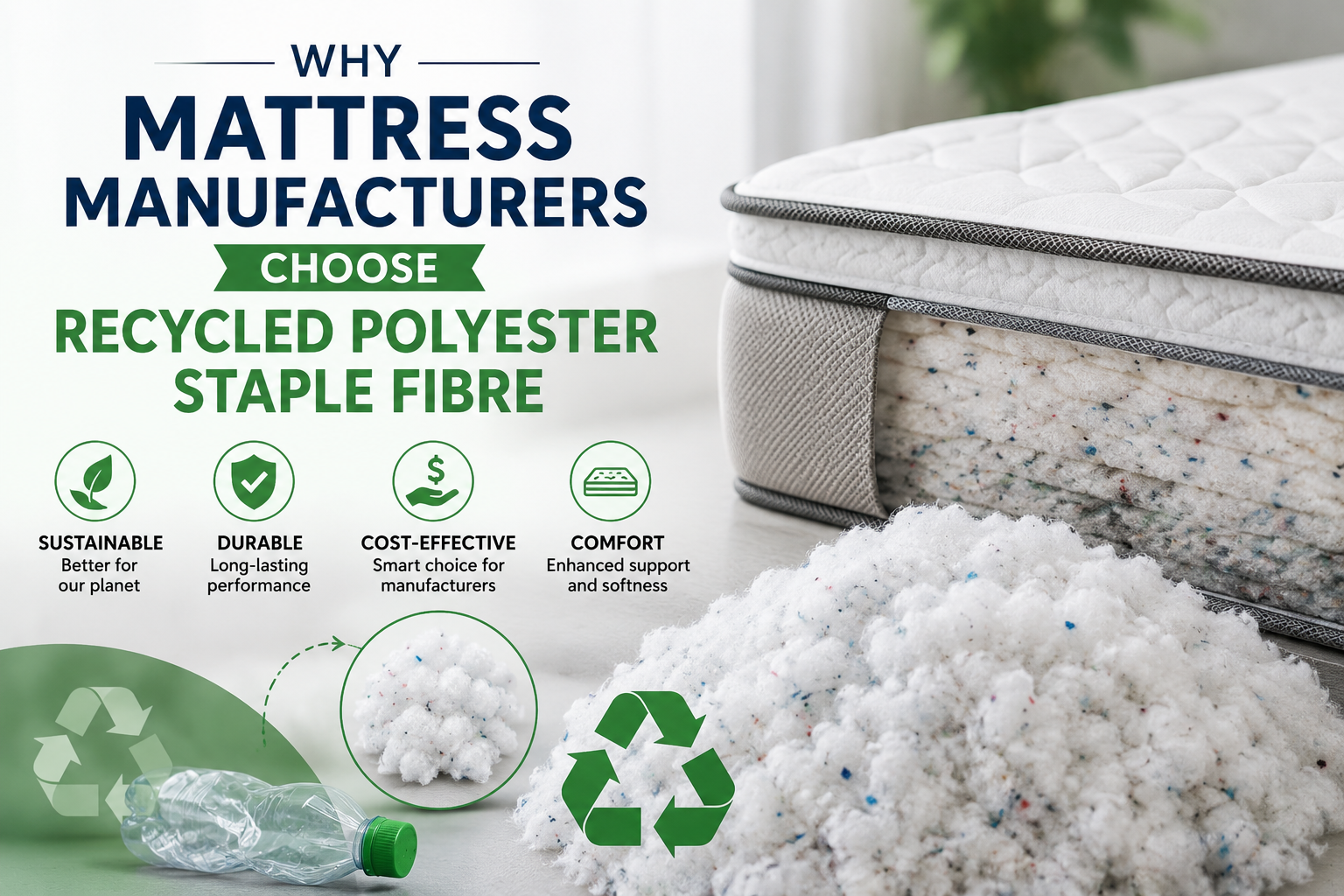
    Why Mattress Manufacturers Choose Recycled Polyester Staple Fibre

    The mattress industry has changed a lot through the years. Comfort and durability are still the most important factors, but manufacturers are giving more priority to sustainability, material efficiency and shifting consumer expectations. Hence, Recycled Polyester Staple Fibre (RPSF) has become one of the most preferred materials used in mattress production.

    Recycled Polyester Staple Fibre is made from recycled PET bottles and polyester waste, and provides a cost effective blend of performance and environmental responsibility. Its versatility has made it an indispensable part for mattress manufacturers who want to provide quality products while supporting sustainable manufacturing practices.

    The Growing Demand for Environmentally Friendly Mattress Materials

    Consumers are more aware of the products they’re bringing into their homes today. Not only do they look for comfort, but they also care about brands that are environmentally responsible.

    This change in consumer behaviour has caused mattress manufacturers to add recycled materials that lessen the dependence on virgin resources. Recycled Polyester Staple Fibre provides a perfect combination for these objectives by converting plastic waste into a valuable raw material for everyday products.

    The growth of RPSF in mattress production can help meet the increasing demand for sustainable products and help with waste reduction.

    Exceptional Comfort and Longevity

    Recycled Polyester Staple Fibre is preferred by mattress manufacturers primarily due to its comfort and resilience.

    Mattresses need to be filled with things that can hold their shape and give support over long periods of use. The RPSF provides great loft retention and cushioning and keeps mattresses feeling comfortable without too much flattening.

    The softness and durability combined results in a better sleep experience for consumers.

    Durability for Long-Lasting Performance

    A mattress is a long-term investment, and consumers expect it to perform the same for years.

    Staple Fibre Recycled Polyester is tough and durable. It can be squashed over and over and survive everyday use without losing its shape. This reliability makes it suitable for many mattress layers, including quilt fillings and padding applications.

    For manufacturers, the use of durable materials can help reduce customer complaints and increase satisfaction with products overall.

    Lightweight Yet Powerful

    Another important point to consider is efficiency in manufacturing and transportation.

    RPSF offers light weight filling solutions without compromising performance. Lightweight materials allow for easier handling during production and are also able to support the logistics and storage processes efficiently.

    This operational efficiency can translate into meaningful cost savings for large-scale mattress manufacturers over time.

    Low-cost Production

    Manufacturers are always looking for a balance between quality and competitive price.

    Recycled polyester staple fibre can be used as a substitute for some traditional filling materials. It has economic benefits as it uses recycled inputs and meets the standards required for modern mattress manufacture.”

    This provides a cost-efficient way for manufacturers to supply quality mattresses across different market segments without sacrificing performance.

    Multi-Purpose Use in Mattress Manufacturing

    Recycled Polyester Staple Fibre is used extensively at all stages of the manufacturing process of the mattress including:

    • Quilt filling for extra comfort
    • Cushioning and support padding layers
    • Pillow Top Mattress Parts
    • Protection insulation layers
    • Nonwoven applications in mattresses

    Its versatility gives producers the opportunity to create products for varying tastes and comfort levels of consumers.

    Supporting sustainability objectives

    Across industries, environmental responsibility has become an important business goal.

    Manufacturers can reduce plastic waste by giving a second life to discarded PET bottles with the help of Recycled Polyester Staple Fibre. This method supports circular economy efforts and leads to more sustainable supply chains.

    For businesses looking to meet ESG objectives or to bolster their sustainability messaging, using recycled materials can further reinforce their environmental commitments.

    Fulfilling Consumer Expectations

    Consumers today want to know where their products come from and that they are responsibly sourced.

    Mattress companies that use recycled materials are often able to gain an edge on their competitors because they appeal to evolving customer values. The use of Recycled Polyester Staple Fibre can boost brand perception and attract the environmentally conscious customers.

    With increasing awareness around sustainability, early adapting manufacturers could be better positioned to meet future market expectations.

    Also Read: how-recycled-polyester-staple-fibre-is-used-in-automotive-interiors/

    Conclusion

    Recycled Polyester Staple Fibre has become the material of choice in mattresses, due to its unique mix of comfort, durability, efficiency and sustainability. RPSF enables manufacturers to create mattresses that meet performance specifications and environmental goals, from quilt fillings and cushioning layers to insulation applications.

    As the mattress industry continues to evolve, the use of Recycled Polyester Staple Fibre is likely to grow, allowing manufacturers to produce products that deliver quality sleep experiences and contribute to a more sustainable future.

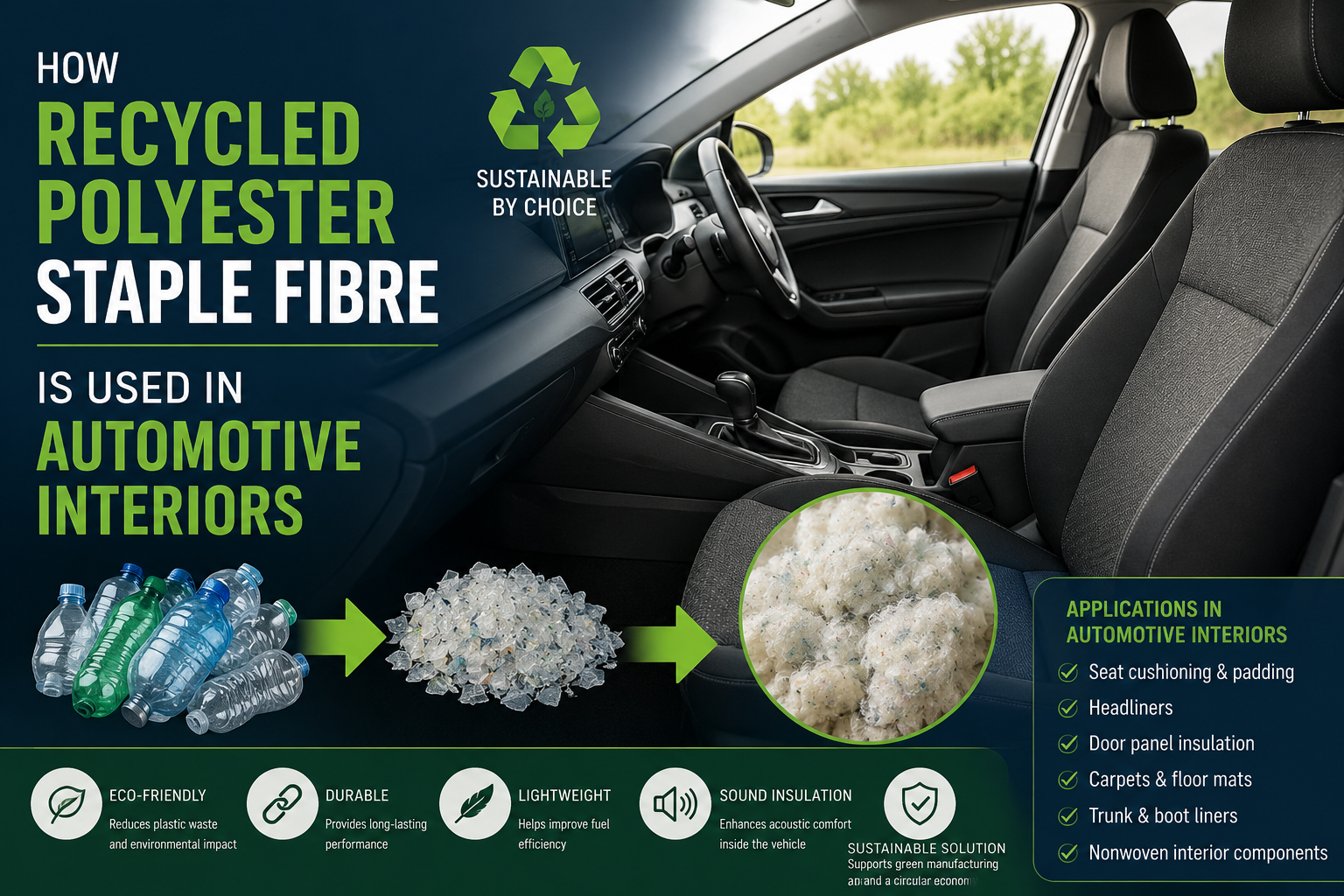
  • How Recycled Polyester Staple Fibre Is Used in Automotive Interiors

    How Recycled Polyester Staple Fibre Is Used in Automotive Interiors

    The automotive industry is constantly changing to meet increasing demands for sustainability, durability and cost efficiency. Recycled materials are increasingly important in vehicle production as manufacturers seek ways to reduce their environmental footprint. One material that has drawn a lot of attention is Recycled Polyester Staple Fibre (RPSF).

    Made from recycled PET plastic bottles and other polyester waste, Recycled Polyester Staple Fibre provides a practical option for manufacturers looking for environmentally responsible materials without having to sacrifice on performance. Today RPSF is used extensively in automotive interiors, helping to meet sustainability goals as well as product quality.

    What is Recycled Polyester Staple Fiber?

    Recycled Polyester Staple Fibre is produced by collection, processing and recycling of post-consumer PET bottles and polyester waste. The materials are washed, heated up and turned into fibres which can be used in diverse industries, for example in the textile industry, home furnishings, nonwoven products and the automotive industry.

    It is the material of choice for automotive interior components due to its durability, flexibility and cost-effectiveness.

    Why is RPSF used in the Automotive Industry?

    Car makers today are facing growing pressure to reduce waste and make their supply chains more sustainable.

    Recycled Polyester Staple Fibre helps to achieve these goals by:

    • Reduced reliance on virgin raw materials
    • Encouraging Recycling and Waste Minimization
    • Reducing environmental impact
    • Dependable performance on interior applications
    • Supporting Sustainable Manufacturing Goals

    Many automotive companies are working recycled materials into vehicle interiors as part of their long-term sustainability strategies as a result.

    RPSF in automotive interior applications

    Seat Padding & Cushioning

    Recycled Polyester Staple Fibre is used most often for seat cushioning and padding.

    The fibre is comfortable, resilient and durable and so is ideal for vehicle seats that will be in constant use. Its long term shape and support retention property makes it a useful component in contemporary automotive seating system.

    Headliners

    Nonwoven materials manufactured from Recycled Polyester Staple Fibre are often used for vehicle headliners, the interior roof lining of a car.

    RPSF enables the development of lightweight and durable headliner products to enhance the interior aesthetics and contribute to vehicle efficiency.

    Door Panel Insulation

    In automotive door panels we need materials that have sound absorption and structural support.

    Recycled Polyester Staple Fibre is frequently used in the insulation layers of door panels, helping to reduce road noise and improve passenger comfort. This app enhances the driving experience while encouraging the use of sustainable materials.

    Carpets & Floor Mats

    Vehicle carpets and floor mats see daily wear and tear. These products commonly have RPSF added for strength and durability.

    Its use enables the creation of durable products for interior floor coverings, whilst minimizing the environmental impact of the manufacture of virgin polyester.

    Boot and Trunk Liners

    Nonwoven fabrics from recycled fibres are used in trunk liners and cargo area components.

    RPSF offers excellent performance in these applications by providing durability, dimensional stability and resistance to regular usage.

    Advantages of using recycled polyester staple fibre in vehicles Sustainability One of the biggest advantages of RPSF is its role to promote environmental sustainability. Using recycled plastic waste, manufacturers reduce landfill buildup and support circular economy efforts.

    Lightweight features

    Automakers are constantly looking for lightweight materials to increase fuel economy and vehicle performance overall.

    Products based on RPSF are a good compromise between strength and weight for a range of interior applications.

    Durability

    Car interiors are built to withstand years and years of daily use. Recycled Polyester Staple Fibre offers excellent durability for long-lasting performance in the seats, insulation systems and nonwoven interior components.

    Cost-effectiveness

    RPSF is a cost-effective alternative to some conventional materials while maintaining quality. This is attractive to manufacturers wanting economic and environmental benefits.

    Sustainable Automotive Interiors: The Future

    With increasing environmental regulations and consumer consciousness, the use of recycled materials in vehicle manufacturing is likely to increase.

    Global automotive companies are investing in sustainable manufacturing practices and Recycled Polyester Staple Fibre is expected to play a key role in this transition. “The versatility, performance and environmental benefits of paper make it an ideal material for the automotive interior innovations of the future.

    Also Read:  How rPET Flakes help businesses meet sustainability goals

    Summary

    Recycled Polyester Staple Fibre has emerged as an important material in the modern automotive interiors, offering a blend of sustainability, durability and functionality. RPSF is aiding the automotive industry’s transition to greener manufacturing processes, from seat cushioning and headliners to carpets and insulation systems.

    The Recycled Polyester Staple Fibre in automotive interiors market is expected to expand on the back of a growing emphasis on environmentally conscious solutions by manufacturers, enabling the development of environmentally conscious and high-performing vehicles.

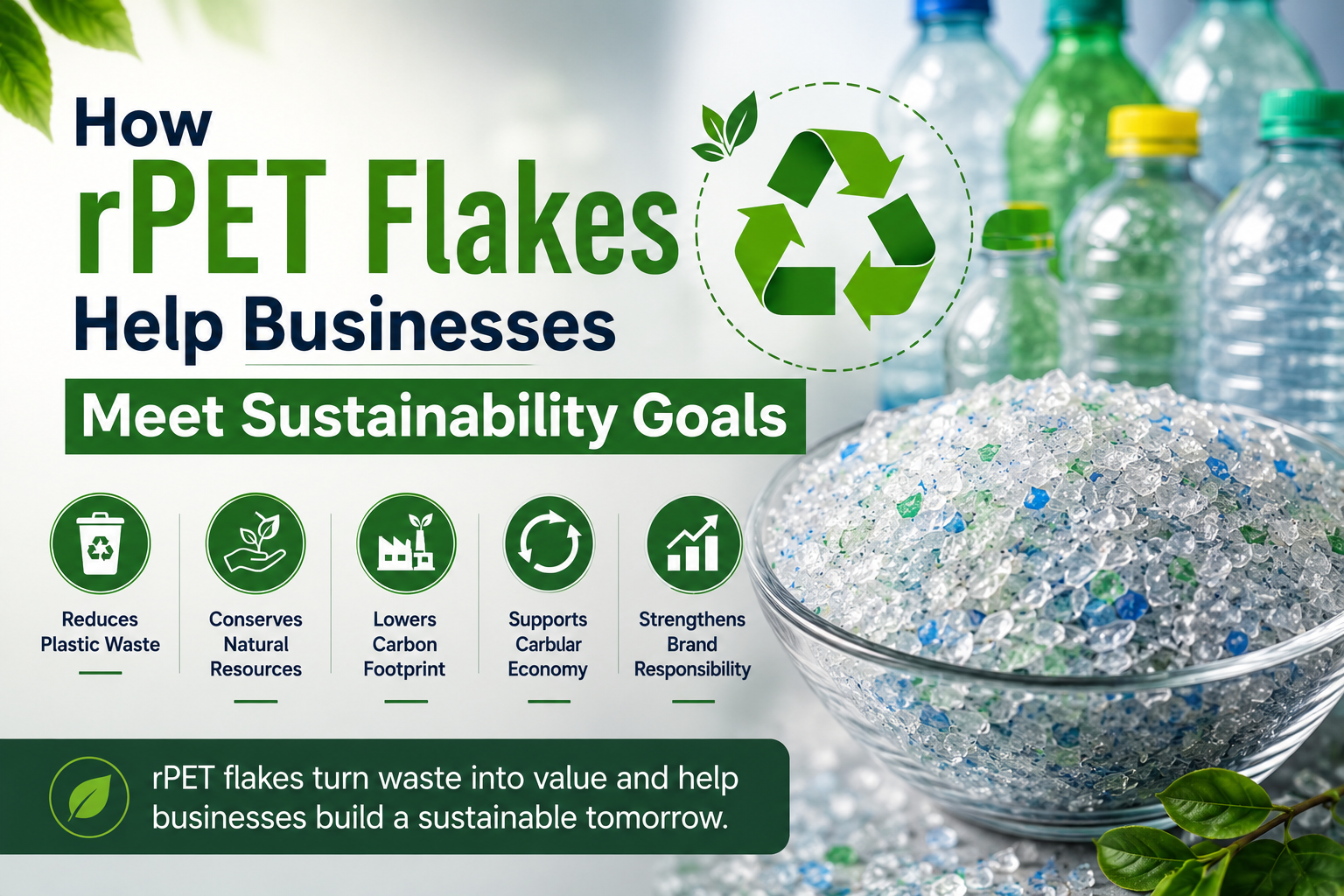
  • How rPET Flakes Help Businesses Meet Sustainability Goals

    How rPET Flakes Help Businesses Meet Sustainability Goals

    Sustainability is no longer just a business trend. Businesses in every sector are now expected to cut waste, save resources, and operate in an environmentally conscious manner. Customers, investors, and governing bodies are taking notice of the way that businesses handle their environmental footprint.

    A material that helps many businesses to achieve their sustainability goals is rPET flake. This material is made from recycled PET plastic bottles and containers, offering manufacturers a viable method of incorporating recycled material into production, as well as supporting a long-term strategy.

    As industries continue to move toward more sustainable production, the significance of rPET flake grows.

    An overview of rPET flakes

    rPET flake is a plastic recycling byproduct. Made from post-consumer PET bottles, after plastic bottles are collected they are cleaned, processed, sorted and washed before being turned into a high quality plastic flake.

    This flake is then used as a raw material for applications such as;

    • Recycled polyester staple fiber (RPSF)
    • Textiles
    • Packaging
    • Nonwoven fabrics
    • Plastic sheeting
    • Industrial components

    Rather than waste, rPET flake uses material that would have been sent to landfills, instead re-using it and giving it both an economic and an environmental value.

    Reduction in reliance on virgin plastic

    One of the primary sustainability challenges that businesses face today, is over-reliance on virgin plastic resources. Virgin plastic production requires extensive resources and energy in order to make it. By incorporating rPET flake into manufacturing processes, businesses can effectively reduce their reliance on virgin plastics.

    A sustainable benefit comes from:

    • Conservation of natural resources
    • Reduction in material usage
    • Minimizing strain on environmental production systems
    • Sustainable use of materials

    Many companies are actively trying to increase the recycled content in their products and so rPET flake provides a viable solution that benefits them by adding a sustainable value to the products that they manufacture.

    Support for circular economy processes

    The circular economy is an initiative that aims to maximize the use of materials throughout their lifespan, instead of having a “make, use, dispose” system. Businesses are striving to find ways to reuse and recycle resources, and rPET flake supports these aims.

    When PET bottles are turned into rPET flakes, these flakes are then made into other products, and the material is kept within the production system, rather than being thrown away. This type of practice allows businesses to participate in circular economy processes, and supports environmental claims. Many businesses working toward certifications have found that the circular use of materials is very important.

    Helping to reduce plastic waste

    One of the biggest issues affecting the environment at present, is plastic waste. Businesses are under considerable pressure to actively contribute to efforts to reduce plastic waste. Through demand for recycled materials such as rPET flake, significant volumes of plastic waste are saved and recycled, instead of being left in landfills or simply disposed of. This makes for a more sustainable use of materials and further promotes the infrastructure to make this possible.

    Meeting customer expectations

    Modern day consumers are much more informed about their purchases. Buying from environmentally conscious companies that recycle is important, and it can be an influence on many purchase decisions.

    Brands that actively choose to include recycled materials within their products often receive further creditability among environmentally aware customers. Businesses that utilize rPET flake, can illustrate that they are actively practicing:

    • Responsible manufacturing
    •  Sustainable sourcing
    • Reduction in waste
    • Environmental awareness

    All of these contribute to strong customer trust in the brand.

    Supporting sustainable manufacturing

    Companies are actively trying to reduce their environmental footprint, and rPET flake helps them to achieve this through:

    • Resource efficiency
    • Material recovery
    • Sustainable production processes
    • Reduced waste generation

    Textile, packaging, automotive and industrial manufacturers alike, are seeing viable ways in which to incorporate recycled material into their own supply chains.

    The need for quality rPET flakes

    For businesses hoping to make a positive change, it is vital to get quality rPET flakes. Good quality flakes will:

    • Have consistent material properties
    • Have low contamination
    • Be efficient during processing
    • Ensure high quality finished products

    Businesses that choose a reliable supplier can also meet their own sustainability goals alongside their business aims.

    Also Read: Why rPET flakes are gaining importance in the recycling industry

    Conclusion

    As the importance of sustainability in manufacturing continues to rise, the use of recycled materials is becoming increasingly evident in product development and production. Using rPET flake allows businesses the chance to reduce their waste and environmental footprint, increase circularity in their operations, and lessen their reliance on raw material.

    The use of quality rPET flakes by companies globally, illustrates that environmental sustainability is now becoming as important as business success, and by utilizing materials such as these, businesses can contribute positively to both themselves and the wider environment.

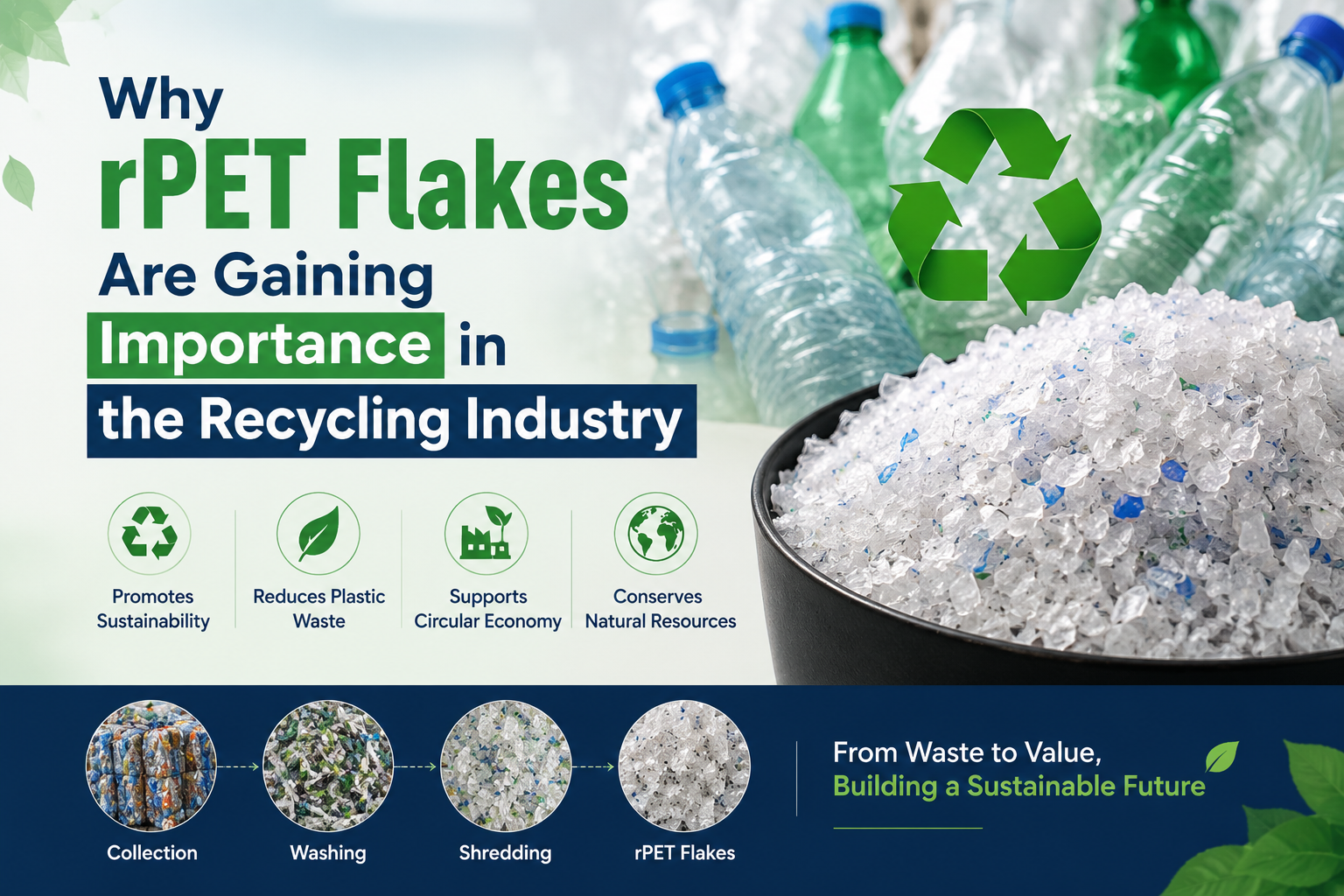
  • Why rPET Flakes Are Gaining Importance in the Recycling Industry

    Why rPET Flakes Are Gaining Importance in the Recycling Industry

    The recycling industry has changed over the last 10 years. What used to be mainly seen as a waste management activity is now a key part of sustainable manufacturing and resource conservation. rPET flakes are one of the materials fuelling this transformation and are becoming more and more important.

    rPET flakes are manufactured from recycled PET (Polyethylene Terephthalate) plastic bottles and containers and is an excellent raw material for many industries. The demand for high-quality recycled materials remains strong as businesses and consumers continue to prioritize sustainability. This change is one of the key drivers behind the increasing awareness of rPET flakes in international recycling markets.

    What is rPET Flakes?

    rPET flakes are small processed pieces of recycled PET plastic, obtained by a systematic recycling process. Used PET bottles are collected, sorted, cleaned and shredded into flakes that can be used later in manufacturing applications.

    These flakes are an efficient way to recover plastic waste and return it to the production cycle, instead of sending it to landfills or allowing it to enter the environment.

    Today, rPET flakes are used extensively for the production of:

    • Recycled polyester staple fibre (RPSF)
    •  Packaging materials
    •  Textile goods
    •  Non woven fabric
    •  Sheet plastic
    •  Uses in the industry

    They are versatile and an important part of modern recycling systems.

    What is driving the increasing demand for rPET flakes?

    A number of factors including the increased focus on sustainability are driving the increased demand. Companies in many industries are seeking methods to lessen their environmental impact and to reduce reliance on virgin plastic materials.

    Recycled PET flakes can be used by manufacturers to:

    • Less plastic waste
    • Reduced resource consumption
    • Back circular economy initiatives
    • Better sustainability performance
    • Meet environmental requirements

    As governments and industries set increasingly ambitious sustainability targets, recycled raw materials are only increasing in value.

    Supporting the Circular Economy

    The circular economy is now a major focus of the recycling industry. The objective of circular systems is to keep materials in use for as long as possible, as opposed to the traditional “use and dispose” model.

    rPET flakes play a key role in this process.

    By recycling PET bottles to flakes and making new products from them, these valuable resources remain in the production cycle. It reduces the amount of waste produced and reduces the demand for fresh raw materials.

    This means that rPET flakes are directly contributing to more sustainable manufacturing processes.

    Growing Applications Across Various Industries

    The significance of rPET flakes is also associated with their increasing industrial uses.

    Textile Commerce

    The textile industry is one of the largest consumers of recycled PET materials. The polyester fibres are made from rPET flakes and are used in clothing, home furnishings and industrial textiles.

    With the rising demand for sustainable fabrics, textile manufacturers are turning to recycled raw materials.

    Packaging Sector

    Many packaging companies are incorporating recycled PET content into their products to reduce impact on the environment.

    rPET flakes enable companies to meet sustainability goals without compromising on product quality and performance.

    Industrial Production

    Recycled PET flakes are used in various industrial sectors for the production of sheets, straps, nonwoven materials and so on.

    They are versatile and can be used in a wide variety of applications.

    Environmental Advantages of rPET Flakes

    Major environmental benefits of PET plastic recycling.

    The recycling process turns plastic waste into reusable flakes, thus contributing to:

    • Less waste going to landfill
    • Reduce plastic pollution
    • Lower carbon emissions
    • Save natural resources
    • Encourage responsible use of materials

    Global investment in recycling infrastructure and processing technologies is increasing as a result of these benefits.

    Quality is key in rPET flake production

    The growing industrial demand has made the manufacturers more attentive to uniform standards of quality.

    Good quality rPET flakes usually include:

    • Low contamination
    • Proper washing and cleaning
    • Equal sizing
    • Material properties you can trust

    Quality assurance also helps make sure that recycled materials fit into today’s manufacturing processes.

    The Future of rPET Flakes

    Sustainability is an increasing focus in industries around the world and the outlook for rPET flakes is promising. Companies are increasingly using recycled materials, not only because regulations require them to, but also because that’s what consumers expect.

    As recycling technologies improve and environmental awareness grows, demand for quality rPET flakes is forecast to increase further.

    Also Read: The Industrial Future of Recycled Polyester Staple Fibre Explained

    Conclusions

    rPET flakes have become an integral part of the modern recycling industry. Their ability to convert waste plastic into valuable industrial resources supports sustainability, resource efficiency and responsible manufacturing.

    The increasing applications of rPET flakes in textiles, packaging and industrial use are helping companies move to a more circular and environmentally conscious future. Their rising importance indicates a wider transition towards sustainable production methods that benefit both industries and the environment.

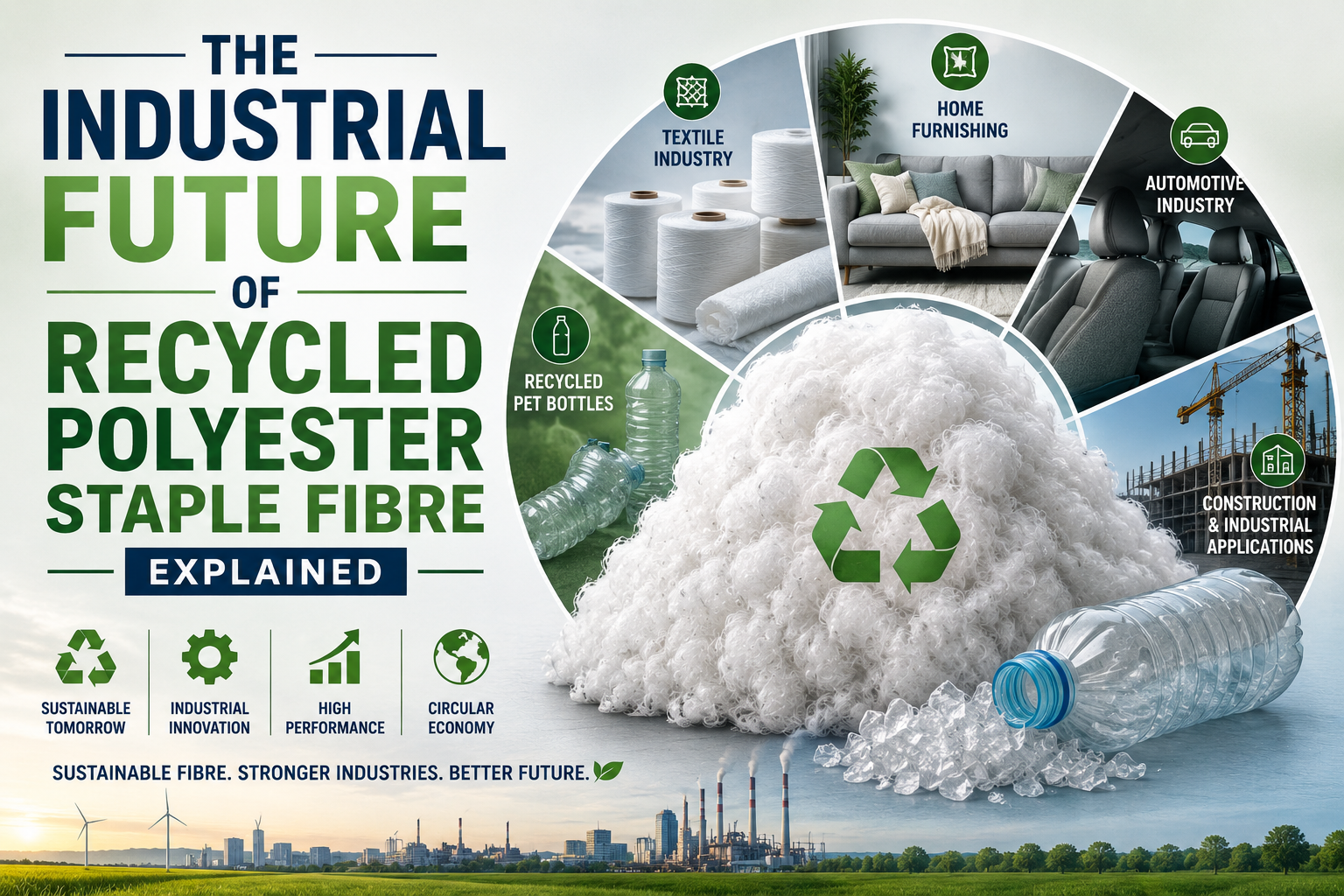
  • The Industrial Future of Recycled Polyester Staple Fibre Explained

    The Industrial Future of Recycled Polyester Staple Fibre Explained

    The global shift to sustainable manufacturing practices is happening at a breakneck speed, and it is transforming the way raw materials are being produced and used. Among the materials that are gaining strong industrial importance Recycled Polyester Staple Fibre (RPSF) has emerged as one of the promising solutions for the future.

    RPSF is a sustainable product made from recycled PET bottles and polyester waste, enabling industries to reduce their impact on the environment without compromising on production efficiency and product quality. What was once only a recycling initiative, has grown into a major industrial resource used by multiple sectors.

    As the world continues to seek sustainable materials, the future of Recycled Polyester Staple Fibre in the industry is brighter than ever.

    Growing Demand for Sustainable Industrial Materials

    Modern industries are under the increasing pressure to reduce waste, carbon emissions and to implement green production systems. Governments, environmental groups and consumers are all putting pressure on businesses to change their manufacturing practices to be more responsible.

    Traditional manufacturing processes rely heavily on virgin raw materials, which require large amounts of energy and pose environmental problems in the long run. Recycled Polyester Staple Fibre provides an alternative by converting plastic waste into a reusable industrial material.

    This way of working supports the growing idea of a circular economy, where waste materials are reused instead of being thrown away.

    Why RPSF Matters to Future Industries

    The ability to combine industrial performance with sustainability is one of the principal reasons for the growth of RPSF. Today manufacturers search for environmentally friendly materials and solutions that are commercially practical.

    RPSF has several advantages, such as:

    • Durable fiber strength
    • Lightweight design
    • Versatile for industry
    • Consistent quality of production
    • Help with low-cost manufacturing

    This makes it suitable for use in industries that demand reliability at large production scales.

    Growing Industrial Applications of RPSF

    The future growth of Recycled Polyester Staple Fibre is directly dependent on its growing applications in various industries.

    Textile Industry

    The textile industry is still one of the biggest users of RPSF. The fibre is commonly used in:

    • Yarn making
    • Nonwoven fabrics
    • Filling Material
    • Technical textiles – Apparel applications

    With the growing interest in sustainable fashion and eco-friendly textiles, the need for recycled fibres is expected to increase.

    Business of Home Furnishings

    Recycled polyester fibre is becoming increasingly popular among home furnishing producers for products such as:

    • Cushions
    • cushion
    • Mattress
    • blankets
    • Couch stuffing

    These days, consumers are more aware of environmentally responsible products and this is encouraging brands to opt for sustainable materials.

    Automotive Industry

    RPSF is also being integrated in the automotive sector:

    • Interior fittings
    • Insulating materials
    • Seat fillings
    • Sound Insulation Systems

    Automakers are working to reduce the environmental impact of vehicles, which makes recycled materials more important in future production systems.

    Uses in Construction and Industry

    RPSF is also used in:

    • Geotextiles
    • Filtration products
    • Packing Solutions
    • Industrial insulations

    Its flexibility allows manufacturers to use it in many industrial environments.

    Future production will rise with technology

    Development of recycling technology should improve overall quality and efficiency of RPSF production. Today’s recycling systems are aimed at:

    • Improved fibre consistency
    • Higher processing efficiency
    • Increased durability
    • Less waste in the production

    As technology advances, recycled polyester fibre will become even more competitive with traditional raw materials.

    Global Sustainability Goals RPSF Growth Support

    Sustainability policies and environmental regulations are getting tougher in an increasing number of countries and industries. More and more businesses are being held accountable for their plastic waste and recycling practices.

    The recycled fibre industry is growing as a result of the world’s focus on sustainability. Using environmentally responsible materials also strengthens the market value and trust of the consumer for companies.

    Therefore, the industrial demand for RPSF is anticipated to grow tremendously in the coming years.

    Industry Still Faces Challenges

    The RPSF industry faces some challenges, although the future is promising.

    These are:

    • Efficient collection of plastic wastes
    • Limitations of recycling infrastructure
    • Quality consistency of recycled materials
    • Market competition for virgin polyester

    But technology keeps moving on and people are becoming more aware of the need to protect the environment so industry is beginning to find ways of coping with these problems.

    Outlook for Recycled Polyester Staple Fibre to 2026

    The future of Recycled Polyester Staple Fibre as an industry is closely linked to the future of sustainable manufacturing in general. Recycled materials are no longer seen as second-rate by industry. Rather, they are becoming key elements of modern production strategies.

    As industries focus more on sustainability, resource efficiency and waste reduction, RPSF is set to have an even greater role in world manufacturing sectors.

    Also Read: The Real Industrial Value of Recycled Polyester Staple Fibre

    Recycled Polyester Staple Fibre is not just a recycled product, it is a vision of the modern industries of the future. The conversion of plastic waste into valuable industrial products makes it highly relevant for the future of sustainable manufacturing.

    From textiles and automotive applications to home furnishings and industrial products, RPSF is rapidly becoming a material of choice for companies seeking performance and environmental responsibility. As technology and sustainability initiatives continue to evolve, the industrial future of Recycled Polyester Staple Fibre looks more robust and relevant around the world.

  • The Real Industrial Value of Recycled Polyester Staple Fibre

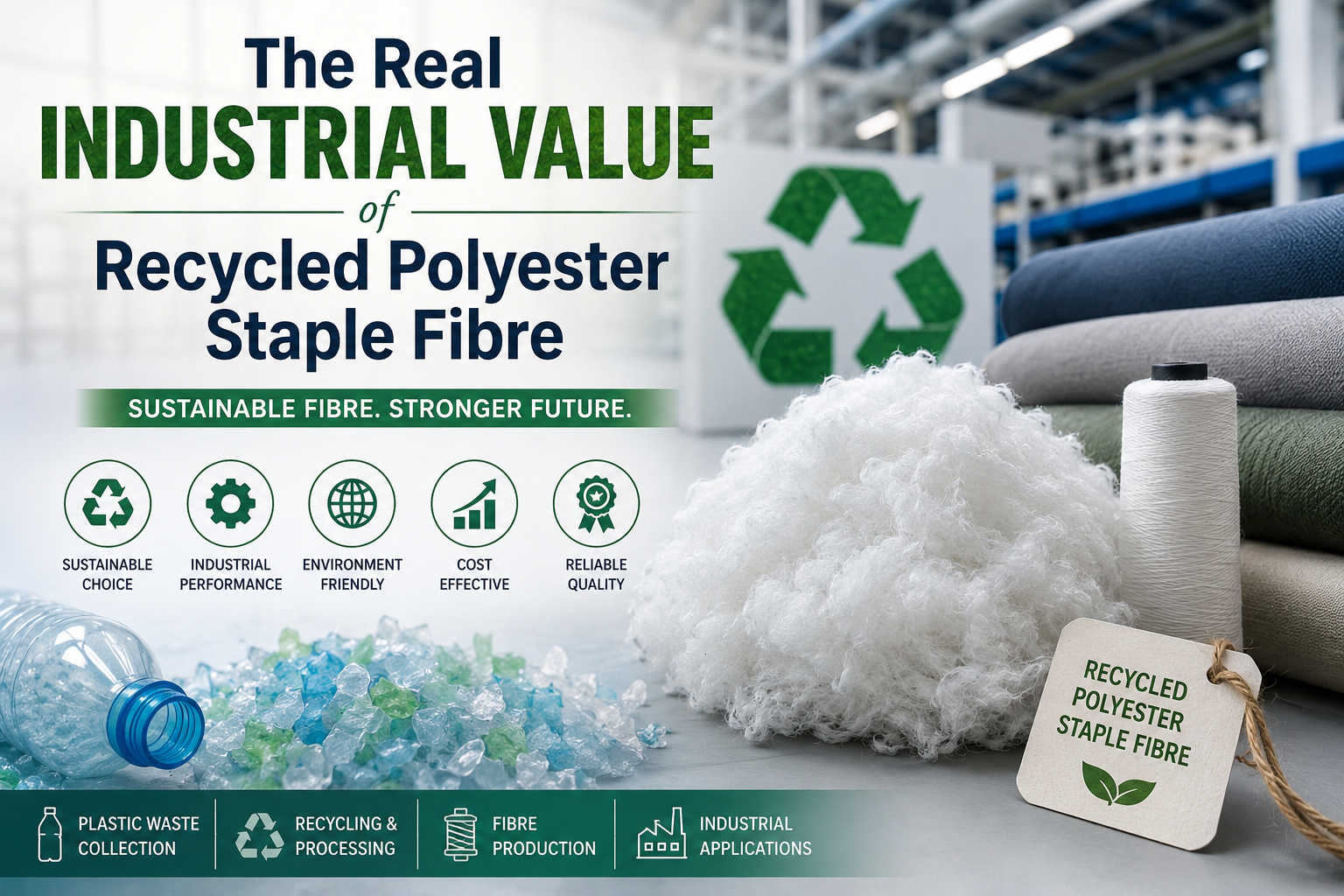
    The Real Industrial Value of Recycled Polyester Staple Fibre

    Over the last couple of years, industries worldwide have begun to focus more on sustainability, waste management and responsible manufacturing. Environmental issues are on the rise and manufacturers are seeking materials that can maintain industrial performance and eco-friendly production. One material that has gained significant importance in this shift is Recycled Polyester Staple Fibre (RPSF).

    RPSF is produced from recycled PET plastic bottles and polyester waste. It has become much more than an alternative raw material. Today, it plays a major role in modern industrial manufacturing, due to its durability, versatility and environmental value.

    What is Recycled Polyester Staple Fibre

    Recycled Polyester Staple Fibre is produced from used PET bottles and polyester waste that is processed into a reusable fibre. Instead of risking plastic waste ending up in landfills or the oceans, businesses are turning it into a valuable industrial product that can be used across multiple sectors.

    The process is as follows:

    • Plastic waste collection
    • Sorting and cleaning
    • PET flake processing plant
    • Fiber cutting and finishing Melting and extrusion

    The fiber thus produced is then supplied to the industries for various applications.

    Why RPSF is being adopted by industry

    The increased demand for RPSF is due to two major goals that industries today are trying to balance:

    • Manufacturing with high efficiency
    • Sustainable production methods

    Environmental impact and cost of production are increased by traditional raw materials. Recycled Polyester Staple Fibre helps manufacturers reduce waste, whilst maintaining product quality and industrial efficiency.

    One of the main reasons that the industrial value of this combination of performance and sustainability is growing.

    Applications in Various Industries

    Perhaps the biggest advantage of RPSF is its flexibility. Its adaptable properties make it suitable for use in many industrial sectors.

    Textile Industry

    RPSF is extensively used in textile manufacturing for:

    • Yarn Fabric production
    • TEXTILES NONWOVEN
    • Stuffing materials

    Its strength and flexibility are well suited to a variety of textile applications.

    Home Furnishing Products

    Recycled polyester fibre is used by the home furnishing sector in:

    • Cushions
    • Cushions
    • Mattress
    • Quilts
    • Upholstery Items

    Soft feel and durability make it ideal for comfort products.

    The automotive industry

    Automotive manufacturers also utilize RPSF to:

    • Filling Car Seats
    • Insulation, interior;
    • Soundproofing fabrics
    • Fabric Parts

    This helps to reduce the use of virgin materials in vehicle production.

    Industrial and Nonwoven Applications

    RPSF is well-liked in:

    • Geotextile fabrics
    • Products Filter
    • Packaging Materials 6
    • Industrial Insulation Services

    Its capability to operate in diverse industrial environments enhances its commercial worth immensely.

    Environmental Benefits Drive Industrial Demand

    Much of the shift to RPSF is driven by environmental responsibility. The management of plastic waste has become a global issue and manufacturers are under increasing pressure to move towards sustainable solutions.

    The use of recycled polyester fibre helps:

    • Combat plastic pollution
    • Less waste in landfills
    • less dependence on virgin polyester
    • Support activities of the circular economy
    • Lower total environmental impact

    For many companies, sustainability is no longer a branding strategy. It’s an operational necessity.

    Cost effectiveness and production benefits

    Besides sustainability, RPSF has practical industrial advantages. In general, manufacturers prefer materials that offer long term production efficiency and recycled polyester fibre is very much in support of this requirement.

    Some of the main benefits are:

    • The material is always available
    • Long life fibre conductivity
    • Lightweight construction
    • Versatile for a range of applications
    • Production costs competitive

    These factors are felt to be giving RPSF a high commercial value for large scale and small scale manufacturing operations.

    Increasing Global Demand for Sustainable Materials

    Environmentally conscious production systems are evolving rapidly worldwide. Sustainable manufacturing practices are increasingly being embraced by consumers, businesses and governments.

    This in turn means demand for recycled materials continues to grow in:

    • Textiles Manufacturing
    • Packaging industries
    • Construction applications
    • Automotive manufacturing
    • Consumer goods industries

    Recycled polyester staple fibre has become a vital part of this transition, combining the benefits of industrial usability and sustainability.

    RPSF Opportunities in Manufacturing

    The future of industrial manufacturing will be even more sustainability-driven. “Companies are likely to spend more on materials that reduce environmental impact but do not compromise product quality.

    RPSF is an ideal candidate for this direction as it upcycles waste into a useful industrial resource. With ongoing improvements in technology and recycling infrastructure, the industrial use of recycled polyester fibre is likely to grow even more across global markets.

    Also Read: How RPSF manufacturing is reshaping indias textile industry

    Conclusion

    The real industrial value of Recycled Polyester Staple Fibre is much more than just recycling plastic waste. It is a realistic and sustainable solution for today’s manufacturing industries looking for performance, efficiency and environmental responsibility at the same time.

    RPSF has been proving its worth in a number of industries, from textiles and home furnishings to automotive and industrial applications. Recycled polyester staple fibre is a key material for the future of sustainable manufacturing as industries shift to greener production systems.

  • How RPSF Manufacturing Is Reshaping India’s Textile Industry

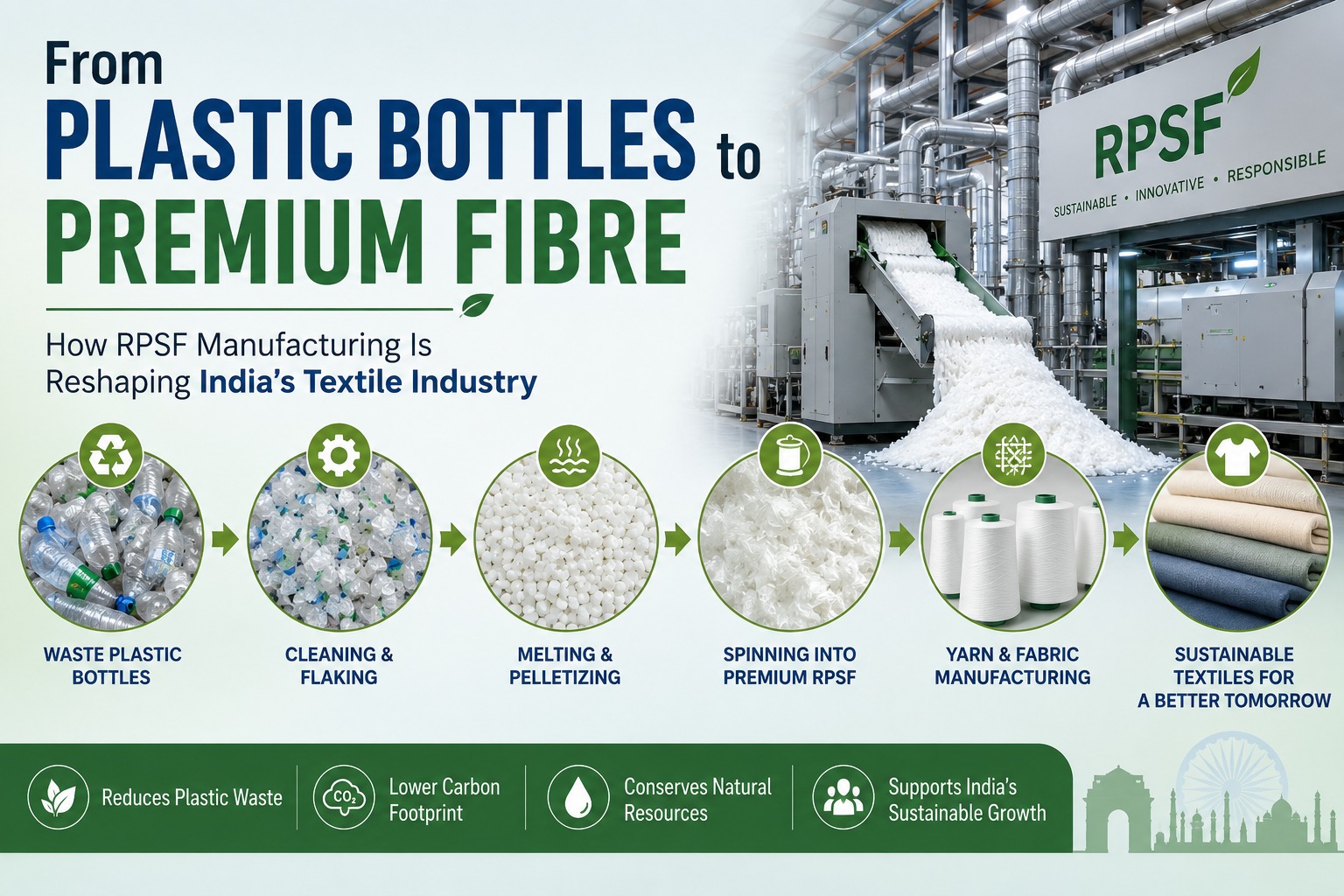
    How RPSF Manufacturing Is Reshaping India’s Textile Industry

    India generates more than 9.4 million tonnes of plastic waste every year, a large share of which is from discarded PET bottles. Much of this waste ends up in landfills or waterways, but an ever-growing slice of India’s manufacturing sector is turning this problem into an extraordinary opportunity. Leading the charge in this transformation is the manufacture of Recycled Polyester Staple Fibre (RPSF) – a process that transforms post-consumer PET bottle waste into a high-grade textile fibre that is used in industries around the world.


    What is RPSF and why does it matter?

    Recycled Polyester Staple Fibre (RPSF) is a high performance fibre manufactured from post-consumer PET waste – mainly used plastic bottles – by a series of carefully controlled industrial processes. The bottles collected are then washed, sorted and shredded into small PET flakes. These are then melted, extruded and drawn into fine staple fibres that match – and in many cases exceed – the performance attributes of virgin polyester.

    This is a game changer for the textile industry. RPSF provides the softness, tensile strength and dyeability of traditional polyester, with a significantly lower environmental footprint of the production process. RPSF production uses significantly less energy, produces fewer greenhouse gases, and does not need new petroleum-based raw material than virgin polyester.


    Wide range of applications across sectors

    RPSF is one of the most versatile of its type. The recycled polyester staple fiber is used today in a wide range of sectors:

    Textiles and clothing RPSF is widely used in clothing, home decorations and furniture, offering a sustainable option catering to the increasing consumer demand for eco-friendly fashion.

    Automotive Interiors: RPSF is helping to make vehicles greener and more comfortable, and is used by car makers for seat padding, sound-absorbing panels and thermal insulation.

    Nonwovens: Fast growing area for RPSF, nonwoven applications include medical textiles, geotextiles, filtration, packaging and more. Home comfort products Pillows, cushions, mattresses and quilts are increasingly filled with recycled polyester staple fibre, a resilient, hypoallergenic and sustainable filling material.

    Gujarat – India’s RPSF manufacturing base

    Gujarat is now the number one destination for RPSF manufacturing in India due to its strong textile ecosystem, robust logistics infrastructure and high density of innovative recycling companies. Now, companies in the Rajkot-Morbi belt with access to PAN India PET waste networks are exporting premium grade recycled polyester fibre and rPET flakes to Europe, Southeast Asia and North America markets.

    Rakshitam Ecofibre Pvt. Ltd. is a well-known name in this space with its headquarters at Wankaner, Morbi. The company has a manufacturing capacity of 30,000 TPA. It procures 100% post consumer PET bottle waste and converts them into superior grade RPSF and rPET flakes. Its clients include companies in Spain, Italy, Belgium, Turkey, USA, Bangladesh, Vietnam and China.


    Circular economy in practice

    RPSF manufacturing isn’t just recycling, it’s a circular economy in action. Companies like Rakshitam Ecofibre are closing the loop on materials, reducing dependence on virgin petroleum-based resources and enabling brands to meet their sustainability commitments by directing waste plastic bottles back into productive industrial use. “Indian manufacturers are likely to see a substantial increase in demand for certified and traceable RPSF as more global brands adopt EPR (Extended Producer Responsibility) frameworks and recycled content targets. 

    Gujarat-based suppliers are quickly emerging as a preferred sourcing destination for textile brands, apparel manufacturers and industrial buyers seeking a reliable RPSF manufacturer in India with the scale, quality certifications and sustainability credentials.

    Also Read: Inside the manufacturing process of recycled polyester staple fibre

    On the horizon

    As sustainability regulations around the world tighten and brands come under increasing pressure to reduce their plastic and carbon footprints, recycled polyester staple fibre is transitioning from a niche material to an industry standard. India, with its huge base of PET waste resources, cost competitive manufacturing ecosystem and rapidly upgrading recycling technology, is well positioned to become the world’s largest supplier of RPSF.

    Rakshitam Ecofibre is the kind of partner the future of textile manufacturing needs for companies looking for a dependable, high-capacity manufacturer of recycled polyester staple fibre with a real commitment to sustainability.

  • Inside the Manufacturing Process of Recycled Polyester Staple Fibre

    Inside the Manufacturing Process of Recycled Polyester Staple Fibre

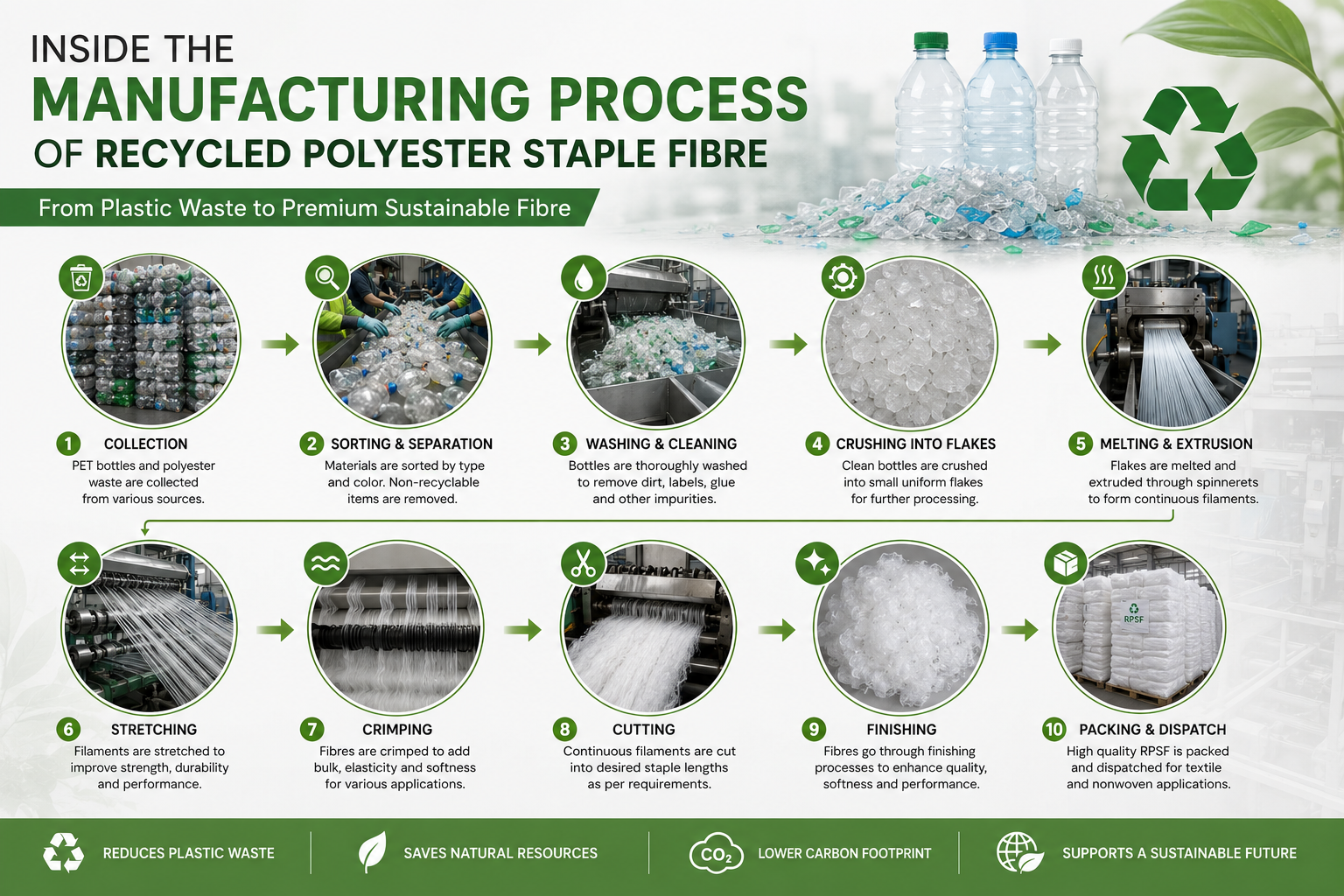
    With industries across the world moving towards sustainable production, the Recycled Polyester Staple Fibre (RPSF) has become a significant solution for the textile and nonwoven sectors. RPSF is manufactured from recycled PET bottles and polyester waste, thereby reducing environmental pollution and fulfilling the increasing demand for eco-friendly materials.

    Though many are aware that recycled fibre comes from plastic waste, few have a detailed understanding of the manufacturing process. The process of turning discarded plastic bottles into high quality polyester fibre is one of advanced technology, quality control and sustainable practices.

    Plastic waste collection

    The manufacturing process of RPSF involves collecting post-consumer PET plastic bottles and polyester waste materials. The bottles are sourced from recycling centers, waste management facilities and industrial sources.

    PET bottles are among the most widely recycled materials because they contain polyester-based polymers that are recycled well. This waste material is used to make fiber instead of ending up in landfills or the oceans.

    This first step is crucial in reducing plastic pollution and fostering a circular economy.

    Separation & Sorting

    The plastic waste is sorted in a detailed way, once collected. Bottles are sorted by colour, type of material and quality in order to ensure consistency in the final fibre production.

    Careful removal of non-recyclable materials such as caps, labels, metals and other contaminants. Sorting is very important. The impurities may affect the quality and performance of the recycled fibre.

    High manufacturing standards are often maintained through advanced sorting systems and manual inspections.

    Washing & Cleaning Process

    The PET bottles are then thoroughly washed and cleaned to remove dirt, adhesives, oils and other contaminants.

    The bottles pass through several cleaning stages involving hot water, detergents and industrial washing systems. This process makes sure that the recycled material is clean and good for further processing.

    Clean raw material is very important to make high quality and durable Recycled Polyester Staple Fibre.

    Shredding to PET Flakes

    The cleaned bottles are crushed into small pieces called PET flakes. The flakes are of uniform size and are easier to handle in the next stages of manufacture.

    The strength, texture and consistency of the final fibre product are directly affected by the quality of the PET flakes. Therefore, manufacturers are very careful to maintain proper flake standards.

    At this stage the material has been converted from waste plastic into a useful industrial raw material.

    Extrusion and Melting

    The PET flakes are then melted in specialized machinery at high temperatures . The material becomes a thick liquid polymer after melting.

    This molten polymer is then extruded through spinnerets – small nozzles with tiny holes – to form long continuous polyester filaments. It is called extrusion.

    At this stage the thickness and properties of the fibre can be controlled according to industrial needs.

    Fibre Stretching & Crimping

    The fibres are cooled and stretched after extrusion to enhance their strength and durability. The stretching process aligns the molecular structure of the fibre, which makes it more resilient and suitable for a variety of textile applications.

    The fibres are then crimped to give a textured, wave-like surface similar to natural fibers. Crimped fibres have better softness, elasticity and filling properties.

    This step is particularly important in applications such as pillows, cushions, quilts and upholstery products.

    Cutting & Finishing

    The continuous polyester filaments are cut to specific lengths of staple fibre according to customer requirements. Different industries require different sizes and specifications of fibre.

    After cutting the fibres may be subjected to further finishing treatments to enhance softness, brightness, antistatic properties or performance characteristics.

    Finally the finished Recycled Polyester Staple Fibre is baled, packed and ready for distribution.

    Applications of RPSF:

    RPSF finds extensive application in many industries such as:

    • Products of home furnishing
    • Pillows & Cushions
    • Quilts and mattresses
    • Vehicle interiors
    • Non-woven fabric
    • Geo-textiles
    • Soft furnishings and upholstery

    It is eco-friendly , durable and lightweight making it a great option for modern manufacturing .

    Also Read:  The role of RPSF  in sustainable home furnishing products

    Conclusion

    Recycled Polyester Staple Fibre’s manufacturing is a perfect example of how waste can be turned into a valuable and sustainable resource. From the collection of discarded PET bottles to the production of high quality textile fibre, every step contributes to environmental protection and responsible manufacturing.

    As industries increasingly prioritise sustainability and circular economy practices, RPSF will have an even greater role to play in shaping the future of textile and home furnishing production. Manufacturers are not just producing quality products but also contributing to a cleaner greener world through the recycling of plastic waste into useful fibre.