The PET recycling ecosystem in India has been evolving rapidly with organized collection networks, recycling infrastructure and EPR requirements getting stronger. Industry estimates have shown the collection of PET bottles in India is around 80% and this has been a significant stream of post-consumer PET for recycling. At the same time, India’s EPR framework continues to drive higher recycling obligations and increased use of recycled plastic content in rigid packaging.
These developments are significant for manufacturers of Recycled Polyester Staple Fiber (RPSF), especially in the well-established textile and recycling ecosystem in Gujarat. Better organization of PET collection can help ensure a more reliable and traceable feedstock supply.
EPR is revolutionizing the PET collection ecosystem
Indian Plastic Waste Management framework holds producers, importers and brand owners responsible for plastic packaging waste. The EPR system uses a centralized platform at CPCB for registration, reporting and compliance, which helps bring more structure and accountability to the management of plastic waste.
The recycling targets for rigid plastic packaging are also rising over time. Under the proposed scheme, the minimum recycling level for Category I packaging will be raised from 60% of the EPR target in FY 2025-26 to 80% from FY 2027-28 onward.
This gives collection agencies, recyclers and others in the PET value chain more incentives to improve collection and processing systems.
Why better collection is important for RPSF
For an RPSF producer, PET bottles are not simply trash. They are the feedstock for the production of recycled polyester fiber.
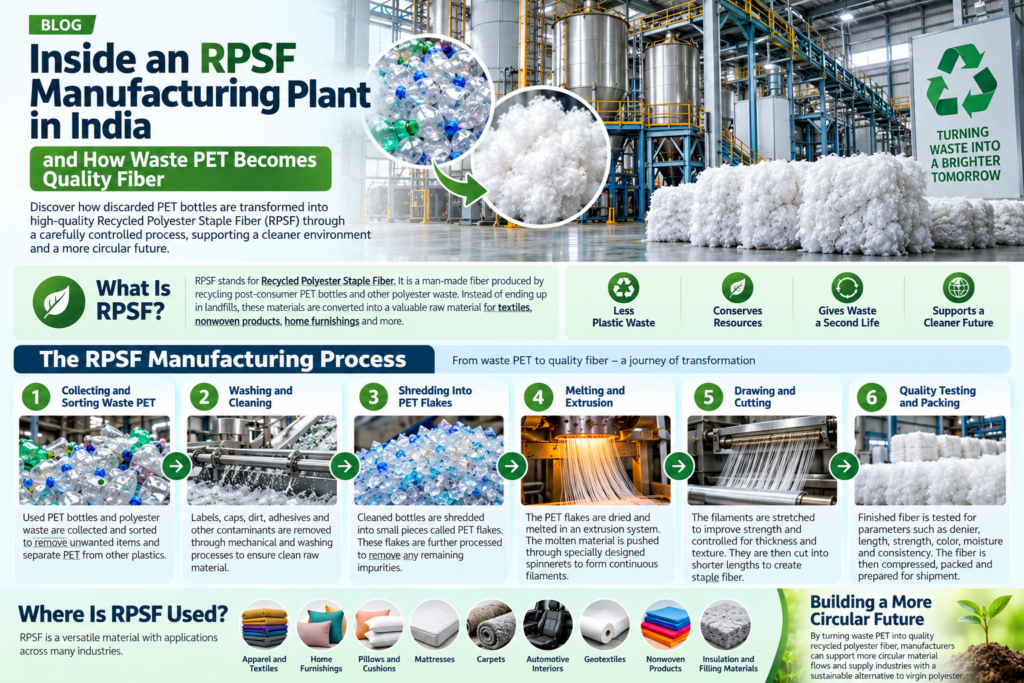
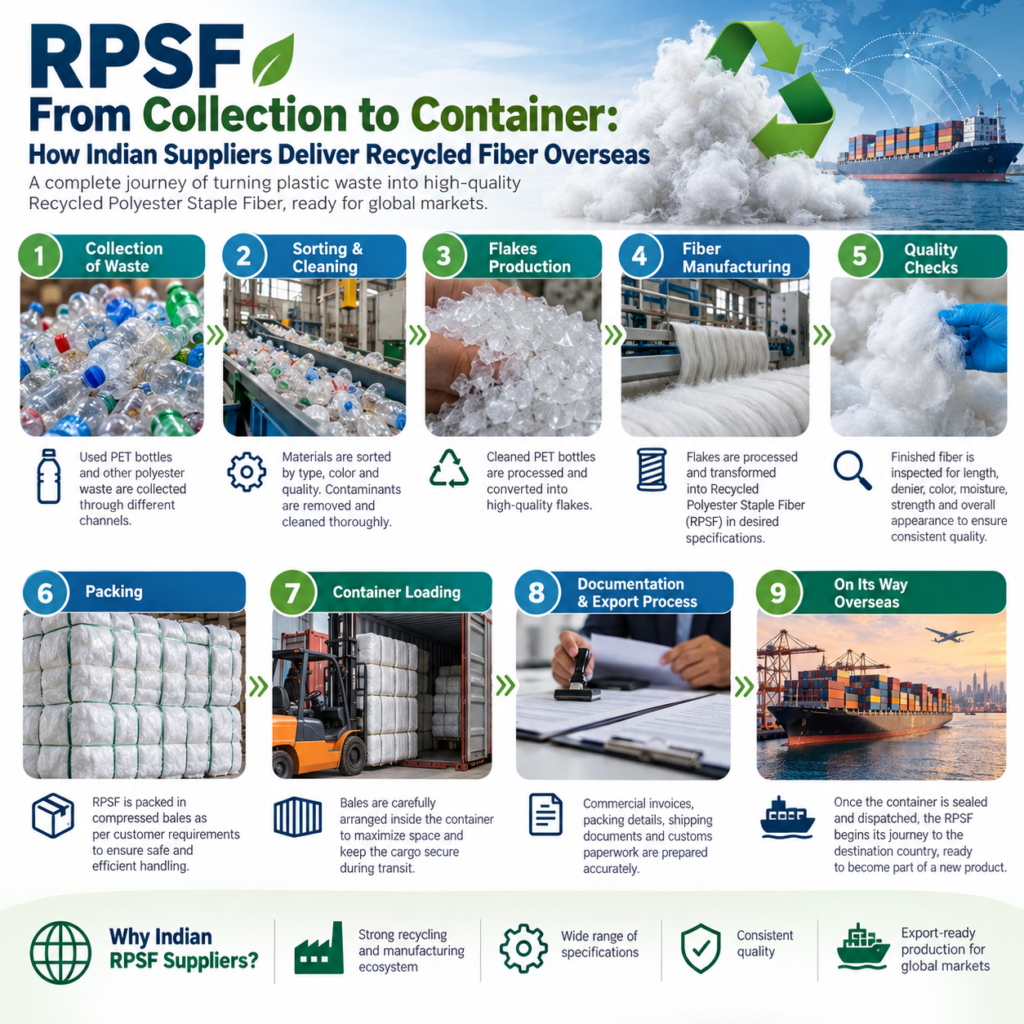
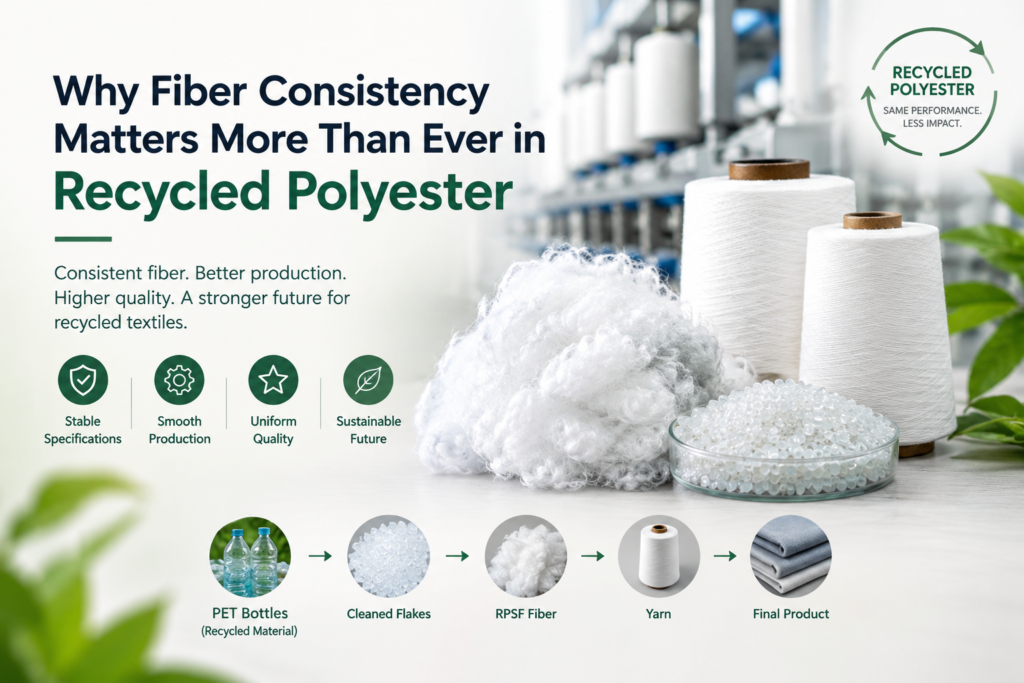
The collected bottles are sorted, washed, converted into PET flakes and then through recycling and extrusion processes converted into polyester staple fiber. The quality of the final fiber is directly related to the quality and consistency of the incoming PET feedstock.
More organized collection systems allow manufacturers to work with more predictable sources of material and to institute stronger quality-control procedures.
Better Separation could improve feedstock quality
One of the biggest challenges for recycling post-consumer PET is contamination.
Bottles collected from badly sorted waste streams may have labels, caps, other plastics, dirt, moisture, colors or non-PET material. Such contaminants increase the requirements for sorting and processing and may affect the consistency of recycled material.
A stronger collection ecosystem means waste is segregated earlier and more systematically. Better segregation can thus allow recyclers to obtain cleaner PET flakes with more uniform properties for downstream applications.
Gujarat RPSF Industry Has Benefit
Textiles, synthetic fibers, plastics, chemicals and recycling-related industries have a strong manufacturing base in Gujarat. This creates an ecosystem where the recovered PET can flow through the collection, processing and fiber manufacturing stages.
Gujarat-based RPSF manufacturers can plan their production better and improve quality with reliable access to PET feedstock.
Consistent feedstock also enables easier monitoring of critical parameters such as color, contamination levels, material composition and processing performance.
Traceability Is Gaining Importance
The evolution of EPR is more than simply getting more plastic. It is also about making waste management systems more responsible.
India’s plastic EPR framework consists of online reporting and verification mechanisms and registered plastic waste processors have a formal role in generating recycling certificates. The Ministry of Environment, Forest and Climate Change has reported the generation and transfer of large quantities of EPR certificates through the system.
Improved traceability can allow recycled-fiber producers to have more confidence in the origin and processing of their recycled feedstock.
From PET Waste to Higher Value Recycled Fiber
A significant portion of washed rPET flakes from the Indian PET recycling ecosystem is already estimated to be directed toward the production of polyester staple fiber. A material-flow assessment for 2021-22 estimated that 75% of washed rPET flakes were converted to polyester staple fibers.
The connection between PET collection and textile production shows the importance of quality standards along the whole recycling chain.
The goal for RPSF manufacturers is not just to get more PET bottles. The aim is to obtain suitable, homogenous and well treated feedstock that can ensure a stable fiber production.
RPSF Manufacturers’ Road Ahead
With the EPR framework evolving in India, the PET recycling industry is likely to continue to be shaped by collection, recycling targets, recycled-content requirements and digital compliance systems. The Plastic Waste Management Amendment Rules are also now available on the CPCB’s plastic waste management portal, a sign of the continuing evolution of the regulatory framework.
This provides Gujarat’s RPSF manufacturers an opportunity to focus not only on production capacity but also on the quality of feedstock, supplier networks, sorting standards, traceability and efficient recycling processes.
India’s strong PET collection ecosystem and more structured EPR requirements are helping to deliver a more organized journey from post-consumer bottles to recycled raw materials.
For RPSF manufacturers in Gujarat, the significance of this development is more than just higher availability of PET. Better collection and segregation means cleaner feedstock, more consistent PET flakes, better production planning and better traceability.
As the country’s circular economy infrastructure continues to develop, manufacturers with strong quality controls throughout the bottle-to-fiber process can be key players in turning post-consumer PET waste into valuable recycled polyester products.