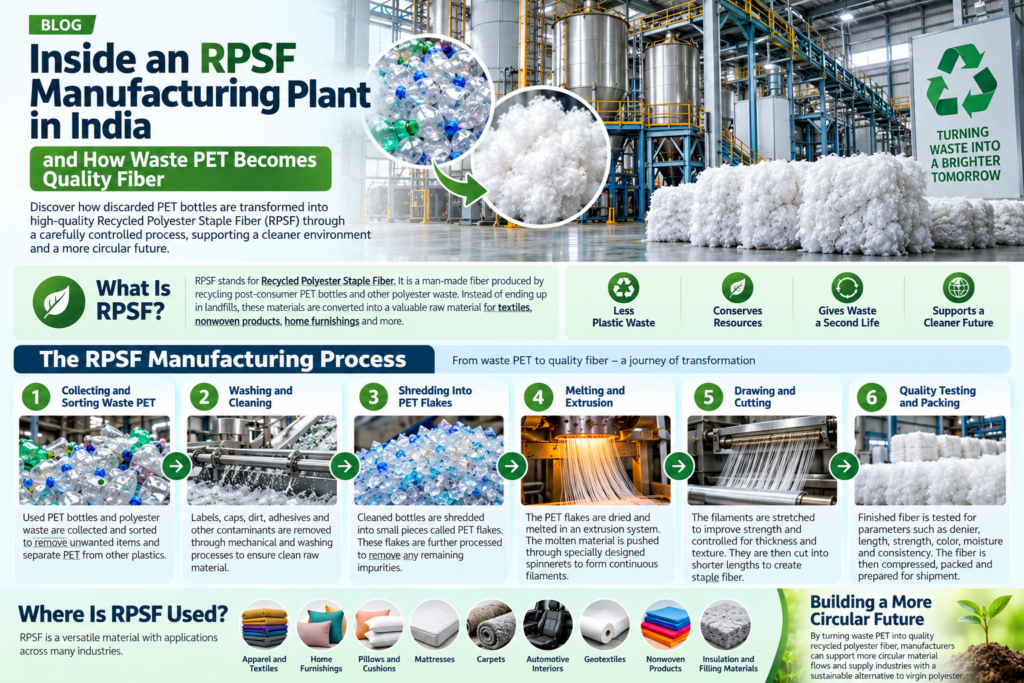
The textile industry is always changing as manufacturers look for new materials that provide quality, durability, cost efficiency and environmental benefits. One material that is gaining a considerable interest is Recycled Polyester Staple Fibre (RPSF). Made from recycled PET bottles and other suitable polyester waste, RPSF provides an alternative to virgin polyester fibre and encourages more responsible use of resources.
Modern textile manufacturing today relies heavily on recycled polyester staple fibre to respond to changing market demands, reduce dependence on virgin raw materials, and develop versatile textile products.
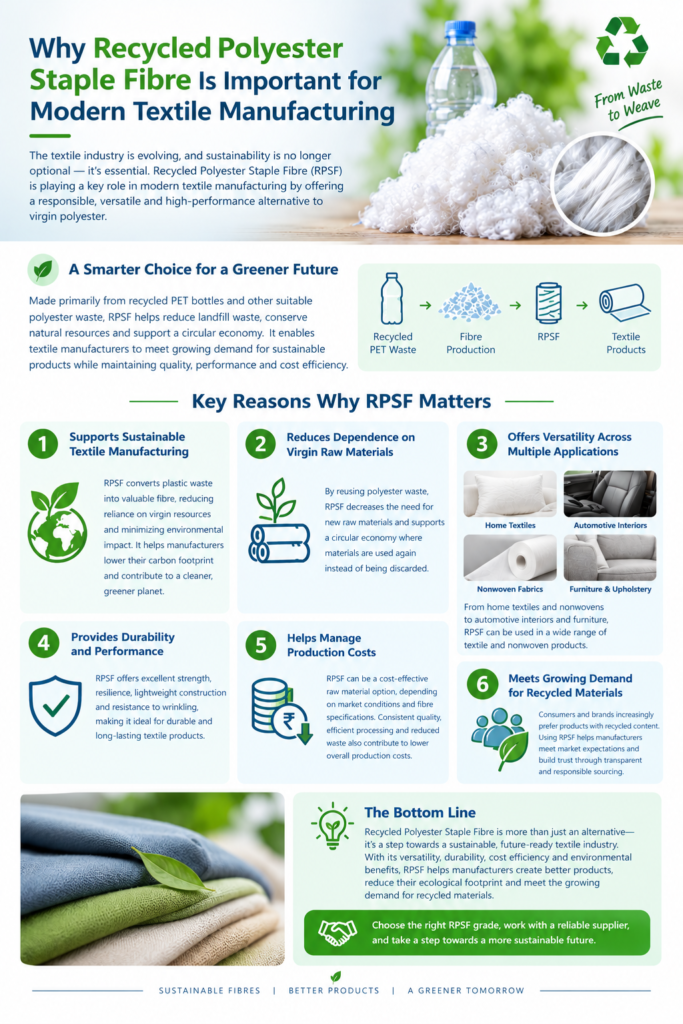
1. Encourages sustainable textile production
Sustainability is becoming an important issue for textile manufacturers globally. RPSF can use recycled polyester materials as its raw material, whereas traditional polyester production relies heavily on virgin petroleum-based resources.
Recycling is a means of keeping materials in circulation by converting suitable plastic waste into usable fibres. It can also reduce the amount of waste going to landfills. The environmental benefits depend on the recycling process, the energy consumption, the transportation and the source of the recycled material.
RPSF provides manufacturers with an opportunity to incorporate recycled content into their processes, improving resource efficiency.
2. Reduces the need for virgin raw materials
Polyester is still in demand for its strength, versatility, and affordability. But making virgin polyester requires new raw materials and energy.
Recycled polyester staple fibre reduces the dependence on these virgin resources by converting suitable polyester waste to new fibre products. This approach supports material recovery and contributes to a circular economy, where materials are reused rather than discarded after one use.
Use of RPSF in appropriate applications can be an important step in the direction of more resource conscious manufacturing for textile businesses.
3. Provides Flexibility for Various Applications
The versatility of RPSF is one of its greatest advantages. Depending on the fibre grade, specifications and processing requirements, recycled polyester staple fibre can be used for various textile and nonwoven end-uses.
Typical applications include:
– Home textiles: Pillows, cushions, duvets, blankets and mattresses.
– Non-woven fabrics: Filter media, insulation materials and certain industrial products.
– Automotive textiles: Interior padding, cushioning and some sound deadening components.
– Blends of apparel and textiles: Compatible recycled fibres, suitable yarns and fabrics.
– Furniture manufacturing: Upholstery padding and stuffing.
This versatility enables manufacturers to choose RPSF grades that suit the needs of their specific product.
4. Offers Durability and Performance
In today’s textile manufacturing, materials are expected to perform consistently. Depending on the grade and processing, recycled polyester staple fibre can impart useful properties, such as strength, resilience, lightweight construction, and resistance to wrinkling.
Such properties make RPSF suitable for applications where durable filling materials, cushioning or nonwoven structures are required.
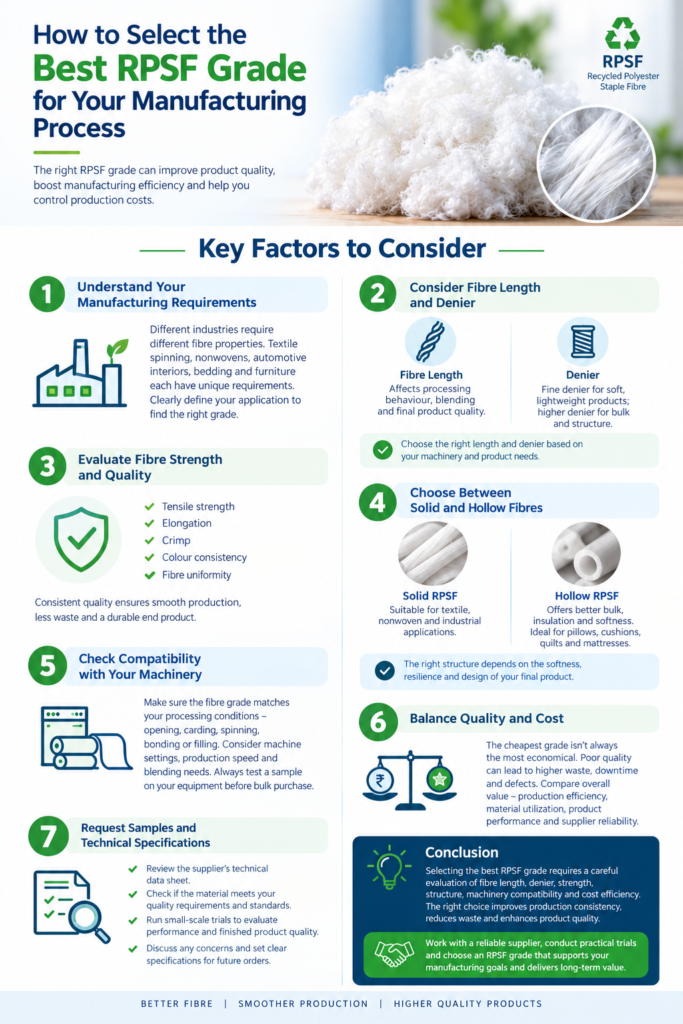
However quality of recycled fibre depends on raw material selection, recycling technology, fibre length, denier, crimp, quality control etc. The correct grade must be chosen to achieve the performance needed in the final product.
5. Assists manufacturers with managing production costs
Another important factor in textile manufacturing is cost efficiency. Recycled polyester staple fibre may be a competitive raw material option depending on market prices, fibre specifications, availability and processing requirements.
RPSF can be evaluated by manufacturers beyond the purchase price. The total cost of production is affected by constant fibre quality, efficient processing, less material waste and reliable supply.
When changing to recycled fibre, businesses should carry out production trials to check the compatibility of machinery and that the material meets the quality requirements.
6. Responds to Growing Demand for Recycled Materials
Consumers, brands and business buyers are showing increasing interest in products containing recycled materials. This has led textile manufacturers to search for alternatives that will aid their sustainability goals.
The use of RPSF can help manufacturers to develop products with recycled polyester content and to meet customer requirements. Businesses should maintain appropriate documentation on their suppliers and check recycled content claims with reliable records or appropriate certification schemes, when required.
Transparency in sourcing and accurate product information is critical to establishing confidence and avoiding greenwashing.
7. Promotes Innovation in Textile Manufacturing
Innovations in recycling technology and fibre production are opening new opportunities for the textile sector. Manufacturers have the opportunity to experiment with different grades of RPSF, fibre blends and processing methods to produce products that balance performance, quality and recycled content.
Working in close collaboration with trusted suppliers, businesses are able to determine the right fibre specifications, improve consistency of production and explore new market opportunities.
Conclusion
Recycled Polyester Staple Fibre is becoming important as a material in modern textile manufacture due to its versatility, useful performance characteristics and ability to improve resource efficiency. RPSF meets a diverse set of manufacturing requirements, from home textiles and nonwoven fabrics to automotive applications and select apparel products.
Also Read: how to select the best RPSF grade for your manufacturing process
Manufacturers can incorporate recycled polyester into their manufacturing process by choosing the right quality grade and partnering with credible suppliers to meet customer demands and promote more sustainable use of the material.