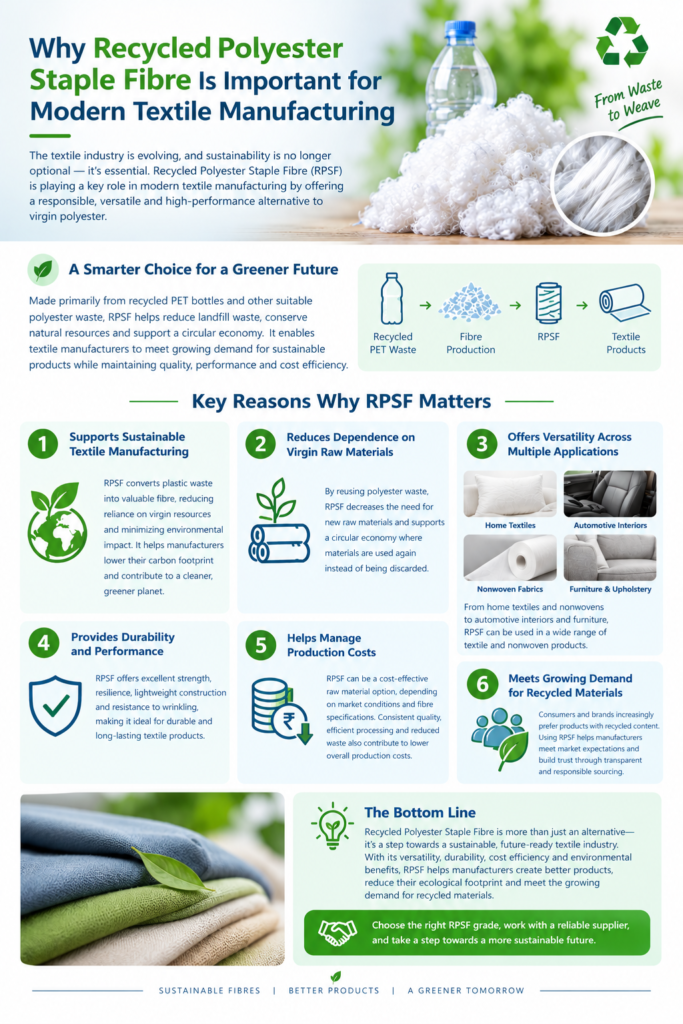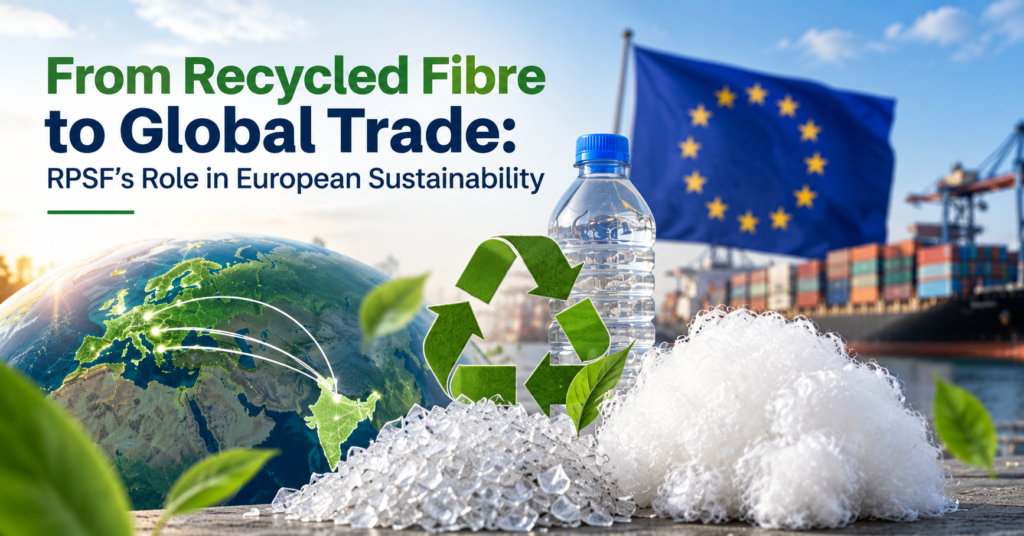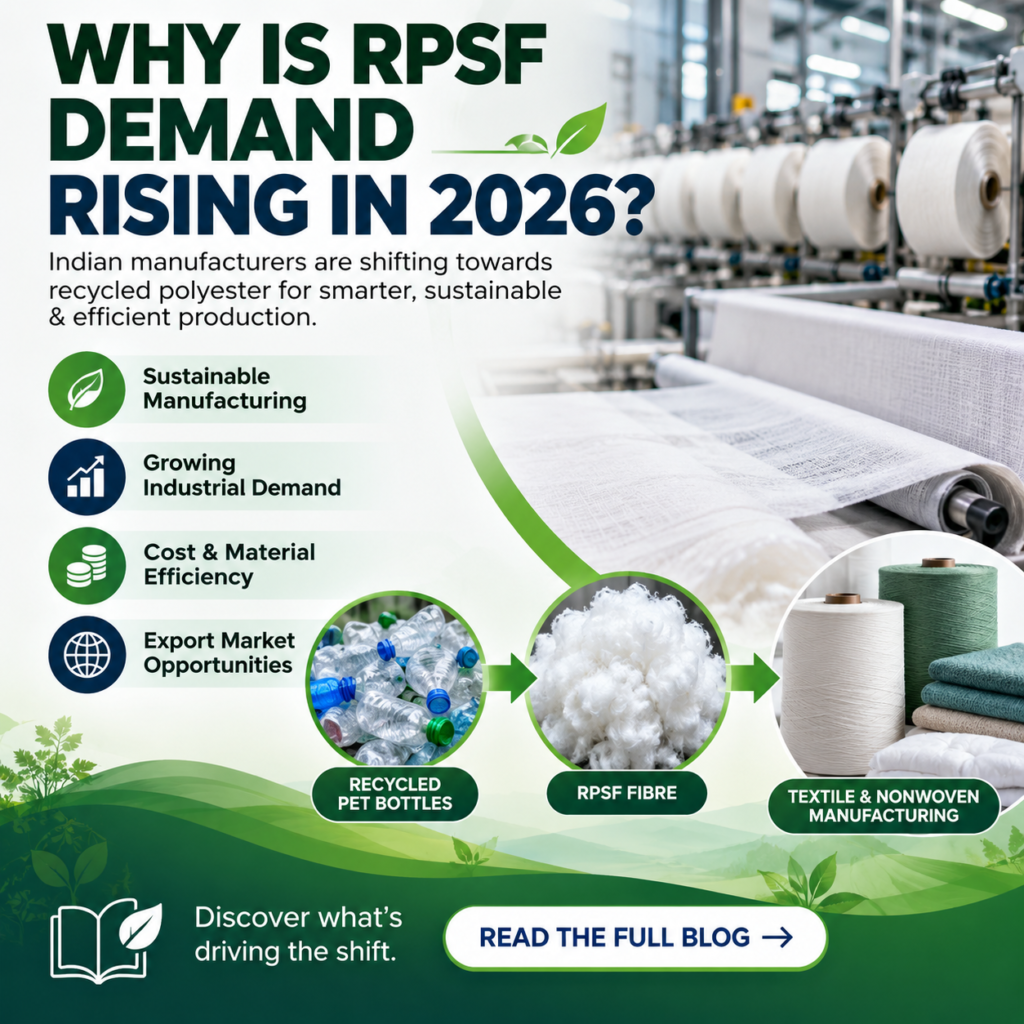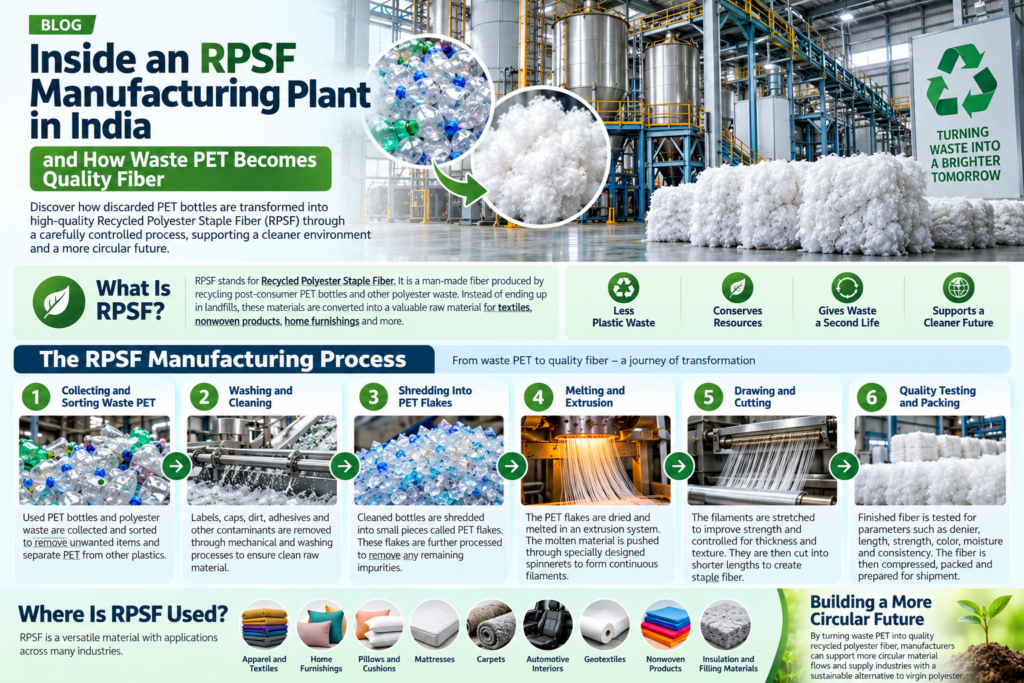
India has emerged as a key source of recycled polyester for the textile and industrial markets across the globe. Brands and manufacturers seeking alternatives to virgin polyester are turning to Recycled Polyester Staple Fiber (RPSF) for use in spinning, nonwovens, home textiles, automotive products, filling materials and other industries.
But it’s not simply about offering recycled fiber at a competitive price when entering an international market. International buyers are becoming more and more interested in the entire supply proposition – from fiber quality and consistency to documentation, traceability, certifications and delivery reliability.
Understanding these expectations is key to developing long term export relationships with Indian RPSF suppliers.
Quality of Fiber Consistency
The first things international buyers look at is consistency.
Buyers want RPSF with consistent specifications from shipment to shipment. Changes in denier, cut length, color, strength, finish or other technical characteristics can affect the own production process.
Thus, a reliable supplier must have stable manufacturing and quality control procedures, allowing buyers to schedule their production with confidence.
Clear Specifications of Product
International buyers typically have technical requirements depending on the application.
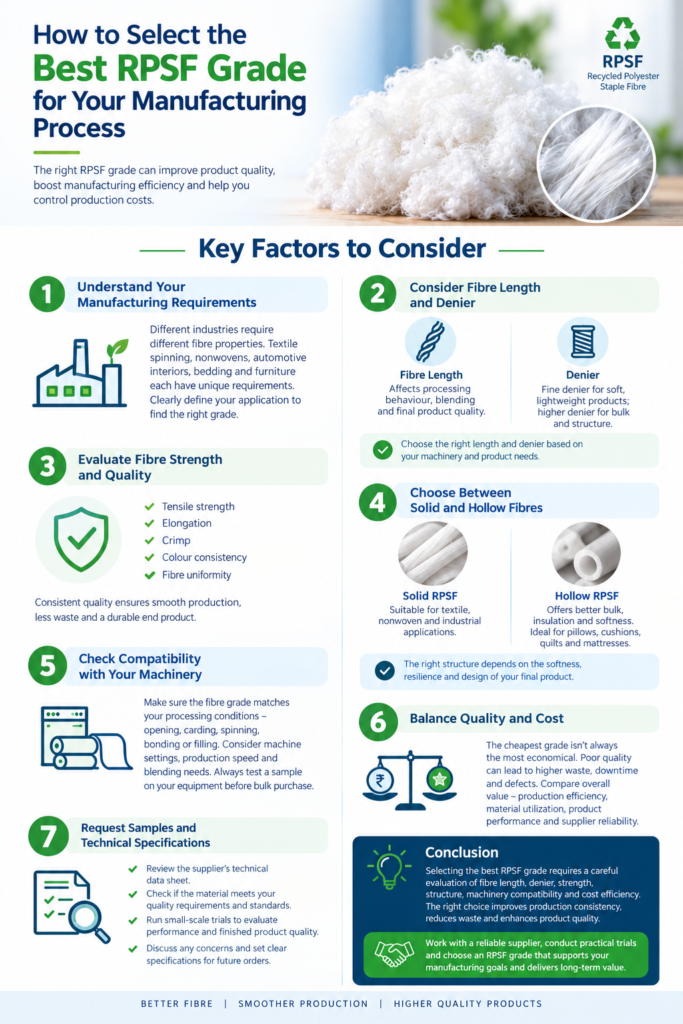
A good RPSF supplier should clearly be able to communicate basic product specifications such as denier, cut length, color, fiber characteristics and intended applications.
The precise technical data enables buyers to choose the right fiber for spinning, nonwoven production, filling, automotive or other end use.
Traceability of Recycled Material
For many international customers, it is no longer sufficient to know that a product is recycled. More and more they want to know where the recycled material comes from and how it moves through the supply chain.
For RPSF made from post-consumer PET bottles, traceability can show the link between the recycled feedstock and the finished fiber.
Buyers can more easily meet their own sustainability and reporting requirements with proper documentation and established chain-of-custody systems.
Any certifications
Certifications can play an important role when Indian RPSF is sold into international market.
Depending on the buyer and end application, certifications such as the Global Recycled Standard (GRS) may be applicable to show recycled content and responsible processing requirements.
However the certification requirements are different for the customer, country and application. Suppliers should not rely on one certification for all markets, but should be aware of documentation requirements of each buyer.
Production Capacity and Stable Supply
International buyers are often planning production months out. They want suppliers that can deliver the agreed quantities at the time they need them and can maintain consistent production.
Good production planning, sourcing of raw materials, quality control and export logistics can give a supplier more confidence to overseas customers.
For large textile manufacturers, supply reliability can be as important as the initial product quotation.
Export Documents Professional
Accurate documentation is essential for the smooth flow of international trade.
Depending on the shipment and destination, commercial invoices, packing lists, certificates, shipping documents, product specifications, test reports and certification records may all be required.
Indian RPSF suppliers with organized documentation can simplify the purchasing process for international buyers and avoid unnecessary delays.
Technical Assistance and Open Discussion
International buyers expect suppliers to understand their needs rather than simply selling a standard product.
Open communication about specs, samples, production schedules, packaging, shipment timelines and quality expectations can go a long way in making the relationship much more effective.
Fast answers and practical technical support are particularly important when buyers are trying out a new recycled fiber in their manufacturing process.
Long-Term Value at Competitive Prices
Price will always be a major issue in international sourcing but buyers also judge the overall value of a supplier.
Consistent quality, fewer production problems, reliable delivery, proper documentation and stable supply can all help to reduce the customer’s operational risk.
For Indian RPSF manufacturers, competing globally therefore means providing a full supply solution, not just the lowest price.
Also Read: Why egypt could be a new market for indian RPSF suppliers
Building Stronger RPSF Export Partnerships
There are opportunities for Indian manufacturers in many markets, with international demand for recycled polyester opening up. But sustainable development in exports must be founded on knowing what global buyers really want.
Reliable RPSF supply begins with reliable product quality, responsible recycling, clear specifications and reliable customer support, Rakshitam Ecofibre states.
Such a combination of capabilities, coupled with a robust export process, can help Indian RPSF suppliers develop long-term relationships with textile manufacturers and buyers looking for reliable recycled polyester options.