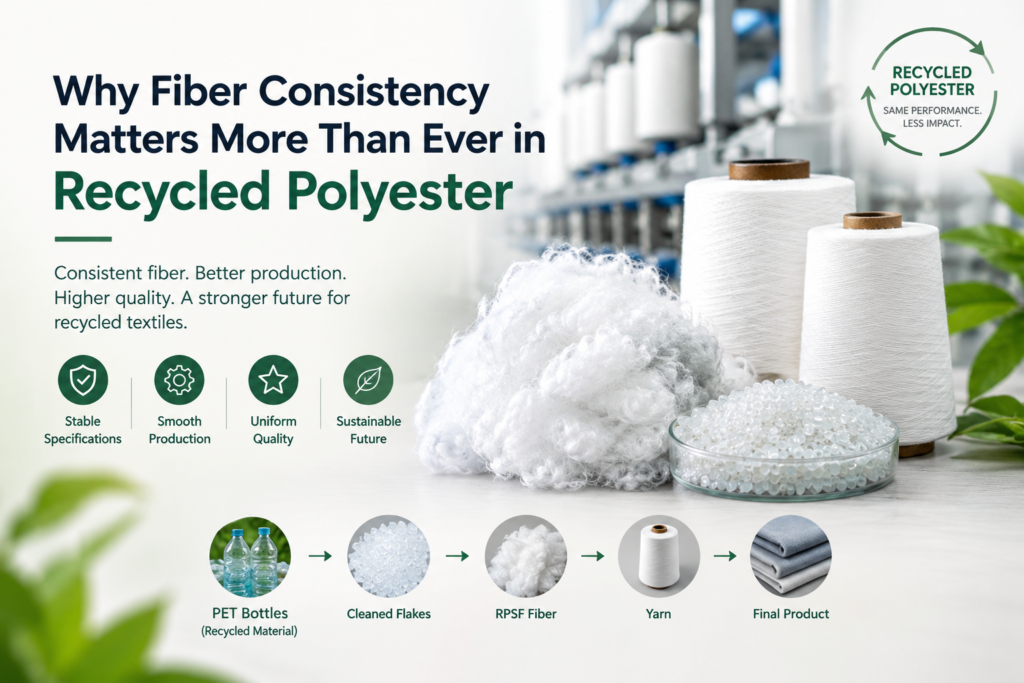
Recycling plastic waste into useful products is becoming more and more important as industries seek more sustainable manufacturing solutions. One of the most useful examples is Recycled Polyester Staple Fiber (RPSF), made from waste PET bottles and other polyester materials. Inside a state-of-the-art RPSF manufacturing plant in India, discarded PET undergoes a carefully controlled process and is converted into quality fiber for use across the textile and nonwoven industries.
What is RPSF ?
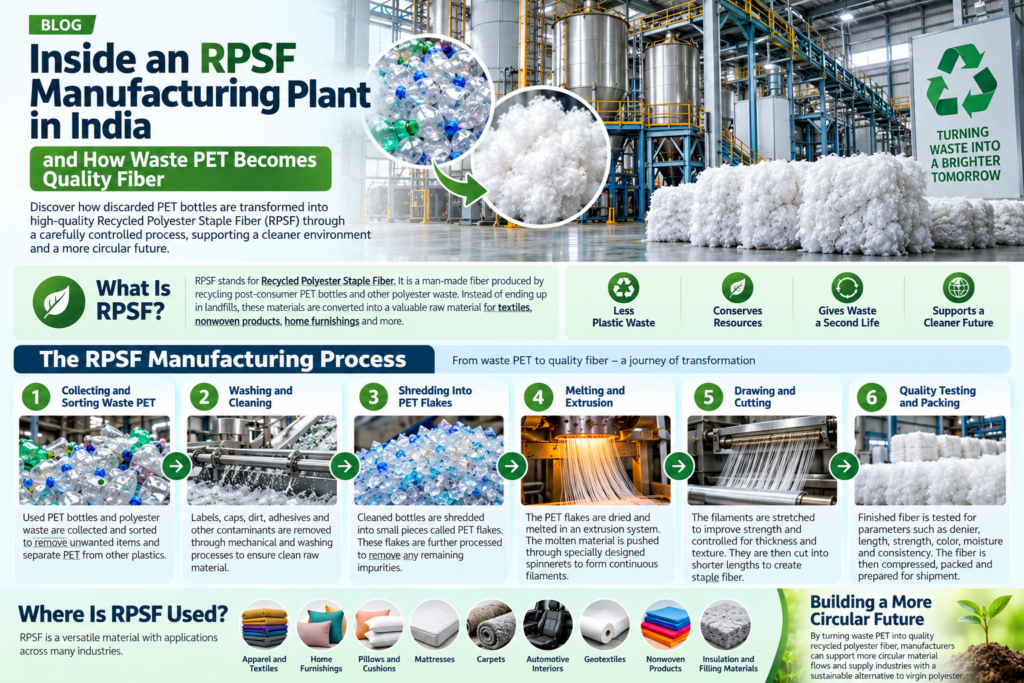
RPSF = Recycled Polyester Staple Fiber. It is a man-made fiber produced from the recycling of polyester waste, especially post-consumer PET bottles. Manufacturers process these materials into a valuable raw material instead of allowing them to end up in landfills for products such as clothing, home textiles, filling materials, carpets and nonwoven fabrics.
The recycling process helps reduce the reliance on virgin polyester and gives a second life to waste materials.
Step 1: Waste PET Collection and Sorting
The process starts with the collection of used PET bottles and polyester waste. The collected material is sorted to remove any unwanted items and to separate PET from other plastics.
Proper sorting is important since contamination can impact the quality and performance of the final fiber. Depending on the type of RPSF being manufactured, bottles may also be separated by color.
Step 2: Wash and Clean
The PET bottles are thoroughly cleaned after sorting. Labels, caps, dirt, adhesives and other contaminants are removed by mechanical and washing processes.
Clean raw material is key to consistent recycled polyester. Hence the washing stage is important to maintain the quality of the final product.
Step 3: Shredding to PET Flakes
The cleansed bottles are shredded into little pieces called PET flakes. The flakes are then further processed to rid of any unwanted materials and impurities.
The flakes’ quality directly affects the quality of the recycled polyester produced further down the line.
Step 4: Melt & Extrude
The PET flakes are dried and introduced into an extrusion system. The PET is melted by controlled heat to a homogenous polymer melt.
The molten material is then forced through specially designed spinnerets to form continuous polymer filaments. Temperature, pressure, and processing conditions have to be carefully controlled to get consistent fiber characteristics.
Step 5: Drawing & Cutting
The new filaments are drawn or stretched as a way to enhance their strength and other physical properties. Manufacturers can control features like fiber thickness, length and texture, depending on the desired application.
The continuous filaments are then cut into shorter lengths, creating staple fiber. The fibers can then be processed into different grades and specs to meet customer requirements.
Step 6: Quality Check & Packing
Quality control is an important aspect of RPSF manufacturing. Finished fiber may be tested for denier, length, strength, color, moisture, consistency.
Once the fiber has been tested to meet the required specifications, it is compressed, packed and prepared for shipment to textile mills, manufacturers and other industries.
Application Of Recycled Polyester Staple Fiber
RPSF has applications in a wide variety of industries. It can be utilized in:
Clothing and textiles
Home furniture
Pillows & cushions
Mattresses
Rugs
Car interiors
Geotextiles
Non-woven products
Insulation and filling materials.
Different fiber specifications can be developed depending on the intended application.
Building a More Circular Future
An RPSF manufacturing plant demonstrates how recycling can convert a common waste material into a useful industrial resource. By turning waste PET into quality recycled polyester fiber, manufacturers can support more circular material flows while supplying industries with an alternative source of polyester.
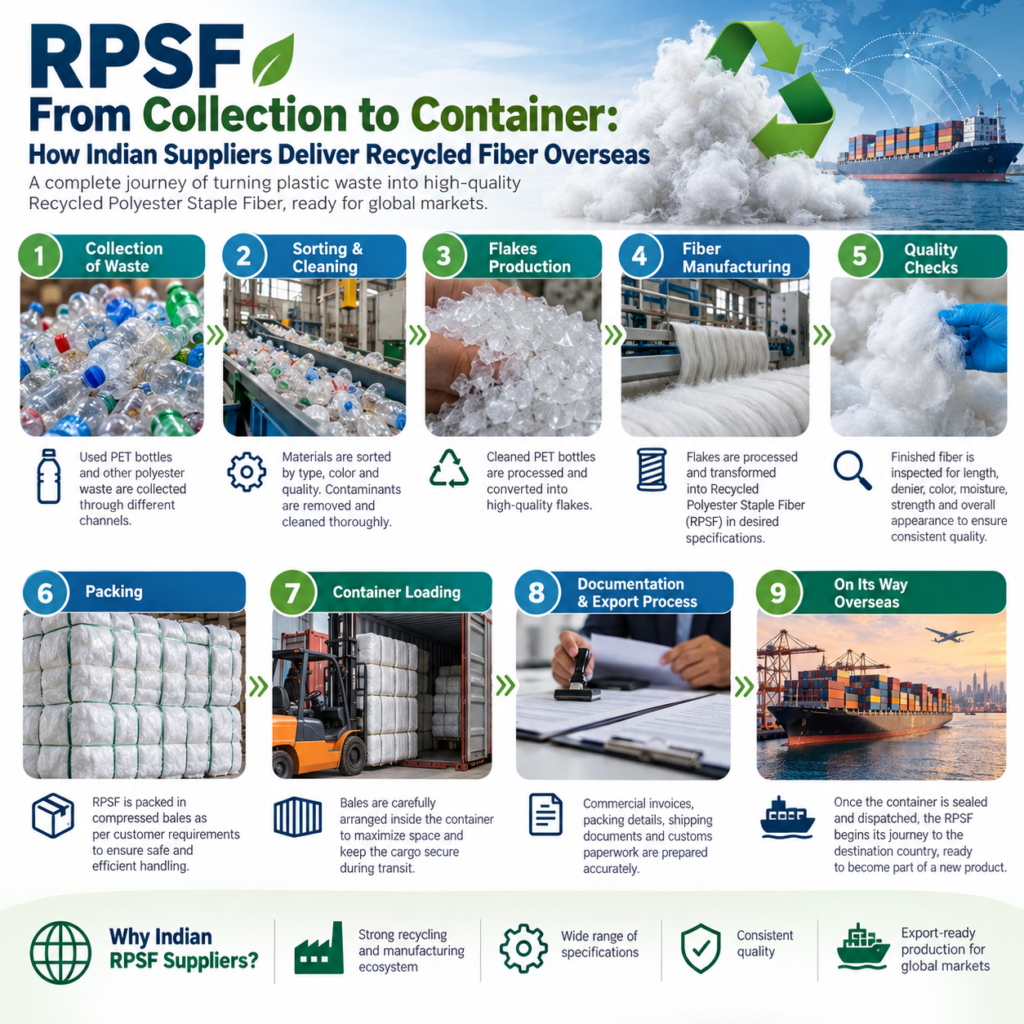
Also Read: RPSF from collection to container how indian suppliers deliver recycled fiber overseas
As demand for recycled materials continues to grow, efficient PET recycling and advanced RPSF manufacturing can play an important role in creating a more resource-conscious textile and manufacturing ecosystem in India.