The Indian manufacturing landscape is evolving rapidly and sustainability, cost efficiency and responsible material sourcing are becoming increasingly important. One material that is reaping the benefits of this shift is Recycled Polyester Staple Fiber (RPSF).
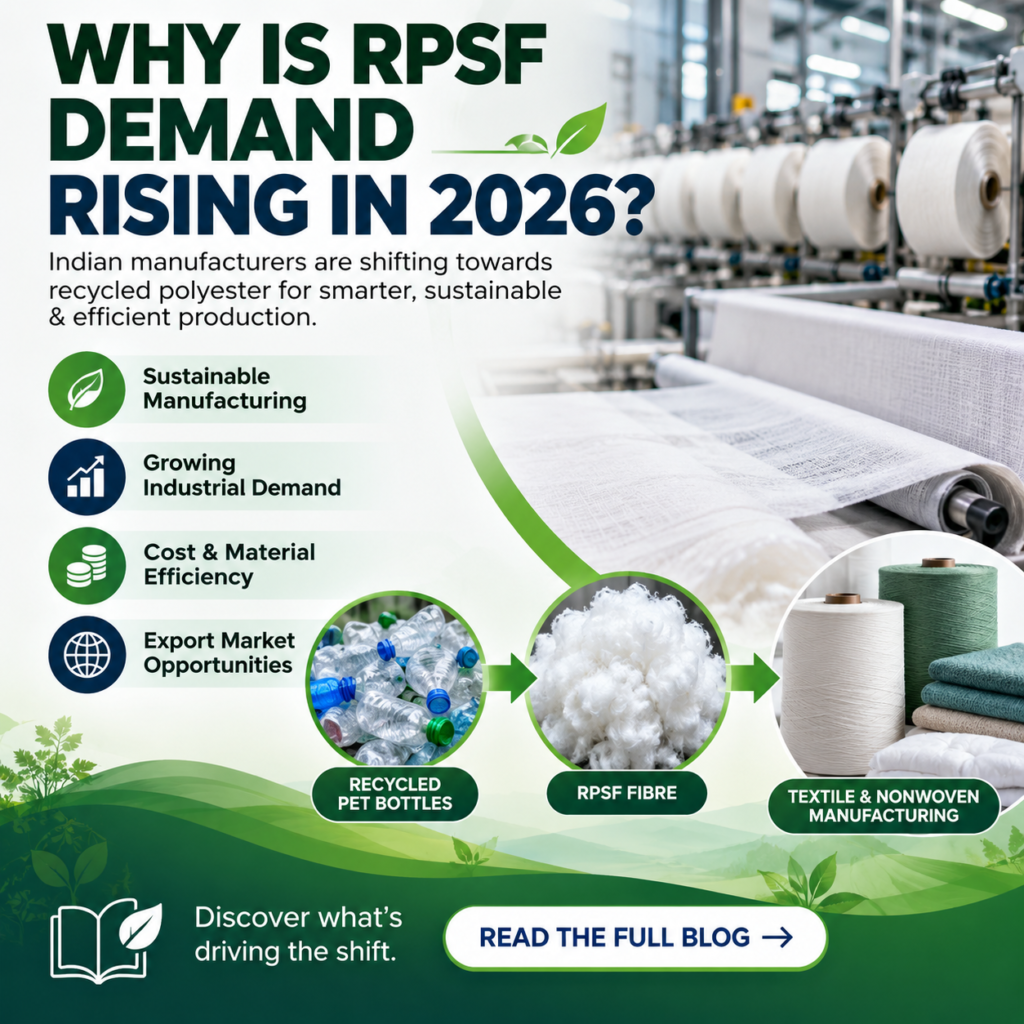
The Indian manufacturing industries in 2026 are witnessing increasing demand for RPSF. Manufacturers are finding recycled polyester an increasingly viable raw material for everything from textiles and nonwovens to car parts, home furnishings and fillings.
But what is fueling this growing demand? Here are some of the key factors responsible for the increasing use of RPSF by Indian manufacturers:
1. More Focus on Sustainable Manufacturing
Sustainability isn’t just for the international brands and big businesses any more. Indian manufacturers are also exploring means to reduce their dependence on virgin raw materials and incorporate more recycled content into their manufacturing processes.
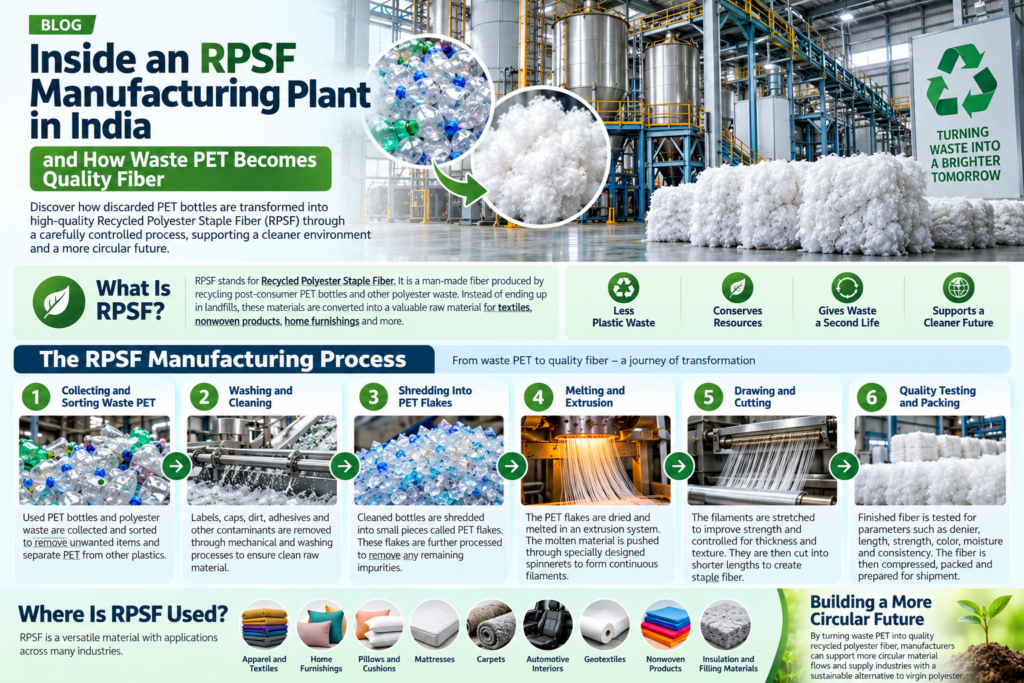
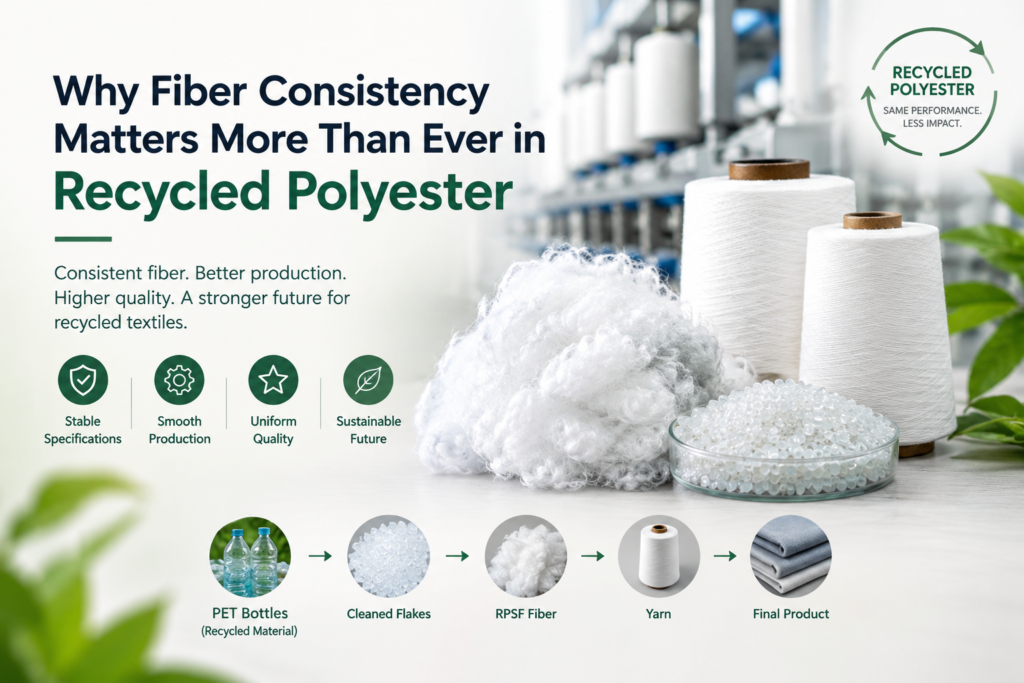
RPSF is generally made from recycled PET materials, such as post-consumer PET bottles. Converting this waste to usable polyester fiber helps prolong the useful life of existing plastic material.
So for manufacturers who are trying to reach sustainability goals, RPSF can be an important part of the material strategy.
2. Demand for recycled materials growing
Companies throughout the value chain are increasingly aware of the materials in finished products. “More buyers, brands, exporters and manufacturers are looking for recycled-material options to help meet their environmental and sourcing needs.
This is opening up opportunities for RPSF in a number of applications.
According to the requirements and quality, recycled polyester staple fiber can be used in non woven fabrics, textile products, cushions, pillows, mattresses, insulation, automotive interiors, toys, filtration products and a wide range of filling applications.
RPSF has a number of potential applications and is relevant to a number of manufacturing sectors.
3. Cost and Material Effectiveness
Manufacturers are still concerned about raw material costs. Prices depend on fiber specifications, quality, market conditions and availability of raw materials but RPSF can provide manufacturers an alternative to dependence solely on virgin polyester fiber.
For large-scale operations, the ability to use multiple material options can improve sourcing flexibility and allow manufacturers to better manage their production needs.
It is one of the reasons RPSF continues to attract attention, this combination of availability, functionality and potential cost-efficiency.
4. The Growing Recycling Ecosystem in India
India has a large manufacturing base and an increasingly organized recycling ecosystem. The collection, sorting, cleaning, processing and recycling of PET waste have evolved considerably over the years.
The ecosystem is useful for converting discarded PET materials into industrial raw materials.
A better recycling infrastructure will provide manufacturers with greater access to different grades and specifications of recycled polyester fiber. It can also support industries that want reliable sourcing within India, with a stronger domestic supply chain.
5. Demand in Different Industries
Another major reason for RPSF’s growth is that demand is not tied to one industry.
The textile and nonwovens industries are primary customers, but RPSF is also important to producers of home furnishings, automotive products, geotextiles, insulation, filtration materials, padding and other industrial products.
This wide application base provides RPSF with great potential within India’s growing manufacturing economy.
6. Manufacturers focused on exports are adapting
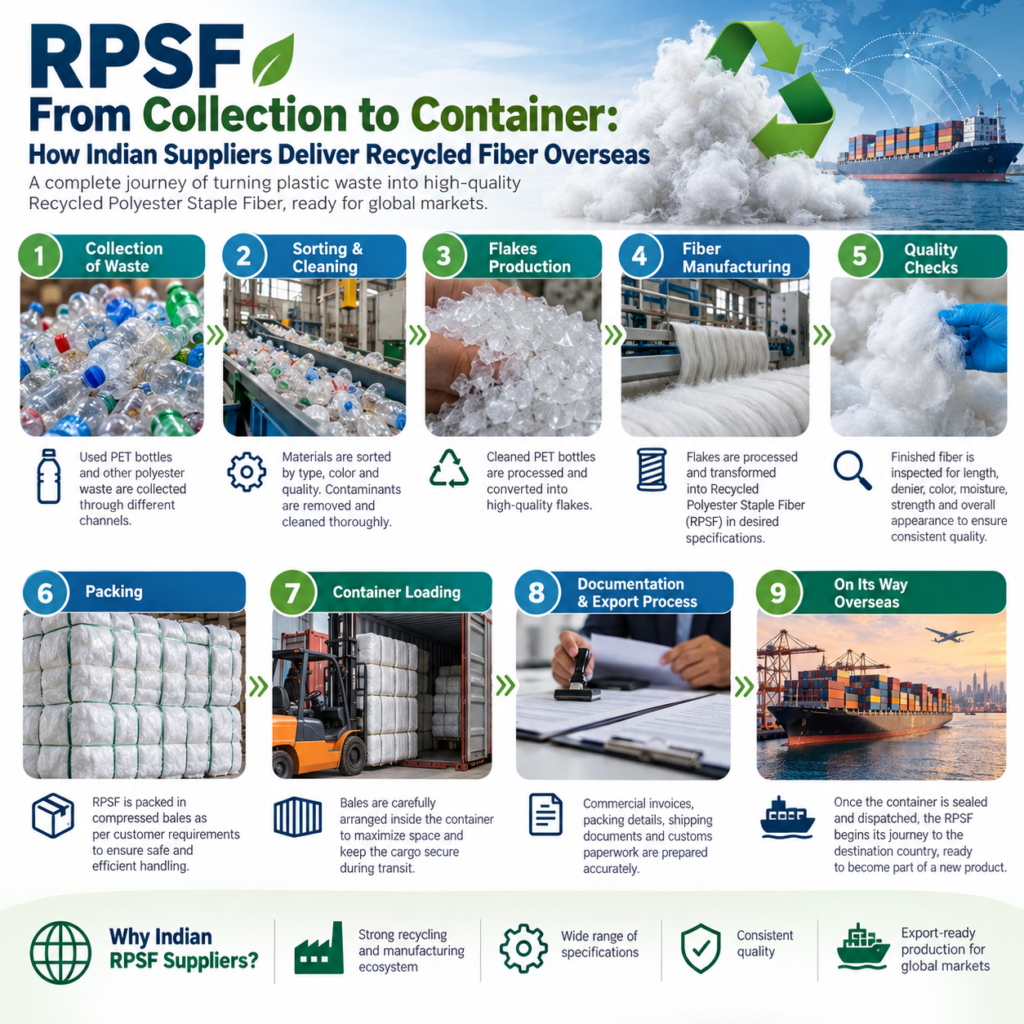
Changing buyer expectations are also a challenge for Indian manufacturers exporting to global markets. “We are seeing customers around the world asking suppliers more and more about recycled content, sustainability practices, material traceability and responsible sourcing.
By using appropriate grades of RPSF, manufacturers can meet these changing requirements and develop products with recycled content.
For export-oriented companies, this can be particularly critical when working with brands and buyers with sustainability targets.
The Road Forward for RPSF in India
The increase in RPSF demand in 2026 shows a bigger shift in Indian manufacturing. Companies are thinking outside the box on sourcing and looking at materials that combine performance, commercial practicality and recycled content.
Recycled Polyester Staple Fiber is likely to continue as an important raw material in many sectors, as recycling technologies improve and more circular manufacturing practices are adopted across industries.
Also Read: inside an RPSF manufacturing plant in india and the process of turning waste pet into quality fiber
“For manufacturers, the opportunity is more than simply replacing virgin polyester. It’s about creating a more flexible, resource-efficient and sustainability-oriented supply chain for the future.