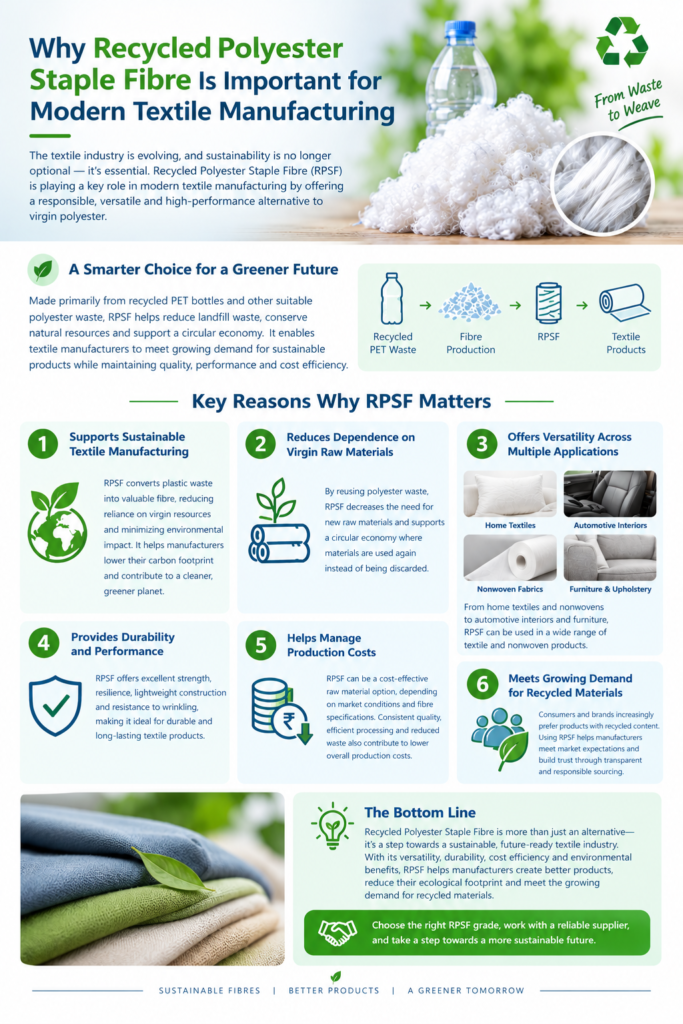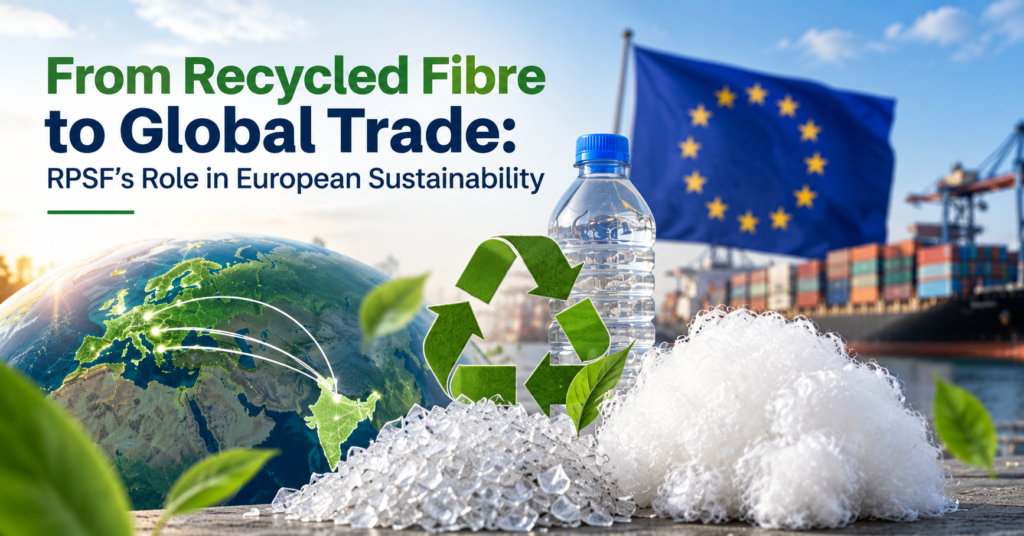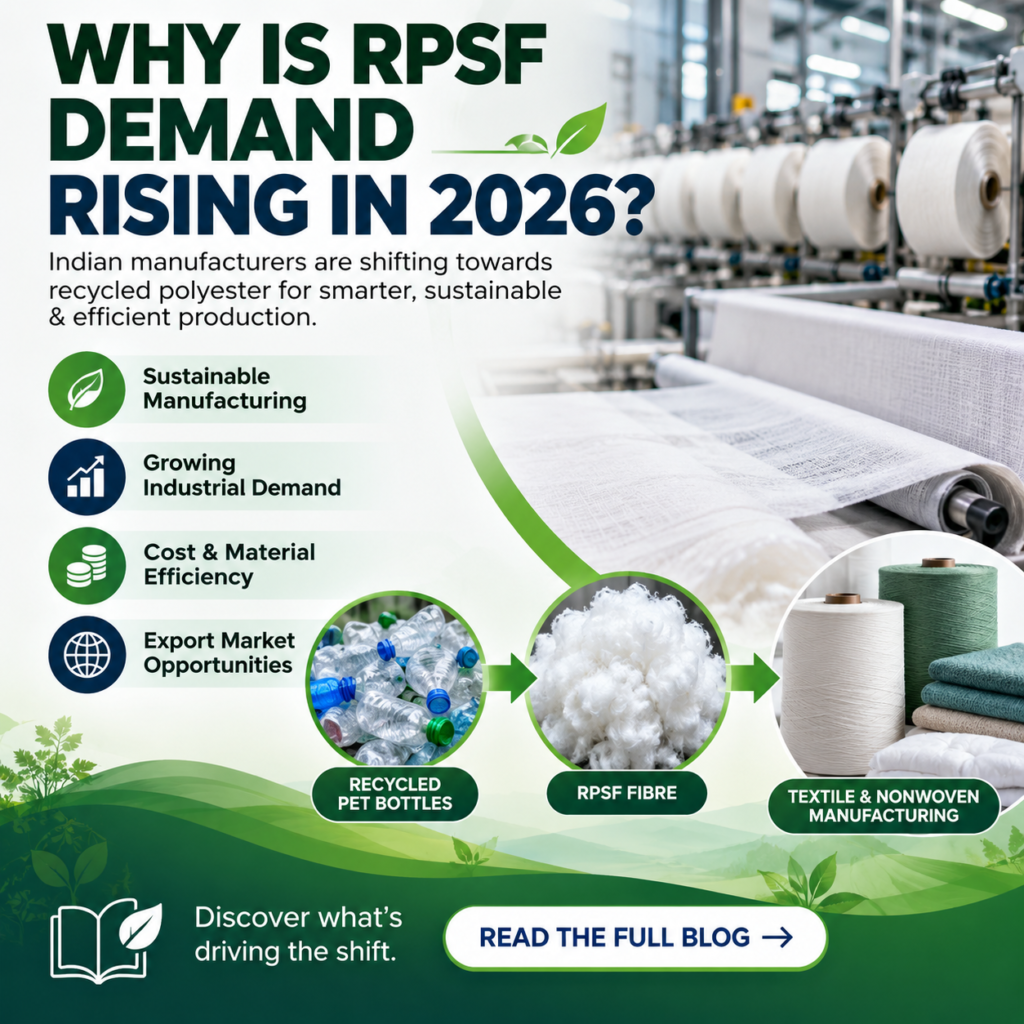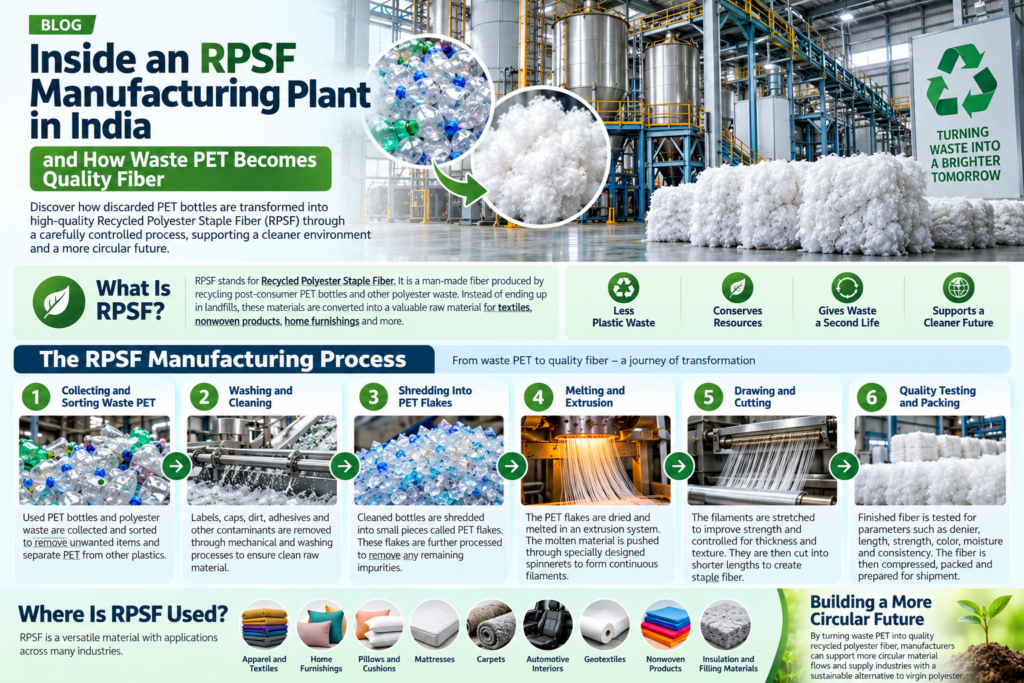
Recycled polyester staple fiber (RPSF) is becoming a key material for industries that want to use recycled content without sacrificing performance. The demand for recycled polyester is increasing in international markets for textiles, nonwovens, filling materials and other applications.
But what happens before it gets to an overseas buyer? The journey involves a lot more than just packing fiber and putting it on a container. Indian suppliers manage the entire process, from the collection of suitable waste to the preparation of carefully made shipments ready for export.
It Begins With Collection
The RPSF journey typically begins with polyester waste, notably used PET bottles and other appropriate polyester substances. These are collected by different means and sorted by type, color and quality.
Correct sorting is important because the quality of the final recycled fiber depends a lot on the material used at the start of the process. Prior to further processing, contaminated or inappropriate waste shall be removed.
Reprocessed waste fiber
After sorting, the material is subjected to a number of processing steps. PET bottles, for example, are decontaminated and turned into flakes. Those flakes are then processed and converted to polyester material that can be spun into staple fiber.
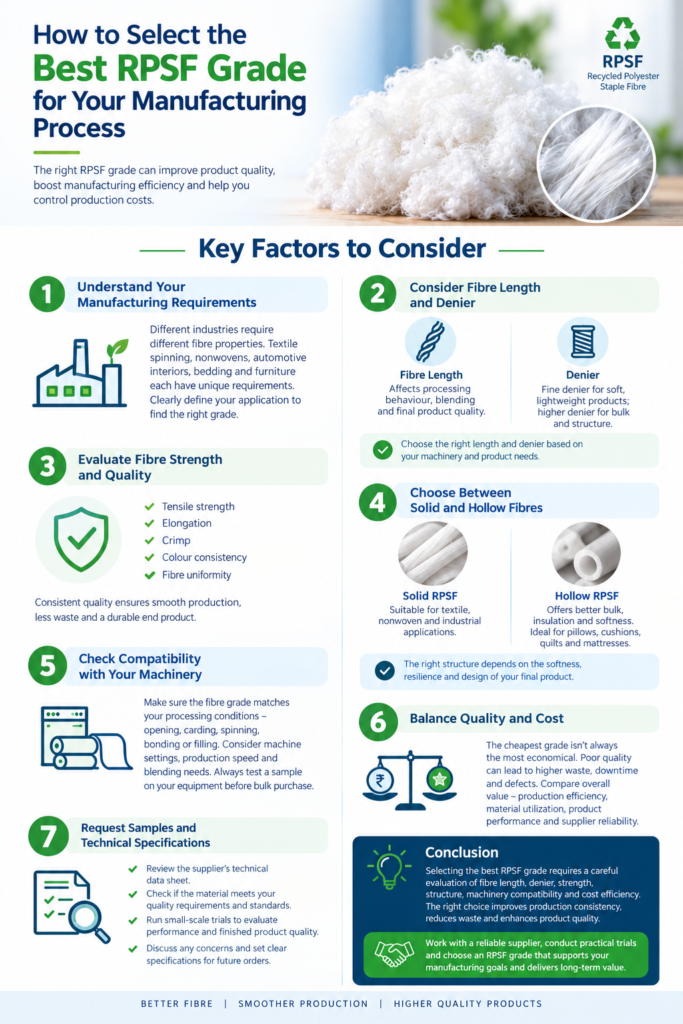
RPSF can be supplied in a range of specifications including fiber lengths, deniers, colors and finishes, depending on application and customer requirements.
Consistency is key for international buyers. For this reason, suppliers monitor the production parameters and quality checks throughout the manufacturing process.
Quality Checks Prior to Export
The completed fiber is inspected to the required specifications before RPSF is packed for shipment. Depending on the buyer and application, checks may encompass items such as fiber length, denier, color, moisture, strength, and general appearance.
Good quality control helps suppliers maintain consistency from shipment to shipment . This is especially true for overseas customers who may use RPSF as a raw material in their own manufacturing processes.
Packing and Loading Containers
Once the quality checks are complete, the product is packed according to the customer requirements. RPSF is often packed in compressed bales, which aids in handling and allows more material to be loaded into a container.
Packaging must protect the fiber during transportation. Properly secured bales help minimize movement, contamination and damage while in transit.
Container loading is the next step. The Indian suppliers meticulously plan the arrangement of the bales within the container so that they can use the space efficiently and to keep the cargo secure.
Preparing for the Trip to Overseas
RPSF is more than simply exporting goods. Suppliers also need to coordinate documentation, shipping schedules, customs procedures and buyer-specific requirements.
Prepare commercial invoices, packing list, shipping documents and other necessary documents correctly. Good communication between supplier, buyer, freight forwarder and shipping line helps keep things flowing smoothly.
Once the container is sealed and shipped, the RPSF begins its trip to the destination country, where it can be eventually incorporated into a new product.
Why are RPSF suppliers important in India?
India’s well-established textile and recycling ecosystem offers local manufacturers access to recycling expertise and a strong manufacturing base. The international buyer can have access to a range of RPSF specifications and production that is ready for export by working with an experienced Indian supplier.
“Ultimately, that entire journey from collection to container is about maintaining quality at every point,” he said. Recycled material may start out as waste, but once sorted, processed, tested, packed and shipped correctly, it becomes a useful industrial fiber, ready to be sold in markets around the world.
ALSO READ: why fiber consistency matters more than ever in recycled polyester
This is the true journey of RPSF—from collection to production and into a container for its next destination.