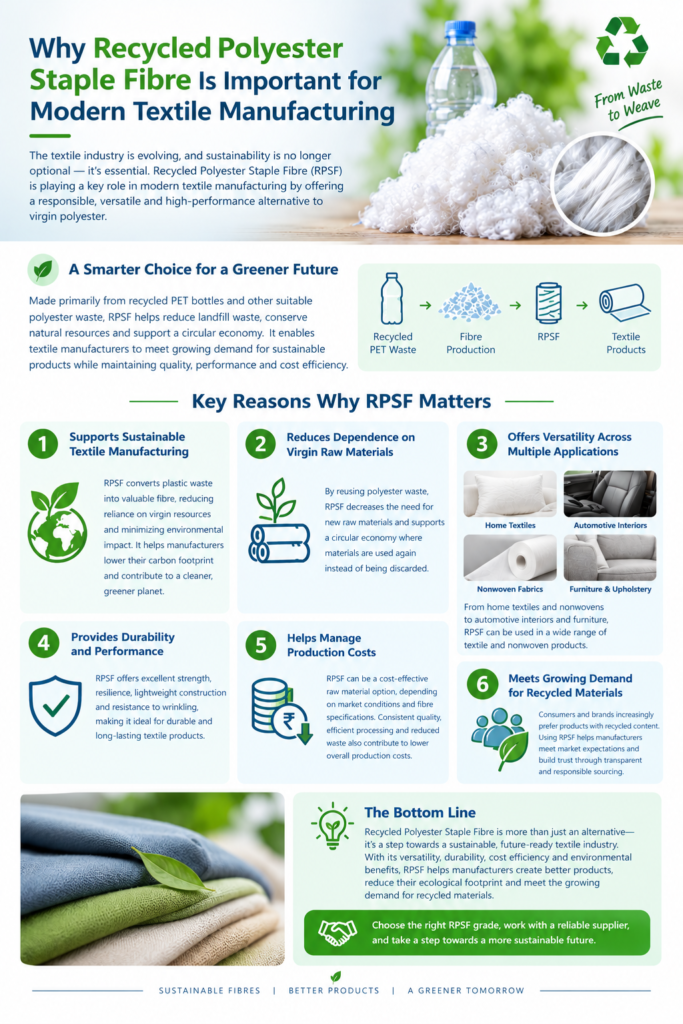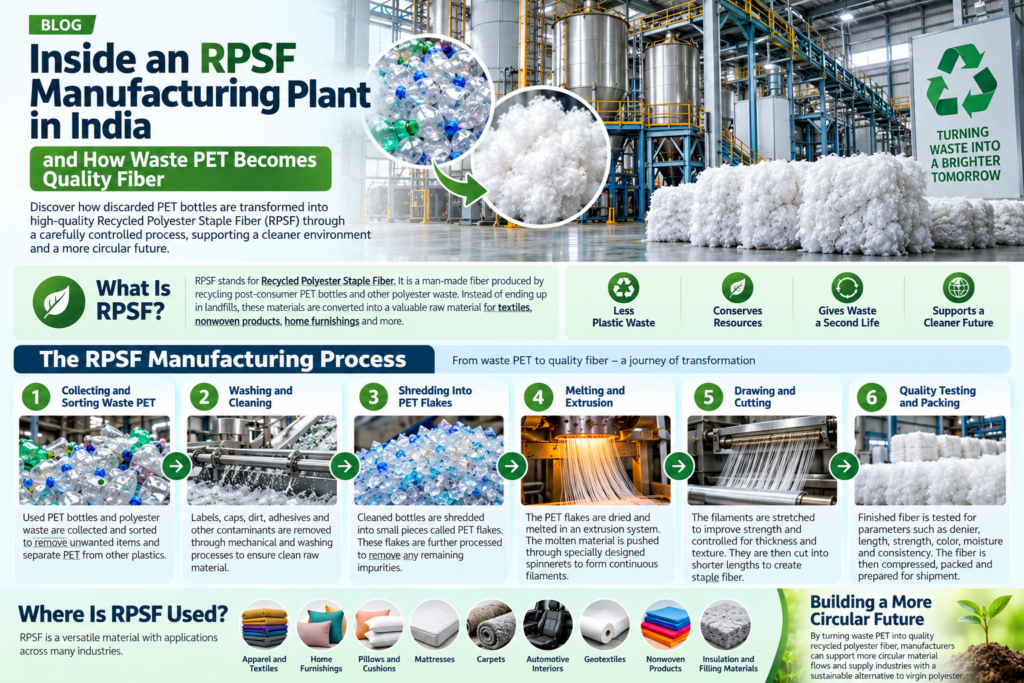
Recycled Polyester Staple Fiber (RPSF) has evolved from being a choice made for sustainability reasons into an essential raw material for today’s textile and industrial applications. With the increased demand for recycled polyester, buyers have begun to consider one factor that directly affects production performance: fiber consistency.
For manufacturers using RPSF, the recycled content is only part of the puzzle. The fiber must also have predictable performance from batch to batch. Consistent quality means textile makers can operate more efficiently, make fewer adjustments and produce more uniform finished products.
What is Fiber Consistency?
Fiber consistency means same properties batch to batch .
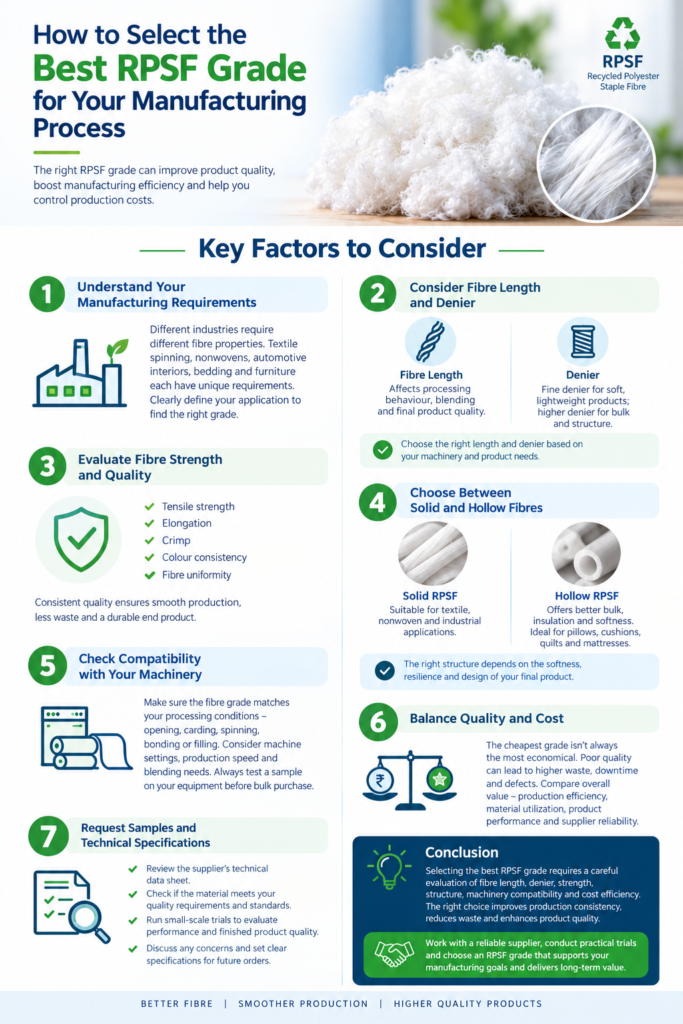
For RPSF this may include parameters such as denier, cut length, color, strength, elongation, finish and other technical properties. Manufacturers can then use the fiber with more confidence if these properties stay within the specified requirements.
Consistency is especially important when RPSF is delivered on a regular basis to large textile or industrial customers.
Why Inconsistent Fiber Causes Production Issues
The processes of manufacture of textiles are dependent upon certain properties of the raw material. When the incoming fiber’s nature changes substantially, the makers might have to adjust their machines or processing conditions.
Variations in fiber length, fineness, strength or other properties can influence blending, carding, spinning and downstream processing. Inconsistent raw material may also be a cause for differing yarn or fabric performance.
And for manufacturers at commercial scale, small differences can be amplified when seen across multiple production batches.
Consistency begins with the raw material
The quality of the incoming PET material is an important factor for the final fiber of recycled polyester.
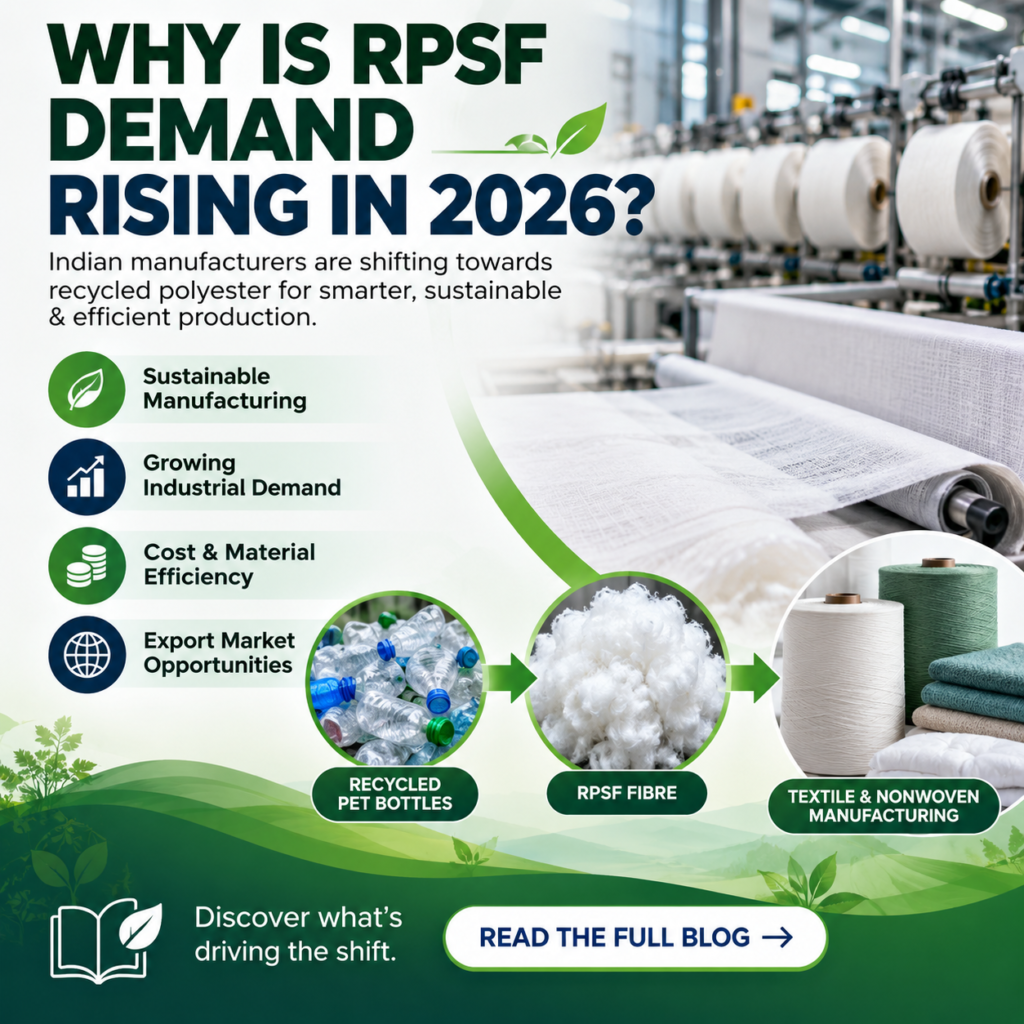
Post-consumer PET bottles have to be collected efficiently, sorted, cleaned and processed to be suitable recycled polyester feedstock. Contamination, mixed materials, inconsistent sorting or poor processing can affect the quality of the fiber produced.
Therefore, a controlled recycling process is required to produce RPSF with predictable characteristics.
The Difference is Manufacturing Control
It is not only the quality of raw material which ensures consistent RPSF.
Manufacturers need controlled processes in washing, flake preparation, extrusion, spinning, cutting and finishing. Regular quality checks can identify variations before products are shipped to customers.
With the right process controls in place, it is easier to produce the same product specifications from one production run to the next.
Why International Buyers Care About Consistency
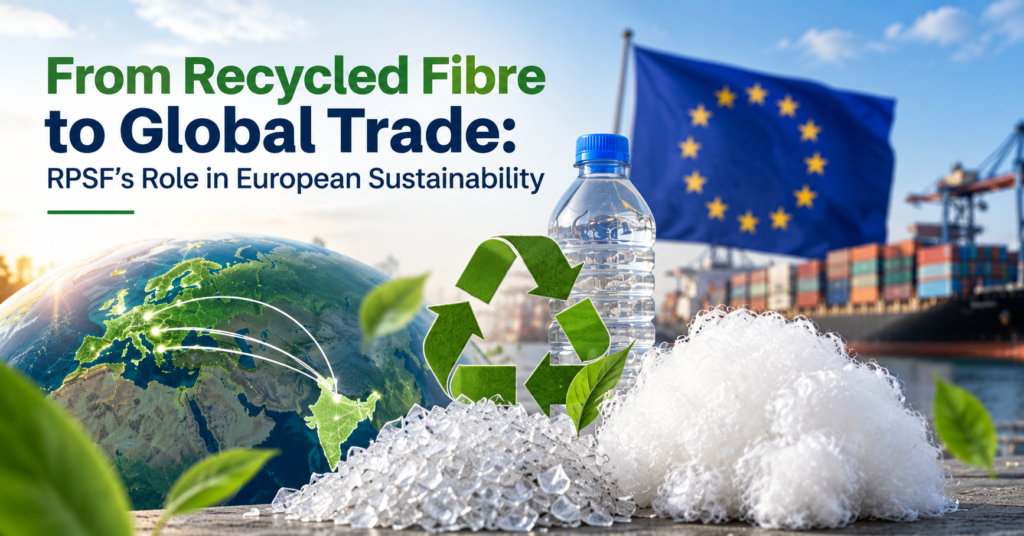
With international buyers, consistency is closely associated with reliability of supply.
There is a need for confidence in the performance of future shipments of RPSF from a textile manufacturer who purchases RPSF from another country. Too much variation from one shipment to the next can mean more testing, changes in production, and demands on quality control.
This means that buyers are increasingly assessing suppliers not only on price but also on their ability to hold specifications over time.
Consistency Equals Better Finished Products
The goal of RPSF is in the end to be part of some other product.
Recycled polyester staple fiber can be spun into yarn, made into nonwoven materials, or used in home textiles, automotive products, furniture filling, insulation and other applications, depending on the application.
The stability of the fiber properties allows the manufacturer to predict results in downstream processing more accurately. This can help to ensure that the final material looks, performs and is of a uniform quality.
Sustainability and Quality Need to Work Hand in Hand
The growth of recycled polyester is partly driven by the need to lessen reliance on virgin raw materials and better use post-consumer plastic waste.
But product performance should not be compromised for sustainability.
The long-term viability of recycled polyester depends on the ability to produce recycled materials that can meet the technical demands of modern manufacturing processes. A consistent RPSF helps show that recycled materials can be incorporated into demanding industrial supply chains without treating quality as an afterthought.
Establishing Trust with Consistent RPSF
Uniformity of fiber quality is an important part of our approach to recycled polyester manufacturing at Rakshitam Ecofibre. We control processes from the preparation of PET feedstock to fiber production and quality checks to help ensure the same product specifications for our customers.
With the world’s demand for recycled polyester on the rise, buyers will be looking for suppliers who can deliver both sustainability and consistency.”
Also Read: RPSF export markets what international buyers expect from indian suppliers
The recycled polyester is no longer evaluated only on the basis of the origin of its raw material. Its value also depends on how well it works. Fiber consistency is becoming a key component for RPSF manufacturers and buyers to create reliable, long-term recycled textile supply chains.