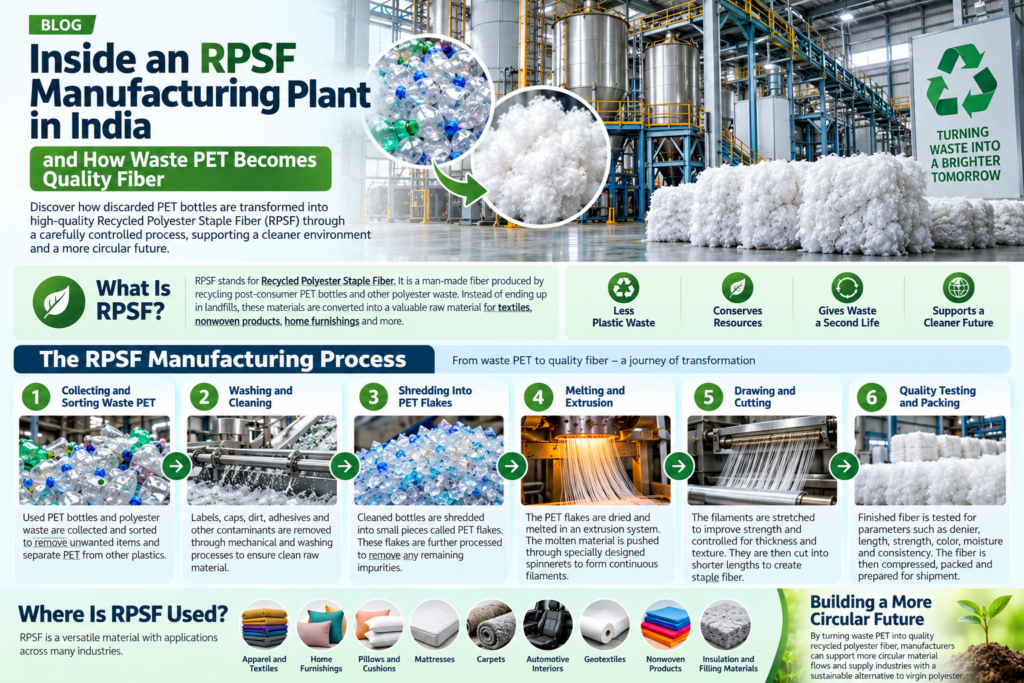
The global market for Recycled Polyester Staple Fiber (RPSF) is growing at an impressive pace with market reports projecting a Compound Annual Growth Rate (CAGR) of approximately 7.7% in the foreseeable future. With the world’s industries becoming ever more concerned with sustainability, resource efficiency and environmental responsibility, RPSF has become a material of choice for a number of sectors.
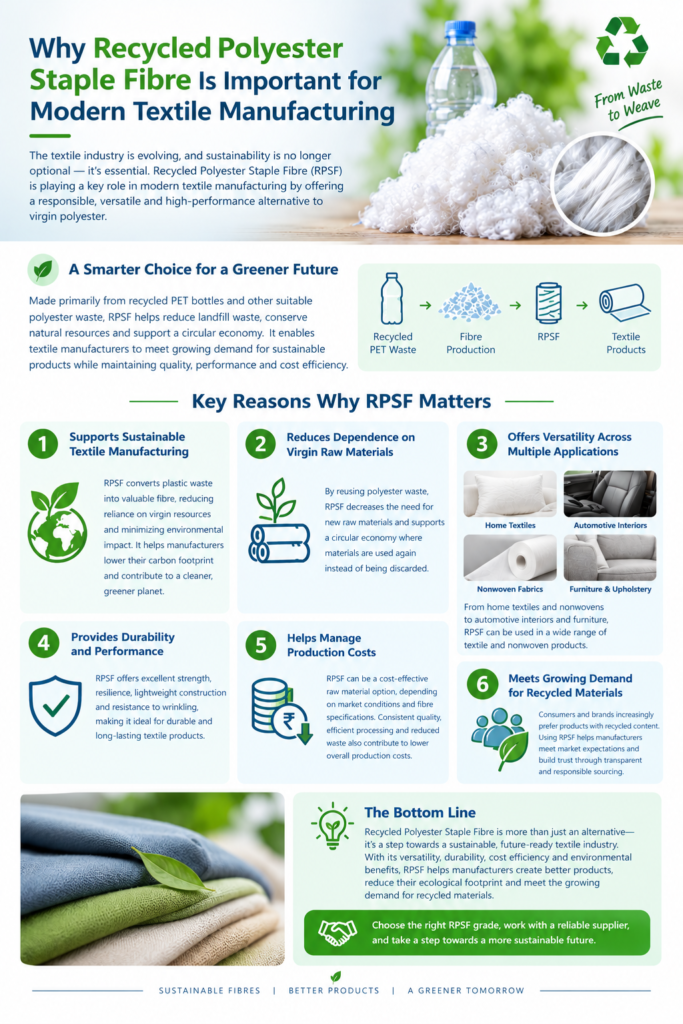
RPSF, made from recycled PET bottles, provides a practical solution to reducing plastic waste, while still meeting the performance demands of today’s industries. But what is causing this rapid growth? Let’s take a look at the key drivers for the increasing global demand for recycled polyester staple fiber.
The growing focus on sustainability
One of the biggest drivers of RPSF demand is the global move towards sustainable manufacturing and consumption practices.
Among governments, businesses and consumers there is more awareness emerging about the environmental consequences of plastic waste and over consumption of resources. Therefore, industries are looking for materials that align with their sustainability goals.
RPSF helps producers to reduce their reliance on virgin polyester and gives a second life to discarded plastic bottles. This fits in well with global environmental initiatives and corporate sustainability commitments.
Fears over Growing Plastic Waste
Plastic pollution is a worldwide problem. Every day millions of PET bottles are thrown away, creating a huge burden on waste management systems and natural ecosystems.
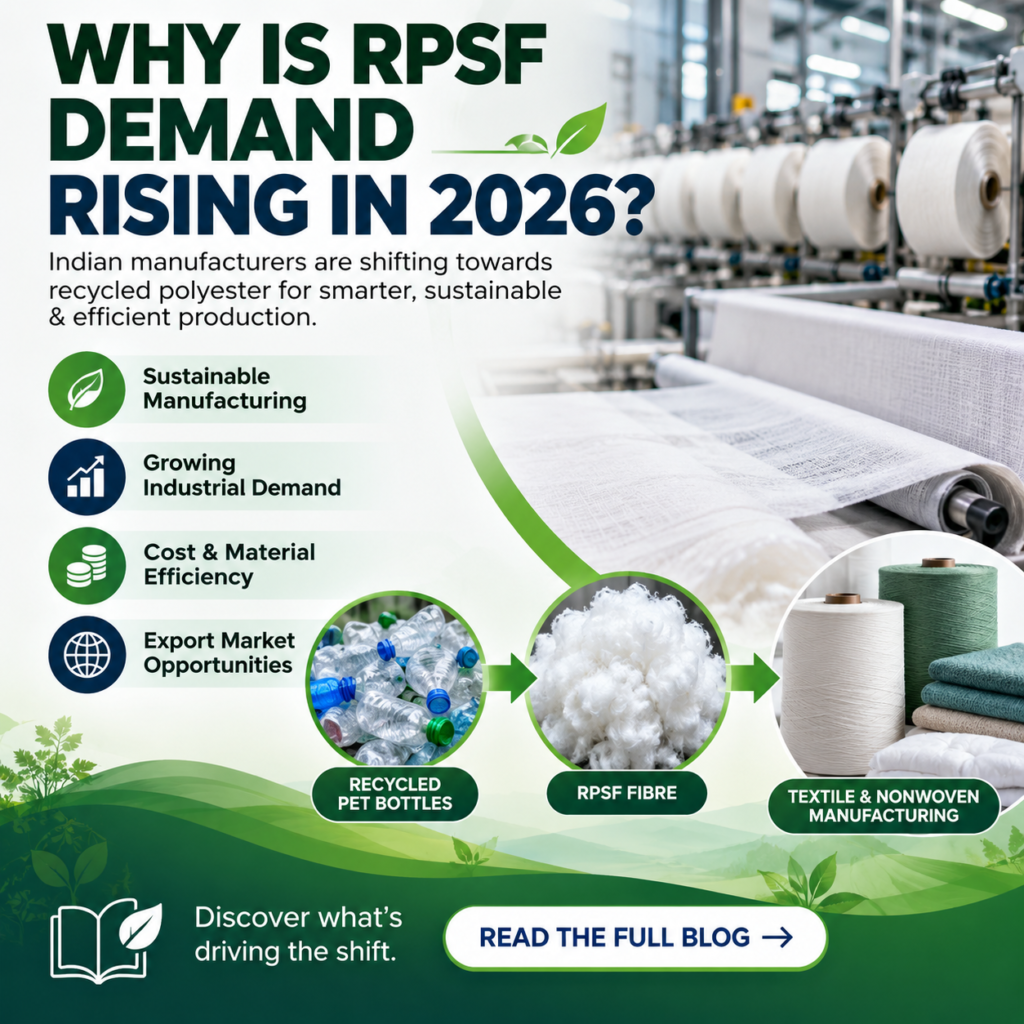
This waste is converted to industrial value in the form of recycled polyester staple fiber. Manufacturers convert used PET bottles into high-quality fibers, helping reduce landfill waste and support recycling efforts.
As efforts to tackle plastic pollution intensify from governments and organisations, demand for recycled materials like RPSF is also on the rise.
Strong Demand from Different Industries
Another important reason for the growth of RPSF is its versatility.
Currently, recycled polyester staple fiber is widely used in:
- Home furniture
- Bedding and mattresses.
- Cushions and cushions
- Car interiors
- Non woven fabrics
- Production of textiles
- Upholstery articles
- Stuffed toys and filling materials
Due to its durability, flexibility, and cost-effectiveness, RPSF is constantly expanding its use among various industries and applications.
Corporate Sustainability Programs
Many global brands have set ambitious Environmental, Social and Governance (ESG) goals. These initiatives often include commitments to reduce carbon emissions, cut waste and increase the use of recycled materials.
To reach these goals, manufacturers are adding more and more RPSF into their production processes. Recycled fibers allow companies to show their dedication to the environment and meet consumers’ demand for sustainable products.
As sustainability becomes a competitive advantage, demand for recycled polyester staple fiber is likely to grow that much more.
Government Regulations to Support Recycling
Governments across the world are implementing stricter regulations on waste management, recycling and environmental protection.
Many countries today provide incentives, recycling requirements and sustainability policies to encourage the use of recycled materials. These regulations are leading companies to use green raw materials and cut their reliance on virgin resources.
As regulatory frameworks continue to evolve, RPSF manufacturers are well placed to capitalize on the growing demand for sustainable alternatives.
Cost savings and efficiency of resource utilization
Economically, RPSF is benefiting from its growth but sustainability continues to be a key driver.
Recycled polyester staple fiber is often a cheaper alternative to virgin polyester. Manufacturers can achieve reliable performance with less reliance on raw material and better resource utilization.
Furthermore, recycling of PET waste preserves the petroleum-based resources used in traditional polyester manufacturing, and therefore RPSF is promising from both environmental and economic aspects.
Consumer Awareness is Growing
Today’s consumers are more aware of how the products they purchase affect the environment. Today many consumers look for brands that are sustainable whether they are buying clothes, furniture, bedding or automotive products.
The change in consumer behavior is pushing manufacturers to incorporate recycled materials into their supply chains. With the increasing demand of eco-friendly products, the demand for reliable and quality recycled polyester staple fiber is also increasing.
The Future of RPSF Industry
The future of the recycled polyester staple fiber industry is very bright. The growth of the market is expected to be further accelerated by advancements in recycling technology, expanding collection networks and growing investment in sustainable manufacturing.
With increasing support from governments, businesses and consumers, RPSF is becoming a key part of the global circular economy. It is a material that is increasingly vital for the future, because it helps to reduce waste, conserve resources, and provide consistent performance.
Also Read: How Recycled Polyester Staple Fiber helps reduce plastic waste
Conclusion:
The rising demand for RPSF, at a CAGR of 7.7%, is more than just market growth. It signifies a global shift towards sustainability and responsible resource management.
The factors driving the growth of the recycled polyester staple fiber market include increasing environmental awareness, increasing plastic waste problems, government regulations, corporate sustainability objectives, and increasing industrial applications.
With the growing emphasis on sustainable materials across industries, RPSF will remain at the forefront of environmentally responsible manufacturing, paving the way for a cleaner and more resource-efficient future for generations to come.