Plastic waste is among the most pressing environmental challenges facing the world today. Every day millions of plastic bottles are thrown away and a huge amount ends up in landfills, rivers and oceans. With more and more industries and consumers seeking sustainable options, recycled polyester staple fibre (RPSF) has emerged as a viable option to convert plastic waste into value-added products.
By using recycled polyester staple fibre made from discarded PET bottles, we can not only help manufacturing industries but also reduce environmental pollution and promote a circular economy.
What is Recycled Polyester Staple Fibre
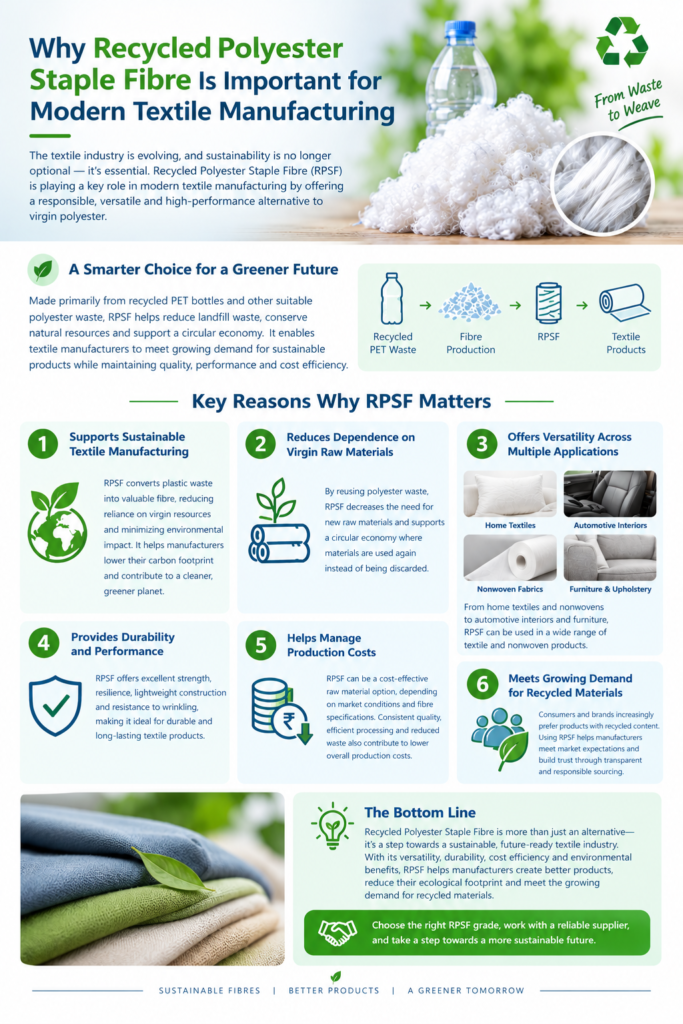
Recycled polyester staple fibre is a synthetic fibre made from recycled PET (Polyethylene Terephthalate) plastic materials, the main source of which are beverage bottles. Instead of ending up as waste, they are collected, processed and transformed into long-lasting polyester fibres that can be used in a wide range of industrial and consumer applications.”
The fibre produced has many of the same performance characteristics as conventional polyester, but virgin polyester production has a greatly reduced environmental impact.
Turning Plastic Waste into Valuable Fibre
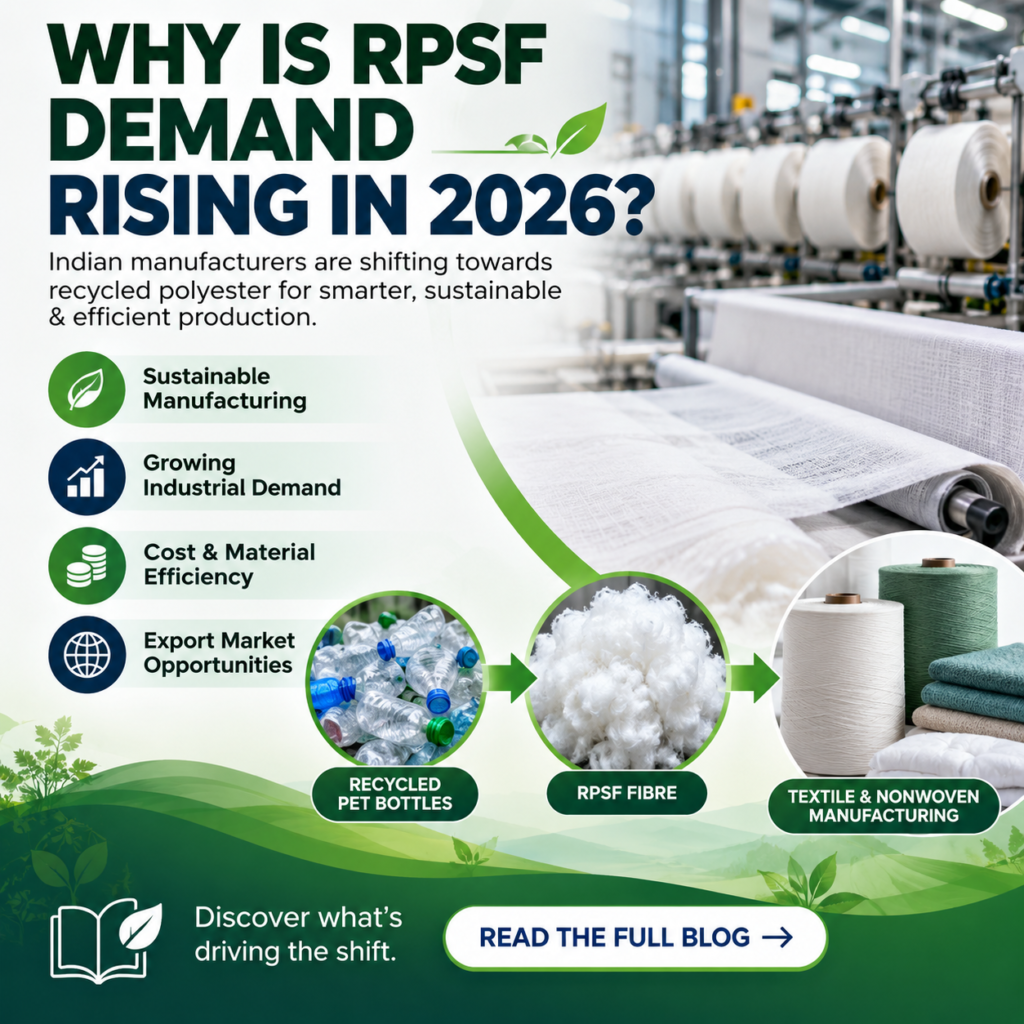
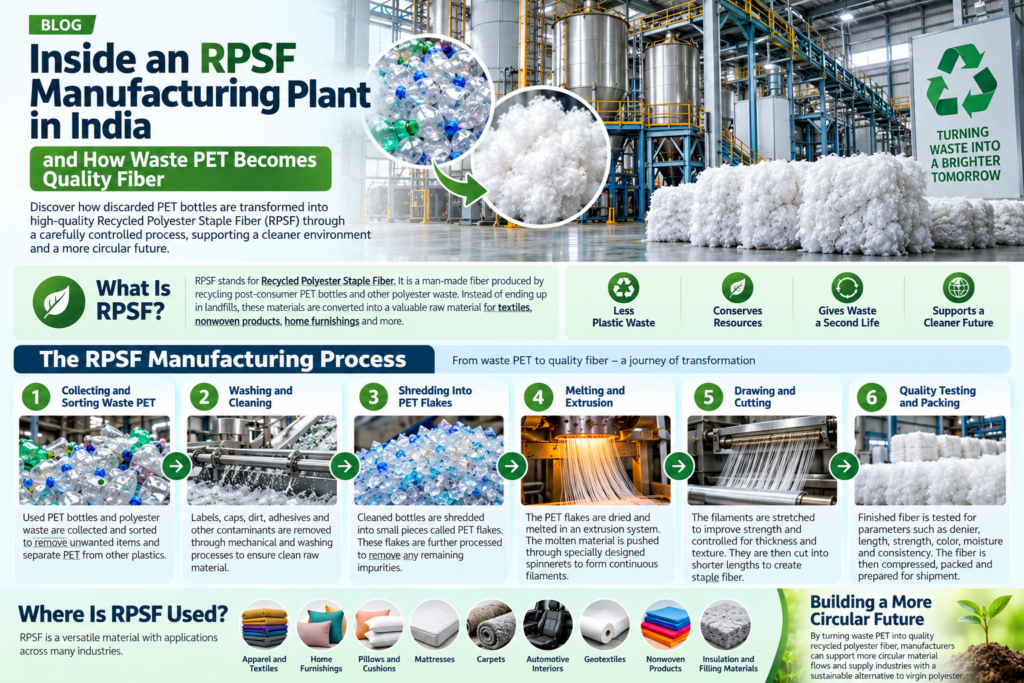
The production process of recycled polyester staple fibre starts from the collection of post-consumer PET bottles. These bottles go through a series of processing steps for quality and cleanliness.
A typical process is as follows:
- Used PET bottles collection
- Sorting and separation
- Removing labels and caps
- Cleaning and Washing
- Crushing to PET flakes
- Melting and extrusion
- Fibre fabrication and cutting
The recycled fibres after processing can be used in many industries, giving a second life to plastic waste and not polluting the environment.
Recycling for Plastic Waste Reduction
One of the biggest benefits of recycled polyester staple fibre is the direct contribution to reducing plastic waste.
Taking waste out of landfills
Plastic bottles take hundreds of years to break down. Recycling PET waste into polyester staple fibre helps divert large quantities of plastic from landfill and reduce the burden on waste management systems.
Pollution Prevention – Ocean
Improper disposal of plastic frequently causes it to enter rivers and oceans, endangering marine ecosystems. We can cut down on the amount of plastic that ends up in our natural environments and help keep our waterways clean by recycling PET bottles.
Advocating Responsible Waste Collection
The increasing demand for recycled materials means business for waste collection and recycling networks. This encourages improved waste disposal methods and increases recycling rates in communities.
Advancing Sustainable Production
An important element of sustainable manufacturing is recycled polyester staple fibre, which reduces the need for virgin raw materials.
Traditional polyester production is heavily reliant on petroleum-based resources. Recycled PET bottles help manufacturers save natural resources and reduce the environmental burden of extracting and processing new raw materials.
A lot of industries are now opting for recycled polyester staple fibre because it fits with their sustainability goals and helps them meet the increasing demand from consumers for more environmentally responsible products.
Uses of Recycled Polyester Staple Fibre
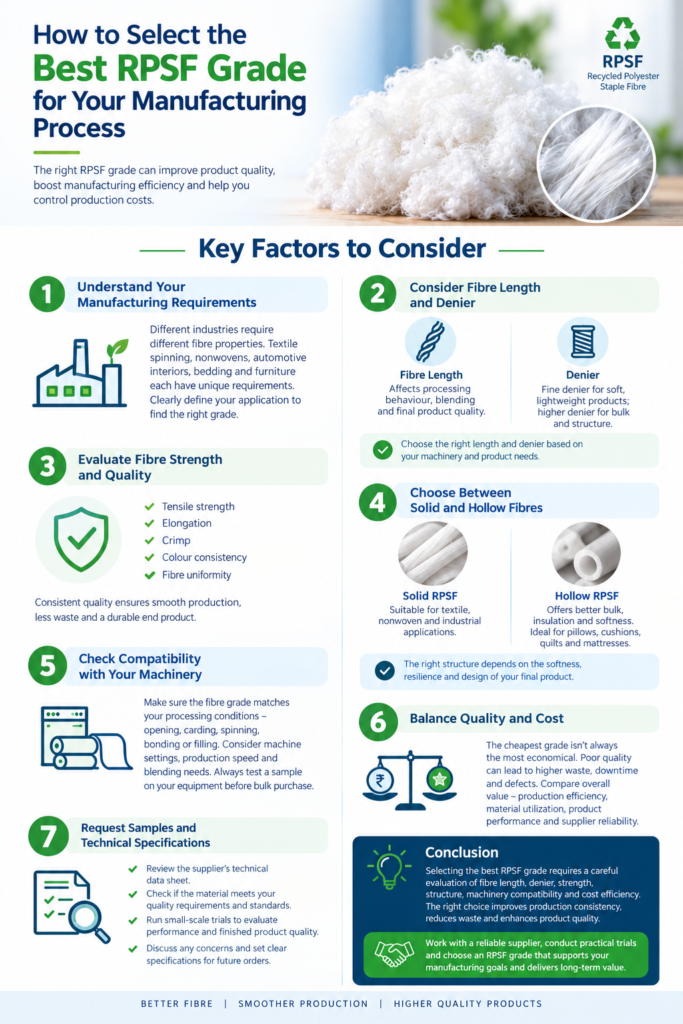
Recycled polyester staple fibre is very versatile and can be used in a variety of applications including:
- Mattresses & Bedding Items
- Pillows and cushions
- Automotive interiors
- Nonwoven fabrics
- Upholstery goods
- Textile production
- Soft toys and filling material
The need for sustainability is increasing and more and more industries are incorporating recycled fibres into their production processes.
Beyond Waste Reduction: Environmental Benefits
Recycled polyester staple fibre has many benefits beyond the reduction of plastic waste.
Reduced Carbon Emissions
Recycled polyester usually requires less energy to produce than virgin polyester, which helps to lower greenhouse gas emissions.
Conservation of Resources
Recycling of existing plastic material reduces the need for new petroleum based raw materials and helps to promote efficient resource use .
Support for a circular economy
One practical example of the circular economy is recycled polyester staple fibre. Waste is turned into value as materials that would normally be thrown away are converted into useful products.
Also Read: Sustainable Manufacturing inside indias Recycled Polyester Staple Fiber industry
Conclusion
Innovative manufacturing such as recycled polyester staple fibre is one example of how we can help solve the increasing problem of plastic waste. Manufacturers recycle PET bottles into useful industrial products that help save the environment and promote sustainable production.
As businesses and consumers become more environmentally conscious, recycled polyester staple fibre will continue to be a key player in reducing plastic pollution, conserving resources and creating a more sustainable future. Plastic waste is not a burden on the environment but a valuable resource if responsibly recycled and used in advanced manufacturing processes.