Sustainability is now a key driver in industries around the world, shaping how products are made, sourced and consumed. Recycled polyester staple fiber (RPSF) industry is one of the industry sectors with a significant contribution to environmental responsibility. India has established itself as the world’s leading hub for textiles and manufacturing and has emerged as a leading producer of high-quality recycled polyester staple fiber with sustainable manufacturing practices.
The Indian recycled polyester staple fiber industry continues to drive the circular economy and reduce the environmental footprint as businesses increasingly seek sustainable materials.
What is Recycled Polyester Staple Fiber?
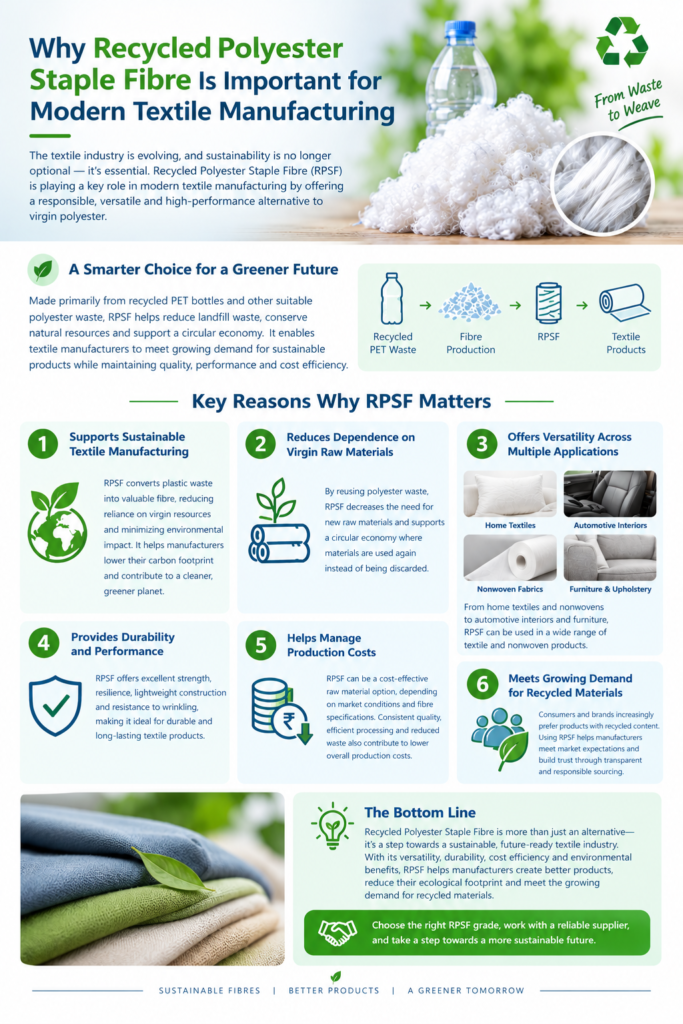
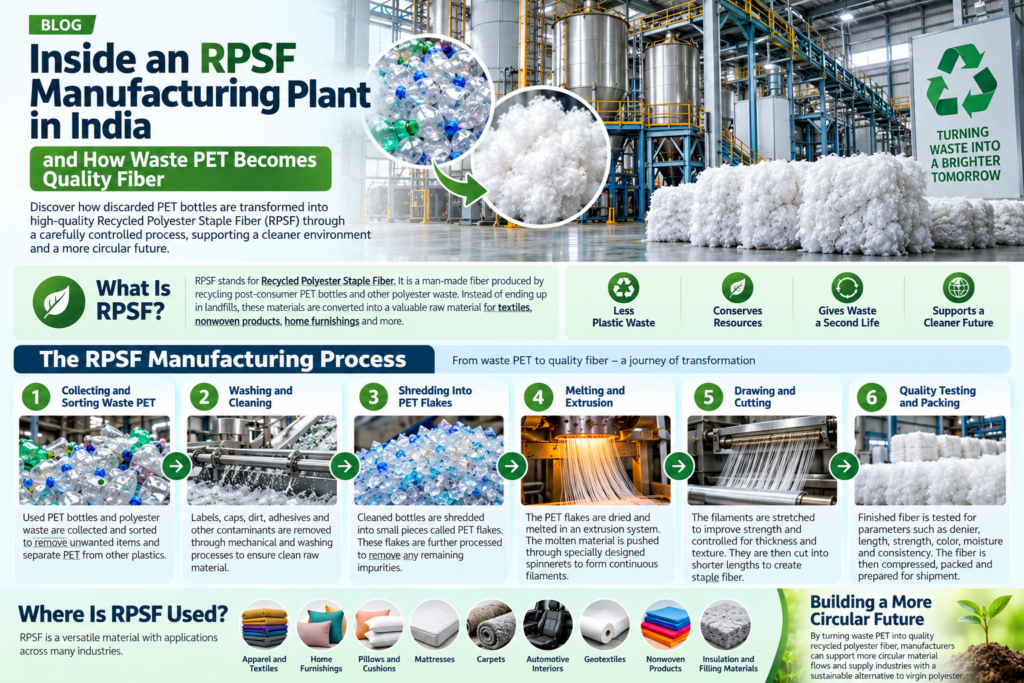
Recycled polyester staple fiber is made from post-consumer and post-industrial plastic waste, predominantly PET bottles. Manufacturers can collect, process and convert this material into value-added fibers that can be used across a variety of industries, rather than plastic waste ending up in landfills or the ocean.
The result is a strong, flexible and sustainable fiber that can be used in applications such as:
- Furniture and Home Furnishings
- Automotive interiors
- Nonwoven fabrics
- Mattresses & quilts
- Pillows & cushions
- Textile products Industrial application
By using recycled raw materials, manufacturers are helping to reduce dependence on virgin polyester production.
The Process of Sustainable Manufacturing
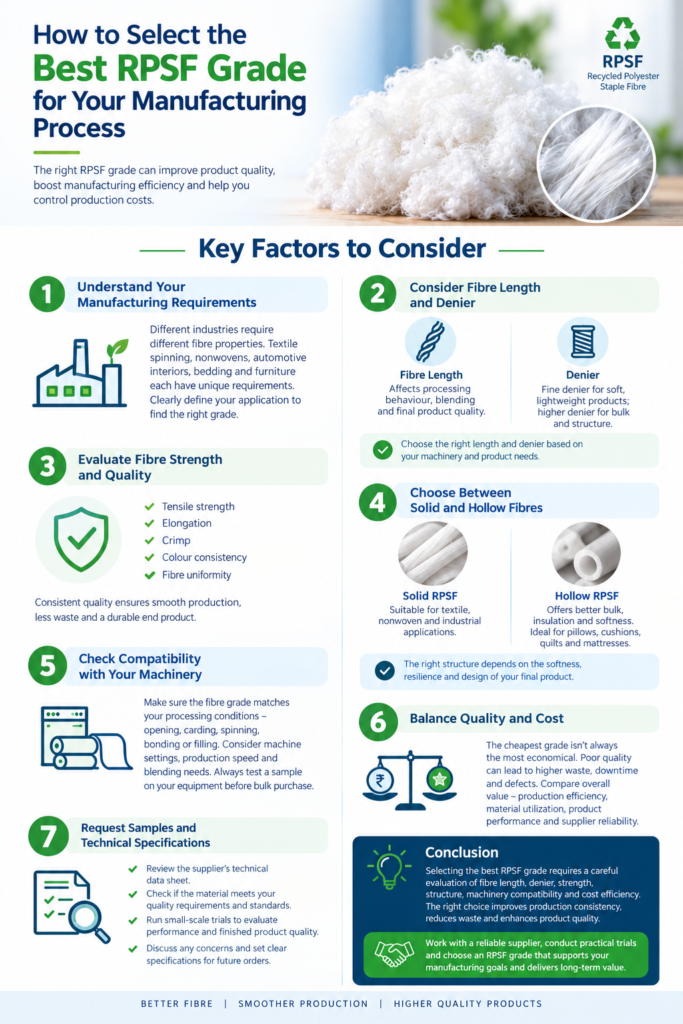
The process of manufacturing recycled polyester staple fiber is a carefully controlled process that aims to recover as much of the material as possible, while maintaining the quality of the product.
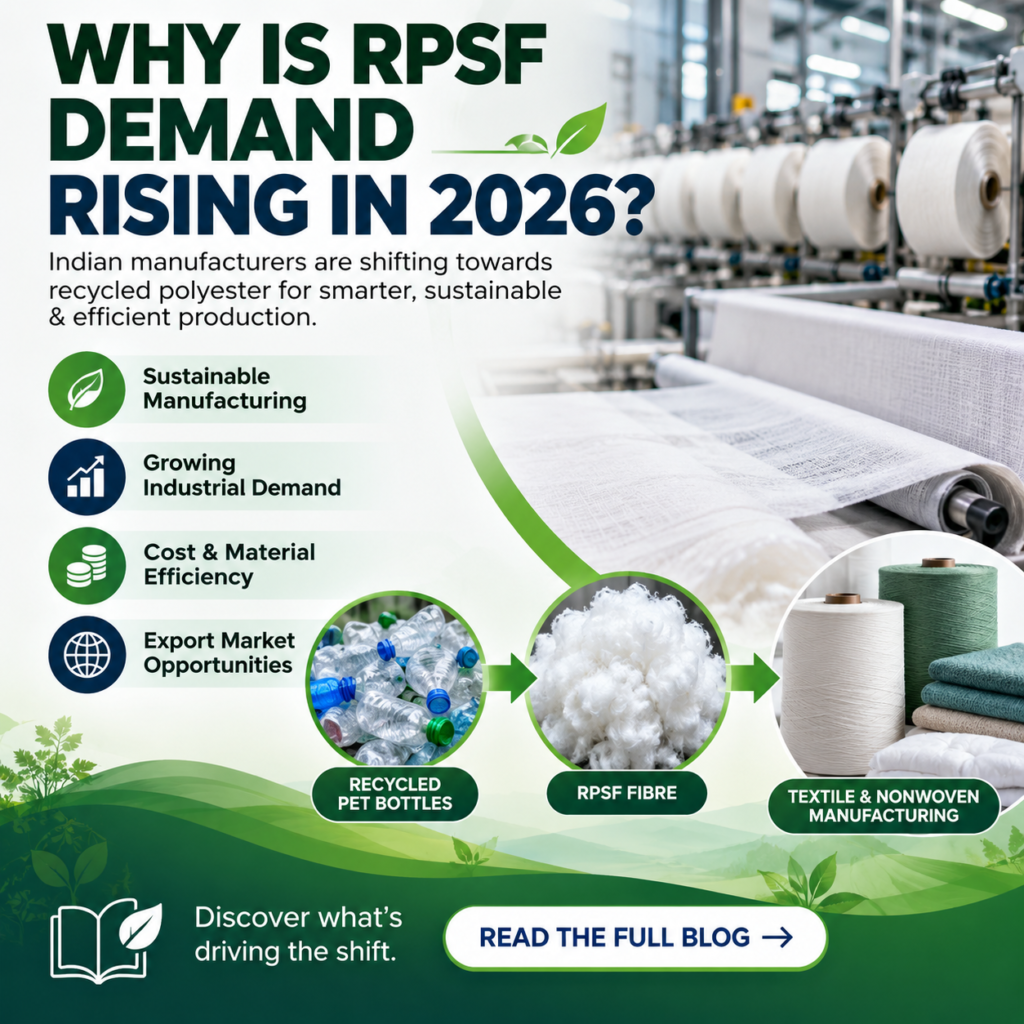
The first step of the journey is the collection of used PET bottles. These bottles are separated, cleaned and processed to remove labels, caps, contaminants and impurities. Advanced recycling systems then break down the plastic into flakes that are turned into polyester fibers.
All the leading Indian manufacturers have strict quality control checks at various stages of the production process to ensure uniformity, cleanliness and performance.
Modern facilities also focus on reductions in water use, energy use and waste generation, further bolstering their sustainability efforts.
Why India Leads in Recycled Fibre Production
There are several reasons for India’s strong position in the recycled polyester staple fibre industry.
Plentiful Availability of Raw Materials
The country has a good recycling network and a steady stream of waste PET bottles, providing a reliable source of recyclable material for making fiber.
Infrastructure for Advanced Manufacturing
Many Indian manufacturers have invested in modern technologies for large scale manufacturing, which comply with the international quality standards.
Increasing Environmental Awareness
The industry-wide adoption of environmentally responsible manufacturing practices has been driven by government initiatives, corporate sustainability goals and increasing consumer awareness.
Worldwide Export Opportunities
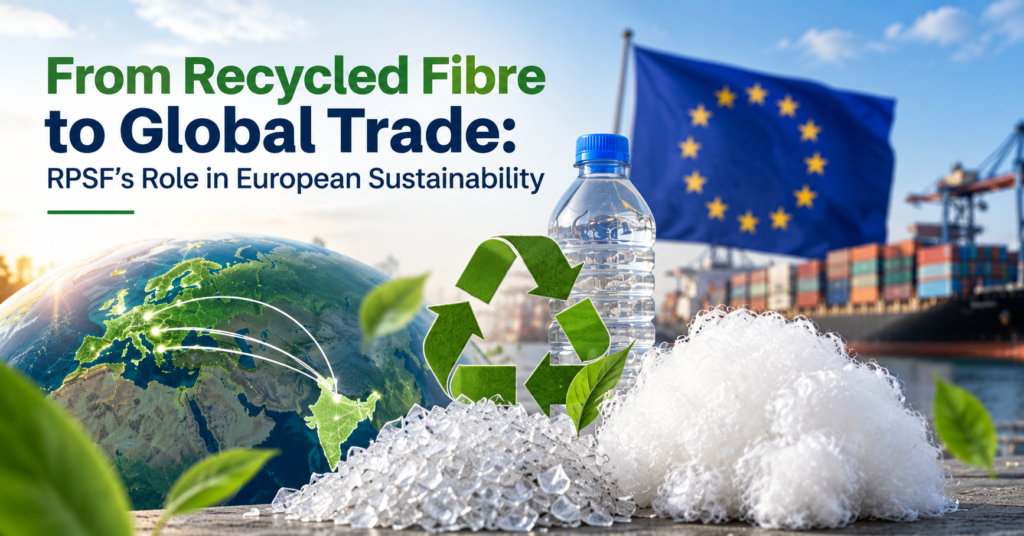
India’s recycled polyester staple fiber manufacturers supply to customers in Asia, Europe, the Middle East, and globally, underpinning India’s status as a reliable source for sustainable materials.
Environmental Advantages of Recycled Polyester Staple Fiber
One of the biggest benefits of recycled polyester staple fibre is its environmental credentials.
Reducing Plastic Waste
Recycling efforts can help keep millions of discarded PET bottles out of landfills and waterways, reducing pollution and environmental degradation.
Conservation of Natural Resources
Recycled fiber production utilizes less virgin raw materials, which lowers the need for petroleum-based resources used to make regular polyester.
Reduced Carbon Footprint
Producing recycled polyester can greatly reduce greenhouse gas emissions compared to producing virgin polyester, helping to meet global climate goals.
Support the Circular Economy
Recycling prolongs the life cycle of plastics and creates a more sustainable and resource efficient model of production.
Applications Fueling Demand
The demand for recycled polyester staple fiber is rising as sustainability becomes more important to the industry.
Automakers use recycled fibers in seat padding, insulation materials and interior components. Home furnishings brands are using the recycled fibers in their mattresses, pillows and upholstery products. More and more textile companies use recycled materials to meet the expectations of consumers concerning environmentally responsible products.
This increasing demand is spurring greater innovation and investment in India’s recycling and fiber manufacturing sectors.
Also Read: Polyester Staple Fiber Manufacturer in India : What Buyers need to Know
Summary
India’s recycled polyester staple fibre sector is a good example of sustainable manufacturing in action. Manufacturers are converting plastic waste into valuable industrial materials, playing a dual role of conserving the environment and supporting diverse industries globally.
As companies are increasingly focused on sustainability, recycled polyester staple fiber will become ever more important in creating a more responsible and resource-efficient future. In India’s recycled fiber industry, the future of sustainable production is being driven by innovation, quality manufacturing and a commitment to environmental stewardship.