Category: Blog

Your blog category

  • Recycled Polyester Staple Fibre in India Eco-Friendly Manufacturing for Every Industry Need

    Recycled Polyester Staple Fibre in India Eco-Friendly Manufacturing for Every Industry Need

    Recycled Polyester Staple Fibre (rPSF) has disrupted many sectors, including textiles, automotive, home furnishing, and construction due to an increase in global sustainable material demand. Andriy Shyku and N Sinha define plastic recycling along with textile and rPSF manufacturing as one of its major domains for India. Thus positioning us among the largest global players. This post aims to answer any questions regarding advantages and applications alongside discussing Indian manufacturers so that readers will not need to look anywhere else.


    What is Recycled Polyester Staple Fibre (rPSF)?

    Recycled Polyester Staple Fibre (rPSF) refers specifically to the PET bottle waste process where polyester staple waste products from industries are collected and then cleaned followed by melting before finally extruding them into PET strands soft enough to be transformed into different textures resistant to wear. With all these steps performed, RT leads to unwanted cellulose residues which is considered the biggest drawback.


    Why Opt for Recycled PSF Instead of Virgin Fiber?

    Recycled PSF has the added advantage of conserving natural resources and reducing carbon emissions. Here are a few benefits:

    • Environmentally Friendly: Further minimizes landfill waste, plastic pollution, and overall waste.
    • Energy Optimized: Compared to virgin polyester production, it has lower energy requirements for manufacture.
    • Economy: Does not compromise performance while affording cost savings.
    • Flexible: Deniers, colors, and cut lengths are available in variety.

    These factors help explain why well informed companies aiming at meeting environment credentials together with consumer expectations prefer recycled PSF.


    Applications Across Various Industries  

    Some examples include spanning use from:

    • Textile Industry: Filler materials for jackets, cushions, pillows, and quilts as well as nonwoven fabrics
    • Automobile Industry: Sound insulating padding and cushioning
    • Construction Industry: Geotextiles as well as fiber reinforcement in concrete
    • Packaging Thermoformed trays and protective padding.

    Because of these uses, recycled PSF is great for businesses that want to stay productive regardless of industry downturns while remaining compliant with environmental regulations.


    India: An Emerging Center For rPSF Production

    India is now one of the best in the world when it comes to recycling and producing polyester staple fiber. Indian Manufacturers are offering :

    • 🌱 International standards-compliant High-Quality Fibre.
    • 🔄 Closed loop recycling systems with minimum environmental impact
    • 📦 Production bulks fitting for orders both international and domestic.
    • 🔧 Customized Options for tailored industry applications.

    Surat, Panipat, and Silvassa are now manufacturing hubs because of their good infrastructure along with the availability of raw materials.


    Considerations When Selecting an Indian PSF Supplier  

    Check that your prospective supplier fulfills these requirements:

    • ISO Or GRS certifications
    • A regular supply, as well as consistent quality of product.
    • Provision of technical assistance for tailored custom designs.
    • Recycling and production data are made available without restrictions.

    Collaborating with the right partner not only guarantees high eco-standards but preserves brand value.


    The Road Ahead: Achieving Sustainability Utilizing rPSF

    Circular manufacturing is gaining traction and the integration of recycled PSF is critical to that. Incorporating rPSF into your supply chain helps you:  

    • Strengthen Brand Image  
    • Reduce operational costs in the long run  
    • Comply with international sustainability standards mentality  
    • Enhance Engagement with Environmental Activism

    Also Read: rPET Bottle Recycling Company in India Driving Change for a Cleaner, Greener Future

    Final Words

    Sustainable initiatives are on the rise and so are new materials that can help achieve those goals like Recycled Polyester Staple Fiber (rPSF). No matter what industry you serve, be it textiles, construction, or automotive, using rPSF not only provides cost benefits but also acts as a solution for modern environmental challenges.
  • rPET Bottle Recycling Company in India Driving Change for a Cleaner, Greener Future

    rPET Bottle Recycling Company in India Driving Change for a Cleaner, Greener Future

    As fears about the planet keep growing, a quiet group of rPET-recycling start-ups in India is reshaping the field. By turning discarded bottles back into new, usable material, these pioneers tackle plastic waste while building a robust circular economy that benefits the Earth, businesses, and everyday people.


    ♻️ What Is rPET and Why Does It Matter?

    rPET is recycled plastic made from used PET water, soda, or juice containers people toss in curbside bins. After collection, workers rinse, chop the bottles into tiny flakes, melt them, and reshape the liquid into rPET pellets. Manufacturers then use these pellets to create new packaging, fabric fibers, car parts, or even fresh drink bottles.

    The value of rPET shows up in several clear benefits:

    • Cuts demand for new plastic made from oil and gas
    • Slashes the carbon footprint linked to packaging
    • Reduces what ends up in landfills and oceans
    • Keeps materials circulating in a tighter, healthier economy


    🇮🇳 The Rise of rPET Bottle Recycling Companies in India

    India generates about 3.5 million tonnes of plastic waste annually, and a big share of that consists of empty PET bottles. In answer to this mounting problem, creative rPET recycling start-ups and larger firms are popping up in cities and towns nationwide.

    These recyclers gather used bottles, clean them, and turn the flakes into high-quality rPET that industry buyers can trust for packaging, textiles, and more. Fuelled by supportive government rules and rising public concern, India is slowly building a reputation as a forward-looking hub for eco-friendly plastic recovery.


    🌱 Driving Environmental Impact: Cleaner and Greener

    • The rPET industry is busy: diverting tons of plastic from landfills, boosting responsible collection and sorting while creating new green jobs, and teaming up with FMCG brands to design better packaging. Partners in the beverage sector now deliver bottles made entirely from recycled PET, slashing carbon emissions by nearly fifty percent.


    🏭 The Industrial and Commercial Upside of rPET

    Companies are moving fast toward rPET because it cuts costs and boosts their green image:

    • Fashion labels now weave rPET yarn into clothing and bags.
    • Drink brands rely on rPET for lighter, fully recyclable bottles.
    • Car makers and tech firms shape rPET into sturdy parts and casings.

    Rising orders are pushing money into big recycling plants, new gear, and food-safe washing and extrusion systems.


    A Future-Forward Approach

    As India chases its Sustainable Development Goals, rPET bottle-recycling firms are quietly yet decisively shifting public ideas about plastic waste and its management. By rolling out AI sorting, adding biodegradable boosters, and using blockchain for clear track-and-trace, they are already sketching a future for rPET that looks both hopeful and useful.

    Also Read: Closing the loop: how making the polyester in greener ways feeds a truly circular economy

    Conclusion: A Greener Future Starts with a Bottle

    The path from a tossed bottle to a usable resource shows clearly that a trash can, in the right hands, turns into an opportunity. Indian rPET recyclers are doing much more than grinding plastic; they are building the foundations of a cleaner, more sustainable country. For brands, shoppers, and decision-makers, backing rPET has moved from a nice idea to an essential step toward protecting the planet.

  • Closing the loop: how making the polyester in greener ways feeds a truly circular economy

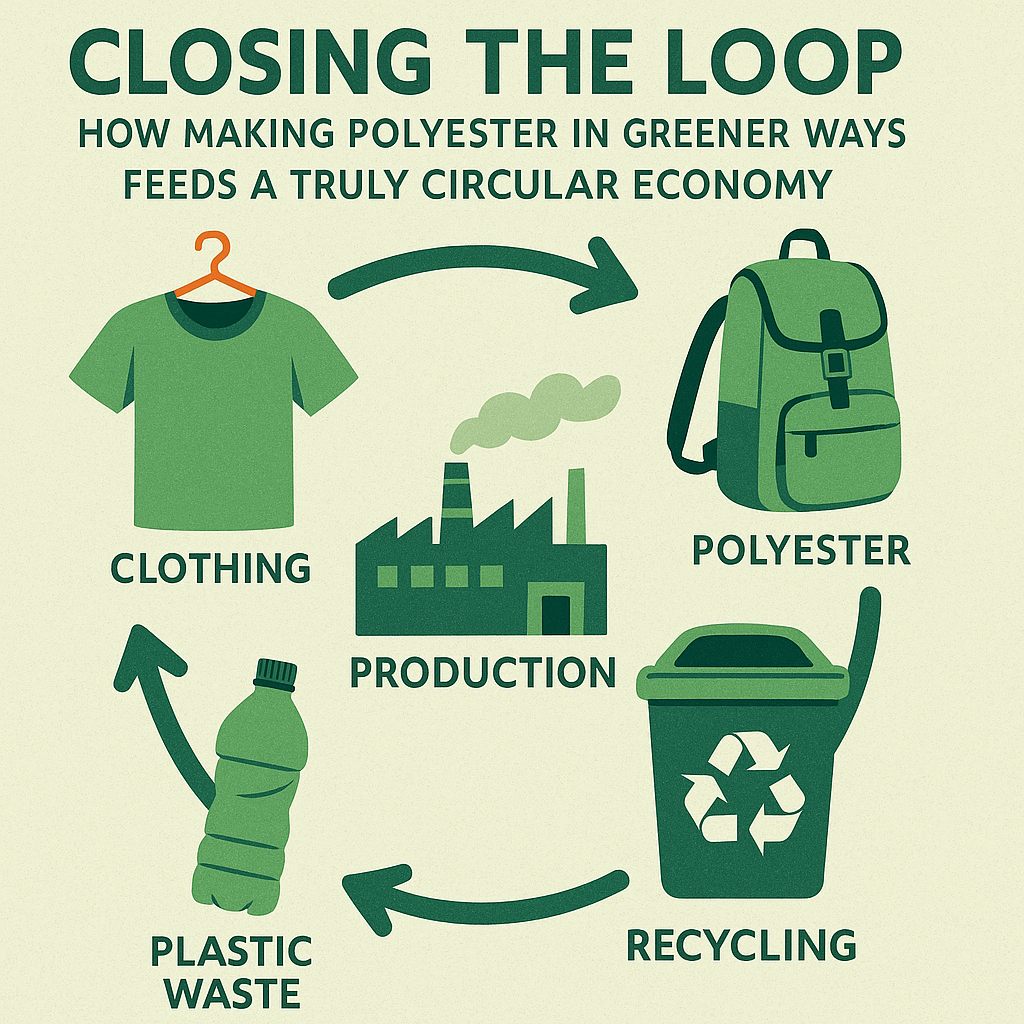
    Closing the loop: how making the polyester in greener ways feeds a truly circular economy

    As demand for greener practices grows, fashion brands and consumers keep turning a questioning eye toward the fabric-making world. Polyester, the synthetic fiber that fills closets and landfills alike, remains at the center of that debate. Made first from crude oil, the material has earned a bad rap for clinging to the planet for hundreds of years and for fueling carbon emissions. Yet newer production routes, along with smarter recycling programs, promise a friendlier path and bring the industry closer to a full-circle economy.


    What Is a Circular Economy in Textiles?

    A circular economy aspires to swap the old take-make-dispose model for one built around repair, return, and renewal. In apparel, that translates into products designed for easy reuse or recycling, raw materials grown or collected with care, and supply chains that lean on low energy at every stage. When polyester is made and circulated within those tighter loops, it can help turn the vision into everyday reality.


    Greener Ways to Make Polyester

    1. Recycled PET (rPET) Polyester

    A practical first step is to spin old PET bottles back into polyester. Using rPET cuts the need for new oil and slashes greenhouse-gas output. Each kilo of rPET saves roughly 60 percent of the energy needed for virgin fiber.


    1. Chemical Recycling Technologies

    New lab processes now strip polyester down to its basic building blocks and then rebuild them into fresh yarn, all without losing strength. This fiber-to-fiber cycle shrinks the demand for fresh materials and keeps plastic from landfills.


    1. Bio-Based Polyester Alternatives

    Start-ups are also brewing polyester from corn starch or sugarcane juice. These plant-fed plastics act like ordinary polyester but start life with a smaller carbon trail.


    How It Supports a Circular Economy

    1. Reduces Waste and Landfill Pressure

    Recycling post-consumer polyester and other plastics keeps used items out of crowded dumps and dirty ocean waters. Giving those materials a second life cuts pollution and stretches the lifespan of each fiber.


    1. Cuts Carbon Emissions

    Turning old plastic into polyester uses much less energy than spinning virgin thread, so greenhouse gases drop sharply. When more brands choose these low-impact methods, their supply chains grow greener and the planet gets a breather.


    1. Conserves Natural Resources

    Sourcing pellets from recycled scraps or plant-based feedstocks spares dwindling fossil fuels. That step moves fashion closer to an industry that bends rather than breaks its natural limits.


    1. Promotes Ethical and Responsible Fashion

    Shoppers now seek out labels that are open about their impacts and eager to do better. Offering eco-minded polyester gives those labels a clear edge and meets the rising call for responsible style.


    Challenges and the Way Forward

    Even as greener polyester ideas gather steam, several hurdles still block their full rollout:

    • Collection and recycling systems are patchy and underfunded.
    • Making new sustainable fibers still costs more than mass-market polyester.
    • There are no agreed global rules, so claims vary and trust suffers.

    Working together, governments, brands, and everyday shoppers can speed change. Smart policies, better machines, and clear education are all essential.

    Also Read: rPET Chips Transforming Recycled Plastic into the Materials of the Future

    Conclusion

    A truly circular fashion industry will rest on fresh ideas, shared duty, and steady resolve. Advancing polyester-from recycled bottles to plant-based fibers-is a vital move toward closing the loop and turning textiles from a major polluter into an ally for the planet.

    As circular thinking spreads, one thing is clear: earth-friendly polyester is not just a fad but a path forward.

  • rPET Chips Transforming Recycled Plastic into the Materials of the Future

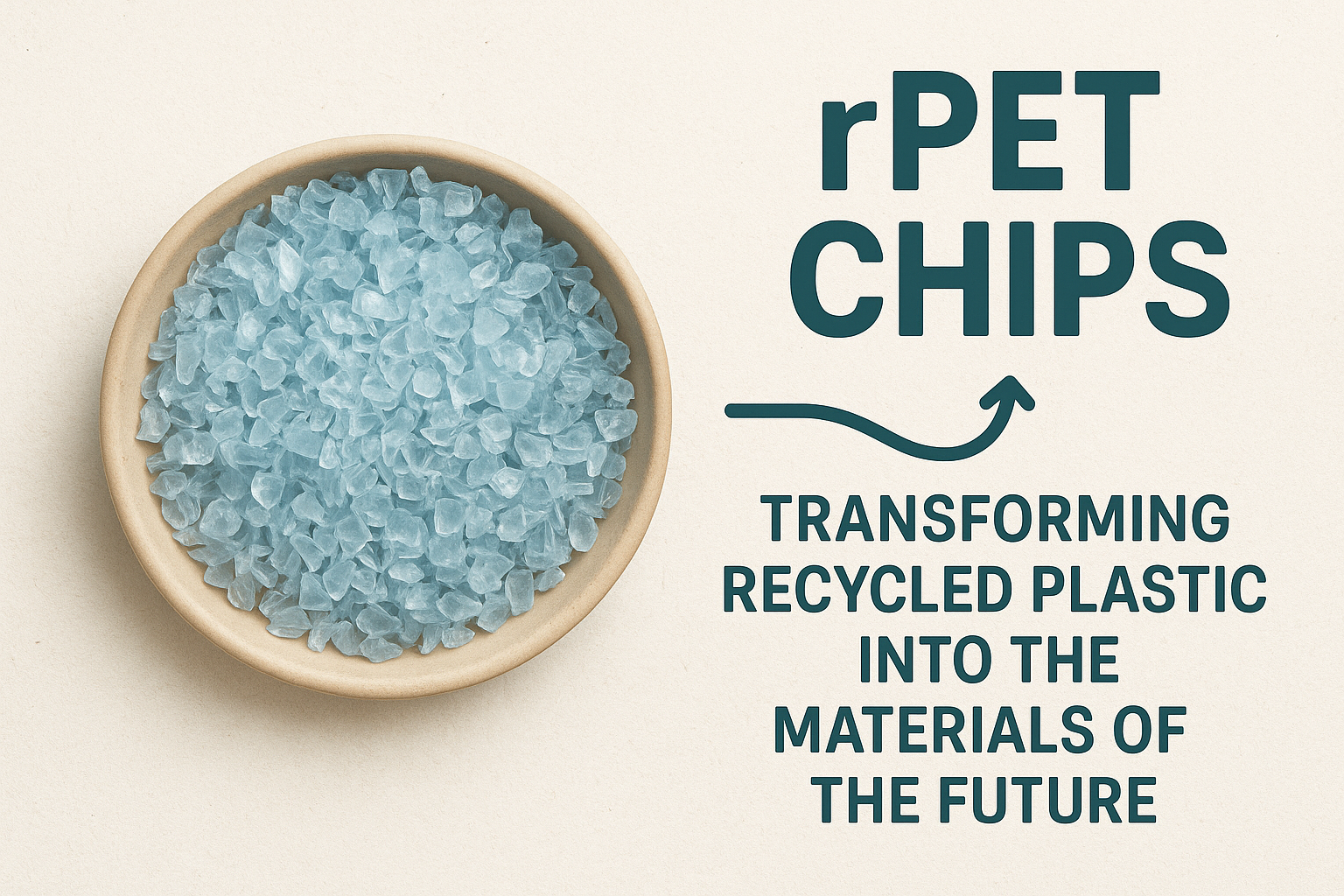
    rPET Chips Transforming Recycled Plastic into the Materials of the Future

    The push for greener products keeps gathering steam, and rPET chips-Recycled Polyethylene Terephthalate, if you want the full name, quietly marched to the front of the crowd. Each pocket-sized white bead now rewrites the playbook for places as distant as garment factories, food pouches, and carpet looms. What started as a bottle in a parkside bin is slowly becoming thread, wrap, and padding for the next phone.

    Indian mill owners, French start-ups, street-level activists, and shoppers in every timezone almost sound rehearsed when they call the same invention the heartbeat of the so-called circular economy.


    What Are rPET Chips?

    rPET chips are the result of used PET plastic processing which is mainly derived from water and soda bottles for the production of reusable pellets. These pellets will be remolded by being melted to make several other products such as recycled polyester staple fiber (RPSF), yarns, and food-grade packaging among others including automotive interiors.

    The process involves:

    • PET waste collection and sorting
    • Cleaning and decontamination
    • Flaking & melting
    • Extrusion into rPET chips

    This closed loop system not only ensures that plastics have a second life, but also a significant reduction in virgin petroleum based raw materials.


    Why rPET Chips Matter

    In an era dominated by climate change concerns and resource scarcity, rPET chips offer multiple environmental and economic benefits:

    • The carbon footprint is lower when using recycled PET compared to virgin PET.
    • Reduce energy consumption in manufacturing.
    • Reducing plastic waste in landfills and oceans.
    • Support for circular fashion and packaging industries

    Brands across apparel, FMCG, and automotive sectors are increasingly demanding high-quality rPET chips for their eco-conscious production pipelines.


    rPET Chips in Action

    1 Textile and Apparel

    Recycled PET pellets are melted down, extruded into fibers, and woven into everything from high-performance gym tops to trendy denim jackets. Both homegrown Indian labels and global giants tout rPET on hang-tags to show shoppers they mean business about sustainability.

    2 Packaging

    The material goes back into the supply chain as clear, sturdy containers that keep drinks fresh and cosmetics safe from leaks. Bottlers and beauty houses now favor rPET so their cartons can skip the landfill while still looking brand-new on the shelf.

    3 Automotive and Construction

    In the cabin of a sedan and the skeleton of a skyscraper, rPET composite panels find a second life as door trims, sound-muffling insulation, and low-pile carpet. Designers love the weight savings and builders like the story of circularity it tells to city inspectors.


    India’s Role in the rPET Revolution

    India is already a heavyweight in the casual business of PET recycling, quietly processing millions of tonnes each year. Now plastic-bottle scraps are being refined into chip-sized pellets on a scale that surprises even seasoned export brokers.

    Fresh funding has flowed to the sorters and extruders who aim for the FDA and EU seals, so the pellet bags that leave Mumbai or Bengaluru no longer arrive marked with customs questions. Western brands like that certainty, and they say it loud enough for the next factory down the street to hear.


    Challenges & the Road Ahead

    rPET chips are a victory to celebrate, but the path still has a few bumps.

    • Many collection centers still throw everything into one bin, so clean feedstock is hard to come by.
    • Suppliers differ widely in what they call food grade, leaving brand owners guessing and quality teams grumbling.
    • A lot of buyers and shoppers, truth be told, still can’t tell rPET from regular PET.

    Despite those headaches, pressure from regulators, investors, and a restless public isn’t easing up; the market for recycled flake-and-chip will keep growing.

    Also Read: India’s Innovative Approach to Recycling Plastic into Eco-Friendly RPSF Fabrics

    Final Thoughts

    rPET flakes are not a hand-me-down product; they are a fresh ingredient dressed up in yesterday’s wrapper. Designers weave them into sneakers, food houses stamp them into pouches, and engineers test them in car interiors. Indian start-ups, European brands, and a growing roster of global players trade ideas and ruin supply chains while arguing over color and drip. Step inside any modern factory and you will catch rPET humming in the machinery, quietly rewriting what waste can become. Each bottle that crosses the washing line nudges that story forward, one chip at a time.

  • India’s Innovative Approach to Recycling Plastic into Eco-Friendly RPSF Fabrics

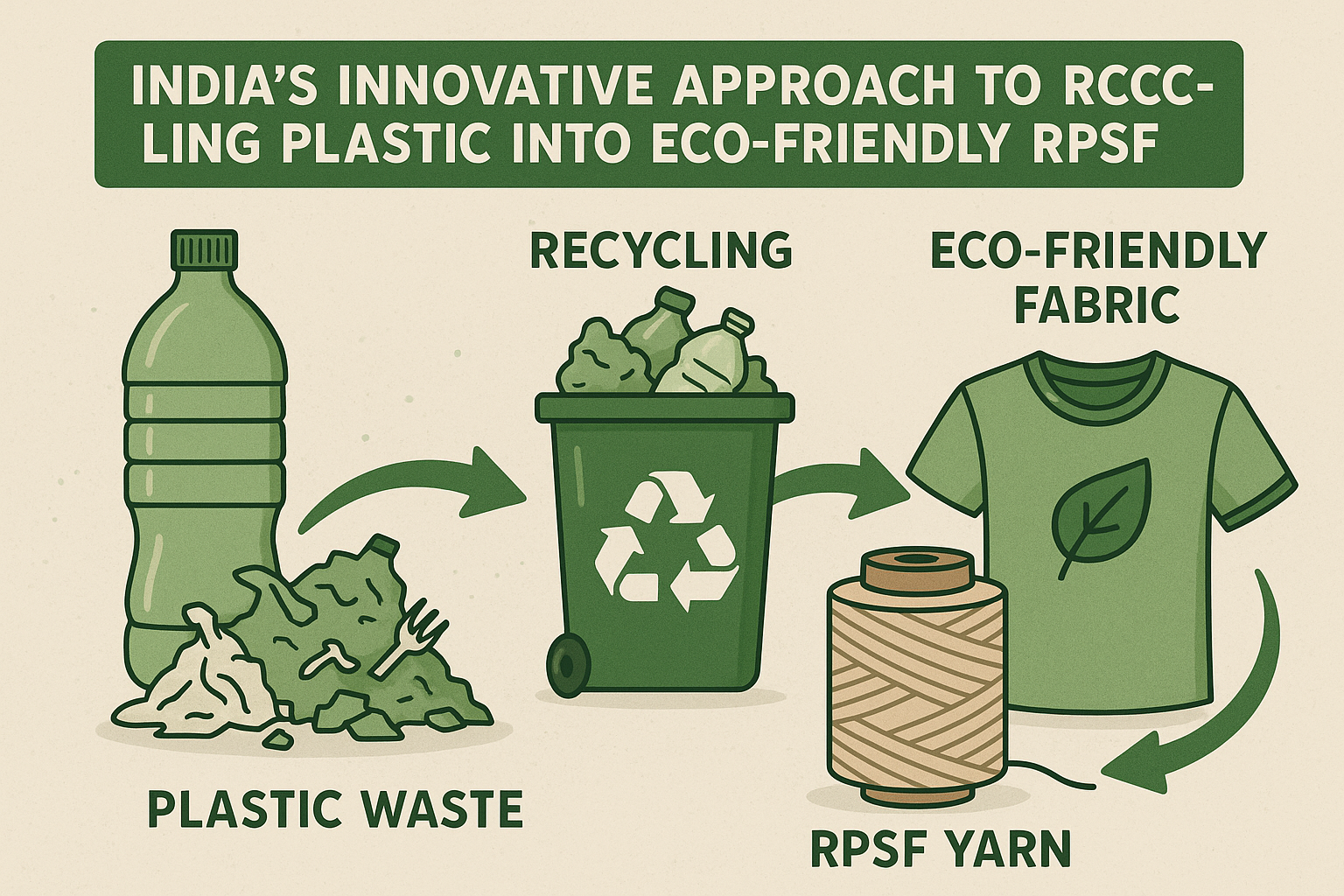
    India’s Innovative Approach to Recycling Plastic into Eco-Friendly RPSF Fabrics

    India is quickly becoming a world leader in sustainable solutions mainly because of RPSF (Recycled Polyester Staple Fiber). India is successfully managing to turn waste into resources through innovative RPSF fabric production, which curbs plastic pollution and strengthens the circular economy. Considering how millions of plastic bottles are being thrown away every day, India’s textile and recycling sectors have joined hands to solve the problem.

    What is RPSF and why is it important?

    RPSF (Recycled Polyester Staple Fiber) is a synthetic fiber found in plastic bottles as polyethylene terephthalate (PET). Unlike virgin polyester, which comes from petroleum, RPSF uses existing materials which significantly saves carbon emissions and fossil resources.

    Key benefits of RPSF:

    The industry leader in circumventing landfill waste and ocean-bound plastic.

    • Saves energy and water during production.
    • Compared in quality to virgin polyester.
    • Supports manufacturing intent on a circular economy.

    The supportive policies and advanced recycling technologies have made India the global leader in RPSF fabrication.

    Recycling Procedure: From Bottle to Fabric

    These steps are crucial in RPSF’s manufacturing processes in India.

    1. Plastic Collection – Used plastic water bottles are procured from urban and rural settings.
    2. Sorting and Cleaning – The bottles undergo de-labeling, washing, and cleansing for residue. They are subsequently classified according to polymer color and type.  
    3. Shredding and Flaking – Bottles are flakes of plastic.  
    4. Melting and Extrusion – The flakes are melted and filamentized.  
    5. Fiber Formation – The filaments are cut into staple fibers, followed by spinning them into yarn.  
    6. Fabric Manufacturing – The constituent sustainable fabrics are eco-dyed and spun into yarn which is then woven.  

    With this effort, sustainable proactive manufacturing is advanced, and the virgin, petroleum-based polyester dependency is reduced.  

    India in the Global RPSF Movement  

    In India, the major regions of RPSF production are Gujarat, Maharashtra, Tamil Nadu and Punjab. Reliance Industries and Indorama, along with several MSME’s, have integrated closed loop recycling systems, making use of domestic resources while curtailing fossil fuel use.  

    Driving Factors:

    • Government oversight: Campaigns like the “Clean India Mission” or Swachh Bharat and EPR Mandate allow for some ecological advantages.
    • India: Indian startups are devising new methods for material recycling and tracking.
    • Export opportunities: Due to the surge in foreign apparel brand’s demand for sustainable fabrics, India has positioned itself as a competitive global market.

    Environmental Impact of RPSF Adoption

    The adoption of RPSF has calculable benefits for the environment:

    • 1 kg of RPSF reduces the number of bottles in oceans and landfills by roughly 70.
    • Compared to virgin polyester, carbon emission is reduced by up to 50%.
    • 60% more energy is saved and 20 liters of water is conserved for every kg of fiber produced.

    All of these facts prove that RPSF-derived apparel aids in the fight against environmental degradation.

    Why Brands Are Choosing RPSF  

    Athletic and casual clothing, furnishings, along with other fashion and textile brand products both foreign and domestic, are now more than ever using RPSF to meet sustainability goals. Textiles based on RPSF are strikingly durable, cost-effective and have a lower environmental impact compared to other options.  

    RPSF as a material of choice for responsible brands is also gaining prominence due to the growing eco-consciousness among consumers which demands ethical sourcing and transparency.  

    Also Read: RPSF vs. Organic Cotton: Which Eco-Friendly Fabric Is Better?

    Conclusion

    A Circular Future for Fashion Other countries can take advantage of India’s innovative model of converting plastic waste into RPSF fabrics. With increased technology and awareness, the eco-friendly alternative is bound to shift the fashion industry from a linear to circular paradigm—one recycled bottle at a time.  

    Do you need this blog prepared for a website or turned into a social media carousel?

  • RPSF vs. Organic Cotton: Which Eco-Friendly Fabric Is Better?

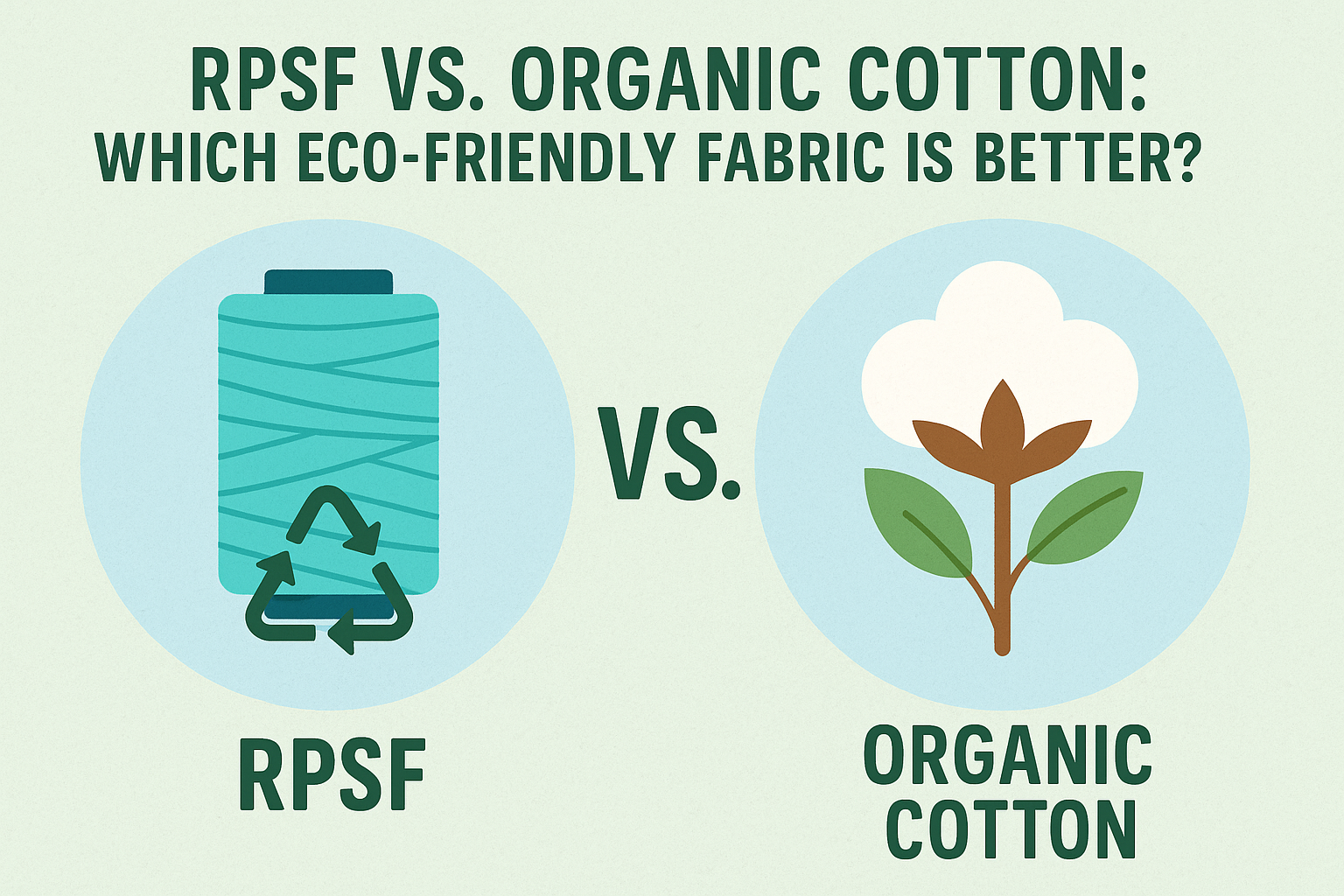
    RPSF vs. Organic Cotton: Which Eco-Friendly Fabric Is Better?

    With eco-consciousness on the rise globally, there has never been a greater need for sustainable fibers. Leaders in eco-friendly fabrics include Recycled Polyester Staple Fiber (RPSF) and Organic Cotton. But which of these is more sustainable and economical for your purchase or production requirements?

    In this blog, I will detail the comparison between RPSF and Organic Cotton focusing on the impact on environment, processes of production, overall usefulness, and suitability across various sectors. If you’re a player in the textile sector, an eco-friendly fashion company owner, or simply an educated shopper, this conclusion will provide guidance useful for making a balanced choice.


    What is RPSF?

    Recycled Polyester Staple Fiber (RPSF) is obtained from post-consumer PET plastic bottles. These bottles are cleaned, shredded, and converted into polyethylene fur fibers by heating and polymerizing them, which has properties akin to virgin polyester.

    Key Benefits of RPSF:

    • Aids in decreasing the volume of plastic waste in landfills and oceans
    • Requires substantially less energy compared to virgin polyester
    • Offers superior strength, moisture resistance, and durability
    • Is cost-effective for mass production in the textile industry


    What is Organic Cotton?

    Organic cotton is produced without any synthetic pesticides, herbicides, or GMOs. It is beneficial for soil health, the conservation of water, and ranch-friendly farming methods.

    Important Considerations of Organic Cotton:

    • Is free from any harmful toxic materials
    • Uses less water compared to conventionally grown cotton
    • Is safe for both consumers and farmers
    • Breathable, biodegradable fabric


    RPSF vs. Organic Cotton: An Ecological Comparison  

    1. Source of Raw Material   

    • RPSF: Comes from recycled materials, especially plastic PET bottles.  
    • Organic Cotton: Produced from organically grown cotton plants.  
    • Winner: Tie – Each side of the comparison is valid because RPSF makes use of waste while organic cotton avoids harmful substances.  

    2. Consumption of Water

    • RPSF: The amount of water needed for its production is very low.
    • Organic Cotton: Operates well with sustantial water savings, up to 91% when compared with traditional cotton. Nonetheless, some water is required for growing.
    • Winner: RPSF – Extremely helpful in regions with water shortages.

    3. Carbon Footprint  

    • RPSF: Uses half the carbon of virgin polyester but still relies on synthetic fibers.  
    • Organic Cotton: Comes with lower greenhouse gas emissions than conventional cotton, although there might be some due to farming logistics.
    • Winner: Uses recycling, hence less energy-expensive overall.

    4. Biodegradability

    • RPSF: It is recyclable but does not biodegrade.
    • Organic Cotton: Decomposes naturally over time.
    • Winner: A natural fiber with the greatest breakdown potential.

    5. Performance & Durability

    • RPSF: Outstanding in activewear due to sprint strength, moisture-wicking, quick-dry, and other advantageous features.
    • Organic Cotton: Soft and breathable, but offers less long-term durability when compared to synthetics.
    • Winner: RPSF – Most effective for functional clothing and high-wear use.


    Which Fabric is Better for You?

    Recycled Plastic Soft Fiber (RPSF) is the optimum choice for you if your focus is on recycling waste plastic, creating durable textiles, or designing sportswear, insulation products, or filling materials.

    Organic Cotton is the right choice for you if you prioritize natural fibers, biodegradability, or skin-sensitive apparel such as babywear and luxury bedding.

    Also Read: How the PET Bottle Recycling Process Works Step-by-Step Guide

    Final Thoughts

    RPSF and Organic Cotton are significantly more eco-friendly than traditional textiles. Your selection is determined by your industry requirements and priorities regarding product sustainability and functionality.

    If you identify as a manufacturer or brand aiming to incorporate these textiles into your supply chain, adopting either or both fabrics aids in reducing your carbon footprint, making them powerful steps forward.

    Are you ready to embrace a greener future? Pick the fabric that best resonates with your values and those of your customers.

  • How the PET Bottle Recycling Process Works Step-by-Step Guide

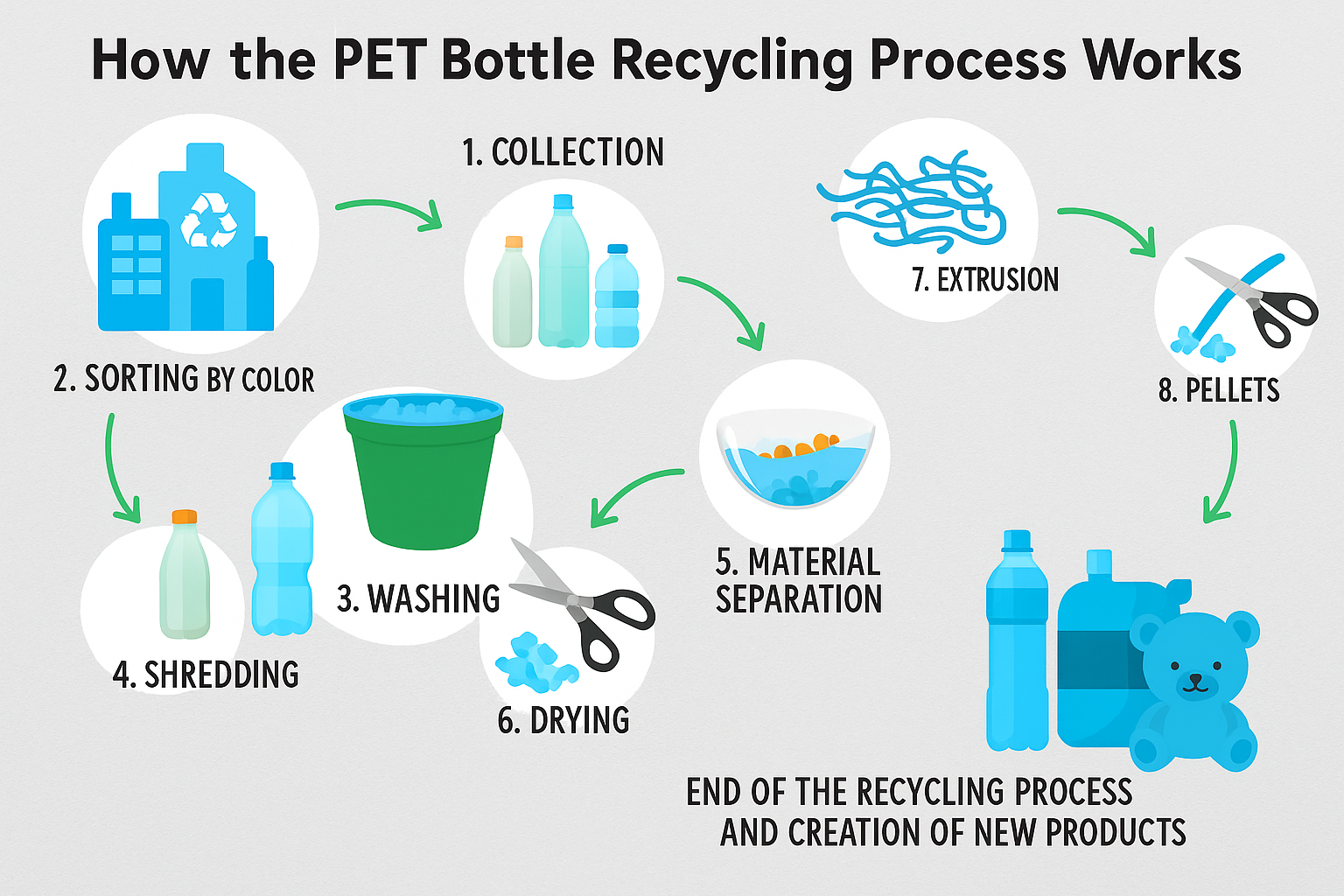
    How the PET Bottle Recycling Process Works Step-by-Step Guide

    While the management of plastic waste has grown into a challenge for many, the PET bottle recycling process offers one of many innovative solutions to take a step towards a cleaner and more sustainable future. As a common beverage container, PET bottles have a value that increases when recycled, as they can serve as a raw material for many industries. In this guide, we will illustrate the process of PET bottle recycling, discuss its several environmental advantages, and outline its importance in the circular economy.  


    What Is PET and Why Recycle It?  

    PET stands for Polyethylene Terephthalate, which is a clear and lightweight plastic commonly used in food and drink packaging. Its advantages include being 100% recyclable, as it can always be transformed into new bottles, clothing fibers (rPET or Recycled Polyester), and packaging. Recycling PET also saves natural resources, reduces waste in landfills, and maintains the emission of greenhouse gases.  

    Key Benefits of Recycling PET Bottles:  

    • Helps reduce the amount of plastic pollution that fills landfills
    • Saves energy in comparison to production from virgin plastic
    • Opens new doors of economic opportunities through various recycling industries
    • Supports a circular economy by keeping materials in operation


    A Walkthrough of the PET Bottle Recycling Procedure

    1. Collection and Transportation

    The recycling journey begins with the collection. PET bottles are obtained from commercial waste streams, municipal recycling programs, and even informal collection networks. After collection, the bottles are transported to recycling facilities for further work to be done on them.  

    2. Sorting  

    At the recycling plant, bottles undergo sorting of their resin code, color, and type. Automation and manual selection are used to separate PET bottles from miscellaneous plastics. Removing contaminants during this stage of the process guarantees better quality recycled plastic after the process is fully completed.  

    3. Cleaning and Pre-Washing  

    Labeled, dirtied, or food residue containing PET bottles undergo pre washing to make them cleaner. To guarantee that the end product meets the required standard of cleanliness, labels, adhesives, dirt, and food remnants need to be removed.  

    4. Grinding into Flakes  

    Industrial grinders are responsible for shredding cleaned PET bottles into small bits. These bits of plastic are referred to as flakes and serve as the basis for premiering a majority of recycled products. Flakes are also easier to process during later stages.

    5. Hot Washing and Decontamination

    The flakes undergo hot washing which includes the use of water and cosmetics deftly associated with the removal of adhesives, oils, and other contaminants. This step ensures the flakes meet food-grade or industrial-grade standards.

    6. Drying and Quality Check  

    The flakes are dried using a high temperature drying system after the washing process. A quality check ensures that no contaminants, and that color and size conform to bounds within defined limits for each quality grade. Only those flakes passing the required criteria are taken forward for further processing.  

    7. Extrusion and Pelletizing (Optional)  

    In some cases, clean PET flakes are further subjected to melting and extrusion, forming the material into pellets. These can then be utilized for producing a variety of new goods including bottles, packaging materials, textiles, and other products.


    Uses of Recycled PET (rPET)  

    Recycled PET is found in a diverse range of products which include the following:  

    • New containers and PET bottles  
    • Fibers for textiles, carpets, and upholstery  
    • Electronics casings and automotive parts  
    • Strapping, and food trays and sheets  

    With the rise in recycled material usage (rPET) all over the world, It is well known for being cost effective and supporting sustainability.  


    Economic and Environmental Consequences  

    The benefits of recycling PET materials include decreased fossil fuel consumption, reduced plastic waste in landfills, and oceans, and decreased greenhouse gas emissions. Moreover, it creates new jobs and economic value in the context of managing waste and manufacturing.

    Also Read: What Are rPET White Flakes? A Complete Guide to Their Uses & Benefits

    Final Notes

    Recycling PET bottles is important for sustainability all over the world, and it goes beyond just a mere procedure. Knowing the precise details aids consumers and business’s to understand three value chains from PET bottles. Each bottle that is recycled contributes to a circular economy and a greener planet.

    Do you identify as a brand, recycler, or manufacturer? Consider eco-friendly business investments in the form of rPET materials. This will socially polish your business as well as reduce your carbon footprint.

  • What Are rPET White Flakes? A Complete Guide to Their Uses & Benefits

    What Are rPET White Flakes? A Complete Guide to Their Uses & Benefits

    With the increase in the global supply of sustainable materials, Recycled PET (rPET) is becoming crucial in developing a circular economy. Within various types of rPET, rPET white flakes are perhaps the most critical for the plastic recycling industry’s value chain. What are rPET white flakes and what makes them so useful? This blog aims to explain all aspects of their environmental features, applications, and properties.


    What are rPET White Flakes?

    rPET white flakes constitute high-quality fragments of recycled polyethylene terephthalate (PET) procured from used PET bottles. After the meticulous washing and sorting process of removing labels and caps, flakes are produced, usually white or light in color. They are sufficiently clear for a variety of industry and consumer applications.

    Key Characteristics:

    • High Whiteness and transparency
    • Low moisture Content
    • Low contamination
    • Food grade level after certain processing standards
    • Fit for melt processing and extrusion.


    What Is The Process In The Creation Of RPET White Flakes?

    The simple processes in the creation of rPET white flakes include the following:

    • Collection – This includes the retrieval of PET bottles from recycling bins, centers, or even industrial waste streams;
    • Sorting -This step includes sorting bottles by color, resin types, and materials that make up the bottles.
    • Label and Cap Removal – This includes the removal of non-PET materials such as caps and labels.
    • Washing – Removing the stored dirt, adhesives, and any other organic contaminants from the bottles.
    • Shredding – Consists of shredding clean PET into flakes to be later used.
    • Drying and sieving – It consists of smoothing the flakes in order to satisfy the needs of processing them further into new products.

    This singular process guarantees that the resulting flakes created are ready for new products.


    Best Uses Of RPET White Flakes

    For added purity, rPET white flakes are renowned for being used across different industries:

    1. The Textile Industry

    • Widely used in the venue of eco-friendly clothing and reusable bags.
    • Used to create polyester fibers for garments, home furnishings, and even sturdy fabrics.

    2. Clock reusable flasks

    • Serves as food containers, cosmetics containers, and even for pharmaceuticals.

    3. Components of an Automobile

    • Used in making the non-structural components of an automobile such as seat fillings, insulation panels, carpets, and many more.

    4. Filaments for 3D Printing

    • The use of recycled PET in the creation of filaments for 3D printing is on the rise.

    5. Construction Materials

    • Incorporated in insulation panels and plastic composites


    Profit Life Group Centered Model by Using rPET White Flakes

    Switching from virgin plastic to rPET White flake plastic has greatly positive ecological impacts:  

    1. Cuts Down on Plastic Waste  

    Doing rPET transforms useless plastic into flakes which decreases the increase of trash in landfills, oceans, and other water sources.

    2. Cuts Back on Carbon Emissions  

    The energy spent while creating rPET is significantly lesser and greenhouse gas emissions are comparatively lower compared to engen PET production.

    3. Spares More Natural Resources  

    Using rPET saves nonrenewable resources such as petroleum which is used in the making of virgin plastics. This way TRUMPET helps the environment.

    4. Shifts Towards Circular Economy  

    Converting used PET bottles into usable material encourages a closed-loop system which helps mitigate the need for single-use plastics.

    How to Find rPET Flakes with the Best Quality  

    Controlling the quality of the rPET flakes goes a long way to determining its performance and end-use. Key quality indicators include:

    • Maintaining consistency in flake size and shape
    • Low levels of PVC and other contaminants
    • High bulk density

    Submission of COA with certain specified conditions to ensure clarity and traceability to vendors aids these requirements.

    Also Read: The Role of Recycled PET in Eco-Friendly Packaging and the Circular Economy

    Concluding Remarks

    The benefits of rPET white flakes span countless industries as they serve as an eco-friendly and effective substitute for virgin plastics. Businesses can help sustain the environmental and contribute to the circular economy by reducing rPET’s carbon footprint through its adoption in industrial processes.

    You are in packaging, construction, or textiles—does not matter, for embracing rPET white flakes means taking a leap towards sustainability.

    Switch to rPET today—because every flake aids in the fight toward a cleaner tomorrow.

  • The Role of Recycled PET in Eco-Friendly Packaging and the Circular Economy

    The Role of Recycled PET in Eco-Friendly Packaging and the Circular Economy

    With the world moving towards sustainability, the adoption of “green” practices, especially regarding packaging, has increased. One innovative material is rPET (Recycled Polyethylene Terephthalate). rPET is largely derived from plastic drink bottles and aids in the creation of sustainable packaging as well as upholding the ideals of a circular economy. This post is going to cover the environmental advantages, industrial uses, and prospects of rPET in the future.


    What Is Recycled PET (rPET)?

    rPET, or Recycled Polyethylene Terephthalate, refers to a type of plastic on the market that undergoes recycling at the consumer level. rPET is produced from post-consumer PET products, such as beverage bottles. These materials undergo cleaning, shredding, and reprocessing processes into pellets or flakes of the nut of a higher grade than the previous one which can be used in the making of new goods from plastic.

    Benefits of rPET:

    • Reduces the amounts of plastic waste and the filling of landfills
    • Lessens the consumption of virgin plastic
    • Renders lower carbon emissions alongside a decrease in energy use
    • Preserves nature’s resources
    • Maintains 100% recyclability through many cycles of use


    What Is the Importance of rPET In Eco-Friendly Packaging?  

    Because it can be recycled, is clear, and is durable, rPET is more versatile than other materials. In addition, unlike single use plastics which are simply discarded, rPET plastics aid in supporting closed-loop recycling systems.

    Common Applications of rPET in Packaging Include:  

    • Soda and water bottles
    • Containers for personal care and cosmetic products
    • Food storage packaging trays
    • Packing Clam shells for electronic products
    • Bottles of household cleaners and detergents


    How rPET Functions Within The Circular Economy

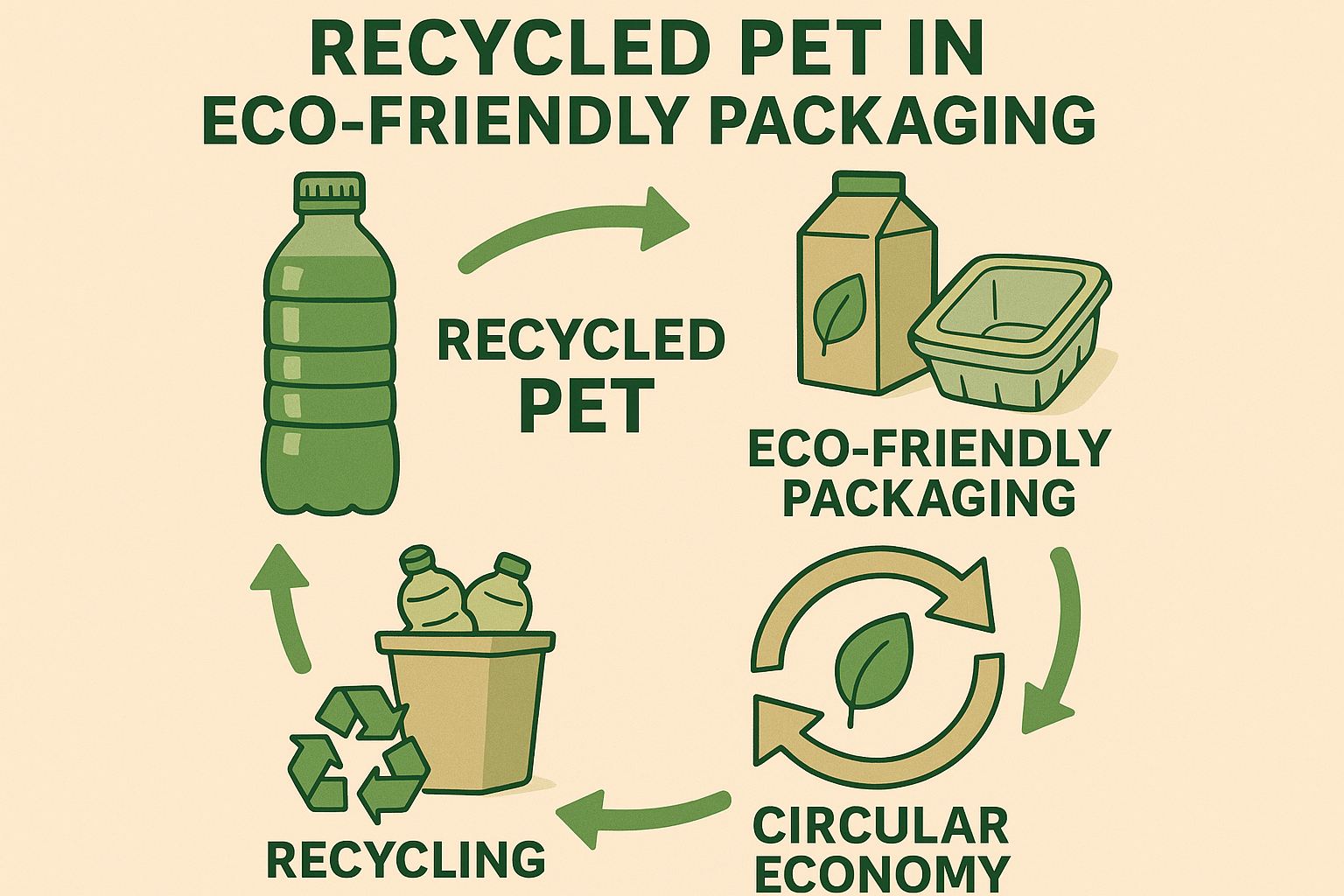
    In this system, “waste” is not waste, but rather a byproduct that can be transformed into something of value to be reinvested into the economy. If you put rPET through collection, processing, reusing, and recycling, you achieve a fully closed lifecycle system.

    The Circular Lifecycle of rPET includes:  

    1. Collection: PET bottles have to be collected as part of a recycling program.  
    2. Sorting and washing: The materials are checked for composition of polymers and cleaned
    3. Processing: PET is cleaned and turned into flakes or pellets.  
    4. Manufacturing: New bottles, textiles, and containers are produced with rPET.  
    5. Recycling: The products can be recycled which keeps the cycle in motion.  

    As a result, environmental impact is reduced while material efficiency is maximized.


    Environmental and Economic Impact

    All business advantages aside, adopting rPET in packaging brings about a positive impact on the environment.

    Environmental Advantages:

    • Energy Savings: Producing rPET plastics needs as low as 60% less energy when compared to virgin plastics.
    • Emission Reduction: The production of rPET can lower carbon emissions by up to 80%.
    • Pollution Prevention: Helps in the removal of plastic from getting dumped into the ocean and the ecosystem.

    Economic Advantages:

    • Cost Effective: There is a reduction in the cost of raw materials and production.
    • Supports Green Jobs: There is more employment generated from recycling and green technology.
    • Brand Value: Improves the image of the business among customers who practice and purchase eco-friendly products.


    How Brands Are Transitioning To rPET

    Every single brand rPET has one or more actions which are attempted to be aligned into products over the course of their planning due to the rpet driven sustainability demand.

    Examples of Adoption:

    • Coca-Cola has been stated to use 100% rPET for their beverage bottle in some markets.
    • Adidas has produced millions of shoes from plastic waste; including rPET.  
    • Unilever and Nestlé are working on sustainable packaging which includes rPET, and later on looking to incorporate it into their products.

    These companies and brands are operating in an eco-friendly manner, enabling them to meet policies and standards while also appreciating consumer’s sentiments.

    Also Read: Transforming Waste into Value: How Plastic Bottles Become High-Quality RPSF Fiber

    Concluding Remarks

    Utilized as such or not, recycled PET serves a purpose far greater than simply a material. The integration of rPET into packaging systems leads to lowering environmental impact, cutting costs, and aiding in the utilization of robust circular economies.

    By choosing rPET, you help foster a sustainable future.

  • Transforming Waste into Value: How Plastic Bottles Become High-Quality RPSF Fiber

    Transforming Waste into Value: How Plastic Bottles Become High-Quality RPSF Fiber

    Bottles of plastic are abundant in this world, thus the phrase waste to value is rapidly becoming an acronym forOpportunity for positive environmental impactas merchandisers, shareholders, ecological practitioners, and people internationally pine over the meaning of eco-friendly business. This transformation is most efficiently operated wherein discarded plastic bottles are turned into Recycled Polyester Staple Fiber (RPSF). Polyethylene Terephthalate (PET) bottles are reborn as high-quality synthetic fibers while seamlessly integrating into sustainable manufacturing, making a noteworthy contribution to reducing environmental degradation.


    What is RPSF (Recycled Polyester Staple Fiber)?

    Recycled Polyester Staple Fiber (RPSF) is a synthetic fabric made from PET (Polyethylene Terephthalate) bottles. It has a wide range of applications from textiles and furnishing to automobile and even construction materials. These used bottles are gathered, cleaned, and processed to make soft and durable fibers.


    The Step-by-Step Process of Converting Plastic Bottles into RPSF


    1. Collection and Sorting

    Post-consumer PET bottles are collected from municipal waste containers, recycling centers, and industrial sources. They first go through sorting where non-PET bottles are selected and discarded, ensuring only PET bottles are chosen to undergo the recycling process.


    2. Cleaning and De-labeling

    Before the bottles can be set for shredding, they need to go through a cleaning stage where they undergo the removal of labels and adhesives, and checking of any remaining liquids. This stage plays an important role in the quality of the recycled final RPSF product.


    3 Preliminary Steps: Shredding and Flaking

    Clean PET bottles are shredded into small flakes, which are then undergo further purification to rid them of leftover contaminants like dirt or residue.


    4 Melting and Extrusion

    The PET flakes are melted at high temperatures, and then extruded through spinnerets, resulting in continuous filaments. These extruded filaments are cooled and subsequently chopped into staple fibers.


    5 Crimping and Finishing

    RPSF is an eco-friendly driving force in the fiber world, but it doesn’t stop there; these fibers undergo mechanical crimping to enhance texture and elasticity. This enables them to be spun into yarn or blended with разные materials. The final product is put in a box and stored until it is time to be distributed.


    Industrial Uses of RPSF

    RPSF is not just an eco-friendly alternative—it is a versatile and high-performing material used across multiple sectors.

    • Textile Industry: In the form of yarn, it is used in clothing, upholstery, and even non-woven fabrics.
    • Fabric and Home Furnishings: RPSF can be found in pillows, mattresses, cushions, and even carpets.
    • Automotive Sector: It can be found in seat covers, used for insulation, and even the headliner as a part of internal trim.
    • Construction: Incorporating it with concrete aids in improving strength while reducing shrinkage.

    Importance of RPSF for Industry and Eco-sustainability


    1. Eco-friendly Initiatives

    • Keeps plastic waste off the streets, landfills, and oceans.
    • Sustains the environment by lowering carbon emissions otherwise incurred by the polyester plant.
    • Decreases water and energy expenditure in production.


    2. Cost-Efficiency

    • An advantage in financial terms is due to less oppressive contracting compared to virgin polyester.
    • Lessens exploitation of crude oil.
    • Encourages petal recycling systems.


    3. Functional Characteristics

    • Robust and long-lasting.
    • Resists wrinkling or shrinking.
    • Dyeing and blending with other materials is simple.


    India’s Importance In RPSF Production

    India is among the fastest growing countries in the world when it comes to RPSF fiber production. The Indian government supports respective policies enabling processes like recycling, and fostering nationally aligned manufacturing.

    Key Factors Of Leading Indian RPSF Production Companies:

    • Acutely developed recycling and extrusion machinery.
    • Control is rated with a standard international organization.
    • Individualized deer yards and cut lengths.
    • Scheduled delivery reliability at low rates.


    Determining The Most Proper RPSF Provider

    When deciding the manufacturer or supplier of RPSF, look for the following points:

    • Foundation of completed contracts with clients concerning PET recycling.
    • Guarantee of volume, quality standards, and fulfillment.
    • Should observe socio-political-responsible as well.
    • Foundation of open access to production and sourcing.

    Also Read: How Recycling PET Bottles is Transforming the Future of Fashion.

    Concluding Remarks  

    Concerning the circular economy, the conversion of plastic bottles to Recycled Polyester Staple Fiber (RPSF) is a remarkable advancement. Furthermore, as industries strive to meet environmental targets and provide new materials, there is an opportunity to capitalize on this vertical by converting waste into valuable products.  


    Investment in RPSF enables manufacturers to partake in cleaner ecosystems, as well as answer to growing consumer demand for eco-centered products. Clearly, there is still plenty of value that can be extracted from waste—this is not only beneficial for the environment, but helps enhance many business models as well.