Category: Blog

Your blog category

  • rPET Flakes Material Manufacturer in India | Uses, Market Growth & Export Potential

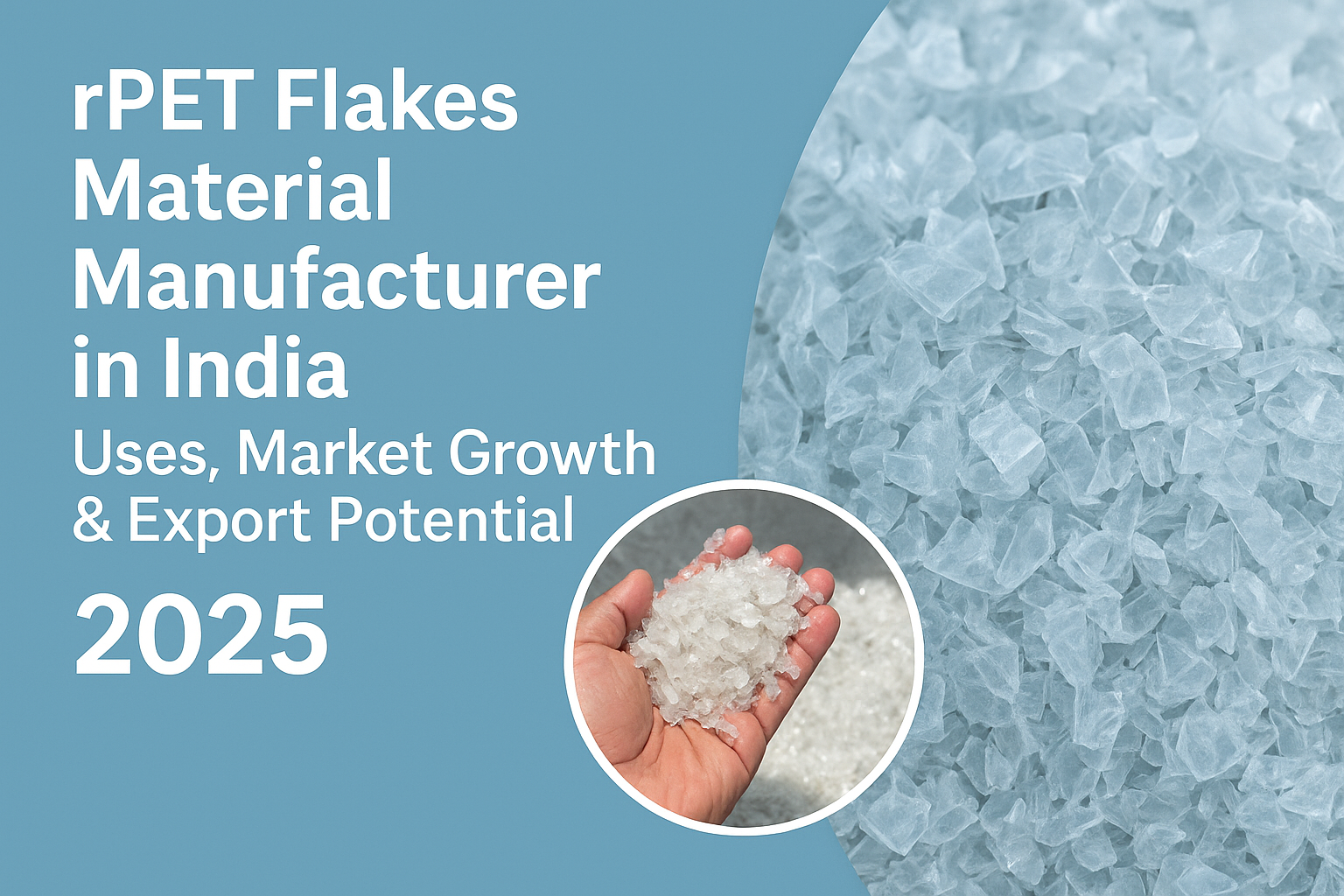
    rPET Flakes Material Manufacturer in India | Uses, Market Growth & Export Potential

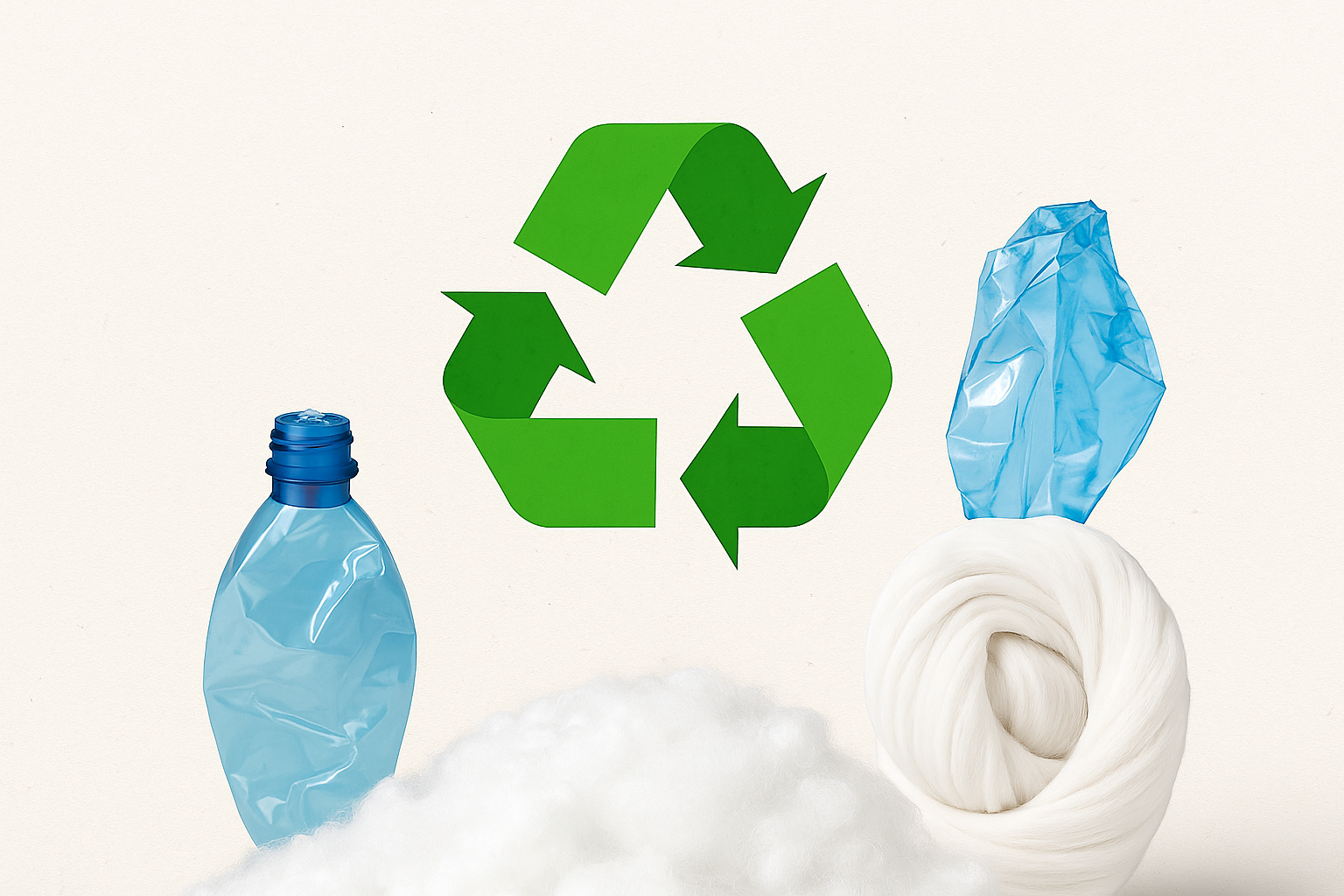
    India is now the frontrunner for recycling innovations worldwide. One of the innovations is the Estonian rPET flakes. rPET Flakes are created from the recycling of polyester waste and used PET bottles. The demand for durable and dependable raw resources is growing globally, and that’s why Indian suppliers of rPET flakes are crucial players in offering recycling materials for textile, packaging, and industrial use.

    In this blog, we expand upon rPET flakes and their applications, discuss rPET Flakes market growth in India, and outline the opportunities for exporters in 2025.

    What are rPET Flakes?

    rPET flakes are washed and shredded PET bottles that are preprocessed and semi-processed. The recycling process includes:

    • Collection and Sorting: Used PET bottles are gathered and organized into collections.
    • Cleaning & Washing: Bottles are washed to eliminate impurities, labels, and caps.
    • Shredding: The PET bottles are reduced into thin uniform flakes.
    • Drying and Processing: Flakes are now ready for the next stage, which is the conversion into Chips, Fibres, or Sheets.

    These flakes are the major input material for producing RPSF (Recycled Polyester Staple Fibre), PET sheets, food-packaging of food-grade quality, and engineering plastics.

    Applications of rPET Flakes in India

    By 2025, the uses of rPET flakes in India have spread widely across industries:

    • Textile Industry: rPET flakes are manufactured into fibres, yarns, and fabrics employed in garments, upholstery, carpets, and industrial textiles.
    • Packaging Industry: Food-grade rPET flakes are molded into bottles, jars, films, and containers extensively consumed in beverages and FMCG.
    • Auto and construction industries: Used for construction and automotive to manufacture reinforced plastics, and sheets, and bound for low cost.
    • Green projects: Qualifying for green certification and achieving net-zero targets are possible with waste-based almost carbon-neutral rPET flakes.


    Increasing Demand in India 2025

    India’s rPET flakes market is becoming more advanced in 2025 and is being driven by the following:

    • Government Directive: Recycling objectives, Extended Producer Responsibility (EPR), and prohibition of single-use plastics.
    • International Fashion Brands: Global consumers expect eco-friendly raw material, higher dependency on Indian rPET producers.
    • Domestic Demand: India’s packaging and textile industries need high volumes of rPET flakes to minimize virgin PET.
    • Economic Advantage: rPET flakes are more cost effective and green than virgin PET, making them attractive to producers.

    Industry analysts predict an annual growth of 7-9% for the market of rPET flakes in India, making it one of the most promising sectors for recycling.

    Indian Manufacturers’ Export Opportunities

    India has emerged as a prominent exporter of rPET flakes with increasing demand in:

    • Europe & North America: Stringent recycling regulations compel the import of high-grade rPET flakes from India.
    • Asia-Pacific: Chinese, Vietnamese, and Bangladeshi countries utilize Indian rPET flakes for textile and packaging purposes.
    • Middle East & Africa: Developments in the FMCG and textile sectors create demand for rPET flakes at affordable prices.

    Indian players are supported by:

    • An ample supply of waste PET bottles.
    • Low-cost production.
    • Sophisticated washing and recycling plant capabilities.

    These advantages make Indian manufacturers global players in offering eco-friendly raw materials.

    Challenges Ahead

    The growth notwithstanding, there are still some challenges:

    • Collection Systems: Requirement of systematic segregation of waste and bottle collection.
    • Quality Standards: Food-grade certification necessitates sophisticated technology.
    • Awareness Gap: More awareness among small-scale manufacturers regarding recycling potential.

    Infrastructure and technology investments will further cement India’s competitive advantage.

    Also Read: The Uses of rPET White & Green Flakes in Textile and Packaging Manufacturing

    Conclusion

    The Indian manufacturers of rPET flakes material are leading the recycling revolution. With extensive use in textiles, packaging, and industries, rPET flakes are now a prominent sustainable raw material in 2025. Rise in demand, as well as international recognition has established India as a rPET flakes market leader.

    For businesses, collaborating with reliable rPET flakes suppliers from India is beneficial to achieve growth and unlock new goals.
  • The Uses of rPET White & Green Flakes in Textile and Packaging Manufacturing

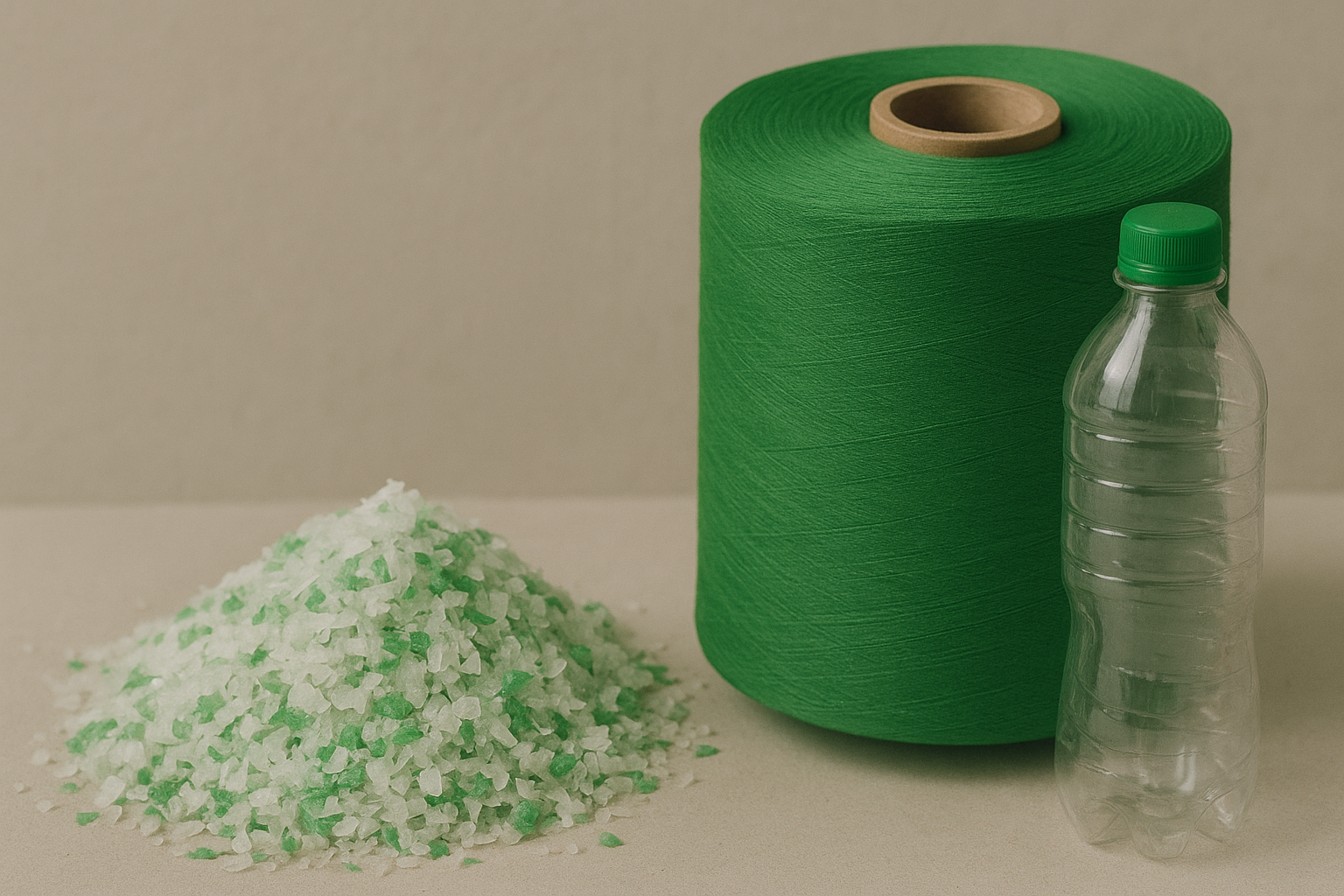
    The Uses of rPET White & Green Flakes in Textile and Packaging Manufacturing

    Sustainability is now a core aspect of every industry. Due to the ever-increasing need for environmentally friendly solutions and recycled plastics, flakes of recycled PET (rPET) white and green are quite useful in terms of solutions. They are recycled from PET bottles and plastic wastes and are transforming the food-grade packaging and textile manufacturing industries. The objective of this post is to explain the uses of rPET white and green flakes, their advantages, and their importance in helping achieve sustainability.

    What are rPET white and green flakes?

    rPET flakes are a product of post-consumer PET bottles. They need to go through a washing and crushing stage, which will determine if they will be white or green flakes.

    White flakes- Transparent bottles are processed into white flakes which are used in textile manufacturing as raw materials for production of fibres, yarn, and fabrics.

    Green flakes- Recycled bottles also yield green flakes which are used in packaging industry for production of bottles, containers and sheets.

    The use of rPET fosters the concept of the circular economy as it reduces the use of virgin plastic and transforms waste materials, such as PET bottles and plastic waste, into valuable raw plastics.


    Applications of rPET in Textile Production

    1. Production of Fibre and Yarn

    The rPET white flakes are processed into polyester fibres and yarns, which are used in clothing, sportswear, and industrial textiles. Leading global fashion brands are adapting to the use of rPET fabrics in order to reduce the carbon footprint of the clothing industry.

    2. Home Furnishings

    From curtains and carpets to upholstery and cushions, rPET fibres offer durability and softness and thus are suitable for home textiles.

    3. Nonwoven Fabrics

    rPET flakes find extensive application in the manufacture of nonwoven geotextiles, filtration, medical textiles, and sanitary products.

    4. Industrial Applications

    The textile industry also applies rPET in ropes, car seats, car interiors, and insulation, which improves its applicability and makes it more efficient as a resource.


    Use of rPET in Packaging Production

    1. Packaging for Food

    With advanced recycling technology, food-grade packaging safe for use in drinks, dairy products, and edible oils can be produced from rPET green flakes.

    2. Containers and Bottles

    Green flakes are commonly employed in producing bottles for water, juices, soft drinks, and household products.

    3. Sheets and Films

    rPET flakes are processed to create sheets and films, which are utilized in packaging trays, clamshells, and other food protection packaging.

    4. Sustainable Packaging Solutions

    With an increasing more consumers opting for eco-friendly products, rPET-based packaging is helping companies reduce plastic waste and meet international environmental standards.

    Advantages of rPET White & Green Flakes

    • Environmental Safety: Prevents billions of plastic bottles from reaching oceans and landfills.
    • Value for Money: Helps save money by reducing the demand for expensive virgin PET.
    • Resource Savings: Saves energy and petroleum resources compared to manufacturing virgin plastic.
    • Brand Reputation: Businesses that use rPET attract environmentally conscious customers and are in line with sustainability certifications.

    The Future of rPET in Textiles and Packaging

    The rPET market is expected to grow significantly. Governments and industries are calling for recycling policies, while global brands are making pledges to include more recycled content in their supply chains. With advances in recycling technology, rPET will increasingly move into premium textiles, food-grade packaging, and even industrial-grade use.

    Also Read: Benefits and Future of Using Recycled Polyester Staple Fibre (RPSF)

    Conclusion

    Applications of rPET white & green flakes in textile and packaging production demonstrate how recycling can build a greener future. Whether in fashion and interiors or bottles and food-grade packaging, rPET is showing itself to be a sustainable, affordable, and environmentally friendly solution. Industries can lower waste, save resources, and help make the planet cleaner by embracing rPET.

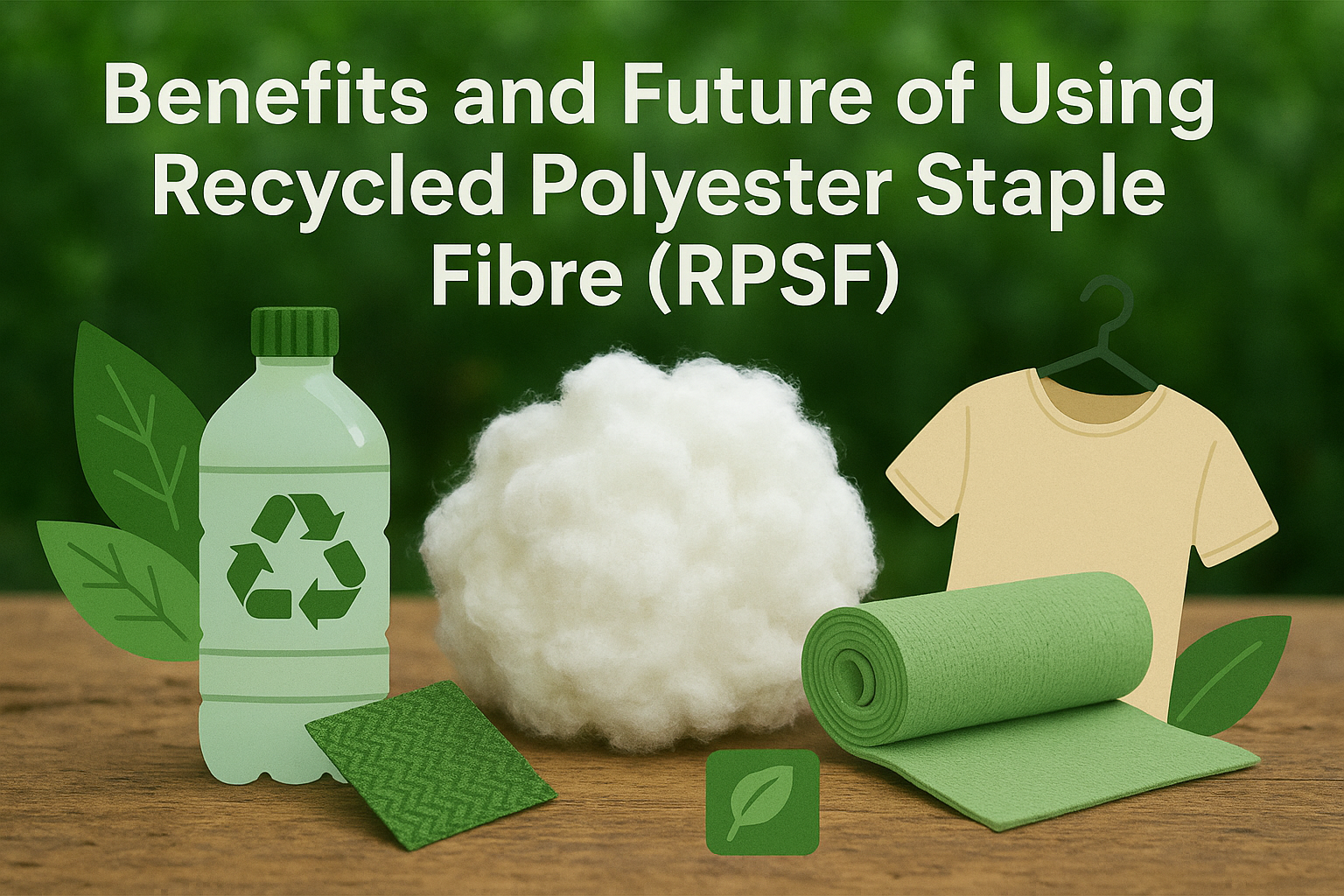
  • Benefits and Future of Using Recycled Polyester Staple Fibre (RPSF)

    Benefits and Future of Using Recycled Polyester Staple Fibre (RPSF)

    In the modern age, sustainability is no longer a fad—it is an imperative. The textile and manufacturing sectors are leading this change. Amongst the numerous environmentally friendly solutions, Recycled Polyester Staple Fibre (RPSF) is the game-changer. Produced from post-consumer PET bottles and plastic waste, RPSF provides an affordable, sustainable, and versatile substitute for virgin polyester. This blog delves into the advantages of RPSF and how it is paving the way for the future of industries around the world.

    What is Recycled Polyester Staple Fibre (RPSF)?

    Recycled Polyester Staple Fibre (RPSF) is an artificial fibre that is produced by recycling PET bottles and waste plastic. It is washed, shredded, melted, and spun into staple fibres that can be used in automotive parts, textiles, nonwovens, upholstery, and packaging. RPSF reduces environmental pollution as well as conserves natural resources by recycling the waste.

    Main Advantages of Utilizing RPSF

    1. Eco-Friendly and Sustainable

    RPSF directly addresses plastic waste reduction. One ton of RPSF Stops prevents thousands of plastic bottles from ending up in landfills and oceans, combating global plastic pollution.

    2. Economical Substitute

    RPSF provides the same strength and durability as virgin polyester at a reduced price. Manufacturers enjoy high-quality fibre without overpaying for raw materials.

    3. Diverse Uses

    RPSF is applied in industries like:

    • Textiles: Yarn, clothing, and home textiles
    • Automotive: Seat covers, insulation, and cushioning
    • Nonwoven Fabrics: Geotextiles, filters, and medical textiles
    • Packaging: Reinforcement in eco-friendly packaging solutions

    4. Energy and Resource Saving

    Manufacturing RPSF takes less energy and fewer natural resources than manufacturing virgin polyester. This makes it a cost-effective option for companies seeking to reduce their carbon footprint.

    5. Enhanced Brand Value

    As consumers become increasingly environmentally conscious, brands employing RPSF earn trust and loyalty. Environmentally friendly processes not only build a firm’s image but also adhere to global sustainability standards.

    The Future of RPSF

    1. Increasing Demand in Textiles

    As fashion transforms towards sustainability, demand for recycled fibres is expected to grow. RPSF is becoming the go-to option for international textile brands searching for sustainable fabrics.

    2. Innovation in Food-Grade Applications

    Technological advancements in recycling technology are enabling RPSF to be utilized in food-grade packaging. This creates opportunities within safe, sustainable packaging.

    3. Government Policies and Support

    Several governments across the globe are encouraging the utilization of recycled products through subsidies, tax incentives, and legislation. Such support will increasingly increase the growth of RPSF.

    4. Growth in Circular Economy

    RPSF is a cornerstone of the circular economy. By continuously recycling plastic waste into new fibres, industries can minimize wastage and maximize resource efficiency.

    5. Technological Advancements

    Future technology will enhance RPSF even stronger, finer, and more application-specific, opening the way to high-end applications in fashion, medicine, and industrial textiles.

    Also Read: The Science Behind Food-Grade rPET: From Collection to Safe Packaging

    Conclusion

    The advantages of Recycled Polyester Staple Fibre (RPSF) are inescapable. It saves resources, reduces waste, conserves costs, and promotes sustainability objectives. As businesses and consumers move towards green and eco-friendly alternatives, RPSF will remain instrumental in defining the future of textiles, packaging, and manufacturing. RPSF selection is not just a business decision—It is a summons to a greener, cleaner Earth.

  • The Science Behind Food-Grade rPET: From Collection to Safe Packaging

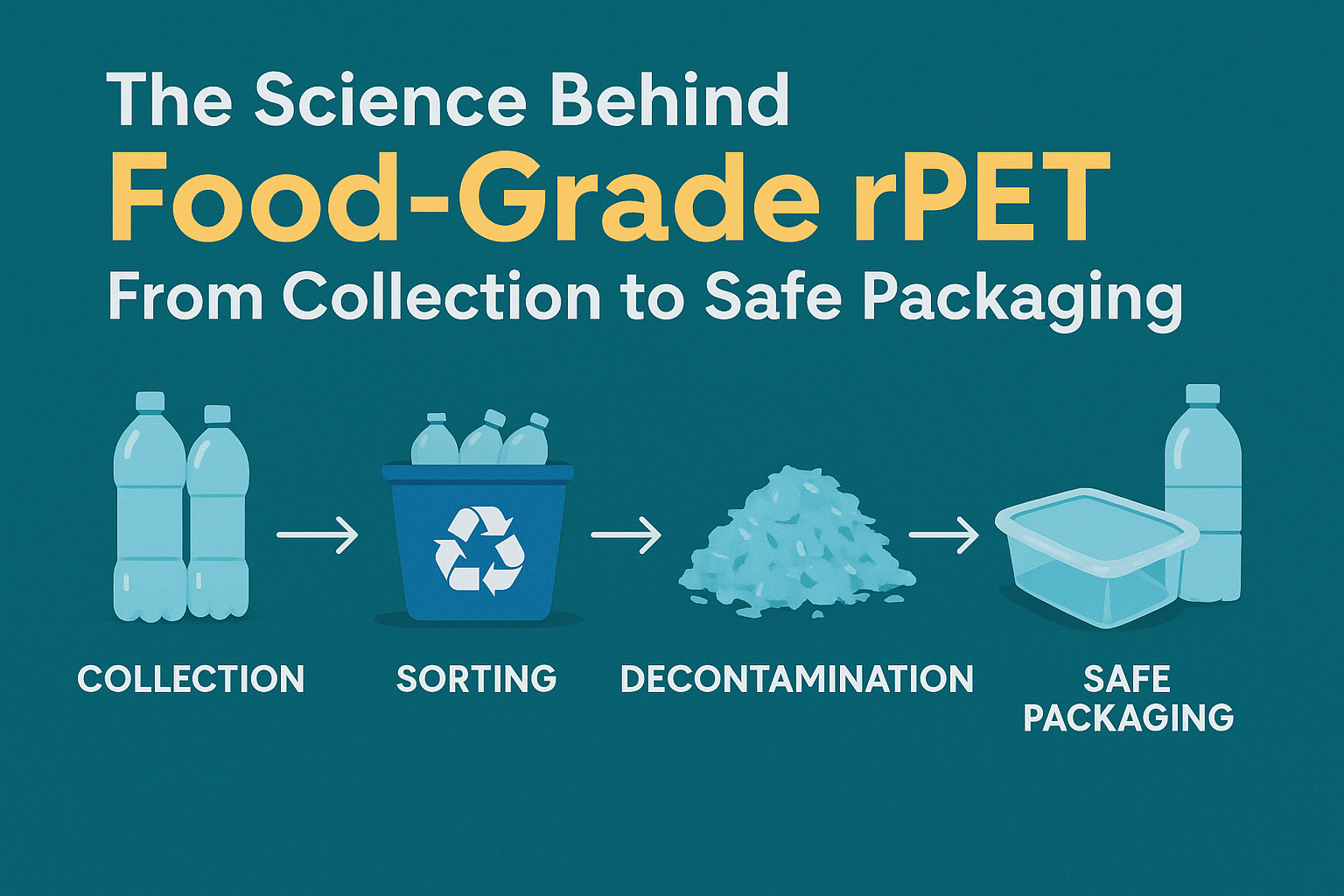
    The Science Behind Food-Grade rPET: From Collection to Safe Packaging

    Plastic bottles hold the top spot in the world’s packaging lineup—pick any shelf in bottled water, soft drinks, or take-home meals, and you’ll see them everywhere. At the same time, mounting alarm over pollution and long-term damage to natural systems has pushed the demand for recycled PET, or rPET, to the forefront. Still, the answer isn’t as simple as it seems. Of the rPET product line, only the food-grade variant meets the exacting health and safety standards that apply to products that come into contact with food or drinks. To highlight the transformation and quality control integrated into the production of food-grade rPET, this blog guides you from the moment a bottle is discarded to the instant it reappears as a high-grade packaging sheet that meets quality standards once again.


    What is Food-Grade rPET?

    Food-grade rPET is recycled polyethylene terephthalate specifically treated to guarantee it is safe for direct contact with food and beverages. Unlike rPET intended for textiles or other industrial uses, food-grade material complies with strict international guidelines, including approvals from EFSA (European Food Safety Authority) and from the FDA (U.S. Food and Drug Administration). This certification helps confirm that bottles, containers, and other packages produced from food-grade rPET pose no health hazards and are reliable for consumer use.

    Step 1: Collection of PET Waste

    The process starts by collecting PET bottles from households, commercial settings, and recycling drop-offs. Effective collection is essential; the cleaner and purer the incoming PET, the safer the resulting rPET. Many recycling operations team up with local waste management services, incentives like buy-back schemes, and modern sorting plants to accumulate post-consumer PET.

    Step 2: Sorting and Cleaning

    Sorted and cleaned PET waste is collected to be free from non-PET plastics, caps, and labels. Infrared sorting machines with high accuracy are now used in advanced recycling plants. PET is shredded into flakes, washed with hot water and detergents, and dried — eliminating dirt, adhesives, and residues.

    Step 3: Decontamination and Processing

    This is where PET gets converted into a food-grade safe material. PET flakes are decontaminated at high temperatures in a vacuum or inert gas atmosphere. This destroys chemical residues that may have been taken up in its previous life.

    There are two major processes employed:

    • Mechanical Recycling: PET flakes are melted and re-extruded as rPET pellets.
    • Chemical Recycling: PET is chemically depolymerized back to its original monomers and re-polymerized into near-virgin quality PET.

    Both processes, when conducted under certified circumstances, yield rPET safe for use in food packaging.

    Step 4: Conversion into Packaging

    The cleaned rPET flakes or pellets are then shaped into food-grade packaging, like:

    • Beverage and water bottles
    • Food containers and trays
    • Packaging films

    All production needs to conform to FDA, EFSA, FSSAI, and BIS standards so that consumer safety is upheld.

    Applications of Food-Grade rPET

    Across the globe, food-grade recycled PET is making an impact in the following areas:

    • Beverage Bottles – refillable mineral waters, sparkling products, and chilled juices.
    • Food Trays and Containers – packaging for heat-and-eat meals and frozen entrees.
    • Pharmaceuticals – high-barrier vials and blister packs for sensitive products.
    • Cosmetics – PE-based emulsions and creams in lightweight, amber or clear PET flacons.


    Why Food-Grade rPET Matters

    1. Lower Carbon Footprint: Substituting virgin resin alleviates preform heating, polymerisation, and distribution impact.
    2. Trusted Certification: thorough testing ensures compliance with FDA, EFSA, and BIS requirements.
    3. Closed-Loop Vision: recycled contention uses existing PET, slowing production of new polymer.
    4. Consumer Approval: an informed public rewards brands that prove a genuine ‘closed-loop’ intention.

     Also Read: From Plastic Waste to rPET Chips Transforming Recycling Into Opportunity

    Conclusion

    Food-grade rPET production integrates high-resin hygiene vigilance, friction-melt crystallisers, and monitored degassed polymer extrusion against chip polymerisation. From cold-feed dew casseride, polymer-dispenser out-feed, and dual capacity and blade exhaust, operators secure an isotopic pack for perishables and overnights. Inspired by carbon-chartable, cigarette-traded gains in disposable carbon footprints, user-friendly software licence manufacturers gain recyclical, life-cost savings approvals. By confidently appointing food-grade EMS-brief, brands champion renewed transformation of heritage revenue and labelling equity–disabling virgin processing.

  • From Plastic Waste to rPET Chips Transforming Recycling Into Opportunity

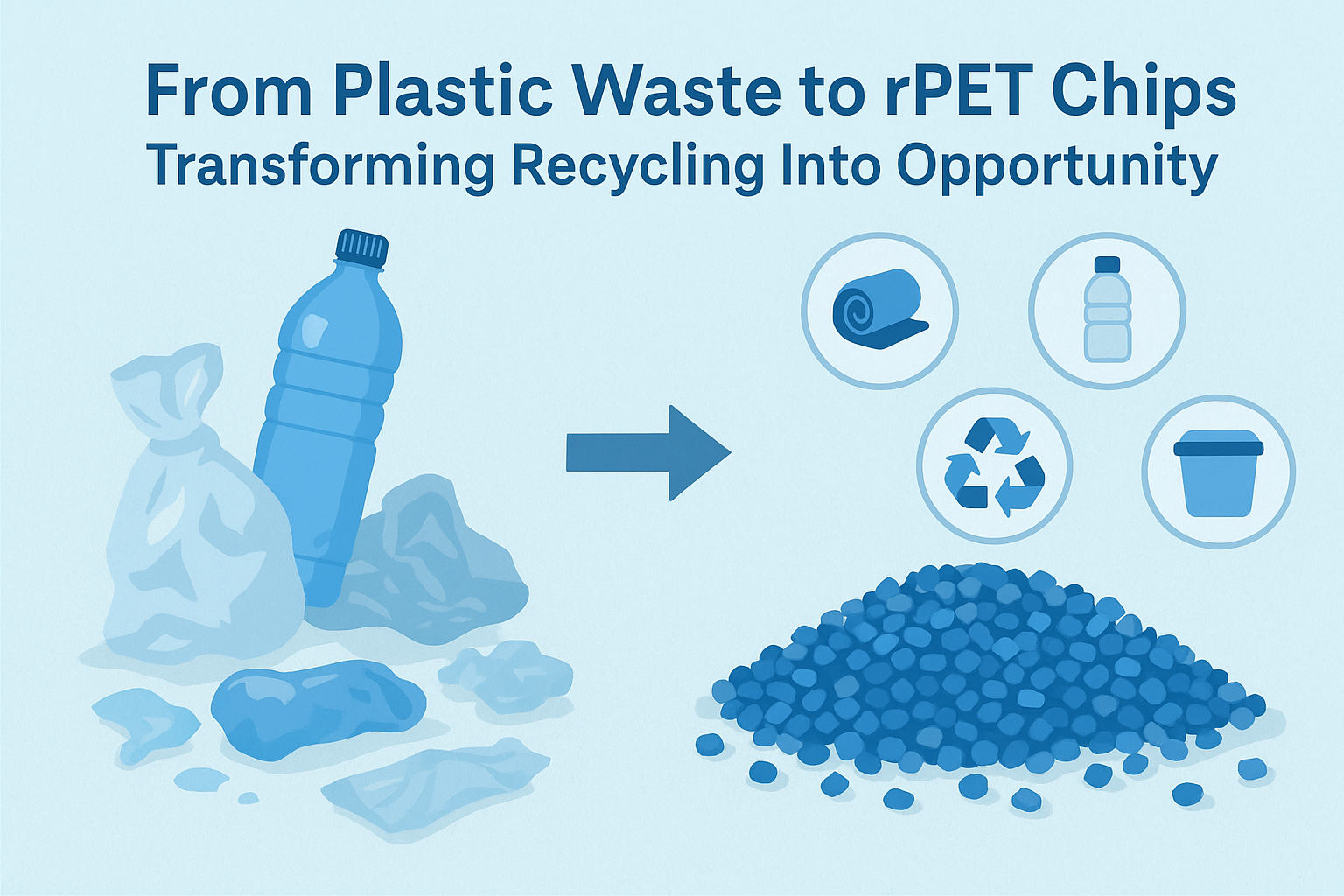
    From Plastic Waste to rPET Chips Transforming Recycling Into Opportunity

    Plastic waste ranks among the most pressing crises the planet faces in its current century. Each year, hundreds of millions of PET bottles and associated packaging are consigned to landfills and oceans, making high-performance recycling a pressing obligation and a compelling economic prospect. Emerging around this dual driver are facilities that routinely convert spent PET containers into high-purity rPET pellets. Those pellets are precisely engineered for a variety of downstream markets, from performance textiles to food-safe packaging. By transforming post-consumer plastic into high-quality rPET chips, the industry leaps past traditional waste management into an economically vibrant, closed-loop circular economy.

    What Are rPET Chips?

    rPET chips are the compact, consistent pellets made from diverted PET bottles and films. They start life being collected, sorted, and purified, then ground into uniform flakes. Under heat, these flakes are melted, filtered, and extruded into smooth, uniform chips. This final product serves as feedstock for making new polyester fibers, rigid containers, thermoformed sheets, and even food-safe packaging.

    Three Grades of rPET Chips

    • Textiles – These chips are engineered for spinning into high-quality polyester fibers, resilient yarns, and performance fabrics.
    • Bottle – Bottles and food packaging are made from chips certified for purity, assuring safety for new direct-food-contact applications.
    • Film – Designed for thin sheets and flexible packaging, these chips deliver clarity and seal strength in safety-critical films.

    Four-Step Transformation

    1. Collection and Sorting – Waste PET bottles are gathered from household, industries, and recycling sources.
    2. Flake Preparation – Bottles are washed away from impurities and then shredded into flakes.
    3. Chip Production – Flakes are heated, filtered, and extruded into rPET chips of uniform size.
    4. Quality Control – Chips are checked for IV value, color, and safety conformity to international recycling standards.

    By following this journey, rPET chips demonstrate a scalable method for closing the plastic loop and keeping resources in active circulation while safeguarding waterways and habitats.


    Applications of rPET Chips  

    Growing interest in rPET chips stems from their wide-ranging adaptability:  

    • Textiles & Fashion – Processed into recycled polyester staple fiber, helping to shape performance gear and eco-friendly textiles.  
    • Packaging – Bottle-grade chips re-enter the beverage and food sectors as new bottles, trays, and thermoformed containers.  
    • Automotive & Industrial – Driven into molded seat covers, noise-reducing carpets, and warm insulation composites for panels.  
    • Consumer Goods – Shaped into durable household items, translucent barrier films, and light-gauge sheets for light packaging and protection.  

    Why rPET Chips are the Future  

    • Environmental Impact – Closing the PET loop lowers the demand for fossil feedstock, conserves resources, and reduces greenhouse gas emissions throughout the lifecycle.  
    • Economic Benefits – Accelerating ambition in the circular economy is propelling recyclers, granulators, and international trade of rPET resins.  
    • Compliance & Sustainability – Regulatory commitments to Minimum Recycled Content and Corporate Extended Producer Responsibility are bolstering rPET harmonization and growth.  
    • Consumer Demand – Conscious consumers are signaling preferences for recycled performance, encouraging brands to broaden their rPET certifications and offerings.

    India’s Increasing Role in rPET Manufacturing

    India is increasingly becoming a major contributor to the world rPET market. As PET consumption grows and strong recycling capabilities exist, the Indian industry is providing high-quality textile-grade and bottle-grade rPET chips to domestic and international industries. Rajkot, Surat, and Ahmedabad are leading cities in rPET-based textile and fiber production.

    Also Read: How Recycled Polyester Fiber is Driving India’s Textile Industry Growth

    Conclusion

    The path from plastic waste to rPET chips is recycling in more than one sense – it’s a problem-solving opportunity. When waste is turned into viable raw materials, businesses are walking into a greener tomorrow while reaching into viable markets. With increasing demand in textiles, packaging, and consumer products, rPET chips are revolutionizing the way companies and communities think of plastic waste.

    Key Takeaway: rPET chips are not simply waste management—they are about creating a circular economy, minimizing environmental footprints, and securing long-term opportunities.

  • How Recycled Polyester Fiber is Driving India’s Textile Industry Growth

    How Recycled Polyester Fiber is Driving India’s Textile Industry Growth

    India’s textile sector is among the world’s largest, playing a significant role in the country’s GDP and employment. Today, there is a drastic change happening, and that too because of sustainability, innovation, and green consumerism. Recycled polyester fiber (RPF) serves as a sustainable substitute for virgin polyester and supports the ongoing shifts in sustainable reuse and recollection of virgin polyester waste. This innovation is changing the fabric production in terms of waste management and India’s global competitiveness in the textile field.

    Learning About Recycled Polyester Fiber

    The Recycled polyester fiber production begins with gathering plastic waste, and converting it into textile fiber. PET bottles are shredded, melted and spun to manufacture the required polyester fiber. The end product is less harmful to the environment while retaining a number of the advantages of virgin polyester.

    This method not only prevents plastic pollution but also saves resources and energy. Research indicates that the manufacture of recycled polyester consumes no more than 50% less energy and releases fewer greenhouse gases than virgin polyester production.


    Why India’s Textile Industry is Adopting RPF

    The use of recycled polyester fiber in India’s textile sector is being driven by a mix of international demand for green products, government policies, and the increased concern for the environment among consumers.

    • Global Competition – European and North American markets are increasingly interested in green products. Indian manufacturers are benefiting from these areas by adopting RPF.
    • Government Policies – Initiatives like Swachh Bharat Abhiyan and regulating plastic waste are motivating industries to use green raw materials.
    • Cost Efficiency – Compared to crude oil’s erratic pricing for virgin polyester, recycled polyester’s raw materials are affordable and long-term reliable.


    Applications of Recycled Polyester Fiber

    Recycled polyester fiber finds applications in fashion, home textiles, automotive, and industrial uses.

    • Fashion & Apparel – Sportswear, jackets, dresses, and T-shirts are being produced using RPF to address the environmentally aware fashion consumer market.
    • Home Furnishings – Curtains, upholstery, and carpets are now being manufactured with recycled fibers without sacrificing quality and aesthetics.
    • Automotive – RPF is used in the auto industry for seating fabric and interior trim for reasons of durability and eco-friendliness.

    This cross-industrial usage is supporting Indian manufacturers in expanding their product lines while converging with green practices.


    Economic and Environmental Impact

    The expansion of RPF in India is not only good for the environment but also for the economy. Plastic waste collection and processing have created new jobs, particularly in recycling and waste management factories.

    On the environmental front, every tonne of recycled polyester fiber manufactured recycles about 60,000 PET bottles that do not end up in landfills. This saves natural resources, reduces microplastic pollution, and decreases carbon emissions — all in India’s support of climate change objectives under the Paris Agreement.


    Challenges Scaling RPF Production

    Scaling recycled polyester production in India is no easy task, despite its advantages:

    • Infrastructure Gaps – Effective segregation and collection of waste systems are yet to be developed.
    • Quality Control – Maintaining consistent fiber quality from diverse plastic waste sources is a challenge.
    • Awareness – Although demand is increasing globally, domestic consumer awareness of RPF products is low.

    These challenges need to be overcome through cooperation between manufacturers, policymakers, and consumers.


    Also Read: 2025 Plastic Packaging Recycling Rules in India: A Manufacturer’s Compliance Guide

    The Road Ahead

    With sustainability increasingly becoming a non-negotiable in international textile trade, India’s early leader status in using recycled polyester fiber is setting it up for long-term prosperity. Venture capital, collaborations with international brands, and outreach efforts to publicize its use can catalyze the transition.

    Through the use of recycled polyester fiber, India’s textile sector is not only innovating — it’s sewing a greener, cleaner, and more competitive future.

  • 2025 Plastic Packaging Recycling Rules in India: A Manufacturer’s Compliance Guide

    2025 Plastic Packaging Recycling Rules in India: A Manufacturer’s Compliance Guide

    India has made a significant move towards sustainability by imposing 2025 plastic packaging recycling regulations. The legislation strives to reduce plastic waste, foster circular economy initiatives, and hold producers accountable for environmentally friendly packaging. For Indian manufacturers located in India, it is important to know and comply with these regulations to avoid fines and mitigate damage to brand reputation.


    Knowledge the 2025 Plastic Packaging Recycling Rules

    The Ministry of Environment, Forest, and Climate Change (MoEFCC) imposed more stringent regulations under the Extended Producer Responsibility (EPR) policy. These rules shall extend to all manufacturers, brand owners, and importers of plastic packaging material.

    Key highlights are:

    • Mandatory Recycling Targets: Manufacturers are mandated to meet annual recycling rates for all types of plastic packaging.
    • Recycled Content Requirement: A minimum proportion of recycled plastic must be used in new packaging.
    • Registration on the CPCB Portal: all producers have to register with the Central Pollution Control Board (CPCB) for compliance monitoring.
    • Ban on Certain Single-Use Plastics: the items listed are specific plastic items that do not have the capacity to be recycled.


    Who Has to Comply?

    These rules shall extend to:

    • Plastic packaging makers
    • Product packaging manufacturing consumer goods
    • Importers of packaged goods into the country
    • Online retailers that sell plastic packaging products

    If your company falls under any of the following categories, compliance is mandatory.


    Manufacturer Compliance Steps

    To maintain compliance with the 2025 plastic packaging recycling mandate, producers will need to:

    1. Comprehend EPR Obligations

    Calculate your yearly recycling target in terms of weight and type of plastic packaging that you generate.

    2. Register with CPCB

    Register for Extended Producer Responsibility online and provide necessary documents.

    3. Employ Recycled Content

    Collaborate with recycling facilities to ensure your packaging is filled with the necessary amount of recycled material.

    4. Maintain Proper Records

    Keep detailed records of production, recycling, and waste disposal activity for inspection.

    5. Submit Annual Compliance Reports

    Annual reports to the CPCB portal, confirming you met your recycling and recycled content targets.

    6. Submit Annual Returns

    File yearly compliance reports to CPCB, confirming that your recycling and recycled content targets are met.


    Penalties for Non-Compliance

    Non-compliance with recycling targets or CPCB registration may result in:

    • Heavy penalties and fines under the Environment Protection Act
    • Suspension of production licenses
    • Damage to brand reputation and customer confidence


    Benefits of Compliance

    Though these regulations appear daunting, they also provide advantages:

    • Enhanced Brand Reputation: Shoppers increasingly favor green brands.
    • Regulatory Assurance: Avoids legal and operational risks.
    • Market Access: Compliances ensure steady business without administrative restrictions.
    • Sustainability Targets: Lower environmental impact contributes to achieving ESG objectives.


    Staying Ahead of the Curve

    To remain competitive:

    • Invest in R&D for green packaging.
    • Align with certified recyclers.
    • Research biodegradable alternatives where feasible.
    • Keep your compliance and manufacturing personnel regularly informed about new regulations.

    Also Read: PET Bottle Procurement in India: Best Practices & Compliance Guide

    Conclusion

    India’s 2025 Plastic Packaging Recycling Rules are a major step towards sustainable manufacturing. For producers, compliance is not merely adhering to the law it’s being relevant in an environmentally conscious market. By adopting these regulations, companies can enhance brand credibility, unlock new market doors, and help make India cleaner and greener.

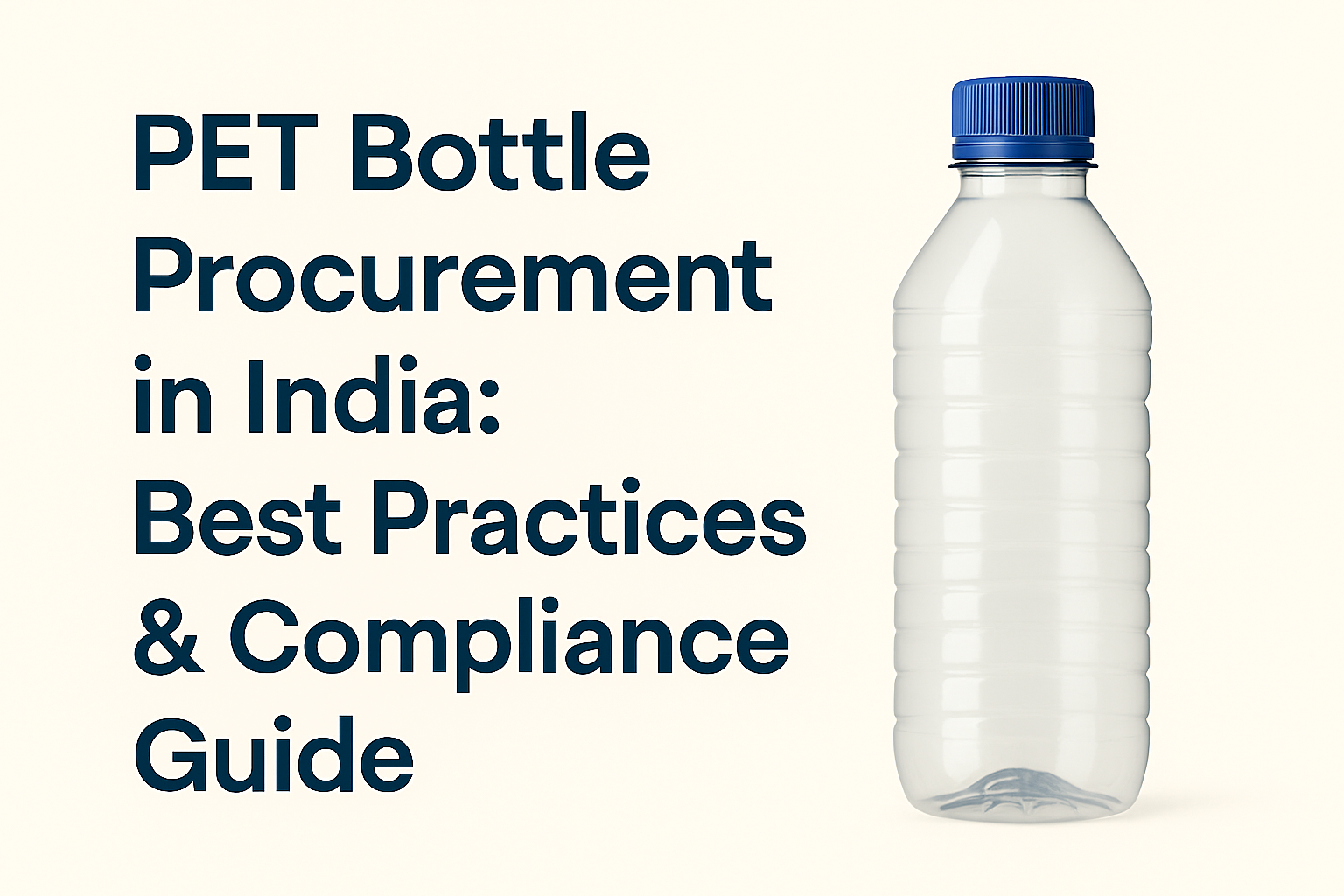
  • PET Bottle Procurement in India: Best Practices & Compliance Guide

    PET Bottle Procurement in India: Best Practices & Compliance Guide

    ecycling post-consumer PET bottles is now a crucial component of the plastic recycling ecosystem as India continues to strive for greener goals and a circular economy. The recycling and production of eco-friendly goods has led to an increase in the sourcing of PET bottles by both small and large scale businesses. Legal frameworks, best practices, and compliance requirements add to the complexity of procuring the bottles.

    This document outlines the systematic and methodical approach for procurement of PET bottles in India while observing compliance with the relevant standards, industry, and government practices.  


    What are Post-consumer PET Bottles?

    Post-consumer PET bottles are the plastic bottles composed of PET (Polyethylene Terephthalate) materials which have been used and recycled into finished goods. Through a recycling process, used plastic bottles, which are commonly water, soft drink, and juice bottles, are transformed back into new products.

    PET is used in the textile, packaging, construction, and automotive sectors. Widespread and responsible procurement of PET is also necessary as it is 100% recyclable; however, the value is more of ethics in procurement.


    Why PET Bottle Procurement Matters

    Proper procurement ensures:

    • Quality feedstock for recycling plants
    • Environmental benefits of reducing plastic waste
    • Compliance with government rules
    • Traceability in the recycling value chain

    As Extended Producer Responsibility (EPR) regulations have gained prominence in India, companies are now required by law to collect and recycle some of the plastic that they produce — PET bottle procurement thus becoming a legal imperative, rather than an operational one.


    Key Stakeholders in the Procurement Process

    1. Waste Collection Agencies: Plastic waste is usually collected by municipal corporations and private vendors from residential areas and commercial establishments.
    2. Kabadiwalas & Scrap Dealers: These are the informal collectors who constitute the strength of the PET collection in India.
    3. Material Recovery Facilities (MRFs): Such facilities sort, clean, and separate PET bottles in readiness for recycling.
    4. Authorized Recyclers & Aggregators: These are registered recyclers who ensure that the PET collected is processed into form and function flakes or granules.


    Best Practices for Sourcing PET Bottles in India

    1. Source through Registered Vendors

    Verify that your suppliers, either as scrap dealers or aggregators, are registered with the local Pollution Control Board and fully comply with local and state laws.  


    2. Define Quality Parameters

    Set tolerance levels for: Contamination, Colour of bottles, Cap and label presence  

    This minimizes issues during processing and enhances recyclability.


    3. Authenticate Documentation

    Have procurement records, invoices, and vendor certificates for compliance reporting and audits.  


    4. Use Weighbridge Slips  

    Always confirm evaluated quantities with credible measurement systems to maintain integrity for trust or value erosion.  


    5. Geotagged Collection Data  

    For participants in an EPR program, employ collection points and quantities for streamlined digital recording to ensure transparent tracking.  


    Understanding Compliance Regulation  

    According to the 2016 Plastic Waste Management Rules and their 2022 amendment, alongside the EPR framework, brands and producers in India are required to take responsibility for their plastic waste.

    Key compliance factors are:

    • EPR Registration on CPCB (Central Pollution Control Board) portal
    • Annual Returns Filing for the collection and recycling of plastic waste
    • Working with Authorized Recyclers
    • Barcode tagging and traceability.

    Fines, license withdrawal, or blacklisting from supply chains may happen due to non-compliance.


    Advantages used for PET bottles procurement are:

    • Improves your brand’s eco-friendly profile
    • Eases certification and audit processes
    • Reduces the use of virgin plastic
    • Supports India’s Swachh Bharat Mission and circular economy


    Conclusion

    With the pressure to adopt eco-friendly practices, the industry has to source legally compliant and effectively sourced post-consumer PET bottles. It’s a smart business decision and a regulatory requirement.

    As a manufacturer, recycler, or brand owner, adherence to best practices and compliance procedures will make your company a sustainability trendsetter in India’s rapidly changing plastic management landscape.

  • Top Industries Using PET Flakes in Everyday Products: Innovation in Action

    Top Industries Using PET Flakes in Everyday Products: Innovation in Action

    The need for sustainable practices across the world has changed the way industries deal with unwanted plastic. The reprocessing of used PET bottles into PET flakes is one of the industry’s most inventive and sustainable approaches. PET flakes are now essential for various industries as they help in converting waste into treasures and achieving the objectives of the circular economy.

    In this blog, we discuss the key industries that process PET flakes into everyday products and how innovations are helping achieve sustainability.


    What are PET flakes?

    PET flakes are the small, cleaned, and processed pieces of PET bottles. They are also regarded as raw materials of great importance, the shredded and washed post-consumer bottles. After post-consumer plastic bottles are collected and sorted, they undergo shredding and washing into the form of flakes.


    1. Textile and Apparel Industry

    The textile industry has become one of the leading consumers of PET flakes, especially for producing recycled polyester fibers or rPET.  

    Commonly used:

    • T-Shirts
    • Jackets
    • Sportswear
    • Backpacks
    • Footwear

    The rPET has been integrated into the supply chains of Adidas, H&M, and Nike, which now provide consumers with fashionable and functional pieces without loss of sustainability.


    2. Packaging sector

    Flakes of PET are utilized in the packaging industry as a raw material within the production of shredded bottles, containers, and food-grade packaging. This is “bottle-to-bottle recycling,” and PET is never thrown away, but recycled back into the production cycle.

    Core Products:

    • Soft drink and water bottles
    • Food containers
    • Cosmetic and personal care packaging

    With increasing government regulations and consumer demand for sustainability, most FMCG firms now implement rPET packaging.


    3. Automotive Sector

    PET flakes are also transforming automotive interiors. Recycled polyester fibers extracted from PET flakes find application in car seat covers, trunk liners, carpeting, and insulation.

    Advantages:

    • Lighter in weight and long-lasting
    • Lower carbon footprint
    • Improved thermal insulation

    This not only addresses green objectives but also leads to better fuel efficiency with lighter vehicle content.


    4. Building & Construction Materials

    In building construction, PET flakes are also being integrated into plastic lumber, insulation panels, roof sheets, and even structural composite materials.

    Benefits:

    • Extremely durable
    • Water and corrosion resistant
    • Lightweight and economical

    The use of rPET in infrastructures helps earn green building certifications and decreases virgin plastic dependency.


    5. Household Products & Consumer Goods

    Most common household goods are now produced using PET flakes, including:

    • Cleaning product containers
    • Storage containers
    • Garden tools
    • Kitchen utensils
    • Toys

    This broad use is testament to an increasing dedication by producers to adopt recycled materials across product groups.


    Why Industries Are Moving Toward PET Flakes

    Several reasons are propelling industries toward PET flakes:

    • Environmental Responsibility: Minimizing plastic pollution and aiding circular economy initiatives.
    • Cost Efficiency: PET flakes tend to be cheaper than virgin plastic.
    • Compliance: Governments are compelling the use in packaging and products.
    • Brand Image: Green practices enhance brand image and customer confidence.


    Also Read: Recycled Polyester Staple Fiber in Gujarat: How Rakshitam Ecofibre Powers rPET Innovation in India

    Final Thoughts

    The mass application of PET flakes industry-wide exhibits how innovation, sustainability, and financial gain can coexist. From the garments on our backs to the packaging on which we open our daily foods, PET flakes are emerging as a strong remedy in plastic waste reduction and a circular future.

    As increasing numbers of industries incorporate PET flakes into their manufacturing cycles, the possibilities for green growth increase, building a cleaner and more responsible world for future generations.

  • Recycled Polyester Staple Fiber in Gujarat: How Rakshitam Ecofibre Powers rPET Innovation in India

    Recycled Polyester Staple Fiber in Gujarat: How Rakshitam Ecofibre Powers rPET Innovation in India

    India is adopting environmental conservation and simultaneously strengthening its position as a global leader on the sustainable front. Leader of rPET products, Rakshitam Ecofibre, is Recycled Polyester Staple Fiber (RPSF) producer, which is leading this revolution.
    Rakshitam Ecofibre’s production of high-performance fibers through the recycling of post-consumed plastics is a tremendous step towards adopting a circular economy in India.


    What is Recycled Polyester Staple Fiber (RPSF)?  

    Recycled Polyester Staple Fiber (RPSF) is classified as a synthetic fiber produced from the recycling of PET (polyethylene terephthalate) bottles and containers. The plastics used in beverage are washedchippedconverted into PET flakes, and processed into synthetic fibers. The fibers are an adaptive green material that can be utilized in:

    • Home textiles (pillows, mattresses)  
    • Interiors of vehicles  
    • Non-woven fabric
    • Geo-textile fabric  
    • Yarn and the spinning industry  

    RPSF is a better choice when compared to virgin polyester, because although it offers the same quality, it is less harmful to the environment.


    Gujarat: The Center of rPET Innovation

    Guiding India in industry and economy, environmental strides are also supported by the state of Gujarat. The recycling industry of Gujarats rPET is supported by the stateaccess to the global marketthe strong infrastructure, and the skilled manpower. In Rajkot, Gujarat, Rakshitam Ecofibre has become one of the leading RPSF producers in India, taking full advantage of these strengths.


    How Rakshitam Ecofibre Leads the Way

    The company is well-respected for its RPSF and well-known for advanced recycling systems, which yield quality PET flakes and RPSF of tailored grade. Rakshitam’s product range includes:

    • RPSF black and white
    • Colored PET flakes: blue, mix, and transparent
    • Non-woven filling fiber, spinning, and filling fiber

    Sustainability and zero-waste production are Rakshitam’s specialties. Their environmentally conscious strategy minimizes waste and energy, as well as greenhouse gas emissions.


    Benefits of rPET and RPSF Provided by Rakshitam

    Plastics Out of Landfills and Oceans: Environmentally friendly as rPET and RPSF keep plastics out of landfills and oceans.

    • Lower Energy Compared to Virgin Fiber: rPET and RPSF require significantly lower energy to manufacture them.
    • More Valuable For Manufacturers: rPET and RPSF are economically friendly as the value provided is greater to manufacturers.
    • Comparable Quality and Durability: rPET and RPSF provide high-performance quality.
    • Custom Tailored For Specific Standards: Industry-specific standards, specific fiber is provided as a tailored solution.

    The unique approach by Rakshitam Ecofibre helps balance the commercial efficiency, environmental impact, and therefore advocates.


    Constructing an Eco-Friendly India  

    Concern for the environment, coupled with the Indian government’s focus on sustainable manufacturing policies, has surely put Ecofibre Rakshitam at the apex of this revolution. By following the circular economy practice of converting waste into resources, they are not only enhancing the industry but also contributing towards India’s long-term green goals.

    Their efforts, falling in line with Make in India and Swachh Bharat campaigns, show that industrial development does not have to come at the cost of environmental sustainability.

    Also Read: How Rakshitam Ecofiber Pvt. Ltd. Leads India’s rPET Recycling & RPSF Manufacturing with PET Flakes

    Concluding Remarks

    Businessmen and women, if you seek eco-friendly fabrics, you can rely on Rakshitam Ecofibre Pvt. Ltd. The company leads India’s sustainable manufacturing initiative with its Recycled Polyester Staple Fiber and rPET products.  

    Showcasing the state-of-the-art innovation, unmatched quality, and true sustainability from Gujarat to the rest of the world, Rakshitam is proving that sustainable development has no borders.