India’s Polyester Staple Fiber (PSF) industry is at a critical juncture of growth. According to Market Research Outlook’s market report for 2026, the India polyester staple fiber market is expected to grow from USD 4.25 billion in 2025 to USD 7.68 billion by 2032, with a CAGR of approximately 8.8%. The report cites the main areas for growth as recycled PSF, technical textiles, nonwovens and sourcing with sustainability focus.
This expansion is more than just a larger market for Indian recycled polyester staple fiber (RPSF) manufacturers. It offers a chance to transition from commodity fiber supply to higher value, specification-driven and sustainability-focused solutions.
What Is Driving the Indian PSF Market?
Polyester staple fiber is used in different industries such as apparel, home textiles, automotive textiles, nonwovens, upholstery and industrial applications. With the growing textile and manufacturing ecosystem in India, the demand for polyester based materials are expected to grow.
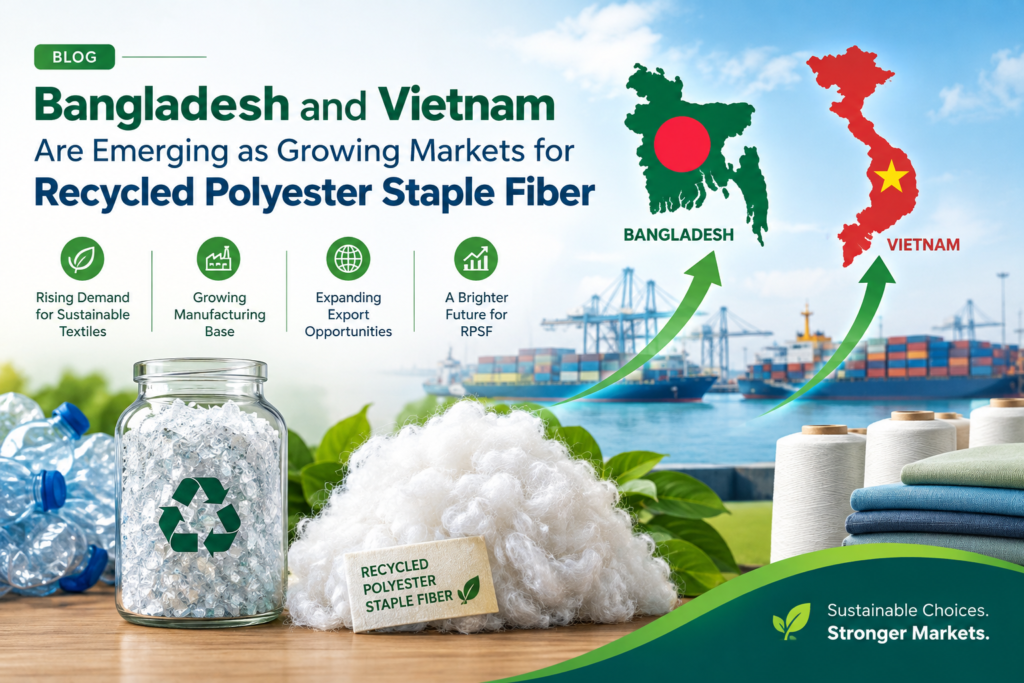
At the same time, manufacturers are increasingly under pressure to reduce their environmental impact. This is generating increased interest in recycled polyester made from post-consumer PET waste.
Market report states that recycled PSF is the fastest growing segment of India’s polyester staple fiber industry.
This is a big opportunity for companies that can supply consistent recycled fiber at a commercial scale.
RPSF: Recycling of Plastic Waste to Industrial Fiber
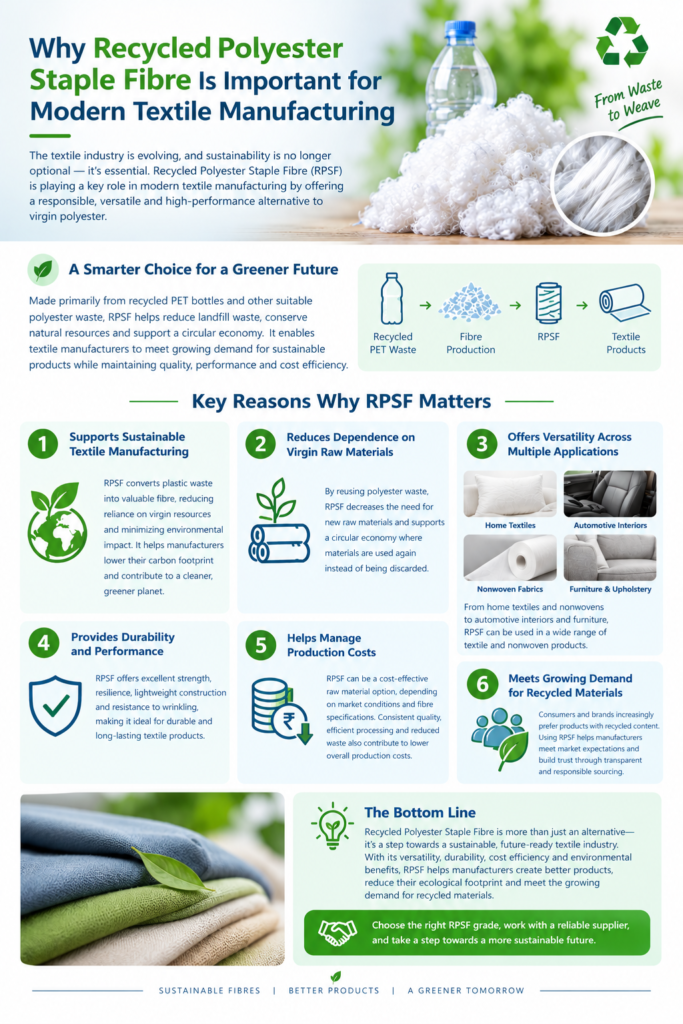
RPSF is an important link in the chain from plastic recycling to textile manufacturing.
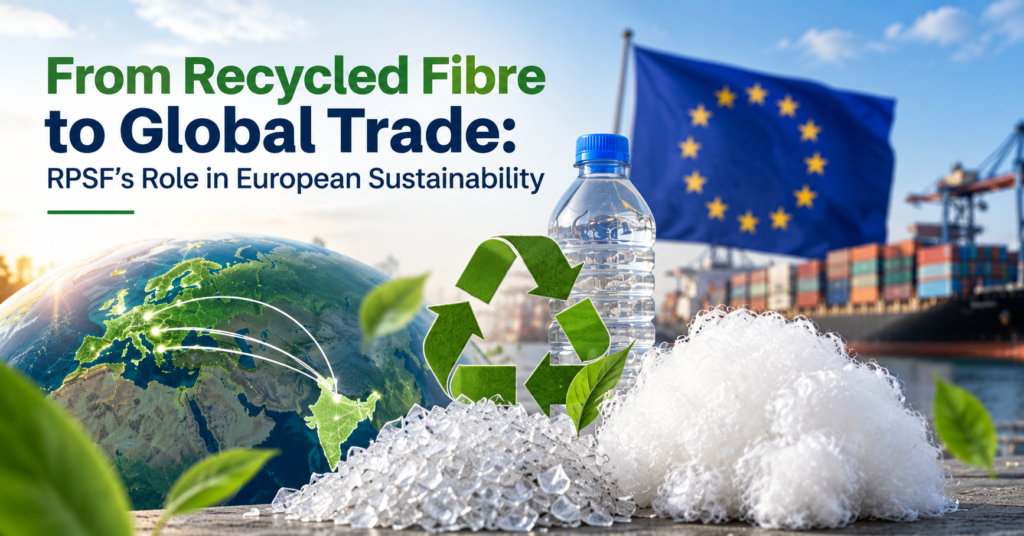
Used PET bottles can be collected, sorted and cleaned and made into recycled PET flakes. These materials can then be recycled into polyester staple fiber for applications including spinning, nonwoven fabrics, filling and home furnishings.
This model provides an opportunity for manufacturers to use recycled content and reduce reliance on virgin polyester feedstock.
“The bottle-to-fibre route is the one we’re working on at Rakshitam Ecofibre and we use post-consumer PET bottle waste as an important raw material for our recycled polyester products.
How Rakshitam Can Seize the Opportunity
1. Expand Production Capacity
The market growth opens up opportunities, but manufacturers need to have sufficient capacity to meet large and repeat orders.
Rakshitam Ecofibre said it has an annual RPSF production capacity of 30,000 MT and can cater to bulk requirements of domestic and international buyers.
As demand grows, scalable manufacturing can be a huge competitive advantage.
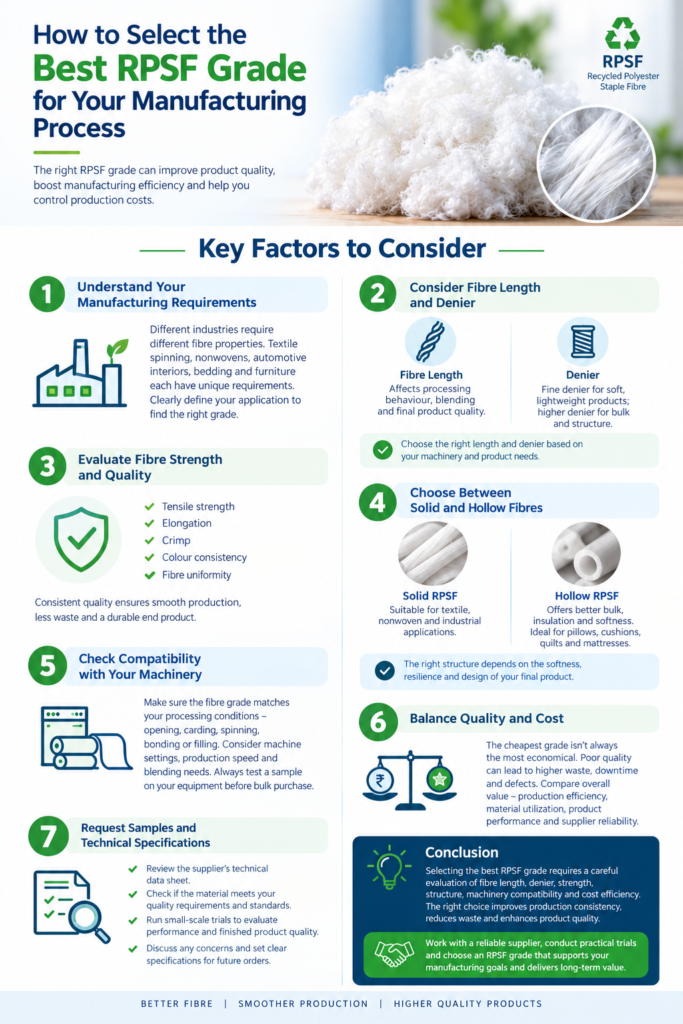
2. Providing Multiple Fiber Specifications
Different applications require different fiber characteristics. A spinning mill may require a different denier or cut length than a nonwoven or filling manufacturer.
Rakshitam has good high tenacity RPSF for all Denier from 1.0 to 3.0 and cut lengths like 28 mm, 32 mm, 44 mm, 51 mm and 64 mm. It comes in a range of different color options.
This flexibility allows the company to meet the needs of a wider range of customers.
3. Focus on Quality and Certifications
With the growing use of recycled fiber, it is expected that buyers will pay increasing attention to consistency, traceability and certification.
Rakshitam on its company profile highlights certifications and quality standards such as Global Recycled Standard (GRS), OEKO-TEX, REX, BIS and ISO.
These credentials can help build supplier confidence for export-oriented customers and brands that have sustainability requirements.
4. Target High-Growth Applications
The future opportunity is not limited to traditional textile spinning.
Applications identified by the PSF market report include nonwovens, automotive textiles, industrial and technical textiles, filtration, geotextiles, fibrefill and upholstery.
RPSF manufacturers can focus on developing products and sales strategies around these specialized applications to command more value instead of competing solely on price.
Sustainability Can Be Commercial Advantage
Increasingly, procurement decisions are taking sustainability into account. Rakshitam’s manufacturing approach is to convert post-consumer PET bottles into recycled fiber, and its sustainability initiatives include a Zero Liquid Discharge system and GRS certification.
This positioning can help Indian RPSF manufacturers connect with brands and industrial buyers in the market for recycled material with more robust sustainability credentials.
Also Read: rPET Flakes to RPSF : How Rakshitam Ecofibre converts plastic bottles into premium recycled fiber
The Future for Indian RPSF Manufacturers
The Indian PSF market is projected to reach USD 7.68 billion by 2032. There is a big opportunity, but just the growth in the market will not guaranty success.
Manufacturers that can successfully integrate production scale, consistent quality, multiple specifications, certification, sustainable sourcing and export capabilities will be better equipped to capture the next phase of growth.
With the recycled PET feedstock model and wide RPSF specification range of 30,000 MT per annum, Rakshitam Ecofibre is ready to play its part in this expanding market and the shift toward more circular textile manufacturing.
As the Indian polyester industry matures, the biggest opportunity may not be in just producing more fiber, it may be producing better, more sustainable and application-specific recycled fiber for the industries of tomorrow.