India’s recycling ecosystem is undergoing a massive transformation with better collection, sorting and processing of post-consumer plastic opening up new opportunities across the recycling industry. This is good news for PET (Polyethylene Terephthalate), which is widely used to make beverage bottles, food packaging and other consumer products.
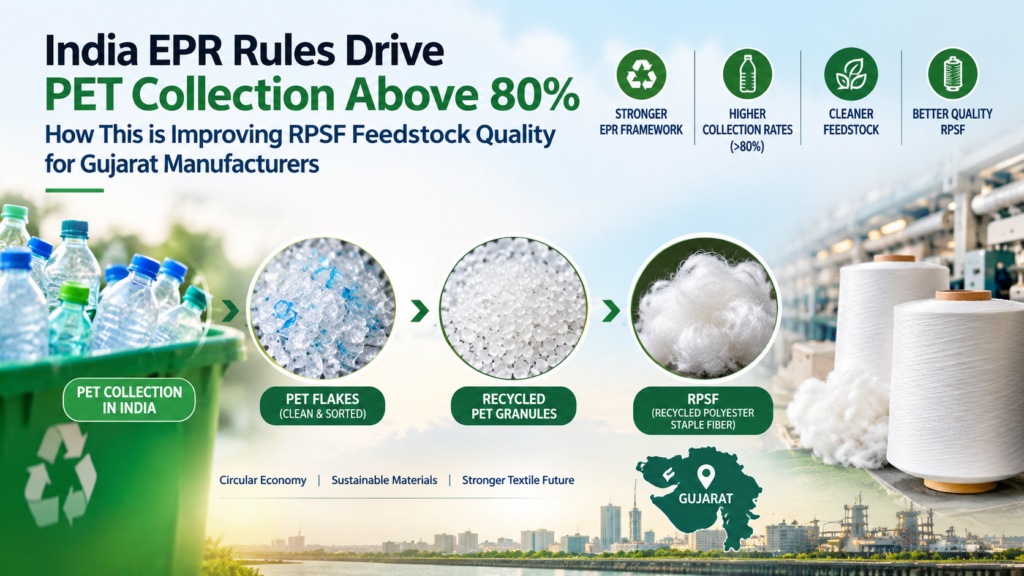
As higher volumes of PET waste are directed into organized collection and recycling streams, the availability of quality recycled feedstock becomes more important for Recycled Polyester Staple Fiber (RPSF) manufacturers. The state of Gujarat is becoming a significant location for the production of premium RPSF from recycled PET due to its robust manufacturing base and well-established textile ecosystem.
Increasing Importance of PET Collection in India
PET bottles have a known recycling value because they are collected, sorted, processed and made into new products. But the effectiveness of recycling depends a lot on how well the used PET is collected and sorted.
India’s growing waste collection infrastructure is helping to steer PET bottles away from informal disposal routes and into better organized recycling streams. The role of collection centers, waste aggregators, recyclers and material recovery facilities in ensuring a consistent supply of recyclable PET is increasing.
Better collection means more PET can be recovered before it goes to landfills or is disposed of improperly. For recyclers and downstream manufacturers it can help to make the raw material supply more reliable.
Used PET Bottle Processing to RPSF
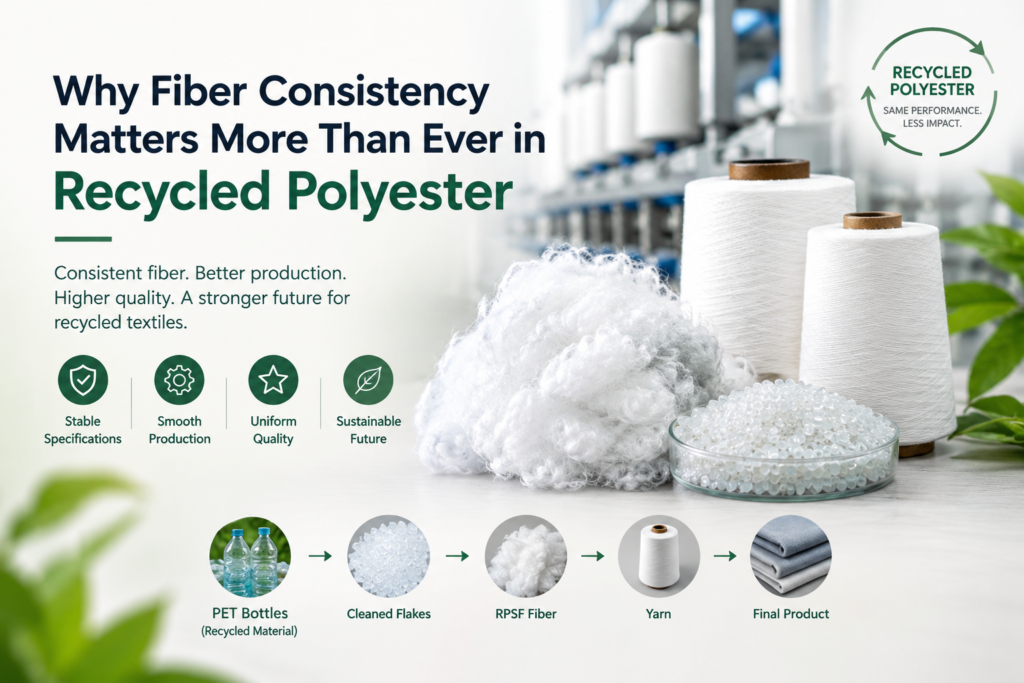
The process from discarded PET bottles to recycled polyester fiber goes through several processing stages. The bottles collected are normally sorted by material and color, cleaned and processed to PET flakes.
These flakes can then be converted into recycled polyester which is further processed into Recycled Polyester Staple Fiber (RPSF).
RPSF can be applied in a variety of applications such as textiles, home furnishings, non-woven products, automotive components, filling materials and industrial applications. This creates a direct link between the PET collection infrastructure and the larger manufacturing economy.
Importance of Gujarat for RPSF Manufacturing
There are many advantages of recycling and textile manufacturing in Gujarat. The state boasts a strong industrial base, well-developed logistics networks, ports, chemical and polymer industries, and a vibrant textile manufacturing ecosystem.
Manufacturers, processors, traders and downstream users of polyester-based materials are located in cities and industrial regions of Gujarat. This concentration of industry can make the state an attractive place for companies that make recycled polyester.
RPSF manufacturers benefit from the proximity to the raw-material sources as well as the textile markets that can support more efficient supply chains.
Improved RPSF with Quality PET
“It’s good to grow the collection, but quality is as important as quantity. Contamination or poor sorting of PET can make it difficult to recycle and affect the consistency of the material.
Therefore the effective sorting, washing, processing and quality control are essential for premium RPSF manufacturing. Manufacturers can use cleaner, better segregated PET feedstock to help ensure more consistent fiber characteristics.
Buyers will look at important factors such as fiber length, denier, color, strength, consistency and suitability for the intended application. RPSF producers must concentrate on quality in the manufacturing process rather than simply producing more.
Supporting a Circular Economy for Polyester
The increased collection of PET and manufacture of RPSF is an important step toward a circular economy. Used PET bottles in recycling systems can be converted from waste to valuable secondary raw materials.
The recycled polyester from this process can be re-introduced into the manufacturing supply chains as a substitute for virgin polyester for appropriate uses. Better recycling will also create economic opportunities for collectors, processors, recyclers, manufacturers and textile businesses.
What this means for RPSF producers
India’s better PET collection infrastructure presents an opportunity for RPSF manufacturers to strengthen their supply chains and develop higher-quality recycled fiber products. Manufacturers who commit to efficient processing, consistent quality control, responsible sourcing and modern recycling technologies may be better positioned to meet the growing demand for recycled materials.
Gujarat’s growing PET recovery, industrial infrastructure and robust textile ecosystem provide a promising foundation for the future growth of the state’s RPSF industry.
India’s recycling industry is evolving toward a more organized and value-driven model. The growing capabilities of PET collection, segregation and recycling can provide a supply of recyclable material to support the growth of recycled polyester manufacturing.
This is an opportunity for Gujarat to consolidate its position as a hub for premium RPSF manufacturing. The future of recycled polyester will be determined not only by how much PET is collected, but by how well that material is transformed into consistent high-performance products that meet the needs of modern industries.