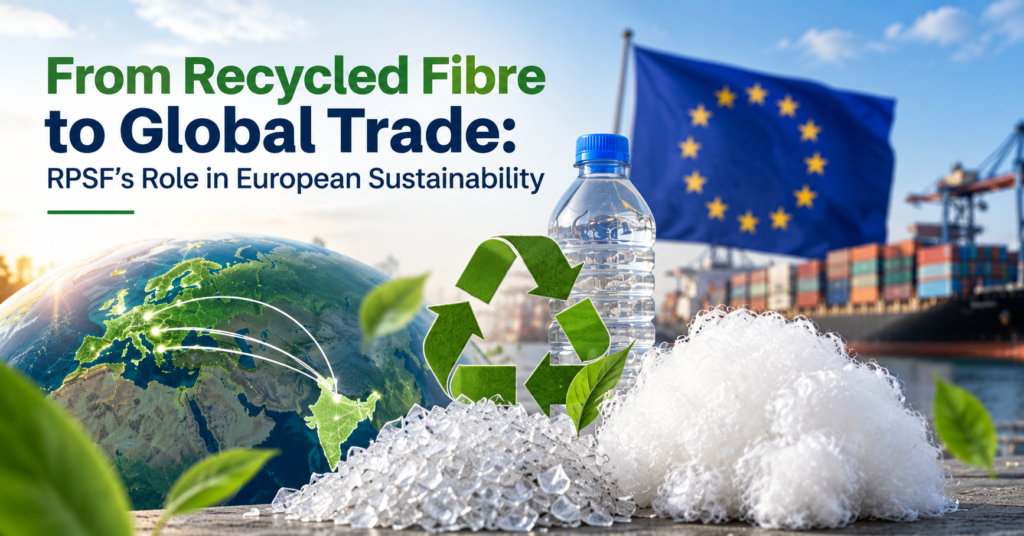
India’s automotive industry is moving into a new phase, in which sustainability is gaining prominence in vehicle manufacturing. In 2026, automakers and component makers will be seeking materials that lower environmental impact, but without sacrificing quality, comfort, durability or cost. In this change Recycled Polyester Staple Fiber (RPSF) is one material that is getting attention.
RPSF is primarily manufactured from recycled PET bottles and polyester waste, and can be spun into fibers for automotive interior fabrics, carpets, seat fabrics, headliners, door panels and other textile components. As India’s automobile production and demand for sustainable manufacturing continues to rise, recycled fiber is emerging as a relevant solution for the automotive supply chain.
Why sustainable manufacturing in automotive interiors matters
In terms of vehicle sustainability, electric powertrains, batteries, fuel efficiency and emissions are the watchwords. But the materials used inside the car also have a big impact on the car’s overall environmental footprint.
Today’s automotive interiors include a number of textile and fiber-based products including:
- Upholstery and fabrics for seats
- Floor coverings and mats
- Headliners
- Door trim
- Linings, boot
- Parcel trays
- Acoustic Isolation
- Padding and cushioning in interiors
Many of these applications require polyester-based materials, which gives the possibility to replace virgin polyester with recycled alternatives such as RPSF.
How Does RPSF Help the Automotive Industry
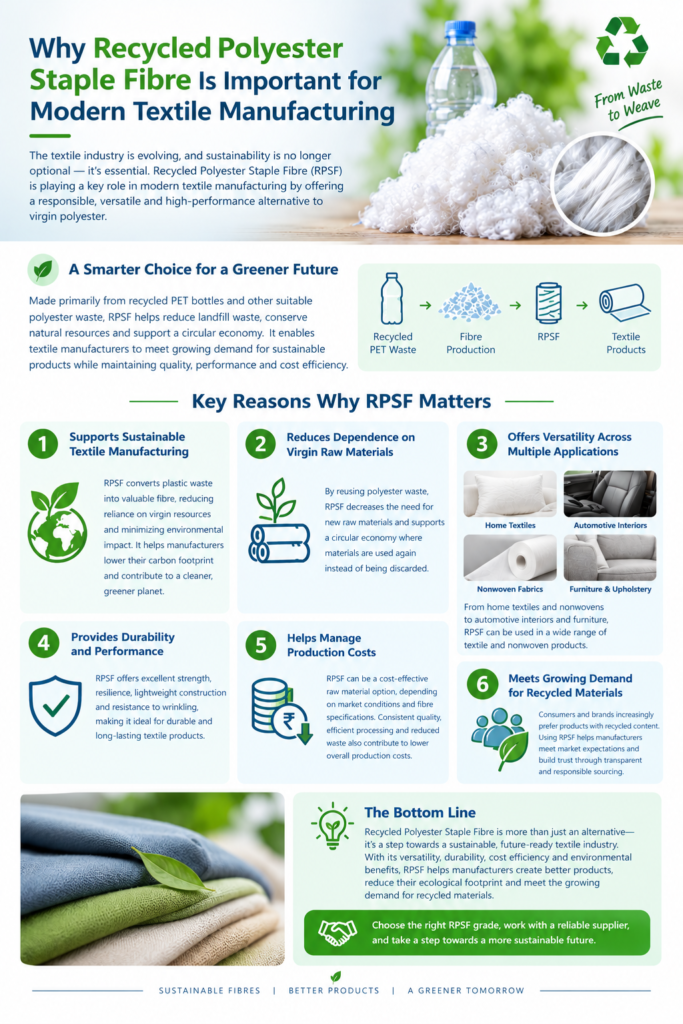
RPSF is produced by recycling post-consumer PET bottles or polyester waste into usable polyester fiber. When plastic waste is not sent to the landfill or environment, it can be recovered and made into a new industrial resource.
This means a circular material cycle for automotive manufacturers:
Used PET bottles → Recycling → PET flakes → Polyester fiber → Automotive textiles → Vehicle interiors
This process helps to reduce the dependence on virgin raw materials and contributes to the wider circular economy.
India’s Growing Market for Green Automotive Fabrics
The Indian automotive industry comprises passenger cars, commercial vehicles, two-wheelers, three-wheelers and electric vehicles. Interior materials are also being incorporated into their environmental strategies when manufacturers compete on technology and sustainability.
Global automotive brands are setting more and more sustainability targets across their supply chains. This puts pressure on Indian component manufacturers catering to these companies to use recycled and environment friendly materials.
Recycled polyester can be developed for many applications and specifications, which can make RPSF particularly enticing. Depending on the manufacturing process, fiber properties can be optimized for applications requiring softness, resilience, strength, insulation or durability.
RPSF & Electric Vehicles
The rise of electric vehicles (EVs) is also driving interest in sustainable interior materials.
EV makers like to sell their cars on the basis of eco-friendly mobility. Inside the cabin, the use of recycled materials can enhance this sustainability proposition.
Recycled polyester fibers can be used in seat fabrics, carpets, acoustic materials and other interior components, enabling vehicle manufacturers to cut back on the volume of virgin polyester used in production.
“This, therefore, presents opportunities for Indian RPSF manufacturers to create specialty fiber solutions for the growing EV and automotive component market.”
Which recycled fiber do carmakers want
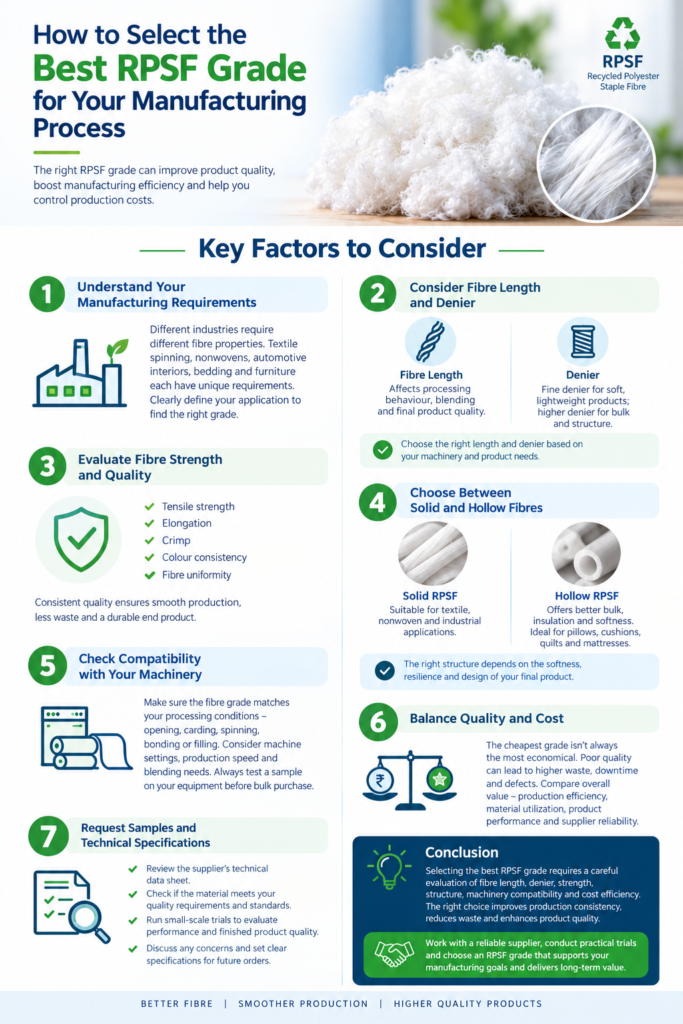
Sustainability alone is not sufficient for automotive applications. Materials must meet stringent technical requirements.
Automotive textile manufacturers usually look for features such as:
- Consistent quality of fiber
- Proper denier and cut length
- Strong durability
- Color Matching
- Dimensional stability
- Good processing.
- Dependable supply
- Competitive prices
Therefore, for RPSF manufacturers to be dependable suppliers to automotive textile manufacturers, they need robust quality-control systems and uniform manufacturing standards.
India’s Auto Textile Supply Chain: The Road Ahead
By 2026, sustainability will evolve from a marketing concept to a practical supply-chain requirement. Automakers, textile manufacturers and component suppliers are increasingly turning to recycled polyester for ways to reduce material footprints, and it’s set to play an important role.
This is a huge opportunity for India. The country has a large PET recycling ecosystem, an increasing automotive manufacturing base, and growing demand for sustainable materials. Linking these industries can improve a stronger circular economy and new markets for recycled fiber producers.
Automotive interior fabrics are a significant sphere of sustainable innovation in India. RPSF provides an easy way to convert waste PET into useful textile materials for vehicle interiors such as seats, carpets, headliners, door panels and acoustic components.
As India’s automotive and EV industries grow further in 2026, manufacturers who incorporate recycled materials into their supply chains can meet their sustainability goals and stimulate demand for a more circular textile economy. The automotive interior segment could be one of the most promising growth opportunities for RPSF manufacturers in the recycled fiber market in India.