PET chips are a crucial raw material used to make polyester fibers, films, bottles, and industrial packaging. Maintaining strict quality standards for PET chips is vital for ensuring consistent performance, durability, and safety in downstream applications. Both manufacturers and buyers depend on standardized testing methods to verify material properties before processing.
In this guide, we look at the key quality standards and testing methods used to evaluate PET chips in industrial applications.
Why Quality Control Is Important for PET Chips
PET (Polyethylene Terephthalate) chips are commonly used in textiles, packaging, and the manufacturing of plastics. Any change in quality can affect:
- Fiber strength and durability
- Film clarity and mechanical properties
- Bottle performance and food safety compliance
- Processing efficiency
Thus, quality testing ensures that PET chips meet industry standards and customer needs.
Key Quality Parameters of PET Chips
To maintain consistency, manufacturers assess several crucial parameters:
1. Intrinsic Viscosity (IV)
Intrinsic viscosity (IV) is a primary quality indicator. It determines the molecular weight of PET resin, which directly influences mechanical strength and processing performance.
Higher IV values are generally needed for:
- Bottle-grade PET
- High-strength fibers
Lower IV values work for:
- Film and sheet applications
2. Moisture Content
PET is very sensitive to moisture. Too much moisture can cause hydrolytic degradation during processing, leading to reduced strength and defects.
The acceptable moisture level is usually below 0.005% for high-quality PET chips.
3. Color and Transparency
Color consistency is essential, especially for bottle-grade PET. Testing includes:
- L-value (lightness)
- b-value (yellowing index)
Clear and bright PET chips are preferred for premium packaging.
4. Bulk Density
Bulk density affects material handling, storage, and feeding efficiency in extrusion and injection molding.
5. Contamination Level
Foreign particles, black specks, or PVC contamination can harm processing and end-product quality. Advanced filtration and inspection systems are used to detect impurities.
Testing Methods for PET Chips
Various standardized laboratory methods evaluate PET chip quality.
1. IV Testing (Viscometer Method)
Intrinsic viscosity is measured using a viscometer under controlled lab conditions. This test checks molecular weight consistency.
2. Moisture Analyzer Testing
A moisture analyzer measures the water content in PET chips through thermal drying techniques. Accurate drying ensures better melt processing.
3. Colorimeter Testing
A colorimeter measures L* and b* values to ensure visual consistency and meet customer specifications.
4. Differential Scanning Calorimetry (DSC)
DSC testing evaluates melting temperature and crystallization behavior to ensure thermal stability during processing.
5. Contamination and Black Speck Testing
Microscopic analysis and filtration tests help detect contamination and ensure material purity.
Global Quality Standards for PET Chips
PET chip manufacturers follow internationally recognized standards to maintain compliance and be ready for export. These may include:
- Food-grade safety regulations
- ISO quality management systems
- Industry-specific material standards
Following global standards enhances product reliability and fosters trust with international buyers.
Quality Control in Recycled vs. Virgin PET Chips
Both virgin and recycled PET chips require thorough testing. However, recycled PET chips may need additional checks for contamination and IV consistency to ensure they perform comparably to virgin material.
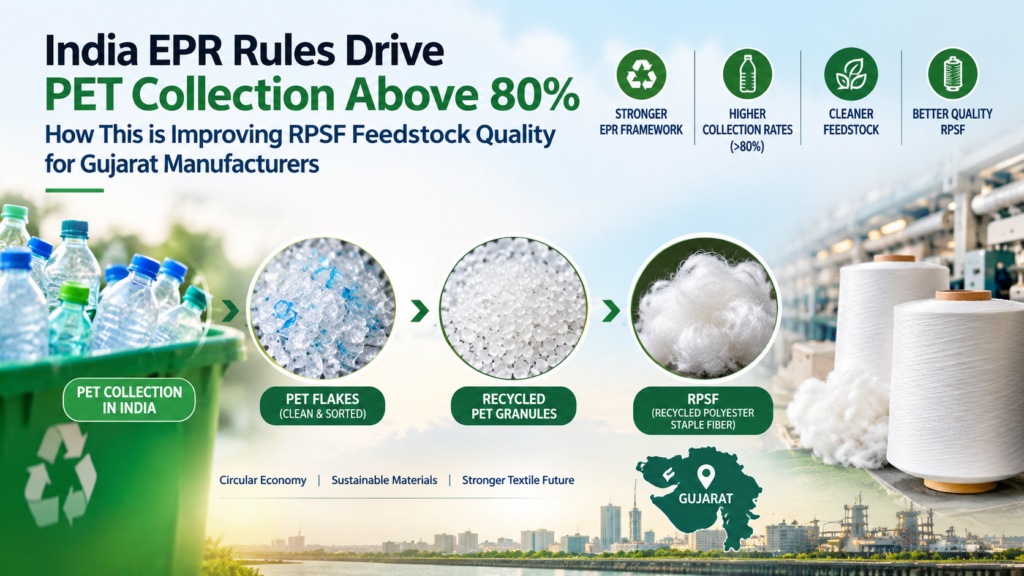
Innovative recycling technologies now enable recycled PET chips to meet high-quality industrial and packaging standards.
Also Read: How rPSF Is Used in Automotive, Home Furnishing & Apparel Industries
Conclusion
Quality standards and testing methods for PET chips are crucial for ensuring product consistency, safety, and performance. From intrinsic viscosity testing to moisture analysis and contamination control, each parameter plays a role in the reliability of the final product.
As demand grows across textiles, packaging, and industrial sectors, strict quality control remains essential for manufacturers seeking a competitive advantage in global markets.