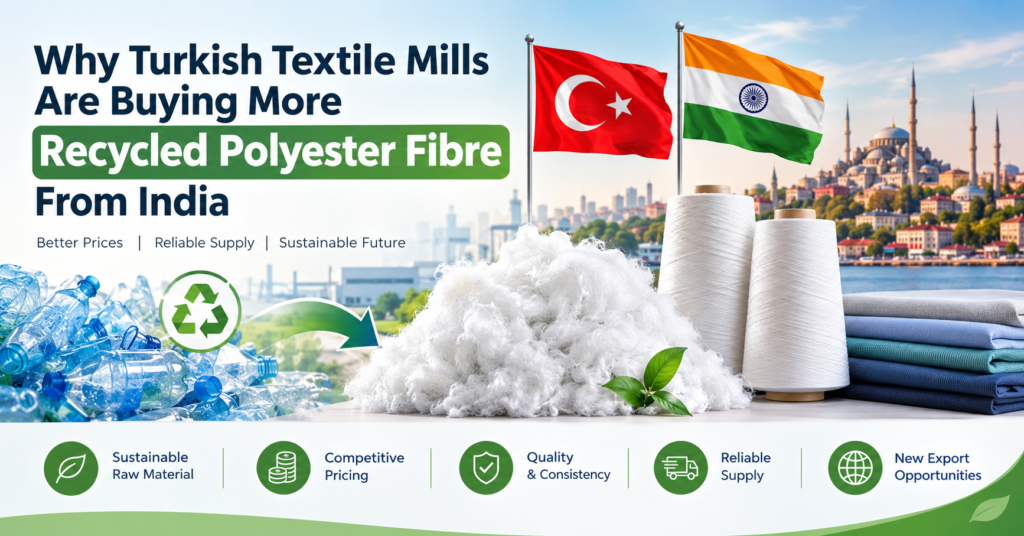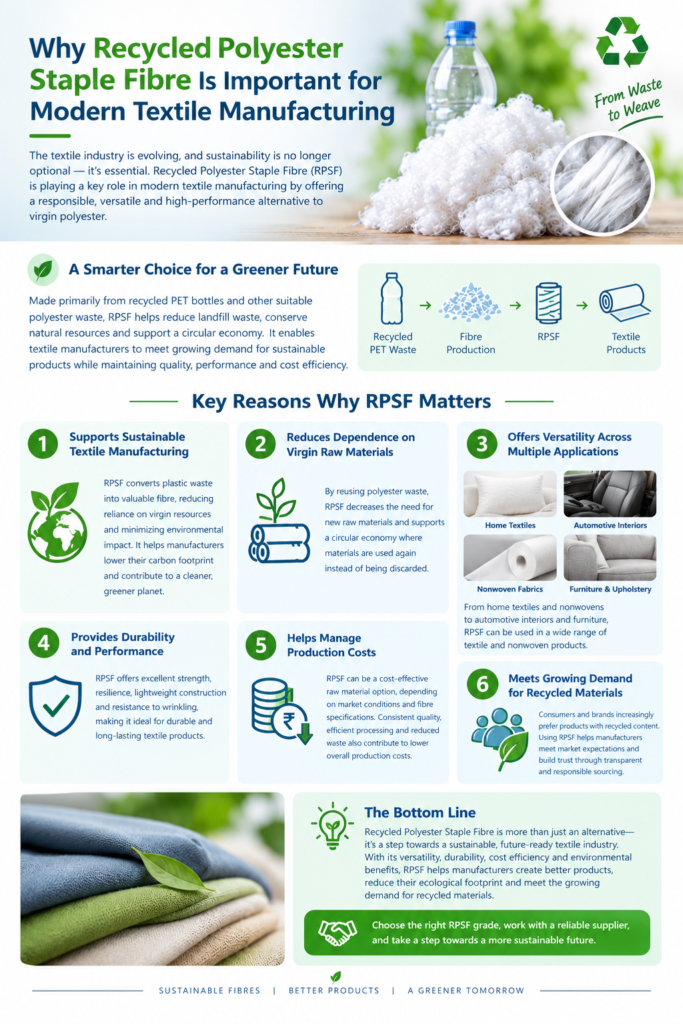
Recycled Polyester Fibre from India is becoming a suitable sourcing option for Turkish textile mills. Turkey has a strong textile and clothing industry. Therefore, its manufacturers need quality raw materials at competitive prices. Indian suppliers offer recycled polyester staple fibre (RPSF) in different grades for textile, nonwoven and home furnishing applications.
India has a booming recycling industry and a good base for textile manufacturing. The country also has a wide range of recycled polyester staple fibre (RPSF). So, India can be discovered as a sourcing destination by the international buyers.
1. Rising Demand for Sustainable Textile Materials
Sustainability has now become a key focus of the textile manufacturers worldwide. Brands, retailers and consumers are increasingly looking for products made from recycled material.
Used PET bottles and other suitable polyester waste are processed by manufacturers to make recycled polyester fibre. This process lessens the dependence on virgin raw materials. It also promotes the circular use of materials.
Moreover recycled polyester fibre also helps Turkish textile mills to meet the increasing demand for recycled products. But manufacturers must comply with the required quality and certification standards. This is especially critical when servicing international fashion and home textile brands.
2. Competitive and Affordable Pricing
The cost of raw materials directly impacts the profitability of textile manufacturing. Turkish textile mills have to balance product quality, production costs and market competition
India has good textile industry and availability of recycled raw material is good. Furthermore, Indian manufacturers are capable of producing recycled polyester staple fibre in different specifications.
These advantages can help India emerge as a low-cost sourcing destination. However, there are a few things buyers need to consider. These include specifications of the fibre, quantities ordered, freight charges and market conditions at the time.
Turkish buyers can compare different Indian suppliers and find sourcing options. This also assists them in managing procurement costs without compromising on product requirements.
3. The Emerging Recycled Polyester Fibre Industry in India
India has an existing textile sector and a nascent recycling ecosystem. In addition, manufacturers produce recycled polyester staple fibre in a variety of specifications. These products find their use in non-woven and textile industry.
Depending on the grade of fibre, RPSF can be used by manufacturers to:
– Production of yarn and blended fabrics
– Home textiles and soft furnishings
-Stuffing for Pillows etc.
– Applications for UpholsteryThus Indian RPSF suppliers can cater to different segments of the Turkey textile market. This makes India an attractive destination for manufacturers looking for multiple fibre applications.4. Various Grades of Fibre Available
All textile applications require specific fibre properties. Fibre length, denier, colour and strength are all factors influencing the efficiency of production. The specifications also determine the product itself.
Indian manufacturers offer RPSF in various grades to suit different industrial requirements. These include spinning mills, filling manufacturers and nonwoven manufacturers.
However, Turkish buyers are advised to check the product specifications before placing bulk orders. They should also ask for samples and look at quality documents. This helps manufacturers keep consistent standards in production. It also cuts down on material waste and increases the efficiency of production.
5. Export and International Sourcing Opportunities
India’s export industry is strong. Thus, global buyers can connect with Indian manufacturers and recycled polyester staple fibre suppliers.
Turkish textile mills have more sourcing options if they import from India. It can also reduce dependence on a small number of suppliers.
However, buyers should consider important factors before choosing an exporter. These include costs for shipping, delivery schedules, customs requirements and trade regulations in effect.
Also, reliable supplier relationships can help in the planning of purchases in the long run. They can also help maintain a steady flow of raw materials.
6. What Should Turkish Buyers Watch Out For When Importing RPSF
Choosing the right supplier is about more than just comparing prices. There are a number of important factors textile manufacturers should consider before importing recycled polyester staple fibre.
Product Quality Check denier, fibre length, colour and other specifications as required.
Quality Documentation: Ask for related test reports and certifications for recycled content, if applicable.
Export Experience: Inspect packaging standards, shipping arrangements and export documentation.
Landed Cost: Calculate freight, customs duties, insurance and other import costs.By looking at these factors, buyers can make knowledgeable choices about sourcing. Therefore, they can develop lasting and reliable supplier relationships.
Conclusion
Turkey’s textile industry is opening up more opportunities for quality recycled polyester suppliers. India has a strong base of textile manufacturing, recycling and export potential. Therefore, it can be a viable sourcing destination for Turkish textile mills.
Companies intending to import RPSF from India need to verify the product quality, price, certifications and reliability of suppliers. These factors are important for success in international procurement.
Also Read: bangladesh and vietnam emerging as growing markets of recycled polyester staple fibre