Category: Blog

Your blog category

  • Top 5 Common Uses for PET Flakes in Everyday Products

    Top 5 Common Uses for PET Flakes in Everyday Products

    PET is a versatile plastic, known for its strength and recyclability. In the recycling of PET materials, such as plastic bottles and containers, it is processed into PET flakes, which become a raw material for a range of products. These PET flakes are reducing the burden of plastic waste on the environment while promoting a sustainable, circular economy.

    Some of the most common everyday product applications include the following five for PET flakes:

    1. Textiles and Fabrics

    PET flake is highly in the application for the manufacture of polyester fibers, which finds their majority usage in the textile sector. Polyester fiber can be obtained as many articles including:

    Apparels: Sportswear, casual wear apparels, and outdoor wear garments and so on are all found to contain polyester fiber derived by PET flake through the process of melting.

    Home Furnishings: Carpets, upholstery, curtains, and cushions often consist of polyester that comes from PET flakes.

    Industrial Applications: Polyester fibers are applied in the manufacture of conveyor belts, ropes, among other industrial applications because of its strength and durability.

    The recycling of PET into textiles reduces the dependence on virgin polyester, and the preservation of natural resources thus makes it an environmentally friendly material for fashion and home application.

    2. Food and Beverage Packaging

    New food-grade packaging materials are mainly produced from recycled PET flakes. These include the following products:

    Bottles: PET flakes are reprocessed to produce beverage bottles for water, soft drinks, and juices.

    Containers: Food storage containers, trays, and jars are often produced from recycled PET, providing a sustainable alternative to single-use plastics.

    The food packaging industry highly benefits by the use of PET flakes in the reason that they are lighter and tough. They maintain the safety as well as quality of packed items during its delivery to consumers. All this also aids them to fulfill environmental as well as policy regulations around the globe.

    3. Building Materials

    PET flakes, commonly applied in the building industry by reason of their long-term strength and acting like insulation. They are sometimes employed in:

    Roofing Materials: The PET flakes serve to develop roofing sheets that can be described as lightweight, weather resistance, and enduring.

    Insulation: They also develop thermal materials for insulating buildings for energy efficiency.

    Composite Panels: PET flakes are used in the production of composite panels for walls and ceilings, thus offering a solid and environmentally friendly building material. The construction sector helps reduce the waste and minimizes the environmental impact of the construction processes of buildings through the use of recycled PET.

    4. Car Componentry

    More and more car componentry uses post-consumer recycled PET flake.

    Important application:
    Vehicle seats, vehicle carpets, door trim etc interior cloth material of automobile made with use polyester fiber which was made of PET flake
    Making of insulation materials as well as acoustic of automobiles in that case it also includes Thermal and acoustic. The applications are for automotive interior cloths as composite materials where, PET flake used dashboards as well as structures.
    This also leads to fewer wastes, lighter, and more fuel-efficient vehicles.

    5. Daily Household Use

    The PET flakes are also converted into various household consumer products we use daily, such as:

    Reusable Bags: Many eco-friendly shopping bags are made from PET-based polyester fabrics.

    Furniture: Chairs, tables, and other furniture items incorporate PET flakes for strength and design flexibility.

    Storage Solutions: Organizers, bins, and other storage products from recycled PET are durable and cost-effective. These household products show how PET flakes can be used to make sustainable alternatives to traditional materials for the benefit of consumers and the environment.

    The Sustainability Factor

    PET flakes are very versatile and can be recycled several times without a great loss of quality, so they form a core part of the circular economy. These everyday products, through the incorporation of PET flakes, help industries around the world to reduce their carbon footprint, conserve resources, and promote sustainable practices.

    India, which is increasingly becoming conscious of recycling and environmental care, can easily emerge as a world leader in PET recycling. Applications range from textiles to packaging, from construction to automotive, so it’s pretty evident that PET flakes can play a very important role in the field of sustainability.

    Conclusion

    PET flakes are at the very heart of products that impact almost every aspect of our daily lives. They ensure that what was once rubbish is converted into something valuable, so recycling and responsible consumption become significant. Hence, consumers can contribute toward a clean, green earth with durability and versatility while using recycled PET-based products.

    As industries innovate and expand the applications of PET flakes, the future holds even greater promise for reducing waste and advancing sustainability. Whether in fashion, food packaging, construction, or household items, PET flakes are proving to be a key material for building a more sustainable world.

  • Why rPET is the Safe Choice for Food Packaging in India

    Why rPET is the Safe Choice for Food Packaging in India

    As the environmental awareness in people’s minds and concern rises, the packaging industry of India progresses toward more sustainable products. From them, rPET comes at the forefront, a reliable source that not only is non-harmful but also protects the environment while being safer to handle with food, for its applications in India and what concerns of sustainability and practicality rPET actually helps the consumer to know in details about.

    rPET stands for post-consumer PET-based materials, such as used plastic bottles, containers, collected, cleaned and recycled back into new packaging material that extends the life cycle of the plastics and lessens the production of virgin PET, therefore having an environmental impact.

    India is one of the leading producers and consumers in the world of PET bottles, which makes it extremely promising to exploit rPET for food-grade applications. Because of its strong recycling network and environmentally conscious mind set, rPET has been seen as a sensible solution to food packaging.

    rPET Environmental Advantages Plastic Waste Reduction

    With millions of tons of plastic waste every year, of which a large percentage is made of PET materials, embracing rPET can divert plastic waste from landfills and oceans towards making the environment cleaner and healthier to live in.

    Lower Carbon Footprint

    With its energy consumption being lesser as compared to virgin PET, rPET also consumes fewer greenhouse gases. Therefore, in a country which works actively in order to achieve climate targets, it represents a tangible step for lowering carbon emissions associated with packaging.

    Promotion of the Circular Economy

    rPET is in line with a circular economy because it allows plastic once used to be used one more time. The effort follows India’s increasing thrust to bring forward sustainable development and save on available resources.

    Safety of rPET for Food Packaging

    Food packaging safety is highly crucial, and rPET meets all the global and Indian norms to ensure safety. For the reasons listed below, rPET can be explained as a safe material for food-grade applications:

    Regulatory Standards

    The rPET used for food packaging in India is as per the regulatory standards prescribed by the food safety and standards authority of India, FDA, or EFSA.
    The rPET must not contain any toxic contaminants and hence is safe to be used for direct food contact.

    Next Generation Recycling Technologies

    The production of food-grade rPET involves advanced recycling processes, such as chemical recycling and super-clean technologies, which thoroughly remove impurities and ensure high levels of purity. These technologies make rPET indistinguishable from virgin PET in terms of safety and quality.

    Rigorous Testing Protocols

    rPET is thoroughly tested in terms of chemical composition, durability, and suitability for contact with food. These protocols ensure the material is safe, non-toxic, and complying with all health regulations.

    Practical Benefits of rPET

    In addition to these safety and environmental benefits, rPET offers practical benefits that make it the first choice for food packaging in India:

    Versatility

    rPET can be molded in different shapes and sizes and therefore can be used in packaging a wide variety of food products, such as beverages, ready-to-eat meals, and snacks.

    Cost-Effectiveness

    Although the initial investment in recycling infrastructure is cost-intensive, the long-run cost benefits of using rPET outweigh these costs. The demand for rPET is becoming increasingly affordable for manufacturers, with advancing technology.

    Transparency and Durability

    rPET retains virgin PET clarity, strength, and barrier properties, hence making it excellent for the protection and preservation of food with great appearance.

    Consumer Appeal

    The modern-day consumer is becoming more sensitive to his environmental impact and prefers products with sustainable packaging. With the adoption of rPET, brands will be in tune with consumer values and will hence increase their appeal in the market.

    Challenges and the Way Forward

    Although rPET has many positive aspects, its introduction to India poses several challenges in the way of its smooth implementation in the country. These are:

    Collection and Sorting: Efficient systems for collecting and sorting post-consumer PET materials are important to provide a steady supply of good quality recyclables.
    Awareness and Perception: Educating stakeholders about safety and benefits will help overcome the skepticism present in the people’s minds for the acceptance.
    Investment in Infrastructure: Scaling up recycling facilities and technologies requires tremendous investment and governmental support.
    All these require coordination between the policymakers, stakeholders in the industry, and organizations concerned with the environmental cause. Government policies related to the Plastic Waste Management Rules and Extended Producer Responsibility would boost the usage of rPET in the packaging industry.

    Conclusion

    rPET is the safest, most sustainable, and feasible food packaging option for India. It will reduce plastic waste, decrease the environmental impact, and will meet very stringent safety requirements. This makes it one of the best choices for this country’s growing packaging requirements. rPET adoption by India will take one giant leap towards a circular economy, carbon footprint reduction, and a greener future for generations.

    rPET’s role in shaping the future of the Indian food packaging industry is not a choice for today but an investment in the health of the planet and well-being of future generations. And with increasing demand for sustainable packaging, the importance of rPET continues to grow.

  • Future Trends in the rPET Bottle Industry: What to Watch For

    Future Trends in the rPET Bottle Industry: What to Watch For

    The rPET bottle industry is leading the pack in innovation in the worldwide movement toward sustainability. Increasingly, more people are realizing the importance of environmental conservation and that there is an urgent need to reduce plastic waste, making rPET bottles the beacon of hope for a more sustainable future. Some trends have emerged that will shape the future of this industry.

    This article delves into some of the most important future trends in the rPET bottle industry, outlining what industry people, consumers, and even environmentalists should be looking out for.

    1. Increased Adoption of Circular Economy

    Arguably, one of the most important trends that dictate the rPET bottle industry is the adoption of circular economy. In a circular economy, materials such as plastic are reused, recycled, and repurposed; this way, waste and resources are reduced to a great extent.

    Legislation Driving Demand: Governments across the world are enacting laws to promote usage of recycled material. In fact, the European Union has committed to making 25% rPET a percentage of all plastic bottles as of 2025 and reaching 30% in 2030.

    Corporate Announcements: Major beverage and packaging companies have committed to putting 100% of recycled material in their bottles-a move aligned with both sustainable goals and consumer expectation

    2. Technology for Increasing Recycling Rate

    The rPET industry is witnessing rapid technological developments that enhance the efficiency and quality of recycling processes.

    Advancements in Sorting Technologies: New technologies, such as AI-powered sorting systems, allow for better separation of plastics, reducing contamination and increasing the yield of high-quality rPET.

    Chemical Recycling: Unlike traditional mechanical recycling, chemical recycling breaks down PET into its molecular components, allowing it to be recycled indefinitely without loss of quality. This innovation could revolutionize the production of food-grade rPET.

    Energy-Efficient Processes: New recycling methods are focusing on reducing the energy required, making the process more sustainable and cost-effective.

    3. Expansion of rPET Applications Beyond Bottles

    Though the bottle remains the main target for rPET, the material’s versatility is opening doors to a wider range of applications.

    Textile Industry: rPET is increasingly being used in the production of polyester fabrics for clothing, upholstery, and industrial applications.

    Food Packaging: The use of rPET in food containers and packaging is growing, thanks to advancements in making it safe for direct food contact.

    Automotive and Construction: Lightweight, strong, and sustainable, rPET is finding its applications in car interiors, insulation materials, and more.

    The diversification of rPET applications is building a more robust demand that is driving investment and innovation in the sector.

    4. Consumer Education and Awareness

    Educating consumers about the benefits of rPET and encouraging responsible recycling are critical to the growth of the industry.

    Labeling and Branding: Brands are labeling clearly how the rPET is used in products. That, in turn, brings consumers’ trust while educating people on recycling.

    Campaign for Recycling: The governments along with the companies come up with campaigns to teach consumers to recycle properly in order to ensure good quality of rPET.

    Transparency Initiatives: The fact that one needs to share the environmental effects of rPET vs. virgin PET, makes people realize the worth of the decision they are making in life.

    5. Innovative Bottle Design

    The rPET bottle design for the future is more focused on sustainability and functionality.

    Lightweight Bottles: This lightens the plastic content in bottles, saving money while increasing recyclability.

    Mono-Material Bottles: These use a single material for improved recyclability and less waste.

    Smart Packaging:  Technologies such as QR codes and embedded sensors in rPET bottles can give consumers an idea of the recycling process and even insights into a product’s sustainability journey.

    6. Regional Growth in Emerging Markets

    Emerging markets are slowly catching up with the developed markets, where rPET adoption is spearheaded.

    Asia-Pacific: Countries like India and China are investing significantly in recycling infrastructure, along with growing awareness about plastic pollution.

    Africa: International partnerships are assisting African countries in developing recycling economies and hence opening up the rPET market in underutilized geographies.

    Latin America: Governments in Latin America are encouraging rPET adoption by offering incentives and changing policy measures.
    The growth of rPET adoption in these regions will significantly increase global production and consumption.

    7. Greater Collaboration Along the Value Chain

    Scaling the rPET bottle industry requires collaboration along the value chain.

    Collaboration of Brands and Recyclers: Brands are aligning with recycling companies to obtain continuous high-quality rPET supply.

    Multi-Stakeholder Programmes: The Ellen MacArthur Foundation is mobilizing governments, businesses, and NGOs to transition faster toward a circular economy.

    Innovation Hubs: It represents collaboration platforms that enable players within the industry to pool together their resources and skills and spur innovation in rPET.

    8. Growing Consumers Demand for Sustainability

    Consumer preferences are the largest influencer of the rPET industry.

    Eco-conscious buying habits: Nielsen Report 73% of global consumers consider changing their consumption to make the environment a better place. This creates the need for rPET bottles


    Also Read: How to Incorporate RPSF into Your Textiles | Rakshitam Ecofibre


    Premium pricing for sustainability Many consumers are willing to pay extra for products produced out of recycled material.

    The future of the rPET bottle industry is bright, with advancements in technology, design, and consumer engagement driving its growth. By focusing on sustainability, collaboration, and innovation, the industry is poised to play a critical role in reducing plastic waste and creating a circular economy.

  • How to Incorporate RPSF into Your Textiles

    How to Incorporate RPSF into Your Textiles

    The word ‘sustainability’ in itself is no longer just a trend but rather something absolutely necessary in the world of modern textile and fashion. Designers have long considered RPSF-the versatility in form, eco-friendliness, and compatibility as fitting it perfectly into their line of endeavors and commitment to lowering impacts in the environment. An ideal alternative to virgin polyester and a key to attaining circular economy, RPSF, made from recycled PET bottles.

    This hands-on guide will walk you through the process of implementing RPSF in your textile designs, from the sourcing of materials to its application, all while upholding the integrity of your design.

    Knowing the Basics of RPSF

    Before showing how to apply RPSF into textiles, let’s know first what makes this material special:

    Sustainability: RPSF is sourced from post-consumer plastic bottles, thus eliminating waste and reducing the demand for virgin raw materials.

    Versatility: It can be used alone or blended with other fibers. This offers flexibility for various applications.

    Performance: RPSF retains most of the virgin polyester’s properties, including durability, moisture resistance, and easy dyeability.

    Step 1: Source High-Quality RPSF

    The first step in incorporating RPSF into your textiles is to source high-quality RPSF suppliers. In sourcing RPSF:

    Check Certifications: Ensure that the suppliers are certified under Global Recycled Standard (GRS) to ensure that the material is sustainable and of quality.

    Assess Quality: The fibers should be uniform in thickness, strength, and color compatibility to meet your design requirements.

    Understand Customization Options: Most manufacturers offer RPSF in various deniers, lengths, and finishes to suit specific textile applications.

    Step 2: Mix RPSF with Other Fibers

    Though RPSF can be used independently, it can be blended with cotton, wool, or spandex to add more functionality and aesthetic appeal to your fabrics.

    For Durability: Blend RPSF with cotton for strong yet breathable fabrics ideal for casual wear.

    For Elasticity: Blend with spandex to create stretchable textiles suitable for sportswear and athleisure.

    For Softness: Blend with viscose or bamboo fibers for softer, richer texture in home furnishings or premium fashion apparel.

    Experiment with different blends to achieve the desired balance between performance and aesthetics.

    Step 3: Use RPSF in Design End

    RPSF offers a lot of scope for creative applications in textiles:

    Apparel Design

    RPSF is suited for making garments that are supposed to be durable and comfortable, such as:

    Activewear: Its moisture-wicking properties make it a very good fabric for sportswear.

    Apparel: RPSF is in great demand to be used for lightweight layers such as jackets and coats.

    Ready-to-Wear: Offer fashionable and eco-friendly, casual wear.

    Home Textile

    Recycled polyester staple fiber is widely used to manufacture upholstery, cushions and even curtains. It is strong and hence, the finished products do not shrink and lose their texture.

    Technical Textiles

    The strength with versatility of RPSF makes it a good contender for industrial applications like Automotive Seat Covers and Geotextiles.

    Step 4: Finalize Fabric Production

    When working with RPSF, you will need to make adjustments in your production processes as follows:

    Spinning: The fibers should be spun into yarns that have the correct twist and strength for the type of fabric you are trying to make.

    Weaving/Knitting: RPSF can be easily integrated into the weaving and knitting processes. This gives a good degree of flexibility in the construction of the fabric.

    Dyeing and Finishing: The dye affinity of RPSF (recycled polyester staple fiber) is similar to virgin polyester. This provides bright and lasting colors. Use eco-friendly dyes to make your textiles more sustainable.

    Step 5: Communicate Sustainability to Consumers

    Once you’ve successfully incorporated RPSF into your textiles, it’s crucial to communicate its benefits to your target audience. Consumers today value transparency and sustainability in the products they purchase.

    Labeling: Emphasize the use of RPSF and its environmental advantages on product labels or packaging.

    Marketing: Promote your sustainable approach through social media, blogs, or advertising campaigns.

    Certifications: Display relevant certifications such as GRS to win the trust and confidence of the environmentally conscious customers.

    Step 6: Stay Innovative

    The use of recycled polyester staple fiber in textiles is always changing because of improvement in technology and design techniques. To be ahead of the game and think ahead:

    Collaborate with Suppliers: Work collaboratively with RPSF producers to be abreast with the latest developments.

    Research New Techniques: Be inventive to develop novel patterns and finishes using recycled polyester staple fiber.

    Practice Circular Design Principles : Use recyclability as design element: consider easy disassembly that results in easier reprocessing by enabling it at the End-Life of the product

    Benefits of Using RPSF

    The following are just but few of the benefits provided upon utilization of RPSF.
    Minimization of plastic waste thereby providing enough resources.
    Cost-Effectiveness: The energy and raw materials used are lower than in the traditional production.
    Market Appeal: It meets the growing demand of customers for environmentally friendly products.


    Also Read: How Many Industries can one fibre impact rpsf


    Conclusion

    One way to assume environmental responsibility is integrating recycled polyester staple fiber into fabrics. It allows the designers a good chance of innovativeness as well as giving meaningfulness to the product by understanding the material and having access to high-quality fibers with a lot of versatility in application.

    As the fashion industry becomes more eco-friendly, RPSF (recycled polyester staple fiber) is a great medium for designers who want to inspire the planet in the process of producing top-of-line products.

  • How Many Industries Can One Fibre Impact? | RPSF

    How Many Industries Can One Fibre Impact? | RPSF

    Recycled Polyester Staple Fibre is more than a “greener” version of traditional fibers-it is an innovation material that changed the course for many industries. Coming from recycled plastic bottles and other post-consumer waste, RPSF integrates two seemingly opposing demands: environmental stewardship with great performance, offering a versatile solution for industries demanding performance, durability, and environmental stewardship. But how many can this single fiber really impact? Let’s take a look.

    The Textile Industry:

    Most affected is the textile sector. RPSF has already applied to building fabrics from clothing to home furnishings and industrial textiles. The beneficial properties include high tensile strength, durability, moisture resistance, and provides a suitable option for fast fashion as well as sustainably apparel brands. Hence, the use of RPSF means further pushing down the dependency on virgin polyester within the textile industry, in line with efforts being carried out to minimize carbon footprints across the world.

    Automotive:

    Although RPSF is used in the auto industry to make seat covers, carpets, and upholstery, its resilience and toughness enable it to be used in applications that experience heavy wear and tear. This is a green solution as the industry continues to focus on sustainability. If used to make vehicles, manufacturers cut down on waste but are still able to produce cars with less negative impacts on the environment.

    Furniture :

    RPSF can be very revolutionary in furniture and home decor. Because it is used in stuffing cushions, mattresses, and sofas, it gives comfort and robustness. Plus, the malleability with other material textures makes it pretty easily used as curtains, carpets, and rugs. Thus, RPSF is quickly becoming a newly preferred choice among the industry of home decor where sustainability has become a challenging factor, offering consumers the eco-friendly choice in their accommodation.

    Building: Strength in Sustainability

    The building industry employs RPSF as a fibre for reinforcement and as insulation. The Concrete and asphalt containing RPSF enhance the strength, reduce cracking propensity, and increase durability. RPSF is also used for soil stabilisation through geotextiles and for facilitating drainage while protecting soil from erosion. This kind of application proves that one fibre can make infrastructures more robust and more environment-friendly.

    Packaging: A Circular Solution

    In the wake of sustainability gaining emphasis within the packaging industry, RPSF stands out as a great material for sustainable packaging. This is applied to non-woven materials used to make a range of packing bags, covers, and other forms of packaging, which enable the effectiveness of a sustainable economy by eliminating virgin plastic dependence.

    Sports and Outdoor Gear: Built to Perform

    RPSF has strength and moisture-wicking properties, making it suitable for sportswear and outdoor products. This fiber ensures durability in jackets, activewear, backpacks, and tents. Its environmental credentials also appeal to the values of eco-conscious adventurers and athletes.

    Agriculture: Growth

    In agriculture, RPSF is applied in the manufacture of non-woven crops covers, weed control mats, and greenhouse linings in efforts aimed at improving agricultural productivity by reducing damage to the environment. This clearly shows how the fiber has a great impact in one of the largest industries in the country.

    Also Read: Future Trends in Recycling What Should India Expect

    The Big Picture: A Fibre of Boundless Possibility

    One of the great versatility aspects of RPSF lies in its ability to undertake the unique demands of various industries and yet support sustainability. From textiles to automotive, agriculture, and construction, RPSF has proved that in one fibre lie revolutions for an industry.

    Large-scale usage is not only something that goes to help the environment, but also brings innovation all around the globe. As companies embrace sustainability as increasingly significant, the role of RPSF will certainly thrive because it shows that this fiber is not just something manufactured-it’s a movement towards a greener future.

    It is in an arena where great strides towards progress and good stewardship of the environment is always being pursued, that RPSF showcases the dynamism on how innovation leads to meaningful change, one fibre at a time.

  • Future Trends in Recycling: What Should India Expect?

    Future Trends in Recycling: What Should India Expect?

    Recycling has emerged as a holistic response to the environmental onslaught spawned by rapid urbanization, industrialization, and population growth. In India, which is experiencing all these factors in an intensity that rivals most other places on earth, recycling represents both a need and a significant opportunity. The future of recycling in India will continue to grow with the awareness of sustainability.

    It discusses trends in the future of recycling and shows what India can expect in the coming years with all the focus on development in technology, policy, and consumer behavior that is forming the industry.


    1. Emphasis on Circular Economy Models

    A circular economy is a system designed to reduce waste and the generation of by-products by reusing, repairing, and recycling materials. Over the next few years, India is expected to be more circular and reduce its dependence on virgin resources as much as possible and also increase the country’s efficiency in managing waste.

    Focus on recyclable product design: The packaging, textiles, and electronics sectors are going to focus more on designing recyclable products. Companies will look for partner recycling facilities that will help in the recovery of materials like plastics and metals and glass. Examples may include reusable packaging systems for FMCGs or modular designs for electronics.


    2. Recycling Technologies

    The innovations that will be seen are significant innovations in the recycling technologies themselves.
    Technological innovation is going to revolutionize the concept of recycling in India.
    Advanced technologies like AI-driven sorting systems, robotics, and chemical recycling are going to make recycling more efficient and cost-effective.


    AI and Machine Learning: The AI and machine learning technology will work to improve waste sorting as it can identify and segregate materials with high precision, hence reducing contamination and increasing the quality of recycled products.

    Chemical recycling: Even though mechanical recycling degrades materials such as plastic into smaller pieces so that they can be recycled as raw material in less quality material, chemical recycling degrades these materials again into their molecular compositions, so the re-use of materials can take place as good-quality raw material. Such technology applied may well speed up the recycling rate of complex or contaminated plastics.

    Blockchain for Transparency: Blockchain will have relevance for tracking each step taken in the recycling process, making waste management systems transparent as well as motivating parties involved to take accountability.


    3. Development of Extended Producer Responsibility (EPR)

    Extended Producer Responsibility is part of the policy approach that makes the producers accountable for the whole lifecycle of their products, including post-consumer waste. EPR-related regulations for plastics and e-waste have already been implemented in India, and strict enforcement of the same will be anticipated going forward.

    Producers will invest highly into better collection systems, recycling infrastructure, and public awareness initiatives to respond to EPR regulations. This is likely to enable companies to design their products sustainably and interact with certified recyclers so the material can be recovered with maximum efficiency.


    4. Growing integration of the informal sector

    The informal waste management sector is important in recycling because many millions of waste pickers collect and sort materials. Future trends indicate more integration of this sector into the formal recycling systems.

    The governments and private companies would invest in training programs, provide protective equipment, and assure the person of hiring a legal contract with waste pickers so as to assure them of fair wages and safe working conditions. This integration would mean that not only does it improve recycling efficiency but also brings social and economic value to vulnerable communities.


    5. Plastic Recycling Innovations

    Plastic waste continues to be one of the largest environmental issues that India is still facing today. Plastics of the future would focus on increasingly more innovative ideas, including the following:

    Bioplastics and Compostable Alternatives: Though recycling will remain on the table, reductions in plastic production itself will come into the picture. Biodegradable plastics and compostable materials begin to be used as alternatives so that the use of the traditional plastics will be reduced.

    High-tech PET Recycling: Already one of the most efficient PET recyclers globally, food-grade rPETs will seal the recycling loop tighter than ever.

    Plastic Roads: The “plastic in roads momentum” is growing and so will the reach of this trend in the states.


    6. Digital Platforms for Waste Management

    Needless to say, the emerging digital solutions will certainly have a significant influence on India’s future of waste collection and recycling. Mobile applications and online platforms will connect households, businesses, and recyclers to streamline the recycling process. For instance, individuals will be able to schedule waste pickups, track recycling rates or claim rewards for recycling by using apps.

    Such platforms would also enable connectivity with trusted recycling partners and monitor progress toward sustainability goals, ensuring a more connected and transparent ecosystem.


    7. Policy for Change

    The Indian government has been actively taking steps to upscale recycling and the effective management of waste. The policies will be implemented more strictly in the near future, and new incentives include:

    Almost certainly, stricter recycling targets for companies would spur innovation and infrastructure investment in recycling. Gains of tax benefits for eco-friendly practice among other eco-friendly practices such as using recycled materials or zero-waste operations would be encouraged.

    Bans on Single-Use Plastics: Bans on single-use plastics are already in existence in certain geographies; strict implementation along with an extension of these bans will continue to decrease the plastic waste.

    8. Behavioral Change Among Consumers

    The success of recycling will be ensured through consumer participation. Rising awareness among people about sustainability will ensure that people begin changing their behavior and treating themselves with care to segregate, use reusable products, and encourage brands that follow recycling procedures.

    Education campaigns by governments, NGOs, and businesses, as the flagship activity toward changing consumer minds and encourage responsible disposal.


    9. Increased Private Sector Participation

    Private companies will have a bigger role in recycling. Some of the expectations from the private sector are investment in infrastructure, innovative recycling initiatives, etc. It is expected to form partnerships between companies, the recycler, and governments that create scalable and effective recycling solutions.


    Conclusion


    Much promising and potential work is still on the horizons of India regarding recycling. With each new development in technology, change in policy, and growing public awareness, the recycling industry is envisioned to be more productive, expansive, and impactful.
    India can work out its waste issue while developing a good source of business and creating a sustainable future.

    From individual citizens to business houses and the government, each of them needs to step through this transformative journey towards sustainability through recycling. India together can redefine waste, transform challenges into opportunities, and set global examples in innovative recycling practices.

  • Redefining Waste: Why Recycled Polyester is the Fiber of the Future

    Redefining Waste: Why Recycled Polyester is the Fiber of the Future

    In a world increasingly concerned with environmental issues and mounting demands for sustainable solutions, comes a new textile player: turned out of trash, recycled polyester-a largely bottle-based fiber that is turning waste into one of the world’s most popular fibers. Amid the textile and fashion industries’ searching for alternatives to send most of their negative environmental impacts into directions, recycled polyester proves to be a route that converts plastic waste into valuable resources.

    Let’s dive right into why recycled polyester is rewriting the fabric of fashion, and why it’s poised to be the fiber of the future.

    The Problem with Traditional Polyester and Plastic Waste

    Polyester, being a synthetic fiber, has received more preference in the textile market concerning durability, affordability, and versatility. However, as polyester from old times is extracted from a nonrenewable source, its production is energy intensive and leads to heavy emission of carbon. Moreover, tiny pieces of plastic called microplastics are released while washing polyester clothing into the sea.

    Meanwhile, plastic waste, especially single-use plastic bottles, has become the new global crisis. Million tons of plastic waste are led to landfills and oceans every year, polluting the ecosystems and threatening marine life. Consequently, the magnitude of waste has pushed innovation into finding solutions that address not only the environmental footprint of fashion but also the plastic waste pandemic.

    Rise of Recycled Polyester

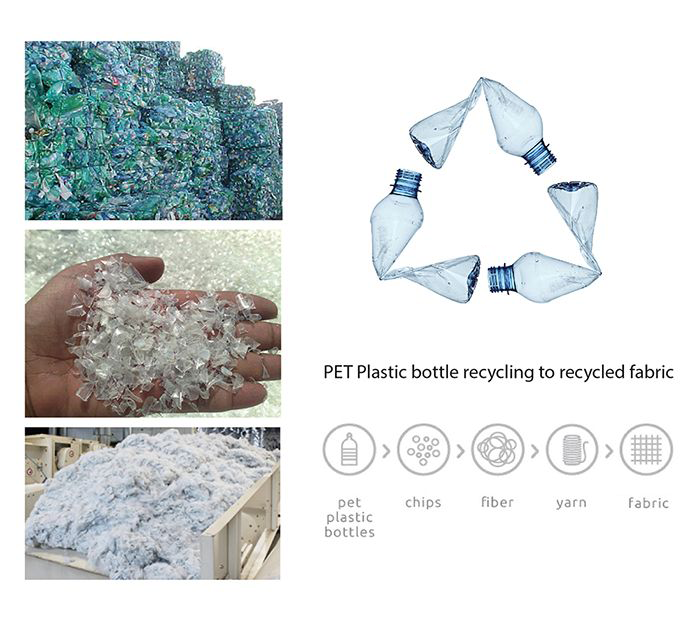
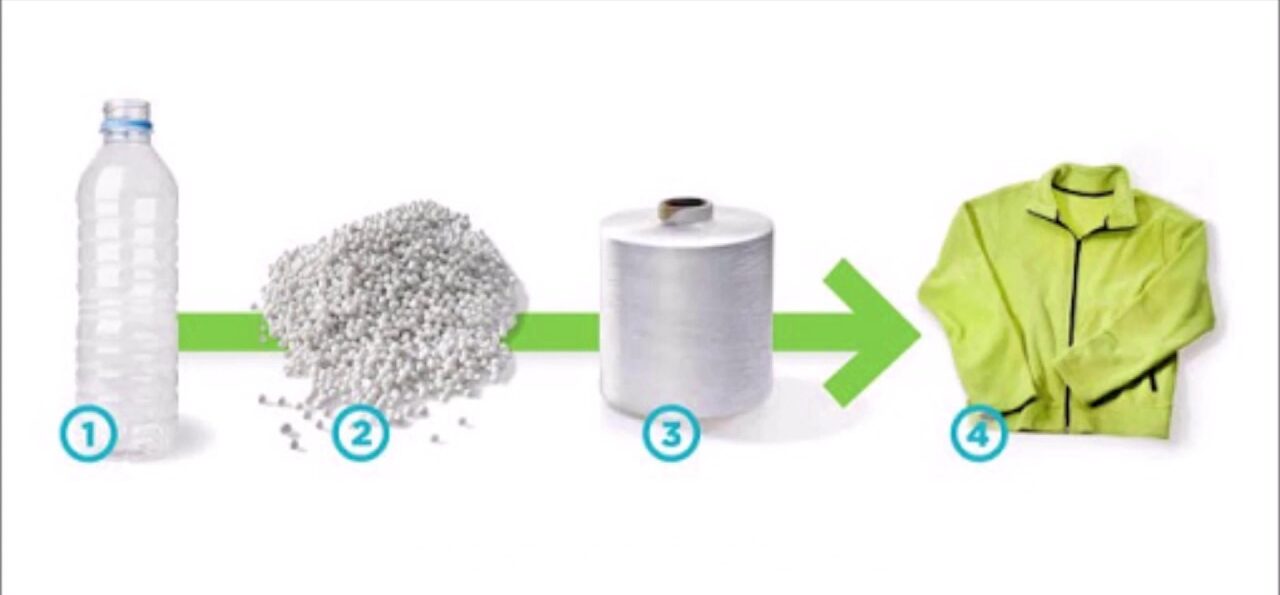
    The second raw material available at Time Apparel is recycled polyester, commonly referred to as rPET, or recycled polyethylene terephthalate. Use of recycled polyester is a better alternative to virgin polyester. This fabric is made when plastic bottles are crushed down and used as polyester fibers. They gather plastic wastes, clean the same, and convert it into small PET flakes, melts them, and spins into yarn. The result is a material that looks and feels just like the old polyester but uses fewer natural resources to create.

    Why Recycled Polyester is the Fiber of the Future

    The use of recycled polyester addresses some of the most pressing environmental concerns while retaining the practical benefits that have made polyester a staple fiber. Here’s why recycled polyester is destined to lead the future of textiles.

    1. Significant Reduction in Carbon Emissions

    Producing recycled polyester is estimated to consume about 59% less energy when compared to virgin polyester manufactured from raw materials. As rPET manufacturing avoids the extraction process of petroleum, carbon emissions are lower and more energy is saved. Moreover, the use of recycled polyester over virgin polyester is said to be able to decrease fossil fuel demand.

    It has been estimated that recycling one ton of PET saves 1.5 tons of carbon, thus rPET is an appropriate choice by the fashion industry to reduce carbon emissions from itself.

    2. Ending plastic waste from a closed loop.

    The extensive criticism of the fashion industry’s usage of plastic-derived fibers in designing clothes is that they contribute to the plastic pollution of the earth. Here, using recycled polyester flips the story upside down by converting plastic waste into something valuable. Once the plastic bottles are given a second life by turning them into recycled polyester, this material insulates potential plastic waste from landfills and oceans while also spurring circularity in the economy-a constant recycling rather than persistent throwing away of waste material.

    This closed-loop approach reduces the environmental burden of plastic waste while giving a constant supply of raw materials for the textile industry. As we recycle more polyester garments, we make a step toward a more circular, sustainable fashion system.

    3. Maintain Durability and Versatility

    The primary advantages of polyester include its durability, which rPET retains. This will give rPET the possibility to be strong enough for sportswear, home textiles, and even outdoor gear. This is important in the creation of products that can resist wear and tear and significantly have a longer life, with fewer replacements.

    Another characteristic that recycled polyester does not lose is the stretchiness of natural polyester. It can be blended with natural fibers such as cotton for soft and cozy materials or processed to impart the qualities of silk or wool. Such flexibility makes it possible for designers to use recycled polyester in a wide variety of products that ensure sustainability without compromising quality or style.

    4. Water Conservation

    The other environmental benefit of recycled polyester is its saving of water consumption. Normal production requires a lot of water for virgin polyester, whereas recycles polyester will need much less. This really makes it very important in the context of increasingly scarce freshwater resources in the world. For brands wanting to preserve water, using rPET instead of virgin polyester would be a useful way to cut their water footprint.

    5. Supporting Conscious Consumerism

    With increasing demands for sustainable options in everyday purchases, especially in the fashion sector, the value of recycled polyester neatly fits into this shift in conscious consumerism and reflects principles of a responsible environmental conscience. With each purchase, consumers become active participants in reducing waste, conserving resources, and supporting sustainability through brands.

    As environmental concerns gain more attention and eco-friendly material demand grows, recycled polyester is appearing in more and more fashion brands’ collections. For an industry looking for reasons to spur change, this is a remarkable shift, bound to make sustainable options more widely available.

    Challenges and Future Potential of Recycled Polyester

    Indeed, while recycling polyester staple fibre greatly offers many advantages for the environment, it still bears some problems. One of the major problems deals with the issue of microplastics, since rPET fabrics will still shed small plastic particles during washing. Yet development in textile technology has found ways to minimize these particles or capture them to lessen the negative effects on oceans.

    Recycling processes are continuously being developed with further research on how best to improve them efficiently and qualitatively. Advanced chemical recycling is some work in progress whereby polyester can be broken down even up to the molecular level, meaning that it can be recycled infinitely without losing its quality.

    When such innovations take place, recycled polyester will probably be more sustainable, a keystone material for future textiles.


    Also Read:  How Eco-friendly Recycled Polyester Staple Fiber RPSF is made from pet flakes 

    Conclusion: Future Road to a Green Future

    Recycled polyester is such an answer to two of the world’s most big problems-issues sustainable as pertaining to fashion and the rising waste problem that pertains to plastic. Defining waste and turning something discarded like plastic into the fabric of value, recycled polyester opens up to give the door for a more responsible, circular fashion industry.

    As a fabric of the future, recycled polyester makes possible eco-friendly choices in production without effects on the quality, style, or performance. In that regards, choosing rPET products is a movement toward sustainable fashion, but it is also an opportunity to live in a world in which waste is perceived as an opportunity—first step toward a greener and more sustainable future for all.

  • How Eco-Friendly Recycled Polyester Staple Fiber (RPSF) is Made from PET Flakes

    How Eco-Friendly Recycled Polyester Staple Fiber (RPSF) is Made from PET Flakes

    The government has continuously been pursuing plastic waste management because the price at which plastic waste is generated is alarming. If this problem is not addressed well in time, the plastic in the unload yards will begin leaking and invading all the environmental factors like soil, air, water, and so on.

    This could have unsafe outcomes on all residing beings. The Rakshitam Ecofibre commenced a mission Rakshitam Ecofibre and soon emerged because the high-quality RPSF manufacturer in India.

    About Rakshitam Ecofibre

    Rakshitam Ecofibre is an enterprise to do away with the most amount of plastic waste and remodel it into exquisite recycled polyester staple fibre. We constantly innovate and improve our generation and knowledge to ensure that the products supplied after plastic recycling meets all excellent requirements.

    Plastic merchandise are used throughout numerous industries in step with their software. We use all possible kinds of recyclable plastic to make high-elegance PET flakes. These flakes are both provided to distinctive product-making organizations or transformed into nice RPSF, which serves as uncooked material for industries like apparel, furnishing, vehicle, and many others.

    The adventure commenced as an Recycled Polyester Staple Fibre (RPSF) producer in Gujarat, and nowadays, we at Rakshitam Ecofibre have recycling plant gadgets throughout the usa.


    Eco-pleasant Recycled Polyester Staple Fiber (RPSF)

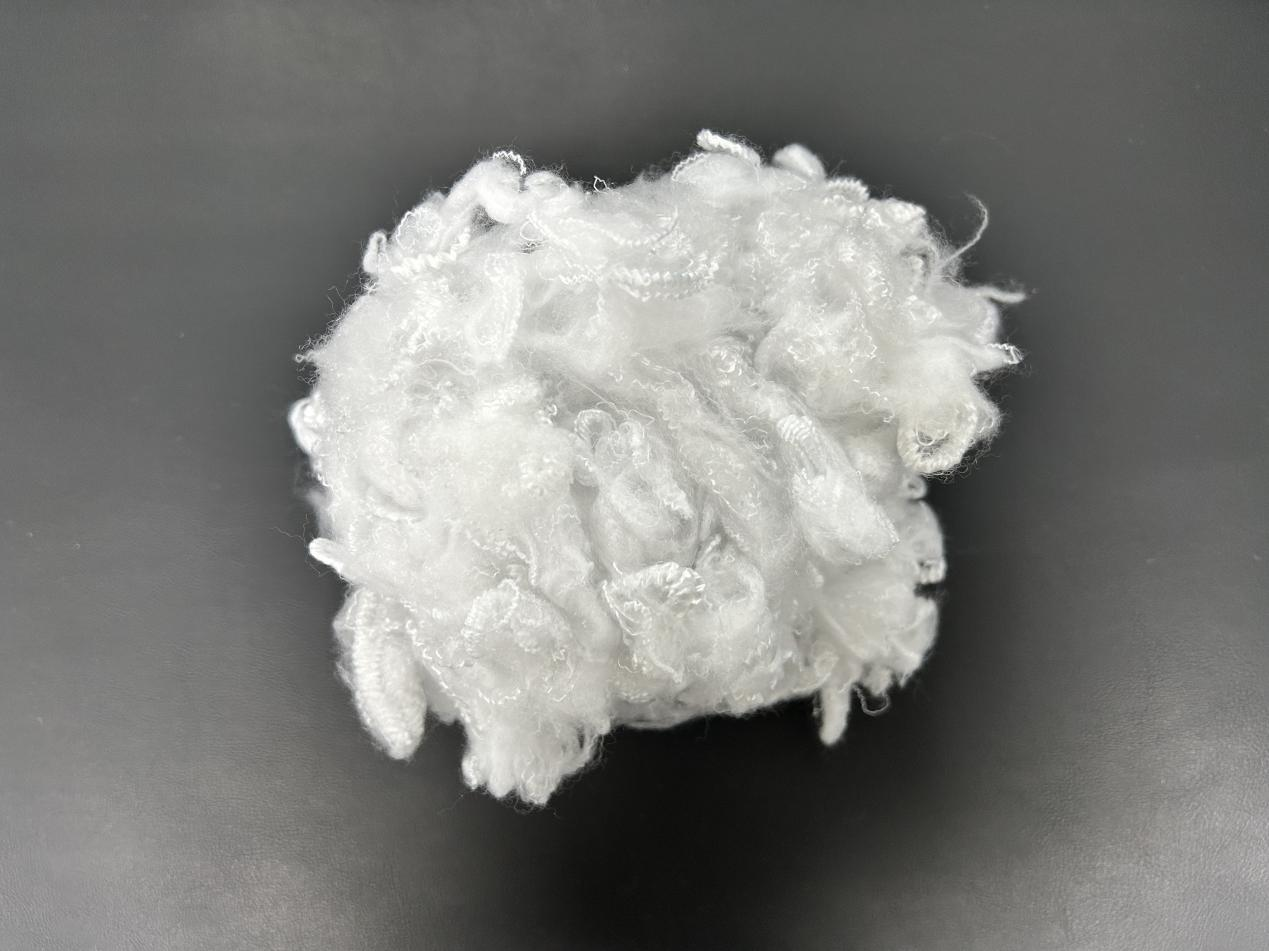
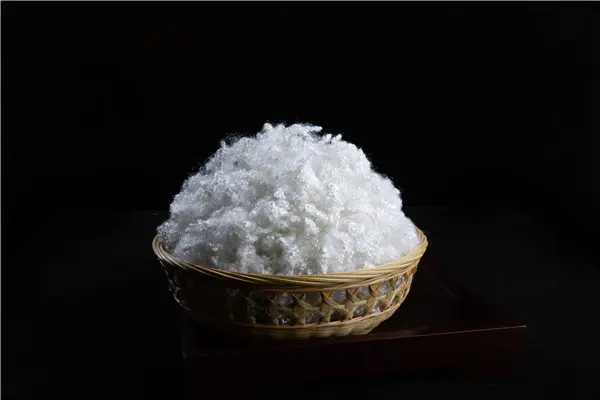
    RPSF, recycled polyester staple fibre, effects from recycled PET bottles and polyester scraps. This fibre has some salient capabilities like excessive heat resistance, superb power, water absorption, and high abrasion resistance.

    Besides being used in clothing, fibre is likewise used as insulation cloth, filtration industry, in non-woven carpets, fillings for pillows, cushions, fishing nets, and much extra.

    As leading rPET flakes producers in India, we provide distinct forms of polyester fibre, which may be classified based totally on the subsequent parameters:

    Length: Usually, better lengths are in demand because it offers liberty to the product manufacturers. We use our years of knowledge as rPET flakes producers and cater to the varied needs of our customers.

    Stretchability: This parameter deals with the issue wherein the fabric may be stretched without damage. Top rPET flakes manufacturers in rajkot render fiber with high elasticity and power.

    Oil pickup: We make a fiber that has proper strength and a sleek end for which we spray a certain quantity of oil at the fiber. This oil is absorbed and allows enhance the high-quality.

    Shades and colour fastness: We are amongst the few rPET flake producers in Rajkot who provide numerous sun shades inside the fiber class. We additionally make certain that our products are coloration speedy, so they may not fade or get dull after use.

    How the PET flakes producers in India make rPSF

    Making green Recycled Polyester Staple Fibre (RPSF) needs superior expertise with technology and processes. Here is an outline of ways we make fiber at Rakshitam Ecofibre.

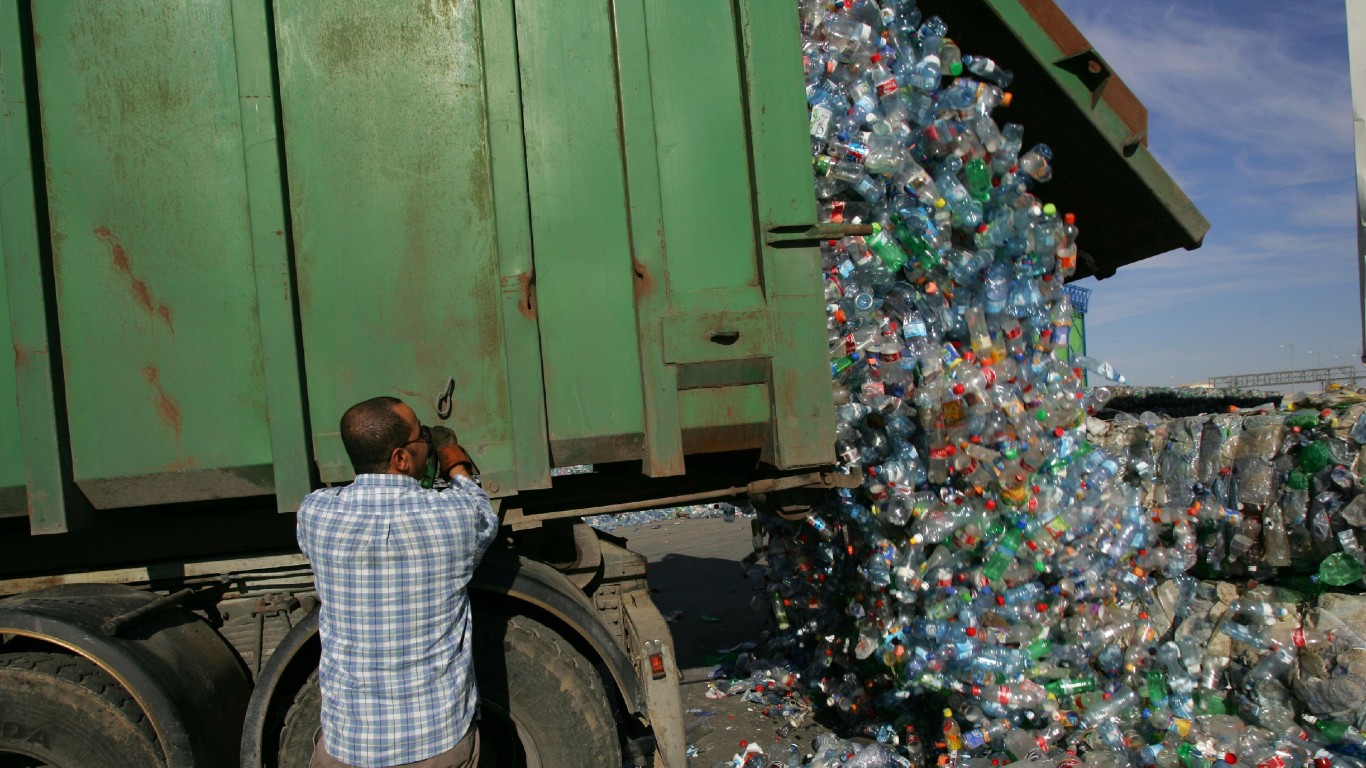
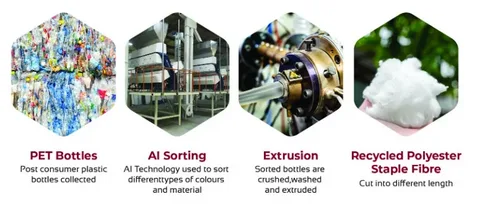
    Waste collection and segregation: The first step of plastic recycling is accumulating PET bottles and different recyclable plastic scraps. This waste is segregated, bales are made, then furnished to the plant. All the infection is removed before it reaches the rPET flakes producer.

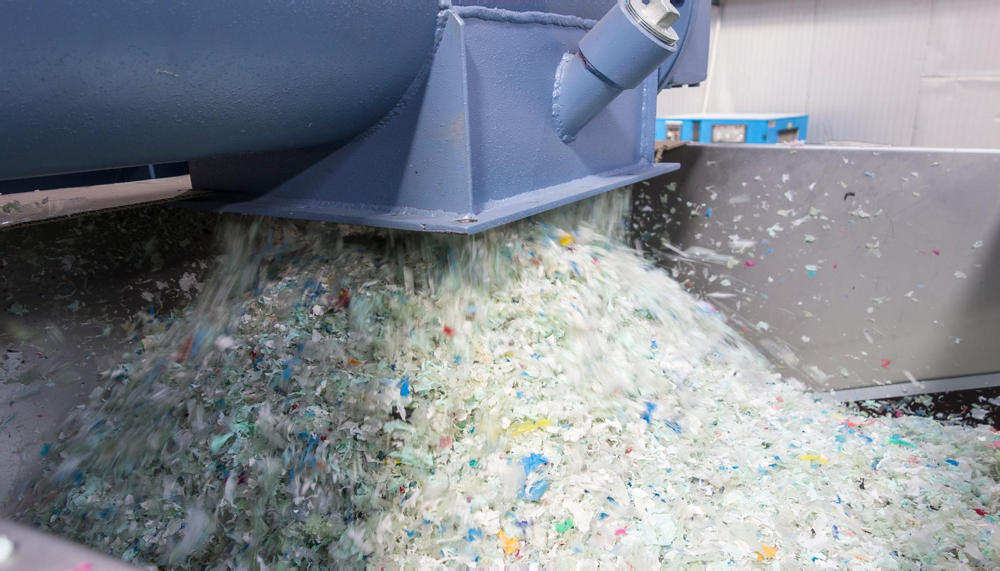
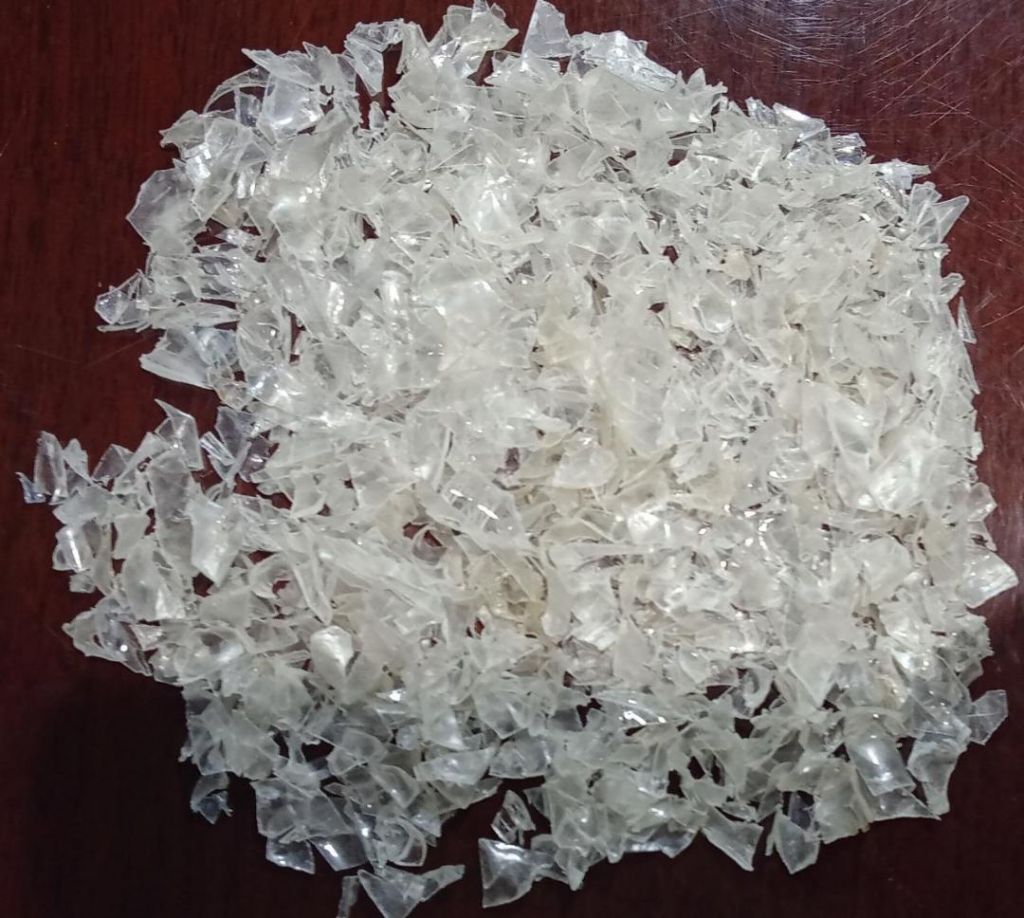
    Cleaning: The bales are introduced into crushing machines, which damage the waste into 12-15mm flakes. These flakes are then washed with a 2% Sodium hydroxide solution. All the glue, dust, stains, and stickers are removed easily.

    Drying: All foremost rPET flakes manufacturers in India use excessive-stop era in each step. In the drying manner, massive vacuum dryers do away with moisture which might also intervene with product nice in later levels.

    Fibre spinning: The PET flakes are delivered to an extruder where a spinneret produces filaments and is accrued in cans as solid or hollow fibre. Each fibre can is installed a chemical bath where several rounds of mixing and stretching take region.

    Let’s Forward…

    Under the brand name “Rakshitam Ecofibre” offers dyeing assurance of Recycled Polyester Staple Fiber (RPSF) in various cuts and deniers like Ivory White, Hansa White and Fehr White.

    Along with Rakshitham Ecofibre, we are also offering Recycled Polyester Staple Fiber (RPSF) in black color, which is similar to Virgin Black Polyester Staple Fiber in quality specifications. Our fiber is poised to revolutionize the industry and contribute to a better future.

  • Top Application of Recycled Polyester Staple Fiber in Everyday Products

    Top Application of Recycled Polyester Staple Fiber in Everyday Products

    With increasing environmental awareness, industries worldwide are seeking eco-friendly alternatives to replace conventional materials. Recycled polyester staple fiber, or rPSF, is one innovation that has evolved into a highly popular eco-friendly material. Typically produced from post-consumer plastic bottles, industrial plastic waste, and textile waste, recycled polyester staple fiber offers virtually identical properties to virgin polyester but without the attendant high environmental costs of the latter. rPSF converts the rejects from PET bottles into reusable fibers. One can save landfill pollution as well as the energy consumption through it. rPSF is versatile. The prime application includes that it has a variety of uses in the fashion and textile sector to the massive automotive industries. This article looks into the various applications of recycled polyester staple fibre in various sectors while highlighting how it is gaining much importance in the world’s quest to be sustainable.

    1. Textiles and Apparel

    The textile and apparel industries are among the largest consumers of recycled polyester staple fiber, with major brands adding rPSF to their product lines as part of the sustainable fashion trend. Recycled polyester offers similar advantages such as durability, moisture-wicking, and retaining color just like virgin polyester but reduces new raw material demand hence lowers environmental impact.

    Casings and activewear: Polyester is highly used in casings and sportswear because it drives away the moisture content and dries quite fast. It is perfectly ideal for sportswear clothing such as leggings, t-shirt, or jacket. Major sportswear brands like Adidas and Patagonia have introduced clothing lines made from recycled polyester to prioritize sustainability without losing performance.

    Outerwear and Fleece: rPSF is also widely used in fleece jackets and outerwear because it’s light and insulating. In that respect, it warms without being bulky and has become very popular among outdoors people as well as cold-weather apparel.

    In addition to pure recycled polyester clothes, there are many brands that mix rPSF with a natural fiber, like cotton, wool, or even recycled cotton, to produce blended fabrics. These blends then balance different aspects of sustainability, comfort, and aesthetic appeal, which easily ensures suitability for a wide range of fashion products.

    Following this surge in demand for sustainability in fashion, the involvement of rPSF in the textile industry is poised to increase as many brands will embrace the use of it.

    2.Home Furnishings and Upholstery

    The uses of recycled polyester staple fibres in the production of home furnishings and upholstery are numerous. It is tenacious, versatile, and environmentally friendly, making it an excellent material for making soft furnishings and other household items.

    Cushions and pillows. Most cushions and pillows – known collectively as soft furnishings are filled with recycled polyester fibre. This will offer the same comfort and support as filling materials made from virgin materials but has a much smaller footprint. The versatilities in range and hold means recycled polyester has become a favorite in designing interior.

    Curtains and Drapes: rPSF is primarily used to make curtains, drapes, and other window coverings. They seem very beautiful within the interior decoration but at the same time can perfectly withstand fading, wear, and tear, to be more appropriate for use in homes or commercial premises for many years.

    Carpeting and Rugs: The usage of rPSF in carpeting and rugs has also received some popularity. rPSF based carpets are stain resistant, durable and easy to clean hence highly suitable for both domestic and commercial applications.

    The home furnishings sector continues to develop sustainable materials like rPSF, which mirrors a growth in consumer demands for more environmentally friendly products.

    3. Automotive Industry

    The automotive industry now intensely and extensively utilizes recycled polyester staple fibre for a wide array of purposes. Considering this, rPSF helps deliver less environmentally harmful vehicles due to its contribution to changing this industry’s emphasis from non-green productions toward greener ones.

    seat covers and upholstery Car manufacturers are now adding rPSF in seat cover applications, headrests, and other interior upholstery. It is the higher durability that this material offers along with its softness that actually enhances the interiors of the car. It also reduces virgin polyester or synthetic leather dependence, which is part of the trend of producing more environment-friendly vehicles.

    In addition, carpets and car floor mats are also produced from the same recycled polyester fibre. Such products have to undergo heavy stress when providing resistance to wear in an eco-friendly version of standard materials.

    Insulation and Soundproofing: rPSF is being heavily used in vehicle soundproofing materials. With its high insulating properties, noise within the cabin is reduced to provide an even quieter ride. This inherent lightweight also saves fuel, and that could turn out to be a handy source of competence for automobile manufacturers.

    As consumers and regulatory bodies continue to push the auto industry toward more sustainable vehicles, auto product manufacturers will find increasing use for recycled polyester in their products, increasing both environmental sustainability and the performance of the product.

    4. Non-Woven Fabrics

    Recycled polyester staple fiber is widely used to make non-woven fabrics, those made without weaving or knitting, in many applications such as in the medical sector, construction, and packaging.

    Medical and hygiene products: The rPSF-based non-woven material is used in creating facial masks, gowns for surgeries, and disposable wipes. This is so because of its softness, breathability, and durability to medical applications; this also significantly reduces waste production in the health sector because of its eco-friendly properties.

    Industrial and Geotextiles: rPSF is used in the construction sector to manufacture geotextiles, which control soil erosion and are applied for proper drainage. Also, industrially it is highly used in filterations, insulations, and protective coverings.
    Packaging Materials: Nowadays, non-woven fabrics manufactured from rPSF are used majorly as eco-friendly packaging material. These light weight, long duration textiles have recyclable features, which make them an eco-friendly better packaging solution.

    Non-woven fabrics of recycled polyester fibres are the answer to the requirements of an environment-friendly solution, especially for those sectors that involve disposable materials.

    5. Insulation and Padding

    The staple fibre provides the recycled polyester with a good insulation quality and can therefore be used as a sound and thermal insulator for many applications.

    rPSF is applied in the context of thermal insulation within clothing, bedding, and outdoor gear. Sleeping bags, winter jackets, and quilts are among such products which use rPSF as primary insulators for warmth, with no added weight.

    In apparel, rPSF is also applied as soundproofing material in building construction. It is applied on walls, ceilings, and floors to prove itself as a barrier for all kinds of noise while running down the costs of using conventional soundproofing materials.

    Recycled Polyester Fibres to be Used for Furniture Padding Firms operating in the mattress, chair, sofa, and other furniture industries have been using recycled polyester fibres as padding material in their products. This reduces waste from the environment while using the same to provide comfort and good durability in the products.

    The use of rPSF in insulation and padding applications helps industries reduce wastes and may further reap benefits of fibre performance characteristics.

    Also Read: The Importance of  Recycled Polyester Staple Fiber in Fashion

    Conclusion

    Recycled polyester staple fiber (rPSF) is an environmentally friendlier alternative to virgin polyester, offering the same durability, versatility, and performance profile across a very wide range of applications-from textiles and home furnishings to automotive manufacturing and non-woven fabrics. rPSF has emerged as a critical material in the endeavor toward sustainability. As more and more industries turn their attention toward eco-friendly solutions, the use of recycled polyester staple fiber is going to take off, providing a viable pathway to reduce plastic waste and preserve natural resources.

    Consumers can opt for recycled polyester staple fibre content products that can contribute to the economy in terms of value for sustainability in support, thus helping to limit the need for new raw materials and minimizing potential ecological damage.

  • The Importance of Recycled Polyester Staple Fibre (RPSF) in Sustainable Fashion

    The Importance of Recycled Polyester Staple Fibre (RPSF) in Sustainable Fashion

    Let’s Start with a little introduction to RPSF! So basically, Recycled Polyester Staple Fibre (RPSF) is an artificial, man-made fibre produced by recycling plastic waste, largely PET (Polyethylene Terephthalate) bottles and polyester scraps. This eco-friendly material is a game-changer in the textile industry, providing a sustainable alternative to virgin polyester.

    Now Let’s go through key characteristics of RPSF shall we?

    Now the process starts with sourcing plastic waste and one thing that we know of is plastic waste is in abundance and today we can easily source it from dumpsters and waste management as recycled PET materials are used to create RPSF which helps divert plastic waste from landfills and oceans. Now Once RPSF is produced from the waste material it can be used as a base for many products like insulation materials, filtration systems, home textiles (like cushions and pillows), non-woven carpets, and artificial fur.


    Now you might think why make RPSF right?

    Well, the answer is has more than one aspect to it!

    Firstly energy consumption and greenhouse gas emissions in manufacturing RPSF are way lower than the manufacturing of traditional polyester, and secondly making and using RPSF promotes a circular economy as in using material that could have contributed to waste resulting in increasing pollution and damaging the environment.

    Overall, RPSF not only supports sustainable fashion but also contributes to broader environmental goals by reducing plastic waste and resource depletion.


    Emphasizing the Significance of Sustainability in the Fashion Industry.

    Today sustainability in the fashion industry is increasingly recognized as essential why because of its significant environmental and social impacts!

    The fashion industry is and has been a major source of pollution and waste and to battle the pollution and waste generated over the years a new trend is emerging, a trend of integrating sustainable practices into fashion aims to reduce resource consumption, lower emissions, and promote recycling and upcycling initiatives.

    Recently due to spreading awareness of environmental damage due to increasing plastic waste, many are actively seeking eco-friendly options, pushing brands to adopt to sustainable practices and this shift is driving companies to embrace a shift towards responsible production methods, placing a greater emphasis on sustainability in their day-to-day operations giving their environmental responsibility a marketing twist.


    The Environmental Impact of the Textile Industry

    The textile industry has a huge impact on the environment primarily driven by traditional manufacturing practices and the rise in demand of fast fashion.

    Current challenges are as follows:

    • The textile industry is a major contributor to global pollution accounting for approximately 10% of global carbon emissions, Surpassing the emissions from all international flights and maritime shipping combined.
    • Additionally, it is responsible for 20% of the wastewater generated worldwide, Mainly due to toxic chemicals used in dyeing and finishing processes.
    • Now these chemicals often end up in rivers and oceans, polluting water and harming aquatic ecosystems.
    • The industry heavily relies on non-renewable resources. For example, making a single cotton shirt requires about 700 gallons of water, while a pair of jeans can take up to 2,000 gallons, now this excessive water usage contributes to water scarcity in many areas. Furthermore, the extraction of raw materials for synthetic fibres, primarily derived from fossil fuels, exacerbates resource depletion and environmental degradation.
    • The fast fashion model promotes an unsustainable cycle of overproduction and waste. An estimated 85% of textiles produced each year end up in landfills.
    • The rapid turnover of fashion trends leads to millions of garments being discarded after minimal use like in the U.S., enough textile waste is generated every six days to fill the Mall of America.


    Naturally, the answer to sustainability is RPSF.

    Recycled Polyester Staple Fibre (RPSF) serves as a sustainable alternative in the textile industry, primarily due to its production process and resource efficiency compared to virgin polyester.


    Let’s discuss its production process:

    RPSF is made by recycling post-consumer plastic waste, particularly PET (Polyethylene Terephthalate) bottles and polyester scraps. The manufacturing process at Rakshitam involves several key steps:

    Firstly, Used PET bottles and scraps are collected and sorted by waste segregators.

    1. Flake Production: The collected materials are cleaned and processed into small flakes.
    2. Extrusion: These flakes are then melted and extruded through a spinneret, forming continuous filaments. Depending on the desired properties, the filaments can be hollow or solid.
    3. Fiber Formation: The extruded filaments are cooled, stretched, and treated in a chemical bath to enhance their characteristics. They are then dried and cut into staple fibers of various lengths for use in textiles.

    This process not only repurposes plastic waste but also conserves resources by utilising existing materials rather than requiring new raw materials from petroleum sources.

    rpsf

    Resource Efficiency

    • RPSF demonstrates significant efficiency when compared to virgin polyester, the production of RPSF typically requires up to 60% less energy than that needed for virgin polyester. This reduction is primarily due to the lack of energy-intensive processes involved in extracting and refining crude oil into raw polyester.
    • RPSF production uses considerably less water—about 90% less than the production of virgin polyester. Traditional polyester manufacturing is water-intensive, particularly during dyeing and finishing processes, whereas RPSF leverages recycled materials that require minimal additional water.

    In summary, RPSF not only provides a viable solution for reducing plastic waste but also enhances resource efficiency in textile manufacturing, making it a crucial component of sustainable fashion practices.