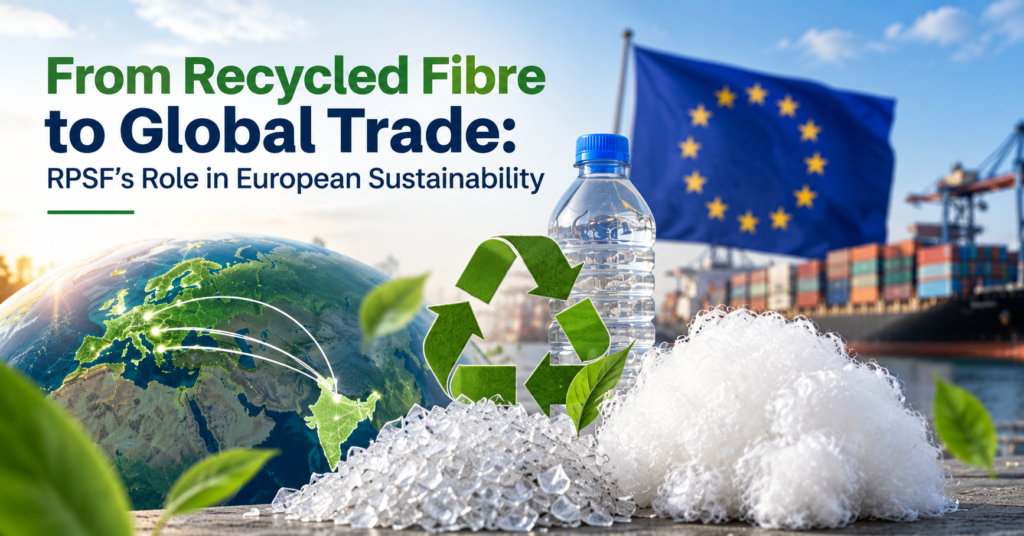
Sustainability is altering the way the world produces, sources and trades in materials. More and more companies in Europe are working on recycling, reducing waste, sourcing responsibly and circular production. This shift opens up new avenues for manufacturers and exporters that can provide reliable recycled materials.
One such material which is playing a crucial role in this transition is Recycled Polyester Staple Fiber (RPSF). RPSF is primarily produced from recycled PET bottles and appropriate polyester waste, turning waste into an important raw material for various industries. It is an opportunity for Indian manufacturers and exporters to connect recycling with the increasing sustainability demands of European markets.
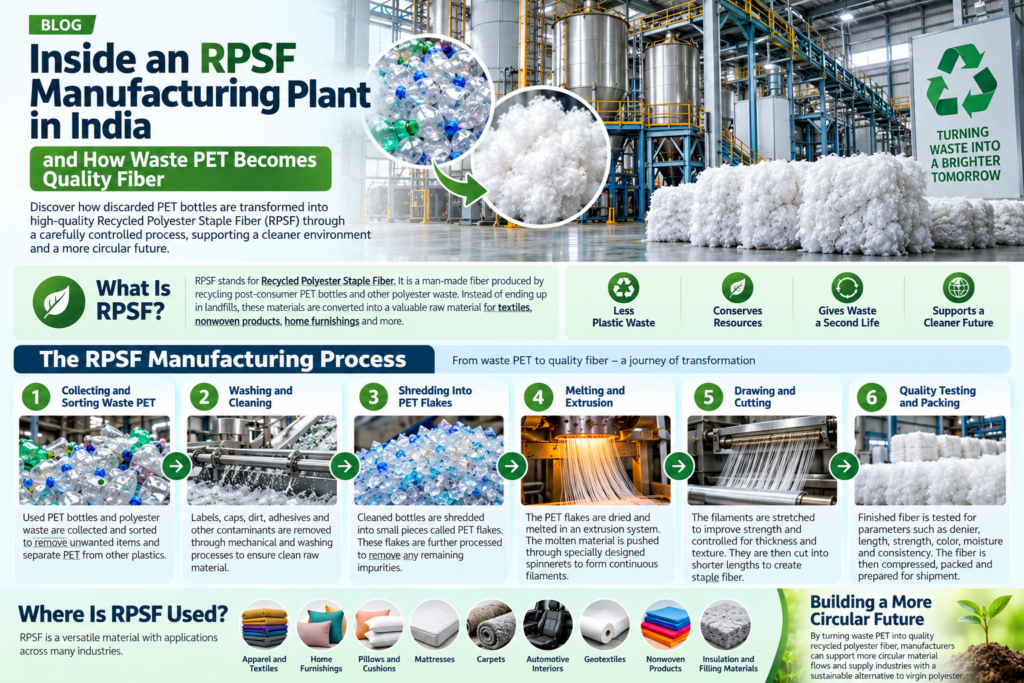
PET Waste into Useful Fiber
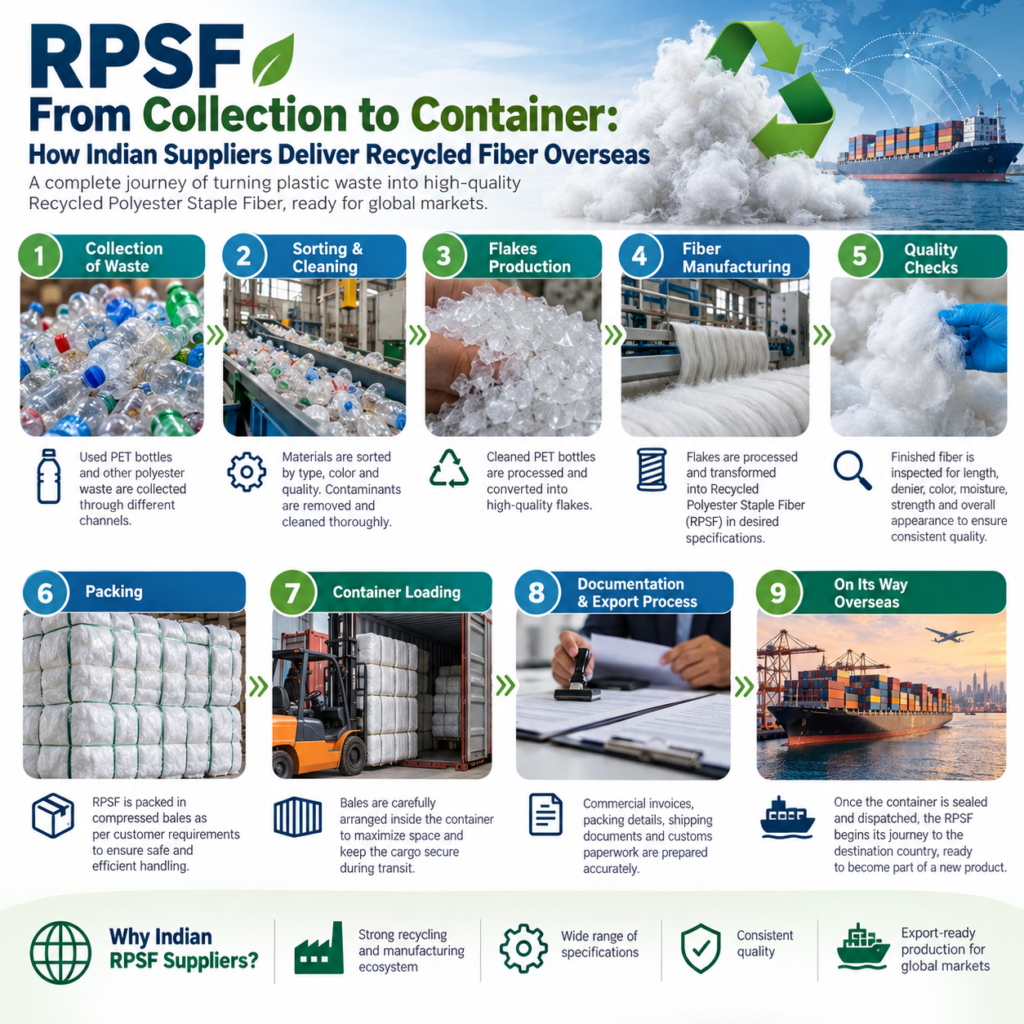
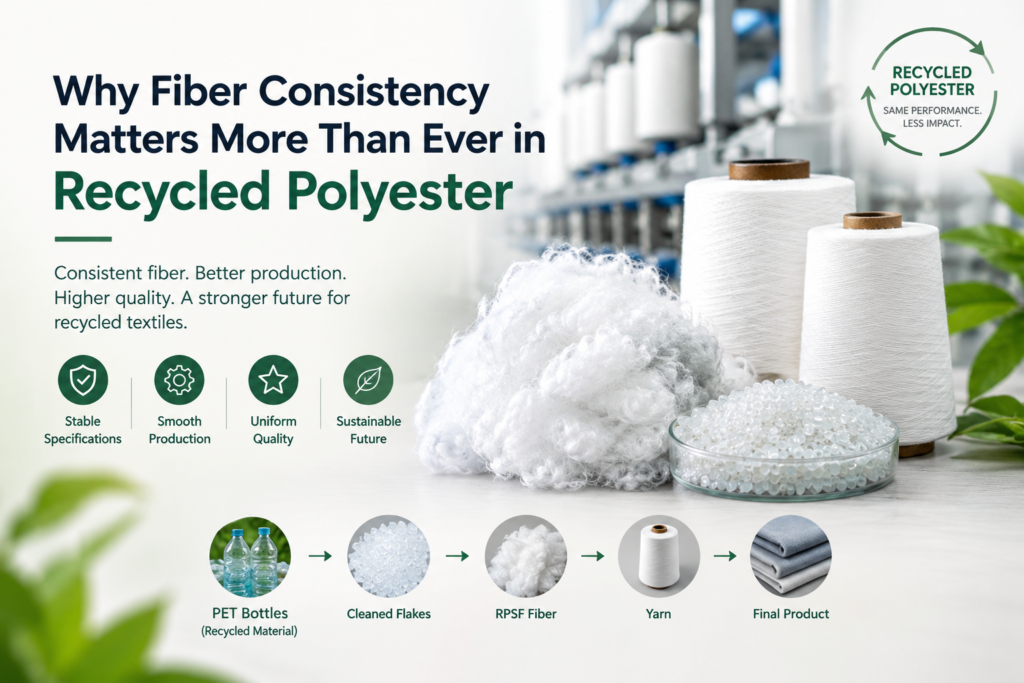
RPSF Process The journey of RPSF begins with PET bottles and other recyclable polyester materials. These materials are collected , sorted , cleaned and transformed into PET flakes . The flakes are then further processed and converted to polyester staple fiber.
Depending on the needs of the industry RPSF can be manufactured in different deniers, cut lengths, colors and specifications. It is versatile and can be used in textiles, nonwovens, automotive parts, home furnishing, stuffing, insulation, geotextiles and other industrial applications.
“RPSF turns waste into a manufacturing material, helping to create additional value from resources that might otherwise be thrown away.
Advancing Europe’s journey to circularity
Circularity is increasingly becoming a key component of European sustainability policies. Rather than constantly taking new resources and throwing away products after use, the circular model seeks to keep materials within the economy for as long as possible.
This model naturally allows RPSF as it provides PET waste with another productive lifecycle. Recycled PET can be made into fiber, to serve as a raw material for new products.
“Companies supplying European consumers can boost recycled content and lessen their reliance on virgin materials by employing recycled polyester.”
Decreasing Dependence on Virgin Polyester
Virgin polyester is normally produced from petrochemical resources. Polyester remains an important material in many industries but manufacturers are increasingly looking at recycled alternatives as part of their environmental strategies.
RPSF provides a way to reduce the use of virgin polyester in applicable contexts. This is particularly helpful for companies that are dealing with buyers that have targets for recycled content or responsible sourcing of materials.
Steady supplies of RPSF or products made from recycled polyester could help Indian exporters meet these changing procurement expectations.
Improving supply chain transparency
Sustainability is not only about the material. European buyers are increasingly asking for the full story behind the products they buy, from where the raw materials come from, how they are processed, to whether recycled-content claims can be substantiated.
Traceability and documentation are of even greater importance.
Indian RPSF manufacturers and exporters can improve their position through maintaining credible production records, quality testing, recycled-content documentation and relevant certifications where demanded.
Note that the use of RPSF does not in itself indicate that a product is compliant with all European sustainability requirements. Also product category, application, customer requirements, certifications and regulations applicable.
Generating Opportunities for Indian Exporters
India has a large manufacturing and recycling ecosystem, which creates significant potential for recycled polyester production and international trade.
The opportunity for the Indian RPSF manufacturers is to position themselves as trusted partners to the European companies looking for suppliers to support their sustainability strategies. Consistent quality, custom specifications, transparent sourcing, traceability and reliable supply can be the backbone of stronger international business relationships.
The rise of the circular economy
RPSF shows how waste can go beyond recycling and be part of a global manufacturing supply chain. A discarded PET bottle can be converted into fiber, made into a new product and ultimately serve industries across international markets.
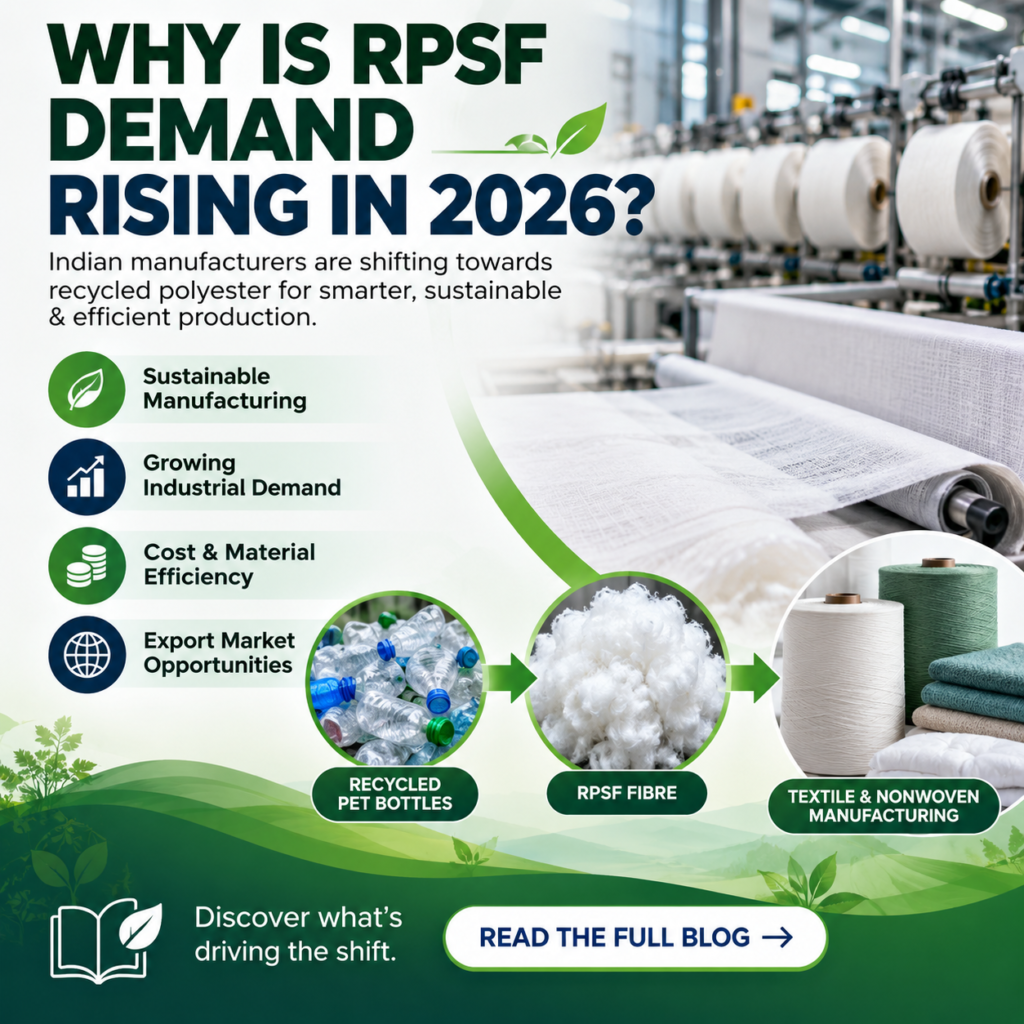
Also Read: why is RPSF demand increasing in 2026 among indian manufacturers
This opens up avenues for Indian manufacturers to incorporate recycling, responsible manufacturing and export growth. As Europe increasingly focuses on circularity and responsible sourcing, high-quality and traceable RPSF can help Indian suppliers respond to changing market expectations and establish themselves more firmly in sustainable global trade.