As industries worldwide shift to sustainable manufacturing, the need for environmentally responsible raw materials continues to increase. Bottle-to-fiber technology has revolutionised recycling. The sophisticated process converts waste PET plastic bottles into premium Recycled Polyester Staple Fibre (RPSF) to add value to waste and lessen environmental impact.
Bottle-to-fiber technology is today not only helping to solve the global plastic waste problem, but also revolutionising the RPSF industry by improving efficiency, quality and sustainability.
Bottle-to-Fiber Technology Explained
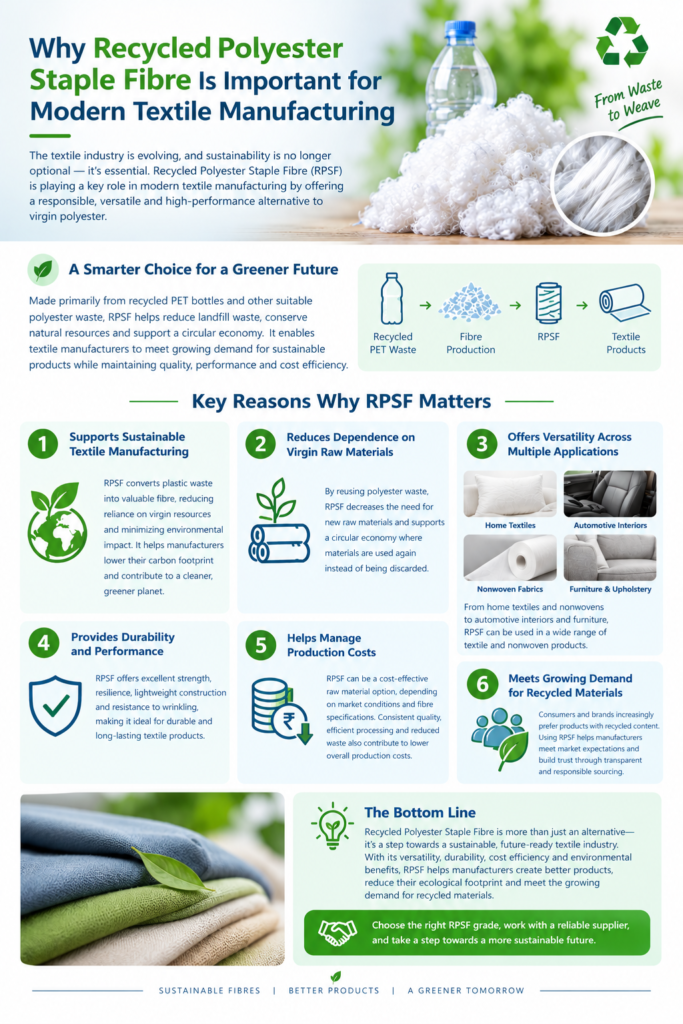
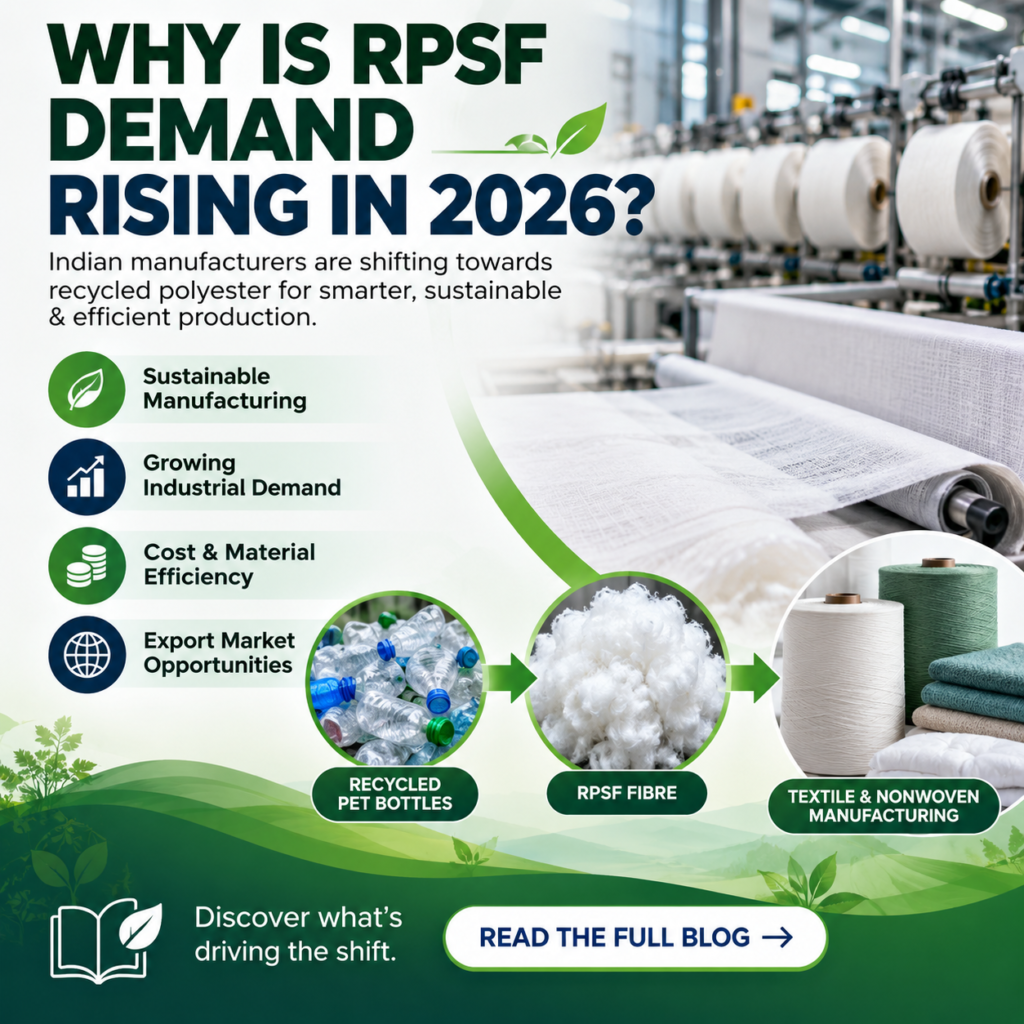
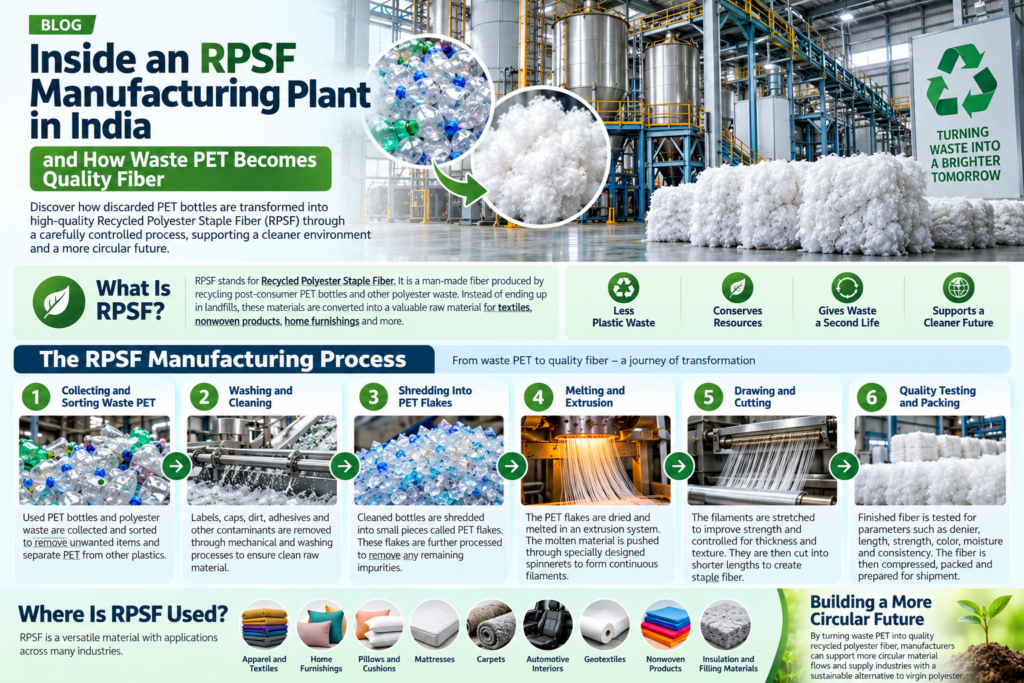
Bottle-to-fiber technology is a recycling process that turns used PET (Polyethylene Terephthalate) bottles into polyester staple fibres. Plastic bottles are collected and processed into valuable industrial materials, instead of being dumped into landfills or the oceans.
This process typically includes:
- Post-consumer PET bottle collection
- Sorting and separating by colour and quality
- Cleaning and Contaminant Removal
- Crushing Bottles to PET flakes
- Melt and extrude
- Cutting and Fibre Forming
The end product is recycled polyester staple fibre which can be used in various industries like textiles, automotive, home furnishings and nonwoven applications.
Solving the Problem of Global Plastic Waste
One of the biggest advantages of bottle-to-fibre technology is its ability to cut down on plastic waste.
Every year billions of plastic bottles are discarded around the world. Overflowing landfills and pollution of the environment result from conventional waste disposal methods. These PET bottles are then turned into RPSF, which diverts huge amounts of waste from the environment.
Such recycling approach supports global sustainability goals and promotes the responsible use of resources.
Development of a circular economy
Bottle-to-fiber technology is essential to creating a circular economy.
Instead of the traditional model of “produce, use and dispose,” recycled PET bottles are fed back into the production cycle as valuable raw materials. This increases the life of plastic products and cuts down on the need for virgin resources.
This circular economy approach helps industries to reduce waste and make the best use of their materials, leading to more sustainable and environmentally friendly manufacturing.
Making Manufacturing More Sustainable
With the increased pressure on businesses to reduce their environmental footprint, RPSF produced using bottle-to-fiber technology is a very attractive alternative to virgin polyester.
DIVERSION AND SUSTAINABILITY BENEFITS OF RECYCLED PET BOTTLES:
- Less waste to landfill
- Less dependency on petroleum resources
- Reducing carbon emissions
- More efficient use of resources
- Backings for corporate sustainability initiatives
This, in turn, drives up the demand for RPSF, as many global brands are now prioritising recycled materials in their supply chains.
Improvements in Fibre Quality
When recycling technology was in its infancy, questions about the quality of recycled fibres were frequent. Modern bottle-to-fibre systems, however, have considerably improved the standards of production.
Today’s advanced recycling facilities utilise sophisticated sorting, washing and processing technologies to ensure production of quality fibre. Thus, recycled polyester staple fibre now provides excellent performance, durability and consistency suitable for demanding industrial applications.
This quality improvement has resulted in acceptance of RPSF in many sectors.
Growing Industrial Applications
RPSF’s versatility continues to fuel its adoption across a wide variety of industries.
Common applications are:
- Mattresses & Bedding Products
- Cushion and stools
- Car interiors and
- Nonwoven material.
- Upholstery fabrics
- Textile goods
- Insulation products filling soft toys
As bottle-to-fiber technology advances, manufacturers are finding new ways to include recycled fibres into products without compromising quality or performance.
Supporting Global Goals for Sustainability
More governments, businesses and environmental groups are supporting recycling programs that cut waste and save resources.
These goals are well served by bottle-to-fiber technology by:
- Developing Recycling Infrastructure
- Optimise waste collection systems
- Supporting green production
- Minimising environmental pollution
- Building sustainable supply chains
The benefits make the RPSF industry a major contributor to the world’s sustainability efforts.
Also Read: Why is demand for RPSF growing at 7.7 CAGR globally key drivers explained
Conclusion
Bottle to fibre technology is a breakthrough innovation in the recycled polyester staple fibre industry. This technology transforms discarded PET bottles into valuable industrial materials, and helps to tackle plastic waste challenges, while promoting sustainable manufacturing practices.
With increasing awareness of the issues surrounding the environment and as industries seek greener alternatives, bottle-to-fiber technology will play an increasingly important role in shaping the future of the RPSF industry. “With innovation, resource efficiency and responsible recycling, the industry is proving that waste can be a valuable resource for a more sustainable world.”