In a world where sustainability is no longer an option, businesses are always looking for new ways to cut down on waste without lowering quality. Recycled Polyester Staple Fiber (RPSF) is one of the most important new materials in this area. It literally turns plastic waste into high-performance products.
Recycled polyester staple fiber is a big step toward responsible manufacturing. It can be used to make everything from strong textiles to industrial products. But what is it, and why is it getting so much attention around the world? Let’s take it apart.
What is polyester staple fiber that has been recycled?
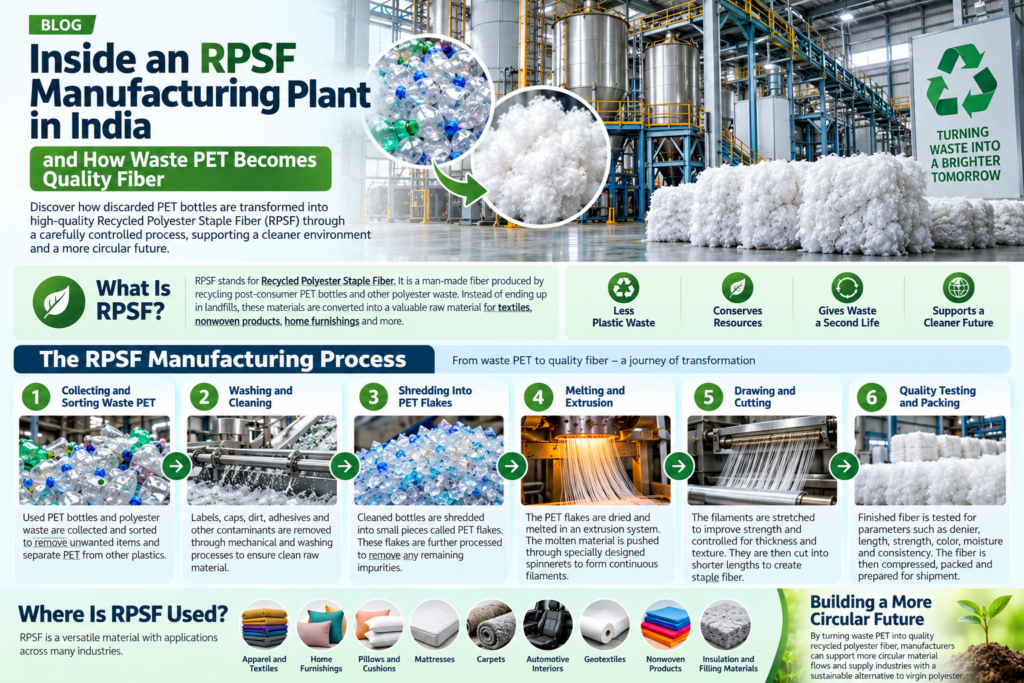
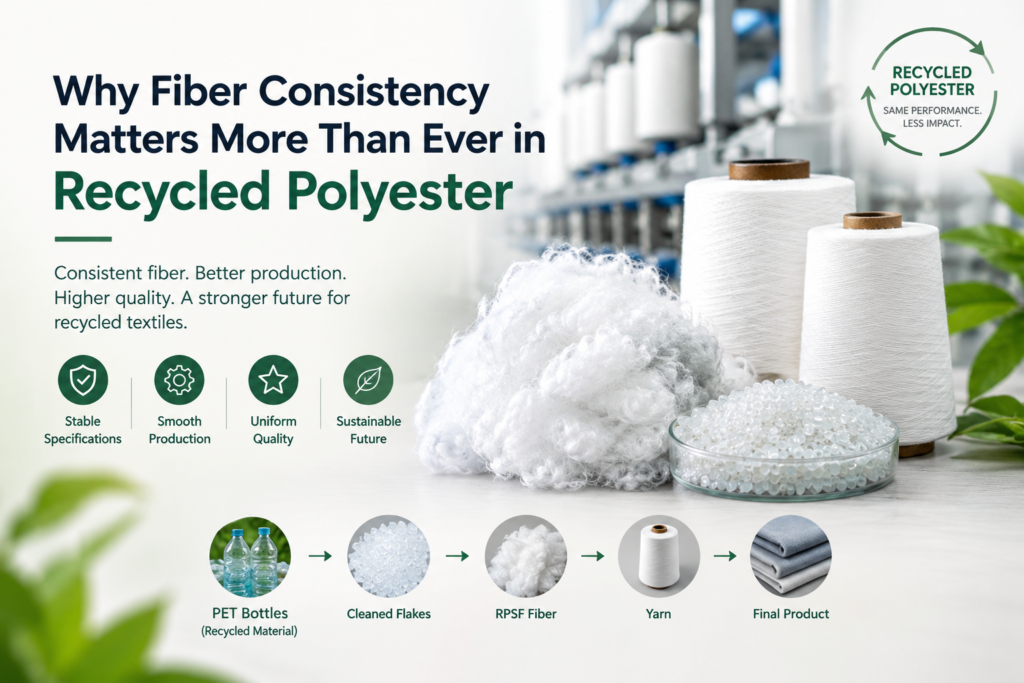
Recycled Polyester Staple Fiber is a synthetic fiber made from plastic waste that has already been used, mostly PET bottles. Instead of letting plastic build up in landfills or the ocean, it is collected, cleaned, melted, and spun into fine fibers that can be used in many different fields.
They are called “staple” fibers because they are cut into short pieces, which makes them easy to mix with other materials and useful in many ways. The end result is a fiber that is strong, flexible, and cheap, and that works almost as well as virgin polyester.
The Journey: Turning Plastic Waste into Performance Fiber
The process of changing RPSF is both interesting and effective:
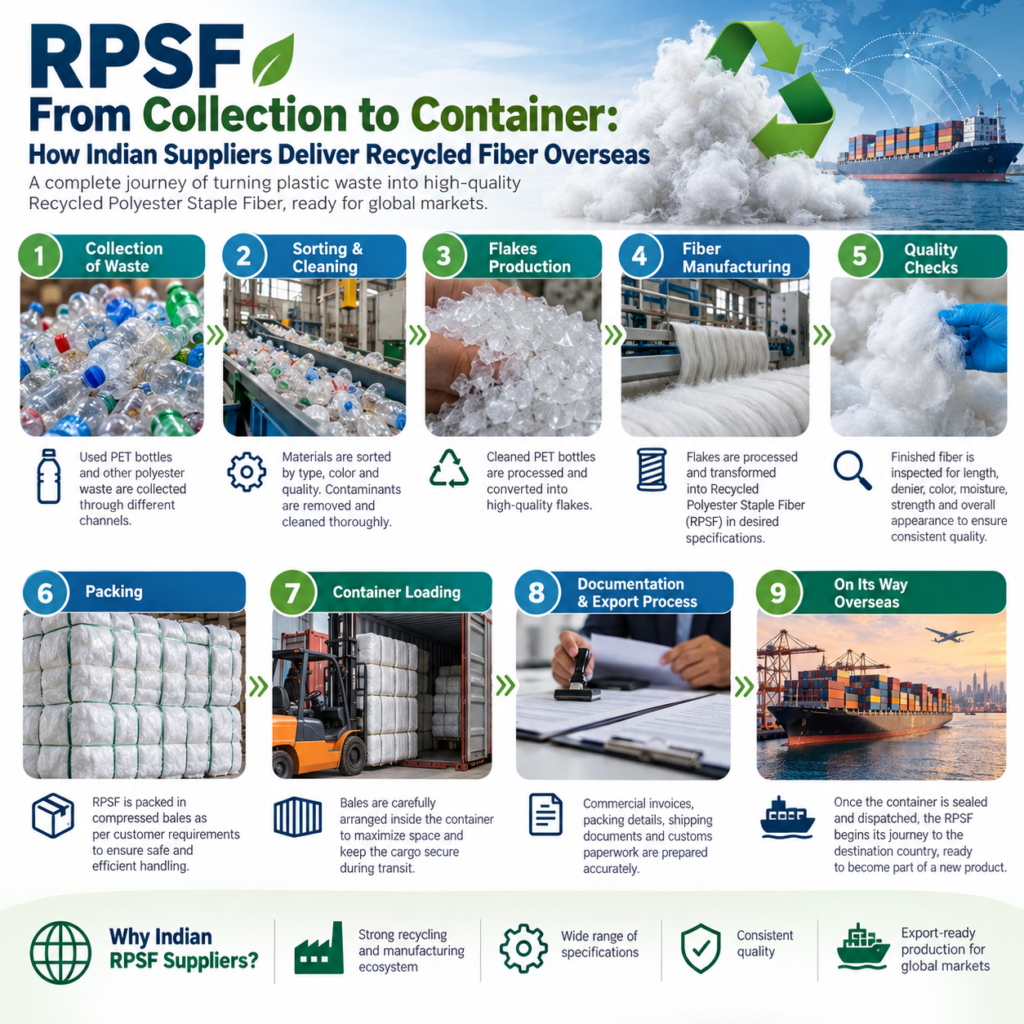
- Collection and sorting: Used plastic bottles are gathered and sorted by type and quality.
- Cleaning and shredding: The plastic is cleaned well and then cut into small pieces.
- Melting and Extrusion: These flakes are melted and pushed through small nozzles to make fibers.
- Cutting and Finishing: The fibers are cut into lengths that are useful and then treated for those uses.
This process not only cuts down on pollution in the environment, but it also cuts down on the need for new raw materials by a large amount.
Why Recycled Polyester Staple Fiber Is Important
1. Effect on the environment
RPSF’s positive effect on the environment is one of its best features. It helps keep landfills from overflowing and the ocean from getting polluted by recycling plastic waste. Also, making recycled polyester uses less energy than making new polyester, which means less carbon dioxide is released into the air.
2. Performance and Longevity
This fiber is still high quality even though it has been recycled. It is very strong, flexible, and resistant to moisture. Because of these qualities, it can be used in many different ways, such as in clothing and car interiors.
3. A solution that doesn’t cost too much
Recycled polyester staple fiber is usually cheaper than new polyester. It gives manufacturers a balance between being environmentally friendly and saving money, which is very important in today’s competitive market.
Important Uses in Many Fields
One of the best things about RPSF is how flexible it is. A lot of people use it for:
- Textiles and clothing: blended fabrics, sportswear, and eco-friendly clothes
- Furniture for the home includes cushions, mattresses, carpets, and upholstery.
- The automotive industry makes seat fillings, insulation materials, and parts for the inside of cars.
- Wipes, filters, and hygiene products are all examples of nonwoven products.
Its ability to change makes it useful for both the consumer and industrial markets.
Increasing Demand in Global Markets
The demand for recycled polyester staple fiber is growing quickly because people are becoming more aware of the environment and there is more pressure from the government. Brands all over the world are making promises to be more environmentally friendly, and using recycled materials is a big part of their plans.
People who buy things are also very important. People who buy things today are more aware of how the things they buy affect the environment. People are changing how they buy things, and this is making manufacturers more likely to use eco-friendly options like RPSF.
Things to Think About
RPSF has many advantages, but it also has some problems. Sometimes, it can be hard to find high-quality recyclable plastic. Also, to keep the quality of the product the same during processing, you need advanced technology and strict quality control.
But these problems are getting easier to solve thanks to ongoing improvements and new ideas in recycling infrastructure.
What will happen to recycled polyester staple fiber in the future?
The future of RPSF looks bright, though. As recycling technology gets better and more people around the world care about sustainability, its use is likely to grow even more.
Industries are moving toward models of the circular economy, where waste is kept to a minimum and resources are used again and again. Recycled polyester staple fiber is a key material for the future because it fits perfectly into this vision.
Also Read: Growing Demand for Recycled Polyester Staple Fiber in Global Markets
In conclusion
Recycled Polyester Staple Fiber is not only a good choice for the environment; it’s also a smart choice for modern businesses. It solves both environmental and economic problems by turning plastic waste into high-performance fiber.
As businesses and consumers keep putting sustainability first, materials like RPSF will be very important in making the future cleaner and more responsible.
The idea of turning plastic into performance is no longer just an idea; it’s a reality that will shape the next generation of manufacturing.