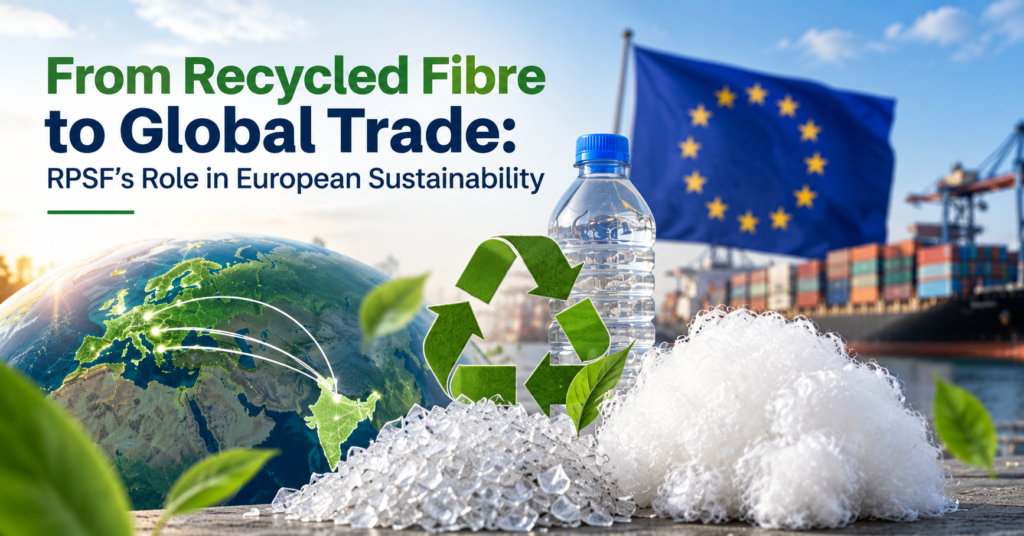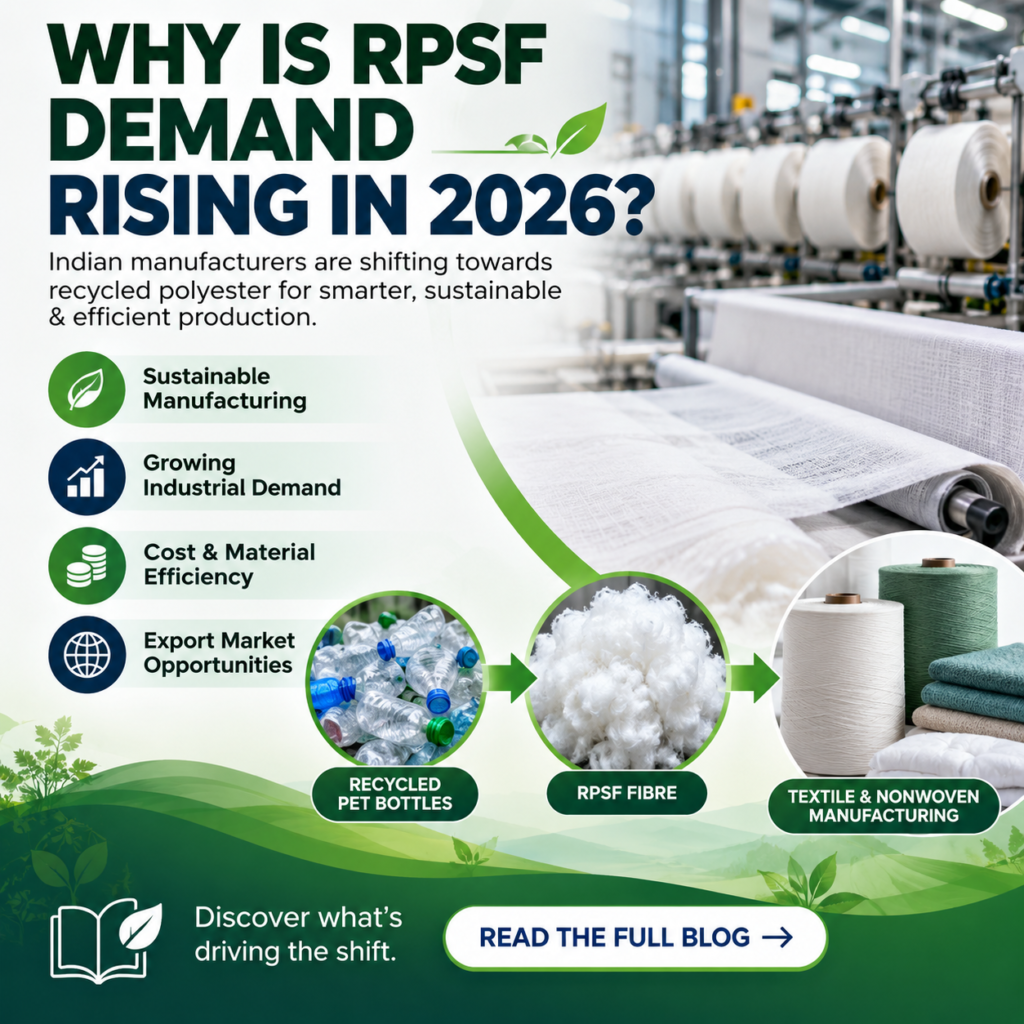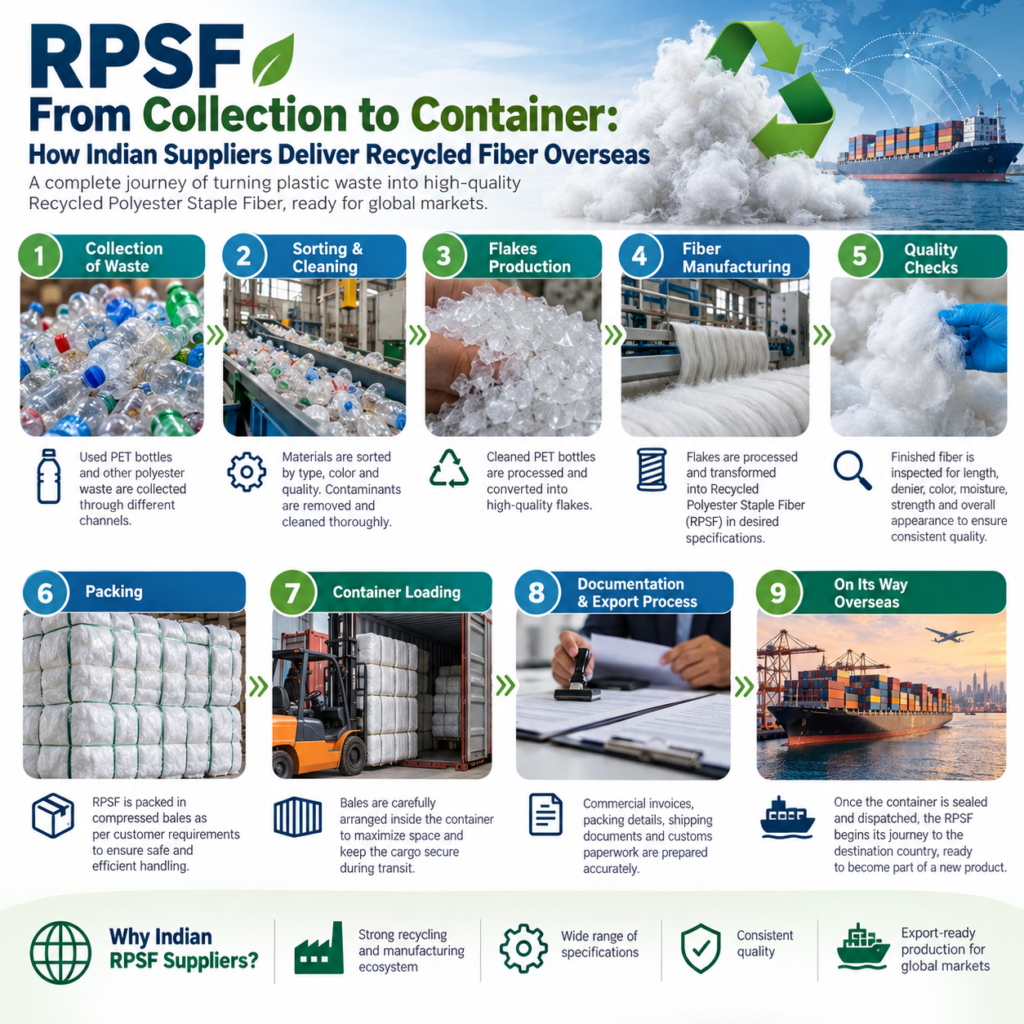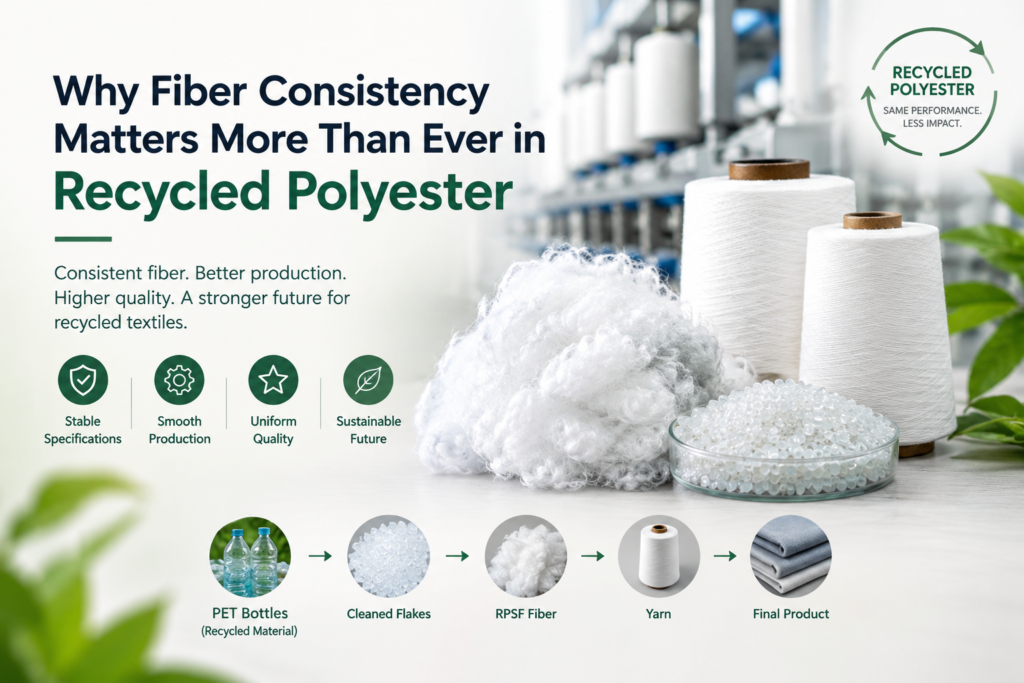
Recycled Polyester Staple Fibre (RPSF) is an essential component in contemporary manufacturing industries owing to its eco-friendliness, strength, and cost-effectiveness. RPSF is manufactured from recycled plastic bottles and plastic waste, thereby contributing to the prevention of environmental pollution.
Today, RPSF is commonly used in automotive, home furnishing, and clothing industries, which are some of the industries that use RPSF to manufacture eco-friendly and high-performance products.
As the global need for eco-friendly materials is on the rise, manufacturers are increasingly opting for RPSF as a trustworthy substitute for polyester.
What Is RPSF?
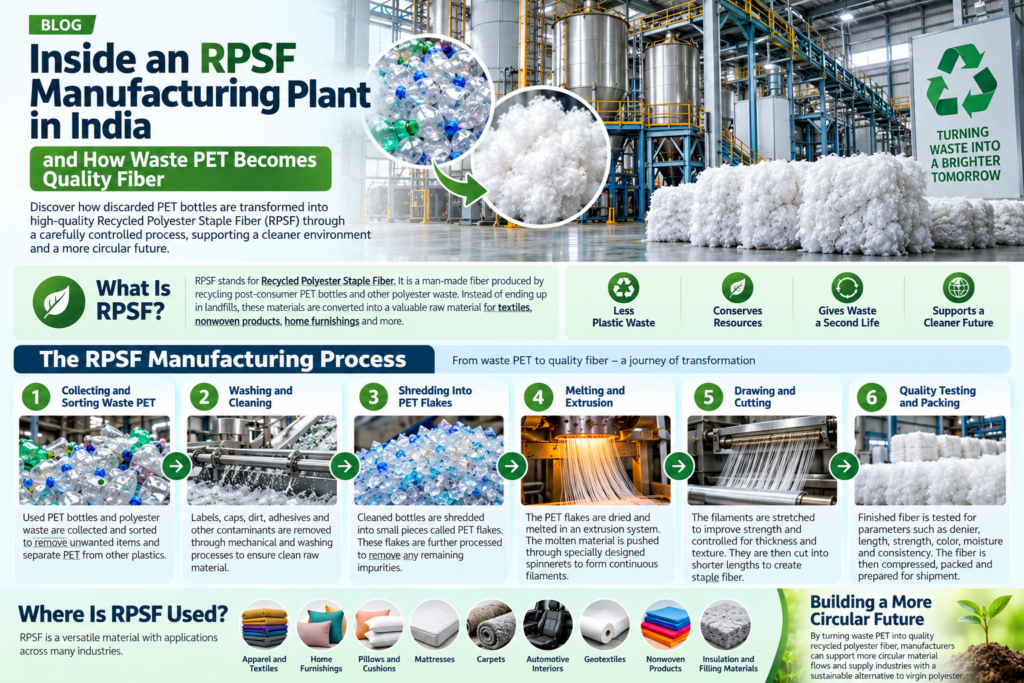
RPSF, or Recycled Polyester Staple Fibre, is defined as a man-made fibre manufactured from recycled PET plastic bottles and other forms of polyester waste materials. A unique recycling technique is employed to recycle plastic waste materials, which involves cleaning, cutting, melting, and finally transforming them into strong polyester fibres.
Fibres are commonly used for different purposes in various industries owing to their excellent properties, such as strength, flexibility, light weight, and moisture resistance.
RPSF Applications in the Automotive Industry
The automotive industry uses RPSF in many interior and insulation components. Automakers prefer RPSF because it is lightweight, durable, and environmentally friendly.
Common Automotive Uses of RPSF
- Car Seat Filling
RPSF is widely used as a filling material in car seats and cushions. It provides comfort, resilience, and long-lasting shape retention.
- Interior Insulation Materials
Automotive manufacturers use RPSF in insulation layers for doors, roofs, and floors. These materials help reduce noise and improve thermal insulation inside vehicles.
- Carpets and Floor Mats
Many car carpets and floor mats are produced using recycled polyester fibres, including RPSF. These fibres offer strength and wear resistance.
- Sound Absorption Components
RPSF-based nonwoven fabrics are used in soundproofing panels to improve acoustic comfort in vehicles.
By using recycled materials like RPSF, automotive companies can reduce their carbon footprint while meeting sustainability goals.
RPSF in Home Furnishing Products
Another major application of RPSF is in the home furnishing industry. Due to its softness, resilience, and affordability, RPSF is widely used in household products.
Common Home Furnishing Applications
- Pillows and Cushions
RPSF is commonly used as a filling material in pillows and cushions because of its soft texture and durability.
- Mattresses and Quilts
Many mattress and quilt manufacturers use RPSF filling, as it provides comfort while maintaining shape over time.
- Sofa and Furniture Filling
Furniture manufacturers use RPSF for sofa padding and upholstery filling. It provides bulk and comfort while keeping costs manageable.
- Carpets and Rugs
RPSF fibres are also used in carpets and rugs because of their durability and wear resistance.
These applications help create sustainable home products while reducing dependence on virgin synthetic fibres.
RPSF in Apparel and Textile Manufacturing
The apparel and textile industry is one of the largest users of recycled polyester fibres. RPSF is used in spinning yarns and producing fabrics that are later turned into garments.
Textile and Apparel Applications
- Blended Yarns
RPSF is blended with cotton, viscose, or other fibres to produce yarns used in fabric manufacturing.
- Nonwoven Fabrics
Nonwoven textiles made from RPSF are used in interlining, padding, and technical textiles.
- Sustainable Clothing
Many clothing brands now use recycled polyester fibres to produce eco-friendly garments such as jackets, sportswear, and casual apparel.
- Industrial Textiles
RPSF is also used in technical textiles such as filters, geotextiles, and protective fabrics.
Using recycled fibres allows fashion and textile brands to support circular economy practices and reduce environmental impact.
Benefits of Using RPSF Across Industries
RPSF offers several advantages that make it suitable for automotive, home furnishing, and apparel applications.
Key benefits include:
- Reduces plastic waste by recycling PET bottles
- Supports sustainable manufacturing practices
- Provides durable, lightweight fibre
- Cost-effective compared to virgin polyester
- Suitable for multiple industrial applications
Because of these benefits, the demand for RPSF continues to grow globally.
Also Read: Regenerated PSF Manufacturing Process from Recycled PET Bottles
Conclusion
The use of Recycled Polyester Staple Fibre (RPSF) in automotive, home furnishing, and apparel industries highlights the importance of sustainable materials in modern manufacturing. By transforming plastic waste into valuable fibres, RPSF helps reduce environmental pollution while supporting efficient production processes.
As sustainability becomes a priority for industries worldwide, RPSF will continue to play a crucial role in creating eco-friendly products for everyday use.