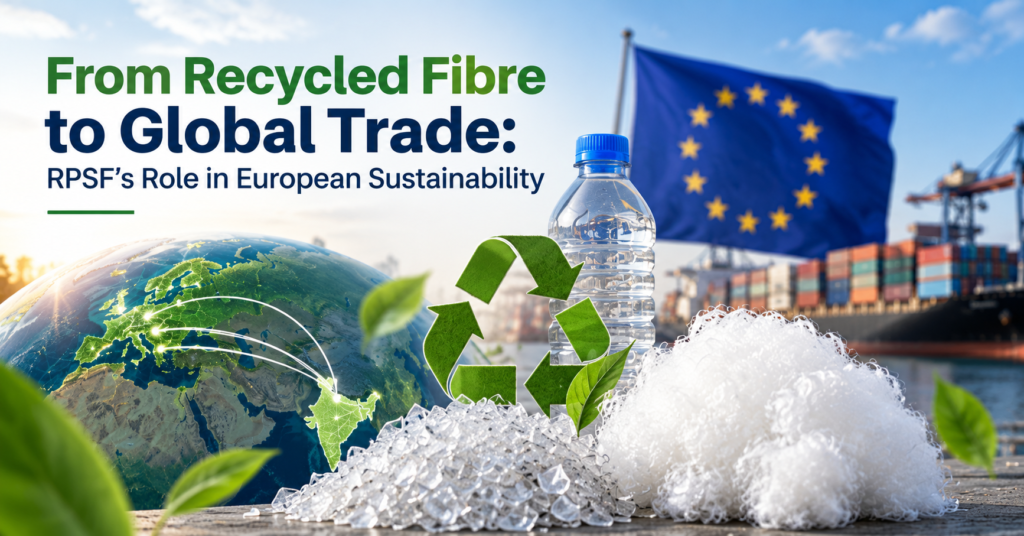
Sustainable materials, cost efficiency and reliable sourcing are increasingly important in the global textile industry. Turkey is one of the important centres of textile and garment manufacturing and constantly searches for quality raw materials for its production needs. In this changing market, recycled polyester fibre from India is an attractive option for Turkish textile mills looking for reliable suppliers and sustainable alternatives.
Given the recycling infrastructure, textile manufacturing capabilities, and availability of recycled polyester staple fibre (RPSF) in India, it is a potential sourcing destination for international buyers.
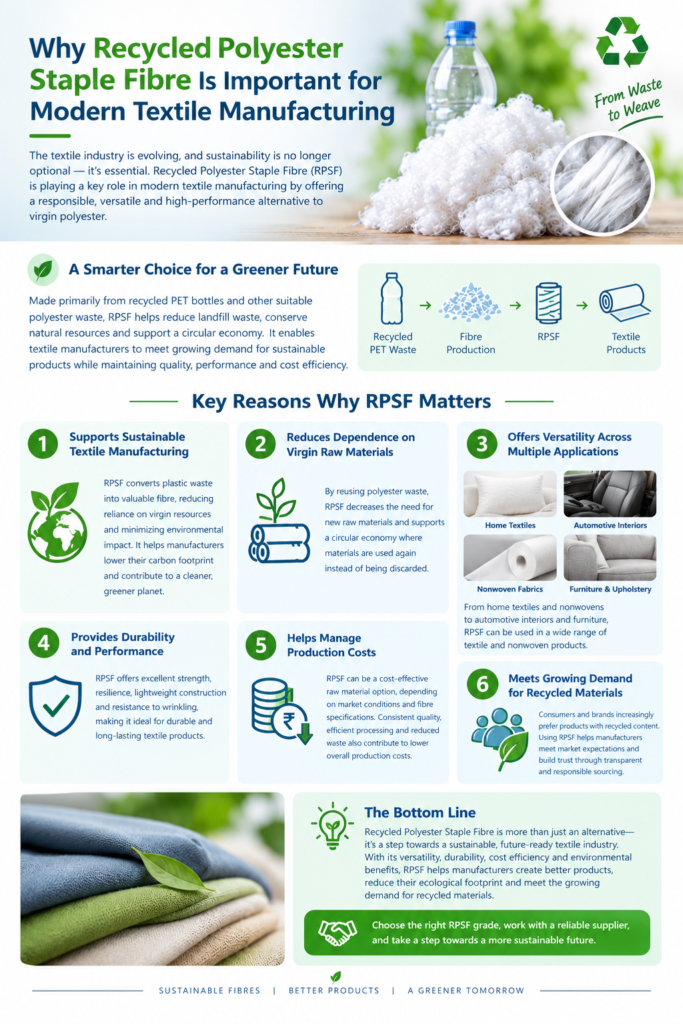
1. Increasing Demand for Sustainable Textile Materials
Sustainability has emerged as a key focus area for textile manufacturers worldwide. Increasingly, brands, retailers and consumers are interested in products made from recycled materials.
Recycled polyester fibre is made from the processing of waste polyester materials, such as used PET bottles and other suitable polyester waste. This helps to reduce dependence on virgin raw materials and to allow more circular use of materials.
Provided the material quality and relevant certification standards are met, recycled polyester fibre can help Turkish textile mills supplying international fashion and home textile brands meet customer requirements for recycled content.
2. Competitive, Cost-Effective Pricing
The cost of raw materials directly impacts the profitability of textile manufacturing. Turkish textile mills have to balance between quality of products, production costs and competition of the market.
Indian suppliers have the manufacturing capabilities, readily available recycled raw material and strong textile industry, which can be a cost-effective source of recycled polyester staple fibre. However, the actual costs will be determined by fibre specifications, order quantities, freight charges and market conditions.
Turkish buyers can compare suppliers in India to find cost effective sourcing options that fit the technical requirements of their products.
3. India’s Expanding Recycled Polyester Fibre Industry
India already has a textile sector and a growing recycling ecosystem. Manufacturers manufacture recycled polyester staple fibre in various specifications for the applications in the textile and non-woven industries.
RPSF can be applied in: Depending on the grade,- Yarn and blended fabric spinning
– Home textiles and home furnishings
– Materials for filling pillows and cushions
– Upholstery and cushions.
– Selected industrial applications and nonwovens
This range of applications makes Indian RPSF suppliers relevant for Turkish manufacturers supplying different segments of the textile market.
4. Various Grades of Fibre Available
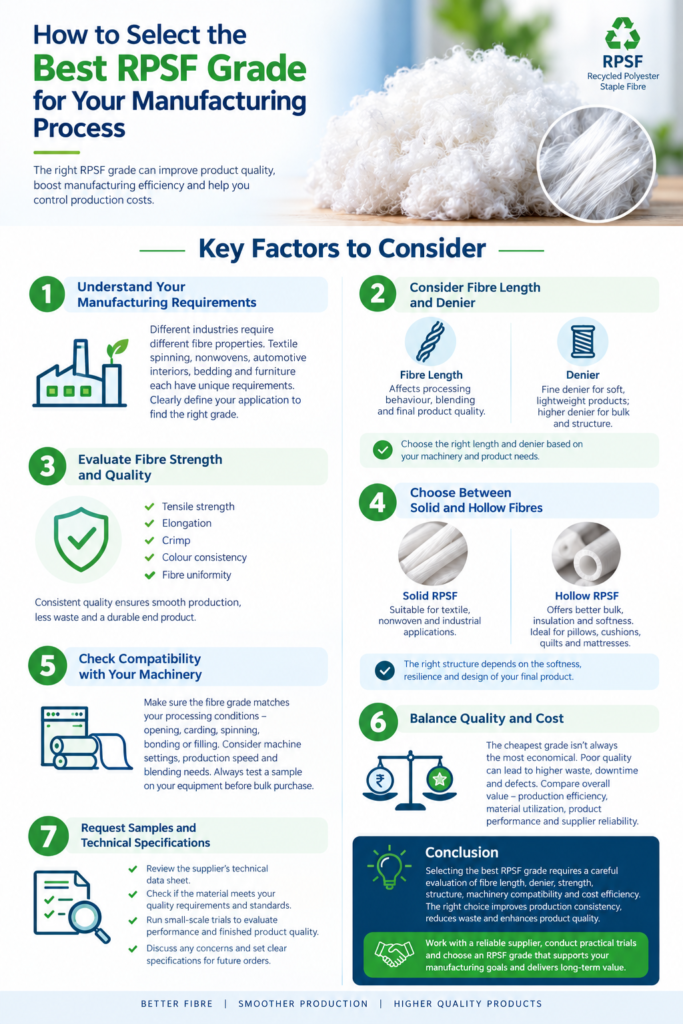
The characteristics of the fibre are specific to the textile application. Fibre length, denier, colour, strength and consistency can impact on production efficiency and the quality of the final product.
Indian manufacturers are capable of supplying different grades of RPSF to meet the requirements of spinning mills, filling manufacturers and nonwoven producers.
Before placing bulk orders, Turkish buyers are advised to verify technical specifications, request samples and review quality documentation. Consistent fibre quality is key to maintaining production standards and reducing material waste.
5. Export and international sourcing opportunities
India’s strong export sector offers international textile buyers the opportunity to connect with manufacturers and suppliers of recycled polyester staple fibre.
Importing from India can help Turkish textile mills diversify their sourcing network and reduce dependence on a limited number of suppliers. However, buyers should consider shipping costs, delivery timelines, customs requirements, and relevant trade regulations before selecting an exporter.
This can lead to better procurement planning and consistent availability of raw materials by establishing long-term relationships with reliable Indian suppliers.
6. What RPSF Turkish Buyers Should Look for Before Importing
Choosing the right supplier is not just a matter of comparing prices. Textile mills need to think about:- Product quality: Check denier, fibre length, colour, etc. as per the required specifications.
– Quality documentation: Ask for relevant test reports and recycled-content certifications where applicable.
– Export experience: Review packaging standards, shipping arrangements and documentation capabilities.
– Landed cost: Include freight, duties, insurance, and other import costs.
These audits assist buyers to make informed sourcing decisions and build reliable supply relationships.
Conclusion
Turkey’s textile industry offers opportunities for suppliers of quality recycled polyester fibre. India, with its textile manufacturing base, recycling capabilities and export potential, can be a very good sourcing destination for Turkish textile mills looking for competitive materials and different suppliers.
Businesses looking to procure recycled polyester staple fibre (RPSF) from India should consider the product quality, price, certification and supplier reliability to have a successful international procurement.
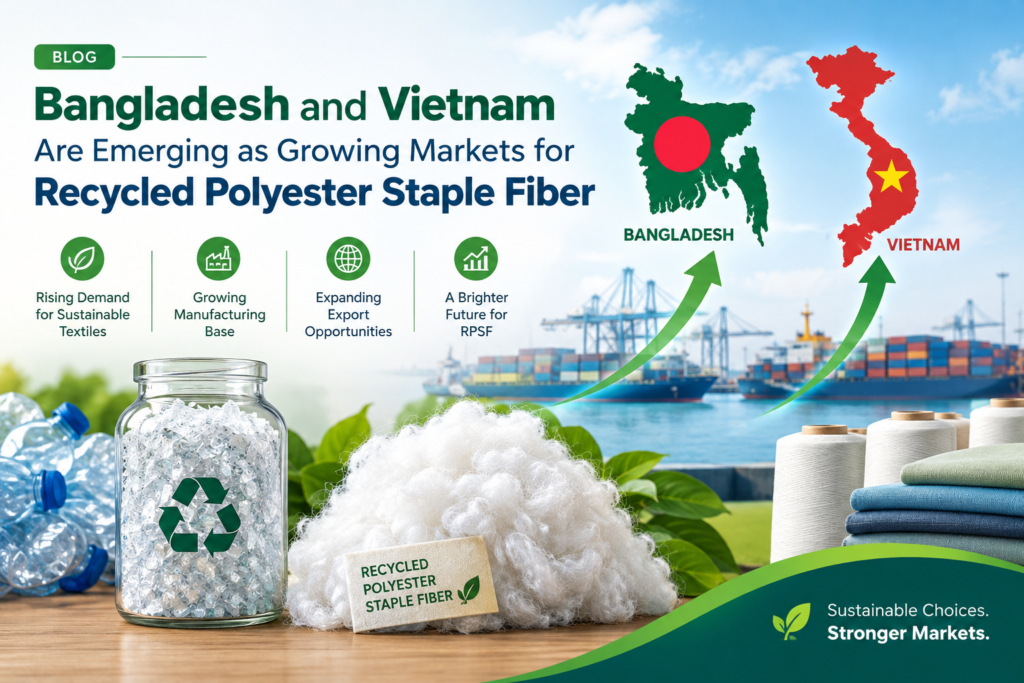
Also Read: bangladesh and vietnam emerging as growing markets of recycled polyester staple fibre
Rakshitam Ecofibre Pvt. Ltd. provides the recycled materials industry with recycled polyester staple fibre and PET flakes for eligible bulk needs.