As global industries move towards sustainability, recycled PET flakes are one of the most sought-after raw materials in the packaging and textile industries. PET recyclers, exporters, and consumers in 2025 will keep a focus on maintaining quality consistency, certification, and transparency of the supply chain in order to fulfill international demand.
This article delves into what 2025 purchasers of recycled PET flakes are looking for — from material specifications and regulatory compliance to market trends that are defining the recycling future.
1.Understanding Recycled PET Flakes.
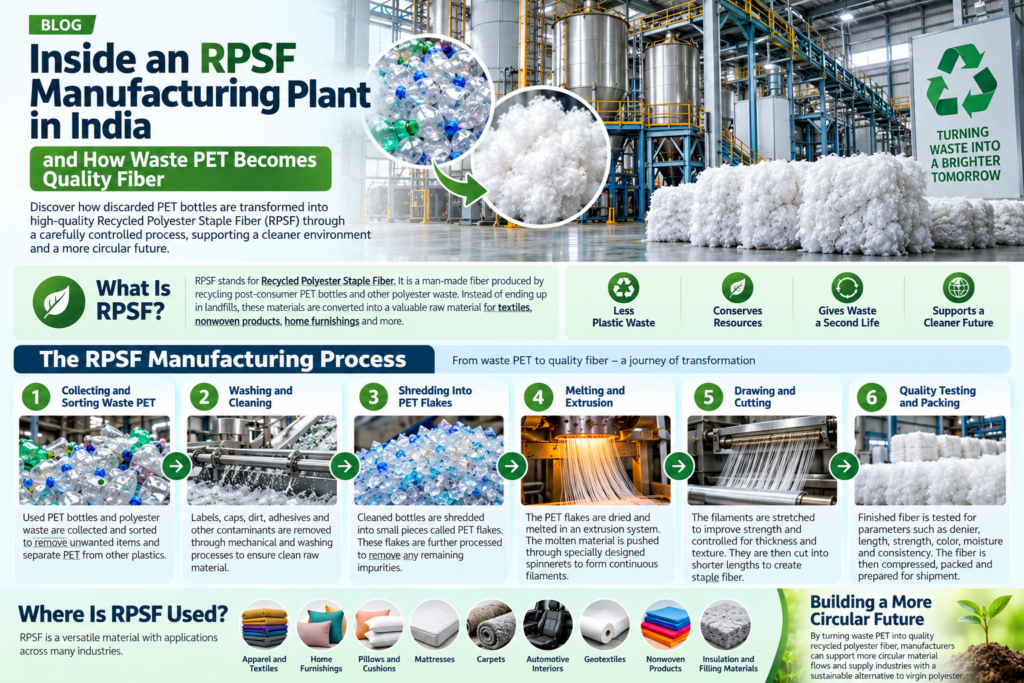
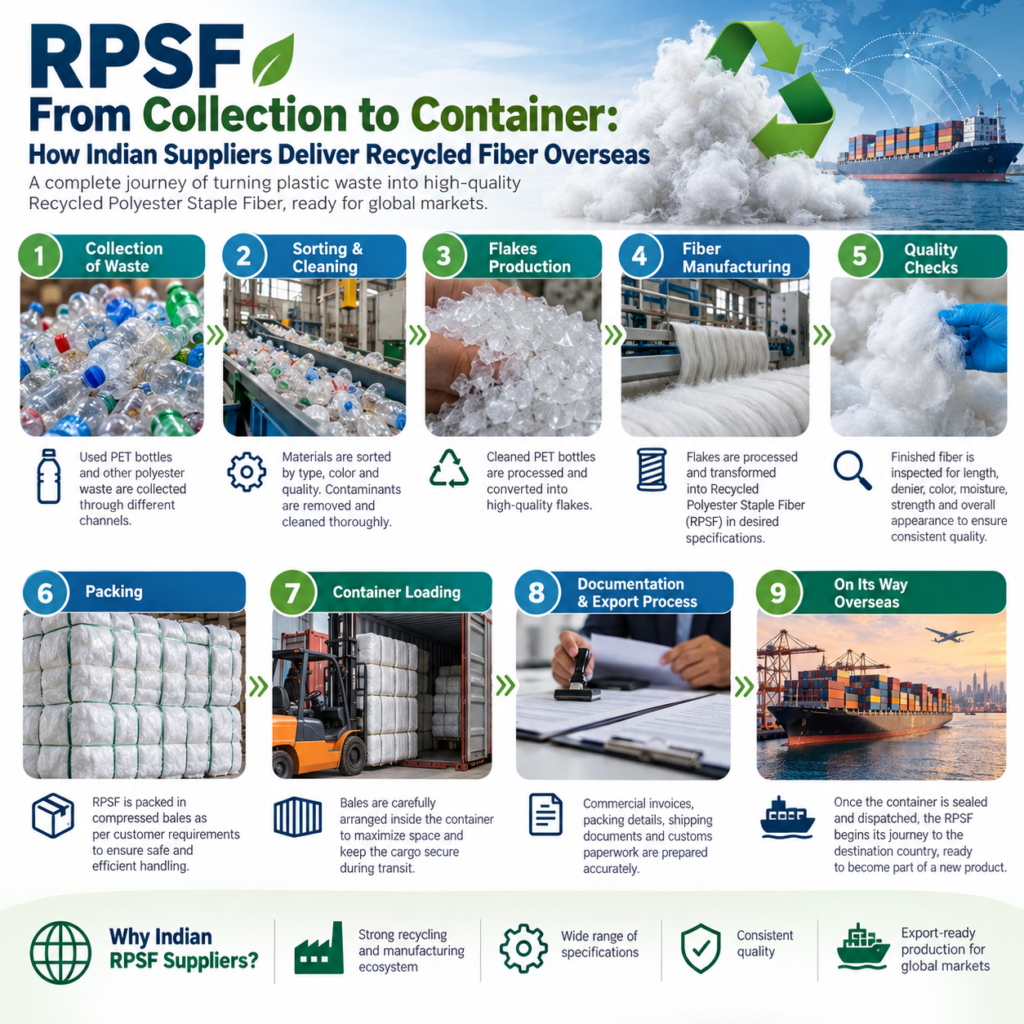
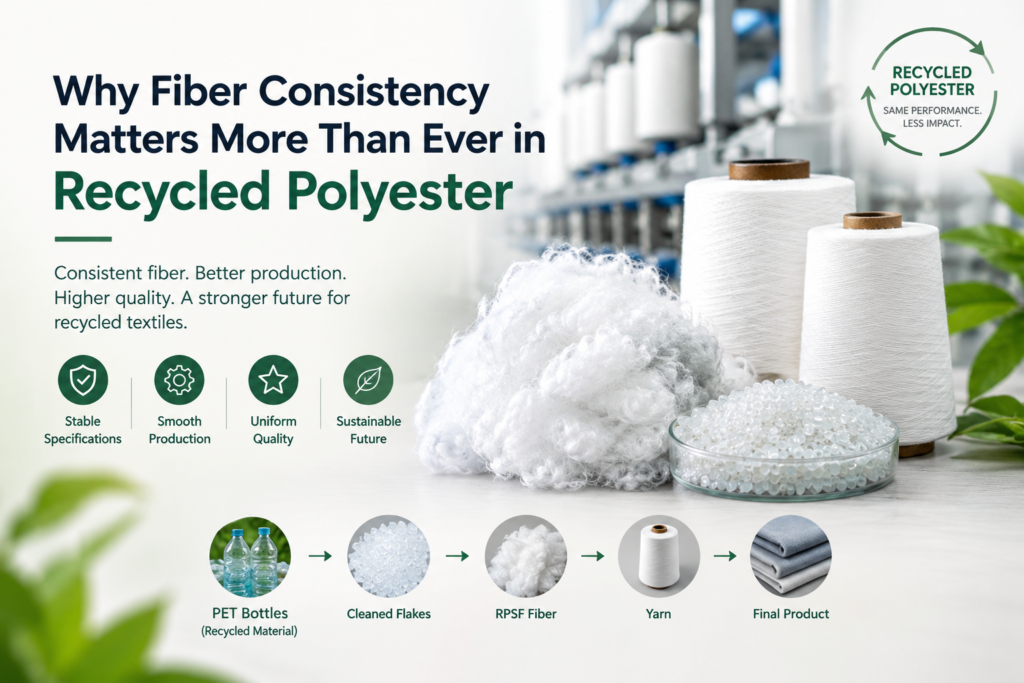
Recycled PET Flakes, referred to as rPET flakes, undergo winning, collection, washing, shredding, and drying processes to manufacture them from post-consumer plastic bottles. These flakes are used to manufacture fibers, packaging films, strapping, and textiles.
With sustainability goals being implemented, industries are turning to Recycled PET to avoid using virgin plastic. The plastic manufactured using virgin plastic materials will be more expensive in comparison.
2.What Buyers Want in 2025
1.Quality and Purity Standards
For Buyers in 2025, the Priority factors will be Quality PET development that exceeds the International recycled standards. The primary factors are as follows:
- Color homogeneity: The Light blue and transparent flakes are most prized.
- Moisture level: Below 0.5% to sustain the efficiency of extrusion.
- Level of contaminants: Less than 100 ppm (parts per million) for superior grade flakes.
- Flake size: Regular granules for enhanced melt flow and machinery compatibility.
To ensure the flakes are efficient in the manufacture of the sheet and film, the flakes need to be PVC-free, contain metallic particles, and have adhesives.
2. Global Certifications
For Global Trade, Trust is the most important element, and Compliance in Trade. In 2025, the most demanded Certifications are:
- GRS (Global Recycled Standard): Ensures traceability, and that ethical labor is used and repurposed materials are maintained.
- RCS (Recycled Claim Standard): Ascertains recycled content in materials and the integration of recycled materials.
- FDA & EFSA Approvals: Requirement for food-grade recycled PET flakes.
- ISO 9001 / ISO 14001: Indicates quality and environmental management systems.
European and North American buyers now require certified suppliers that guarantee traceable, contamination-free raw materials compliant with import rules.
3.Supply Chain Transparency
The interest in PET waste traceability is bound to increase by 2025. Buyers will want to know the origin and the process history of the waste.
The emergence of digital traceability and blockchain technology will aid buyers in verifying recycling records and supplier reputations.
3. Global Market Trends in 2025
The global recycled PET flakes market is expanding rapidly, with strong demand from packaging, textiles, and automotive sectors. Key 2025 trends include:
- More recycled polyester offers from apparel brands.
- Recycled material in production, government incentives.
- Optical sorting and chemical recycling innovation.
- Asia Pacific, including India & China as leading exporters, will dominate.
- Premium pricing for food-grade and GRS-certified flakes.
The trade is projected to expand at a CAGR of 7–9% between 2024 and 2030, facilitated by growing sustainability pledges from global multinationals.
4. The Future of PET Flake Trade
By 2025, effective PET flake suppliers are those making investments in leading-edge recycling technology, compliance with certifications, and quality management systems.
Today, buyers are no longer simply buying material — they are joining forces with suppliers who share their ESG (Environmental, Social, Governance) agendas.
Transparency, traceability, and trust will characterize the recycled PET business in the coming years.
Also Read: PET Flakes to Fabric: Mapping the 2025 Value Chain of Recycled Textiles
Conclusion
An increase in demand for recycled PET flakes in future years shows the world’s changing attitude in relation to circular production and sustainably sourced materials. Quality consistency remains the main concern for buyers, along with international certification and clear supply chain access.
For the supplier, it is achieving these expectations through securing long-term relationships in a fast-expanding, sustainable market.
As companies adopt a more sustainable future, PET flakes are not merely raw materials — they’re the cornerstone of an improved global economy.