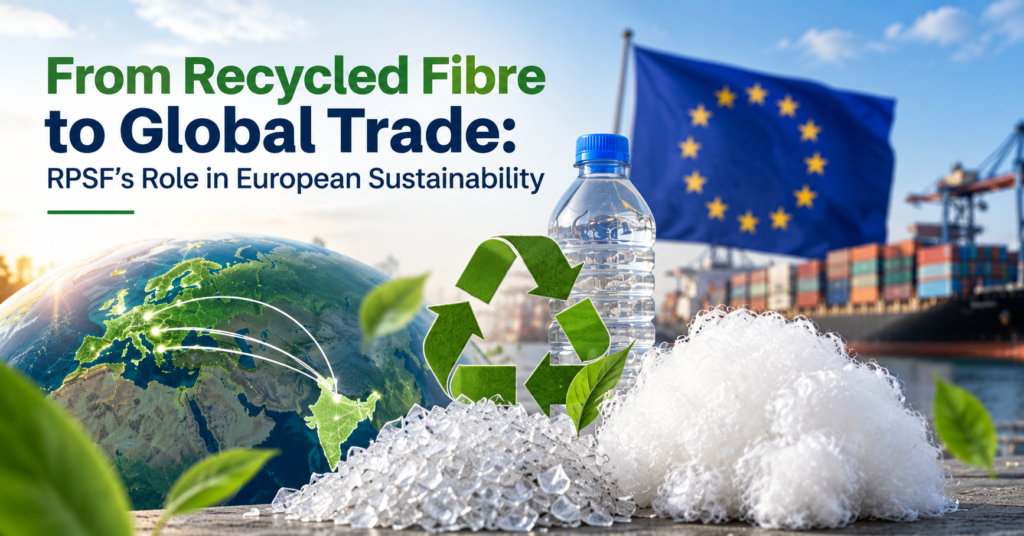
Each day, millions of PET bottles are used for consumer products and beverages. Once they’re thrown out, these bottles can be a big waste problem. But with the right recycling technology a used PET bottle can have a second life – as a valuable raw material for the textile and industrial fibre industry.
Rakshitam Ecofibre takes the waste of post-consumer PET bottles and converts it into recycled PET flakes and then further converts it into high quality Recycled Polyester Staple Fibre (RPSF). Based in Gujarat, the company has a declared annual production capacity of 30,000 MT of recycled polyester staple fibre, rPET fibre and yarn.
What is rPET Flakes?
Used PET bottles are processed into rPET flakes. The bottles are collected, sorted, cleaned and then shredded into small PET flakes. The quality of these flakes is important as clean and properly processed raw material is of great importance for the quality and consistency of the recycled fibre produced afterwards.
The different recycled products from recycled PET flakes are determined by the colour and quality of the original material. White or transparent PET flakes are widely used as raw material for recycled polyester fibre and yarn.
Step 1: PET Bottles Collection
The process starts with post-consumer PET bottles. Rakshitam Ecofibre’s recycling network collects PET waste and takes in various types of used PET bottles including clear, white and transparent bottles.
The goal is to recover valuable PET material that would otherwise be sent to landfills or the wider environment.
Step 2: Filter and Clean
Bottles collected do not turn into fibre immediately. First they have to be sorted by material, colour and quality.
Stripping of labels, caps, dirt and other contaminants and washing and cleaning. This step is so important because contamination can influence subsequent processing and the homogeneity of the final recycled material.
Rakshitam’s recycling methodology involves systematic collection and sorting to help ensure that the materials entering its manufacturing process meet the required quality standards.
Step 3: From Bottles to rPET Flakes
The PET bottles are sorted and washed and then chopped into small flakes. These rPET flakes are an important intermediate material in the process from bottle to fibre.”
The recycling process turns used bottles into a usable industrial resource instead of being thrown away. This is a key part of the circular economy model, reclaiming materials and keeping them in productive use for longer.
Step 4: Turning rPET into Polyester Fibre
The processed PET material is then utilised in the manufacturing process to create recycled polyester. The polymer from the recycling is melted, extruded and formed into fibres that can be cut into staple fibre.
This is what rPET flakes to RPSF.
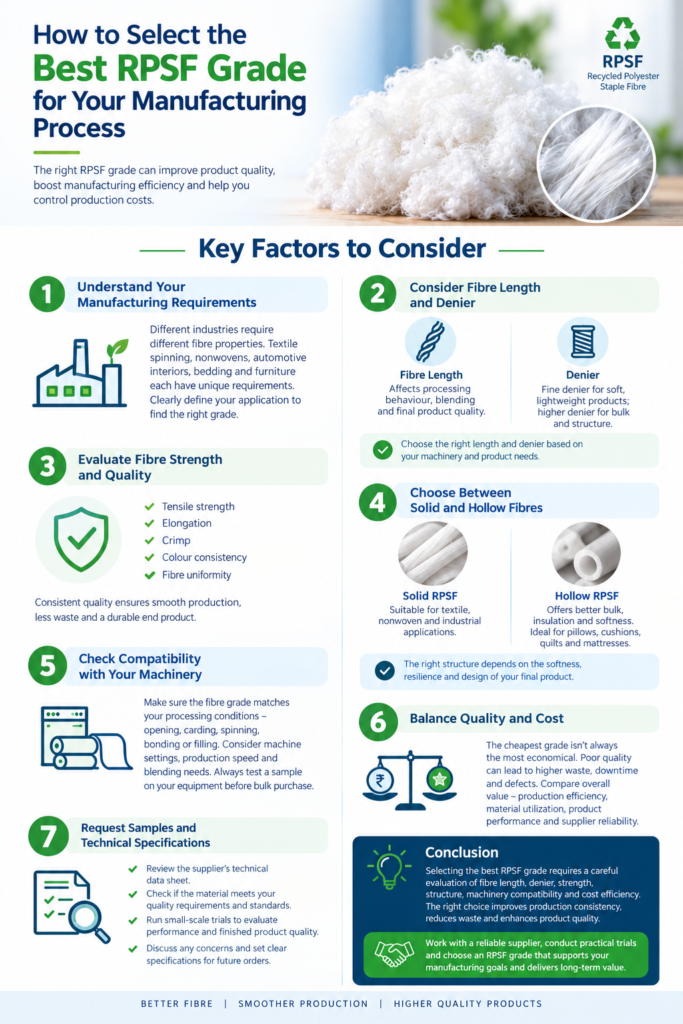
Rakshitam Ecofibre manufactures solid high-tenacity RPSF in a wide range of specifications including deniers from 1.0 to 3.0 and cut lengths of 28 mm, 32 mm, 44 mm, 51 mm and 64 mm. The stated product line includes white, super white, vanilla white, milky white, black and jet-black fibres.
Why Quality Matters At RPSF
Recycled fibre is used in a number of industries including textiles, nonwoven fabrics, fillings, carpets, automotive and functional textiles.
RPSF’s worth to manufacturers doesn’t end at its recycled source. Fibre consistency, strength, denier, cut length and suitability for the application can all influence production performance and quality of the final product.
This requires controlled processing and quality checks on the conversion of post-consumer PET into premium recycled fibre.
Supporting a Circular Future
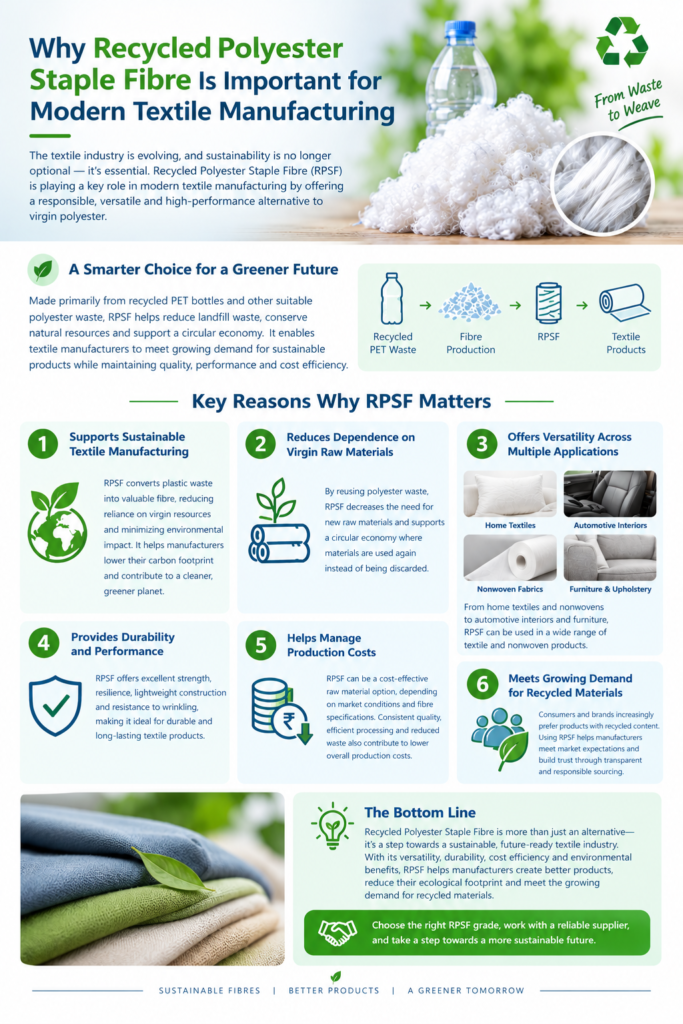
The bottle-to-fibre model links two key sectors, plastic recycling and textile production. Manufacturers can also incorporate recycled polyester into their material strategy, rather than rely exclusively on virgin raw materials.
Rakshitam Ecofibre also prioritises sustainability efforts including its Zero Liquid Discharge method and Global Recycled Standard certification.
Also Read: What is RPSF used for 8 industries that depend on recycled polyester staple fiber in india
From Waste Bottle to High-Grade RPSF
The journey can be simply summed up as:
Used PET Bottle Sorting Washing Shredding rPET Flakes Polymer Processing Fibre Formation RPSF
What begins as a discarded plastic bottle can end up as a useful fibre for textiles, nonwovens, fillings and other industrial uses.
Rakshitam Ecofibre is a great example of responsible PET recycling, showing how post-consumer plastic can be turned into a high-value material for businesses looking for a recycled polyester solution, while supporting a more circular manufacturing system.