The world of fashion is making a significant shift toward the use of recycled and lower-impact materials. Major fashion players around the world are turning to recycled fibers to reduce their dependence on virgin resources and build more circular supply chains.
Rakshitam Ecofibre, Indian manufacturer and exporter of Recycled Polyester Staple Fiber (RPSF) and PET Flakes sees this transition as a big opportunity. As international brands and textile manufacturers increase their demand for recycled polyester, suppliers with consistent quality, scalable production, traceability, and strong sustainability practices can play an increasingly important role in the global textile supply chain.
H&M Goes 100% Recycled Polyester Staple Fiber
“H&M Group has made great progress with its recycled materials strategy. H&M Group 2025 Annual and Sustainability Report H&M Group reported H&M Group reached 100% recycled polyester in 2025. The company had set a target to source 100% of its polyester from recycled sources by 2025.
This is a major development for the polyester Staple Fiber industry. At the scale of a global fashion group, a commitment of this size can influence sourcing decisions across suppliers, textile manufacturers, spinners, fabric producers, and fibre manufacturers.
For companies like Rakshitam, it is an indicator of the increasing demand for good quality recycled polyester materials that meet the technical and sustainability demands of global buyers.
Zara and Inditex Are Also Increasing Recycled Fibre Use
Inditex, owner of Zara, has also set aggressive targets for low impact textile materials. Its approach is that all textile products are to be produced from materials with a lower environmental footprint by 2030. As part of this target, Inditex has outlined a goal for 40% of textile fibres to come from conventional recycled materials, alongside targets for next-generation and organic or regenerative fibres.
Inditex’s sustainability strategy today also points to the growing importance of recycled fibers and collaboration with suppliers and technology firms to improve the quality of recycled materials and develop new recycling technologies for use at an industrial level.
This creates a bigger opportunity for the recycled polyester ecosystem, including producers that can supply consistent recycled fiber in commercial volumes.
How it impacts Rakshitam Ecofibre
At Rakshitam Ecofibre we are dedicated to transform waste post consumer PET bottles into useful recycled products. We recycle 100% of post-consumer PET bottle waste into recycled polyester products, we recycle garbage into industrial raw materials.
Our RPSF production is high tenacity solid fiber in a range of colors, deniers and cut lengths. Our annual capacity is 30,000 MT and we are geared to cater bulk requirements across application.
This combination of recycled feedstock, manufacturing capacity, product variety and production scale is becoming increasingly important as the global fashion and textile industry raises its demand for recycled materials.
It’s going to be all about consistency and quality
The increase in recycled polyester demand also means buyers will increasingly be looking beyond the word “recycled.” They will want suppliers who can offer consistent technical performance and reliable quality batch to batch.
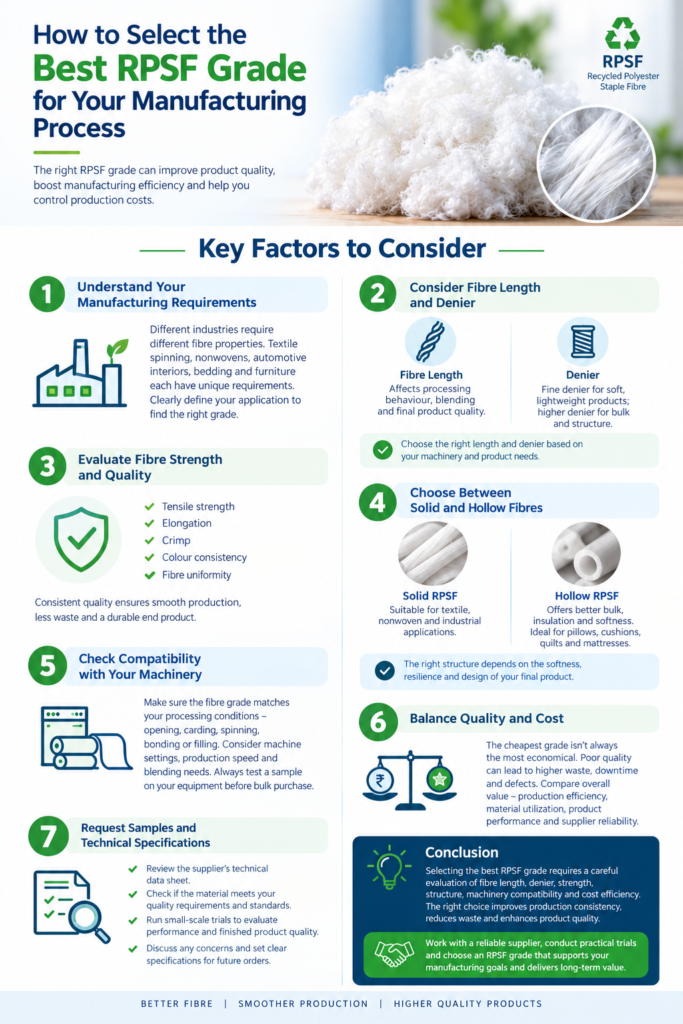
For RPSF manufacturers important factors include:
- Uniform cut length and denier
- Fiber performance and strength
- Color and appearance consistent
- Dependable recycled feedstock
- The procedures of quality control
- Certificates of recycled content
- Traceability & documentation
- Stable production capacity
- Regular delivery times
Rakshitam’s RPSF range are available in cut lengths of 28 mm, 32 mm, 44 mm, 51 mm and 64 mm and deniers from 1.0 to 3.0 for different industrial requirements.
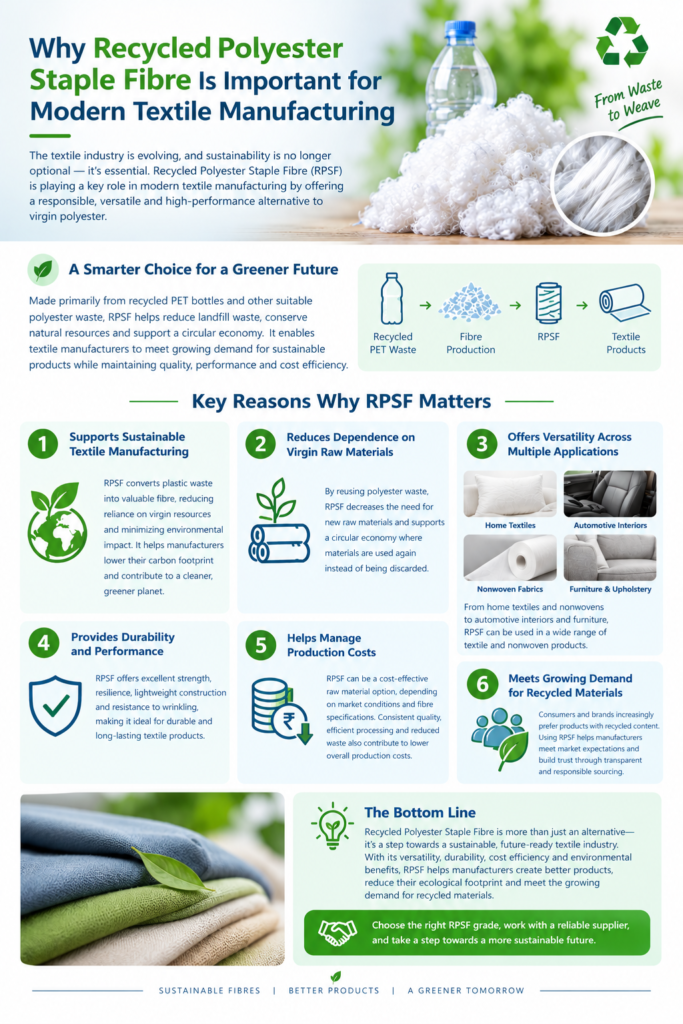
PET Waste to Textile Resources
The supply chain for recycled polyester starts well before a recycled fiber reaches a textile manufacturer.
Used PET bottles can be collected, sorted and processed into PET flakes to produce recycled polyester materials. They can be used in a range of textile and industrial applications.
We at Rakshitam believe in this cyclical process. Our mission is to turn millions of used plastic bottles into high-quality recycled products to help us move away from virgin resources.
An Increasing Opportunity For Indian RPSF Manufactures
India’s strong textile and recycling ecosystem offers opportunities for Indian manufacturers to become key suppliers to global markets.
Rakshitam views the increasing interest of international fashion groups to use recycled materials as an opportunity to establish partnerships with textile manufacturers, sourcing companies and international buyers seeking a reliable source of recycled polyester.
But the opportunity is also to make more. We will offer competitive pricing along with quality, consistency, documentation, certifications, traceability and reliable supply, as global buyers will increasingly demand these factors.
Also Read: Why major mills are now dedicating 40% of capacity to recycled polyester staple fiber production
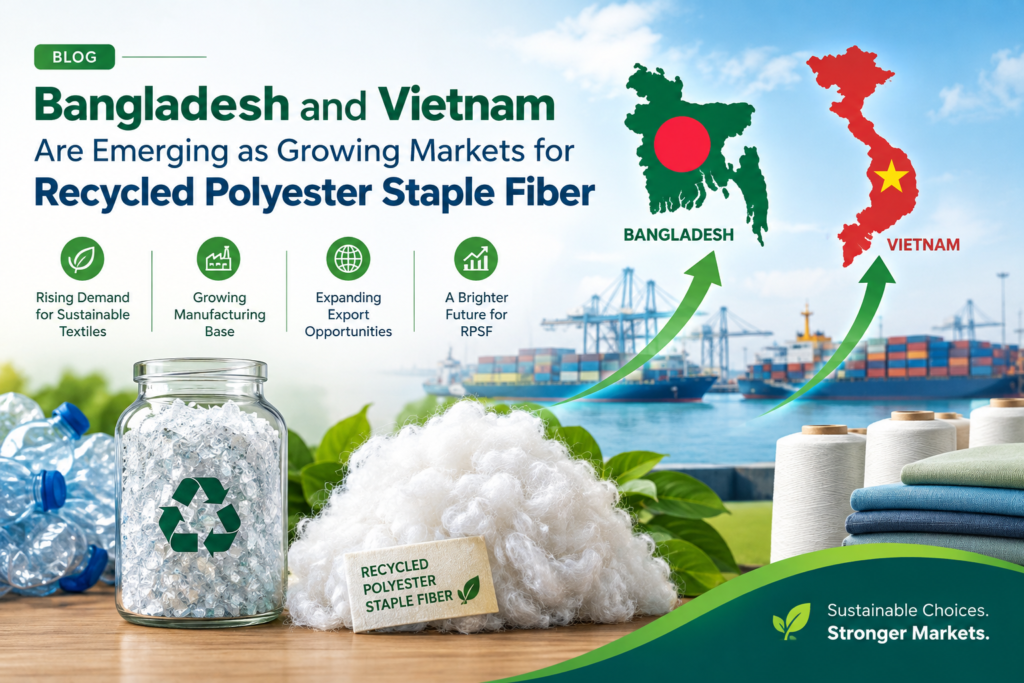
Major fashion groups are shifting to recycled polyester Staple Fiber, throwing the global textile supply chain into flux. H&M Group has reached 100% recycled polyester Staple Fiber and Inditex has continued to increase its use of recycled and other lower-impact fibers in line with its material strategy to 2030.
This change aligns with our dedication at Rakshitam Ecofibre to convert post-consumer PET waste to recycled polyester products.
With the rising demand for recycled materials all over the world, we see Indian RPSF manufacturers as key players in making the textile industry more circular. Rakshitam Ecofibre is well placed to meet the evolving requirements of the global textile and industrial markets with scalable production, multiple RPSF specifications, recycled feedstock and a quality focus.