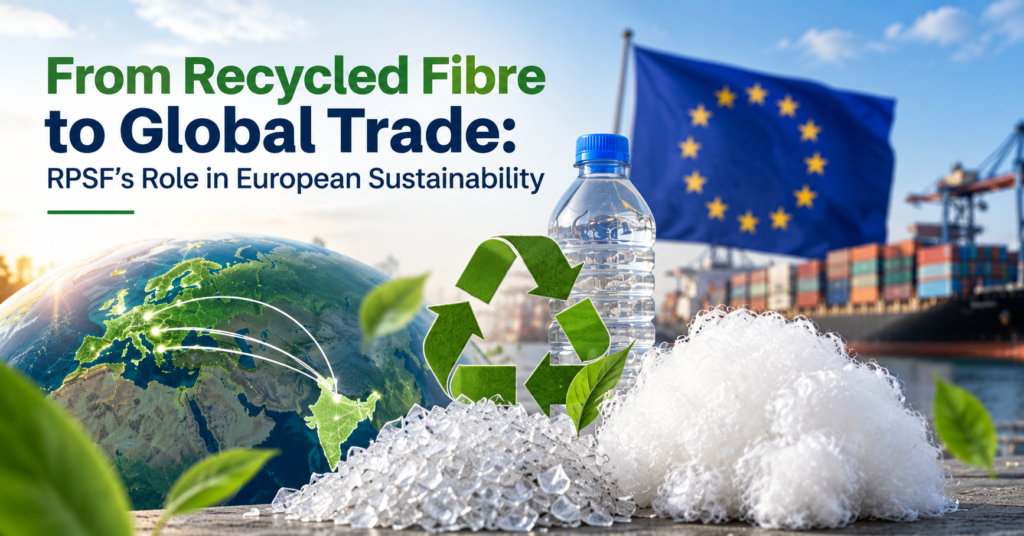
The world’s textile industry is in the midst of one of its biggest transformations in decades. “Sustainability is no longer a trend, it’s a business imperative. With governments enforcing stricter environmental regulations and consumers seeking out greener products, textile manufacturers are rapidly adapting their production strategies. One of the biggest changes has been the increasing attention on Recycled Polyester Staple Fiber (RPSF).
Many leading textile mills are now dedicating nearly 40% of their production capacity to recycled polyester staple fiber. This strategic shift is driven by factors such as increasing market demand, commitment to sustainability, and the long-term economic benefits of recycled materials. In this blog we will examine why this is happening and what it could mean for the future of the textile industry.
Global Demand for Eco-Friendly Textiles Rises
Today’s consumers are more environmentally aware than ever. Fashion brands, home furnishings companies, car manufacturers and industrial textiles producers are all seeking sustainable raw materials, all wishing to reduce their environmental footprint.
Global brands are setting ambitious sustainability targets, many of which involve increasing the use of recycled fibres in their products. As the need for environmentally friendly textiles increases, manufacturers will need to increase recycled fiber production to stay competitive.
This transition has made Recycled Polyester Staple Fiber one of the fastest-growing segments of the world textile market.
Change is being driven by Government Regulation
Environmental regulations are getting tougher in major markets, especially in Europe, North America and parts of Asia.
Policies to promote recycling, extended producer responsibility (EPR) and circular economy initiatives are pushing manufacturers to reduce their reliance on virgin polyester. The use of recycled materials across the supply chain will also be expanded through new packaging and textile regulations.
These changing standards are driving many mills to invest heavily in recycled polyester production facilities.
Brand Commitments for Sustainability
Over the next few years, leading global apparel and textile brands have set targets to significantly increase the recycled content in their products.
Many companies are looking to replace a significant amount of virgin polyester with recycled alternatives, and reduce greenhouse gas emissions.
The manufacturers supply the global brands, and hence they need to align their production capabilities with customer expectations. With higher RPSF production capacity, mills are able to develop long-term business relationships with sustainability-conscious buyers.
Steady demand from a variety of industries
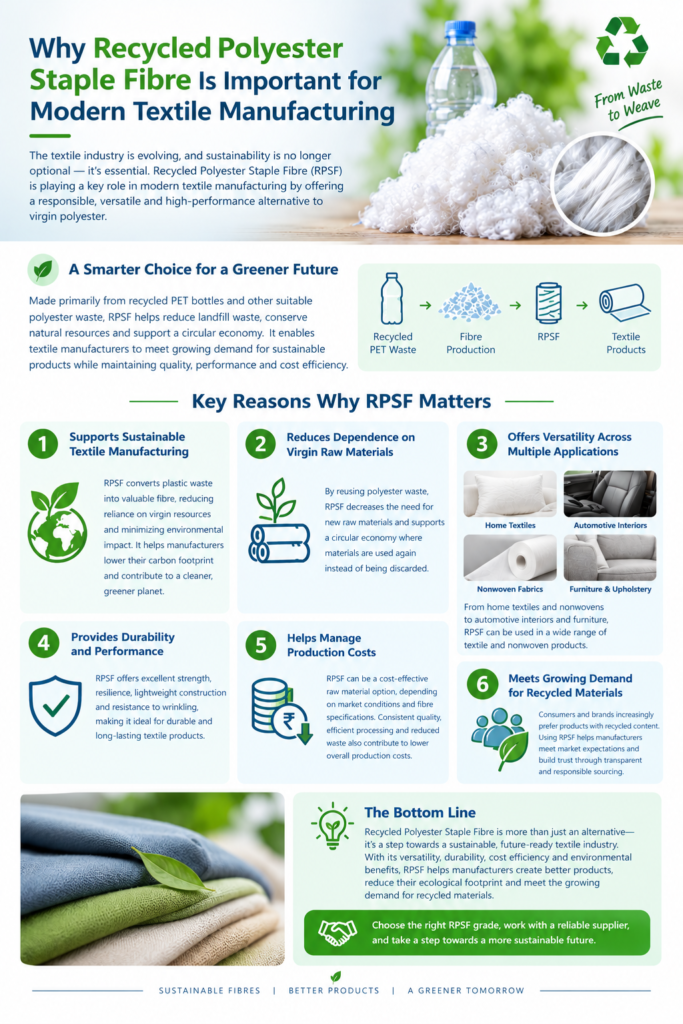
Recycled Polyester Staple Fiber is different from some textile products that are tied to seasonal fashion trends and supports a wide range of industries.
Applications:
- Home furnishing products
- Cushions & Pillows
- Mattresses; cushions
- Interior of automotive
- Non woven fabric
- Filtration Geotextiles products
- Industrial filling substances
This variety of demand gives manufacturers more stability in business and less dependence on any one industry.
Better Recycling Infrastructure
The availability of recyclable PET bottles has greatly improved due to better collection systems and recycling initiatives worldwide.
The introduction of organized waste collection, improved EPR implementation and progress in PET processing technology have made the availability of high quality recycled raw materials more stable.
This continuous availability makes large scale RPSF production more practical and commercially viable for large textile mills.
Technological Advances Improved Quality
The quality of Recycled Polyester Staple Fiber has changed a lot due to modern recycling technologies.
Modern manufacturing processes produce fibers that are stronger, more uniform, more durable and cleaner. High quality recycled fibers are now available to satisfy rigorous industrial and textile performance requirements.
As quality improves, manufacturers are more comfortable scaling up recycled fiber production without compromising product standards.
Economic Benefits to Manufacturers
Sustainability continues to be a primary driver, but economic considerations are also important.
Manufacturers can: invest in the production of recycled polyester
- Meet rising customer demand
- Expand export opportunities
- Develop long-term business relationships
- Enhance competitiveness in international markets
- Less reliance on volatile virgin polyester supplies
“Manufacturers with larger RPSF production capacity are better prepared for future growth as recycled products become mainstream.”
Developing the circular economy
The increased production of recycled polyester also helps the world shift to a circular economy.
Valuable industrial raw materials instead of discarded PET bottles – which would otherwise end up in landfills or the oceans. This process conserves natural resources, reduces carbon emissions, and reduces reliance on petroleum-based virgin polyester.
By increasing the share of production capacity assigned to RPSF, textile mills make an active contribution to responsible resource management and environmental protection.
The Future of Recycled Polyester Staple Fibres
The demand for Recycled Polyester Staple Fiber is expected to keep on growing in the coming few years, say industry experts. Sustainability regulations, consumer awareness and corporate ESG commitments will only accelerate this growth further.
Early investment in recycled fiber production will better position manufacturers to meet changing market expectations and strengthen their position in global supply chains.
When large textile mills pledge to allocate nearly 40% of their production capacity to Recycled Polyester Staple Fiber, it’s not merely a change in market trends, it’s the future of sustainable manufacturing. Rising consumer demands, stricter environmental regulations, technological advancements and global sustainability goals are reshaping the textile industry.
As industries around the world shift to greener manufacturing practices, Recycled Polyester Staple Fiber will remain an integral part of manufacturing high quality, environmentally responsible products and supporting a more sustainable and circular global economy.