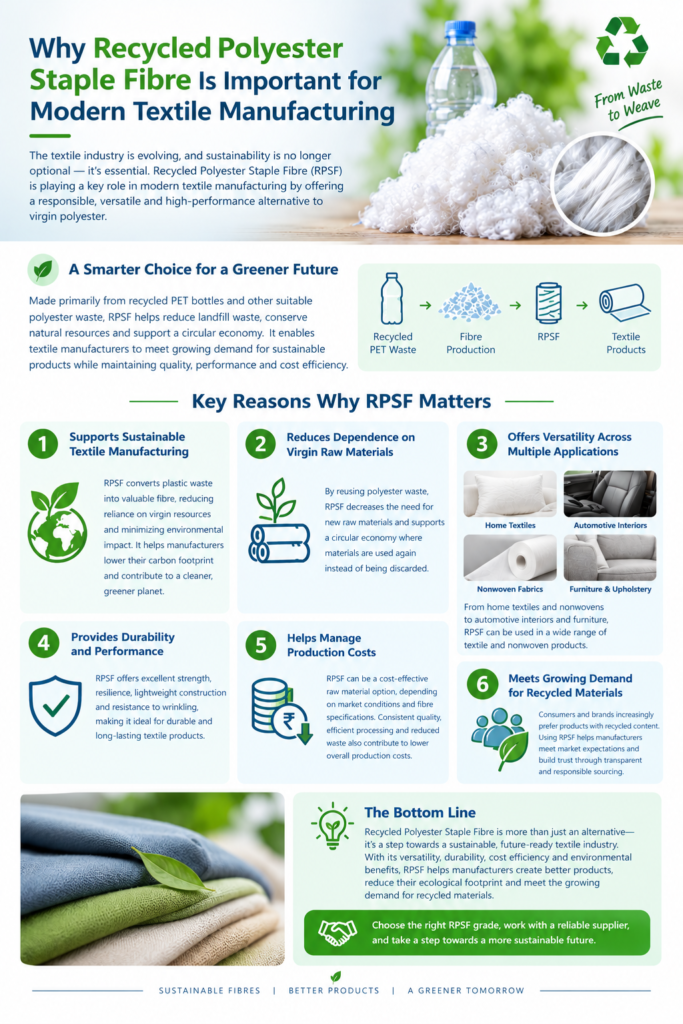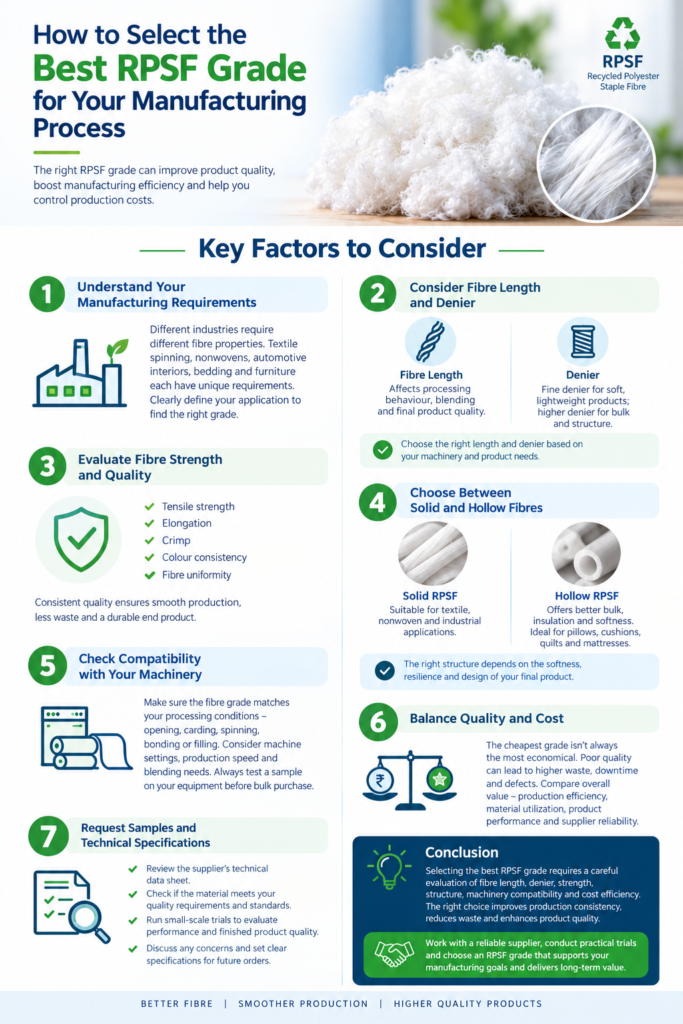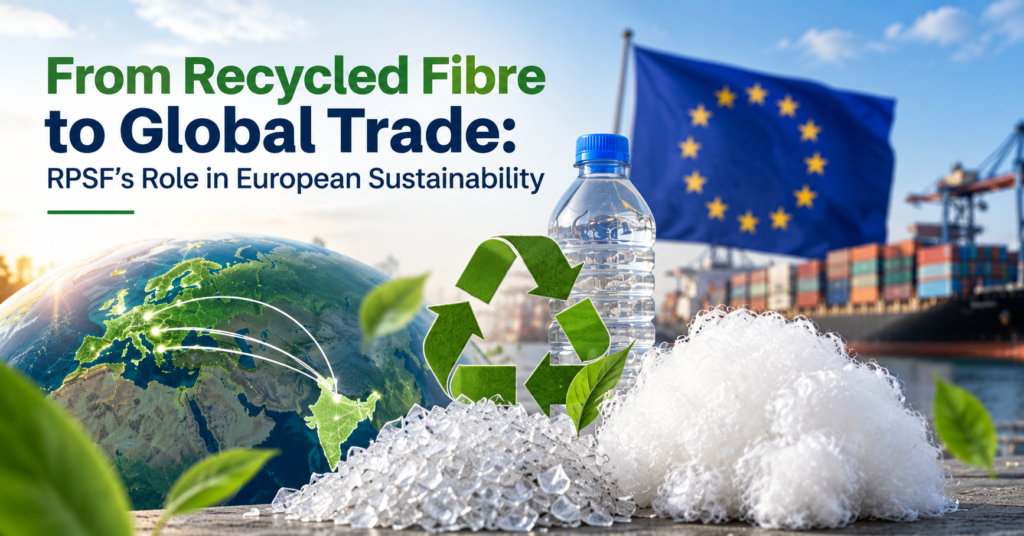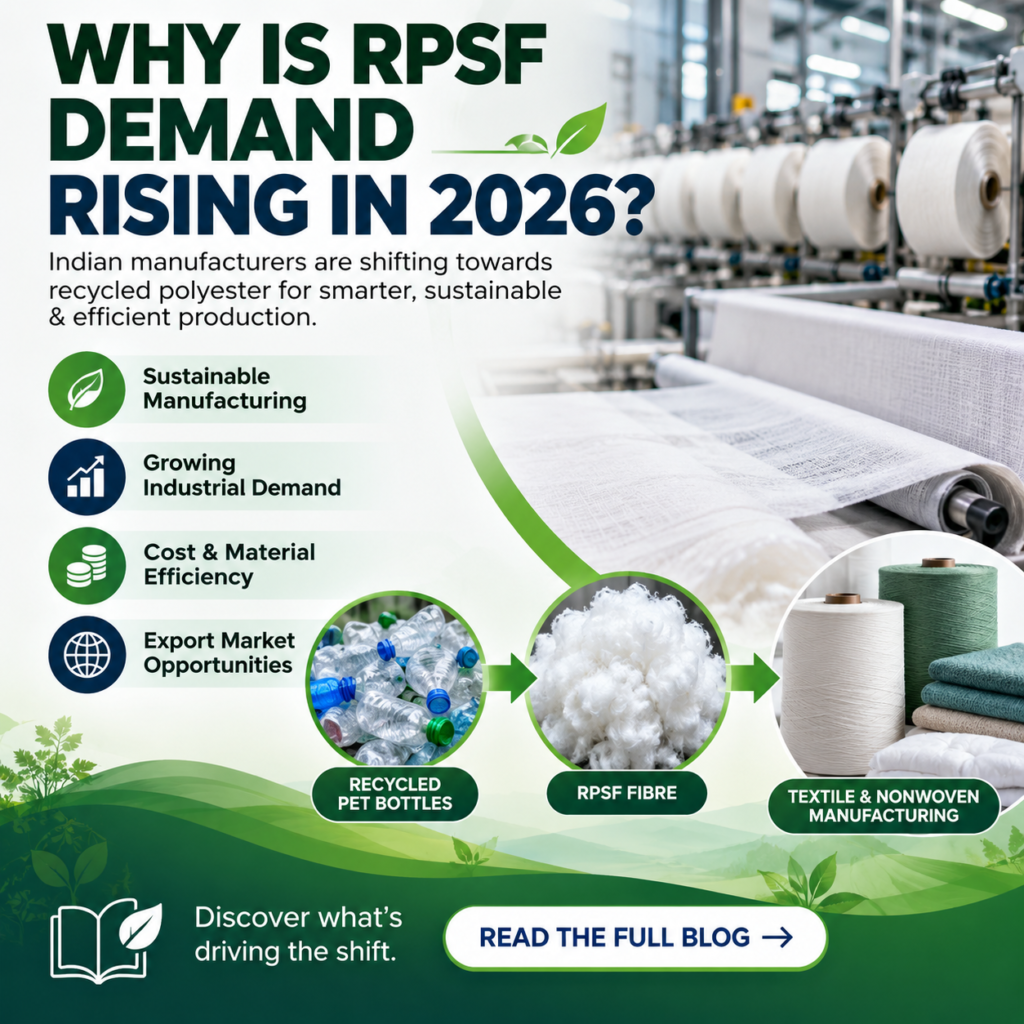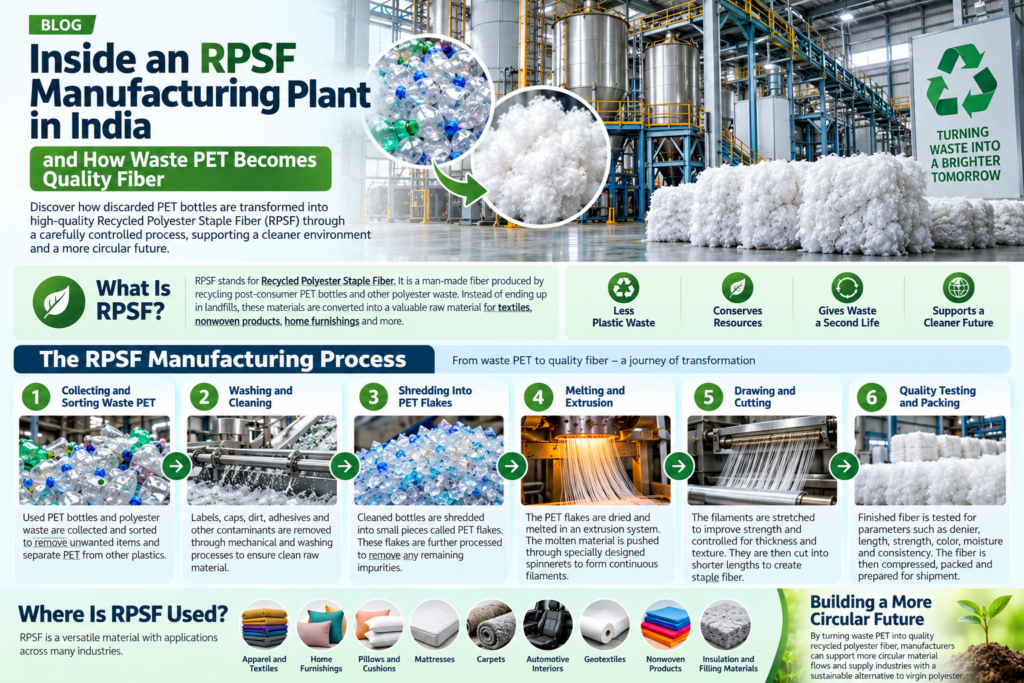
As industries around the world are moving towards sustainable manufacturing, Recycled Polyester Staple Fiber (RPSF) has emerged as a preferred alternative to virgin polyester fiber. RPSF is made from plastic waste and recycled PET bottles, which helps reduce landfill waste and conserve natural resources. However, the rising acceptance of RPSF is not only due to its environmental benefits, but also due to its dramatic improvement in quality.
Modern RPSF produced from advanced recycling technology provides superior strength, consistency and performance, making it suitable for a wide range of industrial and textile applications. High-quality RPSF is being experienced like never before by global manufacturers from automotive interiors to home furnishings and nonwoven fabrics.
The Evolution of RPSF Manufacturing
The recycling industry has changed a lot in the past 10 years. Initial recycling techniques frequently produced variable fiber quality because of contamination and restricted processing capacity. Today, manufacturers have highly automated production lines and precision equipment that guarantee better control at all stages of the manufacturing process.
Today’s recycling plants work hard to keep quality control tight and material recovery high, so recycled fibers can be as good as virgin polyester in appearance and performance.
Improved sorting and cleaning of PET bottles
The quality of RPSF starts with the quality of recycled PET bottles.
Modern recycling plants are equipped with automated sorting systems that use optical sensors and artificial intelligence to sort bottles by color, polymer type and contamination. This helps to reduce impurities before processing even starts.
Different washing steps (hot wash, friction wash, chemical wash) are used for the removal of labels, glues, dirt and other impurities. Cleaner PET flakes lead to cleaner, stronger and more durable polyester fibers.
Production for Uniform Fiber Quality
One of the biggest gains in modern RPSF production has been the development of precision manufacturing.
In modern extrusion systems temperature, pressure and melt flow are precisely controlled during the production of fibres. This guarantees uniform fiber diameter, higher tensile strength and consistent product quality for each production batch.
Manufacturers can also make fibers in different deniers, cut lengths and specifications to suit various industries.
Improved Quality Control Systems
Quality control has become a part of advanced recycling technology.
Modern RPSF manufacturers perform continuous testing during production including:
- Test of fiber strength
- Moisure Content Test
- Color Consistency Check
- Inspection of crimp uniformity
- Detection of Contaminations
- Checking dimensional accuracy
We have rigorous quality checks in place to ensure that every batch meets our customer expectations and international quality standards.
Improved sustainability without sacrificing performance
Many companies used to think recycled fibers couldn’t be up to the same standard as virgin polyester. Today’s technology has changed that perception.
Advanced recycling processes now produce RPSF which offers:
- Great durability
- High resilience
- Uniform texture
- Improved heat insulation
- Excellent filling ability
- Dependable processing capabilities
This means manufacturers no longer need to trade off sustainability and product performance.
Supporting Industrial High Performance Applications
The better quality of RPSF leads to its wider application in many industries.
High quality recycled polyester staple fiber is used widely today in:
- Automotive Interior
- Furniture padding
- Pillows & Coverlets
- Geotextiles
- Nonwoven textiles.
- Home and furnishings
- Filtration products
- Insulation materials
It’s versatile, making it the ideal solution for manufacturers wanting to reduce their environmental footprint without compromising product quality.
Innovation & the Circular Economy
Advanced recycling technologies are key enablers of the circular economy.
Today , recycling systems turn discarded PET into valuable raw materials for industrial use , instead of millions of plastic bottles being dumped into landfills or the ocean . This cuts plastic pollution and dependence on virgin petroleum-based resources.
The result is a manufacturing model that is good for business, good for consumers and good for the environment.
The Future of RPSF Production
As technology continues to evolve, the future of RPSF looks even brighter.
Innovations such as AI-powered quality inspection, smart automation, energy-efficient recycling systems and improved material traceability are allowing manufacturers to produce even higher quality recycled fibres with a lower environmental impact.
These improvements will enhance RPSF’s position as one of the most sustainable and reliable materials in the global textile and manufacturing industries.
Also Read: The journey of a PET Bottle before it becomes RPSF
Advanced recycling technology has improved the quality and reliability of Recycled Polyester Staple Fiber. Today RPSF has automated sorting, accurate manufacturing, quality control and continuous improvement resulting in superior performance and sustainable manufacturing.
As sustainability gains momentum, industries are turning to high-quality RPSF as the optimum choice for those requiring long-lasting, environmentally friendly and economical fiber options. As technology continues to evolve, the future of recycled polyester staple fiber looks brighter than ever, proving that innovation and sustainability can go hand in hand.