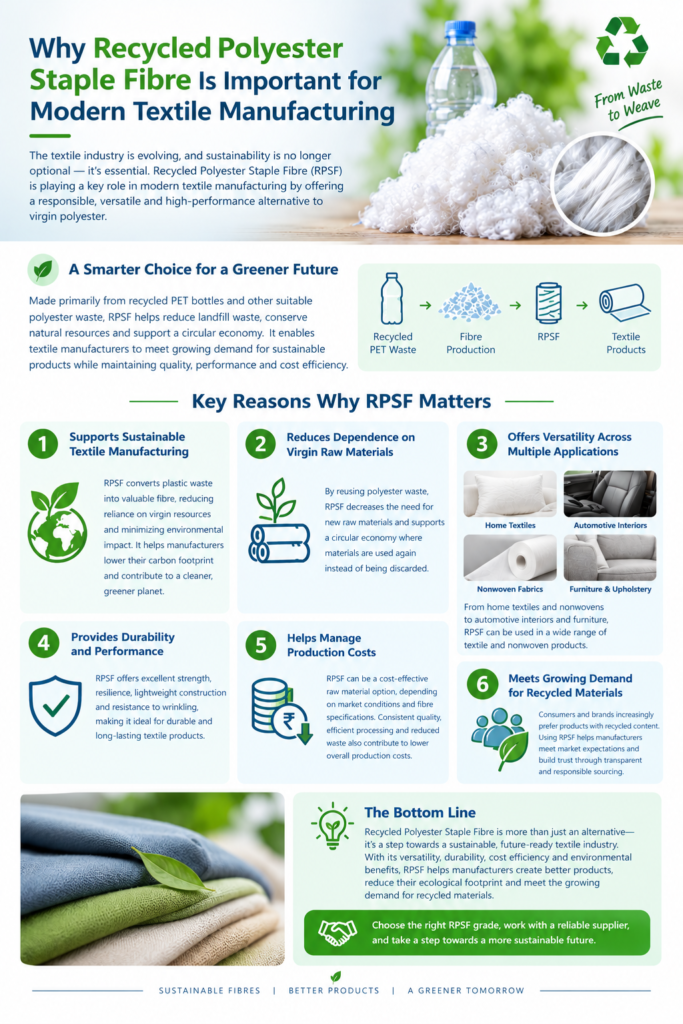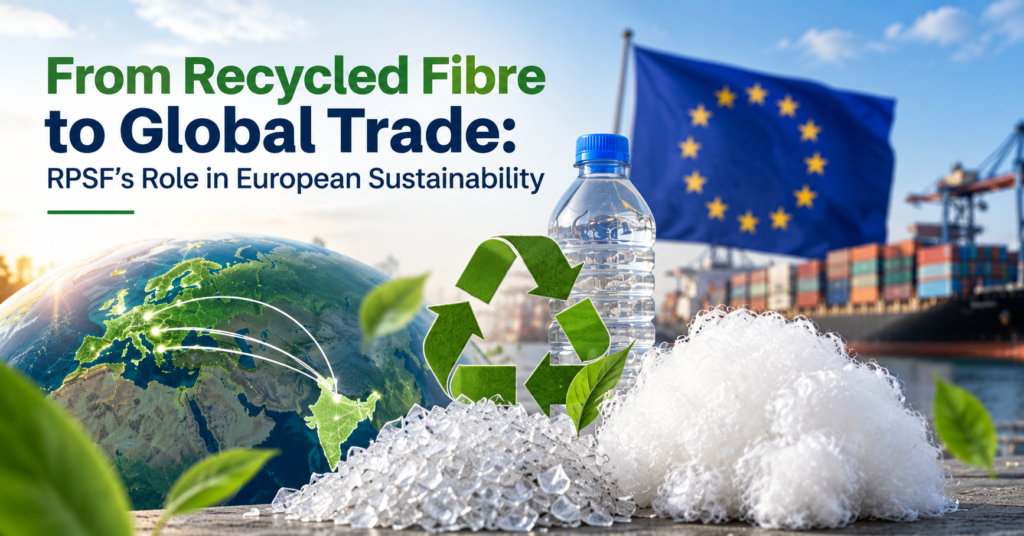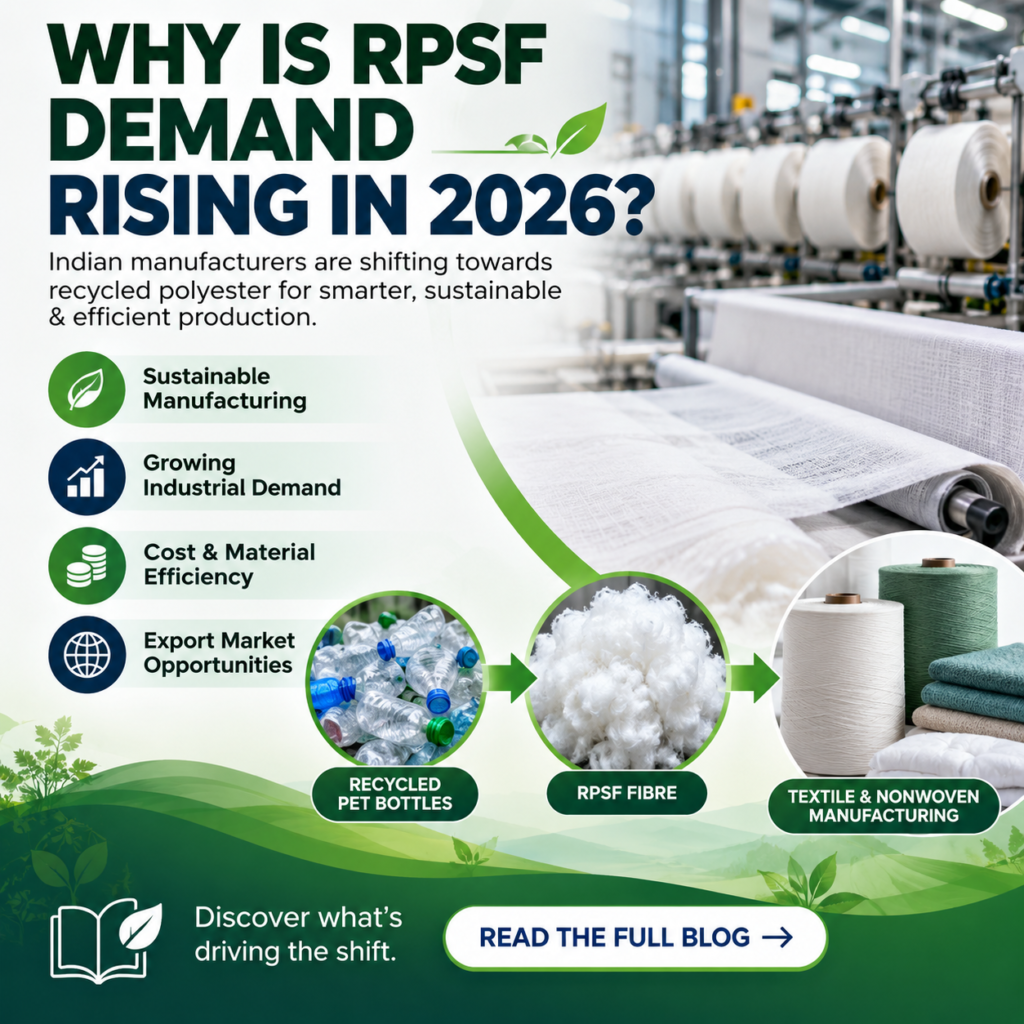
Every day, millions of plastic bottles are used and thrown away around the world. These bottles are waste for many people, but modern recycling processes can turn them into valuable raw materials. One of the most exciting examples of sustainable recycling is the conversion of PET bottles into Recycled Polyester Staple Fibre (RPSF).
RPSF is commonly found in such industries as textiles, home furnishings, automotive manufacturing, mattresses, nonwoven fabrics and filling materials. But before a PET bottle can be turned into a high-quality fibre, it has an interesting journey of recycling and processing.
What is PET Bottle?
PET or Polyethylene Terephthalate is one of the most used plastics for beverage and water bottles. It is light weight, durable and highly recyclable which makes it an ideal material for sustainable recycling initiatives.
Recycling facilities collect used bottles and turn them into reusable materials, such as RPSF, rather than letting them end up in landfills or oceans.
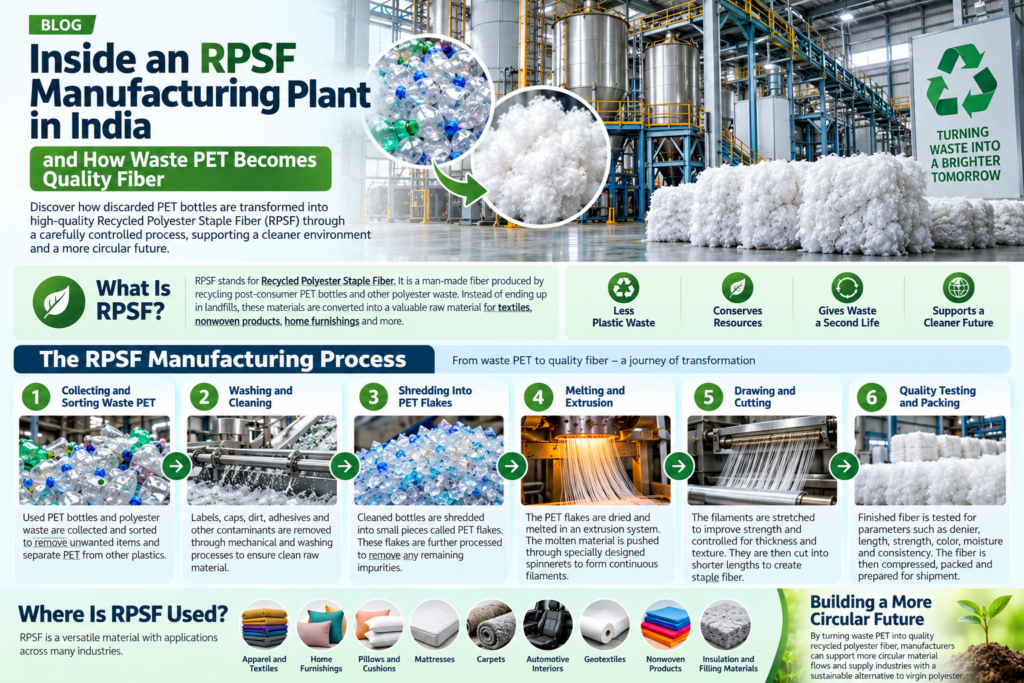
Step 1: Collection of PET Bottles
The process begins with the collection of post-consumer PET bottles.
The bottles are collected from:
- Recycling centres
- The systems for collecting waste
- Local recycling programs
- Scrap dealers;
- Waste streams from industry
Efficient collection systems are essential to maintaining a steady stream of recyclable plastic into RPSF production.
Step 2: Sort and divide
The bottles are then sent to recycling facilities where they are carefully sorted.
The sorting separates
- Other plastics PET bottles
- From clear bottles to coloured bottles
- Clean bottles from bottles infected
Advanced sorting technologies and manual inspection help ensure that only appropriate PET materials are forwarded to the next phase of processing.
Step 3: Wash and Clean
Cleanliness is required for the production of high quality recycled fibre.
Bottles are cleaned in several stages to remove:
- Tags
- Lids Sealants
- Dust and dirt
- Remaining Liquids
- Other Pollutants
Today recycling plants use advanced washing systems to get the highest possible purity before further processing.
Step 4: Crushing of PET Flakes
After being washed and cleaned the bottles are crushed into small pieces called PET flakes.
These flakes are the main raw material used in fibre manufacturing. Additional quality controls are carried out to ensure uniformity in size and cleanliness during this phase.
The quality of the PET flakes has a direct impact on the performance and durability of the final RPSF product.
Step 5: Melting and Extrusion
These PET flakes are then fed into special machinery which melts the flakes at controlled temperatures.
The molten material is passed through fine spinnerets to make continuous polyester filaments. This process is called extrusion.
Advanced manufacturing technologies ensure consistent fibre formation and high quality production standards.
Step 6: Fibre making and cutting
After formation of the filaments, they are cooled, drawn and otherwise processed to impart desired strength and characteristics.
The continuous filaments are then cut to a specific length to produce Recycled Polyester Staple Fibre.
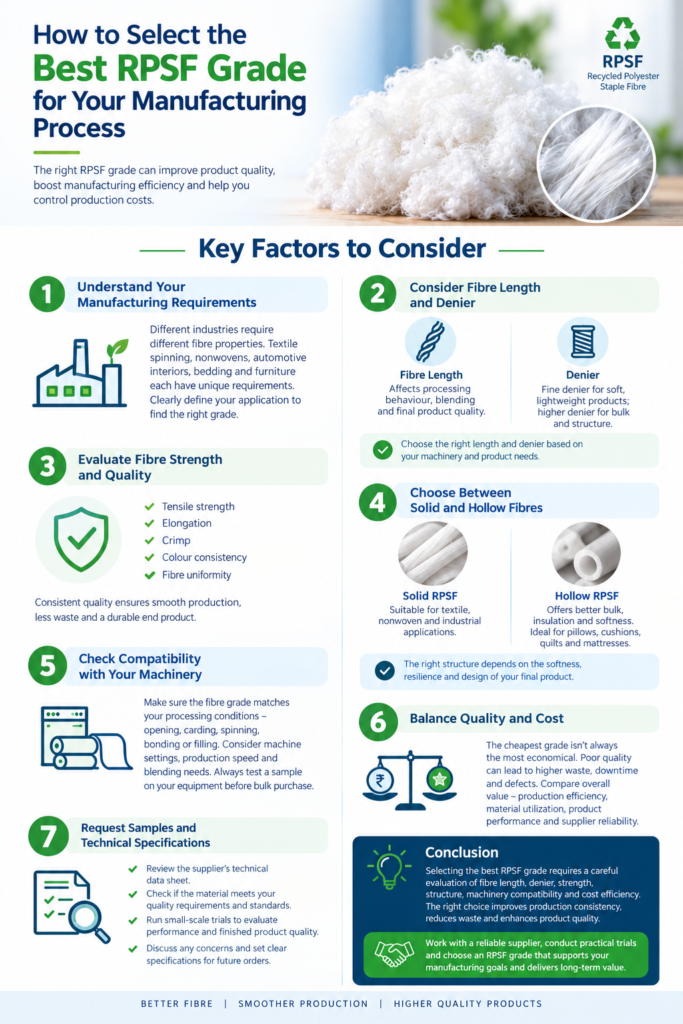
Depending on the industrial needs different types of fibres can be manufactured including:
- Fibres (solid)
- Hollow fibers
- Siliconised fibers
- Conjugate fibres
Each type has its own applications in different industries.
Step 7: Quality Check and Packing
RPSF is subjected to stringent quality control procedures before it reaches the customers.
Manufacturers test for:
- Strength of fibre
- Consistently long
- Cleanliness.
- Moisture content
- Colour quality
- Performance Parameters
Once approved, the fibres are baled and then sent to textile mills, mattress makers, nonwoven fabric manufacturers and other industrial users.
Environmental Advantages of the Process
The bottle-to-fibre recycling process has considerable environmental benefits
The following are:
- Less plastic waste in the landfill
- Reducing levels of pollution
- Saving natural resources
- Less reliance on virgin polyester
- Promoting sustainable manufacturing practices
- Enabling a circular economy
Every recycled PET bottle is another step towards a cleaner, more sustainable future.
Also Read: How bottle to fiber technology is revolutionizing the RPSF industry
Conclusion:
The journey of a PET bottle before it becomes RPSF is an amazing example of how innovation and sustainability can go hand in hand. A discarded plastic bottle can start out as a valuable industrial material that is used in countless products around the world.
In Conclusion The transformation of PET bottles into Recycled Polyester Staple Fibre will continue to be a crucial approach to reducing plastic waste and promoting sustainable industrial development, with ongoing advancements in recycling technology and increasing awareness of environmental concerns. “This shift shows that waste is not just to be thrown away, but can be an important resource for the future.”