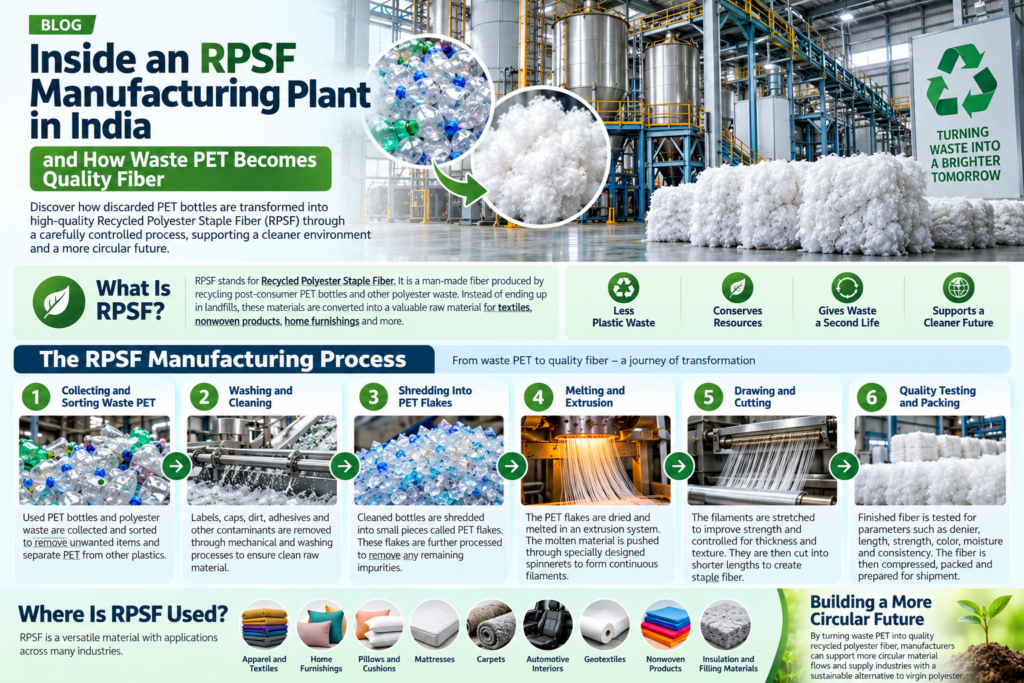
The automotive industry is constantly changing to meet increasing demands for sustainability, durability and cost efficiency. Recycled materials are increasingly important in vehicle production as manufacturers seek ways to reduce their environmental footprint. One material that has drawn a lot of attention is Recycled Polyester Staple Fibre (RPSF).
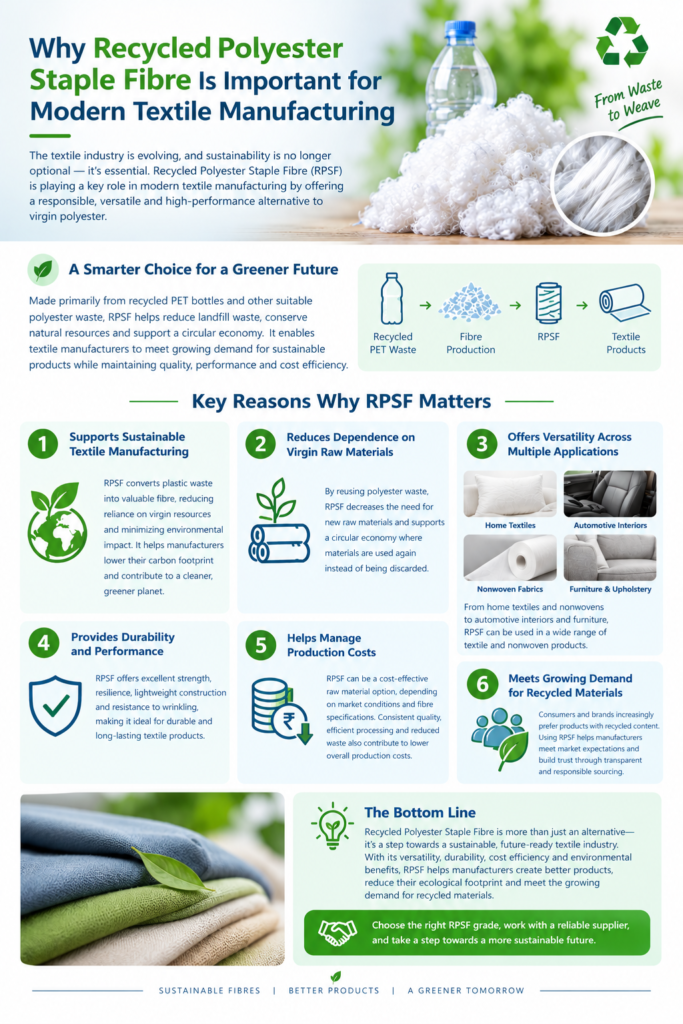
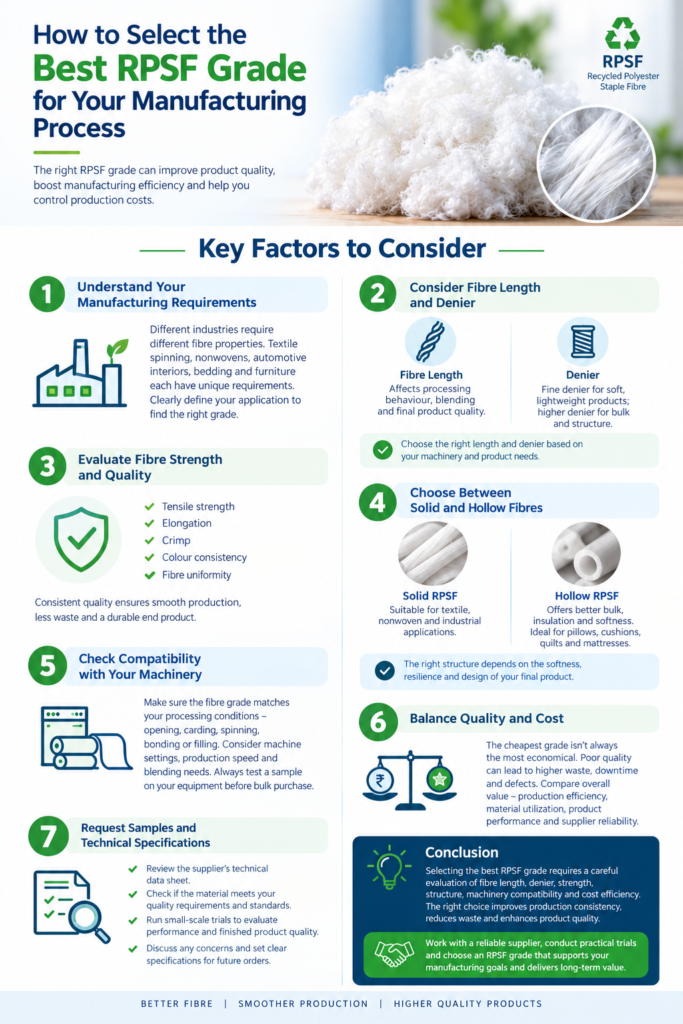
Made from recycled PET plastic bottles and other polyester waste, Recycled Polyester Staple Fibre provides a practical option for manufacturers looking for environmentally responsible materials without having to sacrifice on performance. Today RPSF is used extensively in automotive interiors, helping to meet sustainability goals as well as product quality.
What is Recycled Polyester Staple Fiber?
Recycled Polyester Staple Fibre is produced by collection, processing and recycling of post-consumer PET bottles and polyester waste. The materials are washed, heated up and turned into fibres which can be used in diverse industries, for example in the textile industry, home furnishings, nonwoven products and the automotive industry.
It is the material of choice for automotive interior components due to its durability, flexibility and cost-effectiveness.
Why is RPSF used in the Automotive Industry?
Car makers today are facing growing pressure to reduce waste and make their supply chains more sustainable.
Recycled Polyester Staple Fibre helps to achieve these goals by:
- Reduced reliance on virgin raw materials
- Encouraging Recycling and Waste Minimization
- Reducing environmental impact
- Dependable performance on interior applications
- Supporting Sustainable Manufacturing Goals
Many automotive companies are working recycled materials into vehicle interiors as part of their long-term sustainability strategies as a result.
RPSF in automotive interior applications
Seat Padding & Cushioning
Recycled Polyester Staple Fibre is used most often for seat cushioning and padding.
The fibre is comfortable, resilient and durable and so is ideal for vehicle seats that will be in constant use. Its long term shape and support retention property makes it a useful component in contemporary automotive seating system.
Headliners
Nonwoven materials manufactured from Recycled Polyester Staple Fibre are often used for vehicle headliners, the interior roof lining of a car.
RPSF enables the development of lightweight and durable headliner products to enhance the interior aesthetics and contribute to vehicle efficiency.
Door Panel Insulation
In automotive door panels we need materials that have sound absorption and structural support.
Recycled Polyester Staple Fibre is frequently used in the insulation layers of door panels, helping to reduce road noise and improve passenger comfort. This app enhances the driving experience while encouraging the use of sustainable materials.
Carpets & Floor Mats
Vehicle carpets and floor mats see daily wear and tear. These products commonly have RPSF added for strength and durability.
Its use enables the creation of durable products for interior floor coverings, whilst minimizing the environmental impact of the manufacture of virgin polyester.
Boot and Trunk Liners
Nonwoven fabrics from recycled fibres are used in trunk liners and cargo area components.
RPSF offers excellent performance in these applications by providing durability, dimensional stability and resistance to regular usage.
Advantages of using recycled polyester staple fibre in vehicles Sustainability One of the biggest advantages of RPSF is its role to promote environmental sustainability. Using recycled plastic waste, manufacturers reduce landfill buildup and support circular economy efforts.
Lightweight features
Automakers are constantly looking for lightweight materials to increase fuel economy and vehicle performance overall.
Products based on RPSF are a good compromise between strength and weight for a range of interior applications.
Durability
Car interiors are built to withstand years and years of daily use. Recycled Polyester Staple Fibre offers excellent durability for long-lasting performance in the seats, insulation systems and nonwoven interior components.
Cost-effectiveness
RPSF is a cost-effective alternative to some conventional materials while maintaining quality. This is attractive to manufacturers wanting economic and environmental benefits.
Sustainable Automotive Interiors: The Future
With increasing environmental regulations and consumer consciousness, the use of recycled materials in vehicle manufacturing is likely to increase.
Global automotive companies are investing in sustainable manufacturing practices and Recycled Polyester Staple Fibre is expected to play a key role in this transition. “The versatility, performance and environmental benefits of paper make it an ideal material for the automotive interior innovations of the future.
Also Read: How rPET Flakes help businesses meet sustainability goals
Summary
Recycled Polyester Staple Fibre has emerged as an important material in the modern automotive interiors, offering a blend of sustainability, durability and functionality. RPSF is aiding the automotive industry’s transition to greener manufacturing processes, from seat cushioning and headliners to carpets and insulation systems.
The Recycled Polyester Staple Fibre in automotive interiors market is expected to expand on the back of a growing emphasis on environmentally conscious solutions by manufacturers, enabling the development of environmentally conscious and high-performing vehicles.