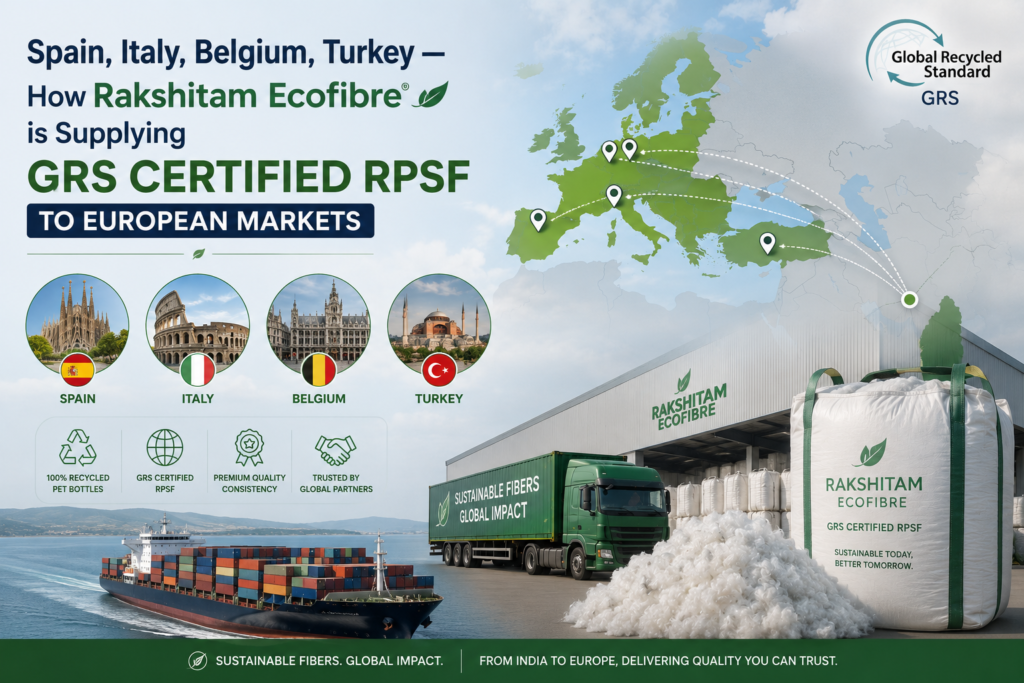
The global shift to sustainable manufacturing practices is happening at a breakneck speed, and it is transforming the way raw materials are being produced and used. Among the materials that are gaining strong industrial importance Recycled Polyester Staple Fibre (RPSF) has emerged as one of the promising solutions for the future.
RPSF is a sustainable product made from recycled PET bottles and polyester waste, enabling industries to reduce their impact on the environment without compromising on production efficiency and product quality. What was once only a recycling initiative, has grown into a major industrial resource used by multiple sectors.
As the world continues to seek sustainable materials, the future of Recycled Polyester Staple Fibre in the industry is brighter than ever.
Growing Demand for Sustainable Industrial Materials
Modern industries are under the increasing pressure to reduce waste, carbon emissions and to implement green production systems. Governments, environmental groups and consumers are all putting pressure on businesses to change their manufacturing practices to be more responsible.
Traditional manufacturing processes rely heavily on virgin raw materials, which require large amounts of energy and pose environmental problems in the long run. Recycled Polyester Staple Fibre provides an alternative by converting plastic waste into a reusable industrial material.
This way of working supports the growing idea of a circular economy, where waste materials are reused instead of being thrown away.
Why RPSF Matters to Future Industries
The ability to combine industrial performance with sustainability is one of the principal reasons for the growth of RPSF. Today manufacturers search for environmentally friendly materials and solutions that are commercially practical.
RPSF has several advantages, such as:
- Durable fiber strength
- Lightweight design
- Versatile for industry
- Consistent quality of production
- Help with low-cost manufacturing
This makes it suitable for use in industries that demand reliability at large production scales.
Growing Industrial Applications of RPSF
The future growth of Recycled Polyester Staple Fibre is directly dependent on its growing applications in various industries.
Textile Industry
The textile industry is still one of the biggest users of RPSF. The fibre is commonly used in:
- Yarn making
- Nonwoven fabrics
- Filling Material
- Technical textiles – Apparel applications
With the growing interest in sustainable fashion and eco-friendly textiles, the need for recycled fibres is expected to increase.
Business of Home Furnishings
Recycled polyester fibre is becoming increasingly popular among home furnishing producers for products such as:
- Cushions
- cushion
- Mattress
- blankets
- Couch stuffing
These days, consumers are more aware of environmentally responsible products and this is encouraging brands to opt for sustainable materials.
Automotive Industry
RPSF is also being integrated in the automotive sector:
- Interior fittings
- Insulating materials
- Seat fillings
- Sound Insulation Systems
Automakers are working to reduce the environmental impact of vehicles, which makes recycled materials more important in future production systems.
Uses in Construction and Industry
RPSF is also used in:
- Geotextiles
- Filtration products
- Packing Solutions
- Industrial insulations
Its flexibility allows manufacturers to use it in many industrial environments.
Future production will rise with technology
Development of recycling technology should improve overall quality and efficiency of RPSF production. Today’s recycling systems are aimed at:
- Improved fibre consistency
- Higher processing efficiency
- Increased durability
- Less waste in the production
As technology advances, recycled polyester fibre will become even more competitive with traditional raw materials.
Global Sustainability Goals RPSF Growth Support
Sustainability policies and environmental regulations are getting tougher in an increasing number of countries and industries. More and more businesses are being held accountable for their plastic waste and recycling practices.
The recycled fibre industry is growing as a result of the world’s focus on sustainability. Using environmentally responsible materials also strengthens the market value and trust of the consumer for companies.
Therefore, the industrial demand for RPSF is anticipated to grow tremendously in the coming years.
Industry Still Faces Challenges
The RPSF industry faces some challenges, although the future is promising.
These are:
- Efficient collection of plastic wastes
- Limitations of recycling infrastructure
- Quality consistency of recycled materials
- Market competition for virgin polyester
But technology keeps moving on and people are becoming more aware of the need to protect the environment so industry is beginning to find ways of coping with these problems.
Outlook for Recycled Polyester Staple Fibre to 2026
The future of Recycled Polyester Staple Fibre as an industry is closely linked to the future of sustainable manufacturing in general. Recycled materials are no longer seen as second-rate by industry. Rather, they are becoming key elements of modern production strategies.
As industries focus more on sustainability, resource efficiency and waste reduction, RPSF is set to have an even greater role in world manufacturing sectors.
Also Read: The Real Industrial Value of Recycled Polyester Staple Fibre
Recycled Polyester Staple Fibre is not just a recycled product, it is a vision of the modern industries of the future. The conversion of plastic waste into valuable industrial products makes it highly relevant for the future of sustainable manufacturing.
From textiles and automotive applications to home furnishings and industrial products, RPSF is rapidly becoming a material of choice for companies seeking performance and environmental responsibility. As technology and sustainability initiatives continue to evolve, the industrial future of Recycled Polyester Staple Fibre looks more robust and relevant around the world.