Today, as the industries of the world continue to bear increasing pressure to significantly reduce emissions and develop methods that ensure sustainable practices, recycled polyester has been recognized as a powerful game-changer, particularly in the textile and apparel sector. Recycled polyester is made from post-consumer PET bottles and industrial plastic waste to an extraordinary extent. In this light, it greatly reduces environmental impact with no apparent sacrifice in performance. This blog examines how recycled polyester contributes to carbon footprint reduction and why it is being favored by brands the world over.
What Is Recycled Polyester?
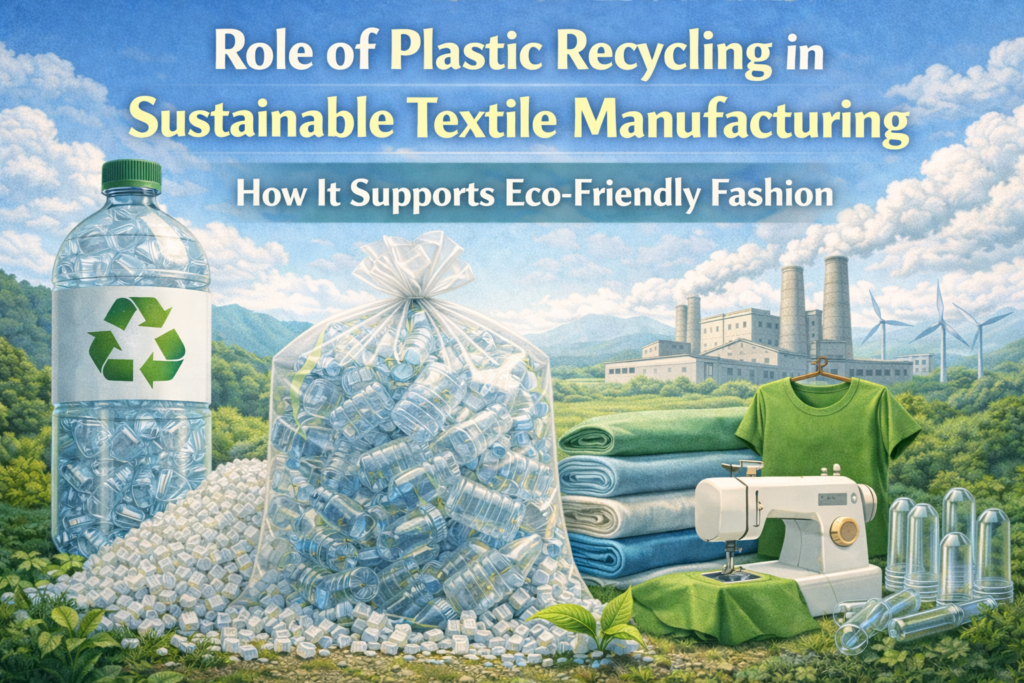
The recycled polyester process reuses plastic waste in the form of PET bottles to create new polyester fibers. Instead of depending on fossil fuels in order to create polyester, suppliers now rely on plastic that already exists.
The recycling process usually entails:
- Collection and sorting of PET waste
- Washing and flaking into flakes
- Melting and extrusion into fiber or chips
- Spinning into yarn for textile use
This closed system is essential when it comes to lowering carbon emissions.
How Recycled Polyester Lowers Carbon Emissions
1. Reduced Energy Usage
The energy required to produce recycled polyester is lower compared to virgin production. Additionally, there is a saving in energy for non-production purposes compared to producing virgin polyester. According to studies, recycled polyester consumes between 30% and 50% less energy.
2. Less Dependence on Fossil Fuels
Virgin polyester comes from oil. When companies switch to using recycled polyester, it decreases the consumption of fossil fuel, a key source of environmental carbon emissions globally. Every ton of recycled polyester created helps to conserve oil and prevent emissions.
3. Lower Greenhouse Gas Emissions
In comparison to virgin polyester, recycled polyester has been shown to emit anywhere from 40 to 60% lower levels of greenhouse gases. The difference largely derives from differences in energy requirements, resource extractions, and variations in production methods.
Contribution to Circular Economy
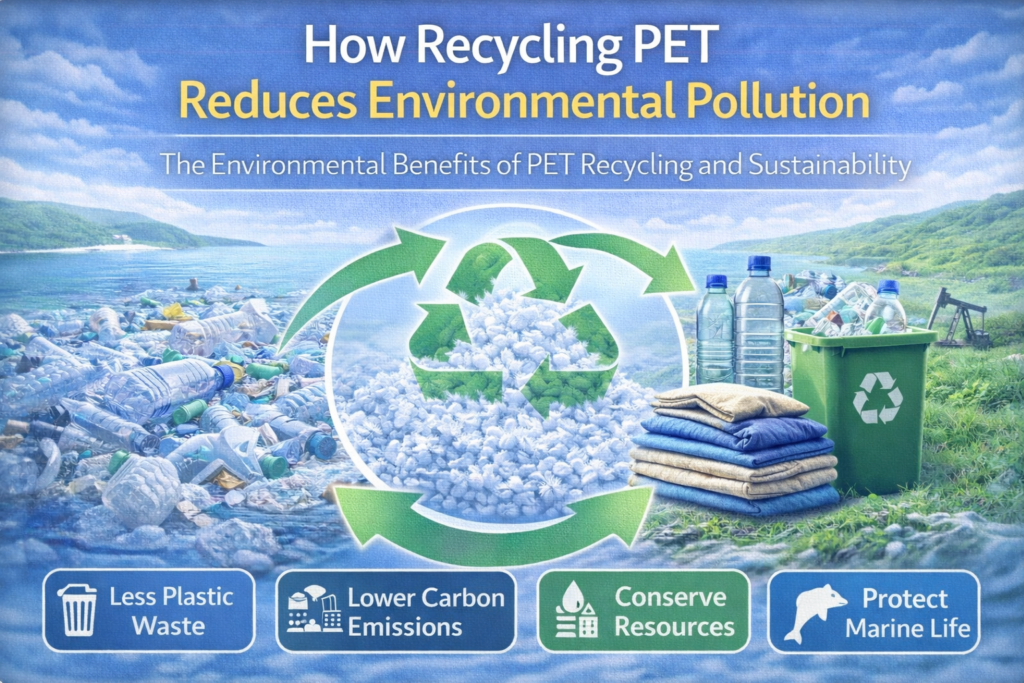
Recycled polyester supports the circular economy: materials are being reused instead of landfilled. PET bottles, which otherwise reach landfills or oceans, get recycled into valuable textile fibers. This helps reduce plastic pollution and avoids emissions from waste management methods involving incineration.
Recycled polyester helps to close the loop by keeping materials in use longer, offering a reduction in the overall environmental footprint created by the textile industry.
Impact Across Industries
Apparel & Fashion
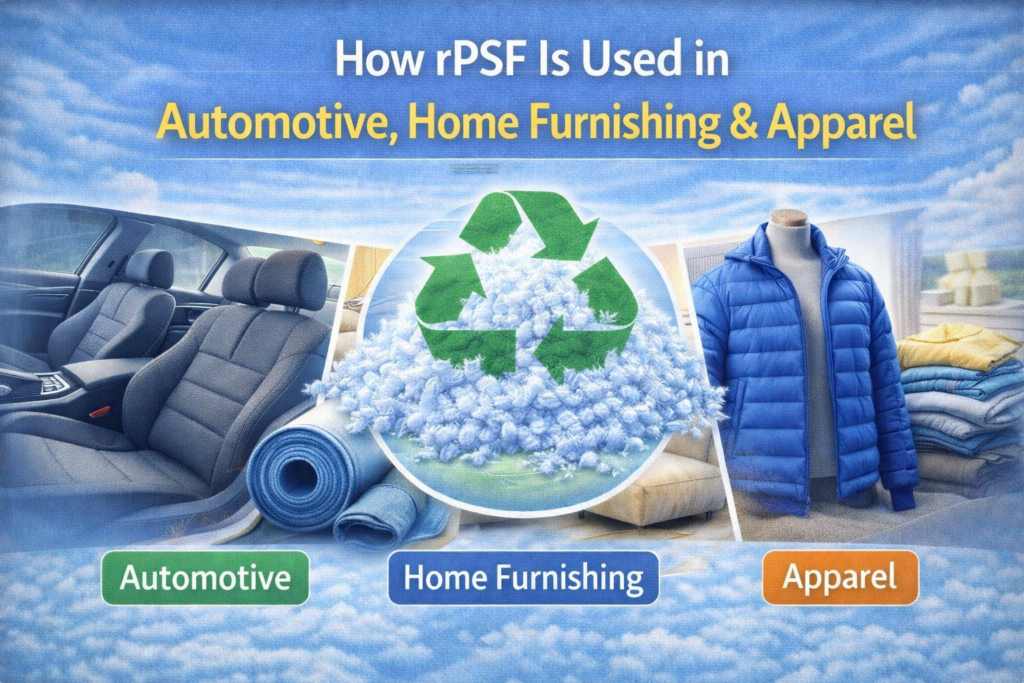
Fashion brands are starting to use recycled polyester in sportswear, outerwear, and casual wear. It provides the same durability, water resistance, and functionality as virgin polyester, but at a much lower carbon price.
Home Furnishing
Products such as carpets, cushions, and upholstery, produced by recycled polyester, cut down on emissions and meet quality and longevity requirements.
Automotive & Industrial Uses
Recycled polyester also has other applications, such as car interior parts, insulation, and non-woven products, that aid in meeting environmental and emission standards for different industries.
Why Brands Are Choosing Recycled Polyester
Brands are embracing recycled polyester not only for its eco-friendly properties but also because:
- ESG and sustainability commitments
- Regulatory forces, influencing pollution emission reductions
- Consumer demand for green products
- comparable quality and performance to virgin polyester
The use of recycled polyester enables companies to reduce the scope 3 emissions of CO2, as scope 3 emissions account for the largest part of the overall carbon footprint of companies.
Challenges and the Road Ahead
While recycled polyester obviously has clear environmental benefits, challenges persist in the forms of recycling infrastructure, quality consistency, and fiber-to-fiber recycling. However, textile-to-textile recycling is getting far better with the development of new technologies, and waste collection systems are similarly improving.
Also Read: How PET Flakes Support Circular Economy and Sustainability
The impact of recycled polyester on carbon footprint reduction is both significant and measurable. By reducing energy consumption, lowering reliance on fossil fuels, and decreasing greenhouse gas emissions, recycled polyester presents a pragmatic approach towards sustainability. As recycling technologies continue to evolve and improve, along with upscaling processes, recycled polyester will become key to developing a low-carbon, more circular textile industry.