Sustainable world, eco-friendly materials, waste reduction, and energy conservation; an industry that tops this list is the innovations of rPET chips (Recycled Polyethylene Terephthalate chips), produced from discarded plastic bottles into new and quality packaging and textile materials. Important for a circular economy, let’s take a look at the importance of the rPET chips production process.
What are rPET Chips?
rPET chips are small transparent pellets made from recycled PET bottles. They are the raw materials used to manufacture new packaging products, polyester fibers, and plastic sheets. Since rPET has maintained both the strength and clarity of virgin PET, it’s increasingly preferred in bottle-to-bottle recycling, textile production, and the extrusion of films.
Manufacturing Process of rPET Chips in Steps
1. Collection & Sorting
The process starts with municipal and private recycling networks collecting post-consumer PET bottles. The bottles are sorted manually and through advanced optical scanners which separate PET from non-PET materials like PVC, HDPE, and other colored plastics.
2. Cleaning & Label Removal
The bottles go through washing in both hot and cold water to remove caps, labels, and glue residues. Clean bottles ensure that the final rPET chips are clear and free from contamination.
3.Flake-type shredding
The next step involves washing and crushing the PET bottles into smaller pieces, referred to as PET flakes. The next step in the process is filtering and separating the flakes to completely remove any lingering impurities, including metal fragments.
4. Hot Washing & Decontamination
Oil and adhesive traces are removed by hot alkaline washing of the PET flakes. The flakes undergo processing in a vacuum decontamination system that removes odors and volatile compounds for food-grade applications.
5. Extrusion & Pelletizing
The purified flakes are melted in an extruder, converted into molten strands, and then cut into uniform rPET chips. Depending on the requirement, additives or colorants can be mixed during this stage.
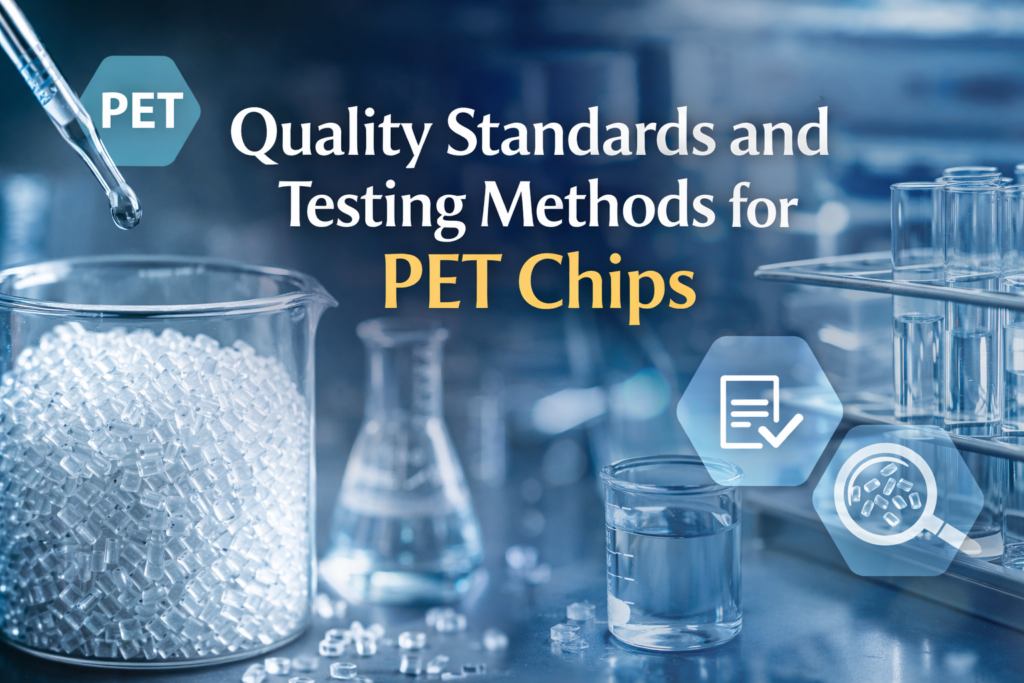
6. Quality Testing & Packaging
Moisture content, intrinsic viscosity, and color value are checked for every batch of chips before packing. This ensures that every lot from the manufacturing unit meets the standards laid down by BIS, EFSA, and FDA for safety and sustainability.
Applications of rPET Chips
rPET chips have applications in the following industries:
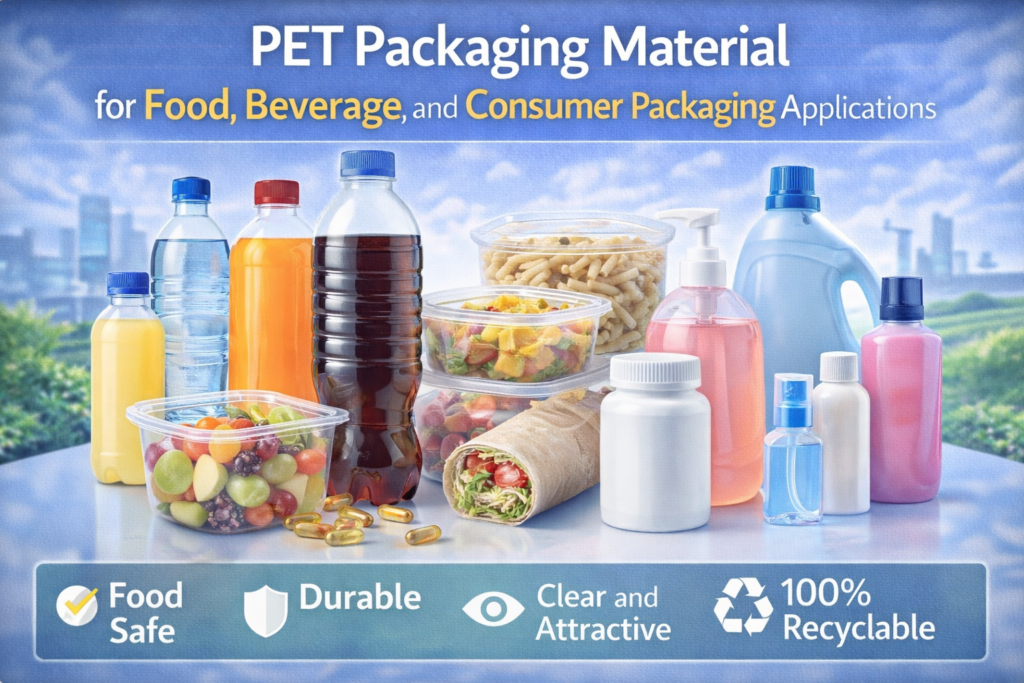
- Packaging: Bottles, containers, and food trays.
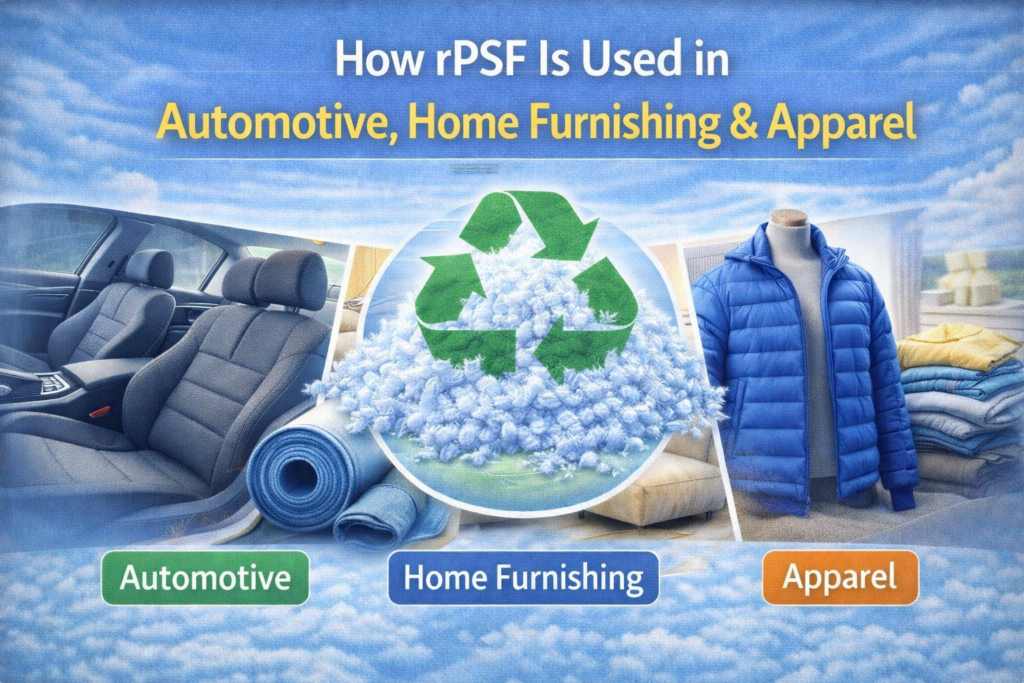
- Textiles: Yarn, fiber, and nonwoven fabric.
- Industrial Uses: Straps, sheets, 3D printing material.
Their versatility, combined with ecological friendliness, makes them an ideal replacement for virgin PET.
Key Benefits of rPET Chips
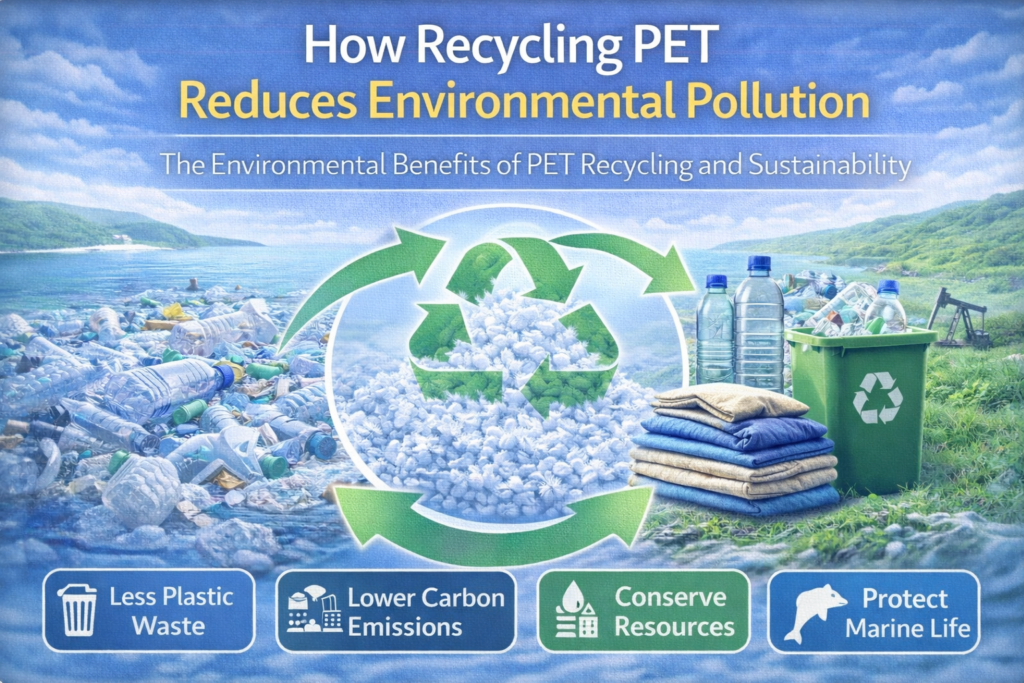
- Reduces Plastic Waste: Keeps bottles out of landfills.
- Energy-Efficient: It consumes less energy in comparison to virgin PET production.
- Sustainable Growth: Encourages recycling-based industries.
- Supports EPR Policy: Meets India’s extended producer responsibility norms.
The Future of rPET Chips in India
India is growing as one of the strong players in the production of recycled PET. With growing awareness of sustainability, brands are moving toward rPET solutions across packaging, textiles, and the FMCG sectors. In addition, there will be a sharp rise in demand for food-grade rPET chips by 2025, bringing in both environmental and economic benefits.
Also Read: Top Indian Manufacturers Leading the Way in Food-Safe Recycled PET Resins
Conclusion
The manufacturing process of rPET chips shows that plastic waste could be transformed into an excellent material for new packaging and textiles. As more manufacturers adopt recycling technology, rPET chips will usher in a cleaner, greener future.